
Our readers keep the lights on and the garage heater humming. As an Amazon Associate, I earn from qualifying purchases.
Specs are compiled from manufacturer listings and verified buyer reviews and can change over time — please confirm the key details on the product page before buying.
The quickest way to end a hot-car misery is to find the exact AC part that fits your make, model, and engine — and to know whether you’re buying the condenser, the evaporator core, or the compressor itself. This guide cuts through the fitment confusion and quality lottery so you can order the right component once, install it, and get back to blowing cold air without a second trip to the parts store.
I’m Mo Maruf — the founder and writer behind GoCarLife. This guide is built by comparing the manufacturers’ published specifications and the patterns across verified customer reviews, so you get each pick’s real strengths and trade-offs instead of marketing spin.
From the condenser that sheds heat to the evaporator core that chills the cabin and the compressor that drives the whole loop, these are the vehicle ac parts worth your garage time and your money.
Our Picks at a Glance

How To Choose The Best Vehicle AC Parts
Your car’s AC system is a loop, and each of these three parts has one job. The compressor pressurizes the refrigerant, the condenser sheds that heat out front, and the evaporator core chills the air that reaches your face. Buying the right one starts with knowing which of these has failed, then matching the part number to your exact vehicle.
Match the part number, not just the model name
The single biggest mistake buyers make is trusting a listing that says “fits your car” without cross-checking the OEM (Original Equipment Manufacturer) reference number. A condenser built for a 2012 Camry won’t bolt onto a 2018 Avalon without bracket differences, even though both are Toyotas. Look for the specific OEM numbers like 88460AZ004 or 23141861 in the listing, and confirm yours matches before you order.
Know your compressor’s oil and pulley spec
Compressors are pre-filled with a specific oil type and volume, and they spin on a pulley with a set groove count that must match your belt. If your old unit used PAG46 oil and 7 grooves on a 100 mm pulley, a compressor with different specs won’t drive the system properly. Get these wrong and you’ll burn out the new part fast, so write down your old unit’s tags before shopping.
Quick Comparison
| Model | Best For | Part Type | Weight | OEM Cross-Refs | Amazon |
|---|---|---|---|---|---|
| AUTOSAVER88 Condenser★ Best Overall | Nissan Altima & Maxima owners | Condenser | 6.75 lb | NI3030161, NI3030171 | Amazon |
| UAC EV 939604PFXCCabin Chiller | GM truck cabin cooling | Evaporator Core | 16 oz | OE spec | Amazon |
| Orceed Condenser #3995Top Performer | Toyota Camry & Avalon swaps | Condenser | 7.19 lb | 8846006230, 88460AZ004 | Amazon |
| TRQ ACA89044 | 90s GM trucks & SUVs | Condenser | 3.26 lb | 52402209, 52458718 | Amazon |
| Spectra Premium 7-4283 | GM full-size pickups | Condenser | — | 23141861, 23141869 | Amazon |
| ECCPP Honda Civic Compressor | Civic 1.8L owners | Compressor | — | 38800R62H01, 38810RNAA01 | Amazon |
| ECCPP GM Express Compressor | Chevy Express & Tahoe vans | Compressor | — | 1520410, 10342790 | Amazon |
| ACDelco Gold 15-63889 | Silverado & Sierra with trans cooler | Condenser | 4.9 lb | 19383805 | Amazon |
In‑Depth Reviews
1. AUTOSAVER88 A/C Condenser
Our pick — 4.5★ from 400+ verified ratings; the strongest balance of quality and price.
The Nissan-spec condenser that drivers keep shoehorning into Fords and Chevys with surprising success.
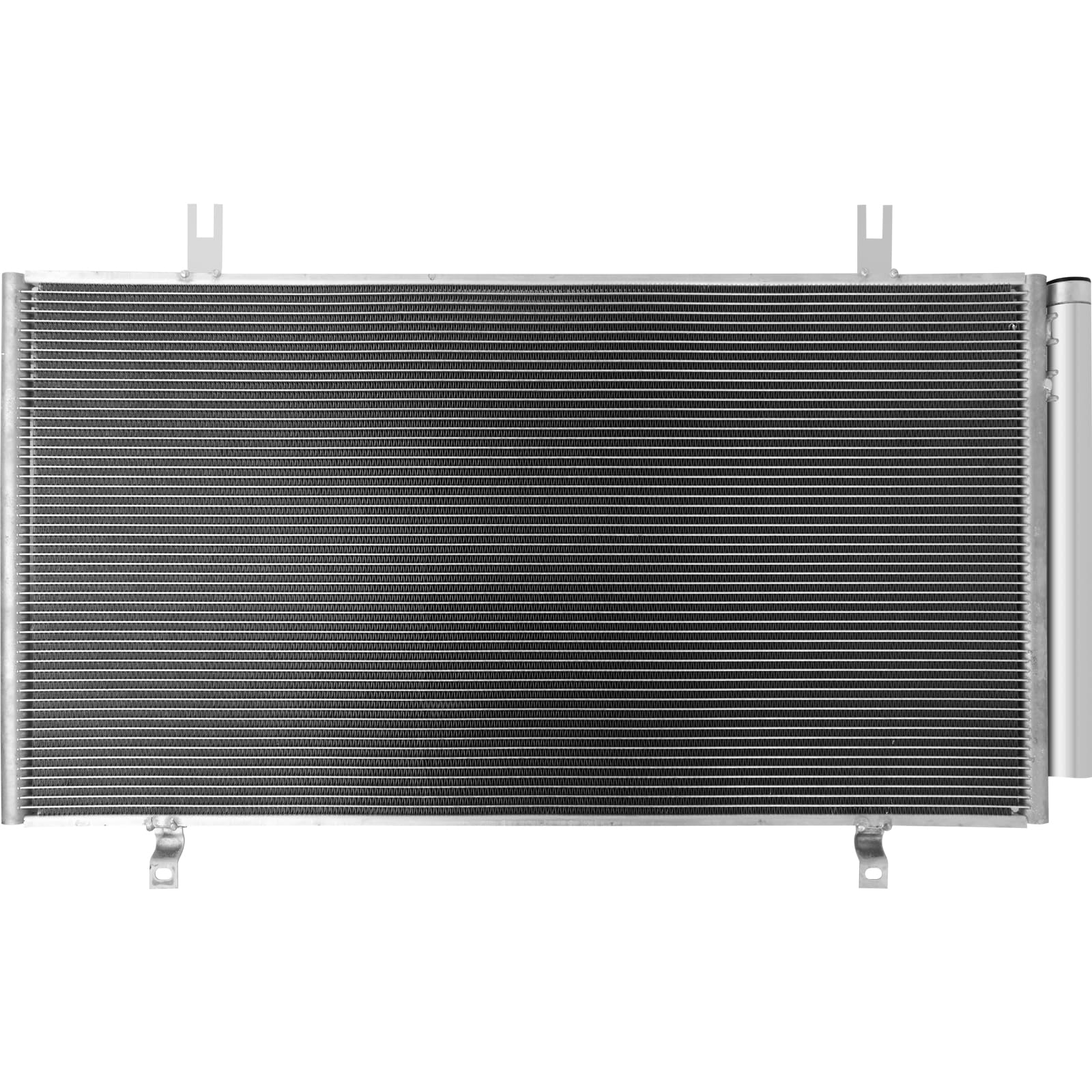
Your Altima’s AC stops blowing cold because this aluminum block out front can’t shed heat anymore, and this replacement is built to fix that with high-density multi-louvered fins that boost cooling efficiency while staying durable in extreme cold weather. The corrugated aluminum fins and tubes are connected by brazing, which is the same joining method the factory uses, so the whole core holds together under pressure.
It passed an air-tight leak detection test under a pressure of 2.94MPa (30kgf/cm) for 1 minute with no leakage, which is your assurance the welds are sound before you bolt it in. At 6.75 pounds, it’s a touch lighter than the Toyota-style 7.19-pound Orceed condenser above, but buyers report the swap takes no problems, about 2-3 hours on a 2011 Ford Expedition, and the only note is that it’s thinner where the tubes attach.
Fit-first design: The thing everyone raves about is the fit — owners have landed it on a 2006 F-250 6.0 Power Stroke diesel, a 2017 Mustang V6, and the Expedition with zero modification, which makes the OEM cross-reference numbers NI3030161 and NI3030171 feel like a formality.
The thin-tube caveat: A few note the tube attachment is thinner than factory, so handle it gently during install and torque carefully.
Reach for this if: you drive an Altima or Maxima and want a condenser that bolts in cleanly with the OEM numbers NI3030161 or NI3030171 on the box.
Look elsewhere if: you need the heavy-duty tube thickness of a premium OEM-grade unit on a work truck.
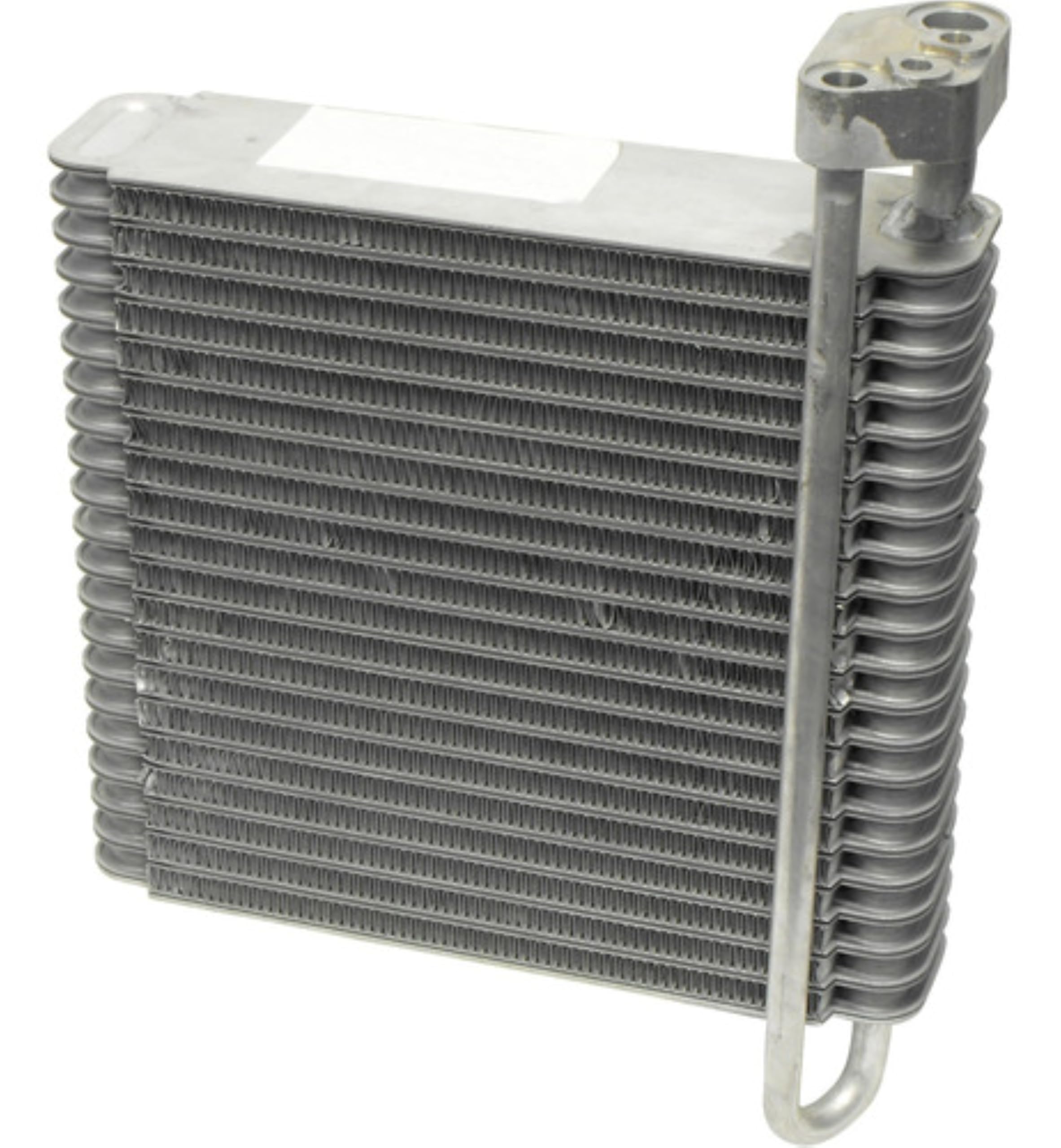
2. UAC EV 939604PFXC A/C Evaporator Core
The 16-ounce evaporator core that turns a Florida-hot Silverado cabin into a refrigerator after a dash-intensive afternoon.
When the air blowing from your vents is warm no matter how much refrigerant you add, the evaporator core behind the dash is the suspect, and this UAC plate-fin unit is a brand-new OE replacement built to meet or exceed OEM specifications for maximum cooling efficiency. It’s an MFNPT connector design, so the inlet threads match the factory line fittings on GM trucks like the 2006 Silverado 2500 where owners mention it fits perfect with no issues.
Here’s the honest catch that shows up across every install story: the core ships as the main component only, with no studs or O-rings in the box. One owner on an 03 Suburban sourced seals at parts stores and used metric screws as studs to finish the job, and another used gorilla tape to seal a trimmed compartment — so budget for hardware and a slow afternoon, because the install is pretty involved whether you’re in a Silverado or a Suburban.
Cold-air payoff: The reward is genuinely icy air — buyers describe restored AC after four hot Louisiana summers and “really cold” vents once the system is recharged, which is why the fit and functionality win people over.
Hardware reality: The lack of studs and gaskets is the recurring gripe, so order those separately before you tear apart the dash.
Best for: GM truck and SUV owners who want an OE-grade core and don’t mind a Saturday of wrenching plus a parts-store run for studs.
Not for: anyone expecting a bolt-in kit with every nut and seal included in the box.
3. Orceed A/C Condenser #3995
The 7.19-pound Toyota condenser that arrives with the receiver drier and bracket already in place, cutting install time.
This Orceed kit is built for the Camry 2012-2017 and Avalon 2013-2018, and it ships with the receiver drier and bracket so you’re not hunting for those small but essential pieces at the last minute. It’s crafted from aluminum with high-density multi-layered fins for optimal cooling efficiency, and the OE design guarantees a precise fit, form, and function for a straightforward drop-in installation.
The gaskets and rings undergo thermal shock treatment to stay resilient in extreme cold, which is the kind of detail that keeps the seals from cracking after a harsh winter. At 7.19 pounds, it’s the heaviest of the condensers here — about 6% heavier than the AUTOSAVER88’s 6.75 pounds — and customers note it fit a 2014 GMC Sierra perfectly and held up fine against road debris and bugs for six months with no bent fins.
What wins people over
- Fit is the top praise — owners landed it on a Sierra, a Sonic, and a 2003 Tahoe with zero mods
- Leak-proof performance gets consistent shout-outs
- Receiver drier and bracket included saves a second order
The durability split
- A few describe the alloy as a bit soft, though it holds up fine in normal use
- An occasional unit arrives with shipping damage, so inspect the fins on delivery
Grab it for: a Camry or Avalon swap where you want the drier and bracket in the box and a fit that the review pages call perfect across several GM trucks too.
Think twice if: you need the stiffest alloy possible for a work truck that eats gravel and bugs daily.
4. TRQ A/C Condenser ACA89044
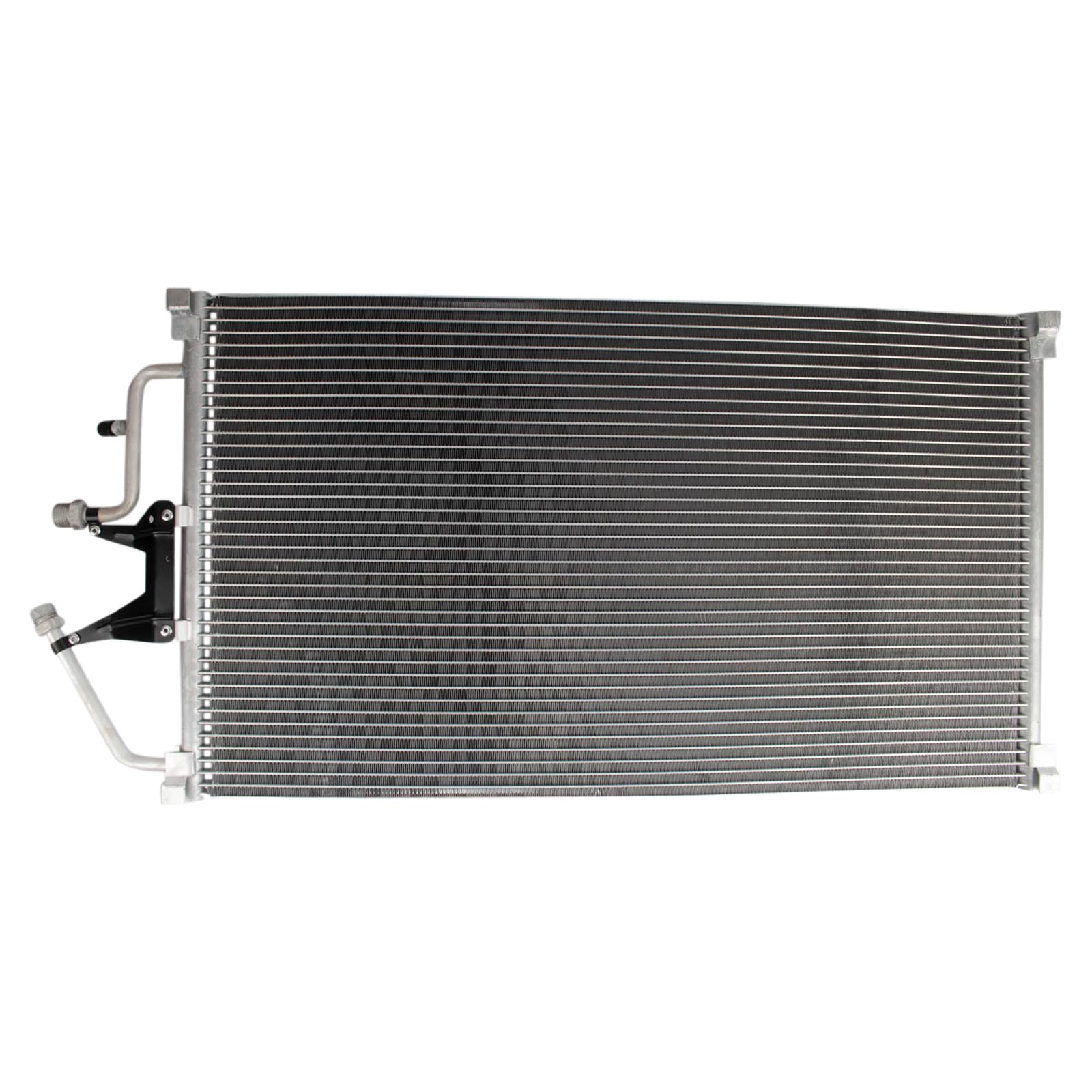
The 3.26-pound condenser for 90s GM trucks that punches above its weight with denser piping and more surface area.
For the 96-99 Chevrolet and GMC Suburban, C1500, C2500, K1500, and K2500 — plus the 99-00 Cadillac Escalade — this TRQ unit is a direct replacement built with pre-assembled components so you skip the modifications. It’s machined and weighs just 3.26 pounds, which makes it the lightest condenser in this lineup and easy to lift into place over the Core Support.
The cooling story here is the surface area: owners on a 2000 Escalade found denser piping and more surface area than the cheaper options, which keeps the AC cold even when the truck is sitting still in traffic. The fit is the stuff of legend — reviewers point out a direct fit with no mods needed on a Chrysler Sebring and an exact fit on a 2002 Subaru Outback, with one replacing a 17-year-old OEM part that finally gave up.
Surface-area win: More fins mean more heat exchange, and the review pages credit it with ice-cold air after charge and no leaks months later.
Shipping risk: One unit arrived with a squished box and a bent mid-section, so inspect the core the moment it lands and use Amazon’s easy return if it’s damaged.
Pick this if: you drive a late-90s GM truck or SUV and want a light, direct-fit condenser with more cooling surface than the budget options.
skip it if: you’re outside the 96-99 Chev/GMC range — the OEM numbers like 52402209 and 52458718 are specific to that generation.
5. Spectra Premium 7-4283 A/C Condenser

The direct-fit condenser for GM full-sizers that fixes the factory’s weak-side crack with reinforced edges.
If you drive a Cadillac Escalade, Chevy Cheyenne, Silverado 1500 or 2500, Suburban, Tahoe, GMC Sierra or Yukon, this Spectra Premium unit is a direct replacement designed to meet OE fit, form, and function — and it’s nitrogen leak-tested so you know it’s a damage-free unit at installation. The heavy-gauge mounting brackets reduce movement and vibration, which is exactly what you want in a truck that feels every pothole.
The reinforced sides are the headline for GM owners, because the original parts are known for cracking where the accumulator welds to the condenser. Buyers found it to be an exact replacement on a 2015 Suburban and an 18 GMC Sierra SLT 5.3L, with one calling it better than the original and noting it saved a ton of money versus taking the truck to a shop — the whole job runs about 2.5 hours with YouTube tutorials and a swivel socket for those 10mm bolts under the radiator crossbar.
Why it earns the top spot for GM
- Reinforced sides address the known GM weak point on the OEM part
- High-density fins deliver ice-cold air, even at idle
- Nitrogen leak-tested so the unit ships verified tight
The honest trade-offs
- The unit sits roughly 1/8 inch higher than stock, needing minor rigging on the plastic cover
- Alignment gets a mixed reception — a few owners had to nudge the brackets to line up bolt holes
Reach for it when: your GM full-size pickup or SUV has the classic accumulator-weld crack and you want a reinforced replacement that outlasts the original.
Best to skip if: you’re not driving a GM full-sizer — the OEM numbers 23141861 and 23141869 lock it to that family.
6. ECCPP AC Compressor for Honda Civic 1.8L

The Civic 1.8L compressor that blows ice-cold air and fits a surprising range of other makes.
When your AC blows warm because the compressor won’t engage, this ECCPP unit with clutch is the direct fix for the 2006-2011 Honda Civic 1.8L, and it comes pre-filled with 130 ml of PAG46 oil so you don’t add a drop at install. The specs are locked to the factory: 7 pulley grooves, a 100 mm pulley diameter, and the TRSE07 compressor type, which is exactly what the Civic’s belt system expects.
The cooling reputation is strong — buyers describe vent temps around 39.2°F on a 95°F day, and one 13-year auto parts veteran calls it top-notch quality that blows ice cold air and is quiet and simple to install. It’s lighter than the OEM unit but fits perfectly, and the crossover list is long enough that it also landed on a 2004 VW Beetle and a 97 SC300 without drama.
Value and cold: The thing everyone raves about is the reliability and the price — one owner notes it works as good as a new OEM part that costs 6 times more.
Durability watch: A minority report units failing within a year or leaking, so respect the pre-filled oil warning and don’t add extra, and confirm your fitment precisely before ordering.
Best for: Civic 1.8L owners who want a pre-oiled, bolt-on compressor with the right 7-groove pulley and a cold-air reputation.
Not ideal if: your vehicle isn’t on the crossover list — the fitment is specific, and a few buyers hit issues outside the core Civic range.
7. ECCPP AC Compressor for Chevy Express & Tahoe
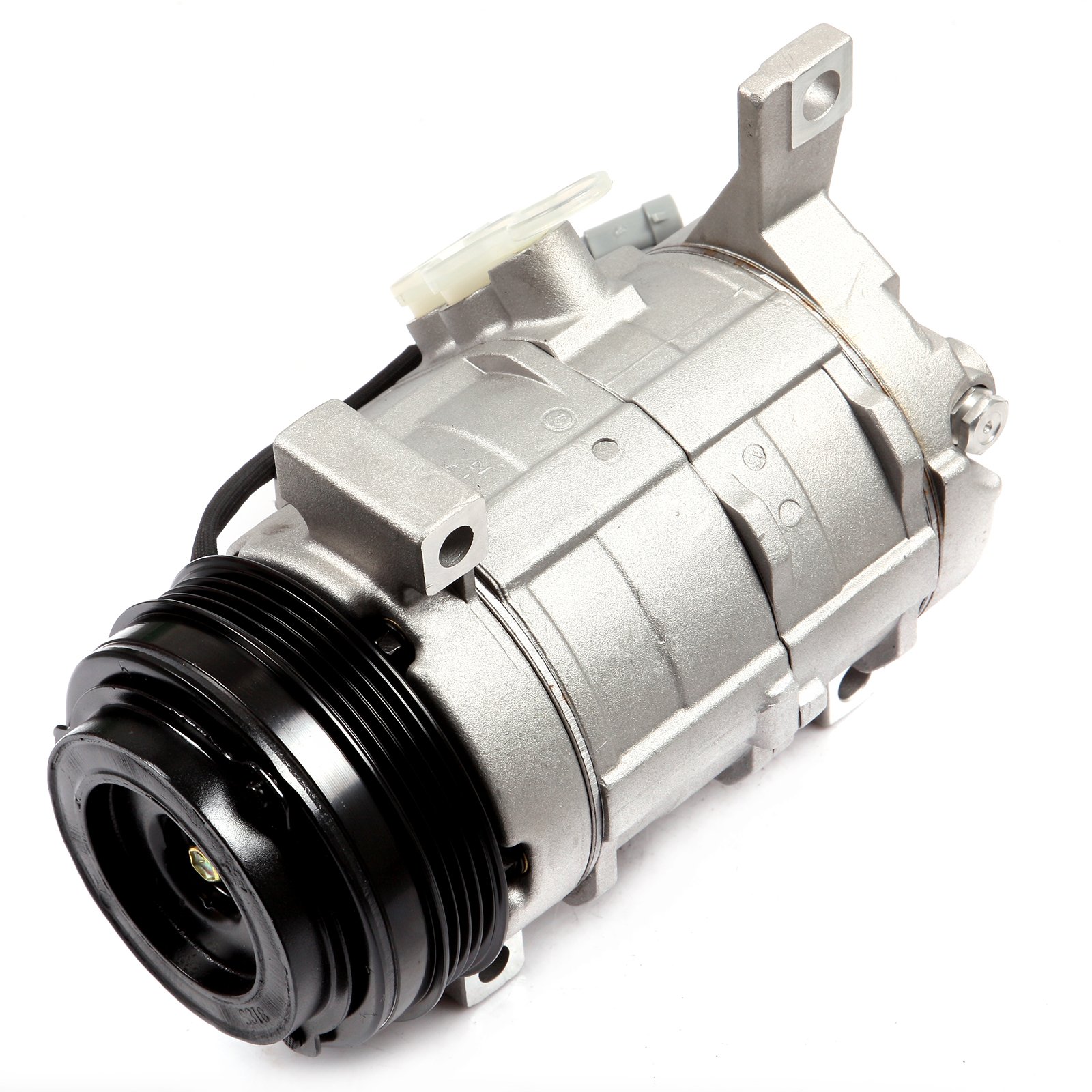
The 10S17F compressor built for Chevy vans and SUVs that keeps noise below 72 dB while pushing cabin temps down.
This ECCPP compressor with clutch is the heavy lifter for the Chevrolet Express 1500, 2500, and 3500 from 2008-2014, plus the Tahoe 5.3L from 2010-2014 and a wide range of GM vans through the 4500 series. The sturdy aluminum structure keeps it stable during long-term use, and it’s engineered for low vibration with noise levels below 72 dB — so you won’t hear it cycling over the road noise.
The cooling spec is the headline: the interior temperature can reach as low as 62℉ when the compressor is running, which is exactly what you want in a work van that bakes in the sun all day. It uses the 10S17F compressor type with 4 pulley grooves on a 111 mm pulley, and it’s pre-filled with 130 ml of PAG46 oil, so the install is a direct swap as long as you flush the cooling system lines first to clear any metal shavings from the old failed unit.
Cold and quiet: Shoppers say fantastically cold air and easy installation, with a Suzuki Vitara owner calling it “cool as a breeze” after a local mechanic did the swap.
The durability split: Quality and fit get mixed feedback — most owners are happy, but one unit seized 200 miles after install and melted a serpentine belt, so flush the system and torque carefully.
Choose this for: Express vans and Tahoe SUVs where you want a 10S17F compressor that cools to 62℉ and stays quiet.
Pass if: you’re fitting a 2003 PT Cruiser GT Turbo — the fitment list doesn’t cover it, and a few owners hit compatibility walls there.
8. ACDelco Gold 15-63889 Condenser
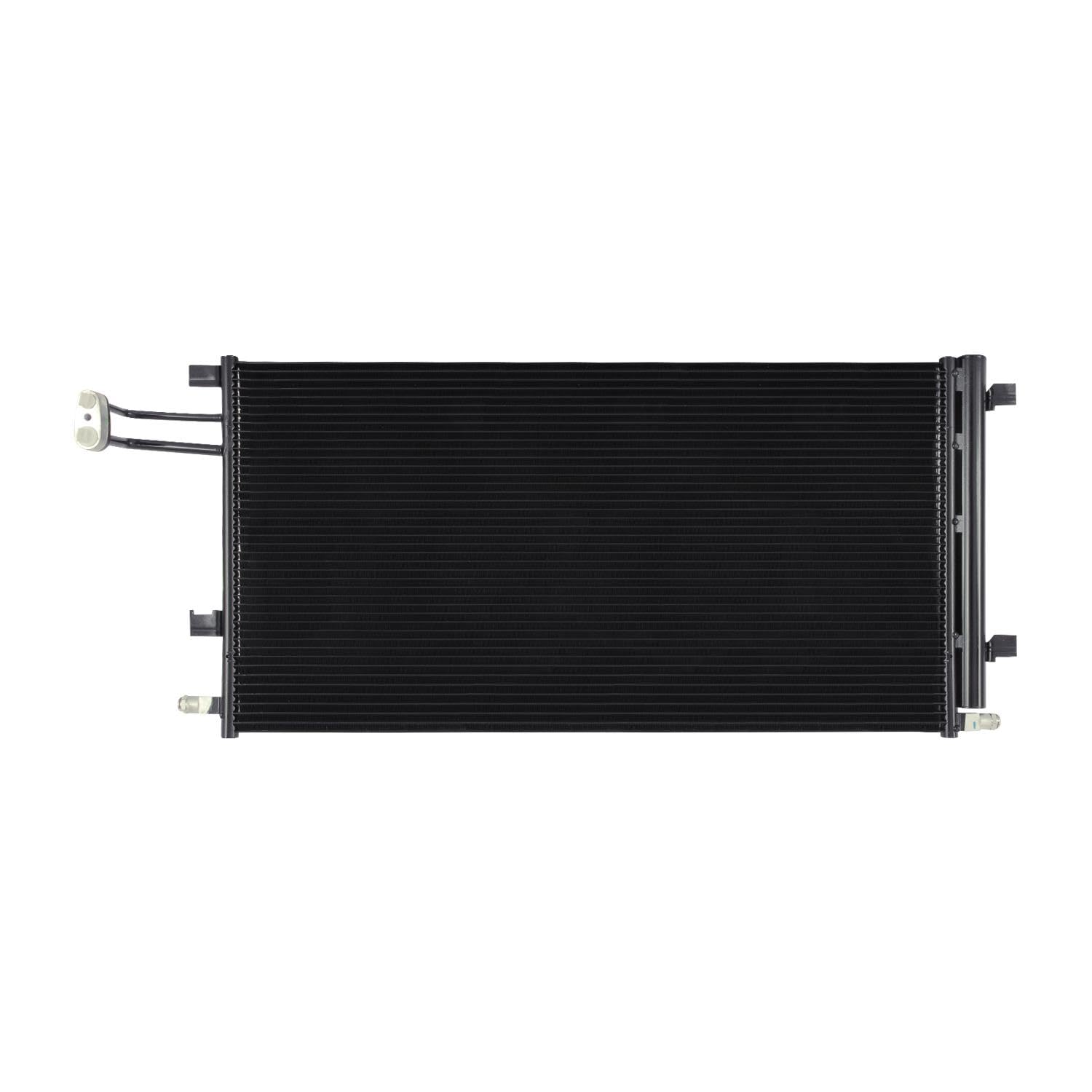
The 4.9-pound aluminum condenser with a built-in transmission oil cooler for Silverado and Sierra owners who want OEM-grade fit.
This ACDelco Gold unit is the premium aftermarket replacement for GM trucks that need the automatic transmission oil cooler integrated into the condenser, and it’s manufactured to meet expectations for fit, form, and function with a bolt-on mount. It’s built from aluminum and weighs 4.9 pounds, and the rectangular design slots into the same space as the factory part on the 2017 Silverado LTZ 6.2L and the 2014 GMC Sierra Denali.
The professional-grade reputation comes through in the details: buyers describe solid packaging that arrives flat and undamaged, with double-boxing and foam protection, and the cooling performance is perfect once you vacuum and charge with R134A per the under-hood specs. The trans cooler adds complexity though — the hardest part of the install is containing the transmission fluid spill, so buy zip-tied gloves and a magnetic stick before you start, and expect a 1.5 to 3-hour job depending on your tool setup.
OEM-grade payoff: The fit is described as an exact replacement, and the quality is considered worth the extra price over cheaper units — one owner called it better than the factory part.
Install quirks: The unit ships without seals, so you’ll need 2 O-rings and 2 oz of PAG 46 oil pre-install, and a few buyers report minor shroud interference that needs prying.
Worth it for: Silverado and Sierra owners who want the integrated trans cooler and don’t mind a longer, more careful install with O-rings and oil purchased separately.
Skip if: your truck doesn’t use the trans-cooler condenser — the Part Number 19383805 is specific to that configuration.
Understanding the Specs
OEM Cross-Reference Numbers
Every AC part has a factory part number, like 88460AZ004 for the Toyota or 23141861 for the GM trucks, and the aftermarket lists several of these per unit. Matching your old part’s stamped number to the listing’s cross-reference list is the single most reliable way to guarantee fit — more reliable than a “fits your car” claim from a garage tool. Write your old part’s number down before you search.
Compressor Oil Type and Pulley Specs
Compressors ship pre-filled with a specific oil — PAG46 is common — and the pulley has a groove count and diameter that must match your belt. A 7-groove pulley at 100 mm is different from a 4-groove at 111 mm, and swapping one for the other won’t drive the belt correctly. Always match the oil type, groove count, and compressor type (like TRSE07 or 10S17F) to your original unit.
FAQ
How do I know if I need a condenser, evaporator core, or compressor?
Will a condenser for a 2012 Camry fit my 2018 Avalon?
Why does my new compressor need the system flushed first?
What does it mean that a condenser is nitrogen leak-tested?
Is a condenser with a transmission oil cooler different from a regular one?
How long does an evaporator core install take?
Why does my compressor spec list a specific oil type like PAG46?
Can I install a condenser myself without AC experience?
Final Thoughts: The Verdict
If you want one dependable pick, the vehicle ac parts winner is the AUTOSAVER88 A/C Condenser because it pairs a proven fit across multiple makes with leak-tested brazed construction at a value price. If you want the reinforced sides that fix the GM weak-point crack, grab the Spectra Premium 7-4283. And for the coldest possible cabin air behind the dash, the UAC EV 939604PFXC evaporator core is the one to reach for, provided you budget time for the studs and seals it doesn’t include.
How We Picked
We do not accept paid placement. Every pick is matched to a real buyer and a real use-case; we do not hands-on test units.
Sources & Methodology
Specifications: manufacturer listings and product documentation. Review insights: verified customer reviews, as of August 2026. Pricing: not shown on this page (it changes often); check the current price via the retailer link.
As an Amazon Associate, GoCarLife earns from qualifying purchases. This does not affect which products we feature.