
Our readers keep the lights on and the garage heater humming. As an Amazon Associate, I earn from qualifying purchases.
Specs are compiled from manufacturer listings and verified buyer reviews and can change over time — please confirm the key details on the product page before buying.
The heat rolling off your exhaust, catalytic converter, and engine doesn’t just make the floorboards toasty — it slowly cooks your cabin, stresses your paint, and can even damage wiring over time. The fix is a simple peel-and-stick mat that reflects radiant heat before it ever reaches your interior. The right car underbody heat shield can drop the temperature on your floorpans and firewall dramatically, and this guide breaks down the best options by coverage, thickness, and what they’re actually built to handle.
I’m Mo Maruf — the founder and writer behind GoCarLife. This guide is built by comparing the manufacturers’ published specifications and the patterns across verified customer reviews, so you get each pick’s real strengths and trade-offs instead of marketing spin.
From budget-friendly rolls to premium engineered barriers, here is the definitive look at the best car underbody heat shield options for keeping the heat where it belongs — outside your car.
Our Picks at a Glance

How To Choose The Best Car Underbody Heat Shield
Before you buy, you need to know what you are actually shielding. Underbody heat protection usually means either a sound-deadening mat that also insulates, or a dedicated radiant heat barrier. Knowing the difference prevents a frustrating install.
Evaluate the material type
Some mats pair a dense foam layer with a reflective foil face, which handles both noise and general heat conduction. Others are thin, flexible sheets made to reflect radiant heat specifically, often from exhaust components. If your problem is a hot floorpan, a thicker multi-layer mat is the pick; if you’re wrapping a muffler, a flexible barrier wins.
Check the temperature rating honestly
Compare the continuous and intermittent ratings. A shield rated for continuous 800°F exposure is built for firewall duty near the headers, while a lower-rated product might be fine for the floor. Never use a shield above its continuous rating no matter what its peak number says.
Measure your coverage needs
Shields come in rolls from roughly 16 to 36 square feet. A full floor and firewall job eats up material fast, so buy a roll that comfortably covers your planned area rather than the bare minimum. It is better to have scraps left over than to run short mid-project.
Pay attention to the adhesive
The best shield in the world is useless if it peels off. Look for a strong self-adhesive backing and be ready to clean the surface thoroughly with alcohol before applying. Buyers report that sticky, well-prepped surfaces hold for months, while dirty surfaces fail quickly.
Quick Comparison
| Model | Best For | Coverage | Thickness | Temp Rating | Amazon |
|---|---|---|---|---|---|
| CHAOGANG 200mil★ Best Overall | Full interior coverage | 36.16 sqft | 5 mm | -40°C to +149°C | Amazon |
| DEGEOBERLIN TitaniumHeat Beast | Exhaust & engine heat | 24″ x 40″ | 0.032″ | 2500°F intermittent | Amazon |
| Second Skin Thermal Block | Firewall & floorpans | 2 sq ft | 0.13 inches | 800°F continuous | Amazon |
| Storystore 394mil | Noise & heat combo | 16.5 sqft | 394 mils | — | Amazon |
| SINNSIDELIN Exhaust Shield | Mufflers & exhaust pipes | 16″ x 78.7″ | 0.5 mm | 1022°F sustained | Amazon |
| MODIGT 10mm | Hood & firewall panels | 21.53 sqft | 10 mm | — | Amazon |
| DREAMIZER 78″x40″ | Whole-interior projects | 78″ x 40″ | 0.25 inches | Heatproof | Amazon |
In‑Depth Reviews
1. CHAOGANG 200mil Sound Deadener Mat
Our pick — over 4.5★ from 450+ verified ratings; the strongest balance of quality and price.
The crowd-pleasing roll that quiets a cab and kills floor heat in one pass
This is the roll that does it all, and it does it with room to spare. It covers 36.16 square feet, which is the most generous single roll here, letting you do the firewall, floorpan, and trunk lid without running out mid-project. The closed cell PE foam is 5mm thick and finished with a 5A grade aluminum foil that resists oil, water, and UV radiation.
Owners mention some impressive real-world results, especially when pairing it with butyl rubber: “With butyl rubber, 100Mil closed cell foam made Ram extremely quiet—no road noise at 55mph with AC on.” The quality and easy-to-install nature are the most-praised traits, with about 12 owners each calling out the installation and the noise reduction separately.
The working temperature range of -40°C to +149°C means it is built for general insulation duty, not for direct contact with a red-hot exhaust pipe. That is the honest limit — this is an interior and underbody comfort mat, not a wrap for your catalytic converter.
What wins people over
- Huge 36.16 sqft coverage for one continuous job
- 5mm closed cell foam blocks both heat and road noise
- High-grade foil resists oil, water, and UV
Treat it gently
- Temperature rating is for insulation, not direct exhaust contact
- Adhesive is good but not aggressive — surface prep matters
- Foam feels fragile if you are rough during install
Perfect for: Anyone doing a full floor, firewall, and trunk insulation job who wants one roll to cover it all.
Reach elsewhere if: You need a thin flexible wrap for a muffler or exhaust pipe — this is a comfort mat, not an exhaust wrap.
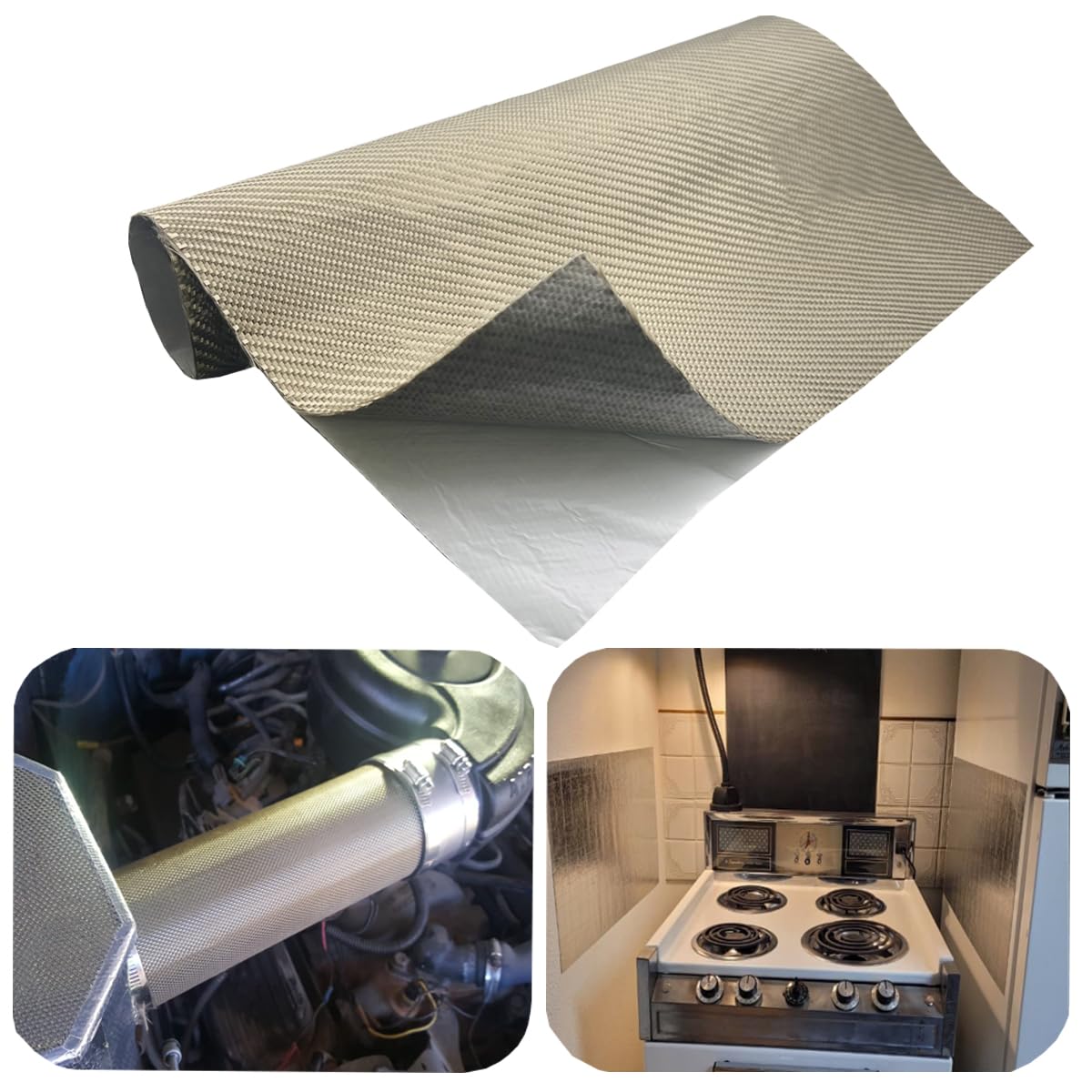
2. DEGEOBERLIN Titanium Adhesive Heat Shield
The high-temp specialist that shrugs off 2500 degrees of intermittent exhaust fury
If your heat problem lives right next to the exhaust, this is the sheet you want. Made from two layers of basalt material with a titanium-colored finish, it withstands a continuous 1800 degrees and an intermittent 2500 degrees of heat. That puts it in a completely different league from the foam comfort mats on this list — this is a true thermal barrier.
Owners have wrapped alternators, batteries, and catalytic converters with it, and the consensus is that it effectively reduces under-hood heat and noise. It is not actually titanium metal — customers note it is a titanium-colored fabric — but the heat blocking is real. The heat resistance is the single most-praised aspect, with about 25 owners singling it out over everything else.
The adhesive is extremely sticky, so you want to align it carefully the first time. However, reviewers point out the adhesive can burn off over time, leaving the layered material to form its own shell. Also, expect some edge fraying that needs trimming, and wear gloves — it is “itchy as fiberglass things are.”
Best for hot zones: The extreme temperature rating and low-profile design make it a perfect wrap for catalytic converters, mufflers, and battery blankets.
The trade-off: You trade a bit of neatness — fraying edges and tough-to-peel adhesive — for maximum heat protection.
3. Second Skin Thermal Block Heat Shield

A precision 1/8-inch barrier that reflects 98% of radiant heat right back at the source
This is an engineered radiant heat barrier, not just a padded mat. The Thermal Block is 1/8″ thick and pairs a reflective aluminum foil face with a PET fiber insulating core. It is designed to reflect up to 98% of radiant heat, which is why it works so well on firewalls, floor pans, and transmission tunnels. It handles continuous exposure up to 800°F (427°C), so it sits comfortably right near the exhaust.
It has been the hero fix for older vehicles where an original gas tank heat shield no longer exists — owners have cut it to fit and solved the problem completely. The foil is thick and the insulation quality is strong, with buyers successfully wrapping AC lines that run beside exhaust headers. This product is engineered in the USA, which explains the premium care in the foil-to-core construction.
At 2 square feet per sheet, this is the smallest coverage on the list, so the cost adds up fast for a whole-floor job. It also needs a minimum 2-inch air gap to perform optimally, which is a critical detail for layout planning. A few owners note the foil can pull away from the insulation if you’re not careful with it.
Built for precision spots: Ideal for a firewall, a transmission tunnel, or a fuel tank that needs a specific engineered shield rather than a blanket roll.
Plan your layout: With only 2 sq ft per sheet and a required air gap, you will want to measure before committing.
4. Storystore 394mil Sound Deadening Mat
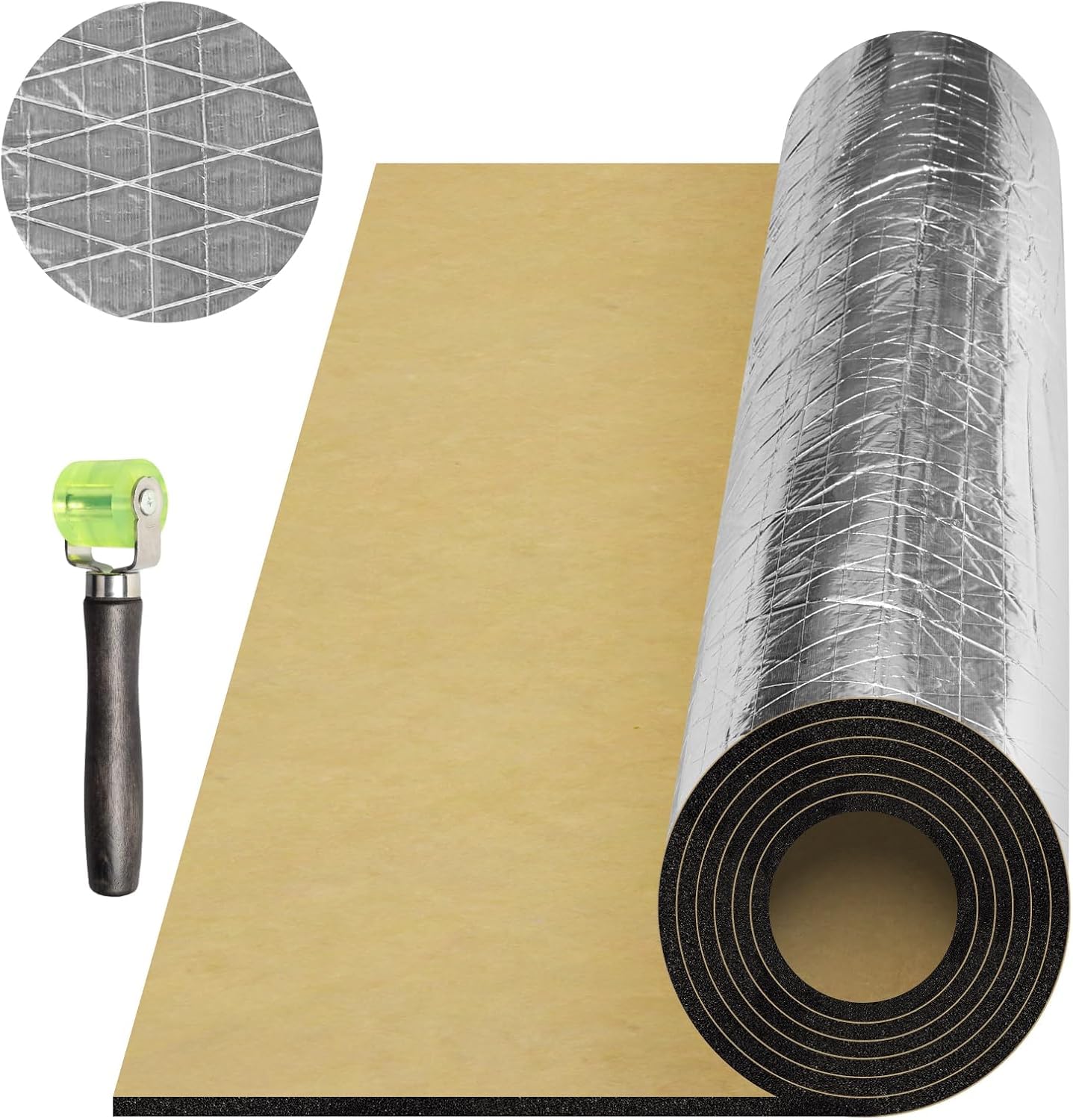
A seriously thick 394-mil mat that gives classic muscle cars a modern quiet cabin
At 394 mils (10mm) thick, this is one of the beefiest mats on the list, and that thickness translates directly into heat and noise blocking. It covers 16.5 square feet with a nominal sheet size of 39 x 60 inches, and it comes with a free installation roller. The aluminum and foam construction resists fire and water, and it is odorless.
The real-world results are impressive, especially on older vehicles. Owners have used it on a 1966 GTO and a 1972 GMC camper with “excellent sound/heat reduction” and strong adhesion. It is thick, easy to cut, and the included roller makes getting a tight, bubble-free install much simpler.
The honest downside is the backing. Shoppers say the thin clear plastic backing tears easily in tight spots, and it is not the stickiest adhesive on this list. It works fine once it’s down and untouched, but you need to be patient when peeling and positioning.
Great for restorations: The thickness and included roller make it a solid choice for classic cars and trucks needing a complete cabin treatment.
Work slowly: The delicate backing demands a careful hand during install, and the adhesive is decent rather than aggressive.
5. SINNSIDELIN Embossed Aluminum Heat Shield Kit
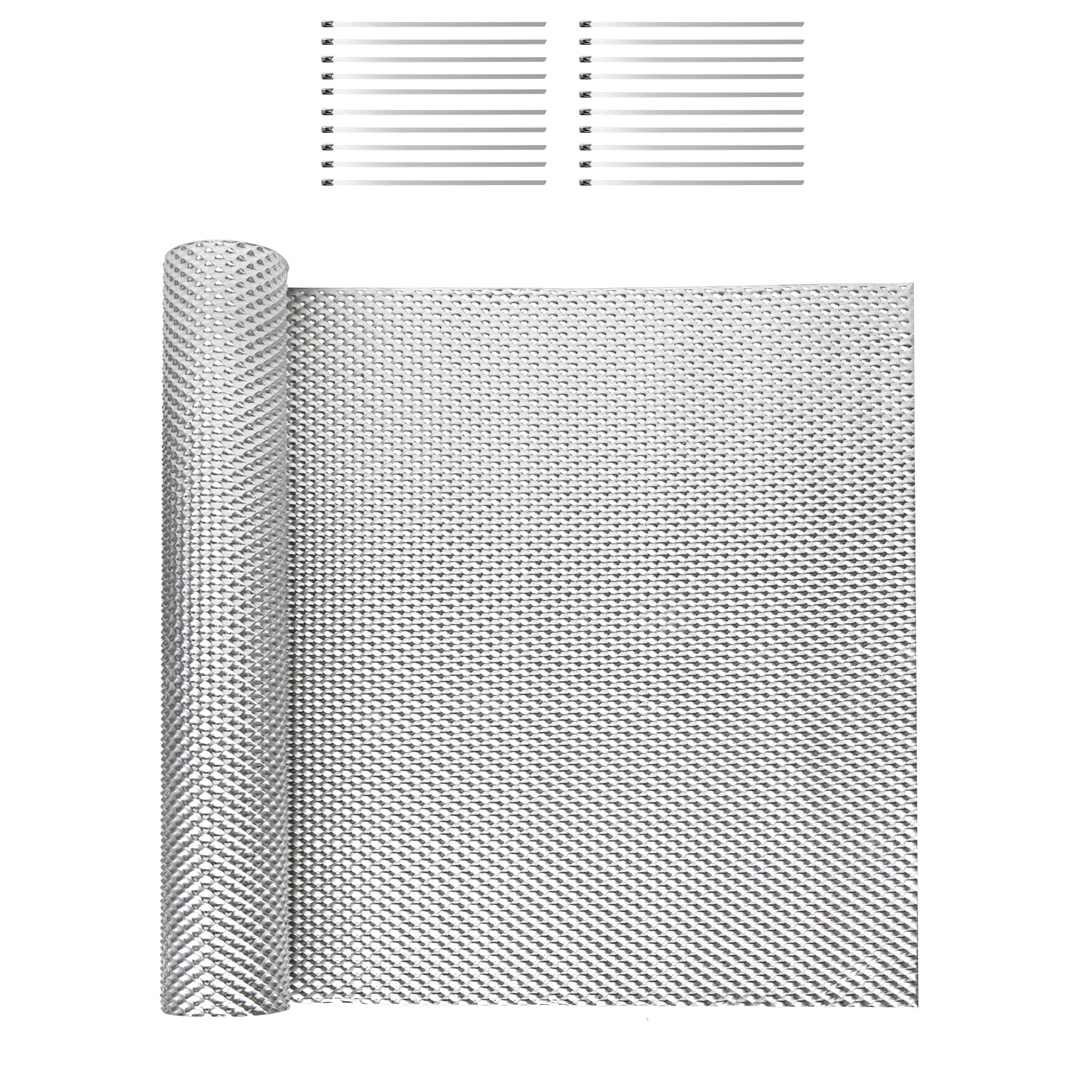
Hammer-formable aluminum sheeting that molds to your exhaust like custom armor
This is a different breed of heat shield — a rigid, embossed aluminum sheet rather than a peel-and-stick mat. At 0.5mm thick, it is flexible enough to bend by hand but strong enough to hold a shape, and it can withstand sustained temperatures up to 1022°F. It ships as a 16″ x 78.7″ roll with 20 stainless steel cable ties included, each 12 inches long.
The standout trait here is moldability. Buyers report it can be tapped and hammered to form around catalytic converters and exhaust pipes, then secured with the included ties. It is “more durable and better heat insulation compared to ordinary heat shield cloth,” and it has been used to keep heat out of cabs on old and track cars that lack factory shielding.
The downsides are physical. The edges are sharp, so gloves are a must, and the steel zip ties are difficult to cinch tight — one owner suggests using a hose clamp to create a groove first. Also, if you cannot reach the spot with a hammer, shaping it on an installed exhaust is tough.
Built for exhaust work: The hammer-formable sheet and included ties make this the go-to for wrapping mufflers and converters with permanent armor.
Bring tools: You will want gloves, a hammer, and patience with the steel ties to get a clean result.
6. MODIGT 10mm Sound Deadener Mat
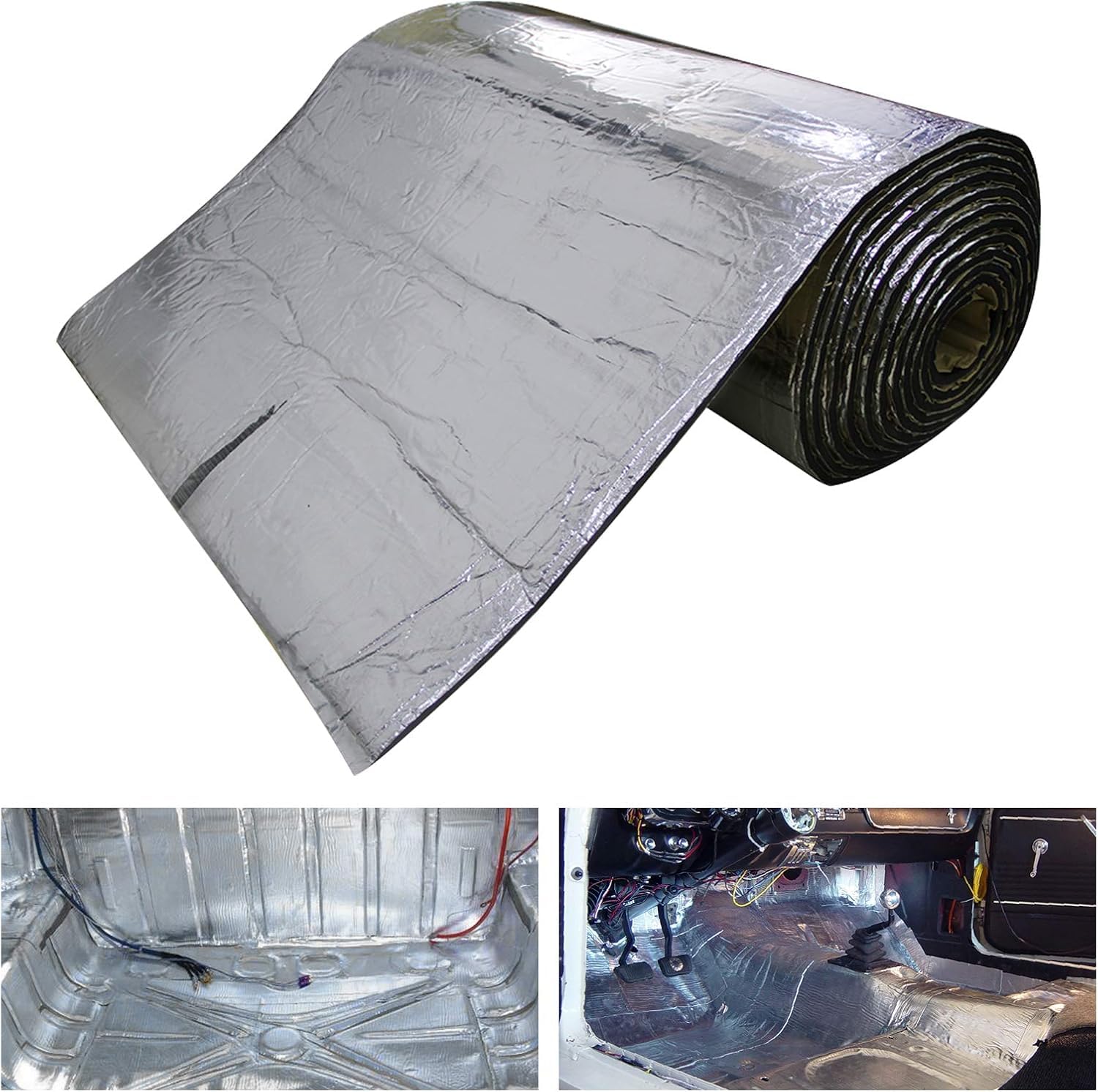
The 21.5-square-foot panel that flips a noisy RV or van cab into a conversation-friendly zone
This is the mat that solves the “I can’t hear my passenger” problem. It covers 21.53 square feet in a single 40″ x 80″ sheet, and at 10mm (394 mils) thick, it is a substantial layer of insulation. The closed-cell design means it absolutely does not absorb water and has no odor, unlike cheaper polyurethane foams. It is also oil and petrol resistant, which makes it a safe bet for engine-adjacent areas.
The real-world stories here are about comfort. An RV owner installed it under the motorhome engine and reported the temperature “dropped tremendously” and the noise difference was so dramatic they could hear people talking again. It has also been used to block heat in a Honda Talon and to replace a mouse-eaten under-hood liner in a van.
This is a comfort mat, not an exhaust wrap — there is no extreme temperature rating for direct pipe contact. It is also more expensive per square foot than the budget options, so it is best suited for targeted panels like the hood, firewall, and floor rather than a full custom system.
Best for daily comfort: The thick closed-cell foam and big sheet size make it ideal for hoods, firewalls, and floors where heat and noise both bother you.
Keep it away from pipes: Without a high-temp rating, treat this as a cabin comfort layer rather than exhaust protection.
7. DREAMIZER Car Insulation Heat Shield Mat

A generous 78-by-40-inch fiberglass blanket for complete interior teardown projects
This is the mat you reach for when you have the whole interior out and you want to do the job right. The DREAMIZER sheet measures 78″ x 40″ with a fiberglass high-fiber cloth surface that is heatproof, and at 0.25 inches thick, it provides real insulation depth. It is marketed for hood, door, and interior use, with the bonus of slowing down car paint aging from heat exposure.
The standout use case here is a full interior teardown. One owner doing an LS3 V8 swap on a Tacoma insulated the entire inside and reported it went on “very nice” and is “waaay better quality than what little insulation it came with stock.” It has also been used on a 1986 restoration and to significantly reduce heat and sound on a Kawasaki Ridge.
The adhesive is described as “super sticky” by some, which is a compliment, but it demands a clean surface — owners mention it works great “as long as you clean the area you are using it.” The fiberglass surface can be itchy to handle, so gloves and long sleeves are a smart idea during install.
Made for full builds: The enormous single sheet and quality construction make this a prime choice for a complete interior sound and heat treatment.
Prep is everything: The aggressively sticky adhesive rewards a clean surface, and the fiberglass texture is worth gearing up for.
Understanding the Specs
Thickness and material
Thickness is measured in mils or millimeters, and it directly controls how much heat and noise gets through. A 5mm closed-cell PE foam mat is great for general cabin comfort, while a thin 0.032″ basalt-fiber sheet is better for wrapping tight exhaust components. Pick the material that matches your specific heat source.
Temperature ratings
Continuous and intermittent ratings tell you exactly where a shield is safe to use. A mat rated for continuous 800°F is happy near the firewall, while one rated only for general insulation should stay away from direct exhaust contact. Always check whether your heat source is a radiant or conductive problem before choosing.
FAQ
What is the difference between a sound deadener and a heat shield?
Can I use a foam sound mat on my exhaust pipe?
How much area do I need for a full car install?
Will the adhesive hold up under the car?
Do I need an air gap for the heat shield to work?
Is it safe to cover the chassis wiring with this?
Will this fix my hot floorboards?
Can I shape aluminum heat shield sheets to fit tight spots?
Final Thoughts: The Verdict
For the majority of shoppers, the winner is the CHAOGANG 200mil roll because it combines the largest coverage on the list with a solid 5mm closed-cell foam that kills both heat and road noise in one install — and the crowd backs it with a 4.6-star rating across 400+ owners. If your problem is right on the exhaust, reach for the DEGEOBERLIN basalt barrier and its 2500-degree peak rating. For a precision firewall fix with an engineered core, the Second Skin Thermal Block is the one to grab.
How We Picked
We do not accept paid placement. Every pick is matched to a real buyer and a real use-case; we do not hands-on test units.
Sources & Methodology
Specifications: manufacturer listings and product documentation. Review insights: verified customer reviews, as of August 2026. Pricing: not shown on this page (it changes often); check the current price via the retailer link.
As an Amazon Associate, GoCarLife earns from qualifying purchases. This does not affect which products we feature.