
Our readers keep the lights on and the garage heater humming. As an Amazon Associate, I earn from qualifying purchases.
Choosing a car amplifier is one of those purchases that can either feel like a power-up… or a slow, expensive lesson. Because the amp isn’t just “the thing that makes it louder.” It’s the control center for your entire sound: how tight the bass hits, whether vocals feel present instead of buried, whether your doors rattle like a junk drawer, and whether your system stays clean at the exact moment you turn it up to your favorite chorus.
If you’re searching for the best amplifier for car, you’re probably in one of these real situations: your stock system feels thin, your sub feels weak, your new speakers sound “fine” but not exciting, or you’re tired of the mystery of protect mode, clipping, and that one weird whining noise that shows up only when you accelerate. The truth is: most people don’t need the most complicated amplifier—they need the one that matches their build, their wiring, and the way they actually listen.
This guide is written like an installer would explain it to a friend—warm, direct, and focused on what matters in the real world: signal noise, heat, how the terminals behave when you’re actually wrenching down wire, whether the remote knob is usable or just a bright plastic annoyance, how forgiving the crossover controls are, and what owners repeatedly praise (or complain about) after months of daily driving.
Below you’ll find 17 excellent options organized by use case (full system, speakers/front stage, or dedicated sub power), with a deep dive on each one—so you can stop guessing and build something that feels confidently “done.”
How to Choose the Best Amplifier For Car (Without Buying Twice)
A car amplifier isn’t “good” because the box screams a huge number. It’s good because it gives you clean headroom (the feeling that your music has effortless punch) while staying stable in your vehicle—electrically, thermally, and mechanically. If you want a system that sounds powerful and stays reliable, use this framework.
1. Start with your build path: full system, speakers, or sub?
Most frustration comes from buying the wrong type of amplifier for your goal. So let’s make this painfully clear:
- Full system upgrade (simplest “finished” result): Choose a 5‑channel amp. It powers front + rear speakers and a dedicated sub channel. This is the cleanest way to get a balanced daily-driver system.
- Speakers/front stage upgrade (clarity + punch): Choose a 4‑channel amp (or a compact multi‑channel). This is the move when you want vocals and drums to hit harder without necessarily chasing huge bass.
- Subwoofer-focused build (impact + low-end authority): Choose a monoblock amp. This is where you get real sub control: better low-end definition, higher output, and less strain than running a sub off a head unit or a bridged full-range amp.
2. Channel count isn’t just “more vs less”—it changes your whole experience
Here’s what channel count really means in daily life:
- Monoblock (1 channel): Dedicated sub power. Usually more efficient for bass, often stable at lower impedances, and built for high current delivery.
- 4‑channel: The “speaker life upgrade.” Better midbass punch, cleaner highs, and more control. You can also bridge channels for a small sub in some setups.
- 5‑channel: The “one amp” solution. The best version of this experience is when the speaker channels stay clean and the sub channel stays controlled without overheating.
A huge tip that most guides skip: if you’re adding an amp primarily for door speakers, you’ll love the result more if your door speakers are protected with a proper high-pass filter (more on that later). That’s where a well-labeled crossover section becomes a quality-of-life feature, not a spec.
3. Power numbers: what to trust (and what to ignore)
The number that matters for matching is RMS power—not “max,” not “peak,” and not the largest number printed on the chassis. But even RMS doesn’t tell the full story unless you connect it to how you’ll use it:
- Headroom beats bragging rights: A good amp feels effortless because it isn’t living at the edge. The system stays controlled at volume, instead of getting harsh or “fuzzy.”
- Sound quality is a behavior, not a spec: Owners tend to describe “good sound” as clean vocals, tight midbass, and bass that hits without turning into a long rumble.
- Heat is a truth-teller: When an amp is pushed beyond what your wiring and vehicle electrical can support, heat shows up fast, and protection becomes your “feature.”
A pro-level mindset: instead of chasing the biggest claimed wattage, chase the amp that stays stable with your wiring, your mounting location, and your real listening habits.
4. Ohms and wiring: the reason some systems slap and others die young
Impedance (ohms) is where builds either become reliable… or become a cycle of blown fuses and burnt smells. Here’s the simplest way to think about it:
- Lower ohms usually means the amp can deliver more power—but it also draws more current and generates more heat.
- “Stable at 1 ohm” doesn’t mean “1 ohm is always a good idea.” It means the amp was designed to handle it if your wiring, ground, and electrical system are strong enough.
- Bridging changes the math: Bridging a 4‑channel amp is a great trick, but it also raises the stakes. Your wiring, gain settings, and load need to be intentional.
One of the most common “new system disappointment” stories is this: someone installs a powerful amp, then runs it on a load that’s either too demanding for the electrical system, or too mismatched for the speakers. The result isn’t just weak output—it’s inconsistent behavior: protect lights, random cutouts, or distortion creeping in at the worst moment.
5. Inputs and integration: factory stereos, signal noise, and the “why is there whining?” problem
Modern cars make audio upgrades trickier because the head unit and factory amps can be tied into safety chimes, navigation prompts, and vehicle settings. So your amplifier choice needs to match how you’re feeding it signal:
- RCA (low-level) inputs: Ideal when you have an aftermarket head unit or a high-quality line output converter (LOC). Usually the cleanest path.
- High-level inputs: Useful when keeping a factory head unit. Some amps handle this elegantly; others make it awkward with adapter-style solutions.
- Auto turn-on / signal sensing: A lifestyle feature if you don’t want to chase remote turn-on wires. Great when it works; annoying when it’s finicky.
6. Controls that matter in real life (and the ones that tempt you into trouble)
When owners talk about loving an amp long-term, they rarely say “it has a feature.” They say things like: “it’s easy to tune,” “it stays clean,” “it doesn’t get hot,” or “I don’t hear hiss.” Those experiences come from the control section.
- Low-pass filter (LPF): Essential for subs. Keeps vocals and mids out of your subwoofer channel.
- High-pass filter (HPF): Essential for door speakers. Stops deep bass from trying to live in a speaker that can’t reproduce it cleanly.
- Subsonic filter: A quiet hero for ported boxes. Helps protect the sub from ultra-low frequencies that waste power and cause mechanical stress.
- Remote bass knob: Can be truly useful—or a fragile accessory with an annoying bright light. We’ll call out which ones owners complain about.
- Bass boost: Treat it like hot sauce. A tiny amount can be fun; too much turns systems into distortion machines and cooked voice coils.
7. Installation reality: size, terminals, heat, and “does this fit where I need it?”
This is where spec sheets feel helpful but often miss what you’ll actually deal with:
- Terminal design matters: Some amps clamp wire securely; others rely on small set screws that beg for ferrules or pin connectors.
- Mounting location matters: Under-seat installs require cool-running amps and smart airflow. Trunk installs need planning for wire runs and secure mounting.
- Heat management matters: A small amp that runs cool is a blessing. A powerful amp that’s starved for airflow becomes a protect-mode machine.
If you take only one install lesson from this guide, let it be this: a quality amp can still behave poorly if it’s fed weak power, grounded poorly, or choked for airflow. Most “mystery problems” aren’t mysteries at all—they’re electrical and mounting realities.
8. Reputation isn’t about hype—it’s about consistency
An amplifier’s reputation is built from patterns: how often owners mention it running cool, how often people complain about remote knobs, how often someone reports a defective unit, and whether the sound stays clean when used responsibly. In the reviews below, I focus on those patterns—so you can buy with confidence, not hope.
Quick Comparison: 17 Best Amplifier For Car Picks
Use this table to spot the amps that fit your goal (full system vs speakers vs sub), then jump into the detailed reviews for the real-life stuff that matters—noise, heat, tuning behavior, terminal quality, and what owners repeatedly say after living with the amp.
On smaller screens, swipe or scroll sideways to see the full table.
| Model | Amp type | System strength | Best match | Amazon |
|---|---|---|---|---|
| STINGER Audio MT-1000.5 | 5‑channel | One‑amp system builds with clean power, compact footprint, and strong tuning controls | Most daily drivers who want speakers + sub done right | Amazon |
| Rockville dB55 5‑Channel | 5‑channel | Strong “system in a box” feel with flexible crossovers and impressive perceived headroom | DIY builders who want one amp with real tuning range | Amazon |
| BOSS Audio PV3700 | 5‑channel | Feature-packed, flexible inputs, big chassis—works best with smart install practices | Large vehicles / trunk builds / “I want options” shoppers | Amazon |
| Alpine S‑A32F | 4‑channel | Clean, punchy speaker power with “set it and enjoy it” sound quality | Front stage + doors when you care about clarity and balance | Amazon |
| Pioneer GM‑A4704 | 4‑channel | Reliable Class A/B upgrade with practical filters and easy daily use | Simple speaker upgrades where dependability matters | Amazon |
| DS18 SXE‑1200.4/RD | 4‑channel | High-output A/B energy for speakers with strong crossover control | “Louder doors” builds, pro-style mids/tweeters, show systems | Amazon |
| Taramps TS 1200×4 | Compact 4‑ch | Big output in a small chassis for aggressive front stages | Compact installs that still need serious speaker power | Amazon |
| SounDigital 800.4 EVO 4.0 | Compact 4‑ch | Stealth installs, motorcycles, tight spaces—clean output in a rugged package | Motorcycles / small cabins / “hide it anywhere” builds | Amazon |
| Taramps TS 800×4 | Micro 4‑ch | Small, loud, and efficient—best when you understand the built-in crossover behavior | Door speakers + tweeters in compact installs | Amazon |
| Recoil DI550.4 | Budget 4‑ch | Impressively clean for the size; great when you want efficient daily power | Budget-minded speaker upgrades with modern Class D efficiency | Amazon |
| Orion Cobalt CBA2500.4 | 4‑channel | Old-school A/B character with practical controls—best with realistic expectations | Budget A/B buyers who want solid daily performance | Amazon |
| CT Sounds CT‑2000.1D | Monoblock | Compact Class D sub power that hits hard when wired and tuned correctly | Single or dual subs in daily drivers who want real impact | Amazon |
| Taramps MD 5000.1 | Monoblock | Massive output for serious bass builds—electrical upgrades strongly recommended | SPL-style systems and big subs that demand serious current | Amazon |
| Skar Audio RP‑1200.1D | Monoblock | Popular 1‑ohm daily driver amp with strong output and straightforward tuning | Most sub builds that want reliable “hits hard” performance | Amazon |
| ZE1000.1 Monoblock | Monoblock | Shockingly clean value amp with stable behavior when installed with care | Budget sub builds that still want tight, controlled bass | Amazon |
| Planet Audio PL2000.1M | Monoblock | Budget-friendly bass amp with classic A/B behavior and simple controls | First-time sub installs where you want audible improvement fast | Amazon |
| BOSS R1100M | Monoblock | Entry-level bass add-on with straightforward tuning and lots of installs out in the wild | Gentle sub support, basic systems, “I just want more low end” upgrades | Amazon |
In‑Depth Reviews: 17 Best Amplifier For Car Picks for Real‑World Builds
Now we’ll go model by model. I’m going to talk like someone who’s actually installed and tuned systems: what feels easy, what feels fiddly, what owners repeatedly praise, what complaints show up in patterns, and what you should know to get the “wow” result instead of the “why is this weird?” result.
1. STINGER Audio MT‑1000.5 – The Clean “One‑Amp System” That Feels Finished
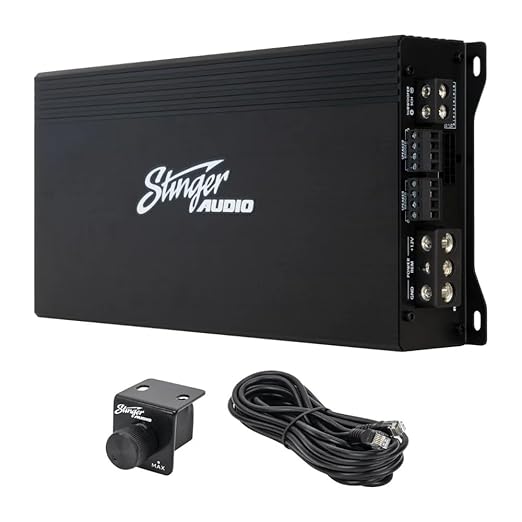
If you want a system that sounds like it was built intentionally—balanced, punchy, clean, and confidently loud—the MT‑1000.5 is one of the smartest “start here” choices. The owner feedback around this amp tends to sound the same in the best way: surprised by how clean it is, impressed with the output for the money, and genuinely happy that it doesn’t bring extra noise into the cabin.
What makes it feel “finished” is the combination of: a practical 5‑channel layout (so you’re not juggling multiple amps), a compact footprint that opens up more mounting options, and a tuning section that gives you the controls you actually use. In daily life, that means you can set your speaker high-pass filters properly, keep your sub channel focused with a low-pass, and avoid the classic “my doors sound stressed” problem that happens when people try to make small speakers reproduce deep bass.
The MT‑1000.5 also earns points for the noise floor—owners describe it as quiet even when playing loud, which is not something people say accidentally. If you’ve ever had an amp that added hiss or a faint “electrical” sound, you already know how valuable this is: you don’t want louder… you want cleaner.
The biggest real-world caveat is ergonomics. Some people dislike connector choices (like RCA behavior) because it changes how neat your install looks. And like most 5‑channel amps, sub output depends heavily on your load and your sub choice. If you run a sub setup that’s less demanding (higher impedance), you may feel like the bass is “polite” until you match the sub and enclosure to what the amp likes to deliver. That’s not a flaw—it’s a reminder that 5‑channel amps are about balance, not reckless sub abuse.
Why you’ll like it
- True one-amp simplicity – speakers + sub power in one clean package.
- Quiet, clean sound – owners consistently mention clarity and low noise.
- Compact install freedom – easier to fit under seats or in tight trunks than many big chassis amps.
- Practical controls – the crossovers make it easier to protect speakers and keep the system balanced.
Good to know
- Install neatness depends on how you route signal connections—plan your layout before you mount.
- If you want “competition bass,” a dedicated monoblock will feel more aggressive than any balanced 5-channel.
- Like all amps, it rewards solid power wiring—weak wiring turns good amps into inconsistent amps.
Ideal for: the majority of drivers who want a clean, punchy, balanced system with one amp powering everything—and who want it to feel professionally “complete.”
2. Rockville dB55 – The Value 5‑Channel That Surprises Experienced Ears

The dB55 has a specific kind of reputation: it’s the amp people buy cautiously… and then recommend loudly once it’s installed correctly. That “installed correctly” part matters, because this is a powerful multi-role unit. When your power/ground are clean and your gains are set responsibly, it can make even everyday speakers feel more dynamic—stronger midbass, clearer vocals, and a sub channel that feels more controlled than you expect at this tier.
Where it shines is the “system builder” role. If your plan is 4 doors plus a trunk sub, this type of amp can take you from stock to satisfying in one install. And because it’s a 5‑channel, you’re not stuck balancing separate amps with mismatched gain structure. One of the most telling patterns in positive owner feedback is the comparison language: people reference more expensive amps and say, “this reminds me of that kind of sound when tuned right.” That’s a very specific compliment: it’s about control, not just loud.
Another real-world plus is flexibility. You can run it in different modes, and it’s comfortable in the “daily driver” zone where many systems live: loud enough to be exciting, clean enough to stay enjoyable, and adjustable enough to fix common problems like harsh highs or boomy midbass. It’s also a good option when your head unit isn’t incredible—because a decent amp can stabilize the whole presentation.
The caution: don’t try to use a 5‑channel amp as a substitute for a dedicated high-power sub amp if your goal is huge bass. Yes, the sub channel can push real low end, but the happiest owners treat it like a balanced system, not an SPL contest. Also, any multi-channel amp is only as good as the install fundamentals: proper wire gauge, proper ground, and careful routing. If you skip the fundamentals, you’ll blame the amp for issues that are actually wiring physics.
Why you’ll like it
- Impressive “complete system” results – doors sound alive and the sub channel adds real weight.
- Flexible tuning – helps you shape the system instead of living with factory EQ limitations.
- DIY-friendly value – one box can replace multiple upgrade steps.
- Strong perceived headroom – the system feels less strained at higher volume.
Good to know
- Best results require correct gain setting—overdriving any amp creates harshness and heat.
- If you want extreme bass, consider a dedicated monoblock instead of pushing the sub channel too hard.
- Mounting and airflow matter; give it breathing room so it stays cool on long drives.
Ideal for: DIY builders who want one amplifier to power a full daily-driver system and who appreciate tuning flexibility without stepping into “overkill” territory.
3. BOSS Audio Systems PV3700 – Big Chassis, Big Flexibility, Best in Larger Installs

The PV3700 is the kind of amp that shows you two truths at once: (1) you can absolutely build a satisfying multi-speaker + sub system without boutique gear, and (2) the quality of your install and tuning will determine whether you love it or get annoyed by it.
Owners who are happiest with this amp tend to do a few things consistently: they run proper copper power wire (not flimsy “looks like copper” stuff), they keep RCA/signal routing away from power runs to prevent interference, and they actually take time to match gains and crossovers instead of cranking knobs like they’re volume controls. When those fundamentals are done, people describe exactly what you want from a 5‑channel: balanced sound, enough volume to enjoy highway driving with windows down, and a sub channel that fills in the low end without drowning everything else.
The PV3700 is also unusually “install scenario friendly.” Between input options and adjustment controls, it tends to adapt to different head units and wiring approaches. And the chassis is robust enough that it feels like a serious piece of equipment. The one thing you need to take seriously is size: this is not a “hide it anywhere” amp. It wants space, airflow, and a mounting plan. If you’re in a larger SUV/truck trunk or have room under seats with good ventilation, it’s much easier to love.
If you’re the kind of buyer who gets frustrated by inflated numbers in the car audio world, here’s the mindset that makes this amp a win: judge it by the sound you get in your vehicle, not by marketing wattage. When tuned reasonably, it can absolutely deliver the experience most people are chasing: clear mids and highs, and bass that gives music weight instead of cardboard thump.
Why you’ll like it
- Flexible inputs and controls – adapts to many installs and head unit situations.
- Balanced system capability – doors + sub in one amp, with lots of adjustment options.
- Solid chassis feel – the build feels substantial and stable when mounted correctly.
- Fun aesthetics – if you like illuminated designs, it looks great at night.
Good to know
- It’s physically large—measure your space before you commit.
- Very bright lighting can be distracting if mounted in the cabin area.
- Like many amps in this category, real satisfaction comes from careful tuning—not maxing knobs.
Ideal for: trucks/SUVs or trunk installs where you want a feature-rich 5‑channel amp and you’re willing to do the install “the right way” for best results.
4. Alpine S‑A32F – The “Everything Sounds More Expensive” Speaker Amp

If your goal is not “shake the block” but “make my car sound legitimately good,” Alpine is one of the most consistent bets in car audio. The S‑A32F is a perfect example of why: owners describe the sound as clean, powerful, and balanced across the spectrum—especially in the mids and highs. That matters because the human ear is most sensitive in the vocal range. When that range is clean, your whole system feels higher-end.
This amp is the type of upgrade that makes people say, “I didn’t realize my speakers could do that.” Not necessarily because it’s dumping ridiculous power into them, but because it gives them stable control and headroom. The kick drum tightens. The bass guitar becomes more defined. Vocals stop sounding like they’re trapped behind a curtain. And because it’s Class D, it tends to run efficiently and fit into more install locations without becoming a heat monster.
There’s also a practical longevity story here: multiple owners run Alpine amps for years without drama. That’s not “marketing,” that’s a daily life benefit: you install it once and stop thinking about it. If you’ve ever chased intermittent issues (random cutouts, protect mode, buzzing), you know how valuable boring reliability is.
The biggest real-world note is terminal style. Some people dislike small set-screw terminals because they don’t “clamp” wire in a satisfying way. That doesn’t mean it’s unsafe—it just means your install is cleaner and more secure if you use pin connectors or ferrules. Do that, and it’s a rock-solid foundation for a front stage.
Why you’ll like it
- Clean, balanced sound – improves detail and impact without harshness.
- Efficient Class D behavior – easier to mount in tighter spaces with less heat drama.
- Set it and enjoy it – great when you want a “finished” sound, not endless tweaking.
- Brand consistency – owners often report long-term satisfaction and reliability.
Good to know
- Use ferrules/pin connectors for the cleanest, most secure terminal connections.
- This is a speaker amp first—pair it with a dedicated monoblock if you want big bass.
- Speaker tuning still matters: set HPF properly so door speakers don’t struggle.
Ideal for: drivers who care about clarity and punch from door speakers and want an amp that makes the whole system feel more refined.
5. Pioneer GM‑A4704 – The “Just Works” 4‑Channel That’s Easy to Live With
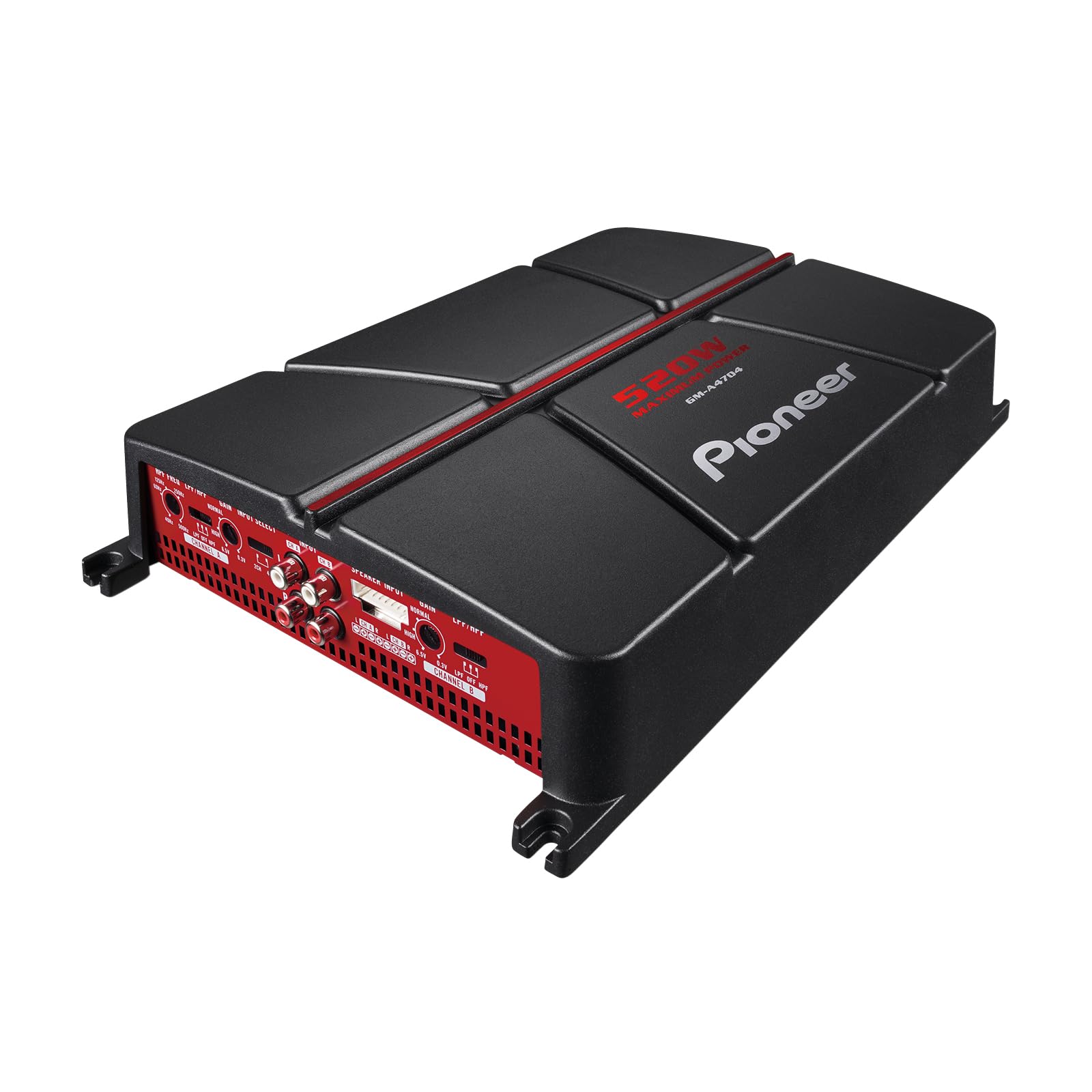
The GM‑A4704 is a classic “smart first amp” because it’s straightforward, stable, and familiar to installers. Owners repeatedly mention the same practical wins: it sounds better than expected, it doesn’t overheat easily in normal setups, and features like auto on/off behavior make daily use easier. That’s a huge deal if you don’t want to treat your amp like a science project.
This amp also has a very “predictable” personality. When you wire it cleanly and set filters sensibly, you get a clear jump in volume and control over running speakers on head-unit power alone. The improvement most people notice first is midbass: drums have more punch, guitars feel fuller, and the system stops sounding thin at moderate volume. That’s the kind of improvement that makes you enjoy your music again—without needing a sub immediately.
Another reason the Pioneer shines is long-term satisfaction. People run these amps for years, and that kind of durability story matters because the real cost of an amp isn’t the purchase—it’s the time and frustration of ripping panels apart to replace something. If you want a stable step-up with an established brand feel, Pioneer is one of the easiest recommendations.
As a Class A/B design, it’s not the tiniest micro-amp in the world, and it’s not the most efficient if you’re chasing extreme output in tight installs. But for a normal car/truck speaker upgrade, it hits the sweet spot of “simple, reliable, better sound.”
Why you’ll like it
- Reliable daily behavior – owners routinely report stable performance without drama.
- Noticeable speaker improvement – better midbass punch and cleaner volume than head-unit power.
- Practical features – bridging and filtering give flexibility for different builds.
- Easy to tune – straightforward controls reduce beginner mistakes.
Good to know
- Not a “micro amp” — plan mounting space and airflow.
- For big bass, add a dedicated monoblock later instead of over-bridging this amp.
- Like all A/B amps, it can run warmer if pushed aggressively in hot environments.
Ideal for: anyone upgrading door speakers who wants a dependable, easy-to-live-with amplifier from a well-known brand.
6. DS18 SXE‑1200.4/RD – The “Turn Up the Doors” Amp with Strong Control

DS18 is a brand people often choose when the goal is a more aggressive, louder presentation—especially for builds with high-output coaxials, pro mids, or tweeter-heavy setups. The SXE‑1200.4 fits that vibe: it’s designed to “supercharge” speakers in a way you feel immediately. Owners using it for moderate upgrades tend to describe it as clean, strong, and stable—especially when mounted with airflow in mind.
One of the most important real-world details here is crossover control. Speaker amps become dramatically more enjoyable when you can properly high-pass your doors and keep deep bass from turning into distortion. The SXE series is built around that idea: give the user the ability to tailor the system, not just power it. If you’re building a system where doors need to be loud without sounding painful, this kind of control matters.
This amp also gets points for solving a very specific problem: hiss. Several owners mention replacing an older amp that had audible noise and finding the DS18 noticeably cleaner. That’s a big deal, because hiss is the kind of annoyance that ruins a system at low volume and makes you regret the install.
The main caution is fan behavior. Some users mention an internal fan that runs whenever the system is on rather than only when the amp is hot. In a trunk install, that might be a non-issue. In a hatchback or quiet cabin, it can be noticeable when no music is playing. It’s not a deal-breaker, but it’s the kind of detail you want to know before you mount.
Why you’ll like it
- Strong speaker punch – great for builds that want louder doors with authority.
- Useful crossover control – easier to tune and protect speakers from low-frequency stress.
- Cleaner than “noisy” amps – owners often report reduced hiss after swapping.
- Flexible install – works well in hidden factory locations in some vehicles.
Good to know
- Fan noise can be noticeable in quiet cabins depending on mounting location.
- Like all A/B amps, airflow matters—use spacers or standoffs if mounting on carpeted surfaces.
- Not a sub-focused amp—pair a monoblock if bass is your main goal.
Ideal for: loud speaker builds and “more presence” upgrades where you want strong output and meaningful control over crossover behavior.
7. Taramps TS 1200×4 – Compact, Loud, and Built for Aggressive Speaker Stages

The TS 1200×4 is the kind of amp that exists for a specific type of builder: someone who wants a lot of output from a small chassis. This is especially popular in installs where space is tight, but the goal is not subtle. Think “door speakers that actually punch,” or a front stage that can keep up with a serious sub setup.
The appeal is obvious: compact footprint, high power potential, and straightforward signal options (RCA and high-level capability). If you’re keeping a factory head unit or working around limited outputs, that flexibility can make the whole project easier. In many builds, this amp becomes the “speaker muscle” that lets mids and highs stay present when bass is added. That’s important: a system is only satisfying when the front stage keeps up—otherwise your sub dominates and everything sounds unbalanced.
Here’s the expert nuance: amps like this reward good gain discipline. Because they can push hard, they can also reveal weaknesses in your signal chain and speaker choice. When people describe “amazing loud and clear,” they usually set crossovers responsibly and keep distortion out of the picture. When people complain about noise, it often comes down to how and where the amp is used—especially if you’re trying to run delicate highs at high sensitivity.
One recurring caution from owners is that some setups can reveal audible noise when the amp’s fan or internal behavior engages, especially if you’re running full/high frequencies and your vehicle cabin is very quiet. That doesn’t mean every install will have this issue— it means you should be intentional: route signal cleanly, avoid maxing sensitivity, and tune in a way that fits your vehicle’s noise floor. In a normal driving environment, many users find it a powerful, compact win.
Why you’ll like it
- Big output in a small body – ideal when space is tight but you want serious speaker volume.
- Simple connectivity – works well across different signal setups.
- Great for front stage authority – helps your doors keep up with bass-focused systems.
- Compact install freedom – easier to place in stealth builds than larger A/B amps.
Good to know
- Noise sensitivity can vary by install—clean signal routing and smart gain setting matter a lot.
- Best used with speakers that can handle real power; weak speakers will complain fast.
- Fixed crossover behavior means you should plan your system tuning approach ahead of time.
Ideal for: compact installs and aggressive speaker builds where you want a lot of output without giving up space.
8. SounDigital 800.4 EVO 4.0 – The Compact Powerhouse for Stealth Installs

SounDigital has carved out a very specific lane: compact amps that hit harder than people expect. The 800.4 EVO 4.0 fits that identity perfectly. Owners love it in places where “normal” amps are inconvenient—motorcycles, tight under-seat installs, hidden compartments, and builds where you want power without sacrificing cargo space.
The most convincing user feedback tends to come from experienced listeners who know what clean sound should feel like. They describe the output as surprisingly strong for the size, and they talk about clarity staying intact even at higher listening levels. That’s a key point: compact amps are often forgiven for sounding “good enough.” When people go out of their way to say it sounds excellent, it usually means the amp is behaving well under real load.
This is also a great choice for builds that require flexibility. Bridging options let you shape your system: run four speakers cleanly, or bridge channels for more output where needed. For motorcycle and powersport installs, the idea of a smaller, more rugged amp isn’t just convenience—it’s reliability. Less bulk, easier mounting, and often better thermal behavior in the limited airflow environments those vehicles have.
The only consistent “life reality” note is not about sound—it’s about logistics. Compact amps are popular, so ordering and availability can sometimes be inconsistent depending on seller and timing. The solution is simple: verify what you’re receiving, and plan your install timeline so you’re not rushing. Once installed, the performance reputation is exactly why these amps have fans worldwide.
Why you’ll like it
- Extremely compact – fits where many amps simply don’t.
- Strong output for size – owners consistently describe it as a “powerhouse.”
- Efficient and practical – Class D behavior helps in tight, warm installs.
- Great for motorcycles – popular for road bikes and compact builds.
Good to know
- Plan your wiring carefully—small installs are less forgiving of sloppy routing.
- If you’re building a huge bass system, this is better as a speaker amp than a sub monster.
- Because it’s compact, it rewards good airflow and smart mounting, even if it runs efficiently.
Ideal for: motorcycles, tight cabins, stealth installs, and anyone who wants real speaker power without a large chassis.
9. Taramps TS 800×4 – Tiny Amp, Surprisingly Loud, Great for Compact Speaker Builds

The TS 800×4 is one of those amps that changes what people believe about “small.” Owners talk about it driving door speakers and tweeters with authority while barely needing the gain knob moved. That’s the signature experience of a well-designed micro amp: it doesn’t feel strained, and it doesn’t demand a complicated install footprint.
This is especially attractive in builds where you don’t want to lose space or add heavy hardware. If you’re installing in a compact car, behind a panel, or in a motorcycle/powersport-style layout, micro amps can be the difference between “doable” and “not happening.” The TS 800×4 is designed as a high power-to-size option, and when paired with efficient speakers, it can get shockingly loud.
The tuning personality is important to understand. This amp’s crossover behavior is more “built-in and intentional” than “fully adjustable like a big A/B amp.” That’s not bad—it just means you should plan how you want your frequencies managed. Many users pair it with head unit filtering or DSP/processing so the system is shaped correctly. When done well, you get a clean, screaming speaker setup without needing a huge amplifier rack.
The best use-case for this amp is a “compact loud door” build: speakers, tweeters, and a system that focuses on clarity and volume. If you want deep sub bass too, you’ll usually add a separate monoblock rather than asking a micro speaker amp to become a bass engine.
Why you’ll like it
- Massive output for size – great when you can’t fit a traditional amp.
- Loud with low gain – owners often report it “barely needs to be turned up.”
- Perfect for compact builds – easy to hide and easier to mount.
- Great with efficient speakers – pairs well with pro-style mids/tweeters.
Good to know
- Fixed crossover behavior means you should plan your filtering strategy.
- Not a sub-focused amp—use a monoblock for serious low-end.
- Because it can get loud quickly, gain discipline is important to avoid clipping speakers.
Ideal for: compact installs where you want door speakers and tweeters to get very loud without using a full-size chassis amp.
10. Recoil DI550.4 – Small, Efficient, and Often Shockingly Clean for the Money

The DI550.4 has a pattern that’s worth paying attention to: people replace a noisy or older amp with it and immediately notice cleaner output. That’s not a subtle compliment. Hiss and signal noise are some of the most annoying car audio problems because they’re present even when your music isn’t “impressive.” When an amp is quiet, your system feels more premium instantly.
Owners also consistently comment on how much output it delivers for the size, especially with gains kept reasonable. That’s how you get a system that’s enjoyable long-term: you don’t need to run everything at the edge to feel impact. With smart high-pass filtering (either on the amp or head unit), this can make even factory speakers sound louder and clearer—while protecting them from low-frequency stress that would blow them.
The key nuance is connectivity. Some people find the high-level input approach awkward because it can require adapter-style solutions. If you’re feeding the amp with standard RCA low-level signal, it’s simple. If you’re trying to integrate with a factory head unit using speaker-level signal, you’ll want to plan your connection method so it’s clean and secure.
Another nuance is noise floor expectations. In very quiet vehicles, tiny amounts of hiss can become noticeable where they’d be invisible in a normal combustion-engine daily driver. So the best way to judge this amp is in a real car environment: with correct grounding and routing, many users report a very clean experience. That’s why it’s often called a “little powerhouse.”
Why you’ll like it
- Great size-to-output ratio – easy to fit and still powerful.
- Often very clean – many owners report no noticeable hiss after swapping.
- Runs cool – efficient behavior is helpful for under-seat or tight installs.
- Flexible tuning – practical controls for gain and crossover shaping.
Good to know
- High-level input method can feel odd—plan your factory integration carefully.
- Ultra-quiet cabins can reveal hiss that normal cars mask; install quality matters.
- Like all compact amps, secure mounting and good airflow still improve longevity.
Ideal for: budget-minded speaker upgrades where you still care about clean signal, cool-running behavior, and compact install options.
11. Orion Cobalt CBA2500.4 – Solid Daily A/B Performance (with Realistic Expectations)

Orion is a name that carries nostalgia in car audio—especially for people who remember older equipment that felt under-rated and over-built. The Cobalt CBA2500.4 sits in a modern budget category, and the smartest way to approach it is with two truths: it can sound genuinely good in a daily driver, and the printed power claims should not be your reason for buying.
Where this amp earns respect is in the lived experience of “it functions well and sounds punchy.” Owners report solid bass presence (for a 4‑channel running speakers and possibly a bridged load), clean low-end character, and a polished feel compared to ultra-cheap alternatives that distort early. If you’re coming from a weak head-unit-only system, a stable A/B amp can make your speakers feel larger and more confident.
The bigger story is the expectation gap. Some users reference dyno-style conversations and point out that measured output can differ from marketing numbers. This is common across budget car audio—so instead of getting angry, use it strategically: choose the amp because it fits your system needs and sounds good at your listening levels, not because you expect miracle wattage. When set up conservatively with good wiring, many owners feel it’s excellent value.
The caution is support experience. A handful of owners describe frustrating warranty/return experiences and inconsistency in replacements. That doesn’t mean everyone will have this problem—but it’s relevant if you want the most “no-drama” ownership possible. If you value smooth after-sales experience above all else, stick to the brands in this guide with consistently positive long-term service reputation.
Why you’ll like it
- Punchy A/B character – solid daily-driver sound for speakers.
- Practical controls – crossover and bass boost options for shaping the system.
- Good value when used realistically – satisfying results without boutique pricing.
- Stable in normal loads – works well when you don’t push beyond sensible limits.
Good to know
- Ignore the biggest marketing numbers—match it to your speakers and build goals instead.
- Some users report frustrating service experiences; keep documentation and install cleanly.
- As an A/B amp, airflow and mounting spacing help prevent heat buildup.
Ideal for: budget A/B buyers who want a noticeable speaker upgrade and can approach power claims with a practical, real-world mindset.
12. CT Sounds CT‑2000.1D – Compact Bass Power That Hits Hard (When Installed Right)

The CT‑2000.1D exists for a very simple reason: a lot of people want real bass authority without installing a massive amplifier rack. This is a compact Class D monoblock that owners consistently describe as hitting hard, staying relatively cool when wired properly, and delivering the kind of output that makes a single sub feel like it “woke up.”
What separates good monoblocks from frustrating ones isn’t just wattage—it’s behavior under stress. The best reviews around this amp tend to mention the same things: it bangs all day, it doesn’t overheat easily in normal use, and it feels stable when paired with appropriate wiring. That “appropriate wiring” isn’t optional. High-output sub amps demand real copper power/ground and solid connections. If you starve it, it won’t just be quieter—it can become inconsistent.
There’s also a real-world accessory note: remote bass knobs can be either a blessing or a headache. Some users love the convenience, while others complain about the knob feeling cheap, being too bright, or even introducing noise if the cable is finicky. This isn’t unique to CT—it’s a common problem across many brands. The pro move is simple: mount the knob where the cable won’t be tugged, route it cleanly, and if it introduces noise, remove it from the chain. Your bass should be controlled by tuning—not by a cable that makes your subs thump when bumped.
If you want a monoblock that feels like “serious bass” but still fits in normal vehicles, the CT‑2000.1D is a strong contender. Just be honest about your sub setup and your electrical. This amp can deliver satisfying impact, but it will absolutely punish weak wiring and sloppy gain settings.
Why you’ll like it
- Hard-hitting bass – a real jump in sub authority for daily builds.
- Compact footprint – easier to install than large chassis monoblocks.
- Runs reasonably cool – owners often mention good thermal behavior when installed correctly.
- Protection features – helpful for peace of mind in daily use.
Good to know
- Remote knob experiences vary; route the cable carefully to avoid noise issues.
- Requires proper power/ground wiring—cheap wire turns powerful amps into problems.
- Easy to overpower weak subs if gains are treated like volume; tune responsibly.
Ideal for: daily drivers who want real subwoofer impact in a compact amp, and who are willing to do the wiring and tuning properly.
13. Taramps MD 5000.1 – The “Electrical Matters” Bass Monster for Big Builds

The MD 5000.1 is not a casual purchase—it’s a commitment to a serious bass build. When owners love it, they describe it as unbelievably powerful, surprisingly compact for the output, and capable of making a system feel “next level.” When owners struggle with it, the story is usually the same: the vehicle electrical wasn’t ready, voltage dipped, and the amp protected itself.
So here’s the expert truth: this amplifier is a stress test for your install fundamentals. You don’t “just install it.” You build the electrical foundation, you secure the ground like you mean it, and you treat tuning like a precision task, not a guessing game. If you do that, this can be one of the most satisfying bass amps you can run in a real vehicle. If you don’t, you’ll spend your time chasing protect lights and wondering why the bass disappears when you turn it up.
This is also a “speaker responsibility” amp. Owners repeatedly mention the obvious lesson: make sure your subs can handle the power. That’s not just about not blowing a woofer—it’s about keeping bass clean. When subs are underbuilt for the power, they distort early, heat up, and lose control. A big amp on weak subs sounds worse than a moderate amp on good subs.
The right way to use the MD 5000.1 is to decide what kind of system you’re building: a big, confident low end that stays clean, or a “max everything” build that breaks things. The best installs choose the first path: keep headroom, keep voltage stable, and use the amp as controlled power—not chaos.
Why you’ll like it
- Massive bass capability – built for serious output.
- Compact for the class – easier to mount than many “big power” amps.
- Strong tuning tools – helps you shape bass instead of just turning it up.
- Great when electrical is upgraded – stable voltage = stable performance.
Good to know
- This amp demands strong electrical support; stock setups often trigger protection when pushed.
- Overkill for casual systems; choose it only if you’re building around it.
- Sub choice matters—weak subs won’t sound good on big power, even if they survive.
Ideal for: serious bass builders who are ready to support the amplifier with strong wiring and electrical upgrades, and who want big low-end authority that stays controlled.
14. Skar Audio RP‑1200.1D – Popular for a Reason (Just Don’t Tune It Like a Maniac)

The RP‑1200.1D is one of the most common “first serious sub amp” choices, and the feedback pattern explains why: people describe it as hitting hard, being genuinely stable at low loads when installed correctly, and delivering the kind of bass output that makes you grin. It’s designed for sub duty, and it behaves like it—focused frequency range, practical controls, and an included remote level control for convenience.
One reason this amp stays popular is that it pairs well with a lot of real-world sub setups. If you’re running a single high-RMS sub or a pair of moderate subs, this kind of amp can bring the system to life without requiring extreme electrical upgrades. And when tuned responsibly, many users report it runs reliably and consistently.
The “responsibly” part is where the truth lives. Some users push gain extremely high, then report protection behavior or heat. That isn’t unique to Skar—that’s how amps respond to abuse, poor impedance choices, or unstable voltage. The correct move is to tune the amp so your sub is loud without distortion, and so the amp isn’t living in thermal stress. When people do that, they describe it as tough and satisfying.
The biggest caution in owner stories is warranty/replacement experience. Some users report smooth support, while others report frustration with replacement condition or timelines. That doesn’t automatically make the amp a bad buy—but it does mean you should install carefully, keep packaging and records, and test thoroughly early. If you treat it like a real system component (not a toy), it can be a strong daily performer.
Why you’ll like it
- Hits hard – strong bass output for many daily-driver sub setups.
- Practical tuning – controls are built for subwoofer use, not gimmicks.
- Stable when installed correctly – many owners report consistent daily performance.
- Remote level control included – convenient for adjusting bass by track.
Good to know
- Pushing gains too far can trigger heat/protection—tune it like an adult and it rewards you.
- Support experiences vary; test early and document your install.
- Long hard sessions may run hot in tight mounts—airflow helps.
Ideal for: most daily drivers who want a strong, sub-focused monoblock that delivers satisfying bass without demanding a full “competition electrical” build.
15. ZE1000.1 Monoblock – The Sleeper Bass Amp That People Keep Recommending

Some amps earn “sleeper” status because they overdeliver on the things that matter most: clean bass, stable behavior, and thermal sanity. The ZE1000.1 has that reputation in owner feedback. People often describe being skeptical because the branding looks generic, then being genuinely impressed by the sound quality and output once installed. That’s the exact pattern you want to see: skepticism turning into long-term satisfaction.
What owners praise most is that it feels unusually clean for the category. Clean bass isn’t just “loud.” It’s tight notes, controlled decay, and the sense that the sub is connected to the music instead of just making air move. Paired with a proper low-pass filter and (if needed) a subsonic filter, this amp can make a moderate sub system feel much more refined.
Another strong point is long-term reliability stories. People report running it hard for long periods without it “breaking a sweat,” which usually means the amp has decent efficiency and heat handling. That said, it still follows the same rule as every sub amp: your wiring and grounding determine whether the experience is stable. Give it good power and it behaves like a far more expensive piece.
The main real-life caveat is terminal grip. A few owners note that speaker wires can loosen if tugged during mounting or repositioning. That’s not hard to solve: use clean wire ends, tighten properly, avoid pulling on cables, and secure your wire runs so the terminals aren’t a stress point. Do that, and the amp becomes exactly what people love it for: a quiet, powerful, “why is this this good?” type of buy.
Why you’ll like it
- Clean bass for the category – owners frequently comment on sound quality.
- Runs cool in many installs – good efficiency and stable behavior when wired properly.
- Great value performance – the output-to-cost feeling is a big reason it’s recommended.
- Simple controls – LPF and tuning tools cover real needs without confusion.
Good to know
- Secure your speaker wire carefully—avoid tugging once installed.
- Ignore “max power” hype; tune for clean output and your sub will thank you.
- As with any 1‑ohm-capable amp, good power wiring is a must for stability.
Ideal for: budget-focused sub builds where you still want clean, controlled bass and a stable daily-driver experience.
16. Planet Audio PL2000.1M – Easy Bass Upgrade (with a Few Classic Budget Quirks)

The PL2000.1M is a very common “I just want more bass” purchase. Owners frequently describe it as easy to install, able to push a single sub enough to feel the upgrade immediately, and generally stable in typical daily driving use. If your goal is not a competition build but a noticeable improvement, it can deliver the core experience: more low end, more fun.
The most consistent positive comments are about basic satisfaction: “it thumps,” “it’s loud,” “it doesn’t overheat in my setup.” That’s exactly what you want in a budget monoblock—simple and effective. It’s also a good example of why install quality matters: several users point out that once they corrected wiring mistakes (like routing signal near power), noise problems disappeared. That’s not a Planet Audio story—that’s a car audio physics story.
The classic budget quirks show up around accessories and aesthetics. More than one owner complains that the remote bass knob feels cheap or doesn’t work. That’s frustrating—but also easy to work around. You can tune your system once and treat the knob as optional. The other recurring note: the blue illumination is extremely bright. That’s cool for some people and annoying for others. If you mount it somewhere visible, plan for the glow.
The last nuance is reliability variance. Budget electronics sometimes have more unit-to-unit variation than premium brands. If you want maximum confidence, buy once and test thoroughly early, and don’t ignore wiring fundamentals. When it’s installed cleanly, many owners are very happy with the everyday bass improvement.
Why you’ll like it
- Easy bass upgrade – noticeable improvement for first-time sub installs.
- Simple control set – LPF, gain, bass boost: straightforward to understand.
- Often runs acceptably warm – stable in many normal daily setups.
- Budget-friendly pathway – a common entry point into amplified sub bass.
Good to know
- Remote bass knob quality can be hit-or-miss; don’t rely on it as your main control.
- Very bright lights—plan where you mount it if you care about cabin glow.
- As with all budget amps, correct wiring and gains are the difference between love and regret.
Ideal for: first-time subwoofer builders who want a clear bass upgrade with simple controls and don’t mind a few budget-category quirks.
17. BOSS Audio Systems R1100M – The Entry-Level Sub Amp That’s Everywhere

The R1100M is a common “starter sub amp” because it’s accessible, widely installed, and simple to understand. In real life, it’s often used to add low-end support rather than to build an extreme bass setup. Owners describe it as doing the job: giving a subwoofer enough power to fill in the low end and make music feel more complete.
A practical pattern in the reviews is that many “problems” people encounter are actually install issues. For example, the protection light can be triggered by a poor ground connection. Once the ground is corrected, the amp behaves normally. This is exactly why grounding is the most important step in car audio. You can have the fanciest amp in the world—if the ground is weak, it will act broken.
Another pattern is expectation management. People who expect miracle wattage are disappointed. People who want “more bass than stock” are often satisfied—especially when the amp is tuned conservatively and the sub is installed in a solid enclosure. That’s the right way to approach entry-level equipment: focus on clean improvement, not max numbers.
If you’re building a system where you want a small, controlled bass lift—something that makes hip-hop, EDM, and rock feel fuller without dominating the cabin— this amp can serve that purpose. Just treat the remote knob as convenience, not as your main tuning tool, and keep the install fundamentals clean.
Why you’ll like it
- Simple bass upgrade – adds low-end support without complex setup requirements.
- Easy to find install help – so many people use it that troubleshooting advice is common.
- Works well for mild systems – great for “I just want more bass” upgrades.
- Basic controls – LPF, gain, and bass boost make it approachable for beginners.
Good to know
- Expectations matter—this is best for moderate bass, not extreme output.
- Grounding issues can trigger protection; treat ground as a real engineering step.
- Like many entry-level amps, it rewards conservative tuning to avoid distortion.
Ideal for: beginners who want an uncomplicated way to add bass support and are happy with a moderate, clean low-end upgrade.
How Amplifier Power Actually Works (So Your System Sounds Clean and Stays Alive)
This section is the difference between “I installed an amp” and “my system sounds expensive.” Because the best amplifier in the world will still sound bad if it’s clipped, starved for power, or forced into the wrong frequency range. Here’s the practical, real-life version of the rules that matter.
1. Gain is not volume (and treating it like volume cooks gear)
Think of gain like matching: it matches the amp’s input sensitivity to your head unit’s signal. When gain is set too high, the amp can clip (distort) even when the music doesn’t sound “that loud.” Clipping is what makes bass sound like a harsh square wave and what overheats voice coils. That burnt smell story you’ve heard? That’s usually clipping plus too much bass boost.
- Safe mindset: set your head unit to a loud-but-clean level you’ll actually use, then match amp gain to that.
- Better mindset: use test tones and a multimeter (or an oscilloscope) to set gain precisely.
- Best mindset: if you don’t know, set gains lower than you think—you’ll still get a major upgrade over stock.
2. Crossovers are your speakers’ armor
Most “my speakers sound harsh” problems aren’t the speakers—they’re the frequencies you’re feeding them. Use filters like a pro:
- HPF for door speakers: start around a safe zone and adjust by ear. If doors distort at higher volume, raise HPF a bit.
- LPF for subwoofer: keeps vocals and upper bass out of the sub so it sounds tight, not boomy.
- Subsonic filter (ported boxes): prevents ultra-low junk frequencies from wasting power and stressing the sub mechanically.
3. Ohms: don’t chase the lowest number if your electrical can’t support it
Lower impedance can mean more output, but it also means more current draw. More current draw means your power wire, ground, battery, alternator, and fuse choices matter more. The most common “amp went into protect” stories usually happen when:
- Voltage drops under load (weak electrical).
- Ground is poor (high resistance, paint under ground point, loose bolt).
- Load is lower than expected (wiring mistake with dual voice coil subs).
- Heat builds because the amp is mounted with no airflow (carpet/trunk panel flush mount).
The pro move is boring but effective: run the load your electrical can handle consistently, then upgrade electrical if you want more output. That approach creates systems that sound powerful and stay reliable.
4. Wiring: copper quality matters more than people want to admit
If you’ve read even a few real owner experiences, you’ve seen it: people warning against cheap “copper clad aluminum” power wire. The reason is simple: the amp’s performance depends on current delivery. If the power wire is undersized or low-quality, voltage drops more under load, heat rises, and stability drops.
- Power wire: choose proper gauge for your amp category and run length; don’t cheap out on the main feed.
- Ground wire: same gauge as power, short as possible, bolted to clean bare metal.
- Fuse: protect the wire, not the amp. Fuse near the battery to prevent a cable becoming a heater in a short.
- Routing: power down one side, signal down the other to reduce noise and alternator whine.
5. Heat and mounting: airflow is not optional
Even efficient Class D amps create heat. A/B amps often create more. Give your amp room to breathe:
- Use spacers/standoffs to keep the amp off carpet or trunk liner.
- Avoid sealing it in a tight box unless ventilation is planned.
- Mount where you won’t kick it or crush wiring (especially under seats).
The hidden truth: many amps that “run hot” are simply suffocated. When owners mention “it barely gets warm,” they usually did airflow and wiring correctly.
6. If your system sounds weird, diagnose like this
Symptom: distortion at volume
- Lower gain (first move).
- Raise HPF on doors (second move).
- Reduce bass boost (third move).
- Confirm speaker impedance and wiring integrity.
Symptom: alternator whine / engine noise
- Move RCAs away from power wire.
- Check ground location and tighten.
- Ensure head unit and amp share good grounding strategy.
- Consider a quality LOC if using factory integration.
When you tune systematically instead of randomly twisting knobs, most systems become easy to dial in—and stay enjoyable for years.
FAQ: Car Amplifiers (Answered Like a Real Human)
Should I buy a 5‑channel amp or separate amps?
How many watts do I actually need?
Is Class D “worse” than Class A/B?
Why does my amp go into protect mode?
Do I need a line output converter (LOC) with a factory stereo?
What causes alternator whine?
Is bass boost safe to use?
What’s the biggest rookie mistake with speakers on an amp?
How do I know if my wiring is “good enough”?
What should I upgrade first: speakers, sub, or amp?
Final Thoughts: Pick the Amp That Makes Your System Feel Effortless
A great amplifier isn’t the one with the loudest marketing. It’s the one that gives you that calm moment on a drive where you think, “Yep… this is exactly how my car should sound.”
If you want the quickest path to a confident purchase, use this short decision guide:
- Want a “one amp does it all” system that feels finished? Start with the STINGER Audio MT‑1000.5. It’s the clean, compact 5‑channel pick that most daily drivers will love long-term.
- Want a 5‑channel that feels like a DIY system-builder with lots of tuning range? Consider the Rockville dB55. It’s a strong “all-in-one build” choice when you like flexibility and value.
- Need a big, feature-packed 5‑channel for trucks/SUVs and trunk installs? Look at the BOSS PV3700 if you want lots of input options and a robust chassis (and you have room for it).
- Care most about clean speaker sound and balance? The Alpine S‑A32F is one of the easiest ways to make doors sound more refined and punchy.
- Want a dependable, mainstream 4‑channel that’s easy to live with? Choose the Pioneer GM‑A4704 for a stable, practical upgrade that just works.
- Building loud doors or pro-style speaker setups? Consider DS18 SXE‑1200.4 or Taramps TS 1200×4 if you want aggressive output in speaker-focused builds.
- Need compact power for tight installs or motorcycles? The SounDigital 800.4 and Taramps TS 800×4 are compact favorites when space is the enemy.
- Want a hard-hitting monoblock for a serious daily sub setup? The CT Sounds CT‑2000.1D is a compact “hits hard” pick when your wiring and tuning are solid.
- Going big on bass and building the electrical to support it? The Taramps MD 5000.1 is the “commitment” amp for serious builds.
- Want strong daily bass without jumping into extreme builds? Start with Skar RP‑1200.1D or the sleeper value pick ZE1000.1. These are popular daily-driver choices when you want real bass without constant drama.
The winning move is simple: choose the best amplifier for car based on how you actually use your system—full build vs speakers vs sub, tight install vs open trunk space, casual volume vs serious output—and you’ll end up with a system you love instead of a system you keep “fixing.”