
Our readers keep the lights on and the garage heater humming. As an Amazon Associate, I earn from qualifying purchases.
Car audio is weirdly emotional. You can swap head units, add subs, upgrade door speakers… and still feel like the music is “stuck down by your ankles.” That’s almost always a high‑frequency problem — not because you need more treble, but because you need better treble in the right place.
If you’re shopping for the best tweeters for car audio, you’re probably chasing one (or more) of these goals: a clean vocal lift, a wider soundstage, more detail at lower volumes, or the kind of high‑output “concert” bite that can keep up with big midrange and bass. And here’s the truth most buyer guides skip: tweeters don’t fail because they’re “bad” — they fail because they’re fed the wrong frequencies, mounted poorly, or paired with a system that forces them to do a job they weren’t built for.
So this guide isn’t a spec parade. We’re going to talk like builders: how harshness is created (and how to prevent it), why some “loud” tweeters feel sharp while others feel effortless, how aiming changes everything, and how to choose between silk dome, PEI/Mylar dome, and bullet/compression styles without wasting money on the wrong vibe.
You’ll also see something most lists don’t do: I’ll explain what real owners are reacting to when they say things like “it woke up my system,” “cymbals were too hot,” “plug‑and‑play but only a small change,” or “so loud it hurts.” That kind of feedback is pure gold — if you know how to translate it into buying decisions.
Below are 17 standout options — from smooth daily‑driver silk domes and stealth OEM‑fit upgrades, to high‑efficiency bullet tweeters designed to slice through road noise, big bass, and wide-open installs. Pick your sound goal first. The right tweeter becomes obvious after that.
In this article
How to Choose the Best Tweeters For Car Audio
A tweeter upgrade is either the most satisfying change you’ll ever make… or the fastest way to create “too bright” sound that makes you reach for the volume knob. The difference comes down to five decisions that matter more than marketing: tweeter type, placement, crossover point, slope, and level matching. Let’s make those choices crystal clear so you can buy once and enjoy it.
1. Start with a sound goal (not a brand)
Most people say they want “more highs,” but that’s not actually the goal. Here are the real goals, and what they imply:
- “Lift vocals and bring music up to eye level”: You want improved staging and clarity. This usually favors dome tweeters and smart placement (A‑pillars, sail panels, dash corners) with careful aiming.
- “More detail at low volume”: You want efficiency and clean top end without harshness. This often points to a quality silk dome kit with a good crossover and a sane crossover point.
- “Concert loud, cuts through road noise and bass”: You want high sensitivity, compression/ bullet style, and protection (capacitors/HPF). This is where super tweeters shine — but tuning matters more than ever.
- “Factory system feels muffled”: You might not need “louder,” you need “less blocked.” OEM dash tweeters and stealth mounts can be huge wins here.
- “I’m building a vocals box / pro‑audio style setup”: You’re in high‑output territory — bullets, hybrids, and pro crossovers, with aggressive high‑pass filtering and level control.
2. Dome vs bullet: the honest difference (and why people argue online)
Here’s the simplest way to think about it:
- Dome tweeters (silk, PEI, Mylar): Usually smoother, wider dispersion, easier to blend with door speakers, and more forgiving off‑axis. Great for daily driving, imaging, and long listening sessions.
- Bullet / compression super tweeters (aluminum/titanium diaphragms): Usually much higher output per watt (high sensitivity) and more “forward” presence. Great for loud builds and for cutting through bass and road noise — but they can get sharp if crossed too low or aimed wrong.
That “harshness” people complain about is often not the tweeter itself. It’s a recipe: a bullet tweeter crossed too low, too steeply boosted with EQ, placed on-axis (pointed straight at ears), and level‑matched too hot compared to the mids. Fix the recipe, and a “piercing” tweeter can become a clean, exciting top end.
3. The crossover is the boss
Tweeters hate low frequencies. Even a tough super tweeter can be destroyed if it’s forced to play too low, too loudly, for too long. Your crossover choice has three parts:
- Crossover point (Hz): Where the tweeter starts working.
- Slope (dB/oct): How fast low frequencies are reduced below that point.
- Protection: Capacitors, in-line crossovers, and/or DSP high‑pass filters that keep dangerous content away from the tweeter.
If you’re using a factory head unit, an in-line crossover network is your safety net. If you’re using a DSP, your settings become your safety net — but you must be disciplined. (We’ll go deeper in the “Power” section.)
4. Placement matters more than “wattage”
Two identical tweeters can sound completely different depending on location and angle. A few real-world placement truths:
- Dash corners / near windshield: Easy staging lift, but windshield reflections can exaggerate sibilance (“sss” sounds) if the tweeter is too hot.
- Sail panels (by side mirrors): Often a sweet spot for imaging and blend, especially when aimed slightly away from your face.
- A‑pillars: Great control and staging potential — but aiming is everything. Pointing directly at ears can be brutally revealing.
- High in door (near factory tweeter location): Good blend and OEM look. Safer for long listening, often less “in your face.”
- On a pro box / pods: Output is easy; smoothness is the challenge. You’ll want level control and a clean crossover strategy.
5. Match impedance and sensitivity to your power plan
This is where people accidentally buy the “wrong” tweeter for their setup:
- Factory head unit power: You want efficiency and an easy load. A slightly lower impedance tweeter can play louder on modest power, but be careful not to stress weak factory amplification.
- Aftermarket amp: You can prioritize sound quality and control. A good crossover and level matching become the big win.
- High-output pro builds: Sensitivity is king. Bullets/compression drivers thrive here — but only when protected and tuned.
Also note: sensitivity numbers are not always apples-to-apples across brands. Use them as a directional clue, not a scoreboard.
6. Decide how “forgiving” you want your system to be
Some tweeters are built to be enjoyable even when the rest of the system is average. Others are built to expose everything — including poor recordings, bad source material, and sloppy EQ. Neither is “better.” It depends on what you listen to and how you drive your system:
- Forgiving and smooth: Great for long commutes, mixed playlists, and loud-but-not-painful listening.
- Hyper-detailed and forward: Great for clean recordings, loud setups, and people who love “in the room” presence.
7. Don’t buy a tweeter that forces you into a rebuild
Here’s the trap: some super tweeters require big cutouts or permanent mounting changes. They can sound incredible — but if you’re not 100% sure you’re committed, choose a model with flexible mounting options or OEM-fit hardware. You can always go bigger later. It’s a lot harder to “un‑cut” a panel.
Quick Comparison: 17 Best Tweeters For Car Audio Picks
Use this table to shortlist fast, then jump to the in‑depth reviews. The “strength” column tells you the real story: is this a smooth daily driver tweeter, a stealth OEM fix, or a high‑output super tweeter built to punch through everything?
On smaller screens, swipe or scroll sideways to see the full table.
| Model | Tweeter type | Strength | Best match | Amazon |
|---|---|---|---|---|
| JBL Club 194T | Dome (silk) | Balanced clarity + flexible mounting for daily driving | Most drivers upgrading from stock without harshness | Amazon |
| KICKER 46KST2504 (KS-Series) | Dome (silk) | Premium “smooth but loud” top end + strong crossover kit | Drivers who want realism and tuning flexibility | Amazon |
| PRV AUDIO TW400Ti-Nd-4 v2 | Bullet (titanium) | Compact, efficient pro bullet with easy serviceability | Tight installs that still need real output | Amazon |
| Timpano TPT-ST71 Chrome | Super bullet | High sensitivity “concert” highs for loud systems | Big bass builds that need highs that don’t disappear | Amazon |
| DS18 PRO-ST OEM Upgrade Kit | OEM-fit | Bolt-on dash clarity upgrade for select Toyota/Subaru | Factory systems that sound muffled up front | Amazon |
| Rockford Fosgate P1T-S (Punch) | Dome (PEI) | Natural clarity + level options on the crossover | Systems that need vocals lifted without glare | Amazon |
| DS18 PROTWN5 Hybrid Driver/Tweeter | Hybrid horn | Extreme efficiency for vocals + high notes (needs smart filtering) | High-output builds that demand presence | Amazon |
| DS18 PRO-GM6.4PK Mid + High Package | Package | One-box pro mid + bullet highs that get loud fast | Door or pod builds wanting “instant output” | Amazon |
| ORION Cobalt CTW1.7HP | Super bullet | Big, bright presence with classic “pro” attitude | Budget pro systems that still want crisp bite | Amazon |
| Rockford Fosgate Prime R1T-S | Dome (Mylar) | Compact kit with practical mounting options | Simple replacement/upgrade in tight spaces | Amazon |
| DS18 PRO-TWX1 | Bullet | Compact DS18 bullet with built-in protection capacitor | Drivers who want loud highs with less wiring fuss | Amazon |
| Pioneer TS-T15 | Dome (soft) | Warm sparkle and wide dispersion in a small footprint | Factory dash swaps and gentle “detail” upgrades | Amazon |
| DS18 PRO-TW220 | Super bullet | Maximum intensity “SPL-style” highs with big presence | Competition-loud builds with careful tuning | Amazon |
| DS18 PRO-TW120B | Super bullet | Classic DS18 loudness with built-in crossover | Budget builds needing serious cut-through | Amazon |
| Skar Audio VX35-ST | Bullet (titanium) | Big output per dollar (but needs big cutouts) | People chasing loud highs fast | Amazon |
| Skar Audio VX200-ST | Bullet (aluminum) | Small, efficient bullet that stays composed when tuned right | Quick lift without going “giant tweeter” | Amazon |
| Skar Audio TWS-01 | Dome (silk) | Budget silk dome kit with crossovers and mounting hardware | Affordable clarity without “bullet bite” | Amazon |
In‑Depth Reviews: 17 Tweeters That Builders Actually Enjoy Living With
Now we go model by model. I’m going to talk like someone who’s installed and tuned systems — what blends easily, what needs restraint, what kind of mounting headaches to expect, and how to predict your “end result” before you drill a single hole.
1. JBL Club 194T – Smooth, Clear Highs That Don’t Punish You

If your goal is “make my system feel open, modern, and detailed” without turning cymbals into needles, the JBL Club 194T is the kind of tweeter that just fits real life. It’s a dome-style top end that tends to read as clear rather than sharp, which is exactly what most daily drivers need.
Here’s the sneaky win: this style of tweeter usually blends more naturally with upgraded door speakers, and it’s far more forgiving when your mounting position forces you off-axis (which happens in almost every car unless you build pods). When people describe “night and day improvement” with a tweeter swap, they’re often reacting to cleaner dispersion and better placement — not raw output.
If you’re upgrading a factory system, the 194T tends to give you that “music came up off the floor” effect without needing extreme EQ. If you’re amped and running a DSP, it gives you a clean canvas: you can add sparkle if you want, or keep it mature and smooth.
Why you’ll like it
- Easy-to-live-with tuning – A smoother dome presentation that doesn’t demand constant EQ babysitting.
- Great for staging – Works well in dash/sail panel locations where wide dispersion helps.
- Factory-system friendly – A smart pick when you’re not chasing “competition loud,” just real clarity.
- Mounting flexibility – Helpful hardware makes it easier to place where it matters most.
Good to know
- If you want extreme SPL highs over big bass, you’ll likely prefer a bullet/compression model.
- Like any tweeter, poor placement can create windshield glare; aim and level matter.
- Small tweeters can sound “polite” if your midrange is extremely loud and forward.
Ideal for: most drivers upgrading from stock who want real detail, better vocals, and a cleaner top end that stays enjoyable on long drives.
2. KICKER 46KST2504 (KS-Series) – Loud, Smooth, and Shockingly “Real”

The KICKER KS tweeters are a great example of why “premium” isn’t about hype — it’s about how easy the tweeter is to integrate. Owners often describe a short “dialing in” period, and that’s actually a good sign: it means the tweeter has enough resolution and output that small tuning changes are audible. Once you land it, the presentation feels more like “real instruments” than “added treble.”
This kit shines when you want your highs to be present and energetic, but not brittle. Silk dome designs are often the answer for people who’ve tried a cheaper bright tweeter and got that sharp “sss” or “tss” fatigue. With the KS kit, you can aim for detail without irritation — especially if you use the included crossover network as intended and don’t crank tweeter level beyond what your mids can support.
The other big win is install flexibility. Mounting options matter because the best tweeter is the one you can place correctly. If you can get these in a good location (sail panel, A‑pillar, dash corner with smart aiming), the soundstage lift can feel like a full system upgrade.
Why it’s worth it
- “Smooth but alive” – Strong detail without the constant harshness fight.
- Great crossover kit – The included network helps protect the tweeter and makes integration easier.
- Flexible mounting – Helpful when factory locations don’t play nice.
- Strong clarity at volume – Good for people who like to turn it up without turning it painful.
Good to know
- You may need a bit of tuning time to land the perfect level for your cabin.
- If your system is extremely bass-heavy, you may still need careful level matching so highs don’t disappear.
- For pure SPL goals, a bullet/compression tweeter can deliver more “beam” and bite.
Ideal for: drivers who want a premium daily-driver tweeter that can play loud, stay smooth, and make vocals sound more “in the car” instead of “behind the door.”
3. PRV AUDIO TW400Ti-Nd-4 v2 – Tight Install, Big Attitude

This is the pick for people who want pro-style bite and projection, but don’t want a giant tweeter taking over the install. The TW400Ti-Nd-4 v2 is designed to be compact, efficient, and purposeful — the kind of tweeter you choose because you know your build needs “reach.”
In real cars, compact bullets like this tend to do two things well: they give vocals a forward “presence lift,” and they keep cymbals and synth sparkle audible when bass and midbass are moving serious air. If you’ve ever heard a loud system where the highs vanish the moment the subs hit, you already understand why high-efficiency bullets exist.
The important part: treat it like a pro tweeter. Cross it high enough, use protection, and don’t assume “more gain” equals “better sound.” When a bullet is set correctly, it sounds exciting. When it’s overdriven, it sounds like stress.
Where it wins
- Compact footprint – Easier fitment in tight installs and pods.
- High output per watt – Doesn’t need huge power to be heard.
- Pro-style projection – Helps vocals and detail cut through loud builds.
- Good “builder value” – Made for people who tune, not just plug in.
Good to know
- Not a “soft” sound; it’s meant to be forward.
- Placement and aiming matter a lot — on-axis can get aggressive fast.
- Best results come with proper high-pass filtering and sane gain staging.
Ideal for: compact pro builds, tight pods, and drivers who want bullet-style clarity without installing oversized super tweeters.
4. Timpano TPT-ST71 Chrome – The “Hear It From a Block Away” Pair
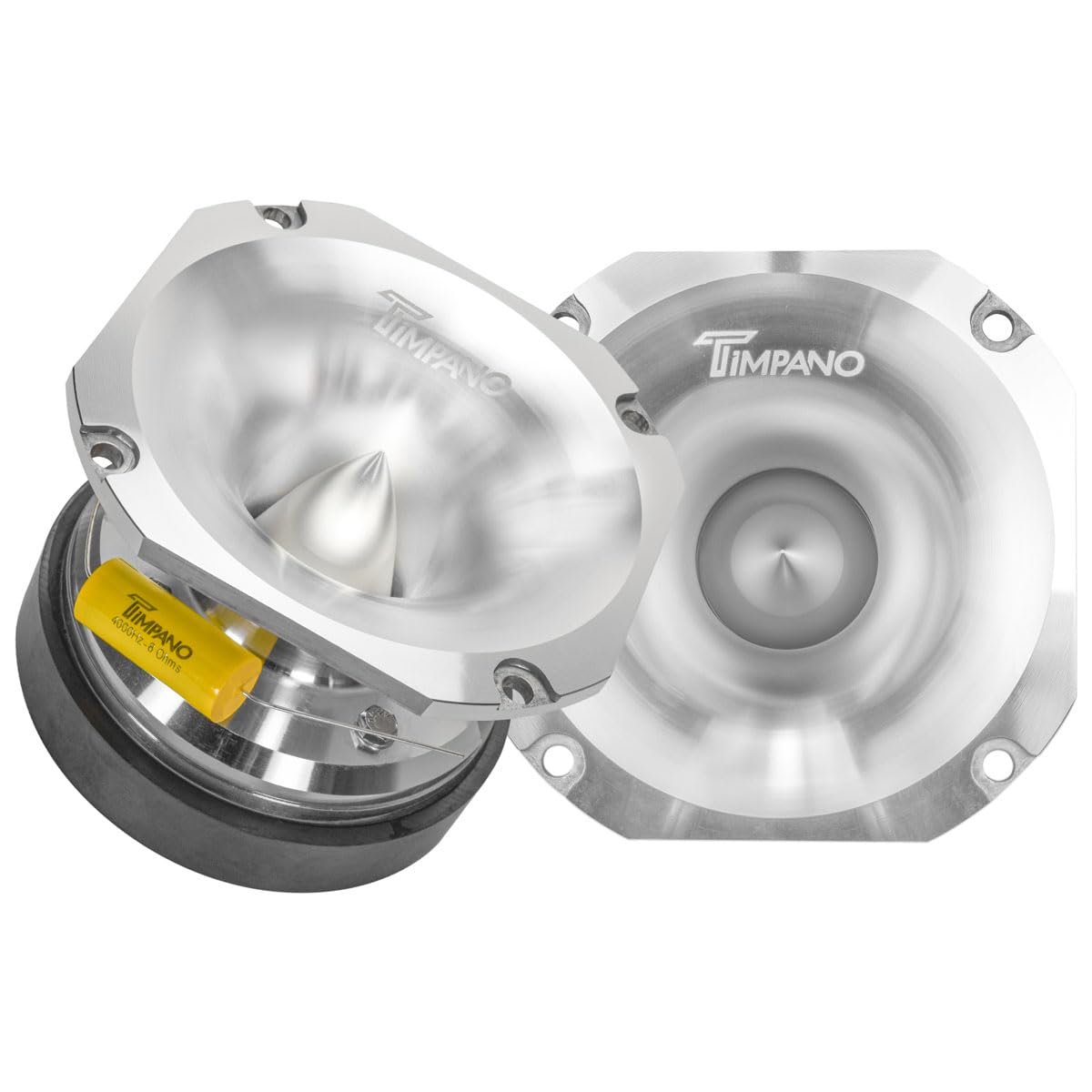
The TPT‑ST71 is not trying to be subtle. This is for builds that already have real output and need highs that keep up — not as background detail, but as a headline act. Owners who love this style of super tweeter tend to describe it as “crisp and clean with the right setup,” which is exactly the key phrase: the right setup.
What makes super tweeters like this addictive is the “projection” factor. Instead of highs feeling trapped in door panels, they feel like they’re thrown forward. That’s a big part of why loud systems with bullets often sound more “live” than systems that rely on door speakers alone.
But you can also see the warning label in owner feedback: when a super tweeter is mis-filtered or pushed beyond its comfort zone, failures happen. The smart play is to treat this like a dedicated high-frequency driver: give it a proper high-pass filter, don’t cross it too low, and don’t run it like a midrange. When you do that, you get that “stage energy” without the painful edge.
Why loud-build people love it
- High output presence – Highs don’t disappear when bass shows up.
- Strong “live” feel – Projection can make the system feel more like a venue than a cabin.
- Great finishing piece – Adds the sparkle and bite that many loud systems miss.
- Looks like the part – If your build is visual, chrome bullets hit that aesthetic.
Good to know
- Not an SQ-first tweeter; it’s about output and cut-through.
- Needs proper filtering and sensible gain to avoid harshness or failure.
- Mounting space and depth are real considerations — plan your location early.
Ideal for: high-output systems where the highs must be obvious and energetic — especially when the rest of the system is already loud.
5. DS18 PRO-ST OEM Upgrade Kit – The “Factory Should’ve Done This” Fix

The DS18 PRO‑ST kit is a different kind of value: it’s not “universal best,” it’s “perfect for the right vehicles.” If you drive one of the compatible Toyota/Subaru models, this is one of the cleanest ways to fix that factory “muffled front stage” feeling without turning the whole car into a custom project.
Owners who love it talk about two things: how fast the install is, and how much more “clear” the front stage becomes. That makes sense because dash tweeters often do the heavy lifting for perceived detail. If your factory dash drivers are tiny paper units, replacing them can instantly remove a blanket from vocals and cymbals.
Now the honest version: not everyone experiences a night‑and‑day change. That’s usually because their factory system’s bottleneck isn’t only the tweeter — it might be the head unit’s EQ curve, door speaker limitations, or the way the OEM amp processes sound. In those cases, the PRO‑ST still helps, but it won’t magically rewrite the entire system.
Why it’s a smart OEM move
- Stealth upgrade – Improves clarity while keeping an OEM look.
- Fast install (on compatible cars) – A “small job” that can deliver real satisfaction.
- Helps the front stage – More presence up top can make the whole system feel more premium.
- Good step-one upgrade – Great foundation before a bigger system build later.
Good to know
- Vehicle compatibility matters — confirm your model and audio package.
- Some installs require sorting wiring/polarity correctly; follow a proven guide.
- If your system’s EQ/amp is the real bottleneck, improvement may feel “moderate” rather than massive.
Ideal for: compatible Toyota/Subaru owners who want a clean, factory‑style clarity upgrade without rebuilding the entire audio system.
6. Rockford Fosgate P1T-S (Punch) – Natural Clarity With Real Control

This is one of those “smart money” tweeter kits: a known car-audio brand, a crossover that gives you practical output options, and a sound character that many people describe as more “natural” than typical budget bright tweeters. It’s a common fix for trucks and SUVs where factory tweeters feel weak and vocals feel buried.
The crossover is the quiet hero here. Owners often mention dialing the level down (instead of boosting EQ), and that’s exactly how you avoid fatigue. When cymbals feel too hot, the move isn’t always “turn down treble” — it’s “reduce tweeter output a step, then flatten EQ.” That single decision can change the whole vibe from sharp to confident.
Install-wise, this kit tends to be straightforward if you’re comfortable doing basic wiring and finding a clean mounting location. If you’re replacing factory A‑pillar tweeters, this can be the last piece that makes the system sound “finished.”
Why it works so well
- Control built in – Level options help you tune without harsh EQ tricks.
- Natural, clear top end – A good fit for mixed music and long listening sessions.
- Strong brand consistency – Reliable “car audio” voicing that fits common builds.
- Great stage lift – Especially when you relocate highs upward (dash/A‑pillar).
Good to know
- Instructions can be minimal; plan your wiring path before you start.
- On-axis mounting can still sound bright — use the level options and aiming.
- If you want ultra-smooth “audiophile soft” highs, silk domes may win for you.
Ideal for: drivers who want a serious clarity upgrade with level control, without jumping into full DSP complexity.
7. DS18 PROTWN5 – When You Want High Notes and Vocals to Punch
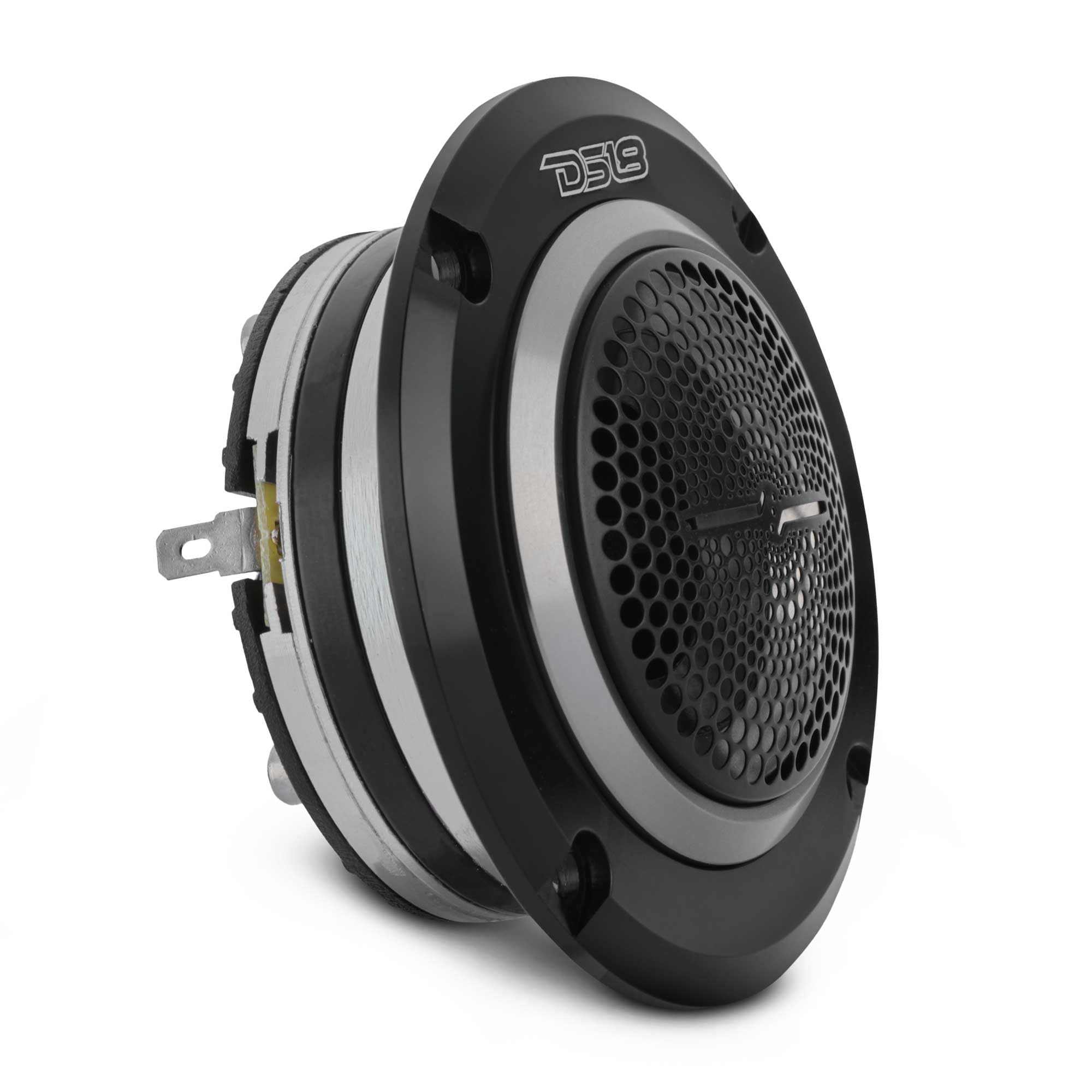
The PROTWN5 is for builders who don’t want a “sparkle enhancer.” They want a high-frequency driver that can carry real vocal energy and still deliver the top-end bite that makes loud systems feel alive. It sits in that hybrid zone: not a delicate dome, not a tiny bullet — more like a compact horn/driver approach.
Owner feedback is very consistent on one point: these can get extremely loud, extremely fast — and they reward proper system design. People who love them often run a dedicated amp channel and keep the crossover strategy clean and conservative. People who struggle usually made one of two moves: they ran them on the same channel as mids without control, or they crossed them too low because “they can handle power.”
Think of the PROTWN5 as a “high presence” driver. If your build already has strong midbass and midrange, this can be the missing piece that makes vocals feel like they’re coming from the windshield instead of the doors. But you must treat it like pro gear: protect it, cross it smart, and match its level.
Why builders choose it
- Vocals with authority – Adds presence that many tweeters can’t deliver.
- High output efficiency – Doesn’t need huge power to sound “big.”
- Great for pro-style systems – Works well in pods, boxes, and high-output door builds.
- Feels like an upgrade in “energy” – The system can sound more live and forward.
Good to know
- Not a beginner-friendly tweeter if you don’t have crossover control.
- Best practice is a dedicated amp channel and clean high-pass filtering.
- If you prefer soft, relaxed highs, a silk dome kit may fit you better.
Ideal for: high-output builds that want both high-frequency sparkle and a strong vocal “push,” especially in pro-style setups.
8. DS18 PRO-GM6.4PK – The “Instantly Loud” Door Upgrade Pack

This one isn’t just a tweeter pick — it’s a system direction. The PRO‑GM6.4PK package is for people who want a pro-loud “front stage” that can be heard clearly at volume, especially in vehicles where factory speaker placement is low and the cabin eats detail.
The value is the synergy: midrange drivers that can project vocals and instruments forward, paired with bullet-style tweeters that keep high-frequency detail audible. Owners often describe this kind of setup as “very loud and clear” even on moderate power — and that tracks with how pro-style drivers behave: they’re built to be efficient and forward, not delicate and recessed.
Here’s the “expert” warning that helps you love this package: don’t tune it like an audiophile component set. Tune it like pro audio. That means controlling low frequencies to the mids (so they stay clean), crossing the bullets high enough to avoid harshness, and keeping tweeter level in check so vocals stay strong instead of turning into hissy glare. Do that, and this package can sound exciting, punchy, and incredibly fun.
Why it’s a strong bundle
- “One purchase” direction – Builds a pro-style mid + high stage quickly.
- High-output voicing – Great for trucks, SUVs, and loud listening.
- Clear vocals – Midrange drivers can lift voices in a way door coaxials often can’t.
- Good platform for amps – Scales well when you add real amplification.
Good to know
- Not for “soft” or “laid back” sound preferences.
- May require fitment work in some vehicles (depth, trim, brackets).
- Best results come from proper filtering (HPF on mids, sane crossover to tweeters).
Ideal for: builders who want a loud, clear front stage fast — especially in vehicles where you need projection and presence, not subtlety.
9. ORION Cobalt CTW1.7HP – Big Bullet Presence Without Going Overboard

The Orion Cobalt CTW1.7HP is one of those “classic” super tweeters that makes sense when you want a pro-audio vibe without going full competition-ruthless. It’s built to be present, bright, and efficient — the kind of high-frequency driver that makes vocals and snare hits feel more “live.”
Where it fits best is a budget pro build where the mids and midbass already have energy, but the top end isn’t making it through. If your system feels like it gets loud but not clear, a bullet tweeter like this can restore intelligibility — the ability to hear words and details even when the cabin is moving air.
The key to enjoying Orion bullets is restraint. Don’t aim them straight at your face unless you truly like that forward, “stage monitor” feel. Aim slightly off-axis, set a clean high-pass, and match level so the tweeter adds clarity without turning the system into hiss. Done right, it’s a very satisfying “pro sparkle” finish.
Why it’s a solid pro pick
- Forward clarity – Helps vocals and detail stay audible at volume.
- Classic pro sound – Bright, energetic top end when tuned correctly.
- Good visual presence – Works in builds where aesthetics matter.
- Efficient output – Doesn’t need massive power to be heard.
Good to know
- Can sound too bright if level is too high or aiming is too direct.
- Not an audiophile “silky” tweeter; it’s built to project.
- Mounting size requires planning; it’s not a stealth dash swap.
Ideal for: budget pro builds that want loud, clear highs with a classic bullet tweeter character.
10. Rockford Fosgate Prime R1T-S – Small Upgrade, Big Practicality

The R1T‑S is a “get the job done” tweeter kit from a brand that understands car installs. It’s not trying to be exotic; it’s trying to be easy to mount, easy to protect, and easy to integrate into real systems — including older vehicles with awkward factory tweeter locations.
Owner feedback often reads like real install life: trimming a hole slightly, fitting it into factory covers, and then hearing the system finally “have tweeters.” That’s exactly what entry-level kits should do: restore top-end detail without requiring custom fabrication. If you’re on a factory head unit, it can still help, but the bigger payoff often happens when you add a clean source or modest amplification.
Sound-wise, think “brighter and clearer than stock,” with the usual rule: if it feels too bright, don’t fight it with treble EQ first — reduce tweeter level (if available) or adjust placement/aiming. The goal is to let the tweeter complete the system, not dominate it.
Why it’s a smart pick
- Practical kit – Designed for real mounting scenarios (not just spec sheets).
- Clear upgrade path – Works as a first step before bigger speaker upgrades.
- Brand reliability – A consistent “car audio” voicing many people enjoy.
- Great for older vehicles – Where factory tweeters are weak or non-existent.
Good to know
- Some installs require minor trimming for fitment.
- If your system is already very bright, this may push it over the edge without tuning.
- For “premium smooth,” silk domes generally win.
Ideal for: drivers who want a straightforward, compact tweeter kit from a trusted brand — especially for older vehicles and practical installs.
11. DS18 PRO-TWX1 – Bright, Loud, and Simple to Wire

The PRO‑TWX1 hits a very specific sweet spot: people who want the “bullet tweeter” energy — crisp, bright, loud highs — but want it in a package that’s straightforward to wire and protect. A built-in capacitor crossover isn’t magic, but it does reduce the number of ways you can accidentally hurt the tweeter.
Owner comments often include two themes: “very clean and loud” and “very bright.” That’s not a contradiction — that’s the nature of bullet tweeters. They can be both clean and too intense if you don’t match their level to the mids. The best way to love a PRO‑TWX1 setup is to treat the tweeter like a spice, not a main ingredient: let it add edge definition and air, but keep the midrange in charge of the story.
Where this shines is in systems that already have decent mids but lack “snap” and intelligibility. If your system is bass-heavy or your speakers are down in the doors, a bullet like this can make the mix feel more alive. If you’re sensitive to treble, use off-axis aiming and don’t be afraid to keep output conservative.
Why it’s a good bullet choice
- Simple protection – Built-in capacitor helps reduce wiring mistakes.
- Strong output – Adds presence that can cut through road noise and bass.
- Compact pro vibe – A bullet “look and sound” without giant hardware.
- Clear definition – Helps vocals and percussion sound more immediate.
Good to know
- Can be very bright; you’ll want crossover and level discipline.
- Not ideal for “soft” sound preferences.
- Polarity marking can be unclear on some installs; verify before final mount.
Ideal for: builders who want bullet-style clarity with straightforward wiring and a compact footprint.
12. Pioneer TS-T15 – The “10-Minute Clarity” Dash Tweeter

The TS‑T15 is the kind of tweeter people buy when they want a simple win: replace weak factory dash tweeters, restore high-frequency detail, and stop feeling like the music is trapped in the doors. Owners often describe this as a “wow” difference for the effort — especially when the factory tweeters were basically doing nothing.
Soft dome tweeters tend to have a “warm shimmer” rather than an aggressive bite. That makes this a good choice for listeners who want detail but dislike sharpness. It’s also a solid pick when your factory location forces weird angles. Wide dispersion helps the tweeter sound more consistent from real seating positions.
The one key install detail to respect: use proper protection (a bass blocker / high-pass strategy). Many factory systems already have a simple capacitor inline with the OEM tweeter, but not always — and a tweeter fed low frequencies is living on borrowed time. Do it right, and this becomes an easy, satisfying upgrade that helps the whole mix breathe.
Why it’s a great “first tweeter”
- Fast payoff – High impact when replacing weak factory dash tweeters.
- More forgiving top end – Soft dome character is easier on the ears.
- Works well in hidden locations – Wide dispersion helps in OEM grilles.
- Easy to integrate – Great for stock wiring and simple installs.
Good to know
- Protection matters; confirm you’re not feeding low frequencies.
- Not a high-output “super tweeter” for loud builds — it’s a daily driver clarity tool.
- Some vehicles need minor bracket adaptation for a clean OEM fit.
Ideal for: factory dash swaps and listeners who want a gentle, clear top end that feels upgraded but not aggressive.
13. DS18 PRO-TW220 – Pure Loudness (Not Subtlety)

The PRO‑TW220 is for a specific type of listener: someone who wants highs that are impossible to ignore. Owner feedback often reads like a warning and a compliment at the same time: “deafening,” “cuts like glass,” “rings out your ears.” That’s not poetic exaggeration — it’s describing the forward, high-efficiency nature of this style of super bullet.
This is not an “add a little shimmer” tweeter. It’s a “make the top end compete with everything else” tweeter. If you have a build with heavy bass and loud mids, this can give you the presence and intelligibility that keeps the system sounding clear at distance. If you put it into a normal daily-driver system and run it hot, it can easily become too much.
The smartest way to run a TW220 setup is to be conservative: cross it high, keep gain sane, and let it fill the top octave instead of trying to cover midrange duties. Think of it like a spotlight — useful, powerful, and absolutely the wrong tool if you point it directly into someone’s eyes.
Why people buy it
- Massive presence – Highs stay obvious even when everything else is loud.
- Competition-style energy – Great for builds that need projection and bite.
- Strong “live” feel – Can make the system feel intense and exciting.
- Good for distance – Useful in installs where sound needs to carry.
Good to know
- Not an SQ-first option; it can be fatiguing if tuned aggressively.
- Gain and crossover mistakes get punished quickly — use discipline.
- Best when used as a true super tweeter (top-end), not a “do everything” driver.
Ideal for: high-output builds and listeners who want unapologetically loud highs — with careful tuning to keep it controlled.
14. DS18 PRO-TW120B – The “Big Upgrade” Pair That’s Easy to Like

If you want that “super tweeter” clarity jump without overthinking your first purchase, the PRO‑TW120B is one of the most common entry points for a reason. Owners regularly describe it as a surprising upgrade even on basic systems — especially when replacing weak OEM tweeters or adding highs to a bass-heavy setup.
The built-in crossover protection is a big part of the appeal. Many first-time tweeter failures happen because someone adds a tweeter with no protection and feeds it frequencies it was never meant to play. With the TW120B, you’re less likely to make that mistake.
Sound-wise, expect “bright and loud” — and that’s a compliment in the pro-audio world. The trick is to keep it controlled. If you hear that sharp “tss” in vocals or hi-hats, don’t panic — lower the tweeter level, try off-axis mounting, and reduce treble boosts. When it’s set right, it fills in the highs your system was missing. When it’s set wrong, it turns your playlist into a dentist drill.
Why it’s a favorite
- Easy upgrade path – A simple way to add high-frequency presence.
- Built-in protection – Reduces the risk of “oops, I blew it” installs.
- Big perceived clarity – Especially on muffled factory systems.
- Strong value – Delivers the “super tweeter effect” without complexity.
Good to know
- Can be bright; best results come with sane gain and aiming.
- Not an audiophile dome sound — it’s a pro-style presentation.
- If you’re treble sensitive, start conservative and tune upward slowly.
Ideal for: budget and mid-level builds that want loud, crisp highs with built-in protection and a simple install path.
15. Skar Audio VX35-ST – Huge Output, Huge Cutout Reality

The VX35‑ST is one of those products that gets recommended for one simple reason: people want loud highs, quickly, without spending forever shopping. And it delivers exactly that — a big, high-compression bullet tweeter presence that can change the “reach” of a system immediately.
The real-life trade-off is also consistent: these are not small. They require larger cutouts and more commitment than a dome tweeter kit. That’s why I call it “cutout reality.” If you’re not sure you want to live with big bullets long-term, choose a smaller option first. But if you are sure, the VX35‑ST can be a very satisfying way to restore balance in a bass-heavy build.
Owners often describe them as “super loud” and “clear when paired with a midrange,” which is exactly how they should be used. A bullet tweeter without a solid midrange foundation can sound all edge and no body. Paired properly, it adds snap, air, and projection that helps the system feel more “live.”
Why it’s popular
- Big output – Delivers immediate presence and projection.
- Strong value – A lot of “loud” for the money.
- Works well in pro-style builds – Great when paired with strong mids.
- Noticeable clarity jump – Especially in bass-forward systems.
Good to know
- Requires large cutouts; plan your install carefully.
- Not a stealth factory swap; it changes the look of the car.
- Can sound too “tinny” if crossed too low or run too hot.
Ideal for: builders who are committed to a loud, pro-style sound and don’t mind making permanent mounting changes.
16. Skar Audio VX200-ST – Clean Highs Without the Giant Tweeter Look

The VX200‑ST is a great “gateway” bullet tweeter: it gives you that high-efficiency presence, but in a smaller form factor that’s easier to place without turning your interior into a custom show build. Owners often highlight that it can get loud without turning into uncontrolled shriek — which is exactly what you want from a daily-drivable bullet.
This is also a smart choice for vehicles where speaker placement is low and the sound feels muddy. A small bullet tweeter mounted higher (and aimed sensibly) can dramatically improve intelligibility, especially for rock vocals and snare presence. In other words: you can hear words again, even with road noise and bass in the mix.
The tuning move that makes this shine is restraint: don’t push it like a super tweeter meant for competition. Use it as a “high lift” tool — add sparkle and articulation, then stop. That’s how you get a clear system that still feels comfortable to listen to every day.
Why it’s a smart bullet pick
- Compact install – Easier placement without huge cutouts.
- Strong clarity per watt – High-efficiency feel helps at volume.
- Can be daily-drivable – With conservative tuning, it stays enjoyable.
- Great for “raising the stage” – Helps highs come from higher in the cabin.
Good to know
- Still a bullet tweeter — on-axis aiming can get bright fast.
- Needs proper crossover strategy to avoid harshness.
- Not as “silky” as dome tweeters for long relaxed listening.
Ideal for: people who want bullet-style clarity in a smaller, easier-to-install format that can still be tuned for daily comfort.
17. Skar Audio TWS-01 – Affordable Clarity Without Bullet Bite

If you’re shopping on a tight budget but still want a legitimate “tweeter kit” experience — crossovers, mounting options, and a smoother dome presentation — the TWS‑01 is a practical place to land. Owners often describe these as crisp and clear, with a noticeable improvement over stock systems, especially when the factory tweeters were weak or missing.
The big advantage of a budget silk dome setup is listenability. You can add detail without the “glass edge” that some cheap bright tweeters produce. That’s why this is a smart pick for people who listen for long periods, or who want to improve clarity without changing the character of their system too much.
The realistic expectation: these may not be the loudest tweeters in the world, and that’s okay. They’re designed to be a balanced addition, not an SPL weapon. Installed properly and level-matched to your mids, they can make the system feel more complete and more modern.
Why it’s a good budget kit
- Smoother sound – Silk dome character is easier on the ears than many budget options.
- Crossovers included – Helps protect the tweeter and simplify wiring.
- Mounting flexibility – Useful in cars with limited factory tweeter locations.
- Clear upgrade for stock systems – Especially when OEM tweeters are weak.
Good to know
- Not built for extreme SPL goals.
- Best results come from careful placement; hidden locations can reduce perceived impact.
- If your door speakers are very low quality, you may still want a full front-stage upgrade later.
Ideal for: budget upgrades where you want real clarity and a smoother top end without committing to bullet tweeters or heavy fabrication.
How Tweeter Installs Actually Work (and Why “Harsh” Is Usually a Setup Problem)
If you’ve ever installed tweeters and thought “wow, that’s bright,” you’re not alone. The good news: harshness is often fixable. The bad news: the fix is almost never “buy a different tweeter” first. It’s usually one of these tuning and install variables:
- Crossover point is too low (the tweeter is trying to play frequencies a midrange should handle).
- Slope isn’t steep enough (too much low-frequency energy still reaches the tweeter).
- Tweeter level is too high compared to the mids (the system becomes top-heavy).
- Aiming is too direct (on-axis beams the hottest treble straight at your ears).
- Reflection is exaggerating sibilance (windshield/dash reflections create “glass”).
1. Think in “zones,” not “numbers”
Instead of memorizing one perfect frequency, think in zones:
- Higher crossover zone: Safer, smoother, and often better for bullet tweeters. You get air and sparkle without forcing the tweeter to cover vocal range.
- Middle crossover zone: Common for dome tweeters. Good balance when your mids are solid and your tweeter can blend cleanly.
- Lower crossover zone: Riskier, often only used when the tweeter and crossover are designed for it and the midrange can’t play high enough cleanly.
If you don’t have measurement tools, the safest strategy is to start higher and work down only if the system sounds “disconnected” (like vocals are stuck in the doors while highs are up top). Most people do the opposite — start low, then fight harshness.
2. Level matching is the cheat code
Here’s a reality that saves people money: most tweeter “upgrades” become amazing when you simply lower tweeter level a notch. That’s why crossover networks with attenuation options are so valuable. Instead of boosting EQ, you can:
- Set a safe crossover,
- Match tweeter output to mids,
- Then use small EQ changes for taste — not damage control.
3. Aiming: on-axis is not always “better”
On-axis aiming can increase detail, but it can also increase fatigue. If you like ultra-crisp, “studio monitor” presentation, you may enjoy direct aiming. If you want daily-driver comfort, try slightly off-axis aiming:
- Aim toward the opposite headrest rather than directly at your face.
- Use the windshield reflection intentionally (especially with domes) to widen stage, but keep output controlled.
- If vocals are too sharp, rotate the tweeter a few degrees away before touching EQ.
4. The “don’t blow your tweeters” checklist
- Never run tweeters full range. Ever. Even “tough” super tweeters need protection.
- Use a proper high-pass filter (crossover network or DSP) and don’t cross too low out of optimism.
- Set gains with discipline. Loudness without control is how tweeters die.
- Keep mids doing mid work. If the tweeter is carrying too much vocal range, it will sound stressed and bright.
5. Three “tuning recipes” that work in most cars
Pick the recipe that matches your setup:
- Factory head unit + basic wiring: Use a tweeter kit with an in-line crossover, mount higher than the door speakers, and keep EQ mostly flat at first.
- Amp + passive crossovers: Use crossover level options, start the tweeter slightly lower than you think, then raise carefully until clarity appears without glare.
- DSP build: Start with safe high-pass settings, adjust level first, then use gentle EQ to tame sibilance peaks rather than blanket treble cuts.
The final truth: the “best” tweeter is often the one you can mount well, protect well, and level-match quickly. That’s why some cheaper kits outperform pricier options in real cars — because they’re easier to integrate correctly.
FAQ: Best Tweeters For Car Audio Questions (Without the Confusion)
Do dome tweeters always sound better than bullet tweeters?
Why do my new tweeters sound harsh or “spitty” on vocals?
Do I need an amplifier for tweeters?
Where should I mount tweeters for the best soundstage?
What’s the safest way to protect tweeters from damage?
Why do bullets sound amazing outside the car but too bright inside?
Should I match tweeters to my door speakers’ brand?
How do I know if my factory system even has tweeters working?
Can I run super tweeters with a sub-heavy system?
What’s the quickest way to pick the right model from this list?
Final Thoughts: Choose the Tweeter That Matches How You Actually Listen
A great tweeter isn’t the one with the wildest numbers. It’s the one that makes you play “one more song” because the system finally sounds alive. The best results come from matching the tweeter type to your goal — then mounting and tuning it like you mean it.
Here’s the simplest way to translate this guide into a confident purchase:
- Want the best all-around daily driver choice? Start with the JBL Club 194T. It’s a balanced, easy-to-live-with clarity upgrade that plays nicely with real-world mounting.
- Want premium silk dome realism with strong tuning flexibility? Choose the KICKER 46KST2504. It’s the “smooth but loud” option for people who care about long-term listenability.
- Need compact pro-style bullet output in a tight install? Look at the PRV AUDIO TW400Ti-Nd-4 v2. Great when you want projection without oversized hardware.
- Building loud and want true “concert highs” that keep up with bass? The Timpano TPT-ST71 is a strong move — just treat it like pro gear with smart filtering.
- Drive a compatible Toyota/Subaru and want stealth clarity? Grab the DS18 PRO-ST OEM Upgrade Kit for a clean dash-front improvement that keeps the factory look.
- Want a natural clarity kit with real crossover control? The Rockford Fosgate P1T-S is a smart “wake up the vocals” choice with practical tuning options.
- Building pro-loud mids and want highs plus vocal punch? Consider the DS18 PROTWN5 or the DS18 PRO-GM6.4PK package if you want a faster “pro direction” with strong output.
- Need budget loudness and crisp bite? The DS18 PRO-TW120B, Skar VX200-ST, and Skar VX35-ST cover different “size vs output vs install commitment” preferences.
- Want affordable smooth clarity (no bullet edge)? Start with the Skar TWS-01 or the Pioneer TS-T15 for a clean daily-driver top end.
The best purchase is the one you’ll still love after the novelty wears off. Pick the best tweeters for car audio that match your build style — factory refresh, daily-driver clarity, or pro-loud projection — then win the game with mounting, crossover discipline, and level matching. That’s how you get highs that feel expensive, not exhausting.