
Our readers keep the lights on and the garage heater humming. As an Amazon Associate, I earn from qualifying purchases.
Car amplifiers don’t usually “die” in one dramatic moment. More often, they slowly cook. First you notice the music cuts out for a second when the bass hits. Then it happens again… and again… until one day your amp is living in protection mode like it pays rent there.
Heat is the silent tax on big sound. It shortens component life, increases the chance of thermal shutdown, and can even make an otherwise solid setup feel inconsistent—especially in trunks, under-seat installs, and sealed panels where hot air has nowhere to go.
That’s why a proper cooling plan isn’t “extra.” It’s part of building a reliable system. The goal isn’t to blast your amp with a hurricane. The goal is to create predictable airflow across the heat sinks so temperatures stay stable when you’re stuck in traffic, the sun is cooking the cabin, and the playlist refuses to chill.
If you’re here searching for the best car amplifier cooling fan, you’re already ahead of 90% of installs online. Most people pick the loudest fan with the biggest airflow number… then mount it in a way that recirculates the same hot air and whistles like a kettle. This guide fixes that.
Below you’ll get a battle-tested framework to choose the right fan style (cross-flow vs. axial vs. blower), install it cleanly, wire it safely, and keep your amp cool without turning your vehicle into a rolling server room.
In this article
How to Choose the Best Car Amplifier Cooling Fan for Your Build
The biggest mistake people make is shopping for “a fan,” instead of shopping for an airflow strategy. A fan can only do two things: move air, or move air badly. Whether it works depends on where your amp lives, how restricted the space is, and what kind of heat sink design you’re trying to cool.
1. Map your amp’s “heat path” in 60 seconds
Before buying anything, answer these three questions:
- Where is the amp mounted? Trunk floor, seat back, under-seat, spare tire well, or inside a panel/false floor?
- Is the heat sink exposed to open air? Or is it trapped under carpet, foam, MDF, and interior trim?
- Do the fins have a direction? Most amps have fin channels. Airflow works best when it travels along those channels instead of smashing into them.
If your amp is in open air (like a seat back board with plenty of clearance), you can use a high-airflow axial fan approach. If it’s in a tight cavity, a low-profile cross-flow fan is often the more elegant solution.
2. Pick the right airflow style: cross-flow vs. axial vs. blower
This is the difference between “it feels cooler” and “it never shuts down again.”
- Cross-Flow Fans: These create a long, even sheet of air across the length of an amplifier. They’re perfect when your amp is wide, your space is shallow, and you want uniform cooling across the heat sink—not just one strong spot.
- Axial Case Fans (like 120mm PC fans): These move a lot of air in open spaces. They shine when you have room to mount a fan above/below the amp and create a clear intake/exhaust route.
- Centrifugal Blowers: These are your “ducting” solution. If you need to push air through a hose, a vent, a grille, or a long channel under a false floor, blowers handle resistance better than most axial fans.
3. Control matters more than people admit
In real installs, the best cooling setups aren’t always the “strongest.” They’re the ones that can be tuned.
- Always-on (simple): Great if you want constant thermal stability.
- Remote-triggered: Turns on when the amp turns on. Clean and convenient, but do it right (we’ll cover wiring).
- Thermostat-controlled: The best “set it and forget it” approach when you want your fan to stay quiet most of the time and ramp up only when the amp is hot.
4. Wiring isn’t optional—do it like a grown-up
Most car audio “fan kits” are two wires: red and black. Easy, right? Yes… until you accidentally overload your amp’s remote output, or you introduce ground noise, or your fan keeps running when you don’t want it to.
- Use a fuse on the fan’s positive feed (close to the power source).
- Consider a relay if you’re powering multiple fans or a higher-draw blower.
- Keep fan power separate from signal wiring to reduce the chance of noise.
- Strain-relief the cable so vibration doesn’t stress solder joints (a common long-term failure point in DIY installs).
5. Noise: “dBA” is not the full story
Two fans can measure similarly and still sound wildly different. What matters in a car is tone. High-RPM small fans often produce a sharper whine. Larger fans usually produce a lower hum. Cross-flow fans tend to sit in the middle: audible in silence, invisible once music plays.
Quick Comparison: 7 Best Car Amplifier Cooling Fan Picks
These are organized by real-world usefulness: purpose-built car audio cross-flow solutions first, then premium smart cooling, then DIY/high-airflow options for custom installs.
On smaller screens, swipe or scroll sideways to see the full table.
| Model | Type | Best For | Key Feature | Amazon |
|---|---|---|---|---|
| Stinger SGJ78 8.25" Cross-Flow Fan | Cross-Flow | Most amp installs | Even airflow across fins | Amazon |
| AC Infinity AIRCOM S7 | Smart Cooling | Silent + controlled cooling | Thermal trigger & speed modes | Amazon |
| Xscorpion 8" Cross-Flow Fan (TF8) | Cross-Flow | Wide amps on a tight mount | Low profile mounting tabs | Amazon |
| Hi-Tech 8" Cross Flow Cooling Fan | Cross-Flow | Ultra-tight spaces | Low profile body | Amazon |
| Wathai 120mm x 38mm High Airflow Fan | Axial 120mm | Open installs & venting | Thick frame = strong push | Amazon |
| Wathai 120mm Centrifugal Blower Fan | Blower | Ducting & enclosed racks | Directional airflow | Amazon |
| 60mm 12V IP68 Waterproof Fans (2‑Pack) | Micro Fans | Moist/humid installs | Sealed electronics + dual pack | Amazon |
In‑Depth Reviews: 7 Cooling Fans That Keep Car Amps Consistent
Specs matter, but installs are messy: carpet blocks airflow, trim panels rattle, remote wires have limits, and fans live in a vibration sauna for years. These reviews are written the way an installer thinks—how each fan behaves in real-world mounting, wiring, and noise conditions.
1. Stinger SGJ78 – The “Set It and Forget It” Cross‑Flow

If you want one fan that “just works” for most amp layouts, this is it. Cross-flow fans are naturally good at cooling amplifiers because they create a sheet of air across the heat sink instead of a single concentrated spot. That matters because most overheating issues aren’t about the hottest point on the amp—they’re about a section of the heat sink that never gets fresh air.
Real-world feedback on the SGJ78 is consistent: it’s effective, and it’s easy. Owners commonly wire it to the amp’s remote turn-on so it runs only when the system is on. A light hum is normal in a silent car, but once you’re playing music it fades into the background. That trade is exactly what you want: steady cooling without drama.
Two practical install notes show up again and again. First, the factory leads are short, so plan to extend them cleanly with proper connectors and heat shrink. Second, it usually doesn’t ship with mounting hardware. That’s not a deal breaker—most installers use short screws, industrial Velcro, or a small bracket anyway—but it’s worth knowing up front.
Why it’s the top pick
- Uniform cooling: Cross-flow design covers more of the amp’s heat sink.
- Low profile: Fits where chunky PC fans won’t.
- Simple wiring: Easy two-wire hookup to a relay or remote trigger.
- Real-world result: Most users report shutdowns stop after adding it.
Good to know
- Expect to extend the wires for many installs.
- Mounting hardware is often DIY (Velcro/brackets/small screws).
Ideal for: Most trunk and under-seat amp installs where you want even airflow across the heat sink without bulky mounting.
2. AC Infinity AIRCOM S7 – The “Thermostat Brain” Upgrade

This is not a “little fan.” It’s a complete cooling system designed to sit on top of hot electronics and actively manage temperature. That’s why it’s a favorite in AV cabinets—and it translates beautifully to certain car audio builds, especially show installs, amp racks, and any setup where you want cooling that stays quiet most of the time.
The biggest advantage is control. Instead of running full blast (and announcing itself), the AIRCOM can run at a low, calm speed and ramp up only when temperatures rise. Users consistently describe the build quality as solid and the noise profile as unusually civilized for the amount of air it can move. It also gives you feedback—so you’re not guessing whether your cooling solution is doing anything.
Where it shines most in vehicles is when you have an amplifier rack or a compartment that behaves like a cabinet: warm air trapped, limited natural convection, and a need for steady exhaust. Put it to work as a top-exhaust “chimney” and it can pull heat out of the space in a way that smaller fans can’t.
Why it’s different
- Thermal control: Runs only as hard as it needs to.
- Quiet-by-design: PWM motors and vibration control keep noise civilized.
- Great for racks: Creates a consistent exhaust path for trapped heat.
- Feedback: Easy to confirm it’s actually lowering temps.
Good to know
- It’s larger than a typical amp fan—measure your space first.
- Best results come from planning a clear intake + exhaust route.
Ideal for: Amp racks, AV-style enclosures, and anyone who wants quiet automatic cooling with minimal babysitting.
3. Xscorpion TF8 – The “Wide Amp, Skinny Space” Fix
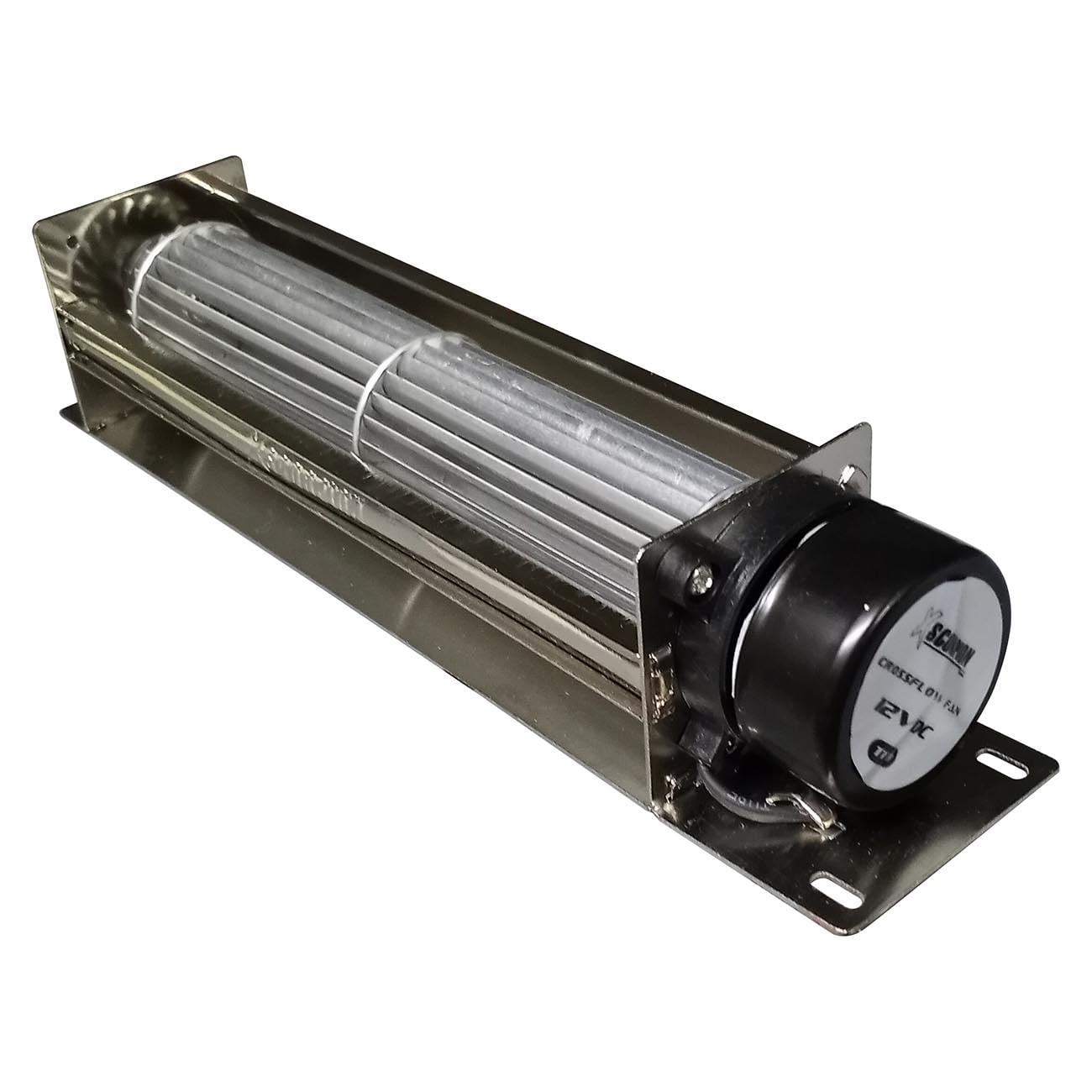
The TF8 is the kind of fan you buy when you’ve already tried the “random PC fan zip-tied somewhere” method—and you want something that actually matches the shape of an amplifier. Its low profile lets it tuck into places where a round fan physically can’t sit, and the cross-flow design spreads air over a longer area.
A detail I like: users often wire it to the amp’s remote terminal, so it turns on and off with the system. That’s clean, practical, and avoids the “oops, my fan drained my battery” situation. Owners also tend to be pleasantly surprised by how effective it is, even when the fan looks small compared to a big monoblock.
Two things to plan for: the leads can be short (so extensions are common), and many people wish it included a protective grille. If your amp rack lives near loose cargo, tools, or anything that can fall into the fan, add a simple guard or mount it where it can’t get hit.
Why it’s a great buy
- Cross-flow coverage: Better “whole-amp” airflow than a single point fan.
- Easy on/off: Remote-wire friendly for simple control.
- Low profile: Fits behind seats and in shallow cavities.
Good to know
- Consider adding a guard if your trunk has loose items.
- Wire extensions are often needed for cleaner routing.
Ideal for: Wide amplifiers mounted in tight spaces where you still want uniform airflow across the heat sink.
4. Hi‑Tech 8" Cross Flow Fan – Great Idea, Mount It Right
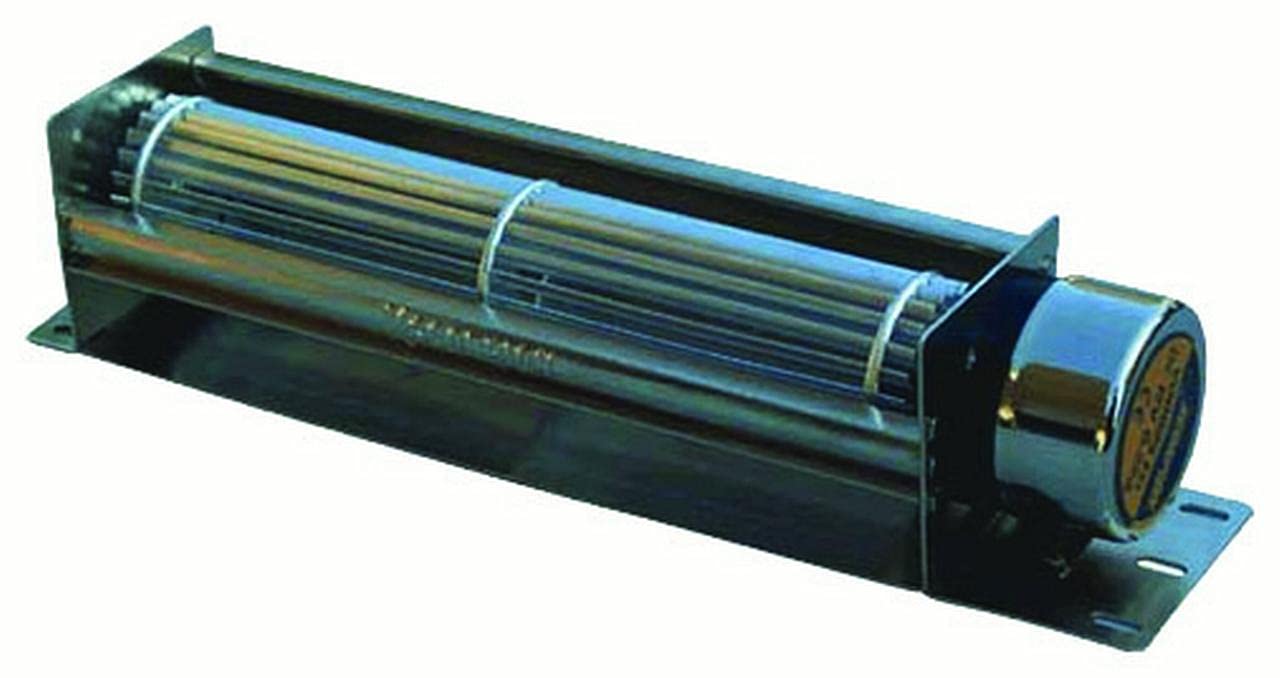
On paper, this is exactly what many installs need: a slim, cross-flow fan that can sit close to the amp and keep air moving across the surface. And plenty of buyers report it doing just that—amps that used to get scorching hot stay far more controlled once airflow is added.
Where you need to be smart is vibration and mounting. Some owners report a unit arriving slightly out of balance or developing extra noise over time. In a car, that matters because the environment is already harsh: bumps, temperature swings, and constant vibration can magnify a small imbalance.
Here’s the “installer fix” that makes this fan perform like it should: mount it with a little isolation (thin foam tape or rubber washers), keep the housing from being stressed or twisted, and test it on the bench before you lock it behind a panel. A clean mount often turns “noisy fan” complaints into “I barely notice it.”
Why it can be perfect
- Compact: Easy to fit in tight enclosures and shallow racks.
- Good airflow pattern: Cross-flow spreads air more evenly than a small round fan.
- Simple install: Straightforward two-wire power.
Good to know
- QC varies—bench test and mount with vibration isolation.
- Keep wiring clear of the fan housing to prevent rubbing.
Ideal for: Tight spaces where you want cross-flow cooling but still want to keep the install simple and compact.
5. Wathai 120mm x 38mm – The “Industrial Wind” 120mm Fan
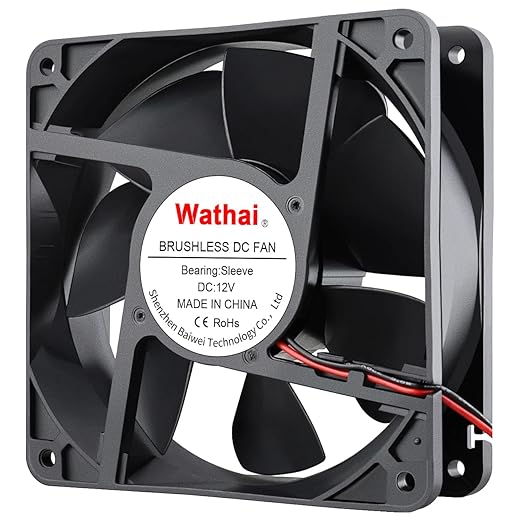
This fan has a very specific personality: it’s not “cute,” it’s not “silent,” and it’s not pretending to be a luxury accessory. It’s built to move a serious amount of air—and owners describe the temperature drop as immediate when used in electronics cabinets, RV fridge vents, and other heat-trap environments.
For car audio, it’s a fantastic option when you have an open install (think: amp rack with breathing room) and you want to create a strong intake or exhaust. The 38mm thickness is a big deal. Thick fans generally handle resistance better than thin fans, which helps when you’re pulling through a grille, a filter, or a tight rack.
The “expert move” is to treat it like an industrial fan and control it. Many users run it at reduced voltage or with a fan controller so it stays quiet enough for daily driving—then they crank it up when they want maximum cooling (hot days, long listening sessions, heavy bass).
Why it’s a monster
- Big airflow: Great for ventilating an amp rack or trunk enclosure.
- Strong push: Thick frame helps when airflow is restricted.
- Simple hardware: Often includes basic mounting pieces.
Good to know
- At full speed it can be loud—plan to use speed control.
- Make sure you have physical depth clearance for a 38mm fan.
Ideal for: Open amp racks, ventilated trunk builds, and anyone who wants powerful airflow with adjustable noise.
6. Wathai 120mm Centrifugal Blower – The “Air Cannon” for Enclosures

If an axial fan is a “breeze,” a blower is a “push.” That difference is huge when your amp lives under a false floor, inside a panel, or in a compartment where air has to travel through a path—not just circulate locally.
Owners use this blower for everything from electronics cooling to stove airflow boosting and 3D printer enclosures, and the theme is the same: it creates focused, directional airflow. That makes it ideal when you want to duct air to an amp heat sink or duct hot air out of a cavity.
One important real-world note: treat the wiring like part of the build. Several users point out the motor leads can be vulnerable if the cable is left to flap around. The fix is easy: secure the cable to the housing (strain relief), mount the blower so it doesn’t get bumped, and you’ll dramatically improve long-term reliability.
Why installers love blowers
- Better against resistance: Great for ducts, grilles, and long airflow paths.
- Directional outlet: Easier to “aim” cooling exactly where you need it.
- Control-friendly: Pairing with a controller lets you balance noise and cooling.
Good to know
- Secure the wiring—vibration can stress solder points if unsupported.
- Blowers can be louder at full speed; tuning is your friend.
Ideal for: Enclosed amp racks and custom builds where you want to move air through a planned route.
7. 60mm 12V IP68 Waterproof Fans (2‑Pack) – Small, Tough, Targeted
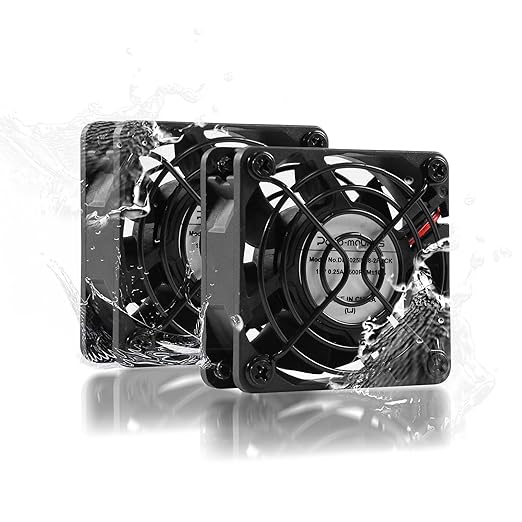
These are the “problem solver” fans for installs where moisture, humidity, or grime is part of the story—think RV, marine, utility vehicles, or any environment where a normal fan rusts, seizes, or dies early. You’re getting a dual pack, which is useful because small fans cool best when you use two: one to push cool air in, one to pull hot air out, or both positioned to cover different hot zones on a heat sink.
Small, high-speed fans have a predictable trade-off: they can sound sharper than larger fans. Users typically describe the noise as airflow-driven rather than motor grinding, and long-term reports are encouraging in humid environments. A smart approach is to mount them with a clear intake, keep them away from loose fabric, and add a simple guard if they’re exposed.
Where they shine for car audio is targeted cooling: aiming airflow at a hotspot (like the power supply end of an amp) or creating ventilation in a tight cavity where a long cross-flow fan won’t fit.
Why they’re worth considering
- Harsh-environment friendly: Sealed design helps in humid spaces.
- Flexible install: Two fans = more placement options.
- Spot cooling: Great for small cavities or specific hot zones.
Good to know
- High-speed micro fans can have a higher-pitch sound.
- Plan cable routing; thin leads need protection from abrasion.
Ideal for: Moisture-prone installs, small enclosures, and anyone who wants targeted cooling with flexible placement.
Airflow & Noise Guide: Specs That Matter in the Real World
Shopping by raw numbers alone is how people end up disappointed. Two fans can have similar airflow ratings and behave completely differently once you mount them near carpet, inside a panel, or against a heat sink with tight fins.
To choose the best car amplifier cooling fan for your setup, focus on how the fan handles resistance, how it sounds in a vehicle, and how cleanly you can control it.
CFM vs. Static Pressure
CFM is how much air moves in open space. Static pressure is how well a fan can push/pull when something is in the way—grilles, filters, ducting, or tight heat sink fins.
- Cross-flow fans excel at spreading air evenly across a surface, which is why they work so well for long heat sinks.
- Thick axial fans tend to hold up better when airflow is restricted than ultra-thin case fans.
- Blowers are the go-to when you need to move air through a path (ducts, channels, enclosed racks).
dBA vs. Sound “Tone”
A car is an echo chamber full of hard surfaces. A fan that sounds fine on a desk can become annoying in a cabin.
- High-RPM small fans often create a sharper, higher-pitched whine.
- Large fans usually create a lower hum that’s easier to ignore.
- Mounting matters: vibration isolation can reduce “rattle noise” more than any spec sheet.
Control: Why speed adjustment is the hidden cheat code
Most people don’t need full speed all the time. A controlled fan running at a lower setting often gives you 80% of the cooling with 20% of the noise.
- Cross-flow fans often sound best when run steadily at a moderate speed.
- Industrial axial fans become dramatically more livable when dialed down.
- Thermal-trigger systems keep your setup quiet when you’re cruising and aggressive when you’re pushing it.
FAQ: Best Car Amplifier Cooling Fan Setup, Wiring, and Placement
Should the fan blow onto the amp or pull heat away?
Can I wire the fan directly to the amp remote turn-on?
Where exactly should I mount a cross-flow fan?
Will a fan fix an amp that overheats because of tuning?
How do I reduce fan noise without losing cooling?
Do fans pull dust into the amp?
Final Thoughts: The Verdict
If you want the most “plug-in and done” solution for typical car amp installs, the Stinger SGJ78 is the cleanest all-around choice because it cools evenly and fits where bulky fans can’t. If you want smart, quiet control (especially for racks and enclosed builds), the AC Infinity AIRCOM S7 is a seriously refined upgrade. And if you’re building custom ventilation or ducting under panels, the Wathai centrifugal blower is the tool that makes the airflow plan actually work.