
Our readers keep the lights on and the garage heater humming. As an Amazon Associate, I earn from qualifying purchases.
Rodents don’t “visit” your car… they move in. And once they’ve decided your engine bay is the coziest studio apartment in the neighborhood, the damage can go from “a few acorn shells” to “why is every warning light on?” frighteningly fast. They nest where it’s warm, they stash food where it’s hidden, and they chew because their teeth never stop growing—wires, insulation, hoses, even the foam sound deadening that looks like luxury bedding to a mouse.
If you’ve ever popped the hood and found droppings on top of the engine cover, you already know the mental spiral: Did they chew anything important? Is that smell just leaves… or a nest? Am I going to get stranded because a critter thought my wiring harness was a snack? The calmest fix is a prevention setup you can trust—and that starts with choosing the best ultrasonic rodent repeller for cars for your exact parking routine.
Here’s what most guides miss: “Ultrasonic” is not a magic word. The details matter. Frequency patterns, strobe behavior, vibration shutoff logic, low-voltage cutoffs, and (huge one) where you mount it in the engine bay. If the unit is blasting into a dead corner behind an insulated cover, you can get a false sense of security while rodents keep partying two inches away.
I wrote this guide like an under-hood detective. I pulled the most useful patterns out of real buyer experiences: what finally stopped repeat wire chewing, what failed (even when the light was blinking), and what setup tweaks turn “maybe” into “finally… silence.” If you want one clear plan and one confident buy, you’re in the right place.
How to Choose the Best Ultrasonic Rodent Repeller For Cars
Before you buy anything, do one quick reality check: rodents aren’t impressed by marketing. They respond to discomfort, unpredictability, and the removal of “safe nesting” zones. So you’re not shopping for a gadget—you’re building a deterrence environment.
1. Start With Your “Rodent Risk Map” (Where Are They Actually Entering?)
Most people assume the engine bay is the only target. It’s usually the main one, but not always. Look for signs in these three areas:
- Engine bay: leaves, shredded insulation, droppings on the engine cover, acorn shells in corners, chewed plastic.
- Cabin air filter housing: a classic nesting spot—warm, tucked away, and easy to access from the cowl area.
- Trunk & storage compartments: especially on parked vehicles, RVs, and seasonal cars.
Your device choice changes depending on where the “activity” is concentrated. Under-hood units protect wiring. Plug-in units protect the space around the vehicle (garage, storage room, attic above the garage).
2. Choose the Right Power Style: 12V Hardwired vs. Battery vs. Plug‑In
This is the decision that makes everything else easier.
- 12V / 24V Hardwired (under hood): Best for daily drivers and long-term protection. No battery swapping. Look for vibration standby and low-voltage cutoffs so you don’t babysit your car battery.
- Battery under-hood units: Best for vehicles that sit for weeks, vehicles with batteries not easily accessible under the hood, or anyone who wants a “zip tie and done” install. The tradeoff is maintenance (battery changes and potential battery-contact issues).
- Plug‑in building units: Best for garages, attics, storage rooms, barns, and workshops—especially if you have multiple vehicles in the same space. They help push rodents out of the building so your engine bay is less appealing in the first place.
- Hybrid / multi-power units: Great if you want the same device to pull double duty: under hood today, garage outlet tomorrow.
3. Deterrent Stack: Ultrasonic Alone vs. Ultrasonic + Strobe + “Extra Modes”
Ultrasonic sound is the baseline. The most consistent real-world wins come when the device also adds one or more of these:
- Strobe LEDs: Light is underrated. In the tight engine bay, flashes can be intensely disruptive because rodents prefer dark, stable hiding spots.
- Variable frequency patterns: Fixed tones can become “background noise.” Variability matters because it’s harder for pests to adapt.
- Pressure-wave / electromagnetic modes: These can help in building setups (garages, attics) where sound doesn’t reach around obstacles well.
- “Test” / audible modes: Some units include a mode humans can hear. It’s not for comfort—it’s for confirmation and for situations where silent ultrasonic doesn’t seem to change behavior.
4. The Big Secret: Engine Bays Create “Shadow Zones”
Here’s why some people swear a device works and others call it useless: a car engine bay is packed with sound-blockers—insulation panels, plastic covers, thick battery trays, fuse boxes. Ultrasonic waves don’t behave like magic fog; they’re closer to a flashlight beam. If the speaker is “aimed” into a blocked cavity, rodents can hang out in the shadow.
- Small engine bay: One well-placed unit can be enough.
- Large engine bay / trucks / RVs: Two units aimed at opposite “nest-friendly” corners often works dramatically better.
- Known nest location: Prioritize line-of-sight to that exact spot instead of mounting wherever is convenient.
5. Smart Shutoff Isn’t a Gimmick—It’s Battery Life and Sanity
Vibration sensing (auto standby while driving) is crucial for battery-operated units, and it’s a quality-of-life feature for hardwired ones too. Low-voltage cutoffs matter for vehicles that sit for longer stretches. If a unit doesn’t manage power responsibly, your protection plan turns into “why won’t my car start?”
Quick Comparison: 16 Best Ultrasonic Rodent Repeller For Cars
This table is ranked in the same order as the deep-dive reviews below—starting with the most confidence-inspiring setups and moving toward simpler, budget-friendly options.
On smaller screens, swipe or scroll sideways to see the full table.
| Model | Type | Best For | Key Feature | Amazon |
|---|---|---|---|---|
| Mouse Blocker ProX 12V (B01MG94UER) | 12V Under‑Hood | Most cars & repeat damage | Dual strobe + aluminum case | Amazon |
| MouseBlocker 1000x Plug‑In (B09JRMV15N) | Plug‑In Building | Garages & storage spaces | High‑output coverage (line‑of‑sight) | Amazon |
| XMUNIHA High Power Plug‑In (B0DZX2QS2H) | Plug‑In Building | Large, unoccupied areas | Variable modes + “cat‑call” option | Amazon |
| CRACLU Battery Under‑Hood (B0D7CNKP6H) | Battery Under‑Hood | Seasonal storage cars | Ultrasonic + strobe + auto standby | Amazon |
| MouseBlocker 12V (B00DWGAHM0) | 12V Under‑Hood | Simple hardwired protection | Ultra‑low draw, tiny footprint | Amazon |
| Loraffe 12V/24V Pack of 2 (B07D118ZRJ) | 12V/24V Under‑Hood | Two‑angle engine coverage | Low‑voltage cutoff + auto standby | Amazon |
| CXIENAOY 4‑Pack Under‑Hood Set (B0G2X3ZHYK) | Multi‑Unit Set | Multiple vehicles / garage | Three power options + vibration sensing | Amazon |
| BORHOOD 2‑Pack Hybrid (B0GC4DGWC2) | Hybrid Power | Car + garage flexibility | Battery/USB/DC power choices | Amazon |
| Loraffe Battery Pack of 2 (B07N6JZ2J4) | Battery Under‑Hood | No‑wiring installs | Ultrasonic + strobe + vibration standby | Amazon |
| Virine Multi‑Mode Plug‑In (B09V44KFN5) | Plug‑In Building | Garages, attics, RV storage | DUO mode + changing patterns | Amazon |
| ZLieatmp Plug‑In 2‑Pack (B0FXG28N65) | Plug‑In Building | Room‑to‑room coverage | 4 modes + 360° style output | Amazon |
| PEXPEL Under‑Hood (B0G7VBPDB8) | Hybrid Power | Flexible power setups | Variable + fixed ultrasonic, 4 strobes | Amazon |
| Angveirt Under‑Hood 2‑Pack (B07YBZ2YYW) | Battery Under‑Hood | Outdoor‑parked vehicles | Variable ultrasonic + auto on/off | Amazon |
| Glaobule Battery 2‑Pack (B07YDK1QXG) | Battery Under‑Hood | Simple starter setup | Silent operation + strobe indicator | Amazon |
| Loraffe 12V/24V Single (B07JG4V1ZP) | 12V/24V Under‑Hood | Budget hardwire option | Low‑voltage cutoff protection | Amazon |
| Loraffe Battery Single (B08K2VZNCV) | Battery Under‑Hood | Quick single‑vehicle add‑on | Low‑battery alert + compact mount | Amazon |
In‑Depth Reviews: 16 Ultrasonic Rodent Repellers Built for Cars
Below are the real-world picks—ranked by how consistently they solve the two problems that matter most: stopping under‑hood nesting and preventing wire chewing. You’ll also see exactly who each model is for, because “works great” means nothing if it doesn’t match your parking situation.
1. Mouse Blocker ProX 12V (B01MG94UER) – The “Set It and Forget It” Engine Bay Guard

If you’ve already had wiring damage, you want a unit that feels more like a professional countermeasure than a novelty gadget. That’s the vibe of the Mouse Blocker ProX: hardwired power, a durable metal body, and a deterrent stack that hits rodents in two ways—sound plus visual disruption.
What makes it “Best Overall” isn’t a magical frequency claim—it’s the way owners tend to install it and the way it behaves once installed. Because it’s 12V powered, you’re not waiting for batteries to die quietly. And because it has visible strobes, you can pop the hood and confirm it’s still active in two seconds (that tiny habit prevents a lot of “it didn’t work” mysteries).
Where this shines is repeat-problem properties: rural driveways, mountain homes, barns nearby, or any place where mice and packrats treat vehicles like condos. For a large engine bay, it pairs well with a second unit or a second style of deterrent placed on the opposite side—but even solo, it’s one of the strongest “single device” moves.
Why it earns the #1 spot
- Hardwired reliability: No battery roulette—consistent protection day after day.
- Audio + visual deterrence: Strobes reduce “dark safe zone” comfort under the hood.
- Easy verification: You can visually confirm it’s active without guessing.
- Built for engine conditions: The casing and design feel made for heat and grime.
Good to know
- Placement matters: Mount it where the sound can “see” nest-prone corners, not behind insulation.
- Some humans can hear it: Younger ears are more likely to notice high-frequency output up close.
Ideal for: Anyone who wants the most confidence-per-install under the hood—especially after a chewed-wire incident.
2. MouseBlocker 1000x Plug‑In (B09JRMV15N) – The “Clear the Garage” Heavy Hitter

If your car problem is really a garage problem, you’ll get better results by treating the building like the battlefield. The MouseBlocker 1000x is designed for that: plug it into power, aim it into open space, and let it run continuously. It’s the pick for people who park multiple vehicles in one place, store an RV for months, or fight rodents in a shop where traps become a weekly chore.
The key to this model is understanding one phrase: clear line of sight. Owners who treat it like a speaker system—facing the open area, avoiding obstacles—tend to report the biggest behavior changes. Owners who tuck it behind storage boxes or expect it to work through walls often feel underwhelmed.
This is also a smart “layer” tool. Even if you run a strong under‑hood unit, pushing rodents out of the garage reduces the pressure on your vehicle. Less traffic around the car means fewer new “test bites” on wiring.
Where it wins
- Excellent for multi-vehicle spaces: One unit can protect the environment around several cars.
- Consistent power: Plug-in means you’re not managing batteries or vehicle wiring.
- Great pairing strategy: Works alongside under‑hood units for a one-two punch.
Good to know
- Not for “through walls”: Obstructions and clutter can reduce effectiveness.
- Best as a space tool: It’s not an under‑hood device unless you have a power setup nearby.
Ideal for: Garages, workshops, barns, and storage bays where the car is just one of many rodent targets.
3. XMUNIHA High Power Plug‑In (B0DZX2QS2H) – The “Make It Unlivable” Option for Big Spaces
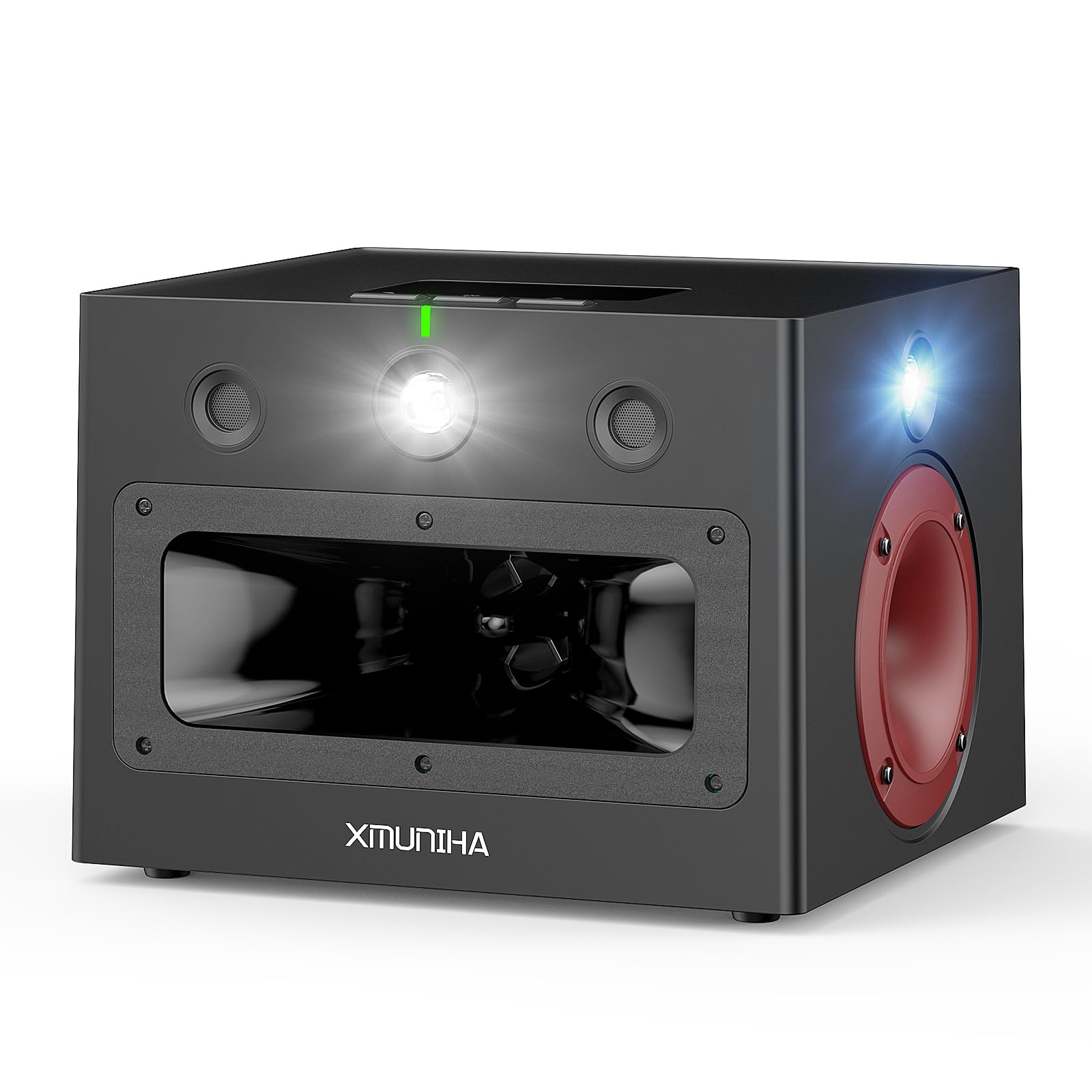
This is the “big room, big attitude” pick. XMUNIHA leans into the idea that rodents adapt when the environment is predictable, so it stacks multiple disruption types: changing ultrasonic patterns, a strobe, and even a “bionic cat” sound option for situations where you want to add a more obvious threat cue.
Where this makes sense in a car-focused strategy is when your vehicles live in a large garage, warehouse bay, storage building, or carport-adjacent space that rodents treat like a transit hub. In those cases, the goal isn’t only to protect one engine bay; it’s to make the whole space feel “wrong” to hang out in.
One important practical note: this model is best used where you don’t mind occasional audible noise from certain modes. If you want “silent and invisible,” stick to ultrasonic-only settings or choose a different style. But if you want to aggressively disrupt rodents in a big, unoccupied area, this brings the toolbox.
Why it’s compelling
- Mode variety: Lets you rotate disruption styles instead of relying on one signal.
- Great for large spaces: A strong fit for garages, storage areas, and commercial-style rooms.
- Anti-adaptation mindset: Designed around changing patterns instead of static output.
Good to know
- Not a living-room device: Some modes can be noticeable in occupied spaces.
- Placement still matters: Big coverage claims don’t defeat walls, clutter, and heavy obstructions.
Ideal for: Large, unoccupied garages or storage spaces where you want a stronger “environmental push” against rodents.
4. CRACLU Battery Under‑Hood (B0D7CNKP6H) – Strong Protection Without Wiring
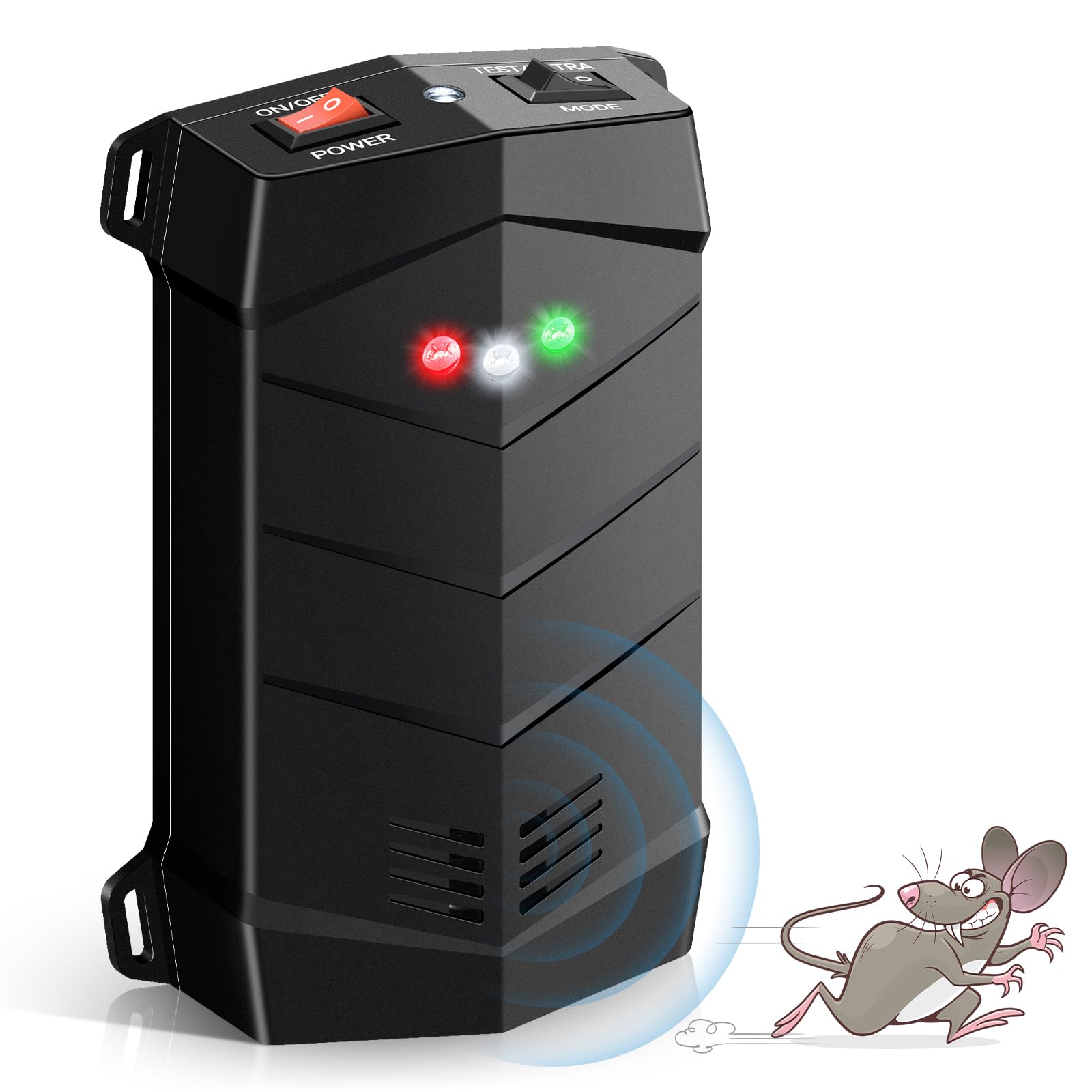
CRACLU is a smart pick for people who want a “real” under‑hood deterrent but don’t want to splice, crimp, or route wiring to a battery. Insert the battery, mount it, and you’re live. The combination of ultrasonic plus strobe is exactly what you want in an engine bay, because it attacks the two things rodents crave: a quiet dark place to nest and a predictable environment.
A major advantage here is the auto-standby behavior. Devices that pause while driving and resume while parked tend to last longer and require less babysitting. That’s why this model shows up often in seasonal storage stories—vehicles parked for weeks, travel trailers, second cars, and “sits all winter” trucks.
The setup tip that matters most: mount it where rodents travel. That usually means near the battery tray area, near firewall access points, or near any location where you’ve seen debris. Don’t bury it behind a cover “because it fits”—give the speaker a clear job.
Why it’s a strong battery pick
- No wiring required: Great for non-DIY folks or vehicles with hard-to-access batteries.
- Visual confirmation: Strobe makes it obvious the unit is functioning.
- Storage-friendly: Auto standby helps conserve power.
Good to know
- Battery maintenance is real: Any battery unit needs routine checks, especially in extreme cold/heat.
- Mounting stability matters: If it’s loose, vibration can cause intermittent contact issues.
Ideal for: Seasonal vehicles, RVs, and anyone who wants strong under‑hood deterrence without hardwiring.
5. MouseBlocker 12V (B00DWGAHM0) – The Tiny Unit With Big “Always‑On” Energy

This is the minimalist’s hardwired option: small footprint, simple wiring, and a design philosophy that says, “If it runs constantly with minimal draw, you stay protected.” For many vehicles, that’s enough—especially when the rodent pressure is moderate and the main goal is to stop casual nesting, not fight an active infestation.
Where this unit shines is stability. Battery devices can fail quietly because the batteries died or corroded. Plug-ins can fail because rodents were never removed from the building. A 12V unit, installed correctly, just sits there doing its job. If you’re the kind of person who wants a single under‑hood solution and you’re comfortable with a basic wiring install, this is a clean, low-fuss approach.
One real-world nuance: some people report that a high-frequency unit can be heard by certain humans (often younger ears) in very quiet environments. If you park extremely close to living areas, mount thoughtfully and test.
Why it’s a keeper
- Hardwired simplicity: Straightforward “always on” protection.
- Small footprint: Easy to mount without interfering with components.
- Good for long-term use: No battery swapping schedule.
Good to know
- No strobe: If rodents are bold, pairing with a light-based deterrent can help.
- Needs smart placement: Don’t tuck it behind thick insulation or in a dead corner.
Ideal for: Daily drivers and DIY installers who want a compact hardwired solution.
6. Loraffe 12V/24V Pack of 2 (B07D118ZRJ) – The Shadow‑Zone Killer

If you remember only one lesson from this entire guide, make it this: rodents exploit engine bay “shadow zones.” That’s why a two-unit strategy can feel like cheating—in the best way. With this Loraffe pack, the smartest approach is to treat your engine bay like two halves: left side and right side, each with its own deterrence “beam.”
Owners who experiment with placement often discover the hidden truth: the device doesn’t need to be centered; it needs to be aimed. If rodents are nesting near strut towers, along the firewall, or under plastic covers, putting one unit on each side to cover those paths changes behavior fast.
The other reason this pack ranks high is the battery protection logic. Low-voltage cutoff plus auto standby means you get hardwired convenience without the “what if it drains my battery during long parking?” anxiety. It’s a thoughtful design for real vehicles, not just a lab bench.
Why it’s so effective
- Two-unit coverage: Greatly reduces engine bay “safe zones.”
- Smart power behavior: Auto standby + low-voltage cutoff supports long-term use.
- Excellent for large bays: Trucks, SUVs, and RV chassis benefit most.
Good to know
- Wiring quality matters: A weak ground can make any hardwired system underperform.
- Mounting is strategy, not decoration: Place near nest-prone corners, not wherever is convenient.
Ideal for: Anyone who wants a “serious” under‑hood setup that covers both sides of the engine bay.
7. CXIENAOY 4‑Pack Under‑Hood Set (B0G2X3ZHYK) – The Perimeter Builder

The hidden superpower of a four-pack isn’t “more devices.” It’s options. With four units, you can build a perimeter strategy: one under the hood of the problem vehicle, one under the hood of the second vehicle (because rodents don’t respect boundaries), and then use the remaining units to cover the garage corners or storage zones where activity shows up first.
This style of set is also fantastic for large engine bays where one unit can’t cover everything. You can place two units on opposite sides of the bay and still have extra units for a second car or a garage shelf near nesting areas.
Another detail that matters: flexible power options simplify weird vehicle layouts. Not every car has a friendly under‑hood battery location. Multi-power units let you adapt the plan instead of abandoning it.
Why it’s a smart buy
- Coverage flexibility: Use across multiple vehicles or build a garage perimeter.
- Strategic placement: Two units per large engine bay is suddenly realistic.
- Easy to live with: Vibration sensing reduces wasted runtime.
Good to know
- Test each unit first: Before zip-tying in hard-to-reach places, confirm all units power on.
- Don’t over-clutter placement: Avoid mounting where heat, water splash, or moving parts can hit it.
Ideal for: Households with multiple vehicles, RV owners, or anyone who wants a “distributed defense” approach.
8. BORHOOD 2‑Pack Hybrid (B0GC4DGWC2) – One Device, Multiple Missions
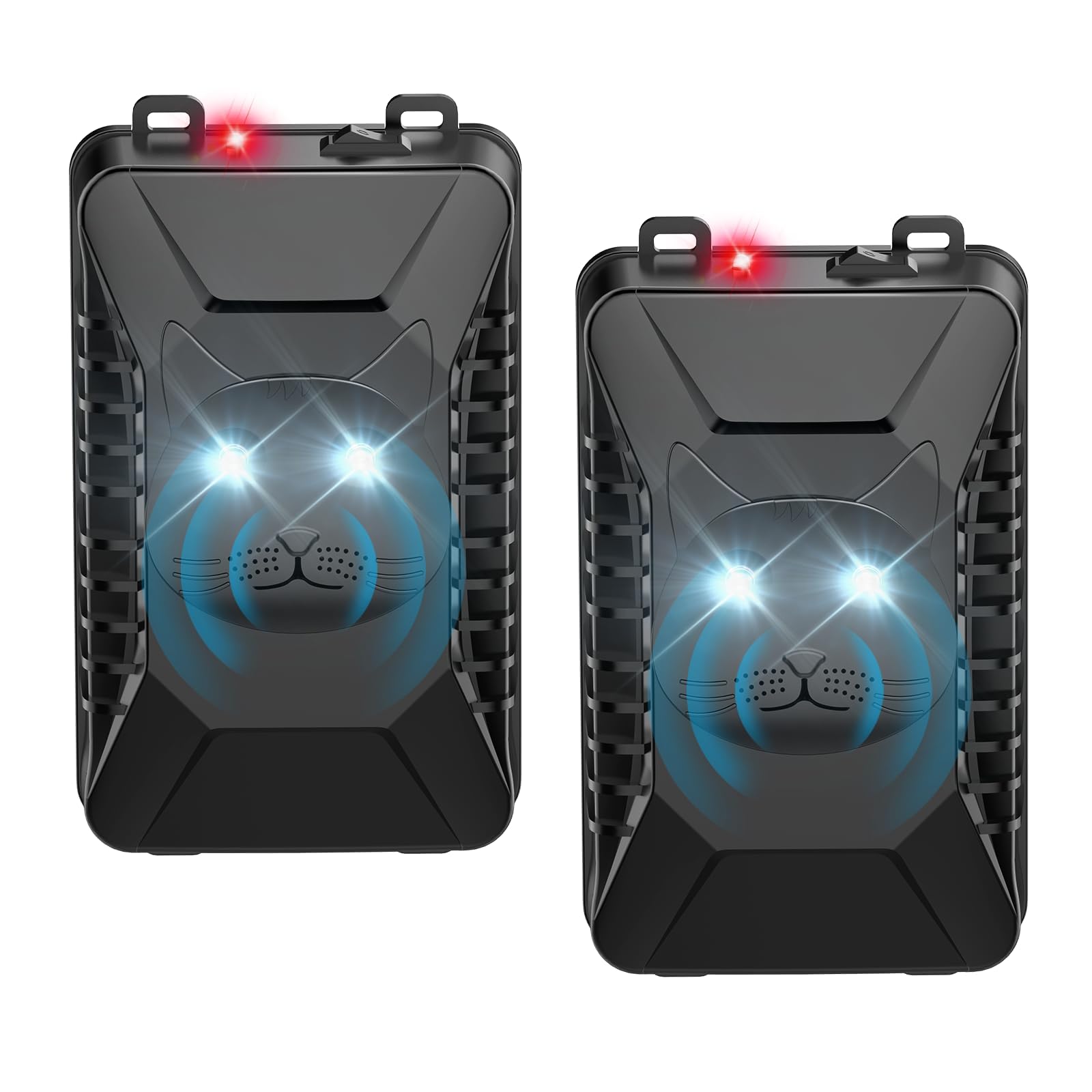
BORHOOD is for the person who wants flexibility without overthinking it. The reason hybrid-power models can be a game changer is simple: you can run one under the hood and place the other in the garage or storage room, using whichever power method makes sense in each spot.
In real life, your “rodent defense plan” changes over seasons. Maybe your car is in the driveway during summer and stored in a garage during winter. Hybrid units make that shift easy. You’re not stuck with a device that only makes sense in one location.
The biggest win with this category is building a layered setup without buying totally different systems. Under hood keeps them from nesting. In-garage discourages them from hanging around the building. Together, it reduces both the “temptation” and the “damage.”
Why it’s useful
- Multi-scenario power: Adapt to vehicles, garages, and storage rooms easily.
- Great for seasonal changes: Same devices, different placement as the year shifts.
- Simple monitoring: Indicator behavior helps you verify it’s running.
Good to know
- Noise alerts vary: Some people dislike beeps or indicator behavior in certain situations.
- Secure mounting matters: Engine vibration can loosen poorly mounted devices over time.
Ideal for: People who want one system that works in both the car and the garage, with minimal fuss.
9. Loraffe Battery Pack of 2 (B07N6JZ2J4) – The “Two Cars, No Tools” Setup

This is the practical “I want protection today” pick. Battery-powered Loraffe units are popular because they’re easy to mount and they combine two deterrents that matter in an engine bay: ultrasonic disruption and flashing lights. If you’ve got two vehicles, this pack lets you protect both without needing to learn wiring.
What real users often discover (and what you should bake into your plan): big engine bays can require two units per vehicle if rodents are persistent. That’s not a failure—it’s just geometry. If you’ve got a large truck or an RV chassis, consider placing one unit near each side where nests usually form.
One common complaint with battery under-hood devices is maintenance hassle. If your unit is zip-tied in, battery swaps may require cutting and re-tying. The simplest fix is planning ahead: mount in a spot that is reachable without removing half your engine covers.
Why people love it
- Fast install: Mount and go—no battery terminals required.
- Strong under‑hood fit: Strobes disrupt nesting comfort in dark corners.
- Two devices = options: One per car, or both in one large engine bay.
Good to know
- Battery swaps take planning: Choose mounting points that remain accessible later.
- Some situations need “extra push”: If silent ultrasonic doesn’t shift behavior, mode changes can matter.
Ideal for: Two-car households or anyone who wants under‑hood protection without hardwiring.
10. Virine Multi‑Mode Plug‑In (B09V44KFN5) – The “Annoy Them Out of the Building” Device

Virine is one of those plug‑in units that gets interesting because it doesn’t pretend one signal solves everything. It offers multiple modes—ultrasonic, pressure-wave style output, and combination settings—so you can adapt based on the pest and the environment.
Where it really fits a car strategy is the garage/attic layer. People who report the best results tend to use plug‑ins like this where rodents travel: attics, garage walls, storage rooms, and the “above the garage bedroom” type spaces where you hear scratching in walls. If you remove their comfort inside the building, they’re less likely to treat your engine bay as the backup apartment.
One of the most useful real-world takeaways with multi-mode devices: movement patterns change before pests disappear. Some users describe increased activity early on—more movement, more noise—then a gradual drop. That’s not always a bad sign; it can be an eviction phase.
Why it stands out
- Multiple modes: Useful when one setting doesn’t shift behavior.
- Good coverage logic: Place several around a building for better results.
- Pattern variability: Designed to reduce “rodent adaptation.”
Good to know
- Cords are a target: In rodent-heavy spaces, protect cords and don’t leave them dangling.
- Building tool, not under‑hood tool: Best used to clean up the environment around your vehicles.
Ideal for: Garages, attics, workshops, and storage rooms—especially when your vehicles live in that ecosystem.
11. ZLieatmp Plug‑In 2‑Pack (B0FXG28N65) – The Simple “Room Pair” for Garage + Entry Area
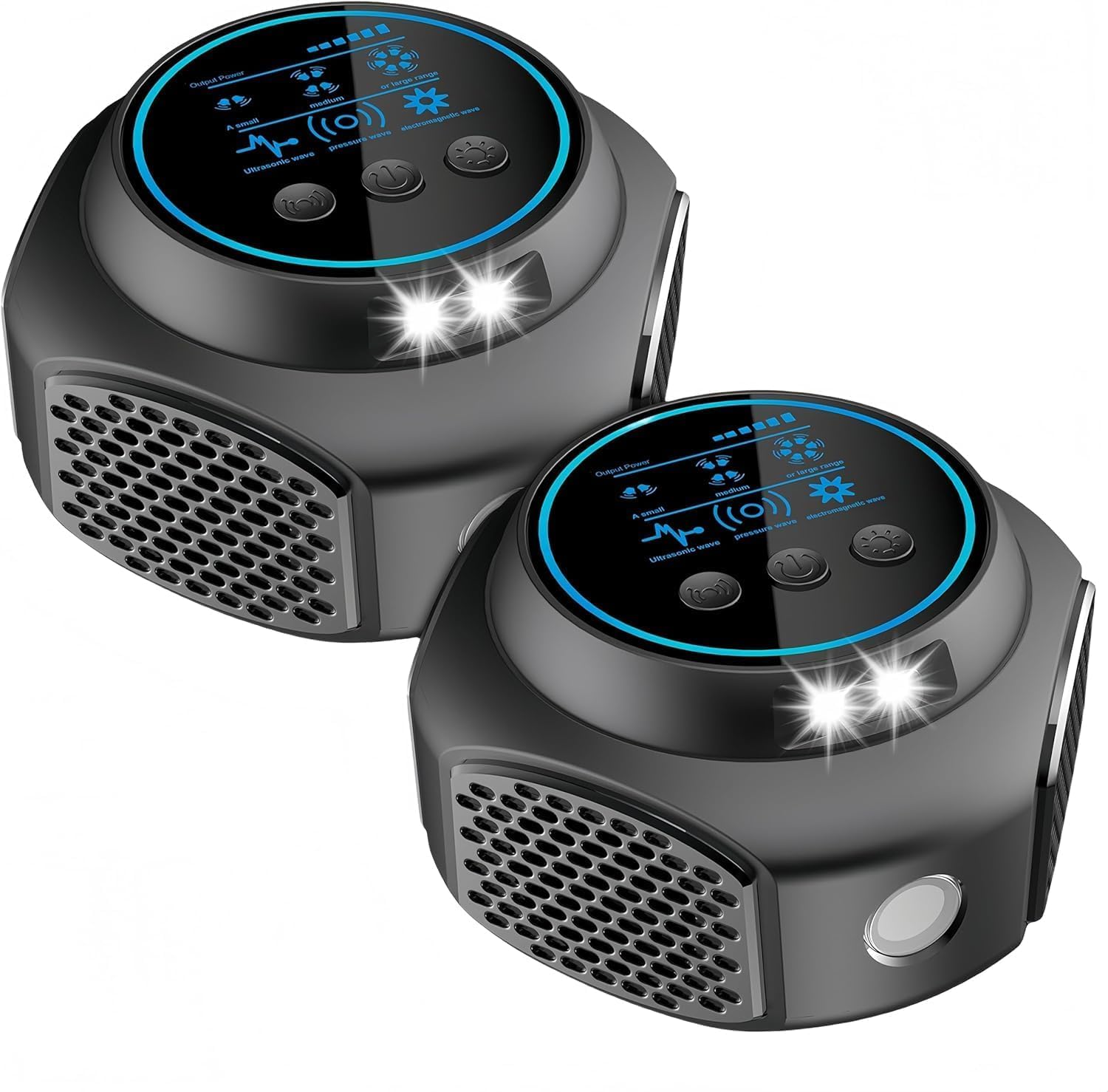
A two-pack plug‑in approach can be surprisingly effective for vehicle protection, because it lets you cover both the “hangout zone” and the “entry route.” For example: one unit in the garage where vehicles park, and the second near the most likely entry area (a storage room, basement stairwell, or the wall that backs up to outdoor access).
ZLieatmp’s appeal is ease: plug in, select a mode, and let it run. The “multiple modes” idea matters because not every pest responds the same way. A setting that discourages mice might not bother squirrels. And a mode that’s effective in a cluttered garage might not be ideal in a clean basement.
This is not the tool you use to protect a wiring harness by itself. It’s the tool you use to reduce rodent pressure in the building so your under‑hood protection has a much easier job.
Why it’s useful
- Two‑location strategy: Cover garage plus a second hotspot.
- Low effort: Plug in, choose mode, done.
- Good pairing: Works best alongside an under‑hood unit.
Good to know
- Obstructions reduce reach: Keep it open—don’t hide it behind boxes.
- Needs time: Plug‑ins often show results over weeks, not minutes.
Ideal for: People who want to push rodents out of garages and adjacent indoor entry zones.
12. PEXPEL Under‑Hood (B0G7VBPDB8) – The Flexible Setup for “Weird” Vehicles
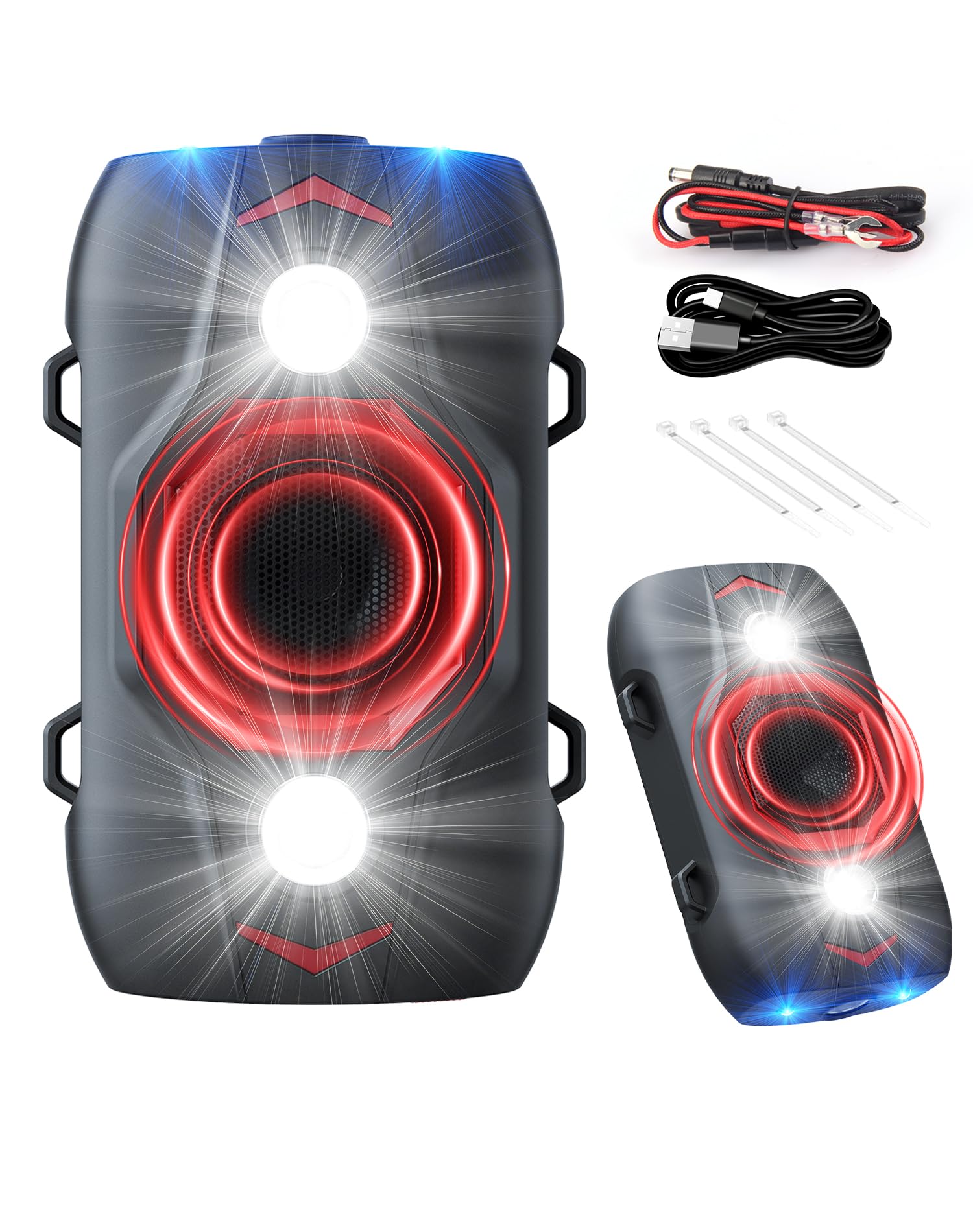
PEXPEL is the “Swiss Army” style rodent repeller for cars: multiple ways to power it and a strong audio-visual deterrent stack. That matters more than it sounds, because one of the most common frustrations in this category is vehicle layout. Some cars have batteries in the trunk. Some have underfloor batteries. Some have engine bays so tight you can’t easily reach a clean wiring point.
With this unit, you can choose what fits your life: hardwire if your battery is accessible, run USB power when you’re parked in a garage with a power source, or use batteries when you need a self-contained under‑hood setup.
The “smart auto on/off” behavior is also exactly what you want for day-to-day driving. It conserves power and keeps the unit focused on the moments rodents actually move in—when the vehicle is parked and quiet.
Why it’s a standout
- Flexible power: Works with more vehicle layouts than single-power designs.
- Strong deterrent stack: Multiple strobes plus ultrasonic patterns.
- Good for garage users: USB power is convenient when the car is stored indoors.
Good to know
- Test before mounting: Hybrid/multi-power devices should be checked before you commit to tight zip ties.
- Be mindful of heat: If using batteries under hood, mount away from the hottest zones.
Ideal for: Vehicles with awkward battery locations, or anyone who wants one repeller that adapts to multiple setups.
13. Angveirt Under‑Hood 2‑Pack (B07YBZ2YYW) – The “Prevent Nesting” Workhorse Set
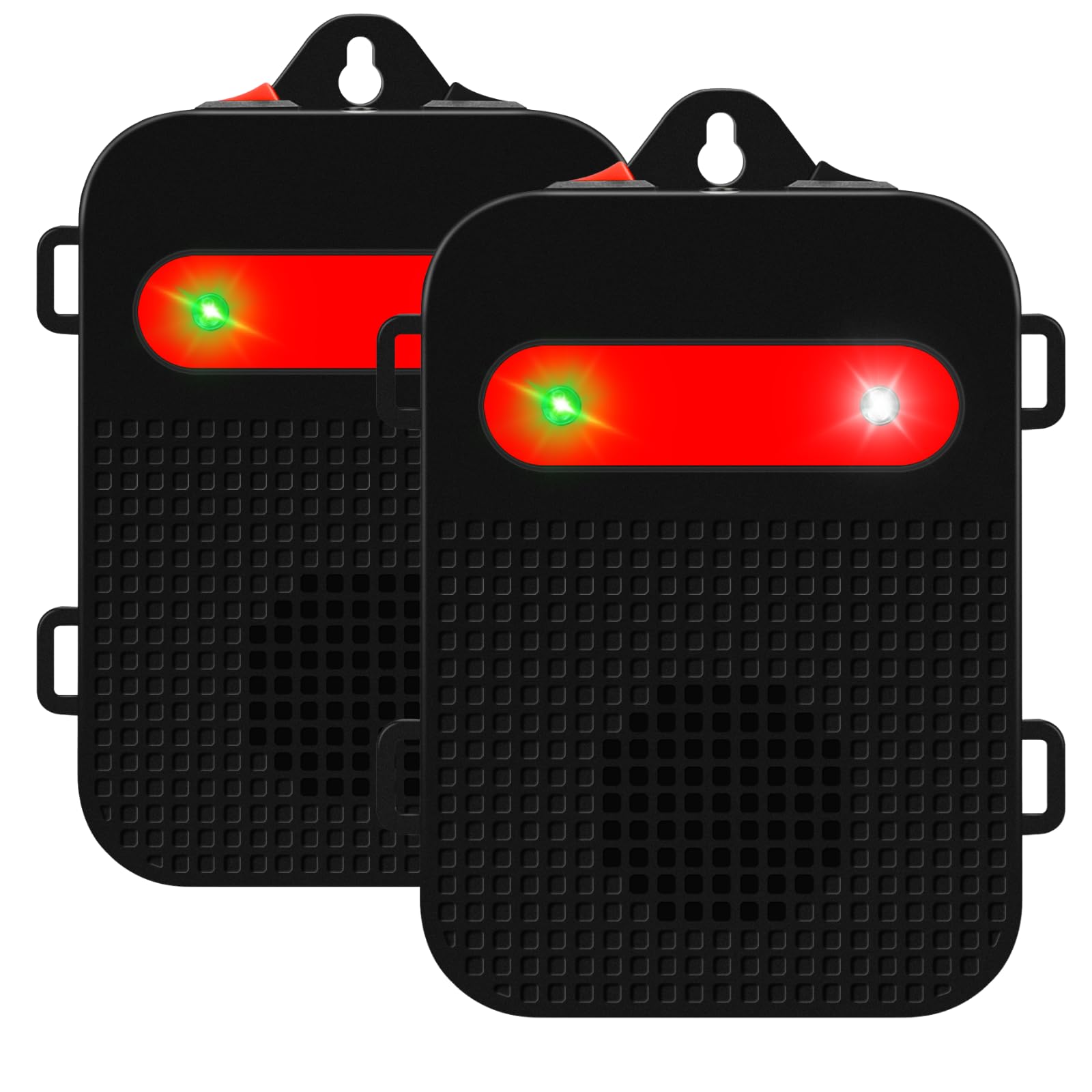
Angveirt is a classic “under hood” two-pack: ultrasonic plus flashing lights, battery powered, and built with the assumption that you’ll install it in places rodents love—engine compartments, RV storage bays, sheds, garages.
The real value with this type of device is how it supports a combined approach. Many owners report the best outcomes when the repeller is used alongside other deterrents like bait stations or strong odor sprays—because rodents don’t all respond to the same pressure. The repeller disrupts comfort and movement patterns; additional measures reduce population and access.
Another useful detail from long-term users: rechargeable AAs can make maintenance simpler if you’re running multiple units across multiple vehicles. The auto on/off behavior helps, but the easiest plan is one you can sustain without resentment.
Why it’s dependable
- Two units for coverage: Better odds against engine-bay shadow zones.
- Easy install: Zip tie placement under hood, RVs, sheds, and more.
- Good “parking season” fit: Especially helpful when vehicles sit longer.
Good to know
- Battery compartment access: Plan mounting so you can service it later.
- Not a miracle wand: For severe infestations, pairing strategies work best.
Ideal for: Seasonal storage vehicles, RV owners, and anyone who wants a reliable battery-powered two-pack.
14. Glaobule Battery 2‑Pack (B07YDK1QXG) – Quiet, Compact, and Easy to Place
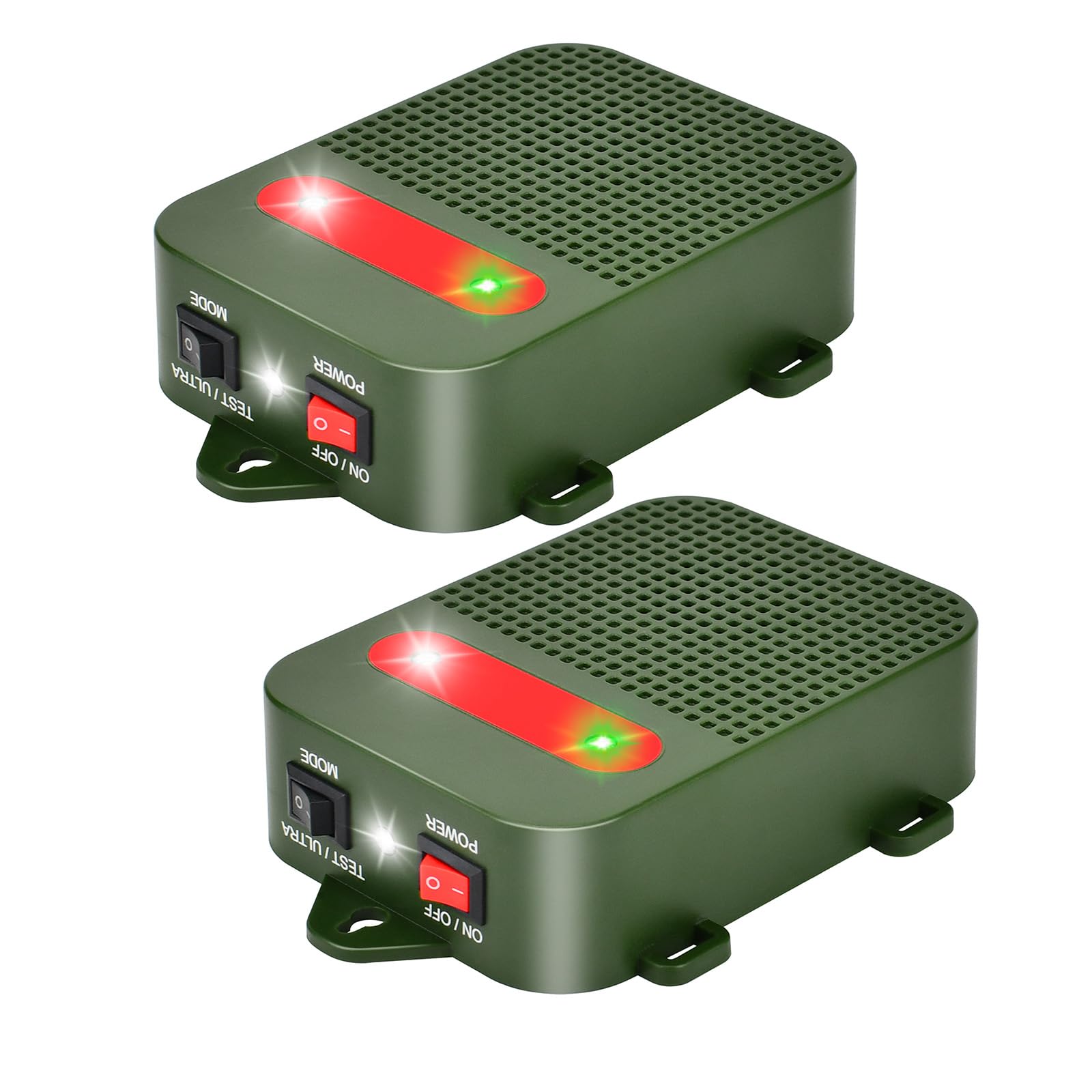
Glaobule’s two-pack is a popular “start here” option because it’s straightforward: mount it, it flashes, you can’t hear it, and it’s ready to work. For many people, that’s exactly the point. They don’t want to become rodent experts—they want to stop nests and protect wiring.
Where this type of unit tends to succeed is as a prevention layer, especially after you’ve already cleaned the engine bay and removed nesting material. Rodents are far more likely to return if the space still smells like “home.” Clean first, then install.
The biggest watch-out is maintenance friction. Several users mention tiny screws or awkward battery access. That’s not unique to this brand—it’s common across battery under-hood devices. So the best move is mounting with future-you in mind: choose a spot you can reach without pulling half the engine apart.
Why it’s a good starter
- Simple install: No wiring, no outlets, no drama.
- Silent to most humans: Works in garages without constant audible annoyance.
- Two units = flexibility: One under hood, one in trunk or storage area.
Good to know
- Serviceability varies: Battery compartment design can be fiddly.
- Best as prevention: For heavy infestation, use a layered plan.
Ideal for: People who want a simple two-pack to begin protecting cars, RVs, or storage compartments.
15. Loraffe 12V/24V Single (B07JG4V1ZP) – The “Hardwire Lite” Option

This is a strong choice when you want the advantages of hardwired power (no battery swapping) without overcommitting to a more complex setup. The install is straightforward: positive and negative connections, then mount the unit where it has clear exposure to the engine bay space.
The best real-world outcomes with this style of unit come from two habits: clean placement (avoid insulating covers and dead corners) and consistent use (don’t switch it off for weeks and expect rodents to “remember” they don’t like your car). Rodents are opportunistic; if protection is intermittent, they treat it like a schedule.
If you’ve got a larger engine bay or a known nesting corner, consider stepping up to a two-device strategy. One unit can work, but two units dramatically reduce the “quiet corner” problem.
Why it’s a solid value
- Hardwired convenience: Set it up once and keep protection consistent.
- Battery safety logic: Low-voltage cutoff supports longer parking periods.
- Easy verification: Strobe behavior helps confirm it’s running.
Good to know
- One unit has limits: Large engine bays can create shadow zones.
- Install quality matters: A poor ground reduces performance and reliability.
Ideal for: DIY installers who want a single hardwired repeller with battery protection features.
16. Loraffe Battery Single (B08K2VZNCV) – The Compact “Extra Layer” Under the Hood

Sometimes the right move is not replacing your whole strategy—it’s adding a second layer. This compact Loraffe battery unit is a good “extra coverage” tool: place it near the corner where activity keeps returning, especially if your main repeller is mounted on the opposite side of the engine bay.
One reason this style is practical is the low-battery alert behavior. Many battery devices fail silently. A warning cue gives you a chance to maintain protection instead of discovering failure after fresh droppings appear.
The two things to do right: mount it away from water exposure and mount it where battery service is possible. It’s easy to zip tie something into an impossible spot. It’s less fun to cut it out later just to change batteries. If you mount smart, it can be a very effective add-on.
Why it’s worth considering
- Compact placement: Fits where larger units don’t.
- Good “second unit” role: Helps cover engine bay shadow zones.
- Maintenance cue: Alerts can reduce surprise failures.
Good to know
- Battery contact sensitivity: Secure mounting reduces vibration-related issues.
- Not a full plan alone: Best as a supplement or prevention tool.
Ideal for: Anyone adding a second deterrent to cover a stubborn corner or support an existing setup.
Power & Placement Guide: Making the Best Ultrasonic Rodent Repeller For Cars Work
The difference between “worked instantly” and “rat sat beside it on camera” is usually not the brand—it’s the setup. Use this section as your blueprint before you mount anything permanently.
Ultrasonic Frequency: Variable Beats Predictable
Most devices operate in ultrasonic ranges (measured in kHz). The exact number matters less than the pattern. Rodents adapt quickly to fixed, predictable signals. Devices that shift frequencies or alternate wave patterns tend to create a “never gets normal” environment.
Practical takeaway: if your device offers multiple modes, start with a variable/alternating mode. If you still see evidence after consistent use, change the mode rather than changing your expectations.
- Quiet doesn’t mean weak: Many effective units are inaudible to humans.
- Audible/test modes are tools: They help confirm operation and can add extra disturbance in tough cases.
- Obstructions matter: Ultrasonic waves don’t “wrap” around thick covers the way you want them to.
Light, Vibration, and Voltage: The Practical Features That Prevent Failure
Strobe lights matter under the hood because they disrupt the safe, dark nesting vibe. Vibration sensing matters because it saves power and makes the deterrent “active when needed.” Low-voltage cutoffs matter because your car must still start.
Use this quick checklist before you commit to a mount:
- Mount away from heat extremes: Not on the hottest metal surfaces or directly beside exhaust components.
- Mount away from splash zones: Avoid areas likely to get soaked during rain or washing.
- Face open space: Aim the speaker toward the largest open section of the bay.
- Cover both sides if needed: Large bays often need two angles to eliminate shadow zones.
FAQ: Ultrasonic Rodent Repellers for Cars
Do ultrasonic car repellers actually work, or is it hype?
Will a 12V hardwired unit drain my car battery?
Where exactly should I mount an under‑hood unit?
Can humans or pets hear these devices?
Battery unit or hardwired unit—what’s better for storage?
Final Thoughts: The Verdict
If you want one confident recommendation that fits most drivers, start with the Mouse Blocker ProX 12V for under‑hood protection—it’s the most complete “install it and trust it” setup in this lineup. For garage-based problems, pair your under‑hood device with a space tool like the MouseBlocker 1000x Plug‑In or the multi‑mode Virine Plug‑In. And if wiring isn’t your thing, the Loraffe Battery 2‑Pack is the cleanest “no tools” path to solid under‑hood coverage.
Bottom line: the best ultrasonic rodent repeller for cars is the one that matches your parking reality and eliminates engine-bay shadow zones. Pick the right power style, mount with intention, and you’ll stop treating every hood pop like a jump scare.