
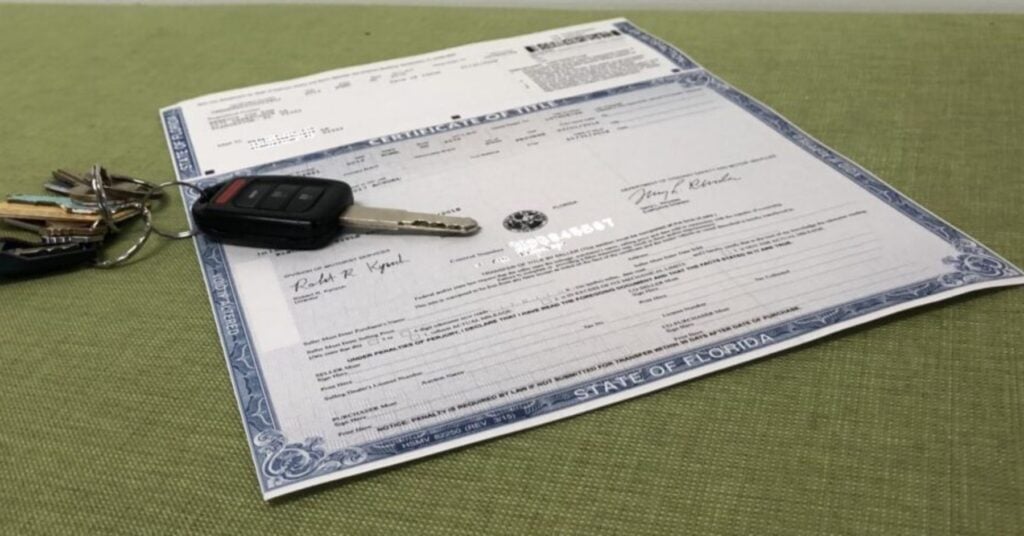
Most dealers file the transfer, then your state issues the title after taxes, fees, and any lien details are recorded.
You’ve signed the contract, handed over your down payment, and driven away. Then you realize you don’t have the title in your glove box. That can feel weird, even if the sale went smoothly.
The reason is simple: a vehicle title is a state ownership record. A dealership can prepare and submit the paperwork that changes that record, but the state controls the record itself. Once you see the process as “dealer submits, state records,” the timeline makes a lot more sense.
What A Vehicle Title Means In Plain English
A title is the legal proof of ownership for a specific VIN. It shows who owns the vehicle and, when there’s a loan, who has a lien. Titles can be paper, electronic, or a mix, depending on your state.
Dealers deal with titles every day, so they can feel casual about it. Buyers don’t, because the title is what lets you sell, trade, or prove ownership later. That’s why it pays to know where the title is supposed to go after your deal is done.
Who Issues The Title After A Dealership Sale
The title is issued by the state motor vehicle agency that records the vehicle. The dealer is a filer, not the issuer. Many states print and mail titles. Some states hold titles electronically and print a paper copy only in certain situations.
If you want to see what a state transfer packet usually needs, California DMV’s Title Transfers And Changes page lists the standard documents and signatures that drive the process.
When You Might Get A Title Right Away
Getting a title at pickup is possible, but it’s not the common path. It usually takes three things lining up:
- You pay in full and there’s no lien.
- The dealer already has a clean, negotiable title in hand for that exact vehicle.
- Your state’s system and dealer workflow allow a handoff without waiting on state processing.
Even in that best-case setup, some dealers still run the transfer through the state first, since the state record is the final word.
When You Won’t Get The Title At Pickup
Most buyers leave with temporary registration or temporary tags and a stack of purchase documents. The title comes later because the state has not finished recording you as the new owner.
- Financing: A lien is recorded, so the lender is tied to the title record. In many states, the lender receives the paper title or the title stays electronic until payoff.
- Lease: The leasing company is the owner on the title record. You get registration documents that show you as the driver.
- Out-Of-State Title: Transfers across states add matching steps for identity and odometer details.
- Trade-In Payoff: If your trade-in loan payoff is still clearing, the prior title chain can slow the new one.
Does The Dealership Give You The Title?
Sometimes, if you’re paying in full, there’s no lien, and the dealer holds a title that can be legally reassigned to you at the counter. Many financed deals work differently: the dealer submits the packet, the state updates the record, and the title is issued later, often to the lender.
So the practical question becomes: after the state records the transfer, will the title be sent to you, sent to a lienholder, or kept as an electronic record until payoff? Ask that before you sign.
When A Dealer Can Hand Over A Title, And When It Can’t
A dealer can only hand you what it legally has. If the store does not yet have a cleared title from the prior owner, it can’t be reassigned on the spot. Some used cars arrive on the lot before the title arrives in the mail from an auction, a previous lender, or a wholesaler.
Also, small paperwork errors can trigger a state rejection: a misspelled name, a missing signature, an odometer statement issue, or a lien that wasn’t released cleanly. Rejections add time because the dealer has to fix the packet, then resubmit.
What You Should Leave The Dealership With
No title at pickup is fine if you leave with the right substitutes. These documents protect you while the transfer runs its course:
- Signed purchase contract or buyer’s order that matches the VIN.
- Temporary registration or temporary plate document, with an end date.
- A receipt that shows taxes and registration fees collected.
- Any state-required inspection, smog, or safety paperwork, when applicable.
Before you leave, ask one direct question: “What date will the title packet be submitted?” If they can’t name a date, ask who will, and when.
How Long Title Delivery Usually Takes
There’s no one national clock. Title timing depends on your state, the dealer’s submission method, and whether the packet is complete the first time. Many buyers see their registration items first and the title later.
If you financed, you may not receive a paper title while the loan is open. In many states, the lender holds it, or the title stays electronic until the lien is released.
Common Title Outcomes After You Sign
This table shows what buyers most often see, based on the deal structure.
| Purchase Scenario | Who Files The Transfer | Where The Title Ends Up |
|---|---|---|
| Cash purchase, clean in-state title in dealer’s file | Dealer or buyer (state rules) | Mailed to buyer, or recorded electronically to buyer |
| Financed purchase through a lender | Dealer | Electronic title with lien, or mailed to lienholder |
| Lease | Dealer or leasing company | Leasing company listed as owner; buyer gets registration docs |
| Used car with out-of-state title | Dealer | Issued by buyer’s state after verification |
| Trade-in with payoff still processing | Dealer after payoff clears | New title record updates after lien release is recorded |
| Title in transit from auction or wholesaler | Dealer once title arrives | Delayed until dealer can submit reassignment |
| State rejection due to missing item or mismatch | Dealer fixes and resubmits | On hold until corrected and accepted |
| Electronic-title state with paper title on request | Dealer and state | Electronic record first, paper title after lien release or request |
| Dealer processes a private-party transfer as a service | Dealer (service fee may apply) | Issued by state after fees and checks |
What To Check Before You Sign Anything
Title trouble is easier to prevent than to unwind. A few checks can save you weeks of calls.
Match The VIN In Multiple Places
Match the VIN on the vehicle to the VIN on the contract and registration documents. If one character is off, stop and correct it before you sign. One wrong character can stall registration, insurance, and the title record.
Ask Whether The Title Is Paper Or Electronic
Ask your dealer what your state uses and what changes when there’s a lien. This single answer shapes who receives the title and whether you should expect a paper document in the mail.
Check For Brands And History Flags
Brands like salvage, rebuilt, flood, or odometer issues can change value and paperwork steps. NMVTIS is a federal-state system that helps deter title fraud, and its consumer page explains what it can show and where to get approved reports: NMVTIS Consumer Information.
Get A Straight Answer On Payoffs And Holds
If you’re trading in a car with a loan, ask when the payoff will be sent and what the store will do if a payoff quote changes. If you’re buying a used car, ask whether the store has the title in hand or is still waiting on it.
After Delivery: A Simple Tracking Routine
You don’t need to call every day. You do need a clear timeline and a few checkpoints.
Within The First Week
Ask for the date the dealer submitted the title packet. Many dealer systems can confirm a submission date. Write it down.
Before Temporary Tags Expire
Temporary tags have an end date. Put that date in your calendar. If the end date is getting close and you have no update, contact the dealer and ask whether an extension or new temporary document is available in your state.
If You Financed, Confirm The Lien Shows Up
Ask your lender whether they can see the lien recorded. If they can’t see it after a reasonable window, ask the dealer what item is holding up the state record.
Red Flags That Suggest More Than A Routine Delay
Some delays are normal. Some deserve quick action. Watch for these signs:
- The dealer can’t confirm a submission date.
- You’re asked to re-sign forms with no written explanation of what changed.
- The dealer mentions repeated rejections but can’t name the missing item.
- The state says the VIN or odometer data does not match what was filed.
When you hear vague explanations, ask for the exact missing piece: missing signature, odometer statement issue, lien release issue, fee mismatch, or a state verification step. Specific answers move the file forward.
This table gives you a clean way to follow up without sounding lost. It also helps you spot where the file is stuck.
| Time Point | Question To Ask | Document To Request |
|---|---|---|
| Day 1 | What is my temporary tag end date? | Temporary registration or temp plate paperwork |
| Days 3–7 | What date was the title packet submitted? | Submission confirmation or batch date note |
| Week 2 | If financed, does the lender see the lien recorded? | Lender note confirming lien status |
| Week 3 | Has the state requested any correction? | Copy of the rejection notice or missing-item list |
| Week 4 | What is the current state status for this VIN? | State status screen print or reference number |
| Two weeks before temp ends | Can the temp be extended in my state? | Extension policy note or new temp document |
| After payoff | How will the lien release be sent and recorded? | Lien release letter or electronic release confirmation |
What To Do If The Title Still Hasn’t Shown Up
Use a short escalation path that keeps the paper trail clean.
- Request a written status: Ask for the submission date and the state office that received the packet.
- Ask what they need from you: If a re-sign is needed, ask to see the state notice or rejected form.
- Call your lender: If financed, ask whether the lien is recorded and whether they hold the title record.
- Contact the state motor vehicle office: Ask whether a title application is pending on the VIN.
- Save your notes: Keep names, dates, and summaries in one place.
Paper Titles, Electronic Titles, And Payoff
If your state uses electronic titles, you may never see paper while the lien is active. After payoff, the lender releases the lien, and the state updates the record. Some states then mail a paper title automatically. Others require you to request a printed title.
If you plan to sell soon after payoff, ask your lender what the release process looks like in your state and what the typical mail or processing time is on their end. That prevents a last-minute scramble when a buyer asks for the title.
Wrap-Up
In a dealership sale, the title is usually not a hand-to-hand item at the moment you get the fob. It’s a state record that gets updated after the dealer’s packet is accepted. Your best move is to confirm where the title will land, get a submission date, and track your temporary tag window.
Do that, and you’ll know what’s normal, what’s not, and what to ask the minute something feels off.
References & Sources
- California Department of Motor Vehicles (DMV).“Title Transfers And Changes.”Outlines common documents and signatures used in a vehicle title transfer.
- U.S. Department of Justice, Bureau of Justice Assistance (NMVTIS).“For Consumers.”Describes what NMVTIS reports can show about title, odometer, and brand history and how consumers can access approved providers.