
Our readers keep the lights on and the garage heater humming. As an Amazon Associate, I earn from qualifying purchases.
Specs are compiled from manufacturer listings and verified buyer reviews and can change over time — please confirm the key details on the product page before buying.
Choosing the right car wire means understanding AWG numbers, metal types, and voltage ratings. The single most important thing to understand is that the gauge number determines how much current the wire can safely carry — a lower number means a thicker wire that handles more power. This guide ranks the best options by your specific project, from amplifiers to trailer lights.
I’m Mo Maruf — the founder and writer behind GoCarLife. This guide is built by comparing the manufacturers’ published specifications and the patterns across verified customer reviews, so you get each pick’s real strengths and trade-offs instead of marketing spin.
Here are the best car wires ranked by performance and value, trusted by real owners.
Our Picks at a Glance

How To Choose The Best Wire for Cars
Every car electrical project starts with the same question: what gauge do I need? The answer depends on your device’s current draw and wire run length. Thicker wire (lower gauge number) handles more amperage without dangerous voltage drop or overheating. A 4 AWG cable is overkill for LED lights but essential for a big subwoofer amplifier.
Gauge and Current Capacity
The American Wire Gauge (AWG) system is the standard: 18 AWG is fine for small signal wires and low-power LEDs, while 14 AWG and 12 AWG handle most interior accessories, speakers, and lighting circuits. Drop down to 10 AWG or 4 AWG for high-power amplifier runs and battery cables. Always size up one gauge if the wire run is very long — voltage drop over distance is a real problem that makes your lights dim and amps clip.
Copper vs. Copper Clad Aluminum (CCA)
Pure copper wire is the best conductor, but it is heavy and expensive. CCA wire — a thin copper layer over an aluminum core — is significantly lighter and more flexible, and owners consistently report it works reliably for 12V automotive use at a much lower cost. The trade-off is that CCA has slightly higher resistance than pure copper for the same gauge, so if you are pushing the limits of a circuit, step up one gauge size to compensate.
Jacket Material and Flexibility
The insulation (the plastic jacket) matters almost as much as the conductor. PVC (polyvinyl chloride) is the most common jacket for automotive wire — it is durable, flexible, and resists oil and moisture. A flexible wire is far easier to route through tight dashboard cavities, along door sills, and inside trunk panels. Owners strongly favor wires that strip cleanly and bend without kinking.
Quick Comparison
| Model | Best For | Gauge | Length | Conductor Type | Amazon |
|---|---|---|---|---|---|
| Energeaster 14 Gauge 100FT★ Best Overall | – | 14 AWG | 100 ft | CCA | Amazon |
| AWELTEC 4 Gauge 25FTHigh-Power Specialist | High-Power Runs | 4 AWG | 25 ft | CCA | Amazon |
| Mygatti 16 Gauge 6-PackColor Coder’s Choice | Multi-Color Projects | 16 AWG | 35 ft ea. | CCA | Amazon |
| GEARit 10 Gauge 100FT Pair | Amps & Batteries | 10 AWG | 100 ft total | CCA | Amazon |
| NAOEVO 12 Gauge 100FT | General 12V Wiring | 12 AWG | 100 ft | CCA | Amazon |
| NAOEVO 14 Gauge Tinned 50FT | Marine & Wet Areas | 14 AWG | 50 ft | Tinned Copper | Amazon |
| BABOOM 14 Gauge 6-Pack 600FT | Big Restorations | 14 AWG | 600 ft total | CCA | Amazon |
| GS Power 18 Gauge 600FT | Signal & LEDs | 18 AWG | 600 ft total | CCA | Amazon |
| BEST CONNECTIONS 14 Gauge 7-Pack 350FT | Trailer Wiring | 14 AWG | 350 ft total | CCA | Amazon |
In‑Depth Reviews
1. Energeaster 14 Gauge Wire 100FT
Our pick — over 4.5★ from 650+ verified ratings; the strongest balance of quality and price.
The 100-foot spool that keeps coming up in project after project.
14 AWG is the balance for most 12V car work — speakers, LED strips, CB radios, and accessory hookups. This Energeaster spool gives you 100 feet of that gauge in red and black, which is enough length to wire an entire interior or run a couple of amplifiers in a sedan. The copper clad aluminum (CCA) construction keeps it lighter and more flexible than pure copper, which matters when you are threading wire through tight firewall grommets or behind a dashboard.
Buyers report the PVC jacket is thicker than some other 14 AWG wire, which makes the insulation feel sturdy, though a few note it can be a tight fit in smaller electrical connectors. The operating temperature range is wide at -35℃ to 105℃, so it handles engine bay heat without softening. Just be aware this is a 12-volt wire — buyers specifically flag it as not rated for direct burial underground, where you would need polyethylene insulation instead.
Owners consistently call the build quality excellent, and the 4.8-star consensus across hundreds of ratings backs that up. The red-and-black polarity coding saves you from tracing wires later, a small detail that every DIY installer appreciates.
Long-haul value: At 100 feet for the price of a fast-food run, this is the spool you grab once and use for years — it beats buying individual rolls every weekend.
The one honest caveat: The thicker casing can pinch in tight connectors; use a quality crimp tool and you will be fine.
Reach for this if: you are doing a full car audio install, adding interior LED lighting, or rewiring a project car on a budget.
Pass it by if: you need wire for direct-burial landscape lights or a 4-gauge battery cable run.
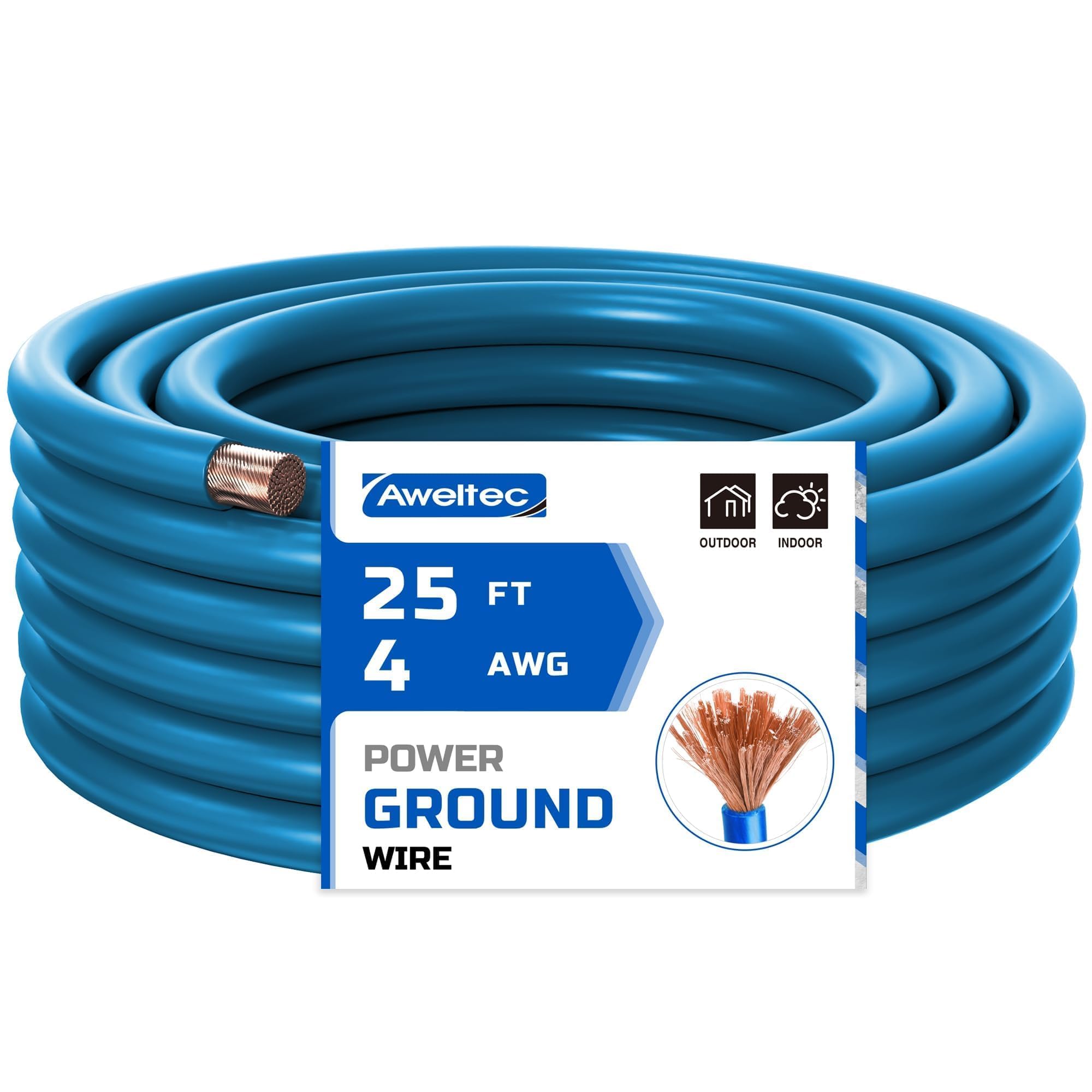
2. AWELTEC 4 Gauge Wire 25 Feet
The thick, flexible cable that feeds hungry amplifiers without drama.
When you are running power to a big subwoofer amp or a secondary battery bank, you want 4 AWG — and at 25 feet, this AWELTEC length covers the run from battery to trunk in most cars, trucks, and SUVs. The CCA core keeps the weight down compared to pure copper (a big deal when you are pulling a thick cable through the cabin). Owners mention it is surprisingly pliable for a 4-gauge; one buyer runs it on a trolling motor and loves how easy it is to coil up after a fishing trip.
The translucent PVC jacket looks sharp and lets you see the conductor, and the blue color differentiates power from ground at a glance. It comes with a 2-year warranty, an extra layer of confidence. The durability consensus is strong — the insulation resists oil, temperature, and impact well, though a few owners note the copper coating can be thin on some batches.
That high strand count is what makes a 4 AWG cable flexible enough to route under carpet and around seats without fighting you.
Big-amp backbone: If your system pulls north of 100A, this 4 AWG carries the load without voltage sag — the same felt by the owner who ran it to a speed controller.
The trade-off: Insulation is thin relative to some pure-copper cables; fine for interior use, but treat it gently near sharp metal edges.
Reach for this if: you are installing a high-wattage car audio system or a second battery in a truck or RV.
skip it if: your project only calls for 16 or 14 gauge — this cable is overkill and harder to bend for small connections.
3. Mygatti 16 Gauge Wire 6-Pack
Six colors, 35 feet each — the wiring kit that makes polarity a no-brainer.
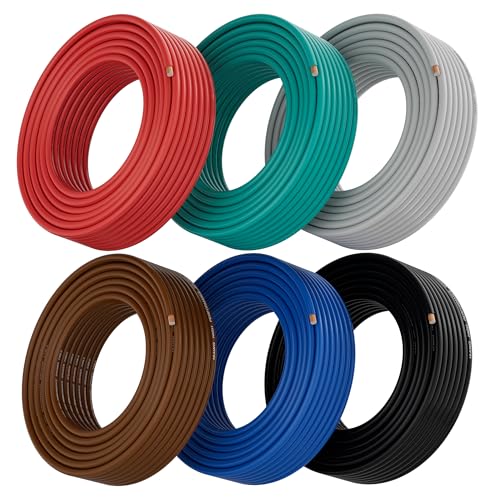
16 gauge is the go-to for signal wires, remote turn-on leads, switch panels, and low-current accessories. This Mygatti six-pack gives you black, red, grey, blue, green, and brown, each at 35 feet, so you can color-code a whole harness without running out of any one color mid-project. The CCA wire is flexible enough to snake inside a 1993 Honda del Sol door panel for a battery relocation, as one owner did, and it strips cleanly without fraying.
Customers note the insulation is durable and holds up well even in cold weather, which matters if you work on your car in an unheated garage. The consensus is clear: it is “consistent 16AWG thickness, durable insulation, easy to strip and install.” One important note from the community — the wire is rated at 16 volts, and owners caution not to use it for high-amperage circuits; stick to light-duty harnesses, backup camera wiring, and sensor connections.
This pack gives you six 35-foot spools (210 feet total) versus a single 25-foot spool of 4 AWG.
Color-coded sanity: Grabbing the right color from your stash eliminates guesswork and speeds up troubleshooting later.
Amperage awareness: 16 AWG is not for big power — owners remind you to check current draw and fuse accordingly.
Reach for this if: you are building a custom switch panel, rewiring a trailer connector, or doing signal-level work in a classic car.
Pass if: you need a single long run of 10 or 12 AWG for a subwoofer or battery cable.
4. GEARit 10 Gauge Primary Wire CCA 100FT Pair
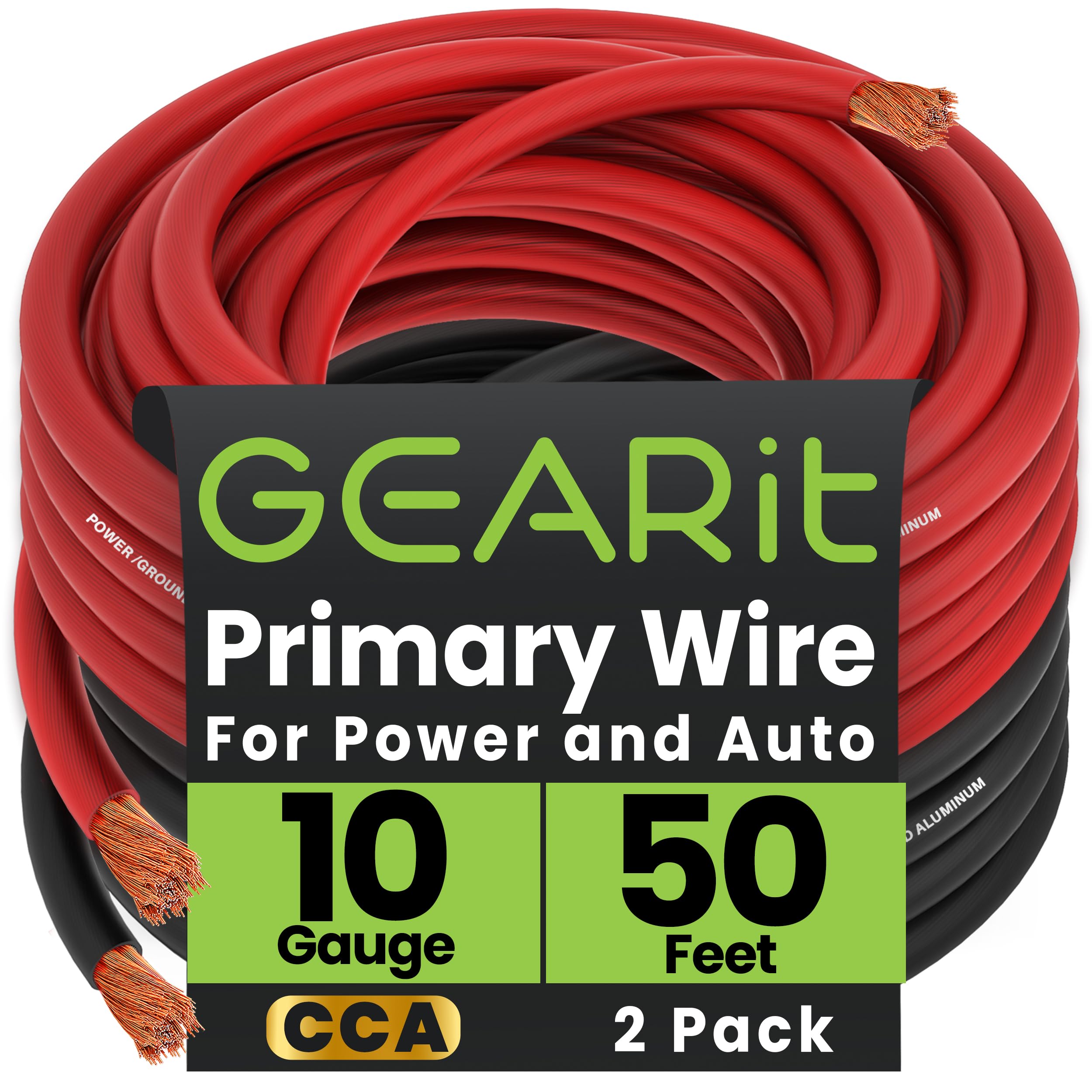
50 feet of black and 50 of red — the ready-made power and ground pair.
For medium-power circuits like a 500-watt amplifier or a secondary fuse box, 10 AWG hits the balance between current capacity and flexibility. This GEARit pack delivers 50 feet each of black and red (100 feet total), so you have both legs of a battery circuit in one purchase. The CCA CCA construction keeps the wire easy to bend through dashboards and trunk liners, and the stranded design solders up nicely — owners specifically call it “super easy to solder.”
One creative use that came up repeatedly: Tesla owners use this wire to run an external battery in the trunk to the front, preventing low-voltage sleep mode issues during audio modifications. That is a solid vote of confidence for a 10 AWG CCA wire. The quality rating is high across the board, with owners praising the value. The jacket is decent but one buyer flagged that the spools can arrive a little beat up in transit, though the wire itself was fine.
Compared to the 4 AWG option above, this 10 AWG is more than enough for amp power leads under 80A and is far easier to route through tight spaces.
Ready-matched polarity: Having exactly 50 feet of black and 50 feet of red means no leftover odd-length spools cluttering the toolbox.
Cold weather question: A buyer mentioned uncertainty about how the jacket handles extreme cold — if you live in a harsh freeze zone, consider a pure-copper wire for critical runs.
Reach for this if: you are wiring a moderate-power amp, adding a secondary fuse block, or building a custom battery extension.
Skip if: your setup demands pure copper for maximum conductivity at the same gauge.
5. NAOEVO 12 Gauge Wire 2 Conductors 100FT
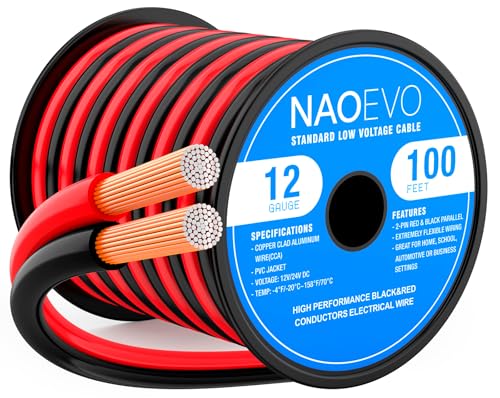
A 12 AWG duplex that strips clean and holds a crimp like it was made for it.
12 gauge is a step up from the common 14 AWG, making it ideal for circuits that draw a bit more current — think a 600-watt amp, a winch control box, or a pair of 55W off-road lights. This NAOEVO wire is a 2-conductor (red and black) bonded together in a single jacket, which keeps the installation tidy because you pull one cable instead of two separate wires.
Owners say flexibility is a standout feature: “pliable, good thickness, good cable count. It’s nice and thick, not like a lot of other ’12ga’ wires I’ve used where the OD of the insulator was good, but only had a couple tiny wires inside.” The 100-foot length provides generous material for multiple projects — one buyer used it to wire NEO motors in a robotics setup. A small but consistent concern from the data: some reviewers point out the copper clad aluminum can corrode over time if exposed to moisture, so keep the connections sealed in a vehicle that sees rain or car washes.
At 2.05 mm wire diameter, the conductor is well-proportioned inside the insulation, which means terminal connectors fit as expected.
Clean two-in-one: The bonded red/black jacket simplifies polarity and keeps your engine bay or trunk looking professional.
Water warning: A few owners flag corrosion risk over long periods — heat-shrink your splices and you will be fine.
Reach for this if: you need a single, clean 12 AWG run for moderate-power accessories or a subwoofer amp.
Pass if: you need a single conductor (one wire) rather than a bonded pair — separate rolls may suit you better.
6. NAOEVO 14 Gauge 2 Conductor Tinned Copper 50FT
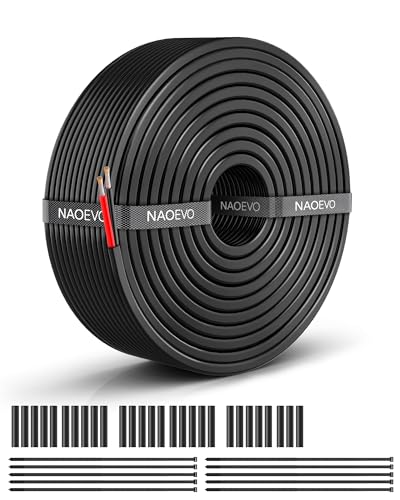
Tinned copper that laughs at corrosion — the pick for boats and damp engine bays.
Unlike the CCA wires above, this NAOEVO wire uses high-precision oxygen-free tinned copper. Tinning (a thin layer of solder over the copper strands) prevents the oxidation that turns bare copper green and increases resistance over time. That makes it the right choice for marine applications, exterior lighting, or any wiring that lives where moisture is a constant companion. Each of the two conductors inside the jacket has 41 strands of 0.24 mm tinned copper wire, giving you excellent flexibility for a 14 AWG cable.
The PVC insulation carries an IP68 waterproof rating and VW-1 flame retardant rating, with a working temperature range of -22°F to 221°F. Shoppers say it is “excellent quality stranded tinned copper for excellent conductivity and corrosion resistance” and that the flat design makes routing inside boat gunnels or car door panels noticeably easier. It comes with 28 heat-shrink tubes and 10 cable ties — small bonuses that save a trip to the hardware store.
One owner sums it up: “high-quality stranded tinned copper for excellent conductivity and corrosion resistance. Flexible PVC insulation, clearly marked red/black conductors. Heavy-duty, consistent 30ft length.” The only catch is the 50-foot length may be short for a full restomod wiring harness — measure your longest run before ordering.
Corrosion shield: Tinned copper is the standard for saltwater boats because it does not oxidize — your car’s door speaker wires will stay conductive for years.
Length limit: 50 feet goes fast if you are rewiring an entire boat or classic car; it is a premium choice for critical circuits, not a bulk buy.
Reach for this if: you are wiring a boat, a Jeep that sees mud and water, or any circuit where corrosion is a real concern.
Skip if: you need 100+ feet for a full harness on a budget — CCA wire at the same gauge is more affordable for long runs.
7. BABOOM 14 Gauge Wire Combo 6-Pack 600FT

Six 100-foot rolls across six colors — a Firebird restoration in a box.
When you are tackling a full car restoration or building a complete harness from scratch, buying six individual spools at the store gets expensive fast. This BABOOM pack gives you 100 feet each of black, red, blue, green, white, and yellow 14 AWG wire — 600 feet total — at a price that comes out well below per-foot retail. The CCA wire is lightweight and flexible, and the color variety means you can follow standard wiring diagrams without running to the store for a missing roll.
Owners praise the kit for classic car work, with one owner noting it has “enough for a 1968 Pontiac Firebird.” That is a lot of wiring. The PVC jacket is rated to 158°F (70°C), which is adequate for interior and protected locations. The manufacturer tags it as “THIS IS NOT AMERICAN 14 AWG WIRE” — a transparent honesty note that tells you to expect slightly thinner conductor cross-section than pure-AWG spec. Several owners recommend ordering one size larger (12 AWG) if you are replacing original 16 gauge wire, just to keep current capacity the same.
Durability gets a mixed read from the community — while many find it perfectly functional, a few report the wire can feel plasticky and may corrode if left exposed to the elements.
Restoration quantity: 600 feet is enough to rewire a full classic car interior, trailer, or small boat without buying a second set.
Gauge honesty: The manufacturer’s own note warns it is not truly AWG standard — size up if you are near the current limit of 14 AWG.
Reach for this if: you are doing a full vehicle rewire or restoration and want six colors in one buy.
Pass if: you need exact AWG compliance for a high-stakes safety circuit like airbags or ABS.
8. GS Power 600ft CCA 18 Gauge Wire 6-Pack
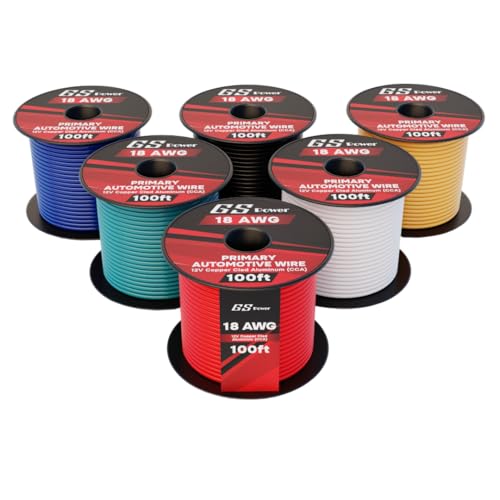
18 AWG in six colors — the perfect gauge for signal-level and LED work.
Thin wire has its place. 18 AWG is ideal for remote turn-on leads, door trigger wires, backup camera video signals, and single-color LED strip connections. This GS Power six-pack gives you 100-foot spools in red, black, blue, yellow, white, and purple — 600 feet total — so you always have the right color for a signal circuit. The CCA construction with 13 strands of 0.25 mm wire inside a flexible PVC jacket is rated up to 80 volts and 105°C, which is more than enough for 12V automotive signal wiring.
Owners like the value: “600 feet. Great value for good wire.” and note it is easy to strip and connect. The durability conversation is more divided — some buyers report the wire holds up well for automotive use, while others mention the copper can corrode from the inside over time in wet environments. That is typical for thin CCA wire, but note for exposed connections. Stick to protected interior runs with this gauge and it will serve you well.
At 18 AWG, this pack gives you 600 feet of wire versus a 25-foot 4 AWG cable — a completely different tool for a different job.
Signal wire heaven: Six colors at 100 feet each means you can color-code an entire aftermarket stereo harness, alarm system, or lighting controller.
Not for power: 18 AWG is too thin for anything above about 5-7 amps — do not use this for speaker main runs or accessory power.
Reach for this if: you are installing a car stereo, alarm, remote start, or LED accent lighting and need thin, color-coded signal wire.
Skip if: you need thicker gauge for power or ground connections — this is strictly for low-current control circuits.
9. BEST CONNECTIONS 14 Gauge 7-Pack 350FT
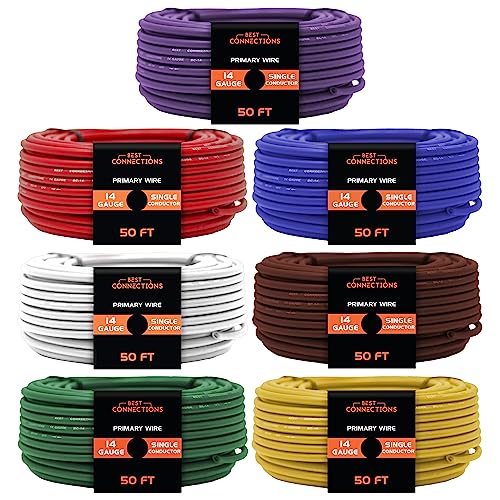
Seven colors, 50 feet each — the rewiring arsenal for trailers and harnesses.
If you are rewiring a boat trailer, utility trailer, or restoring a car harness that needs multiple color circuits, this 7-pack covers every standard wire color in a 14 AWG thickness that works for tail lights, turn signals, brake controllers, and interior accessories. Each of the seven spools is 50 feet long, giving you 350 feet total. The CCA stranded construction keeps the wire flexible, and the PVC jacket protects against impacts and abrasion in underseat or chassis environments.
Owners confirm it is well-suited for trailer work: “Used to rewire several trailers” and “worked great on rewiring my car trailer.” The color options let you follow a standard wiring diagram (brown for tail, yellow for left turn, green for right turn) without splicing in random colors. One owner notes that the insulation can attract rodents — a wire loom or split tubing is a smart precaution if your car sits outside. The voltage range covers 6 to 80 volts DC, so it works for both 12V car systems and some higher-voltage auxiliary setups.
Durability draws a mixed line: most owners find the quality excellent for the price, but a smaller number report the insulation can be chewed or degrade in rough environments. Loom it up and it will last.
Ready-for-trailer colors: Seven colors mean you can follow factory color codes without buying identically-colored wire and tagging it yourself.
Rodent risk: A buyer flagged that the insulation attracted chewing in a week — a simple wire loom or conduit solves this cheaply.
Reach for this if: you are rewiring a car or boat trailer and need the standard color codes in 14 AWG.
Pass if: you only need a short run of a single color — a smaller pack or single spool is more economical.
Understanding the Specs
Gauge (AWG)
The American Wire Gauge number tells you the physical thickness of the copper or CCA conductor. A lower number means a thicker wire that can carry more electrical current without overheating. 18 AWG is fine for signal wires and low-power LEDs, 14 AWG covers most interior accessories and speakers, 12 AWG handles medium-power amps, and 4 AWG is for high-power battery cables and big subwoofer amps. Going up one gauge (say, 12 instead of 14) gives you a safety margin for voltage drop over long wire runs.
CCA vs. Tinned Copper
Copper Clad Aluminum (CCA) is an aluminum core wrapped in a copper skin — it is lighter, cheaper, and more flexible than pure copper, making it the most popular conductor in automotive wire. Owners consistently report it works reliably for 12V systems as long as you size the gauge correctly. Tinned copper goes a step further by coating each strand in solder, preventing the oxidation that can eventually increase resistance in damp environments. Tinned copper costs more but is the standard for marine, exterior, and long-term reliability applications.
FAQ
What gauge wire should I use for car speakers?
Can I use CCA wire for my car battery ground?
How many feet of wire do I need for a full car stereo install?
Is 18 gauge wire too thin for car LED lights?
What is the difference between 14 AWG and 12 AWG wire?
Does tinned copper wire really prevent corrosion?
Can I use automotive wire for home wiring?
How do I know what gauge wire my car needs?
Will CCA wire work for a car amplifier?
What does “stranded” mean on a wire specification?
Final Thoughts: The Verdict
For the majority of shoppers, the wire for cars winner is the Energeaster 14 Gauge 100FT because it nails the balance of length, gauge, price, and owner satisfaction — 100 feet of reliable CCA in the most useful gauge for 90% of car projects. If you need thick cable for a high-power amplifier, grab the AWELTEC 4 Gauge 25FT. And for wiring in wet areas where corrosion is the enemy, the NAOEVO 14 Gauge Tinned Copper 50FT is the one to reach for — it is the only pick here that can shrug off moisture for years.
How We Picked
We do not accept paid placement. Every pick is matched to a real buyer and a real use-case; we do not hands-on test units.
Sources & Methodology
Specifications: manufacturer listings and product documentation. Review insights: verified customer reviews, as of July 2026. Pricing: not shown on this page (it changes often); check the current price via the retailer link.
As an Amazon Associate, GoCarLife earns from qualifying purchases. This does not affect which products we feature.