
Our readers keep the lights on and the garage heater humming. As an Amazon Associate, I earn from qualifying purchases.
Specs are compiled from manufacturer listings and verified buyer reviews and can change over time — please confirm the key details on the product page before buying.
On a freezing morning, thick oil fights your engine’s starter. A thin, cold-weather oil — measured by its “W” (winter) number — flows fast at startup, so your bearings get oil before metal touches metal. The lower the W number, the better it works in extreme cold. Pick the wrong viscosity grade (0W, 5W, or 10W), and your morning crank turns into a struggle. Choosing an oil with the correct low-temperature pumpability is the best winter favor for your engine.
I’m Mo Maruf — the founder and writer behind GoCarLife. This guide is built by comparing the manufacturers’ published specifications and the patterns across verified customer reviews, so you get each pick’s real strengths and trade-offs instead of marketing spin.
Whatever you drive — a turbocharged daily commuter, a high-mileage truck, or a performance sedan that sits outside all winter — the right winter motor oil keeps the oil pressure steady, the engine quiet, and the deposits at bay from the first frost through the last freeze.
Our Picks at a Glance


How To Choose The Best Winter Motor Oil
Choosing a winter motor oil means decoding the viscosity numbers on the bottle. An oil’s cold-weather performance depends on its low-temperature viscosity grade and base-stock quality—synthetic outperforms conventional below freezing.
Viscosity Grade — The Winter Number Is Everything
The first number followed by a “W” (0W, 5W, 10W) tells you the oil’s pumpability at cold temperatures (how easily it flows through the engine at startup). For northern winters and outdoor overnight parking, 0W delivers the fastest cold-start protection. 5W still works well for most moderate cold climates.
Full Synthetic vs. Conventional — Not All Base Oils Handle Cold the Same
Conventional mineral oils contain waxes that cause thickening in extreme cold, which is why a full-synthetic base stock (an artificially engineered base fluid) is strongly preferred for winter use. Synthetic oils maintain stable viscosity across temperature swings, flowing better at startup and resisting shear under load.
OEM Approvals and API Ratings — Why They Matter in Cold Weather
Modern engines—especially those with turbochargers, direct injection, or variable valve timing—have tight oil passages. An oil that meets the latest API SP (American Petroleum Institute’s current gasoline-engine standard) or ILSAC GF-6A (International Lubricant Standardization and Approval Committee fuel-economy spec) standard includes additives (extra chemicals) for low-speed pre-ignition (LSPI — uncontrolled fuel ignition in turbo engines) protection and timing-chain wear prevention. If your vehicle manual specifies dexos1 Gen 3 (GM’s latest oil spec), Ford WSS-M2C962-A, or Chrysler MS-6395, ignoring those certifications can lead to winter sludge buildup or deposit formation.
Quick Comparison
| Model | Best For | Viscosity Grade | Volume (Total) | Certifications | Amazon |
|---|---|---|---|---|---|
| Liqui Moly Special Tec LL 5W-30★ Best Overall | BMW / European precision | 5W-30 | 5 L (169.1 fl oz) | OEM-specific | Amazon |
| Quaker State Full Synthetic 0W-20Budget Champion | Budget-friendly daily driving | 0W-20 | 5 qt (160 fl oz) | API SP, ILSAC GF-6A, dexos1 Gen 3 | Amazon |
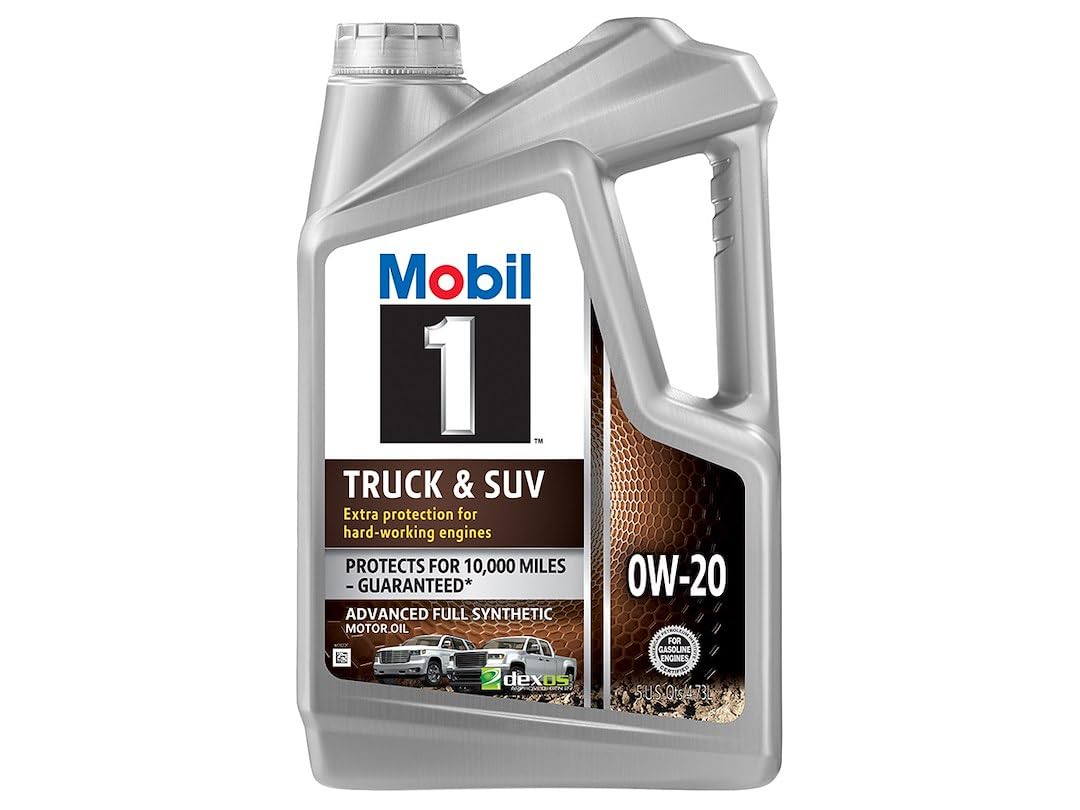
| Mobil 1 Truck & SUV 0W-20Top Performer | Towing & hauling in winter | 0W-20 | 5 qt (160 fl oz) | API SP | Amazon |
| Valvoline MaxLife High Mileage 0W-20 | Engines over 75K miles | 0W-20 | 5 qt | API SP, dexos1 Gen 3 | Amazon |
| Castrol EDGE Extended Performance 0W-20 | Extended 25K-mile intervals | 0W-20 | 5 qt (160 fl oz) | API SP, ILSAC GF-7, dexos1 Gen 3 | Amazon |
| K&N Premium Synthetic 0W-20 | All-weather daily reliability | 0W-20 | 5 qt (4.73 L) | Universal fit | Amazon |
| Mobil High Mileage 5W-30 | High-mileage trucks & SUVs | 5W-30 | 6 qt (192 fl oz) | API SP | Amazon |
| Liqui Moly Molygen 0W-20 | Leak detection & quiet operation | 0W-20 | 5 L | OEM-specific | Amazon |
| Motul 8100 ECO-lite 0W-20 | Japanese / Korean precision engines | 0W-20 | 5 L | API SP, dexos1 Gen 3 | Amazon |
In‑Depth Reviews
1. Liqui Moly Special Tec LL SAE 5W-30 (5 L)
Our pick — over 4.5★ from 950+ verified ratings; the strongest balance of quality and price.
The German-engineered jug that turns a cold BMW into a whisper.
This 5W-30 from Liqui Moly is the top-rated pick for a reason — it earns a commanding 4.9 stars across nearly 1,000 ratings, and the buyer consensus centers on quality as the most-discussed aspect by a wide margin.
What wins people over is the noise reduction. As buyers put it: “my engine still runs smooth and quiet years later, even while tuned, extra boost etc.” The quiet operation and idle smoothness are the recurring themes across the reviews, and the value argument stands up — several owners note it costs less than BMW OEM oil while meeting the same spec. The specific fit means you should verify compatibility, but it covers a wide range of foreign and domestic vehicles from Lincoln Aviators to 750i sedans.
Your go-to if you own a BMW, Audi, or Mercedes that calls for a European-spec 5W-30. The quiet idle and long-term cleanliness make it the easy choice for winter driving. Think twice if your owner’s manual requires a 0W-20 — this is a 5W-30, so it trades some cold-flow speed for extra high-temperature film strength.
2. Quaker State Full Synthetic 0W-20 (5 Quart)
A 16-year-old Jeep that starts every time — on a budget that leaves room for gas.
Quaker State’s full synthetic 0W-20 is the value play that doesn’t cut corners on cold-weather protection. The 0W viscosity grade gives you the fastest possible pumpability at sub-zero temperatures — the most important spec for reliable winter starts — and it carries the latest API SP-Resource Conserving and ILSAC GF-6A certifications, plus GM dexos1 Gen 3 and Ford WSS-M2C962-A approvals. The 160-ounce bottle handles a standard 5-quart drain and fill.
The reviews highlight long-term trust: “Jeep’s 16yrs old — no engine problem (knock on wood) been using Full Synthetic the last 12yrs.” The bottle design itself earns praise — a no-foil, tamper-evident cap with two handles that pour cleanly with no glugging, plus an easy-to-read scale. At a price point well below most full synthetics, it delivers performance that matches oils costing considerably more. The occasional delivery gripe involves cracked jugs from loose packaging, so inspect the box on arrival.
Reach for this if your daily driver asks for 0W-20 and you want proven reliability without the premium markup. The universal fit and extensive OEM approvals make it a no-brainer for most modern gasoline engines. Not the oil for a tuned European performance car — the additive package is strong but not in the same league as the German-engineered options above.
3. Mobil 1 Truck & SUV Full Synthetic 0W-20 (5 Quart)
Built for the guy who tows a trailer through a January snowstorm.
Mobil 1’s Truck & SUV formulation is a 0W-20 specifically engineered for hardworking vehicles that face tough conditions — towing, hauling, extreme heat, and yes, freezing starts. The big selling point is the temperature range: it protects internally up to 500°F and stays pumpable down to -40°F, which is the floor for the 0W rating. The Triple Action Formula targets engine protection, cleanliness, and proven performance, and it is designed to keep oxidation (chemical breakdown from heat) under control for up to 10,000 miles between changes.
The review pages confirm the cold-start confidence: “handles high temps well, stable under load, smooth engine operation.” Owners running it in Arizona heat and winter cold alike report consistent viscosity and clean oil on the dipstick. The 928 ratings averaging 4.8 stars back up the claim. It’s a universal-fit oil that suits GM trucks especially well — one owner calls it the go-to for their new truck — and the 5-quart bottle is the standard size for most V6 and V8 applications.
Perfect for pickup and SUV owners who work their vehicles year-round, including winter towing. The -40°F protection is real confidence for northern climates. If your vehicle takes 0W-20 and you carry heavy loads, this is the one. Not the ideal pick for a high-mileage engine over 75,000 miles — the High Mileage variation from Mobil would suit better.
4. Valvoline MaxLife Extended Protection High Mileage 0W-20 (5 Quart)
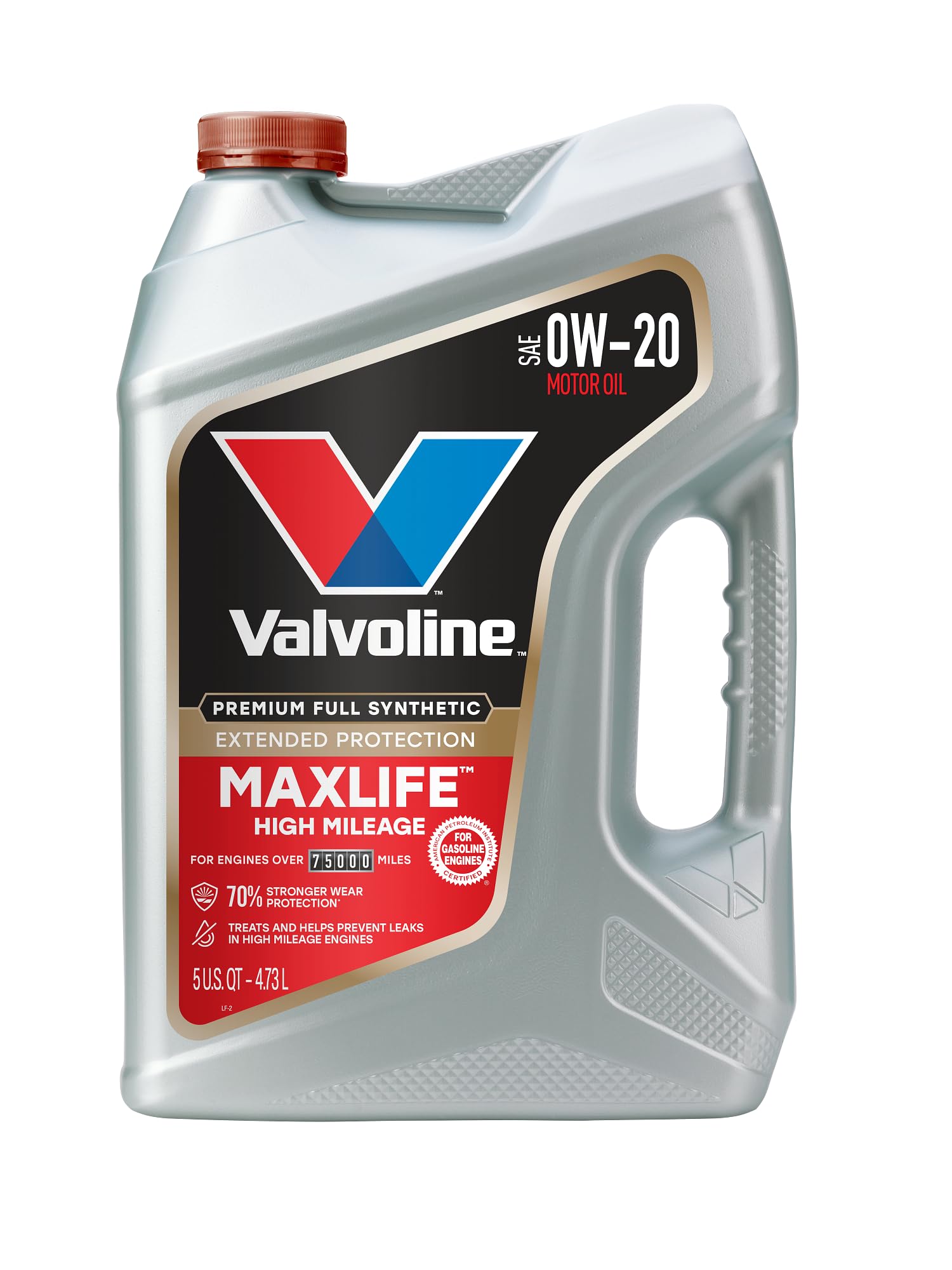
The oil that kept a Honda running to 331,000 miles through 15 winters.
Valvoline’s MaxLife Extended Protection is a 0W-20 formulation for vehicles that have crossed the 75,000-mile mark, and it addresses the two biggest winter worries for an older engine: seals (rubber gaskets) that leak when cold and sludge (thick, gooey deposits) that blocks oil passages at startup. The Dual Defense Additive Technology combines deposit-fighting detergents with seal conditioners (chemicals that keep rubber gaskets flexible) that treat and prevent oil leaks. Valvoline claims 70% stronger wear protection versus industry standards, 20% better sludge defense, and 20X better heat protection — all from the data sheet.
Buyers report smooth, quiet operation in vehicles ranging from a Mini Cooper at 80,000 miles to a Toyota 4Runner. One owner’s Honda with 331,000 miles is still going strong using this as their go-to oil. The 0W-20 grade means it flows freely in sub-zero conditions, and the API SP / dexos1 Gen 3 certifications keep it compatible with modern VVT (variable valve timing) and turbo systems. The main practical caveat: some engines need 5.5 quarts, and this is a 5-quart bottle, so you may need an extra quart for the fill.
Your best bet if your car or truck is north of 75,000 miles and you park outside in winter. The seal conditioners are a real bonus for older gaskets. skip it if your engine is under 75K and doesn’t have any high-mileage needs — you’d be paying for additives you don’t require yet.
5. Castrol EDGE Extended Performance 0W-20 (5 Quart)

Stretches your oil change to 25,000 miles — one of the longest intervals on the shelf.
Castrol EDGE Extended Performance is the most audacious oil in this lineup: the manufacturer claims 25,000 miles (or one year, whichever comes first) between oil changes. The 0W-20 viscosity gives it the fastest cold-flow rating, and the certification list includes API SP/SN PLUS, ILSAC GF-7, ACEA C5 (European auto manufacturers’ oil standard), GM dexos1 Gen 3, and MB-Approval 229.71.
Long-term Castrol users — some going 35+ years — describe a quiet idle, good gas mileage, and smooth performance across multiple vehicles. The 5-quart jug fits most standard fills. One reviewer using it as a Volvo-recommended alternative noted the quality was consistent with the European-spec version. The trade-off is the price premium: you pay upfront for the extended drain capability, but if you are the type who forgets oil changes or drives high miles annually, that 25K-mile claim saves time and waste.
Reach for this if you drive 20,000+ miles a year or want the longest possible protection window for a modern 0W-20 engine. The extensive Mercedes and Ford approvals broaden its fit. Not the right choice if you change oil every 5,000 miles regardless — the extended-life additive package is wasted on short intervals and costs more than you need to spend.
6. K&N Premium Synthetic 0W-20 (5 Quart)

A 135,000-mile BMW X1 with a timing chain that still looks new — proof in the pan.
K&N is best known for air filters, but their premium synthetic oil holds its own in the winter oil conversation. The 0W-20 formulation uses Synthamax Technology — unique additives for critical engine component protection — and the company explicitly markets it for all-weather protection, helping the engine run smooth in both cold and hot temperature conditions. The 5-quart bottle (4.73 liters) covers most standard fills, and the universal fit means it works across car brands.
The standout story from the reviews: a 2014 BMW X1 XDrive28i at 135,000 miles, still on the original timing chain, with an engine that “looks really clean and almost ‘New’ still.” That is the kind of winter reliability that matters when you are cranking at 5 AM. The price sits in the mid-range, and the 206 ratings average is strong. The 3-month manufacturer warranty is shorter than some competitors, but the oil itself gets consistent praise for keeping engines clean.
Choose this if you want a proven all-weather synthetic from a brand you trust for filtration, especially for German or luxury sedans. The 0W-20 grade is ideal for modern engines that specify thin oil for cold starts. Less suitable if you need extended OEM certifications like dexos1 Gen 3 — the universal-fit label means it meets general API specs but may lack brand-specific approvals.
7. Mobil Full Synthetic High Mileage 5W-30 (6-Pack, 1 Quart Each)

The 6-quart pack that saves the day when your truck’s sump takes a half-quart more.
This Mobil High Mileage oil is the one to reach for when your vehicle has passed 75,000 miles and calls for a 5W-30 viscosity. Mobil guarantees protection rated up to 7,500 miles between oil changes, with extra seal conditioners (chemicals that keep rubber gaskets flexible) to prevent leaks and sludge formation.
The 6-quart pack is a practical advantage: many trucks and SUVs require 6 quarts for a full oil change, and buying individual quarts avoids the waste or shortfall of a standard 5-quart jug. The reviews consistently call it a strong oil that keeps GM motors running well, and one buyer with a vehicle at 177,000 miles credits the full synthetic formulation for continued strong performance. The API SP resource-conserving certification meets the latest industry standards.
Your best option if your truck or SUV needs 6 quarts and a 5W-30 high-mileage formulation. Excellent for GM and Ford vehicles with over 75K miles that you drive through winter. Not the right pick if your manual specifies 0W-20 — the 5W-30 viscosity is thicker at startup and may not flow fast enough for tight modern oil passages in extreme cold.
8. Liqui Moly Molygen New Generation 0W-20 (5 Liter)

Green-tinted oil that glows under a UV light — and makes leak detection a two-minute job.
Liqui Moly’s Molygen is a 0W-20 full synthetic with a neat extra: the oil has a UV-reactive green dye that glows when you shine a blacklight on it, making oil leaks instantly visible. That feature alone saves hours of guesswork in a cold garage. Beyond the glow, it is a premium German-formulated oil designed for instant lubrication after cold starts — critical for winter — and it is miscible (mixable) with all commercially available motor oils, so you can top off without worry.
The 5-liter bottle contains 169.1 fluid ounces, and the vehicle-specific fit covers Acura, Buick, Cadillac, Chevrolet, GMC, and other GM-platform brands. Owners mention very little burn-off between changes and a noticeably cleaner, quieter engine. One owner summed it up: “I’ve used Liqui-Moly in all my vehicles and it always performs.” The 0W-20 grade delivers maximum winter-flow speed, and the additive package is designed for turbocharged engines and catalytic converters (emission-control devices).
Ideal for GM-platform owners who want a premium 0W-20 with the unique leak-detection benefit. The cold-start lubrication is genuinely top-tier. Think twice if your vehicle is not on the specific compatibility list (Acura, Buick, Cadillac, Chevy, GMC, Holden, etc.) — the fit is narrow compared to universal oils.
9. Motul 8100 ECO-lite 0W-20 (5 Liter)
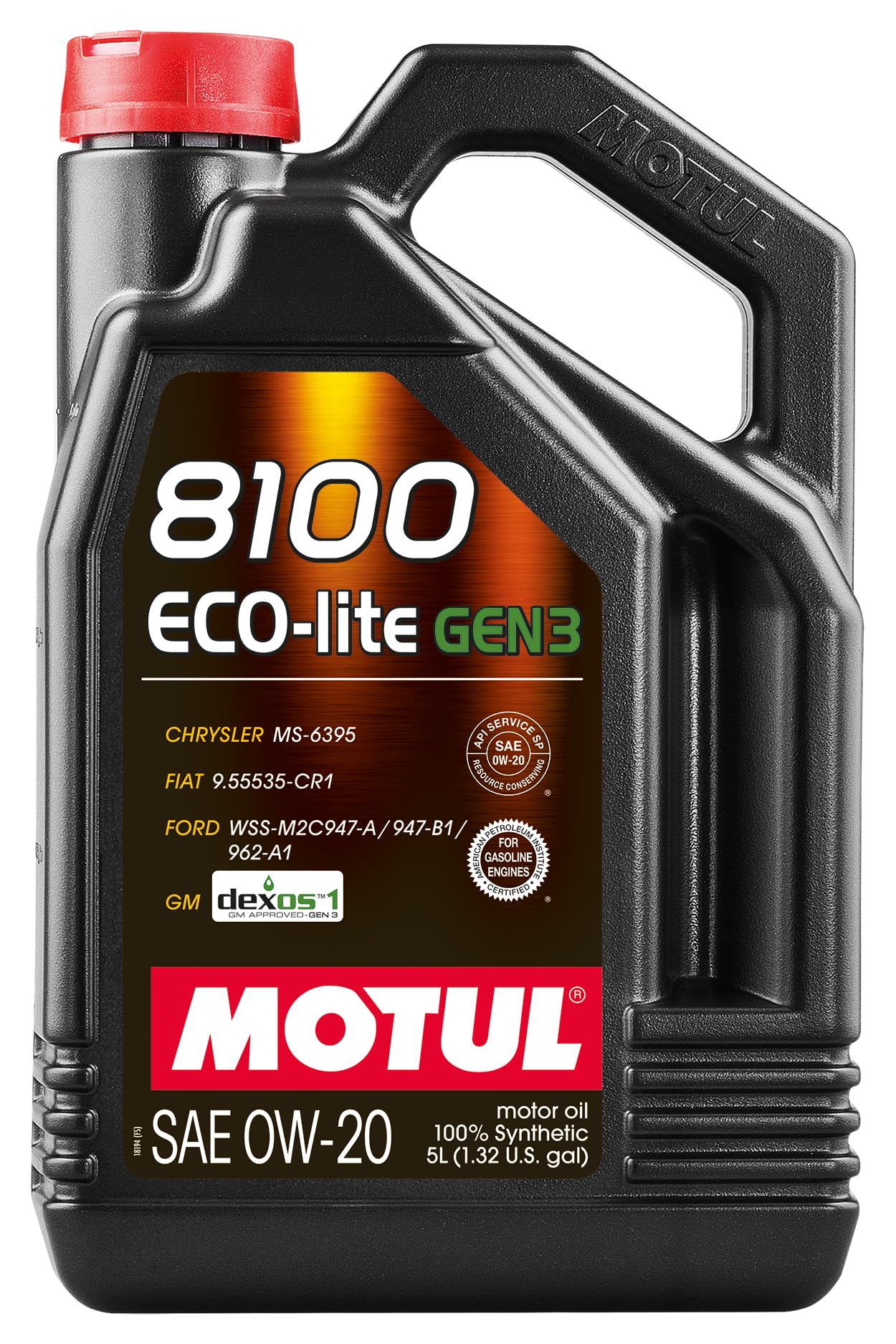
The French-engineered oil that wakes up a SkyActiv Mazda like nothing else.
Motul’s 8100 ECO-lite is a 100% synthetic 0W-20 oil engineered with an advanced low-friction formula for modern engines — turbocharged, direct-injection, and variable-valve-timing systems. It carries API SP and GM dexos1 Gen 3 certification, plus Ford WSS-M2C947-A / 947-B1 / 962-A1 and Chrysler MS-6395 approvals, making it a genuinely broad fit across American, Japanese, and European platforms. The low-friction formulation is designed to support faster lubrication at startup, which is exactly what a winter motor oil needs to do.
The reviews highlight fuel-efficiency gains in Japanese SUVs and sedans, with owners reporting noticeably quieter engine operation after the switch. The 5-liter jug covers most standard fills, and the oil quality is the most-praised aspect among the 737 ratings that average 4.9 stars. One buyer running it in a Civic Type R (FL5) noted “no engine noise, temps are normal” — high praise for a thin 0W-20 in a performance application. The price is in the premium tier, but the ester-based synthetic formulation (a high-performance synthetic base oil) justifies it for owners who value long engine life.
Reach for this if you drive a Mazda, Honda, Subaru, or any modern Japanese car that calls for a premium 0W-20. The dexos1 Gen 3 certification also makes it a strong choice for GM owners. Not the budget-friendly option — the premium price puts it above most competitors, and you are paying for ester technology that some engines simply do not need for daily driving.
Understanding the Specs
SAE Viscosity Grade — The “W” Is for Winter
The SAE J300 standard defines a motor oil’s flow characteristics at specific temperatures. The number before the “W” (0W, 5W, 10W) is the winter rating, tested by pumping the oil through a cold-cranking simulator (a machine that measures how hard it is to pump cold oil). A 0W oil remains fluid enough for reliable startup down to -40°F, while a 5W oil is rated to -30°F. The number after the dash (20, 30) is the hot viscosity at 212°F (how thick the oil stays at engine operating temperature). For winter driving, the lower the “W” number, the better your cold-start protection.
API SP and ILSAC GF-6A — The Latest Protection Standards
The American Petroleum Institute (API) SP is the most current gasoline-engine oil category, introducing requirements for low-speed pre-ignition (LSPI — uncontrolled fuel burning before the spark plug fires in turbo engines) protection and timing-chain wear prevention. ILSAC GF-6A adds fuel-economy and deposit-control requirements. Oils carrying these certifications — like the Quaker State, Castrol, and Motul picks — have been tested for the sludge and oxidation resistance that matters when a cold engine first fires up and moisture condenses in the crankcase (the lower part of the engine where oil sits).
FAQ
What does the W in 5W-30 actually mean?
Can I use a 0W-20 in an engine that calls for 5W-30?
Is full synthetic necessary for winter driving?
How often should I change winter motor oil?
What does dexos1 Gen 3 mean for winter protection?
Can I mix different brands of winter motor oil?
Is 5W-30 thick enough for a high-mileage engine in winter?
What is ester-based synthetic oil and do I need it?
Final Thoughts: The Verdict
For most drivers, the winter motor oil decision depends on viscosity and engine condition. The Liqui Moly Special Tec LL 5W-30 is the overall pick for European cars and those who prioritize quiet operation and long-term cleanliness — its 4.9-star consensus across nearly 1,000 ratings says everything. If you want a fast-flowing 0W-20 for a modern daily driver, the Quaker State 0W-20 delivers proven performance at a value that is tough to top. And for trucks that tow and haul through winter, the Mobil 1 Truck & SUV 0W-20 is the low-temperature workhorse that handles both the cold start and the heavy load.
How We Picked
We do not accept paid placement. Every pick is matched to a real buyer and a real use-case; we do not hands-on test units.
Sources & Methodology
Specifications: manufacturer listings and product documentation. Review insights: verified customer reviews, as of July 2026. Pricing: not shown on this page (it changes often); check the current price via the retailer link.
As an Amazon Associate, GoCarLife earns from qualifying purchases. This does not affect which products we feature.