
Our readers keep the lights on and the garage heater humming. As an Amazon Associate, I earn from qualifying purchases.
Specs are compiled from manufacturer listings and verified buyer reviews and can change over time — please confirm the key details on the product page before buying.
Finding a pair of shoes that actually keeps your feet warm and dry on a winter ride is harder than it sounds. The wrong choice leaves you shivering after 20 minutes, while a good pair turns a freezing commute into a genuinely comfortable trip. This guide cuts through the cold-weather cycling shoe market to find the three models worth your money right now.
I’m Mo Maruf — the founder and writer behind GoCarLife. This guide is built by comparing the manufacturers’ published specifications and the patterns across verified customer reviews, so you get each pick’s real strengths and trade-offs instead of marketing spin.
Whether you ride flat pedals or clipless, commute at dawn or push through weekend singletrack, these are the winter bike riding shoes that earned their spot through real-world results and consistent owner satisfaction across hundreds of miles.
Our Picks at a Glance
How To Choose The Best Winter Bike Riding Shoes
The best winter riding shoe for you depends on two things: how cold your mornings actually get, and whether you ride flat pedals or use clipless cleats. A shoe built for <40°F riding with a heavy Vibram outsole is overkill for a mild 45°F commute, while a lightweight insulated flat shoe leaves you freezing on a long sub-zero adventure. Match the warmth, closure system, and outsole grip to your exact route and riding style.
Insulation Type and Thickness
PrimaLoft insulation and Thinsulate insulation are the two main names you will see in winter cycling footwear. PrimaLoft uses fine synthetic fibers to trap heat even when damp, which matters if you ride through wet snow. Thinsulate packs more warmth into a thinner layer, so your toes stay warm without the shoe feeling like a moon boot. Neither is inherently better — it is about which temperature range you ride in most often. A shoe with a heat-reflective footbed (like the Five Ten Freerider EPS uses) adds another layer of warmth without bulk.
Closure System: BOA vs Laces vs Zipper
A BOA dial (a round twist-knob that tightens a steel lace) lets you adjust tension with thick winter gloves on — a huge convenience when your fingers are cold. Traditional laces are cheaper and easier to replace but require bare hands to cinch tight. Some premium boots add a side zipper and a Velcro strap over a BOA system, which helps you get the shoe on (a real struggle with some models) and locks the ankle area. The trade-off is complexity: more parts mean more potential failure points after a few seasons.
Outsole and Pedal Interface
Flat pedal riders need a sticky rubber outsole that grabs the pedal pins. On winter shoes, this usually means a compound like Stealth S1 (the Five Ten rubber that clings to wet pedals) or a Vibram tread for off-bike traction. Clipless riders need a recessed cleat pocket or a stiff sole that transfers power efficiently — but a very stiff sole, as owners of the Freerider EPS note, makes walking on pavement genuinely painful after 10-15 minutes. The Lake MXZ304 uses a heavy-duty Vibram outsole that delivers maximum traction on snow and ice but is overkill for purely road-based commuters.
Quick Comparison
| Model | Best For | Insulation | Closure | Pedal Type | Amazon |
|---|---|---|---|---|---|
| Five Ten Freerider EPS★ Best Overall | Cold flat-pedal riders who walk short distances | PrimaLoft + insulated footbed | Laces | Flat pedal | Amazon |
| Fizik Terra ARTICA X2 | Clipless riders facing bitter cold and wet roads | Wool insole + wetsuit neoprene | BOA L6 + zipper + Velcro | SPD compatible | Amazon |
| Lake MXZ304 Winter Boot | Deep-winter riders who need maximum warmth and durability | Thinsulate | BOA L6 (front tongue) | SPD compatible | Amazon |
In‑Depth Reviews
1. Five Ten Men’s Freerider EPS Mountain Biking Shoe
Our pick — over 4.5★ from 30+ verified ratings; the strongest balance of quality and price.
The flat-pedal legend gets a winter makeover that actually works without bulk.
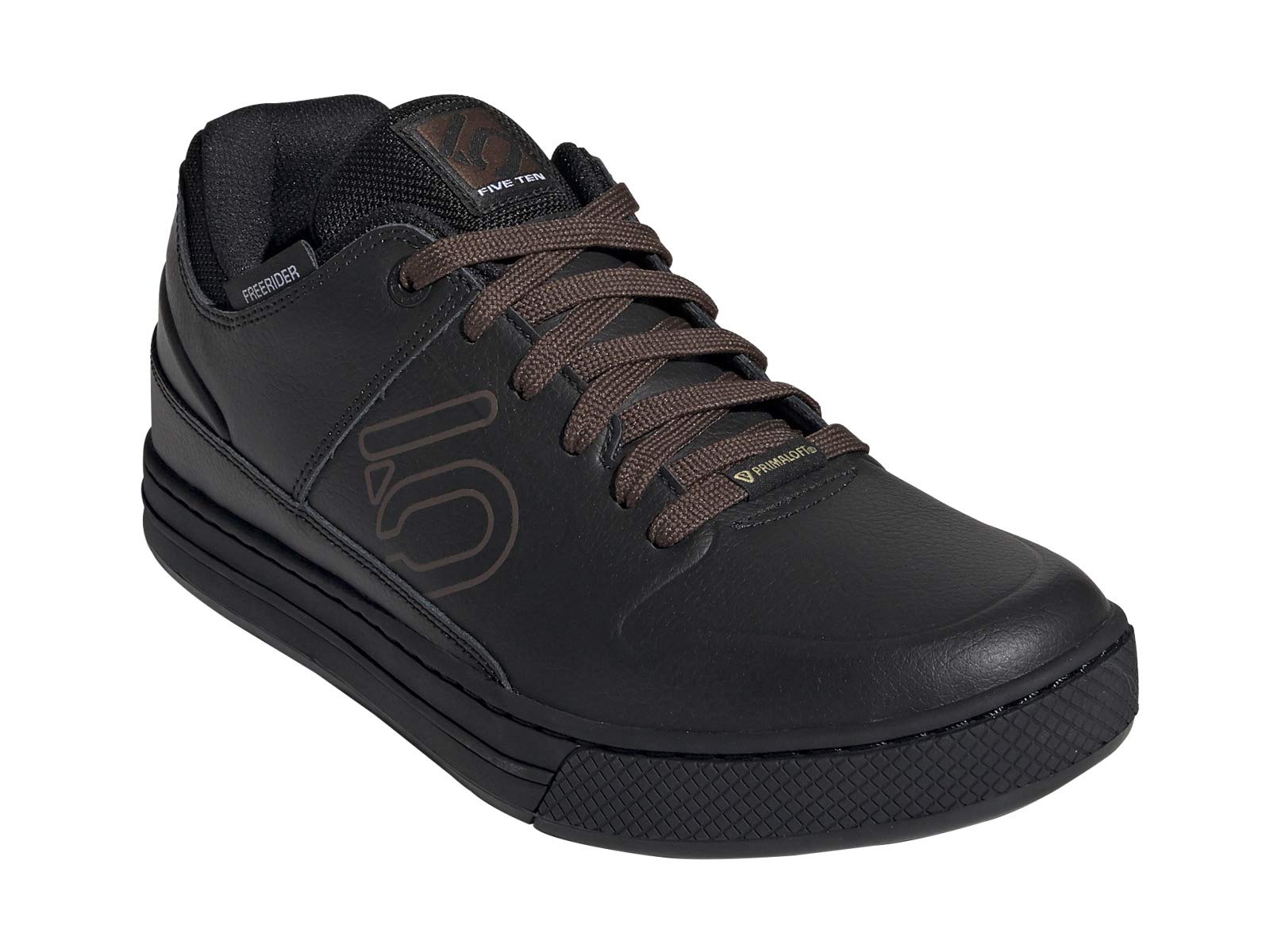
Your feet stay warm on cold, damp rides because Adidas took its classic Freerider flat-pedal shoe and added PrimaLoft insulation plus an insulated, heat-reflective footbed. The coated weather-resistant leather upper uses minimal seams to seal out road spray and melting snow. On the bottom, the Stealth S1 Dotty rubber outsole grips wet ground and flat pedal pins with a tenacity that owners call the real draw — the thing everyone raves about is how secure your foot feels through corners and over slippery roots.
The soles are very hard. That stiffness delivers an efficient pedal platform, but buyers report that walking more than 10-15 minutes in these shoes genuinely hurts. Consensus among owners speaks to the warmth: the shoe works well for cold-weather riding without clip-ins, and the insulation is noticeable without being overbearing — one rider in the northeast called it a steal at its sale price and grabbed a second pair. The fit draws consistent praise for landing true to size, though a few with wider feet found it too narrow and had to return the pair.
What riders love
- PrimaLoft insulation and reflective footbed keep feet warm without a bulky feel
- Stealth S1 rubber grips wet pedals and ground with real authority
- True-to-size fit that most riders can order without guessing
Know before you buy
- Very hard soles make walking on pavement painful after 10-15 minutes — strictly a riding shoe
- A few wider-footed riders found the cut too narrow; check the return policy
Reach for this if: you ride flat pedals through cold, wet winters and want a warm shoe with unbeatable pedal grip that also fits true to size.
Look elsewhere if: you need to walk significant distances on pavement during your ride, or you ride clipless pedals (this shoe has no cleat recess).
2. Fizik Terra ARTICA X2
The clipless winter boot that demands a shoehorn but rewards you with warmth.
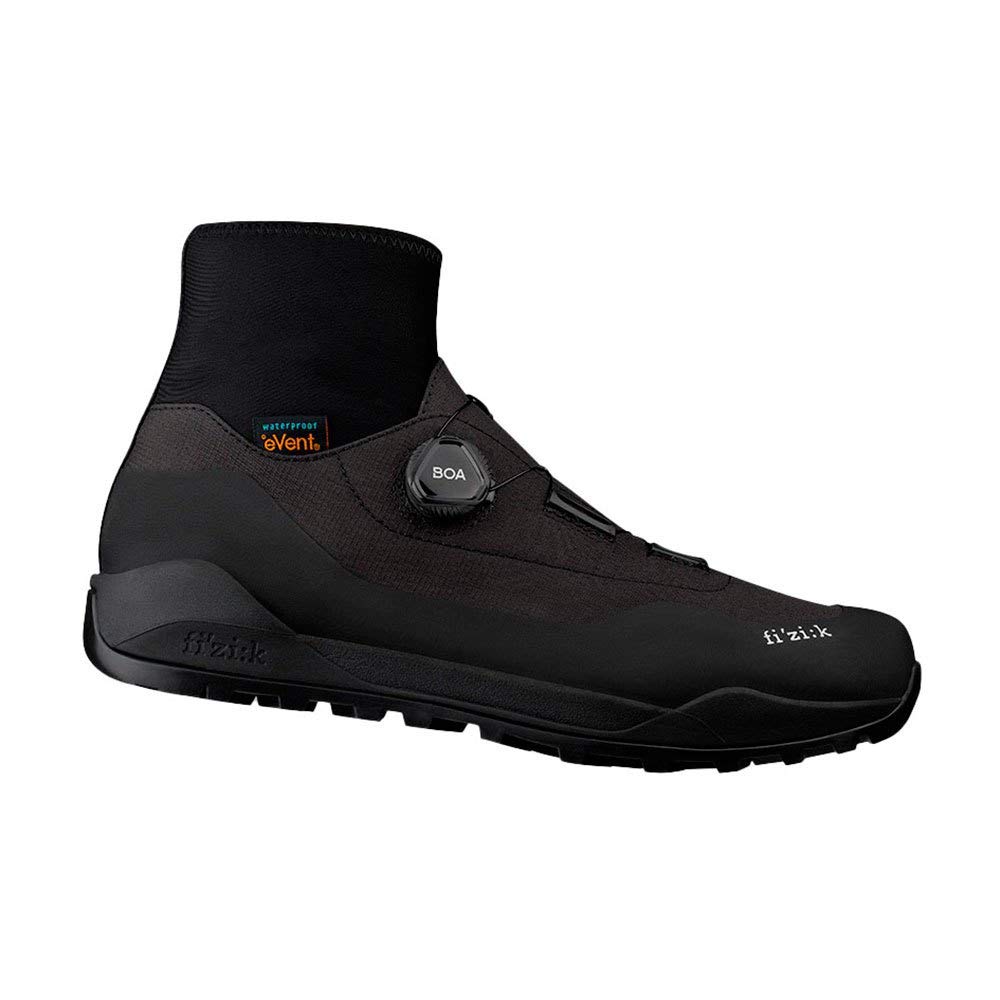
Fizik built the Terra ARTICA X2 for riders facing bitter cold and wet roads. It uses a rip-stop fabric upper (woven material that resists tearing) with an event waterproof and breathable membrane, a wool and foam insole, and a reinforced toe and heel wrapped in wetsuit-like neoprene. A BOA L6 dial handles main closure, backed by a zippered ankle cuff and a Velcro strap. On the bottom, the X2 outsole delivers vibrant grip on and off the bike whether you are clipped in on slick pavement or pushing up a snowy bank.
The single biggest engineering challenge is getting the shoe on in the first place. Ease of use is the most-discussed aspect by far, and the consistent note across dozens of owners is that you genuinely need a steel shoehorn. The ankle opening is very tight. Once inside, however, comfort takes over — the toe box is roomy, the BOA adjuster is easy to turn even with thick gloves, and owners mention the boot is comfortable, warm, and dry after months of snow and ice rides. Water resistance is mixed: some call the boot fully waterproof, while others note the upper fabric and neoprene leak in deeper puddles. The Terra ARTICA X2 is lighter than the Freerider EPS at 438 grams and fits riders who prefer clipless systems (SPD compatible).
Built for bitter cold: The wetsuit-style construction and wool insole keep feet warm in conditions that would leave most shoes helpless — but the entry struggle is real. Go up half a size, use thin socks, and keep a shoehorn with your kit.
Waterproof reality check: Most owners find the boot sufficiently water-resistant for slush and spray, but a minority report leakage in deep standing water. Treat it as highly water-resistant rather than guaranteed dry.
Ideal for: clipless riders who face bitter cold and slushy roads, want a warm, well-built boot with easy on-the-fly adjustment via the BOA dial, and are willing to wrestle it on for the warmth payoff.
Not for you if: you need easy entry/exit or you regularly ride through deep puddles where full waterproofing is non-negotiable.
3. Lake MXZ304 Winter Cycling Boot
The sub-zero specialist that will not quit — if you nail the sizing.
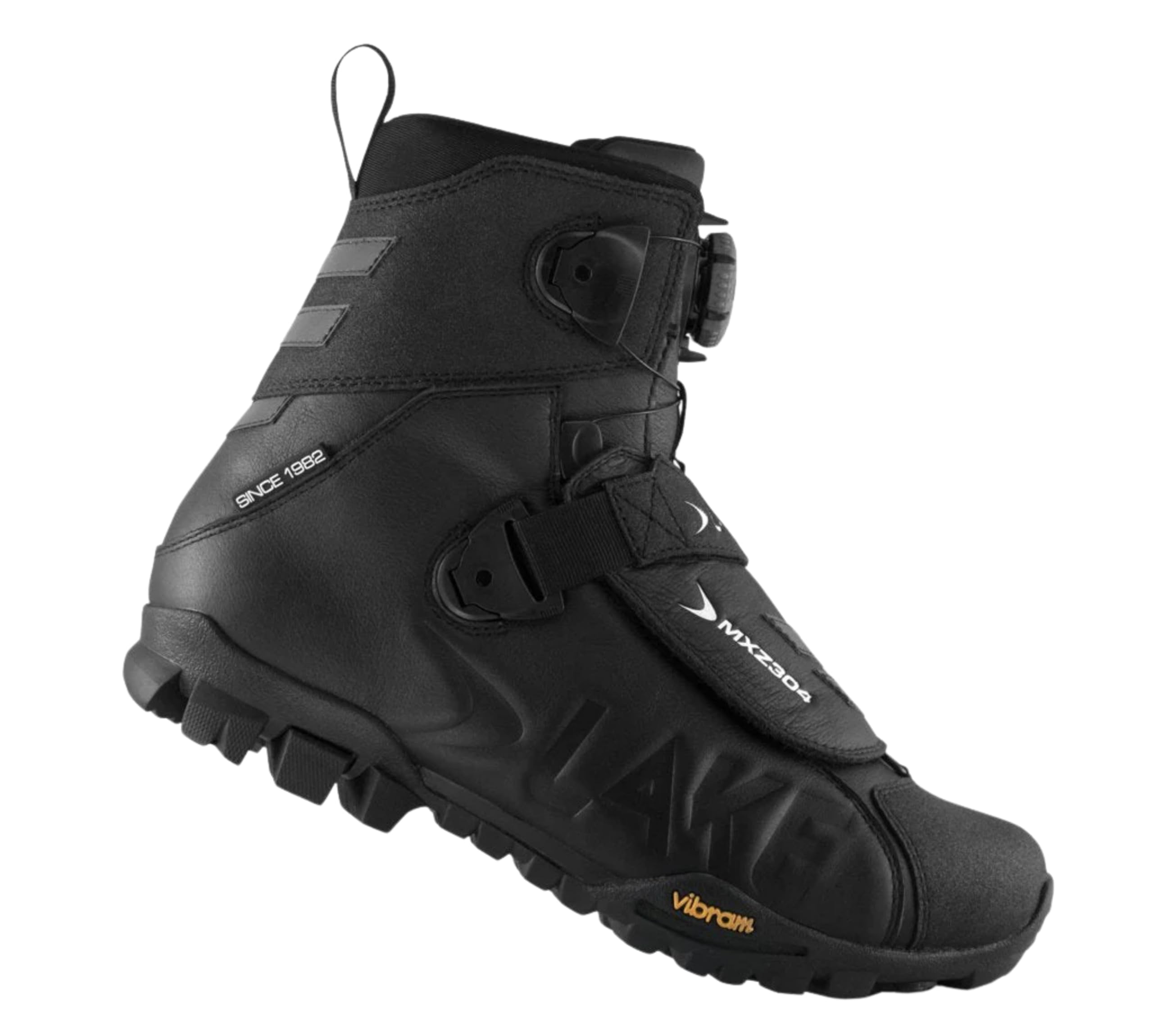
Lake was one of the first companies to make a dedicated winter cycling boot, and the MXZ304 is their best version yet. It uses full-grain Pittards leather that molds to your foot shape over time, lightweight Thinsulate insulation packed into every panel, and a heavy-duty Vibram outsole for maximum traction on snow and ice. The BOA dial has been moved to the front of the tongue so you can adjust tension easily while wearing thick winter gloves, and it distributes pressure more evenly across the top of your foot than rear-mounted dials.
The thing every owner wants you to know: these boots run extremely small and narrow. The most-discussed topic by a wide margin is sizing, and the advice is loud and clear — order 2 sizes up and go wide. A size 13W fits a size 11.5W foot comfortably with normal wool socks. One owner who ordered 1.5 sizes up and wide found room for thick thermal socks and stood comfortably in -5°F conditions. The recurring gripe is the BOA release mechanism, which a few found difficult to operate, and one sole screw fell out after two months of use on what should be a premium boot. Warmth, however, is the thing praised most — 12 owners single it out — and the consensus is that this boot allows riding in below-40°F temperatures with genuinely warm feet, something few other shoes can claim.
What makes it special
- Thinsulate insulation keeps feet warm in temperatures down to -5°F with the right socks
- Pittards leather molds to your foot over time for a custom-like fit
- Front-mounted BOA dial is easier to use with gloves on than rear dials
Watch out for
- Sizing is wildly off — order 2 full sizes up and choose the wide option, or you will not get them on
- BOA release can be stiff; a few owners needed replacement parts within months
The deep-winter choice: if you regularly ride in sub-freezing temperatures and need a boot that keeps toes warm for hours, the MXZ304 is class-leading in warmth — but only if you order 2 sizes up and wide.
skip it if: you want true-to-size convenience, or your winter rides stay above freezing where a lighter insulated shoe will suffice.
Understanding the Specs
PrimaLoft vs Thinsulate Insulation
PrimaLoft uses synthetic microfiber to trap heat even when the insulation gets damp, making it a strong choice for wet snow and slush conditions. Thinsulate packs more warmth into a thinner layer, so your foot does not feel like it is inside a ski boot. Both are effective — the real question is whether you prioritize damp-weather performance or maximum warmth in dry cold.
BOA Dial Closure System
A BOA dial replaces traditional laces with a steel wire and a twist-knob that tightens evenly across the top of your foot. The main advantage in winter riding is that you can operate the dial with thick gloves on — no frozen fingers fiddling with laces. Some boots, like the Lake MXZ304, place the dial on the front of the tongue for even easier access. The trade-off is that a broken BOA part can require a replacement component rather than a simple new lace.
Stealth S1 Rubber Outsole
Stealth S1 is a rubber compound designed by Adidas Five Ten specifically for flat-pedal grip. It uses a “dotty” tread pattern of small rubber nubs that dig into pedal pins and stay sticky on wet ground. This is the closest you can get to the pedal feeling glued to your foot without a mechanical cleat. The downside: Stealth S1 is tune for pedal contact, not pavement walking, so it wears quickly if you hike significant sections.
Vibram Outsole for Winter Boots
Vibram is an Italian rubber sole brand known for aggressive tread patterns and durability on snow, ice, and mud. Winter cycling boots like the Lake MXZ304 use Vibram soles to provide traction when you need to dismount and push through deep snow or cross a frozen stream. The grip is excellent, but the deep tread and heavy rubber add noticeable weight compared to flat-pedal shoes, and on purely paved commutes the extra tread is overkill.
FAQ
Can I use flat-pedal winter shoes with clipless pedals?
How much should I size up for winter cycling boots?
Are winter cycling shoes waterproof or water resistant?
Can I wear thick wool socks in winter riding shoes?
What is the warmest winter cycling shoe on this list?
Which shoe is easiest to get on and off?
Do I need a special shoe for flat pedals in winter?
How long do winter cycling shoes last?
Can I use chemical toe warmers with any of these shoes?
What is the difference between a winter cycling shoe and a regular cycling shoe with overshoes?
Final Thoughts: The Verdict
For most flat-pedal riders, the winter bike riding shoes winner is the Five Ten Freerider EPS because it combines PrimaLoft warmth, a Stealth S1 outsole that genuinely grips wet flat pedals, and a true-to-size fit that saves the headache of returns. If you ride clipless and face bitter cold, the Fizik Terra ARTICA X2 is the premium pick — just budget for a shoehorn. And for deep-winter adventurers who need maximum warmth down to -5°F, the Lake MXZ304 is class-leading, provided you order 2 full sizes up and choose the wide option.
How We Picked
We do not accept paid placement. Every pick is matched to a real buyer and a real use-case; we do not hands-on test units.
Sources & Methodology
Specifications: manufacturer listings and product documentation. Review insights: verified customer reviews, as of July 2026. Pricing: not shown on this page (it changes often); check the current price via the retailer link.
As an Amazon Associate, GoCarLife earns from qualifying purchases. This does not affect which products we feature.