
Our readers keep the lights on and the garage heater humming. As an Amazon Associate, I earn from qualifying purchases.
Specs are compiled from manufacturer listings and verified buyer reviews and can change over time — please confirm the key details on the product page before buying.
Picking the right windshield tint is a trade-off between blocking brutal heat and keeping your vision sharp after dark. This guide focuses on the films that manage both jobs — cutting UV and solar heat while preserving the legal light transmission your front glass demands.
I’m Mo Maruf — the founder and writer behind GoCarLife. This guide is built by comparing the manufacturers’ published specifications and the patterns across verified customer reviews, so you get each pick’s real strengths and trade-offs instead of marketing spin.
The films below represent the top options for a windshield window tint, ranging from nearly-clear ceramic films for maximum heat rejection to pre-cut kits for a perfect factory-style fit.
Our Picks at a Glance


How To Choose The Best Windshield Window Tint
Your windshield is a unique window. Unlike side glass, any tint you apply here must still let enough light through for safe night driving. Every state sets a legal minimum Visible Light Transmission (VLT), which is the percentage of visible light the film lets pass. Most states require at least 70% VLT on the front windshield, meaning the film blocks only 30% of light. Stick with those legal films for the main glass and save the darker strips for the top visor band.
Ceramic vs Dyed vs Carbon
The material of the film determines how well it handles heat and how long it lasts. Dyed film is the cheapest option, but it fades and bubbles over time. Carbon film performs better and doesn’t fade, but it can interfere with GPS and cell signals. Ceramic film is the premium choice for a windshield — it blocks infrared heat without using metals, so you keep reception clear while getting the best heat rejection.
UV Protection and Heat Rejection
Sun damage threatens your dashboard, seats, and skin. Look for a film that claims to block 99% of UV rays, which is now common even at budget price points. Heat rejection is harder to judge from a spec sheet. Ceramic films deliver consistent heat reduction by absorbing solar energy and releasing it as the car moves, cooling the cabin without darkening the glass.
Quick Comparison
| Model | Best For | VLT | UV Protection | Dimensions | Amazon |
|---|---|---|---|---|---|
| BDF NA05★ Best Overall | DIY Privacy | 5% | 99% | 36″ x 12ft | Amazon |
| MEGICOLIM CeramicTop Performer | Heat Blocking | 80% | 99% | 30″ x 10ft | Amazon |
| SW Nano CeramicSignal Friendly | Signal Friendly | 80% | 99% | 40″ x 10ft | Amazon |
| TOYOCO Ceramic | Windshield Legal | 70% | 99% | 24″ x 15ft | Amazon |
| ATMOMO Chameleon | Style | — | Yes | 19.68″ x 118″ | Amazon |
| ASENDIWAY Chameleon | Style + Heat | 65% | 99% | 29.52″ x 9.84ft | Amazon |
| AUTOTEK Premium | Value Roll | 25% | Yes | 36″ x 25ft | Amazon |
| TRUE LINE Pre-Cut | Exact Fit | 5-50% | Yes | Custom | Amazon |
In‑Depth Reviews
1. BDF NA05 Window Film
Our pick — 4.5★ from 5,500+ verified ratings; the strongest balance of quality and price.
The dark privacy king that drops interior temps by six degrees.
This is not a windshield film for the front glass itself — at 5% VLT (Visible Light Transmission), it is far too dark for legal use on your main windshield. But for side windows, rear glass, or a home sunroom, the BDF NA05 is the most popular roll on the market by a wide margin, with tens of thousands of owners backing it. The film comes in a 36-inch by 12-foot roll, giving you enough material to cover several car windows or a set of house windows with leftover stock.
Over 400 owners praise the installation process for being straightforward — the kit includes basic tools and a guide, and the general advice is to soak both the glass and the adhesive side generously with soapy water so the film slides into place. The payoff is daytime privacy owners call a near-complete one-way mirror effect. Heat reduction is the second most praised feature; buyers coming from Texas summers report a measurable difference, with one owner noting the film “keeps rooms dark, while also reducing interior temperatures by up to 6 degrees.” The adhesive gets mixed reviews—the film is sensitive, and any fold creates a permanent wrinkle, so a clean work surface is essential.
Why DIYers Love It
- Blocks 99% of UV rays to protect interiors
- Genuine 5% VLT for deep one-way daytime privacy
- Rejects up to 55% of solar heat
Fitment Reality Check
- 5% is illegal on front windshields — side and rear only
- Folds crease permanently — handle with care
- Kit squeegee is small; a larger one helps
Best for: Anyone after deep daytime privacy for side or rear windows who is willing to work slowly with a soapy-water install.
Not for: The front windshield — it is far too dark and illegal in every state.
2. MEGICOLIM Nano Ceramic Window Film
Nearly invisible clarity with nano-ceramic heat absorption that works as your car moves.
This is a genuine windshield-legal film. At 80% VLT, it lets through 80% of visible light so your night vision stays normal, but the ceramic technology is what makes it special. Nano-ceramic film works differently than dyed or carbon film — it absorbs the sun’s heat through the ceramic particles, then dissipates that heat as air passes over the glass when the car is moving. Owners confirm this works: one review says blocking UV A, B, and C rays combined with “90 percent heat blockage” makes it the best technology for window film.
The 200-inch by 30-inch roll provides a longer sheet than the BDF film’s 144-inch length, reducing splicing on wide windshields. It is a 2-ply design with a scratch-resistant coating to prevent bubbling over time. The catch is installation. A former tint installer rated it harshly, calling it thick and non-conforming on curved glass, which aligns with other feedback that you really need a second pair of hands. The liner removal trick is to use two pieces of tape at the corners and pull. Once applied, the light-blue tint is nearly invisible, giving your windshield a slight cool hue without changing how the world looks from inside at night.
Where it shines: Heat rejection that doesn’t darken your view — the nano-ceramic principle means it absorbs heat first, then releases it, so you stay cooler without sacrificing night vision.
The honest limitation: Thickness makes it tough on curved windshields. Two-person install is strongly recommended.
Reach for this if: You want maximum UV and heat protection on the front glass with zero change to daytime or nighttime visibility.
Look elsewhere if: You are a solo DIY-er working on a heavily curved windshield — this needs teamwork and patience.
3. SW Nano Ceramic Car Window Film
Ceramic heat protection that leaves your phone and radio signals clear.
This roll is the same 80% VLT (Visible Light Transmission, meaning it lets 80% of visible light through) class as the MEGICOLIM above, but it adds a key feature for anyone who drives with electronics: it is a non-metallized film, meaning it won’t interfere with radio, GPS, or cell reception inside the car. The ceramic technology still blocks 99% of UV (ultraviolet) rays and uses the same heat-absorb-and-dissipate principle. The film comes in a wider 40-inch by 10-foot roll, which is 10 inches wider than the MEGICOLIM, so you can cover a larger windshield panel in a single piece.
The reviews reveal a split. Buyers who got it on a flat or gently curved surface report excellent heat reduction on their dash without any vision compromise. One owner called it a “standout” on a motorhome after a wrinkle-free application. Others found it difficult to work with on curved car windows, with the film creasing easily.
Why Signal Clarity Matters
- Non-metallized ceramic — no interference with GPS or phone
- Wider 40-inch roll fits larger windshields
- 2-ply scratch-resistant coating
The Heat Reality
- Curved glass is tricky — creases form easily
- 80% VLT alone may feel less cooling than darker side tints
- Some owners question the heat rejection claims vs real-world results
Best for: Drivers who rely on GPS and satellite radio and need a film that won’t degrade those signals.
Not for: Beginners tackling a highly curved windshield alone — you will fight creases.
4. ATMOMO Dark Blue Chameleon Windshield Tint

A blue-purple color shift that makes your windshield look like a custom exotic.
This is the film for the buyer who wants their car to stand out. The Dark Blue Chameleon tint shifts between purple and green depending on the light, giving the windshield a finish that owners say looks like high-end factory tint jobs on luxury cars. It measures 19.68 inches by 118 inches — a compact roll meant for the windshield strip or visor area rather than covering the full windshield.
Quality is the most praised aspect here — owners consistently say the material feels thick and well-made. But the color-shifting effect gets mixed reactions. Some love the unique look, while others found it difficult to install because the film resists laying flat on a curved windshield surface. The advice from experienced buyers is clear: have a professional do it. One attempt took two tries and still failed, with the owner finally taking it to a shop. If you get it right, it blocks UV and cuts glare from the sun and headlights, all while giving your car a dramatic visual pop that no standard black film can match.
The look: Shifts from purple to green in daylight — pops especially in gloomy weather.
The catch: Installation is the #1 frustration. Even buyers who praised the quality ended up recommending a pro install.
Reach for this if: You value appearance above all and can budget for professional installation to get that chameleon finish right.
Look elsewhere if: You need a full windshield film or plan to install it yourself on a deeply curved car.
5. ASENDIWAY Chameleon Window Tint Film

A lighter 65% chameleon that keeps the style while staying safer for night driving.
Where the ATMOMO is a dark strip, this ASENDIWAY film comes in 65% VLT, making it a better match for a windshield strip that needs to stay semi-legal. It claims 99% UV rejection and 50% heat rejection, plus a scratch-resistant coating. The material feels thick to the touch — one owner who called it “thick material not cheap” also noted the tint is not dark at all, describing it as around 20% darkness.
The reception is mixed on durability. One buyer who had a professional install it says it looks great and is happy with the result. Another found the film thin, breakable during application, and prone to poor adhesion. The split seems to come down to install quality — owners who had a pro handle it are satisfied, while those who attempted DIY on a budget car ran into peeling issues. Given the price point, this is a film for buyers who want a unique deep-blue chameleon look on their front visor strip and are willing to pay for good installation.
The material feel: 65% VLT and a thick build that feels substantial, but successful application depends heavily on your skill level.
The honest trade-off: DIY reviews are split — professional installation seems to open up the film’s full potential.
Best for: Drivers wanting a blue chameleon visor strip who will use a pro to ensure a bubble-free result.
Not for: Strict budget DIY projects where you cannot afford a redo or a shop visit.
6. AUTOTEK Premium 2Ply Window Tint Film
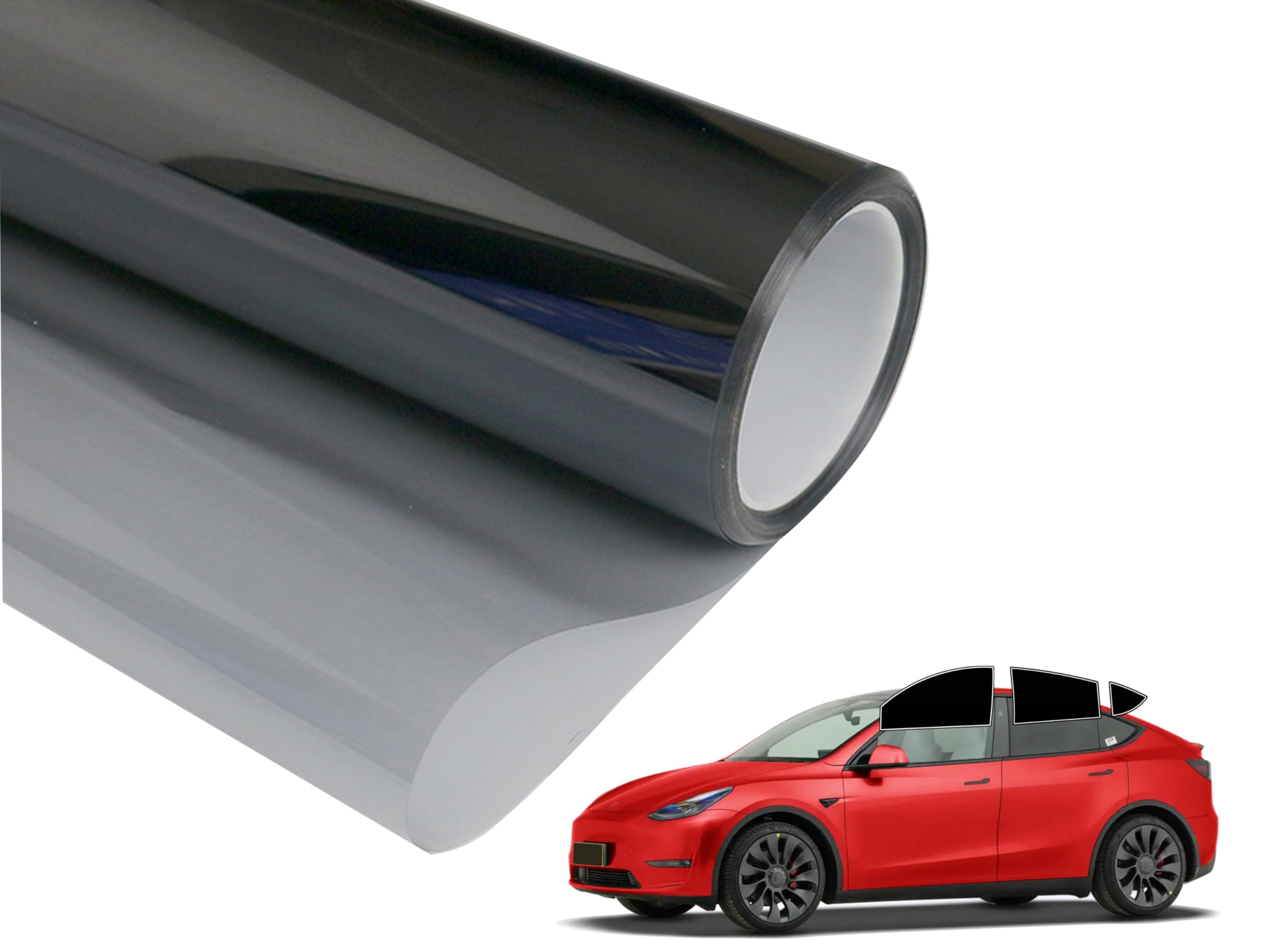
A massive 25-foot roll at 25% tint — enough to do an SUV with extras left over.
This is the biggest roll in the lineup at 36 inches by 25 feet, giving you enough film to cover side windows on a large SUV with material to spare for retries. At 25% VLT it is meant for side and rear glass — too dark for windshield use — but the value proposition is clear: a lot of film for the money. The film is advertised as a 2-ply design with UV protection and scratch resistance.
The feedback from owners is a mixed bag. The most common point of discussion is the tint quality — some find it accurate and consistent in darkness, while others say the film is very thin and crinkles when you try to heat-shrink it with a heat gun. One experienced user who expected a thick 2-ply film found it so thin that heat caused it to crinkle and rip. On the positive side, the film slides and manipulates well during a wet install, and the seller gets consistent praise for responsive customer service if shipping causes issues. For a budget-friendly roll that you are comfortable throwing a few practice cuts at, it delivers decent results.
The Quantity Advantage
- 36″ x 25ft covers large vehicles with waste room
- Heat-shrinkable with a basic heat gun
- Good price relative to coverage area
The Material Quirk
- Thin film that crinkles rather than shrinks under heat
- Very sticky and fragile at the same time
- Listed as 2-ply but some owners disagree on thickness
Best for: Covering a full side-and-rear window set on a tight budget where you can work with a delicate film.
Not for: Windshield use or anyone wanting a thick, sturdy film that handles aggressive heat shrinking.
7. TRUE LINE Pre-Cut Windshield Tint Kit
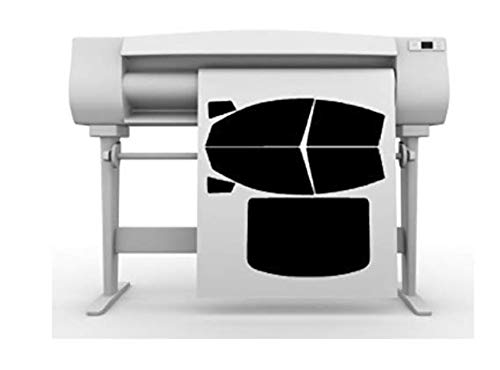
A computer-cut windshield film that drops the trim-work — if your car is in the database.
This is the only product here that is specifically for the front windshield and pre-cut by a computer to fit your exact car model. You pick your vehicle during customization, choose a tint shade from 5% up to 50% VLT, and the manufacturer ships a film cut to the shape of your windshield. In theory, this removes the hardest part of DIY tinting: cutting the film to match the glass curve.
In practice, the execution has been inconsistent. The most common complaint is that the cut is not always accurate to the windshield shape — multiple buyers report needing to trim around the rearview mirror area themselves, which defeats the purpose of a pre-cut kit. One long-time tint installer called the material itself “trash paper” that is hard to handle and does not match specifications. A simpler alternative is to buy a quality roll film and cut it yourself with a sharp blade, as that gives you more control. The kit works best for owners with popular models in the database who are willing to accept some manual fitting.
The premise: Computer-customized shape removes the biggest DIY headache — windshield curvature.
The reality: Cutting accuracy and film quality have disappointed experienced installers. Check your car model carefully before ordering.
Reach for this if: You have a common model in TRUE LINE’s database and want a head start on the shape rather than cutting from a roll.
Look elsewhere if: You expect perfect factory-fit with zero trimming, or you drive a less common model.
8. TOYOCO Ceramic Window Tint Film
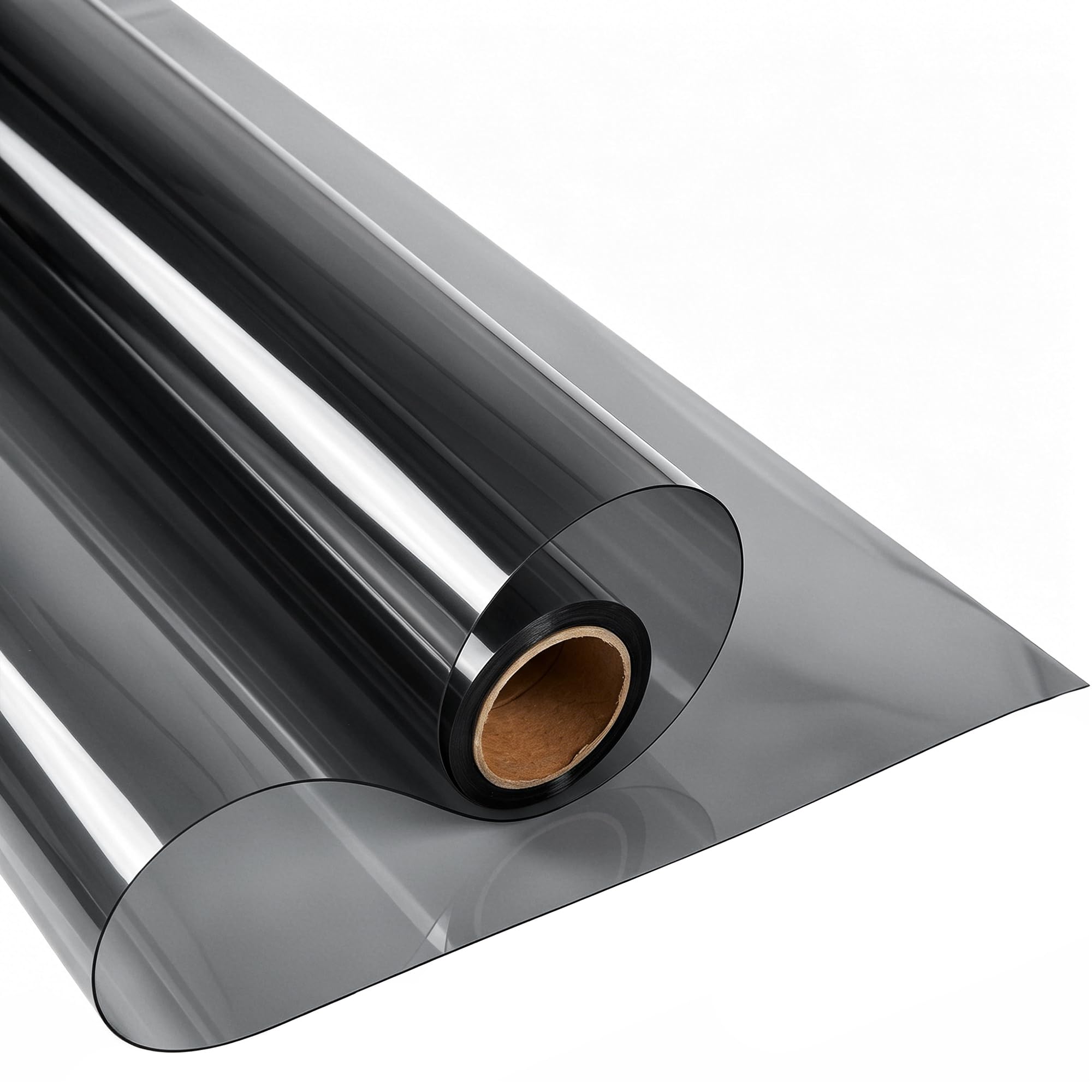
A legal 70% VLT ceramic film at a friendly price — if you can get past the installation.
At 70% VLT, the TOYOCO is a prime candidate for a legal windshield tint that keeps your night vision intact. It uses a ceramic material that blocks over 99% of UV and over 92% of IR rays. The 24-inch by 15-foot roll gives you 30 square feet of coverage, which is a considerably smaller width than the MEGICOLIM — 24 inches versus 30 inches — so you have about 50% less horizontal coverage per pass.
The owner experience here is a sharp divide. Successful first-time users got great results on side mirrors and windows, reporting reduced night glare and a clean look. But a more experienced buyer found the film unusable: the liner took 15 minutes to separate, heat-shrinking caused persistent fingers, and the included squeegee scratched the film deeply. That reviewer abandoned the second window entirely and recommended professional installation. The lesson is that this film rewards patience and correct technique — using the right side, a sharp blade, and a quality squeegee. It is a budget-friendly entry into ceramic tinting, but it asks more of the installer than some premium rolls.
What The Ceramic Gets You
- >99% UV and >92% IR rejection
- 70% VLT is legal on most windshields
- Scratch-resistant coating
The Installer’s Challenge
- Liner is difficult to separate — takes patience or a tape trick
- Included squeegee can scratch the film
- Heat shrinking can leave creases if you rush
Best for: Budget-conscious buyers who have some tinting experience or are willing to watch installation tutorials before starting.
Not for: Complete beginners expecting a quick, stress-free install — the liner and film handling require practice.
Understanding the Specs
VLT (Visible Light Transmission)
This is the percentage of visible light that your tint film lets through the glass. A 70% VLT film lets 70% of light in — that is the legal limit for most windshields. A 5% VLT film (often called “limo tint”) lets in almost no light and is only legal on rear or side windows. The lower the VLT number, the darker the tint, but also the harder it is to see through at night.
UV Protection and Heat Rejection
UV protection (usually stated as 99% blocking) is common even in budget films and prevents dashboard fading and skin damage. Heat rejection is more complex: dyed films absorb heat but can heat up the glass itself, while ceramic films absorb and then dissipate heat as air flows over the car. A ceramic film at 80% VLT can feel cooler inside than a darker dyed film because it handles infrared heat more efficiently.
FAQ
Is 70% VLT legal on the front windshield?
Will windshield tint interfere with my GPS or phone signal?
Can I install a windshield tint myself?
How long does a ceramic window tint last?
What is the difference between a chameleon tint and a regular black tint?
Will a 5% VLT film work on my windshield?
How do I remove a stubborn protective liner from a new tint film?
Does a ceramic tint really keep the car cooler than a regular tint?
Why does the same tint film get such different reviews for heat reduction?
Should I buy a pre-cut kit or a roll of film?
Final Thoughts: The Verdict
For the majority of shoppers, the windshield window tint winner is the MEGICOLIM Nano Ceramic 80% VLT because it combines genuine ceramic heat rejection with a nearly invisible appearance that keeps your night vision safe. If you want to block the most UV and keep your signals clear, grab the SW Nano Ceramic for its wider 40-inch roll and non-metallized design. And for pure style that turns heads, the ATMOMO Chameleon is the one to reach for — just budget for a pro install to get that color-shift finish perfect.
How We Picked
We do not accept paid placement. Every pick is matched to a real buyer and a real use-case; we do not hands-on test units.
Sources & Methodology
Specifications: manufacturer listings and product documentation. Review insights: verified customer reviews, as of July 2026. Pricing: not shown on this page (it changes often); check the current price via the retailer link.
As an Amazon Associate, GoCarLife earns from qualifying purchases. This does not affect which products we feature.