
Our readers keep the lights on and the garage heater humming. As an Amazon Associate, I earn from qualifying purchases.
Specs are compiled from manufacturer listings and verified buyer reviews and can change over time — please confirm the key details on the product page before buying.
A worn or missing windshield gasket does more than let in a few drops of rain. It turns your cabin into a wind tunnel, makes the frame rattle on rough pavement, and leaves moisture trapped against the metal. The trick is finding a seal that matches the exact groove depth of your glass — a half-millimeter off and you are back to square one. This guide walks you through seven replacements, from universal rolls to model-specific fits, so you can get back to a quiet, dry ride.
I’m Mo Maruf — the founder and writer behind GoCarLife. This guide is built by comparing the manufacturers’ published specifications and the patterns across verified customer reviews, so you get each pick’s real strengths and trade-offs instead of marketing spin.
Whether you are patching a classic project or restoring a daily driver, the windshield gasket replacement that works for you depends on getting the profile, length, and rubber formula right for your specific vehicle.
Our Picks at a Glance
How To Choose The Best Windshield Gasket Replacement
Buying the wrong gasket is the most frustrating part of this job. You measure twice, wait for delivery, and then the rubber is too stiff or the channel is the wrong width. Focus on these three things and you will get the right seal the first time.
Match the Channel Profile to Your Glass
A single-channel seal (a U-shape that grips the glass edge) is what most universal rolls use. A frame-to-cowl gasket sits between the windshield frame and the body. Check whether your car needs a wrap-around strip that locks onto the glass or a flat gasket that seals the frame to the cowl panel. The spec always says which one it is.
Confirm the Rubber Material
EPDM rubber is the standard for a reason. It resists UV rays, ozone, and temperature swings without hardening or cracking. If the product does not say EPDM in the material list, you are getting a cheaper compound that will shrink and leak within a season. Look for the exact term in the product data.
Measure the Glass Thickness You Have
Universal seals work only if the groove width matches your windshield. For example, a seal might specify a glass thickness of 0.17 inch (4.5 mm). If your windshield is thicker or thinner, the seal will not seat properly. Always cross-reference the product’s fit spec against your own glass before you order.
Quick Comparison
| Model | Best For | Length | Material | Glass Thickness | Amazon |
|---|---|---|---|---|---|
| PACIXU Front Windshield Rubber Seal★ Best Overall | General gap filling & OEM look | 20 ft | EPDM Rubber | — | Amazon |
| Aroilder Windshield GasketBest for Classics | RV, truck & van window seals | 20 ft | EPDM Rubber | 0.17 inch (4.5 mm) | Amazon |
| Jetuplusllc Cowl Seal | Jeep CJ cowl-to-frame seal | — | Rubber | — | Amazon |
| Seal Rubber Glass Seal | Universal glass-edge seal | 25 ft | EPDM Rubber | — | Amazon |
| Supreme Trading Civic Weatherstrip | 2012-2015 Honda Civic 4-door | — | Rubber & Plastic Composite | — | Amazon |
| Fairchild Automotive D4006 | Jeep CJ windshield seal | — | EPDM Rubber | — | Amazon |
| Auto Krafters Mustang Seal | 1965-68 Mustang & Cougar | — | Rubber | — | Amazon |
In‑Depth Reviews
1. PACIXU Car Front Windshield Rubber Seal Strip
Our pick — over 4★ from 60+ verified ratings; the strongest balance of quality and price.
The crowd favorite for filling the gap left after aftermarket glass.
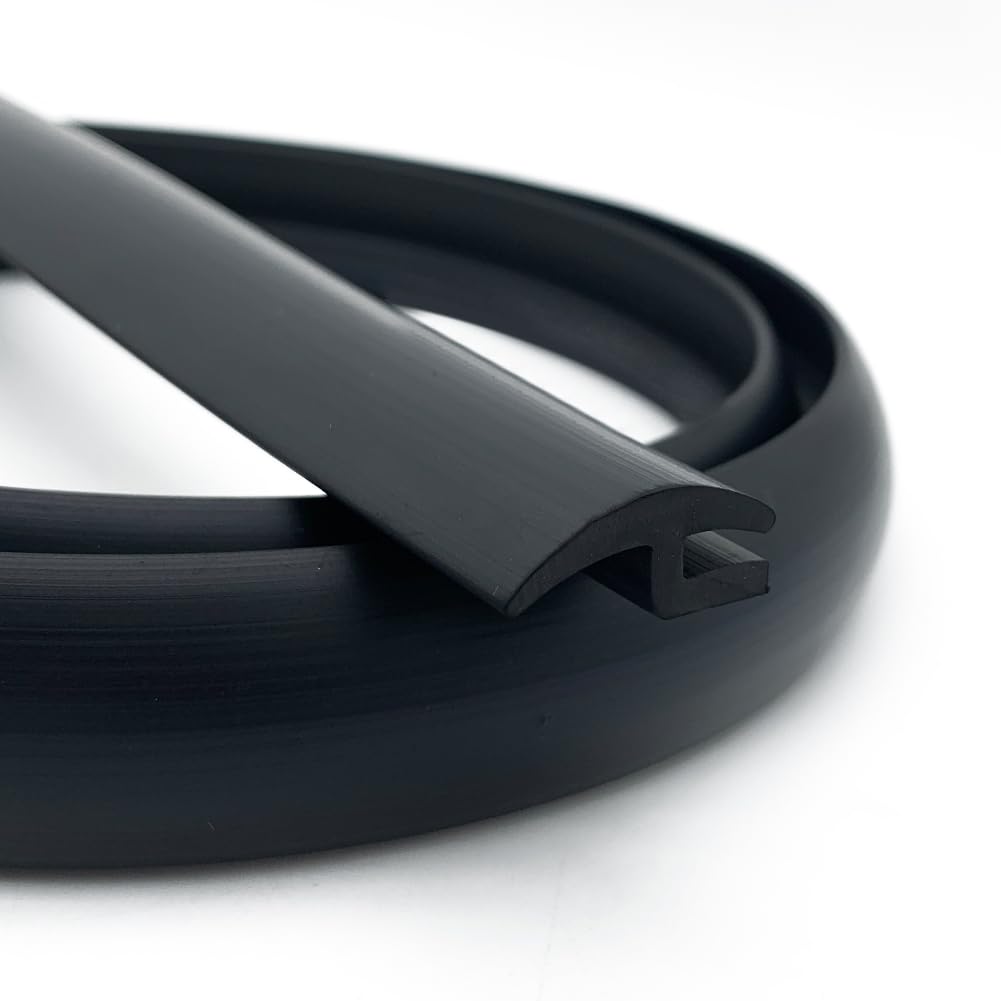
This is the strip that owners keep coming back to because the EPDM rubber is soft and pliable — not the stiff kind that fights you every inch of the way. It measures 7.9 inches by 7.9 inches in the package, meaning it arrives compressed before you cut it to your exact windshield perimeter. The 20-foot length covers most car, truck, and SUV front windshields with spare material for the rear or a side window.
What wins people over is how easy it is to push into the gap without tools. One owner who installed a Titan window on a Silverado reported that it “fills in gap to give an oem look.” Another noted it was a perfect fix for a parent’s vehicle and met their high standards. A 2-year manufacturer warranty covers the seal, which is a good safety net for a universal product.
The only catch: some owners on specific models found the fit tight or the profile not universal for every make. It is flexible enough to mold around curved glass, but always test-fit a small section before cutting the full roll.
Easy mold, OEM finish: The rubber is notably soft compared to some alternatives, making it simple to work around tight corners without creasing.
Double-check your fit: While it covers a wide range, it is not a guaranteed fit for every windshield. A test piece saves the rest of the roll.
Reach for this if: you need a flexible, forgiving seal for a standard car or truck and want an OEM-style finish without a dealer part number.
Look elsewhere if: your windshield has an unusually thick or thin glass edge that needs a specific channel width.
2. Aroilder Windshield Gasket for RV, Truck and Van
The trim delete special — one owner swapped it onto a 1970 Chevelle.
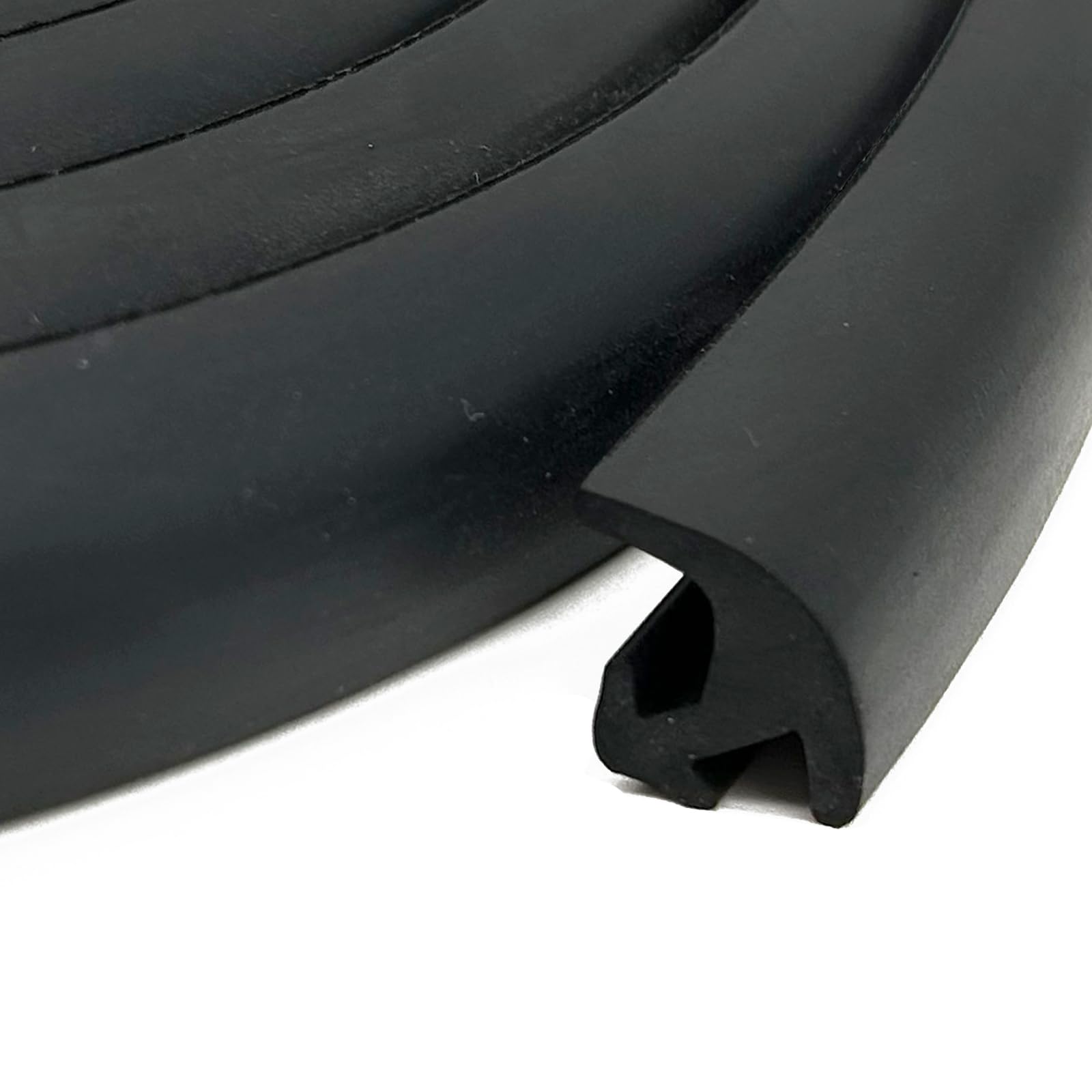
This seal is designed for window glass that is exactly 0.17 inch (4.5 mm) thick, so you get a snug wrap around the edge rather than guessing. The 20-foot length offers 25% less material than the 25-foot roll above, which is still plenty for a single windshield or a van window. At 0.75 inch in length and 0.44 inch in width, the cross-section is noticeably larger than the PACIXU roll’s dimensions — a 10.5x size difference in the package profile, so check your frame gap before ordering.
One owner who added it to a Chevelle said “I am not a fan of chrome trim and this looks so much better.” That sums up the appeal: it replaces bulky chrome moulding with a clean, low-profile rubber edge. The EPDM material is waterproof, dustproof, and odorless, and the installation method calls for soap-and-water lubrication plus optional adhesive. Several owners noted that it is durable and holds edges well once seated.
The trade-off appears in the reviews: a few buyers found the strip too wide for their specific windshield channel, and one noted that the design did not fit their intended seal application at all. Measure your glass thickness first — 0.17 inch is the specific number — and you will avoid the most common frustration.
Clean Look
- Trim-free appearance suits classic cars that lack chrome
- High-quality EPDM stands up to weather without hardening
Measure Twice
- Only fits glass 0.17 inch thick — no wiggle room
- No adhesive included; you must supply your own glue
Grab this for: a classic restoration where you want a sleek, trimless seal and your glass is 4.5 mm thick.
Think twice if: your windshield is thicker or thinner than 0.17 inch — the groove will not hold.
3. Jetuplusllc Cowl Seal for 1976-1986 Jeep CJ5 CJ7 CJ8

A drop-in gasket for the gap between a Jeep’s windshield frame and cowl.
This is a completely different kind of seal from the universal strips above — it goes between the windshield frame and the cowl, not over the glass edge. If you own a 1976 through 1986 Jeep CJ5, CJ7, or CJ8 (Scrambler), the part number 5453950 (also cross-referenced as 12302.03 and J05453950) is exactly what the factory used. The rubber is flexible and pliable from the start, which matters because the old one hardens and cracks over decades of sun exposure.
Reviewers repeatedly mention that this seal fits perfectly on the CJ5 and arrives well-packaged and protected. One owner restoring a project CJ said it was “a nice pliable replacement for my hardened deteriorating one.” There is no cutting or trimming required — this gasket is molded to the original shape, so installation is essentially press-fit.
The limitation is built into the fitment list: it only covers Jeeps from 1976 to 1986. If you have a different model or year range, this gasket will not match the cowl contour. For those with the right Jeep, it is a one-and-done fix.
No-guess fit: Press it in place and the cowl-to-frame seal is restored exactly as the factory intended.
Narrow window: Only fits the specified Jeep CJ years. Outside that, you need a different gasket.
Ideal for: any CJ owner between 1976 and 1986 whose cowl seal has turned hard and lets in water and fumes.
Not for: any other vehicle, or CJs from earlier or later model years.
4. Seal Rubber Glass Seal for Car Windshield, Truck and Van — 25 Feet
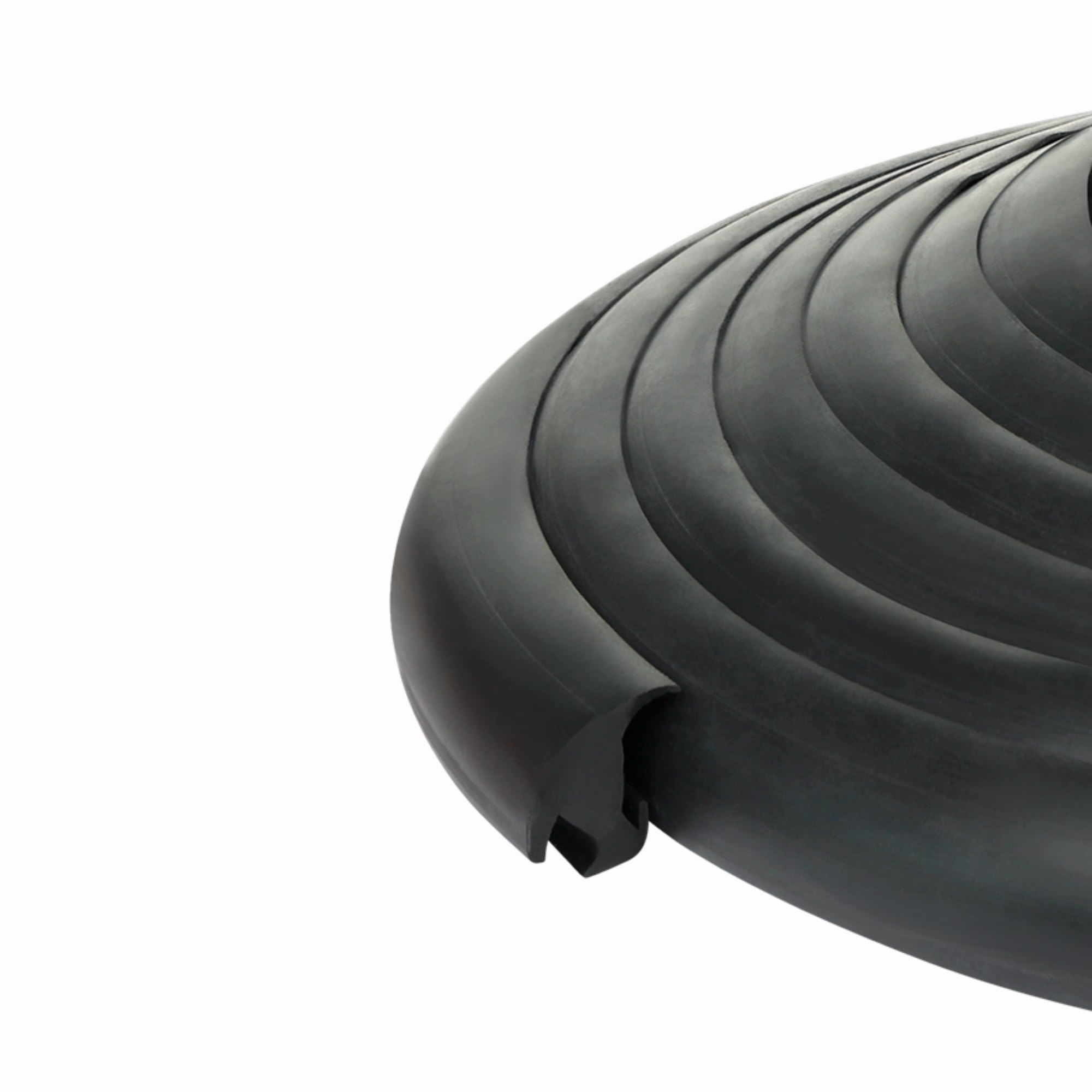
The industry-length roll that covers everything from a 4Runner to a BMW E46.
At 25 feet, this is the longest single roll in the list — that is 25% more material than the 20-foot rolls above, giving you enough length for a full windshield plus a side window or rear glass. The single-channel (U-groove) design slides over the glass edge without adhesive, which keeps the install clean and reversable. The EPDM rubber is UV and ozone resistant, so it holds up under direct sun without drying out.
What stands out across the reviews is the versatility. Owners have used this on a 2004 4Runner (bottom edge only), a 2001 Honda Accord (factory-like trim after trimming the edge), a 2009 Honda Civic (left and right sides), and even a 2001 BMW E46 325i. One owner on the E46 said the fit was actually better than the OEM part. The main caution is reflected in the customers-say summary: fit is mixed. Some cars take it perfectly; a 2010 Hyundai Elantra owner reported it did not fit at all. The product pages sum it up: “Seems like they would be good, but not universal.”
Because the seal has no built-in adhesive, the top edge can loosen from wind pressure at high speeds. Owners recommend adding 3M sealant at the upper corners, especially if you run a roof rack. The material is flexible enough to contour around curved glass, but a test-fit section is essential before committing the full roll.
Generous Length
- 25 feet covers most windshields with significant spare material
- Soft, pliable EPDM bends around sharp curves without kinking
Not Truly Universal
- No adhesive — needs 3M sealant on top corners for highway use
- Fit varies by vehicle; measure your glass groove first
Best for: a DIY owner with multiple vehicles or a project that needs generous length for several windows.
skip it if: your vehicle was reported as a poor fit in reviews (check the Civic, Accord, and E46 consensus first).
5. Supreme Trading 3-Sides Front Windshield Weatherstrip for 2012-2015 Honda Civic 4-Door
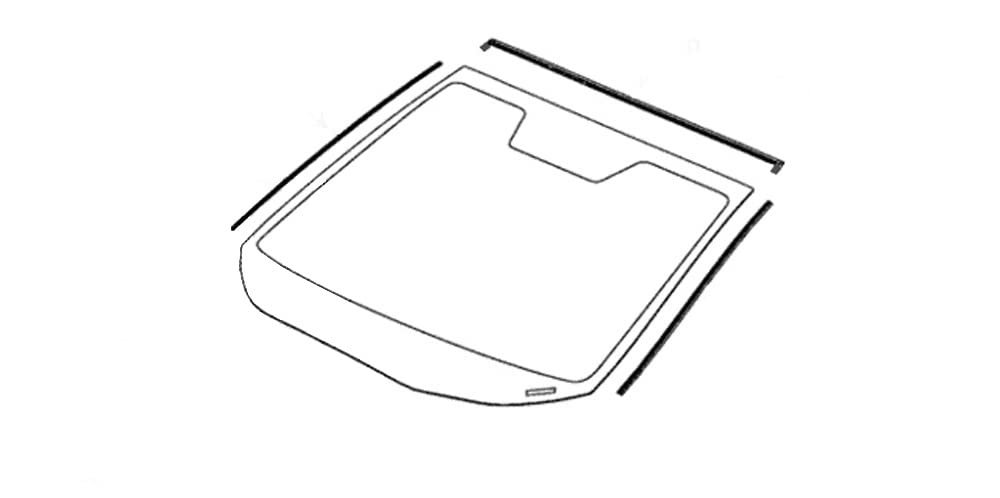
A three-sided trim replacement engineered specifically for the ninth-gen Civic sedan.
This is the most targeted product in the lineup — it replaces part numbers 73150-TRO-A01 and 73125-TR3-A, covering only the 2012-to-2015 Honda Civic 4-Door Sedan. The set includes removal and installation tools, which is rare for this category. The material is a rubber and plastic composite designed to handle weather elements without cracking.
The reviews, however, reveal a split. A couple of owners noted that no installation instructions were included, which made the process confusing. One wrote that they hoped it would “cover the gap between the windshield moulding and the windshield, but it didn’t.” That suggests the fit requires clear guidance on where exactly the trim seats. On the positive side, a lifetime warranty backs the product, which is a strong safety net if the seal does not meet your expectations.
The main takeaway: if you own exactly a 2012-2015 Civic 4-door sedan, this is the correct replacement shape — but be prepared to figure out the install on your own or consult a video guide. The tool included is helpful, but the missing instructions are a real sticking point.
Perfect profile: Matches the original Civic part numbers exactly, so the curve of the trim follows the windshield contour.
No walkthrough: Lack of installation instructions leaves new DIYers guessing. Check a forum or video before you start.
Choose this if: you drive the exact 2012-2015 Civic 4-door and want a factory-correct replacement with a lifetime warranty.
Look elsewhere if: you need a universal seal for a different model or prefer self-explanatory install directions.
6. Fairchild Automotive D4006 Windshield Seal for Jeep CJ

The heavy-duty factory-style gasket that CJ restorers swear by, at 3.3 pounds.
This is the premium seal for Jeep CJ owners who want a gasket that mirrors the original Fairchild part. It is made from EPDM rubber (Ethylene Propylene Diene Monomer), the same high-grade compound used in OEM applications, and the packaging measures 18 by 14 by 7 inches — a much larger footprint than any universal roll, because this is a full pre-formed gasket, not a strip. It fits CJ-5, CJ-7, and CJ-8 models from the 1970s and 1980s, replacing part D4006.
Reviewers working on full restorations report that it fits factory-original windshields exactly. One owner who had already tried a different seal that was “too big” said this one hit the mark. The recommended install technique is the classic paracord-and-soapy-water method: warm the gasket in the sun, fit it onto the glass, run a cord through the frame channel, lubricate, and pull the cord to seat the gasket. A second set of hands helps because the rubber is slick and wants to slide off the frame.
The only note is that the rubber settles over a few days — some owners found loose corners immediately after install that tightened up after a couple of days in the elements. This is normal behavior for a thick, uncompressed gasket.
Restoration-grade: The thick EPDM feels substantial in the hand and matches the original Fairchild profile for a correct factory look.
Patience required: Expect settling time — the gasket may look loose in the corners for the first 48 hours before compressing into place.
Best for: a serious CJ restoration where original dimensions and EPDM quality matter more than price.
Skip if: you have a non-Jeep, an aftermarket frame, or prefer a quick push-in strip.
7. Auto Krafters Windshield Seal for 1965-68 Mustang GT Shelby & 1967 Cougar XR7

The first-gen Mustang and Cougar gasket that solves the fit issues cheaper seals cannot.
If you are restoring a 1965-68 Ford Mustang GT, a Shelby, or a 1967 Mercury Cougar XR7, the factory part number is C5ZZ-6503110. At 8 pounds, this is the heaviest gasket in the roundup — a solid indicator of a thick, dense rubber profile that holds its shape across the wide Mustang windshield frame. The rubber material is pliable enough to work with the standard installation methods, but stiff enough to hold a tight seal against wind and rain.
The reviews tell a clear story: at least one owner tried a different brand first and could not get it to fit right, then switched to this Auto Krafters gasket and reported that “it installed great” and they were “very pleased.” That pattern — failed first attempt followed by success — is what you see when a gasket has the exact cross-section and compound needed for a specific vintage body.
The obvious limitation is the narrow fitment window: only 1965-68 Mustangs, Shelbys, and 1967 Cougar XR7s. Outside that range, the profile will not match the frame. For those with the right car, it is the gasket that saves you from fighting a universal strip that never seats properly.
First Time Fit
- Matches the original Ford profile — eliminates the guesswork of universal strips
- One owner reported it installed great after a competitor’s seal failed completely
Strictly Vintage
- Only fits 1965-68 Mustang, Shelby, and 1967 Cougar XR7
- No use on any other vehicle
Ideal for: anyone restoring a first-gen Mustang or Cougar who wants a gasket that installs without hassle.
Not for: any modern car, pickup, or non-Ford/Mercury applications — this is strictly vintage metal.
Understanding the Specs
EPDM Rubber vs Standard Rubber
EPDM stands for Ethylene Propylene Diene Monomer. It is a synthetic rubber that handles UV rays, ozone, and temperature swings from below freezing to hot asphalt without hardening or cracking. Standard rubber (SBR or natural) degrades under sunlight and shrinks within a year. If the product data lists EPDM, that seal will outlast cheaper alternatives by a wide margin.
Single-Channel vs Cowl-to-Frame Seals
A single-channel seal (also called U-channel or glass-run) wraps around the edge of the glass itself. A cowl-to-frame gasket sits between the windshield frame and the vehicle body — it seals the gap at the base of the windshield. They are not interchangeable. Check which type your vehicle needs by looking at the old gasket you are removing.
Length and Do You Have Enough
Most standard car windshields need roughly 12 to 16 feet of single-channel seal. Trucks and vans often need more. A 20-foot roll gives you generous margin for waste and mistakes. A 25-foot roll covers a full windshield plus a side window. Pre-formed gaskets (like the Fairchild D4006) come as one molded piece and do not need trimming.
Glass Thickness Spec
This is the single measurement that makes or breaks a universal seal. If a gasket specifies 0.17 inch (4.5 mm), your windshield must be exactly that thickness at the edge. Too thick and the seal will not close; too thin and it rattles and leaks. Measure your glass with a digital caliper before ordering when the product shows a glass-thickness spec.
FAQ
Can I use a universal windshield gasket on any car?
How do I install a windshield gasket without breaking the glass?
What is the difference between EPDM rubber and standard rubber?
How long does a windshield gasket replacement last?
Can I install a new gasket over the old one?
How do I know if my gasket needs replacing?
Is a pre-formed gasket easier to install than a universal strip?
Will a wider gasket fit if my gap is bigger than spec?
Final Thoughts: The Verdict
If you want one dependable pick, the windshield gasket replacement that offers the best balance of flexibility, coverage, and ease of use is the PACIXU Car Front Windshield Rubber Seal Strip — the soft EPDM rubber makes installation straightforward and the 2-year warranty backs it up. If you need the longest single roll for a multi-window project, the Seal Rubber 25-Foot Glass Seal gives you the most material per purchase. And for a vintage Mustang or Cougar, the Auto Krafters C5ZZ-6503110 is the gasket that owners say finally fixed their fit after trying others that failed.
How We Picked
We do not accept paid placement. Every pick is matched to a real buyer and a real use-case; we do not hands-on test units.
Sources & Methodology
Specifications: manufacturer listings and product documentation. Review insights: verified customer reviews, as of July 2026. Pricing: not shown on this page (it changes often); check the current price via the retailer link.
As an Amazon Associate, GoCarLife earns from qualifying purchases. This does not affect which products we feature.