
Our readers keep the lights on and the garage heater humming. As an Amazon Associate, I earn from qualifying purchases.
Specs are compiled from manufacturer listings and verified buyer reviews and can change over time — please confirm the key details on the product page before buying.
You want a windshield tint that stops the sun from baking your dashboard and your arms, without making it dangerous to drive at night. Most bargain rolls on Amazon fail at one of those two things — they block heat poorly or they darken the glass so much that you are guessing at lane markers after dusk. The right ceramic film avoids both traps, but you need to know which specs to trust.
I’m Mo Maruf — the founder and writer behind GoCarLife. This guide is built by comparing the manufacturers’ published specifications and the patterns across verified customer reviews, so you get each pick’s real strengths and trade-offs instead of marketing spin.
Below is a clear rundown of the best windshield ceramic tint options, so you can pick the one that fits your car and your tolerance for a do-it-yourself (DIY) installation.
Our Picks at a Glance
How To Choose The Best Windshield Ceramic Tint
Picking the right roll for your windshield depends on balancing three things: how much light you let through (VLT), how much heat the film actually stops, and how willing you are to wrestle the film onto a curved piece of glass. Here is what to watch for.
VLT — The Legal Window
VLT (visible light transmission — the percentage of light that passes through the tint) is your key spec. For windshields, most states require 70% or higher above the AS-1 line (a line marked on the windshield by the auto manufacturer, usually a few inches from the top). Anything darker creates a citation risk and poor visibility at night. Stick with a 70% or 80% VLT for your front glass — it looks nearly clear but still cuts glare and ultraviolet (UV) light.
Ceramic vs. Cheaper Alternatives
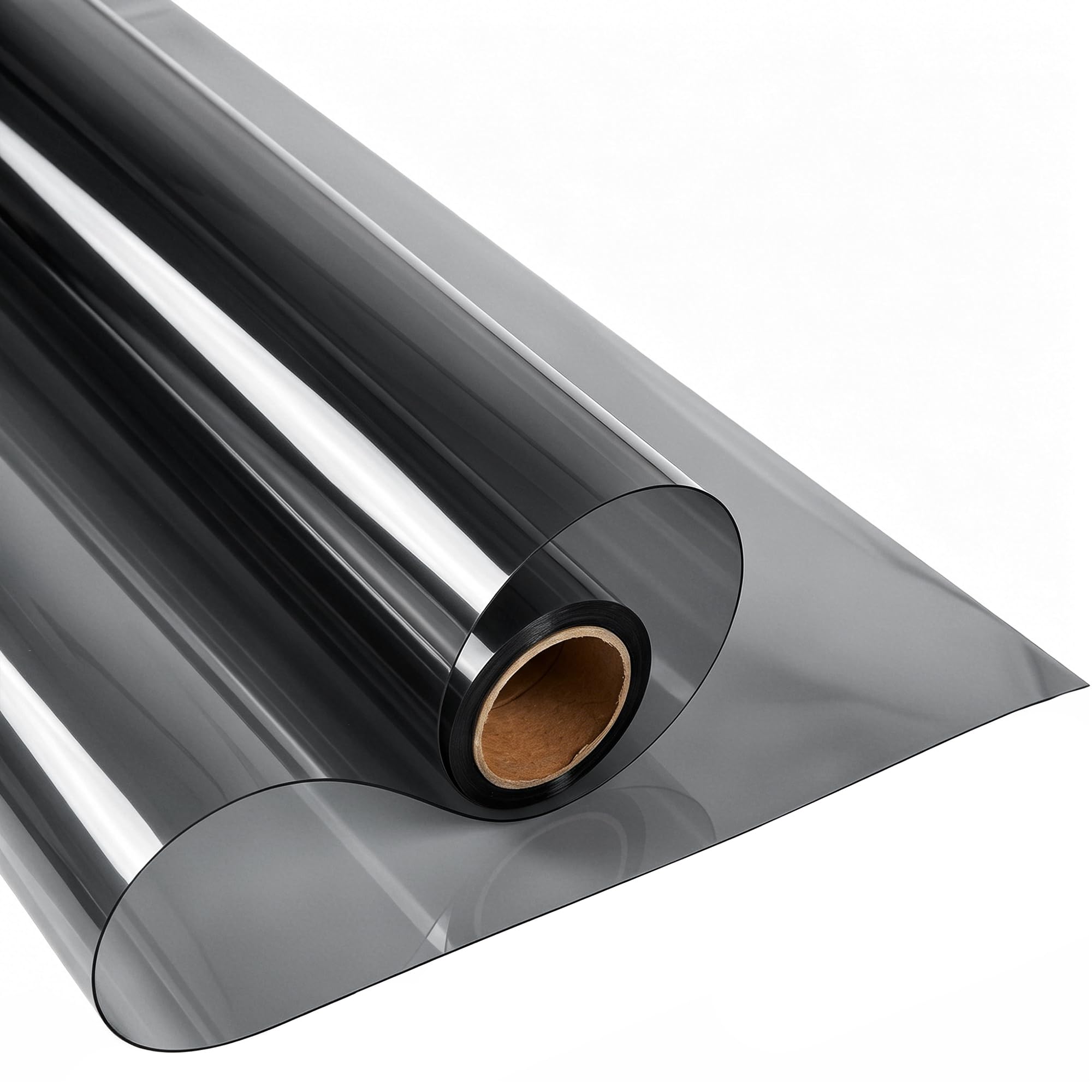
True ceramic tint (also called nano-ceramic) uses non-conductive particles that absorb infrared heat and re-radiate it away from the glass. It does not interfere with GPS, radio, or phone signals the way metallic tints do. The trade-off? Ceramic tint costs more and is often thicker, which makes installation trickier on a heavily curved windshield.
IR Rejection and Real-World Heat
Infrared (IR) rejection — how much of the sun’s heat the film blocks — is a number many budget rolls claim. “Up to 99% IR rejection” sounds impressive, but owner tests frequently show a smaller benefit: a 10-15°F drop on the dashboard rather than a dramatic change. Do not buy on the IR number alone. Look for reviews from owners who park in direct sun, because that is where the real verdict lives.
Quick Comparison
| Model | Best For | VLT | Size | UV Block | Amazon |
|---|---|---|---|---|---|
| TOYOCO 70% VLT★ Best Overall | Cheapest entry-level roll | 70% | 24″ x 15ft | 99% | Amazon |
| MotoShield Pro PrecutAlso Great | Hands-off precision fit | Custom (5%-75%) | Vehicle-specific | 99% | Amazon |
| KORKIE 70% VLT | Overall value and heat rejection | 70% | 30″ x 15ft | 99% | Amazon |
| SW Nano Ceramic 80% VLT | Slightly blue, nearly invisible look | 80% | 20″ x 16.5ft | 99% | Amazon |
| Kinsolar 70% VLT | Clear, vintage look with solid adhesion | 70% | 20″ x 16.5ft | 99.9% | Amazon |
| MEGICOLIM 80% VLT | Budget light-blue option | 80% | 30″ x 10ft | 99% | Amazon |
In‑Depth Reviews
1. TOYOCO 70% VLT Ceramic Window Tint
At the lowest cost in this group for 30 square feet, this is an entry-level ceramic tint where the price shows up in film quality and consistency.
The TOYOCO 70% VLT film claims 99% UV blockage and over 92% infrared rejection, plus a scratch-resistant coating and explosion-proof construction. The 70% VLT offers solid daytime glare reduction, and the 24″ x 15ft roll is long enough to cover a large windshield with leftover material for side glass. But the buyer feedback is split roughly half positive and half negative. Some first-time tinters who watched tutorials ended up with a good result. Others — including an experienced tinter — found the film low quality: the liner was difficult to separate, the heat gun could not remove wrinkles (called “fingers”), and the included squeegee actually scratched the film. That experienced owner abandoned the second window entirely. This is a lottery tint — you might get a decent result, or you might waste a Saturday.
The price advantage
- Absolute lowest cost makes it a low-risk experiment for a first-time tinter on a beater car.
- 24″ x 15ft gives a good amount of material to practice with.
The coin flip
- Film quality is inconsistent — roughly half of owners are unhappy with adhesion, scratching, and finger removal.
- The included squeegee is poor and can scratch the film, so plan on buying a proper installation kit separately.
Reach for this if: you want the cheapest way to try ceramic tint, and you are prepared for a potentially tricky install.
Not recommended if: you value a stress-free installation and consistent quality — the slight jump to the KORKIE or MotoShield Pro is worth it.
2. MotoShield Pro Precut Nano Ceramic Tint
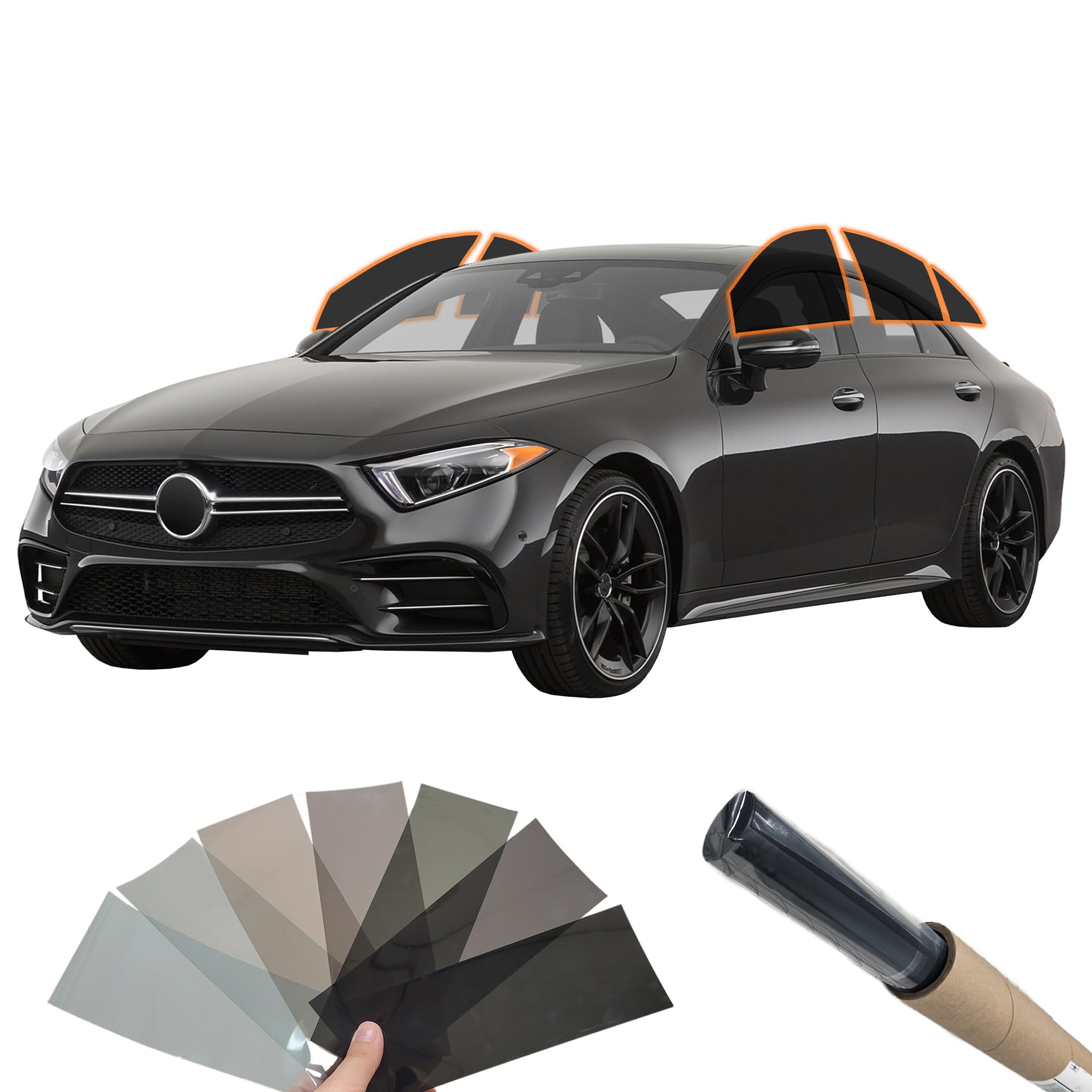
This is the only pick that arrives cut to your specific car’s window shapes, so you skip the hardest part of a DIY ceramic install.
You select your car model when ordering, and the MotoShield Pro Precut film shows up trimmed with a small margin for error. According to feedback from owners, this single feature makes the job “90% easier” than a universal roll — a huge difference for anyone who has never tinted before. The ceramic film blocks 99% of UV rays (ultraviolet light that fades your interior) and, the brand claims, up to 99% of infrared heat (IRR), meaning less work for your air conditioner in summer. Buyers report that the combination of the precut shape and the film’s thickness (it is true nano-ceramic, so it is thicker than budget rolls) means you almost certainly need a heat gun for large windows. A small number of owners noted the precut shape was slightly off for a particular car model, but the seller’s support team reportedly replaced those pieces quickly. This is also the only product here backed by a lifetime warranty against defects, bubbling, peeling, and delamination — a sign the company stands behind the build quality.
Real-world fit check: The precut advantage and lifetime warranty make this the safest bet for a first-time DIYer who wants ceramic performance without the headache of trimming a roll. The trade-off is a higher upfront cost than any universal roll here, and you need to heat-form it properly — skip the heat gun and you will fight the film.
Reach for this if: you want a low-maintenance install with proven heat rejection and a company that will replace a bad piece.
Think twice if: you are on a tight budget or you want to tint a vehicle the kit does not list as a supported model.
3. KORKIE 70% VLT Nano Ceramic Window Tint

This universal roll splits the difference between price and true ceramic performance, with better real-world heat data than the cheaper options.
KORKIE’s 70% VLT (visible light transmission) film claims over 85% infrared rejection (IRR) and 99% UV blockage, and owner reports back up its heat-reduction story: one buyer measured a 10°F drop on the dashboard compared to bare glass. That suggests the ceramic layer is actually working, not just a label on the box. The film is scratch-resistant and built from nano-ceramic and PET (polyethylene terephthalate — a durable plastic) materials, so it resists the fading and bubbling that cheaper dyed films suffer after a season in the sun.
The big gamble here is consistency. A few owners found wildly different performance between VLT levels of the same brand — the 20% roll performed like real ceramic, while the 35% roll looked more like a carbon film. The film quality is praised in most feedback, with eight owners specifically calling it out, though actual clarity gets mixed marks: some call it perfect, others slightly hazy. Buy the VLT level you are confident about.
Why owners grab this
- Strong IR rejection at a mid-range price, beating the cheaper options on actual heat reduction.
- No signal interference from metal components, so GPS and radio stay clear.
- Generous 30″ x 15ft size covers a windshield plus side windows on most sedans.
The real gamble
- Heat performance can vary noticeably between different VLT levels of the same roll.
- Installation requires patience — a breeze-less garage is mandatory to avoid dust bubbles.
Best suited for: a capable DIYer who wants true ceramic heat rejection for a reasonable price.
Look elsewhere if: you need guaranteed consistency across all VLT options or you cannot tolerate a hazy finish on a dark tint.
4. SW Nano Ceramic 80% VLT Window Film

At 80% VLT, this is about as transparent as a ceramic windshield tint gets — it is the pick for keeping a stock look while still blocking UV.
The SW Nano Ceramic film has a very slight blue tint that blends almost smoothly with factory glass. The 2-ply (two-layer) design includes a scratch-resistant coating that the manufacturer claims resists fading, bubbling, and peeling for years. For a windshield that gets a lot of direct sun, the nano-ceramic technology absorbs heat and re-radiates it when the car is moving, which makes it more effective in motion than at idle. Owners mention excellent cabin temperature improvement on large motorhome windshields, but one owner who tested this 80% VLT film against a darker 35% film found the 80% film dropped dash temperature by roughly 10°F while the 35% cut it by 20°F. That is a meaningful drop, but not the dramatic cooling of a darker shop-installed tint.
What wins people over
- Ultra-light tint that does not change the car’s look or obstruct night vision.
- Strong UV protection at 99% helps preserve the dashboard and seats from fading.
The modest reality
- Heat rejection is mild — enough to help but not enough to transform a hot cabin on its own.
- Creases easily on complex curves, so a heat gun and some experience are almost required.
Reach for this if: your priority is UV protection and a nearly clear, legal windshield tint, not extreme heat reduction.
Think twice if: you bake in direct southern sun all day and expect the film to knock 20°F off the dash by itself.
5. Kinsolar 70% VLT Nano Ceramic Solar Tint Film

A thicker, 2-mil film that clings tight with excellent adhesive and claims a 99.9% UV block — the highest number in this group.
The Kinsolar 70% VLT film is 2 mil (one mil is 0.001 inches) thick, giving it a heavy-duty feel during handling. Owners consistently describe the adhesive as excellent, with one calling the finished look “factory.” The extra thickness also makes the film shatter-proof — it holds broken glass together in an accident — a safety bonus. However, that thickness makes it less forgiving on a curved windshield. One owner who tried it on a front windshield was not happy, calling it “not a good film” for that application. That buyer sits alongside three separate 5-star ratings saying it went on easy and looked great. The film also lacks included instructions; a few owners note they had to guess at the installation steps. This is a solid value for an experienced tinter but a potential frustration for a first-timer.
Edges over the competition
- 99.9% UV rating beats every other film in this comparison on paper.
- Heavy 2-mil thickness delivers a sturdy, shatter-resistant layer that reduces heat and glare.
The main note
- Missing instructions and a thick, less flexible film make it a poor choice for a first-timer on a curved windshield.
Best for: a confident DIYer who values maximum UV protection and a sturdy, factory-quality look on flat or slightly curved windows.
Not ideal if: you are installing it on a heavily curved front windshield without prior tinting experience.
6. MEGICOLIM 80% VLT Nano Ceramic Window Film

A nearly invisible, light-blue roll that stays clear at night and offers 99% UV protection for a budget price.
The MEGICOLIM film has an 80% VLT (visible light transmission) and a light blue tint aimed at the front windshield buyer who wants UV protection without changing the car’s appearance. The roll measures 30 inches by 10 feet, giving you 25 square feet of coverage — enough for a large windshield plus side windows on a sedan. Several owners note that visibility is excellent at night and that the film noticeably reduces heat during the day. One reviewer says it works “amazingly.” But a former professional installer gave it a 1-star rating, saying the film is thick, stiff, and prone to creasing — he believed it was repurposed home window film. The heat and UV blocking also get mixed feedback: some praise it, others say it does not block heat or UV effectively. Your experience with this roll will track closely with your skill level.
High-ceiling, low-floor pick: If you have decent tinting skills and care about near-invisible UV protection, this can work. If you are a beginner wrestling a curved windshield for the first time, the thick film will likely frustrate you.
Grab this if: you want a budget-friendly, nearly clear ceramic film and know how to apply it.
skip it if: you are a novice tinter tackling a curved windshield, or you demand proven, consistent heat rejection.
Understanding the Specs
VLT — Visible Light Transmission
This is the percentage of light that passes through the glass. A 70% VLT (visible light transmission) film lets in 70% of the light that hits the windshield; the lower the number, the darker the film. For a windshield, this is the most critical spec. Most states require at least 70% VLT on the front glass (above the AS-1 line — a line marked by the auto manufacturer a few inches from the top). Anything darker can lead to a ticket, failed inspection, or poor nighttime visibility. Stick to 70% or 80% VLT for your windshield.
IR Rejection — Infrared Heat Blockage
Infrared (IR) radiation — the invisible heat that makes the sun feel hot on your skin through the glass — is what a film’s IR rejection percentage addresses. It tells you how much of that heat the film bounces away. Nano-ceramic films absorb that heat and re-radiate it, which works best when the car is moving. Beware of claims above 90% at budget prices. Many rolls advertise “up to 99% IR rejection,” but real-world owner tests often show a much smaller actual benefit at the dashboard level.
UV Blockage — Ultraviolet Protection
UV rays (ultraviolet light) cause dashboard cracking, seat fading, and skin damage over long drives. Most ceramic films block 99% or more of UV light. This is one area where even the cheapest rolls tend to deliver. If you park in direct sun for years, a good UV film preserves the interior materials. The Kinsolar film here claims 99.9%, which is the highest in the group.
Film Thickness and Scratch Resistance
Ceramic films are generally thicker than dyed or carbon films because of the ceramic particle layer. A thicker film, measured in mils (one mil is 0.001 inches), at 2 mil or above, offers better shatter resistance and durability. But it is harder to heat-form onto curved glass. A scratch-resistant coating protects the outer layer during cleaning and handling, though the included squeegee in some cheap kits can still scratch a film if it is rough.
FAQ
Is 70% VLT or 80% VLT better for a windshield?
Will ceramic windshield tint interfere with my GPS or phone signal?
How long does a DIY ceramic windshield tint last?
Can I install windshield tint myself, or do I need a pro?
Does windshield tint help with glare at night?
What is the difference between ceramic and carbon window tint?
How do I prevent bubbles when installing windshield tint?
What does a scratch-resistant coating actually do for a tint?
Is a ceramic tint worth the extra cost over a standard dyed tint?
Will windshield tint make my car hotter in the summer if it is dark?
Final Thoughts: The Verdict
For the majority of shoppers, the best windshield ceramic tint is the MotoShield Pro Precut Kit because it removes the biggest headache — cutting the film yourself — and backs the result with a lifetime warranty. If you want the best bang for your buck in a universal roll, grab the KORKIE 70% VLT for its strong real-world heat rejection at a mid-range price. And for the strictest UV protection with a nearly invisible look, the Kinsolar is the one to reach for if you know your way around a heat gun.
How We Picked
We do not accept paid placement. Every pick is matched to a real buyer and a real use-case; we do not hands-on test units.
Sources & Methodology
Specifications: manufacturer listings and product documentation. Review insights: verified customer reviews, as of July 2026. Pricing: not shown on this page (it changes often); check the current price via the retailer link.
As an Amazon Associate, GoCarLife earns from qualifying purchases. This does not affect which products we feature.