
Our readers keep the lights on and the garage heater humming. As an Amazon Associate, I earn from qualifying purchases.
Specs are compiled from manufacturer listings and verified buyer reviews and can change over time — please confirm the key details on the product page before buying.
The real enemy of a winter ride is the wind cutting through your gloves and numbing your fingers. The right windproof gloves keep you comfortable for hours, even on a 30-degree morning. This guide cuts through marketing claims to find gloves that truly stop the wind, from lobster-claw designs to heated mitts.
I’m Mo Maruf — the founder and writer behind GoCarLife. This guide is built by comparing the manufacturers’ published specifications and the patterns across verified customer reviews, so you get each pick’s real strengths and trade-offs instead of marketing spin.
windproof cycling gloves are measured by how well they seal out cold air while still letting you brake, shift, and signal without fumbling, so we focused on the models that deliver real barrier performance without turning your hands into stiff clubs.
Our Picks at a Glance


How To Choose The Best Windproof Cycling Gloves
Choosing the right pair means understanding that windproofing is a barrier technology, not just a thickness rating. Look for a dedicated windproof membrane (like a softshell or Gore-Tex INFINIUM layer) rather than relying on dense fabric alone — a cheap knit glove can feel warm standing still but turn useless the moment you hit speed. The membrane stops the chill, while insulation keeps the body heat you generate trapped inside.
Understand the Glove Style
Your typical five-finger glove offers the best dexterity for braking and shifting, but it sacrifices some warmth because each finger is individually exposed. A lobster-claw design groups the middle, ring, and pinky fingers together so they share body heat — the trade-off is a slightly bulkier feel when reaching for levers. Split-finger designs (often with a separated index finger) are a middle ground: you keep independent control of your brake hand while your other fingers stay bundled. Your choice depends on your cold tolerance and how much bar precision you need.
Check for Real Insulation
Thermal lining materials vary a lot. Fleece is soft and comfortable for light cold, PrimaLoft or similar synthetic insulation gives serious warmth for deep winter, and wool linings (like merino) add warmth even if they get damp. Don’t confuse a “thermal” label with actual insulation — some thin gloves are just brushed fabric inside and will fail in a stiff breeze. Look for gloves that explicitly name a lining type (fleece, PrimaLoft, wool) rather than just saying “warm.”
Don’t Forget the Grip and Control
A windproof glove that slips on the handlebars is dangerous. Look for silicone or rubber prints on the palm and fingers — those small grippers keep your hands planted even when the glove is wet. Also check whether the cuff seals well (a hook-and-loop closure is ideal) so cold air doesn’t sneak up your sleeve. If you ride in traffic, reflective details on the back of the hand are a real safety feature that many cyclists overlook.
Quick Comparison
| Model | Best For | Style / Finger Design | Key Insulation | Item Weight | Amazon |
|---|---|---|---|---|---|
| GripGrab Ride Deep Winter Lobster★ Best Overall | Extreme-cold road & gravel | Lobster (3-finger split) | Fleece lining + windproof softshell | 0.15 kg | Amazon |
| Benirap Winter GlovesBest Value | Multisport use & budget | 5-finger | Thermal insulation lining | 0.07 kg | Amazon |
| Leakdry Waterproof Merino WoolWarmth & Weather | Wet, windy conditions | 5-finger | Merino wool + 3-layer build | — | Amazon |
| GripGrab Ride Waterproof Winter | Cold, damp road & MTB | 5-finger | DoctorGel padding + fleece | 0.1 kg | Amazon |
| Gore WEAR Thermo Split | Cold-weather road cycling | Split (index + bundling) | PrimaLoft + Gore-Tex INFINIUM | 4.48 oz | Amazon |
| GUMOCH Heated Motorcycle | Sub-freezing motorcycle & cycling | 5-finger | 7.4V 3000mAh electric heat | 0.58 kg | Amazon |
| SAVIOR HEAT Heated Motorcycle | Long-distance winter riding | 5-finger | 7.4V 2200mAh electric heat | — | Amazon |
| Day Wolf Heated Motorcycle | Premium leather + electric heat | 5-finger | 7.4V 2200mAh sheep leather | 0.97 kg | Amazon |
In‑Depth Reviews
1. GripGrab Ride Deep Winter Lobster Cycling Gloves
Our pick — 4.5★ from 360 verified ratings; the strongest balance of quality and price.
The lobster-claw heavyweight that laughs at single-digit wind chills.
What wins people over here is the warmth — this is the pair buyers consistently describe as “excellent for extreme cold,” with one owner noting the gloves kept his hands warm on 2+ hour rides in single-digit wind chills. The secret is the windproof and breathable softshell outer (with a 15k breathability rating) paired with a soft fleece lining and thermal insulation, so you don’t feel like you’re inside a plastic bag. Unlike the Benirap below, which is more of a lightweight all-rounder, this one is built for deep winter and does not compromise.
The lobster-claw design groups your three smallest fingers together so they share body heat — a proven strategy for bitter cold. But the forefinger is split separately, which gives you independent control for braking and shifting on both road and mountain bike levers. The palm and fingertips get a silicone gripper print, so your hands stay planted even when things get wet. And the DWR (durable water repellent) finish sheds light moisture without adding bulk.
At 0.15 kg, these are noticeably heavier than the 0.07 kg Benirap gloves — more than double the weight, which you feel on longer climbs. A few buyers report the sizing runs large, with extra finger length that can feel floppy for precise shifting in the smallest sizes. But the consensus is clear: if you ride hard in real cold, this is the pair that delivers.
What Owners Rave About
- Exceptional warmth in extreme cold — buyers praise it for sub-freezing and single-digit rides.
- Separate index finger gives real braking and shifting control despite the lobster shell.
- Silicone grip on palm and fingertips keeps the bars secure in wet or rough conditions.
The Honest Trade-Offs
- Runs large in some sizes, with extra finger length that can interfere with precise lever work.
- Significantly heavier than a standard 5-finger glove — you feel the 0.15 kg on longer rides.
- Not the best pick for mild days; the insulation is overkill above 40°F.
Reach for this if: your winter rides dip below freezing and you need a glove that keeps you riding for hours without cold fingers.
Think twice if: you primarily ride in chilly but not frigid weather, or you need a slim glove for fine shifter work.
2. Benirap Winter Gloves Touchscreen Windproof Thermal Gloves
The slim, do-it-all glove that punches well above its weight class.
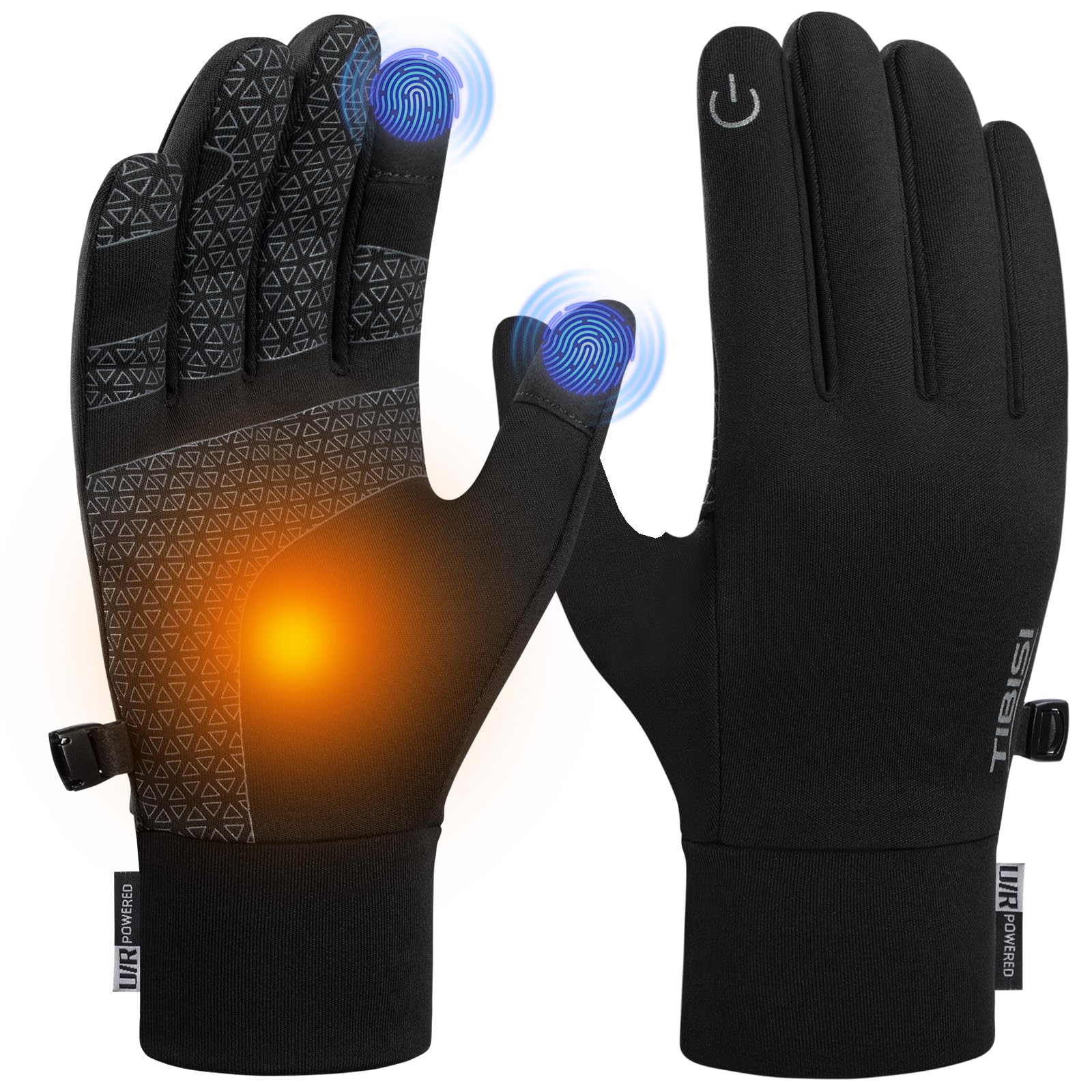
For the cyclist who also jogs, walks the dog, and scrapes ice off the windshield, this is the one. The outer layer is a high-density nylon spandex that blocks wind without feeling like a ski glove, while the inside lining delivers thermal insulation that owners mention is “just right for cold Autumn weather, and high winds.” At 0.07 kg, it weighs barely half what the GripGrab Lobster does, so you don’t tire your hands on a long ride.
The touchscreen compatibility is a genuine win — the conductive material on the thumb and index finger works with iPhones, iPads, and car GPS panels, so you don’t have to bare your skin to check a route. The silicone particles on the palm and fingers add grip without adding bulk, and the elastic closure keeps the cuff snug. Owners also love the versatility: cycling, running, hiking, driving, and even shooting all get mentioned as use cases.
The catch is that these are not for brutal cold. Customers note the thickness is “appropriately thin” for active use, meaning they work great down to about freezing but won’t save you on a 20-degree morning. A few also mention the gloves are easy to lose from an open pocket — there’s no leash or clip. For the price and weight, though, this is the smart all-rounder that does a surprising amount right.
What Makes It a Winner
- Lightweight at 0.07 kg — feels like a second skin on the bars.
- Touchscreen fingers work reliably for phones, watches, and GPS units.
- Silicone grip keeps objects secure, from handlebars to a shovel handle.
The Real Limitation
- Not built for deep winter — best for cool autumn days and mild cold, not sub-25°F rides.
- Some buyers find the thinness surprising if they expected a thick thermal mitt.
- Easy to misplace without a pocket with a zipper or a retention clip.
Grab these if: you need one pair of gloves for cycling, running, errands, and daily winter life while staying affordable.
Look elsewhere if: your rides regularly hit the teens and you need serious insulation.
3. Waterproof Merino Wool Touchscreen Gloves
The three-layer barrier that handles wet, windy New England winters.
Buyers hunting for “quality Winter gloves for R.I.” found these to be the answer — the combination of a nylon outer, a windproof and breathable layer, and a merino wool interior gives you genuine weather resistance without overheating. The wool lining keeps you warm even if a little moisture gets inside, which is a meaningful advantage over polyester-only linings. Owners describe them as “very warm” and “mostly waterproof,” with the grippy palm and fingers offering solid control on the bars.
The touchscreen functionality works best with a vertical fingertip tap, and the tight fit improves dexterity — important for shifting and braking. Multiple reviewers point out that the gloves run small, so ordering up a size is a common recommendation. The size L fits a 3-1/4-inch index finger, which gives you a reference point if you have larger hands.
The trade-off is that these are not for extreme cold. One owner found them “painfully cold” in snow, and others confirm they are best down to about freezing. The waterproof membrane also gets mixed marks in heavy downpours — light rain is fine, but sustained wet can soak through. For transitional winter riding and wet fall days, though, the merino warmth and windproof barrier make these a strong middle-ground pick.
Merino advantage: wool lining stays warm when damp, unlike synthetic insulation that loses its thermal performance.
Reach for these if: you deal with wet, windy conditions just above freezing and want a natural-fiber lining that breathes.
Skip them if: you need heavy winter insulation for sub-20°F rides or true waterproofing in a downpour.
4. GripGrab Ride Waterproof Winter Cycling Gloves

The 4mm DoctorGel glove that kills hand fatigue on rough winter trails.
Road vibration and rough gravel can turn a cold ride into a numb-hand ordeal — and that’s exactly what this glove addresses. The secret is the strategically placed 4mm DoctorGel padding that absorbs shock across the palm, reducing fatigue on long days. Meanwhile, the wind- and waterproof membrane keeps rain, spray, and mud out, and the fleece lining traps warmth. One buyer described it as his “go to cold… I mean COLD weather glove,” using it effectively between 20°F and 40°F.
The anti-slip silicone print on the palm gives you full control on the handlebars, even on rough descents. The hook-and-loop wrist closure creates a tight seal so cold air doesn’t creep in past your jacket sleeve. Owners also mention the hi-vis yellow color is genuinely bright for traffic visibility. At 0.1 kg, it’s heavier than the knitted GripGrab above but lighter than the lobster model, landing in a practical middle ground.
Water resistance is the main dividing line among owners — some find the gloves incredibly waterproof while others say they soak through in sustained rain. The fit also draws mixed feedback, with some buyers reporting a tight palm region and others finding the fingers slightly long. The general advice is to size up compared to your summer cycling gloves. For cold, dry winter riding where you want padding and wind protection, these are a strong choice.
What Stands Out
- 4mm DoctorGel padding absorbs shock and prevents numb hands on rough surfaces.
- Windproof membrane with fleece lining keeps hands warm from 20°F to 40°F.
- Hi-vis yellow with reflective details improves safety in low light.
What to Know
- Water resistance is inconsistent — buyers report varying results in sustained rain.
- Fit runs small for some; sizing up is a common recommendation.
Choose these if: you ride on rough roads or gravel in cold, dry conditions and need palm padding to prevent fatigue.
Skip them if: your main winter challenge is heavy rain rather than cold and vibration.
5. Gore WEAR Thermo Split Gloves

The index-finger-freedom glove that keeps the other digits bundled for warmth.
This is a clever piece of design for road cyclists who refuse to give up braking precision. The split design gives your index finger and thumb independent movement for single-finger braking and shifting, while your other three fingers are enclosed together in a PrimaLoft-lined box. The box construction makes them feel more like a normal glove than a full lobster, so you get warmth without the awkwardness. One owner tested them in 31°F for 90 minutes and came back with warm fingers.
The Gore-Tex INFINIUM fabric on the back of the hand provides wind protection, though the palm and thumb area are less insulated — a few owners mention that wind can sneak through there in bitter cold. The overall build is soft and flexible, with a bright yellow color for visibility. The gloves also have a partial inner divider between the middle and ring fingers, but most owners say it’s shallow enough not to bother them.
The fit conversation is the loudest thing about these gloves. They run small — the review pages are full of people who sized up from XL to XXL. If you have larger hands, plan to go up one or even two sizes. The touchscreen claim is also optimistic; the bundled fingers make phone use clumsy. For cold-weather road riding where you value index-finger dexterity, though, these are tough to top.
Why Riders Love Them
- Split-finger design provides independent index control for braking — no more fumbling.
- PrimaLoft liner with box construction gives warmth without the bulk of a traditional lobster.
- Windproof Gore-Tex INFINIUM layer blocks cold air on the back of the hand.
The Fit Warning
- Runs small across all sizes — expect to size up one or two sizes from your usual.
- Not ideal for bitter cold below 25°F; wind can sneak through the palm and thumb area.
- Touchscreen function is more of a lock-screen opener than a practical typing solution.
Best for: road cyclists who need precise brake and shift control without sacrificing warmth in the 25-40°F range.
Not for: riders with large hands who don’t want to gamble on sizing, or anyone needing real sub-20°F protection.
6. GUMOCH Heated Motorcycle Gloves
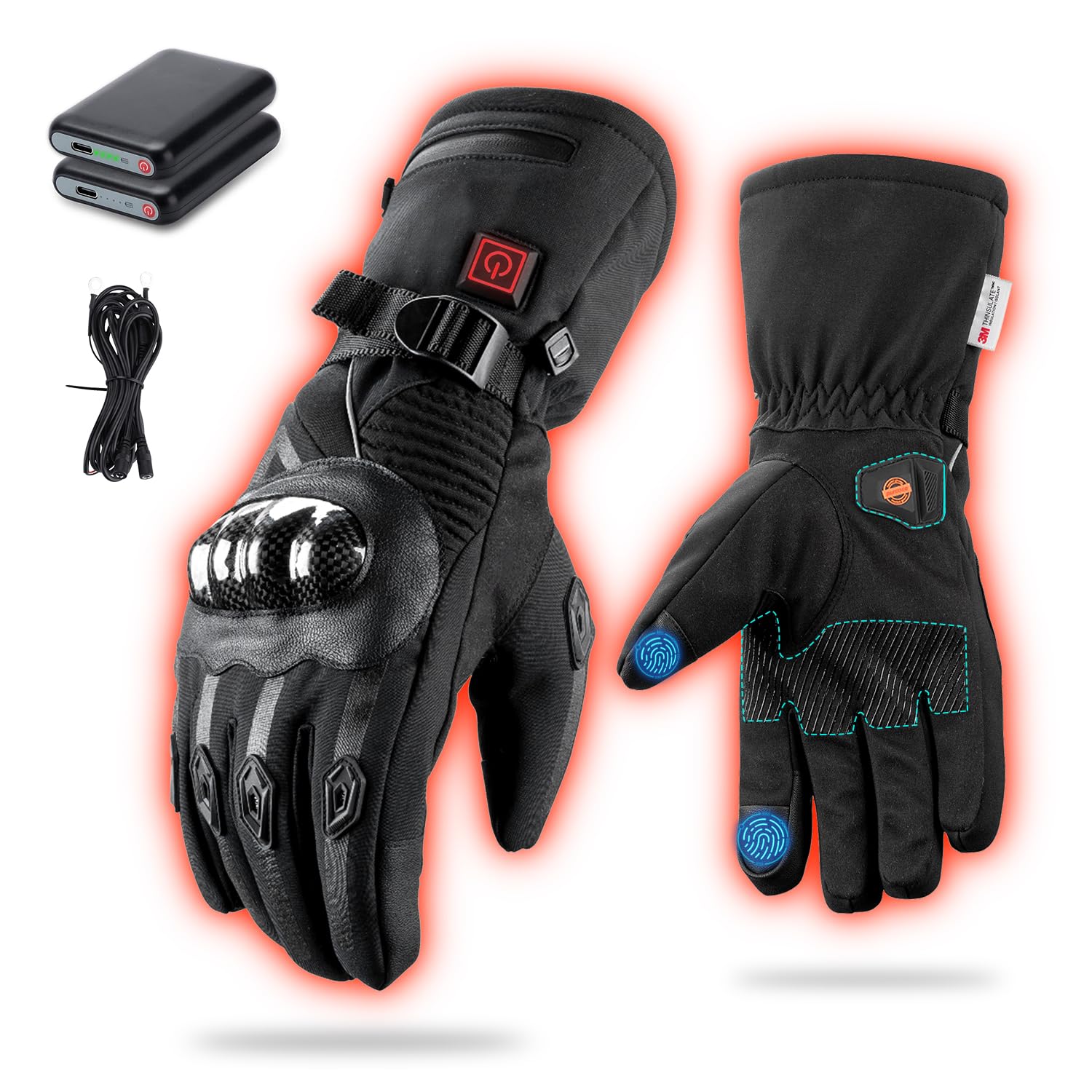
The electric glove that fires up in 20 seconds and keeps your hands warm for hours.
For riders who face truly punishing cold, the GUMOCH heated gloves are a serious upgrade. They come with a pair of 7.4V 3000mAh rechargeable batteries that deliver up to three heat settings: Red at 140°F, Blue at 122°F, and Green at 113°F. That means you can dial in exactly the warmth you need — one owner found the low setting comfortable at 39-42°F, while medium made him sweat. The carbon fiber shell on the back of the hand adds knuckle protection without feeling like armor.
Windproofing is built into the waterproof technology, so cold air doesn’t cut through the fabric. The touchscreen fingertips (forefinger and thumb) work for GPS and phone use, though the overall bulk makes fine screen work a challenge. The gloves also include a 12V DC car charger power cord for long-distance riding, so you can hardwire them to your motorcycle.
Bulk is the big trade-off here. At 0.58 kg with batteries installed, these are noticeably heavier than any non-heated glove on this list — one buyer describes them as “slightly heavy.” The fit can also be tricky for smaller hands, with some women finding them too large. The battery button is positioned so you need to stop to activate it, which is a logistical annoyance. For cold-weather motorcyclists and cyclists who prioritize warmth above all else, though, the heat output is transformative.
Power advantage: 3000mAh batteries provide longer run time than many competitors — customers note 3-4 hours on high and easy top-ups.
Reach for these if: you ride in sub-freezing temperatures and want the option of active heat at the press of a button.
Think twice if: you need a slim, lightweight glove for moderate cold, as the battery bulk is significant.
7. SAVIOR HEAT Heated Motorcycle Gloves

The heated five-finger glove that warms every fingertip, not just the back of your hand.
Most heated gloves concentrate their elements on the back of the hand, leaving your fingers to fend for themselves. The SAVIOR HEAT model runs far-infrared heating elements across the entire hand back and all the way to every fingertip — so cold digits get direct warmth. The 7.4V 2200mAh batteries provide adjustable heat across three settings (High, Medium, Low) and are CE and UL certified, giving confidence on long winter rides. Owners confirm the gloves last well over a season and hold up for years of use.
The external layer uses a blend of 40% lambskin and 60% polyester, which gives a premium feel and natural wind-blocking ability. A HIPORA waterproof layer sits inside, and the carbon fiber protective shell covers the knuckles for impact protection. The touchscreen function on the thumb and forefinger works well enough for maps, though the overall bulk makes fine motor control a challenge.
The fit is the biggest friction point. Buyers consistently report that these run small — you’ll need to size up, sometimes by two sizes. The cuffs, where the batteries sit, can be tight over a jacket sleeve, making them trickier to put on. And at full power, the battery life runs about 1.5 hours, so you’ll need to manage heat settings for longer rides. For riders who want fingertip heat and don’t mind the bulk, though, the warmth is undeniable.
Heat coverage advantage: far-infrared elements reach all five fingertips, unlike many competitors that only warm the hand back.
Best for: motorcycle and long-distance cyclists who need fingertip warmth and are comfortable managing battery life across a ride.
Not ideal for: riders with smaller hands or anyone who needs a slim, easy-on glove for quick commutes.
8. Day Wolf Heated Motorcycle Gloves

The sheep leather heater that feels premium and delivers genuine winter performance.
Leather and heat is an uncommon combination, and the Day Wolf gloves pull it off well. The outer shell is sheep leather and waterproof nylon, which gives a natural resistance to wind and water before the electronics even kick in. Owners note that the gloves are windproof and warm even without the heat turned on — the heat just makes them toasty. The far-infrared heating elements cover the entire back of the hand and all five fingers, starting to warm up within 30 seconds of pressing the switch.
The 7.4V 2200mAh batteries provide three heating settings (Low, Medium, High), and reviewers point out about 2.5 hours on a full charge at moderate use. The carbon fiber knuckle protection adds structural rigidity without being overly stiff, and the forefinger has a rubber edge for wiping rain off a visor — a small but real-world detail. The windproof buckle at the wrist seals the cuff effectively, keeping drafts out.
At 0.97 kg, these are the heaviest gloves on the list — the leather and battery combo adds real heft that you feel on the bars. Fit is a recurring theme: some buyers find them tight, especially in the fingers, while others report the sizing works well if you follow the chart closely. The internal seams can also cause discomfort for some. For cold-weather motorcyclists who want the feel of leather with the option of electric heat, this is a unique and effective package.
The Leather Edge
- Sheep leather provides natural wind resistance and a premium hand feel.
- Far-infrared heat elements cover all five fingers, not just the hand back.
- Visor wiper edge on the forefinger is a smart, rider-focused detail.
The Weight Reality
- Heaviest pick at 0.97 kg — the heft is noticeable on longer rides.
- Fit can be tight for some; careful size-chart reading is essential.
- Internal seam comfort gets mixed reviews from owners.
Reach for these if: you want a premium leather glove with active heat for cold-weather motorcycling and are okay with the weight.
Skip them if: you need a lightweight cycling glove for pedaling, or if you find heavy gloves restrictive on the bars.
Understanding the Specs
Windproof Membranes vs Insulation
Many people confuse “thick and fluffy” with “windproof,” but they are completely different things. A windproof membrane (like a softshell or Gore-Tex INFINIUM layer) is a physical barrier that stops air from passing through the fabric. Insulation (fleece, PrimaLoft, wool) traps your body heat but does not block wind by itself. You need both: one stops the chill from reaching you, the other keeps the warmth you generate from escaping. Without a membrane, a strong headwind can blow right through a thick knit glove and leave your fingers freezing within minutes.
Lobster vs Five-Finger vs Split
The finger layout directly affects how warm you stay and how well you control the bike. Five-finger gloves give you the most dexterity for braking and shifting, but each finger is exposed individually to cold. Lobster-claw designs group three fingers together so they share heat — this keeps you warmer but feels clumsier. Split-finger gloves (often called “trigger” or “lobster split”) separate only the index finger for braking while bundling the other fingers together, giving you a good middle ground. If you spend a lot of time on drop-bar brakes, a split-finger design is often the smartest compromise.
FAQ
Will windproof cycling gloves work in rain?
How do I know what size to order for cycling gloves?
Can I use heated cycling gloves if I ride a regular bicycle?
How long do heated glove batteries typically last?
What is the best glove style for extremely cold weather?
Do windproof gloves ever overheat?
Are touchscreen gloves actually useful for cycling?
How should I care for windproof cycling gloves to make them last?
Can I use a windproof cycling glove for non-cycling activities?
Is it worth spending more for a Gore-Tex or Gore-Tex INFINIUM glove?
Final Thoughts: The Verdict
For most riders, the windproof cycling gloves winner is the GripGrab Ride Deep Winter Lobster because it pairs a windproof softshell membrane with thermal fleece lining and a lobster-claw design that genuinely keeps fingers warm in extreme cold — the crowd favorite among hundreds of owners. If you want a lightweight all-rounder for variable winter conditions, grab the Benirap Winter Gloves. And for sub-freezing commutes where passive insulation alone won’t cut it, the GUMOCH Heated Motorcycle Gloves deliver active warmth with 3000mAh batteries and 20-second heat-up time.
How We Picked
We do not accept paid placement. Every pick is matched to a real buyer and a real use-case; we do not hands-on test units.
Sources & Methodology
Specifications: manufacturer listings and product documentation. Review insights: verified customer reviews, as of July 2026. Pricing: not shown on this page (it changes often); check the current price via the retailer link.
As an Amazon Associate, GoCarLife earns from qualifying purchases. This does not affect which products we feature.