
Our readers keep the lights on and the garage heater humming. As an Amazon Associate, I earn from qualifying purchases.
Specs are compiled from manufacturer listings and verified buyer reviews and can change over time — please confirm the key details on the product page before buying.
I’m Mo Maruf — the founder and writer behind GoCarLife. This guide is built by comparing the manufacturers’ published specifications and the patterns across verified customer reviews, so you get each pick’s real strengths and trade-offs instead of marketing spin.
Whether you are outfitting a minivan office, a weekend camper, or a long-haul RV, the right router is essential., the right wi-fi router for a car should feel as essential as a spare tire — silent, reliable, and there exactly when you need it.
Our Picks at a Glance


How To Choose The Best Wi-Fi Router for a Car
Picking the right in-car router depends on four real-world factors that a spec sheet never fully explains. Here is what actually matters when you are pulling power from a dashboard.
Cellular Generations: 5G vs 4G LTE
5G routers are dramatically faster — a 5G router can hit over 3000 Mbps, while a 4G LTE unit typically tops out around 150 Mbps. But 5G is hungrier on battery and costs more upfront. If you stream 4K video in the back seat or run video conferences from the passenger seat, go 5G. If you mainly browse, email, and use navigation apps, a solid 4G LTE router is plenty and will save you money.
Power: How It Gets Juice in a Vehicle
A car router must run off 12V DC (the cigarette-lighter port). Many premium units come with a 12V adapter, but some budget models only include a wall plug — you will need to buy a separate 12V-to-USB or 12V-to-barrel-plug cable. Look for routers that list a 9-48V DC input range for maximum compatibility with vehicles.
The Antenna Factor: External vs Internal
Inside a metal car, signal loss is brutal. A router with external, detachable antennas lets you mount a high-gain antenna on the roof or hood, grabbing a cell tower the car body would otherwise block. Fixed internal antennas are fine for strong urban coverage but fail on the highway or in campsites. The crowd favorite here is a router with at least two SMA connectors for external antennas.
Dual-SIM and Failover: The Safety Net
When you drive from a T-Mobile zone into a Verizon-only valley, a single-SIM router goes dark. A dual-SIM router with automatic failover switches to the second carrier without you touching anything. This is not a luxury — it is the difference between a call that stays connected and one that drops mid-sentence.
Quick Comparison
| Model | Best For | Data Speed | WiFi Standard | SIM Slots | Amazon |
|---|---|---|---|---|---|
| GL.iNet GL-X3000 (Spitz AX)★ Best Overall | Best Overall 5G | 3000 Mbps | WiFi 6 (AX) | Dual-SIM | Amazon |
| KiwiSIM 4G LTE RouterBudget Entry | Budget Entry | 300 Mbps | WiFi 4 (b/g/n) | 1 (plus pre-loaded SIM) | Amazon |
| GL.iNet GL-X750V2 (Spitz)Value 4G | Value 4G | 750 Mbps | AC750 (WiFi 5) | 1 | Amazon |
| LINOVISION Industrial 4G | Industrial/Rugged Use | 150 Mbps | WiFi 4 (b/g/n) | Dual-SIM | Amazon |
| D-Link G530 | 5G Value | 3000 Mbps | WiFi 6 (AX) | 1 | Amazon |
| MOFI4500-4GXeLTE-SIM8 | Stability & Range | 1 Gbps LAN | WiFi 4 (b/g/n) | 1 | Amazon |
| TravlFi XTR Pro | Subscription Simplicity | 3600 Mbps | Dual-Band AC | eSIM (no physical SIM needed) | Amazon |
| Winegard Gateway 5G | RV Integration | 2000 Mbps | AC Dual-Band | 1 (plus FreedomGo SIM) | Amazon |
| Yeacomm NR610 Outdoor | Outdoor/Mounting | 4.67 Gbps | WiFi 4 (2.4GHz config only) | Dual nano-SIM | Amazon |
In‑Depth Reviews
1. GL.iNet GL-X3000 (Spitz AX) Cellular Gateway 5G Router
Our pick — over 4★ from 850+ verified ratings; the strongest balance of quality and price.
The 5G powerhouse that turns your car into a rolling office — no coffee shop required.
This router delivers up to 3000 Mbps data transfer speed, which is a full ten times faster than a basic 4G mobile hotspot. The secret is its 5G connectivity (both NSA and SA standards) paired with Wi-Fi 6 — the latest WiFi generation that handles multiple devices at once without slowing down. You get up to 574 Mbps on the 2.4GHz band and 2402 Mbps on the 5GHz band, meaning your kids can stream a movie in the back while you run a video call up front, and neither bogs down the other.
The dual-SIM slots with automatic failover are the real lifesaver on the road. Drop into a valley where T-Mobile fades? The router instantly switches to the second carrier without you lifting a finger. It is also AT&T and T-Mobile IoT certified, which makes carrier compatibility straightforward. Owners consistently praise the OpenWrt-based firmware for its depth of customization — more than 5,000 plug-ins available — though a few report that after days of uptime, latency can climb and a reboot is needed to restore peak speeds. The 6 detachable antennas give you the option to mount a high-gain setup on the roof, critical inside a metal vehicle. It runs on USB-C power, which makes it easy to plug into a car adapter.
The crowd favorite is the sheer combo of 5G speed, dual-SIM failover, and OpenWrt flexibility. The honest trade-off is that sustained uptime can trigger a speed slowdown — a reboot every few days keeps things snappy.
Fast 5G gateway: Initial tests logged 230 Mbps down, 70 Mbps up with L2TP VPN and T-Mobile APN. Some owners note that after several days of uptime latency climbs to 100ms and speeds drop, requiring a reboot.
Reach for this: you want the fastest 5G speeds in a car, need dual-SIM failover for cross-country travel, and are comfortable with a bit of router tweaking via OpenWrt.
Think twice if: you need a low-maintenance device with zero maintenance — the odd reboot may be necessary to keep peak speeds.
2. KiwiSIM 4G LTE WiFi Router with 5GB Data Card
A pocket-sized router that includes its first 5GB of data so you can hit the road immediately.
This is the lowest-cost entry point into in-car WiFi, and it stands out because it ships with a pre-loaded KiwiSIM data SIM card. You do not need to hunt down a separate data plan to get started — just charge the built-in 3000mAh battery, install the two external antennas, and you have a 300 Mbps WiFi hotspot that supports Verizon, AT&T, and T-Mobile. The battery gives you about 2-3 hours of runtime, enough for short trips, but for longer drives you will want to keep it plugged into a car charger.
The router runs on the 2.4GHz single band (300 Mbps total) and supports up to 32 devices simultaneously. That is enough bandwidth for browsing, email, and navigation apps, but streaming in HD can be a stretch — a few buyers report much lower real-world speeds around 2-3 Mbps, which is fine for general web use but not for video. The SIM card is region-locked to the USA, and the data add-on plans start at for a 5GB total (not per day), which some travelers found expensive.
What wins people over is the sheer simplicity: pull it from the start, charge it, and connect. The honest downside is the speed cap — it will not keep up with streaming on a family trip, but it is a solid choice for a solo traveler or student who just needs email and maps on the go.
Best for starter: a student or solo commuter who needs basic WiFi for email, web, and navigation without a separate SIM purchase.
Look elsewhere if: you need to stream video or run multiple devices at once — the 300 Mbps peak drops to 2-3 Mbps in practice for some.
3. GL.iNet GL-X750V2 (Spitz) 4G LTE VPN Router
A compact 4G LTE router that doubles as a VPN gateway for secure on-the-road connections.
This is the smart buy for someone who wants the GL.iNet OpenWrt ecosystem without paying for 5G. The GL-X750V2 delivers AC750 dual-band WiFi — 300 Mbps on 2.4GHz and 433 Mbps on 5GHz — and it is AT&T certified for IoT data plans. It weighs just 86 grams (about 3 ounces), making it the lightest router here, and its dual Ethernet ports (10/100M) plus a USB 2.0 port give you wired options for a laptop or a NAS drive in the car.
The pre-installed OpenVPN and WireGuard support means you can keep all traffic encrypted, a strong plus for remote workers who hit public WiFi at coffee shops or campsites. Owners consistently praise the clean user interface and SMS support built into the firmware. The catch is carrier compatibility: T-Mobile and Mint Mobile work plug-and-play, but AT&T, Cricket, and especially Verizon can require IMEI workarounds. The unit also lacks automatic band switching — you may need to select bands manually when traveling between regions.
The crowd favorite here is the balance of price and OpenWrt programmability. The recurring note is that firmware upgrades can be tricky — some units ship with an older firmware (3.104) that risks bricking if you try to upgrade, so check your firmware version early.
Reach for this: you want a lightweight, programmable 4G LTE router with VPN built-in and plan to use T-Mobile or Mint Mobile.
Think twice if: you are on Verizon or need automatic band switching when crossing state lines — carrier setup can require manual intervention.
4. LINOVISION Industrial 4G LTE WiFi Cellular Router

An industrial-grade router that shrugs off extreme temperatures and stays online when consumer gear fails.
This router is built for harsh environments, with a compact diecast aluminum enclosure that operates from -40°F to +158°F. If your vehicle sits in the desert sun or a frozen mountain pass, this is the one that keeps working. It supports an extremely wide DC input range of 9V to 48V, meaning it can run on a standard car cigarette lighter, a truck’s 24V system, or a solar battery setup without a separate converter.
The 4G LTE CAT4 modem delivers up to 150 Mbps download speed and supports extended frequency bands including B66 and B71, which give better signal in rural areas compared to standard routers. It comes with three high-performance magnetic-base antennas for easy mounting on the roof or hood. The dual-SIM slots automatically failover between two carriers, and it is confirmed compatible with Verizon (APN vzwinternet), AT&T, and T-Mobile. The free two-year cloud subscription through Linovision RemoteMonit means you can check the router’s status from anywhere — useful for monitoring a remote vehicle.
Owners mention stable, self-healing connections — one uses it 1200 miles away to monitor 10 security cameras, and it reconnects to the cell tower without a power cycle after any drop. The caveat is the support documentation: the manual is sparse, and the default firewall blocks remote access unless you route through a VPN.
Best for tough sites: a van lifer, remote worker, or fleet operator who needs a router that survives extreme temps, runs on any vehicle voltage, and reconnects automatically.
The catch is: the interface and setup are not consumer-friendly — plan some time to configure VPN and firewall rules.
5. D-Link G530 5G NR AX3000 WiFi 6 Router

A D-Link 5G router that brings Wi-Fi 6 speeds and a companion app for simple remote management.
The G530 delivers a 3000 Mbps data rate on the 5G band, with up to 574 Mbps on 2.4GHz and 2402 Mbps on 5GHz via Wi-Fi 6 (802.11ax). This is a genuine 5G option at a mid-tier price, and it includes a 1GB SIM card for testing. It is PTCRB, AT&T, T-Mobile, and Verizon certified, so carrier compatibility is a known quantity. The Dual-WAN auto-failover automatically switches between the cellular connection and a wired broadband source if available, a nice touch for an RV that parks at a site with campground WiFi.
The FALCON app handles setup and includes parental controls — you can create profiles for kids, set schedules, block specific domains, and set usage caps. The four high-gain internal antennas are pre-positioned for good coverage inside the vehicle. Customers note strong 5G connections with no lag during video conferences and praise its reliability as a cellular backup. However, T-Mobile 5G Home Internet SIMs are not supported, and the app has some gaps: no notification control, and the failover settings are not accessible remotely. A few found the website support link dead and the contact form broken.
What people praise most is the raw speed and the dual-WAN failover. The catch is that T-Mobile home internet users will be disappointed, and D-Link’s support infrastructure feels unfinished for a new product.
Reach for this: you want a certified 5G Wi-Fi 6 router with an app for simple management and plan to use a business or standard mobile data plan.
Think twice if: you plan to use a T-Mobile 5G Home Internet SIM — it is not supported — or if you want rock-solid remote management features.
6. MOFI4500-4GXeLTE-SIM8-V3 4G/LTE Router

A 4G LTE router praised for its easy setup and strong signal — perfect for full-time RV internet.
The MOFI4500 is a respected name in the mobile internet community, particularly among RVers who live on the road full-time. It comes with two upgraded MOFI-UWMB-MAXRANGE1 cellular performance antennas, and the supported LTE bands are extensive: 2, 4, 5, 7, 12, 13, 14, 17, 25, 26, 41, 42, 43, 48, 66, 71. This band coverage means it can lock onto towers that many cheaper routers miss, especially in rural areas. The LAN port is 1 Gbps, so if your cellular link is fast, the wired connection will not bottleneck it.
Owners regularly report that setup takes about 2 minutes — drop a SIM in, power on, and connect. One owner working with a Visible SIM had 3 weeks of uptime in a rural area with zero downtime. The unit also includes an extended WiFi range mode and a built-in wireless repeater mode, useful if you park near a campground with WiFi. The recurring theme in the reviews is how easy it is to get online compared to other routers.
The main compromise is that the WiFi side can be glitchy — some reviewers point out streaming drops on the WiFi network, although the range is considered good. The external antennas also do not always outperform the included paddles, according to a handful of users. But for a reliable 4G backbone with easy setup, this is a top choice.
Best for rural: full-time RVers and road-trippers who want a 4G LTE router that is simple to set up and stays locked onto a tower for weeks.
Look elsewhere if: you need 5G speeds or flawless WiFi streaming — the WiFi radio can be temperamental with video streams.
7. TravlFi XTR Pro 5G Router
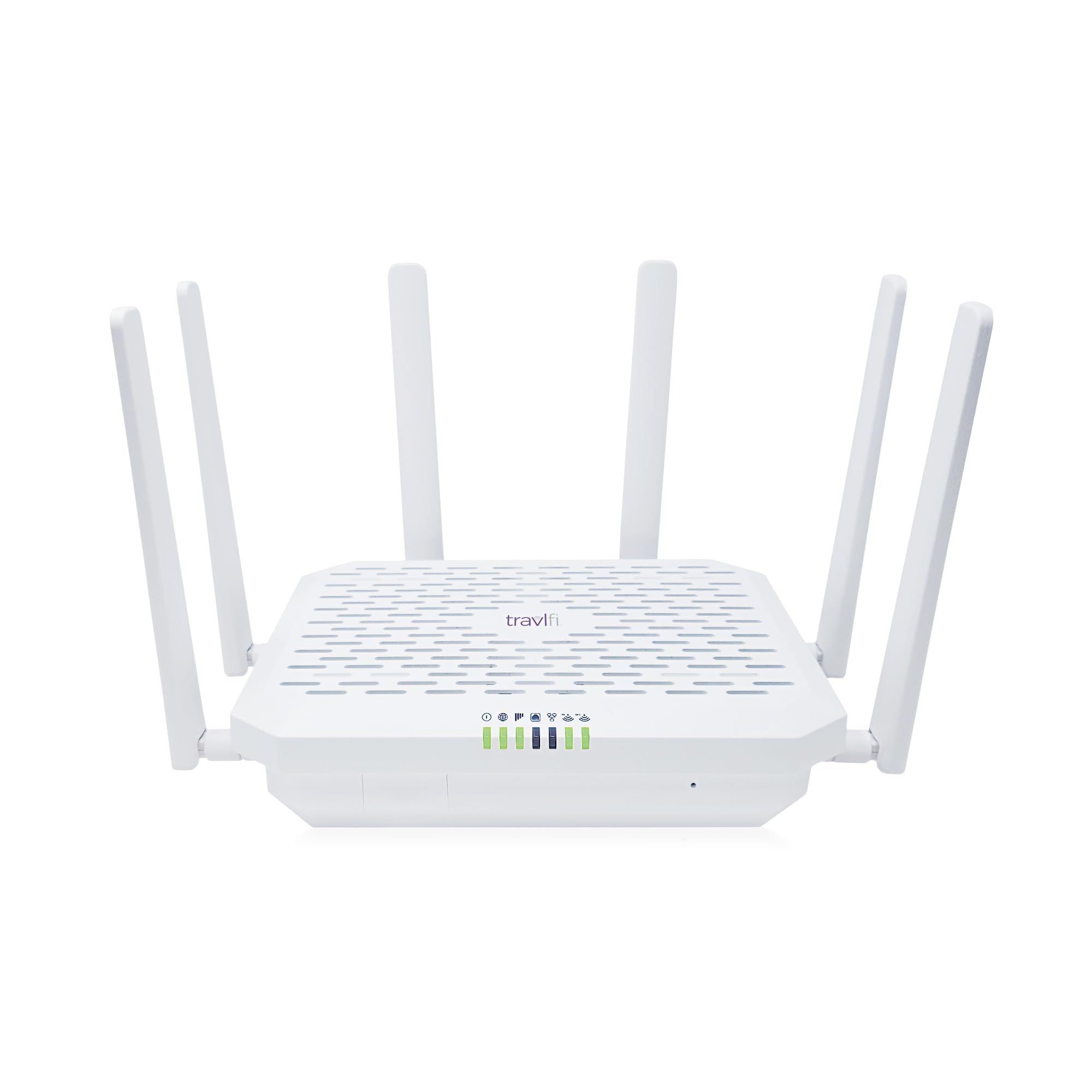
A subscription-based 5G router with no physical SIM needed — just pay month to month.
The TravlFi XTR Pro is unique in this list because it uses an eSIM and comes with its own unlimited data plans — no separate SIM card to buy or configure. The router delivers up to 3600 Mbps, runs on dual-band 5GHz WiFi, and claims coverage virtually anywhere in the U.S. with a private, personal network that keeps you off public WiFi. You prepay month to month with no contract, and you can pause the plan when you are not traveling and resume it later — a big plus for seasonal RVers.
Owners consistently single out signal quality as the top attribute — the router works reliably even in areas with limited cell coverage, and one reviewer says it performs “better than home internet, even in rural areas.” It is compact at 9.8 x 6.8 x 2.2 inches, fits easily in a glovebox, and comes with a fixed antenna setup that is internal and ready to go. The value-for-money aspect gets a mixed reaction — it is expensive compared to buying your own router and a standalone data plan, but the convenience of no-carrier-hunting is a real time saver.
The honest trade-off is the monthly subscription cost, which some find high, and the fact that it defaults to Verizon’s network (you can manually switch carriers, but there is no automatic failover between them). A few shoppers say that reception is poor even close to a city, and one switched to Starlink.
Reach for this: you want the easiest possible 5G setup — no SIM card, no carrier comparison, just a month-to-month plan you can pause anytime.
Think twice if: you are on a tight budget, want to keep hardware costs low, or need the ability to switch carriers on the fly without a manual step.
8. Winegard Gateway 5G GW-5G01 Router
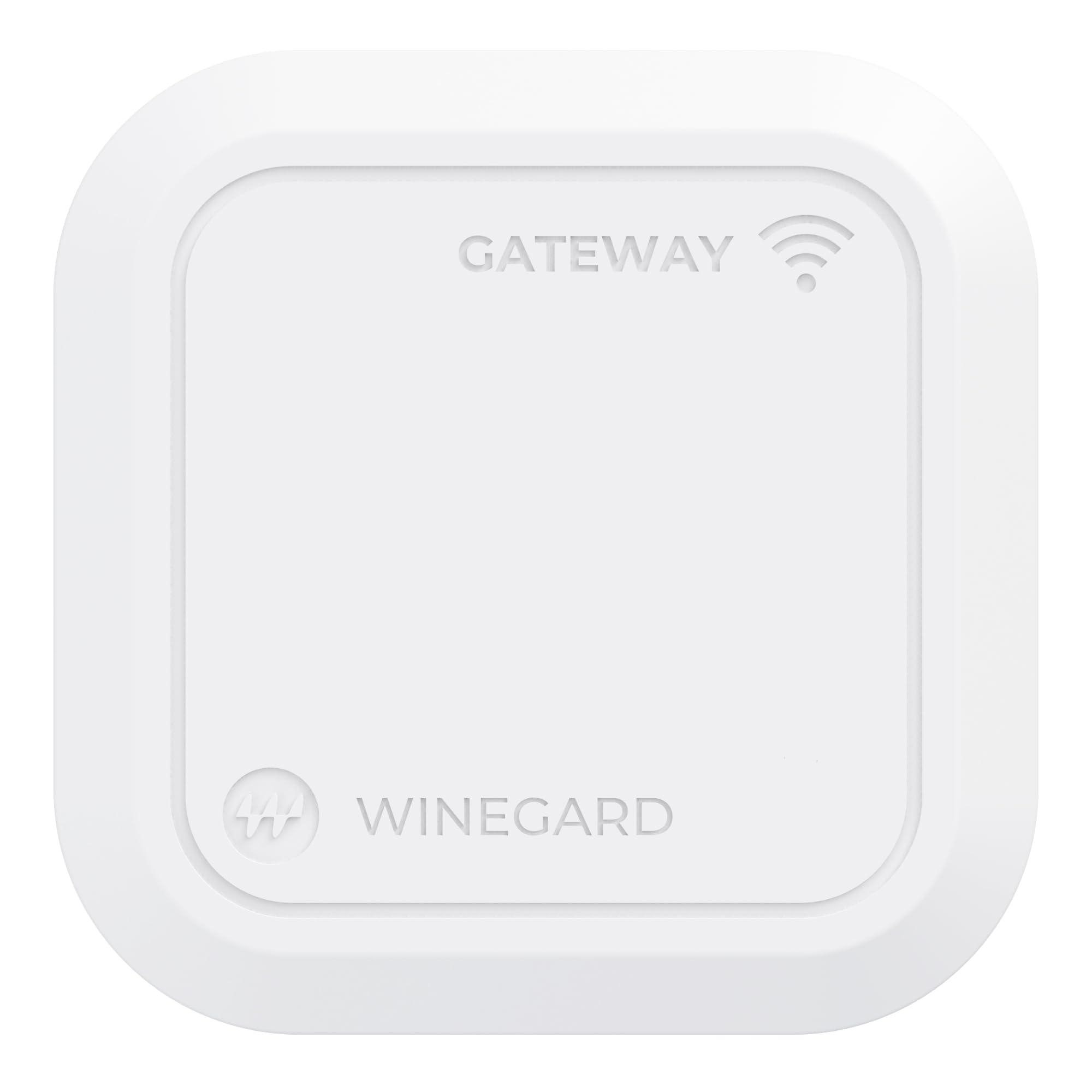
A 5G router that mates directly with Winegard’s RV dome antenna for smooth mobile internet.
This router is specifically designed for the Winegard Air 360+ 5G system, which is a popular roof-mounted antenna on many RVs. The Gateway 5G integrates directly with that antenna for ultra-fast cellular backhaul, and it also supports an Ethernet WAN port for adding Starlink or other satellite networks. It covers a 1/3-mile range and delivers up to 2000 Mbps data speed over dual-band 2.4GHz and 5GHz WiFi (802.11ac). It works with T-Mobile, Verizon, AT&T, and Winegard’s own FreedomGO no-contract 30-day data plans.
Installation gets the most praise from owners — it is straightforward to install, especially if you already have the Air 360+ antenna. The router works well as a WiFi repeater for RV parks, reducing drops when you are within range of a campground network. The U.S.-based design and servers are a plus for privacy-minded travelers.
The mixed feedback centers on connection performance. Some buyers report the router works great, while others say it only connects half the time. One owner could not get it to connect to T-Mobile at all despite following every instruction. The software setup requires some networking expertise — the diagrams are outdated and some recommend hiring an installer. The router also lacks an on/off switch, so you may want to wire one in to save power when the RV sits for days.
Best for campers: RVers who already have a Winegard Air 360+ 5G dome antenna and want a smooth upgrade to 5G with Starlink-ready compatibility.
The catch is: reliability is hit-or-miss on T-Mobile, and setup is not plug-and-play — budget time for configuration or a professional install.
9. Yeacomm NR610 Outdoor 5G Router

An IP67-rated 5G router designed to mount outside, grabbing a cell signal that walls and roofs normally block.
This is the only outdoor-rated router on the list, with an IP67 waterproof and dustproof enclosure that can work in temperatures from -30°C to +55°C (-22°F to 131°F). Mount it on the roof of a van, the side of a camper, or a pole in your yard, and it pulls in 5G signal even in remote regions where indoor routers struggle. It supports dual nano-SIM slots for failover, and the 4×4 MIMO internal antennas are arranged for maximum reception — no external antenna purchase needed if you mount it in a line-of-sight position.
The data rate is the highest here at 4.67 Gbps, though that is the modem’s theoretical max — real-world speeds from owners range from 200+ Mbps down in typical use to peaks of 500+ Mbps down and 100+ up when mounted with clear tower sight. One owner who mounted it 2000 feet from a tower hit 500+ Mbps. The router also includes PoE (Power over Ethernet, 802.3af), which means a single Ethernet cable carries both power and data up to 300 feet — ideal for mounting the router on a roof rack while the cable runs inside to your device. It runs on its own 2.4GHz WiFi for configuration only (not for speed testing); the real data goes through the LAN port, where you would connect a separate high-speed WiFi 6 access point inside the vehicle.
What wins people over is the reliability and quality — the top aspect mentions in reviews. The device handles network congestion well and has useful features like tower/frequency lock, built-in speedtest via telnet, and scheduled reset. The caveats: the internal WiFi is slow (20-30 Mbps), so you need an external access point for fast WiFi, and compatibility with AT&T is mixed — some carriers detect it as a router rather than a phone, which can trigger throttled data.
Reach for this: you are mounting a router on a roof, in a remote area, or in extreme weather — the IP67 enclosure and built-in 4×4 MIMO antennas are class-leading for outdoor use.
Think twice if: you want an all-in-one solution with fast built-in WiFi — you will need a separate WiFi 6 access point for high-speed wireless inside the vehicle.
Understanding the Specs
Data Transfer Rate (Mbps)
This is the maximum theoretical speed data can travel between the router and the cellular tower. 3000 Mbps is extremely fast — enough for multiple 4K streams. 300 Mbps is fine for a few devices browsing and streaming HD. In real-world use, walls, distance from the tower, and network congestion all pull that number down, so the gap between a 5G and 4G router is often smaller in practice than on paper.
WiFi Standard (WiFi 6 vs AC vs b/g/n)
WiFi 6 (802.11ax) is the newest standard and handles more devices at once without slowing down — important if you have a family streaming, gaming, and working from the same vehicle. AC (WiFi 5) is still very capable for up to 3-4 devices. Older b/g/n (WiFi 4) works for basic browsing but will bottleneck any modern streaming or video call.
SIM Slots and Failover
Dual-SIM routers have two SIM card slots. The router can use one as primary and the second as a backup. Failover means if the primary carrier’s signal drops, the router automatically switches to the second carrier. This is essential for cross-country travel where coverage zones change. Single-SIM routers go completely dark when their carrier has no signal.
Antenna Type and Connectivity
External, detachable antennas (usually with SMA connectors) allow you to mount a high-gain antenna on the roof of the vehicle, dramatically improving reception inside a metal car. Fixed internal antennas are fine for urban areas with strong cell towers but struggle on highways or in rural campsites. 4×4 MIMO means four antennas work simultaneously for a stronger, more stable connection.
FAQ
Can I use any router in my car off the 12V power port?
Will a 4G LTE router be fast enough for streaming video in the car?
What does dual-SIM failover actually do for me on a road trip?
Do I need external antennas for a car router?
How do carrier certifications affect my choice?
What is the difference between a 5G router and a 5G mobile hotspot?
Can I use my existing phone’s SIM card in a car router?
How long does a car router battery last when not plugged in?
What size router fits inside a car glovebox?
Which router is best for a full-time RV or van dweller?
Final Thoughts: The Verdict
Across the board, the wi-fi router for a car winner is the GL.iNet GL-X3000 (Spitz AX) because it combines true 5G speeds with dual-SIM failover, six detachable antennas for mounting on a metal vehicle, and the OpenWrt system for advanced customization — all at a rating of 4.3 stars from hundreds of owners. If you want an easier, subscription-based setup with no SIM-card hassle, grab the TravlFi XTR Pro. And for maximum durability in extreme conditions or an outdoor mount, the Yeacomm NR610 is the one to reach for — its IP67 rating and PoE power make it the toughest option for vans and remote campsites.
How We Picked
We do not accept paid placement. Every pick is matched to a real buyer and a real use-case; we do not hands-on test units.
Sources & Methodology
Specifications: manufacturer listings and product documentation. Review insights: verified customer reviews, as of July 2026. Pricing: not shown on this page (it changes often); check the current price via the retailer link.
As an Amazon Associate, GoCarLife earns from qualifying purchases. This does not affect which products we feature.