
Our readers keep the lights on and the garage heater humming. As an Amazon Associate, I earn from qualifying purchases.
Specs are compiled from manufacturer listings and verified buyer reviews and can change over time — please confirm the key details on the product page before buying.
A check engine light is a pit in your stomach — is it a loose gas cap or a transmission grenade waiting to happen? A Wi‑Fi OBD2 scanner takes the mystery out of car trouble by letting your phone or tablet talk directly to your vehicle’s computer, pulling instant data.
I’m Mo Maruf — the founder and writer behind GoCarLife. This guide is built by comparing the manufacturers’ published specifications and the patterns across verified customer reviews, so you get each pick’s real strengths and trade-offs instead of marketing spin.
No two garages are the same, so this round-up of the best wi-fi obd2 scanner covers everything from a pocket-sized code-reader for a quick check to a full bidirectional diagnostic tool that talks to every module in your car.
Our Picks at a Glance


How To Choose The Best Wi-Fi OBD2 Scanner
Focus on three things: system coverage, active test capability, and number of maintenance resets. The right scanner pays for itself the first time you fix a code yourself.
System Coverage and Depth
A basic scanner only reads the engine computer (ECM). A more capable tool digs into the transmission (TCM), antilock brakes (ABS), airbags (SRS), body control module (BCM), and climate control — so a single plug-in can tell you exactly which sensor failed or which module triggered a warning light.
Reset and Service Functions
After you fix a problem, many cars need a computer reset to clear the new part’s memory. Common ones include oil life reset, electronic parking brake (EPB) release for brake pad changes, steering angle sensor (SAS) calibration, TPMS sensor learning, and battery management system (BMS) registration. More resets mean fewer shop trips for a simple button push.
Bidirectional Control and ECU Coding
Bidirectional control lets you command parts directly — you tell a fuel pump to run or a window to roll down — to confirm they work without starting the car. ECU coding goes further, letting you turn on features the factory hid, like auto-folding mirrors or a digital speed display.
Quick Comparison
| Model | Best For | Systems Scanned | Reset Services | Bidirectional Control | Amazon |
|---|---|---|---|---|---|
| LAUNCH CRP129E Elite★ Best Overall | DIYers wanting dealer-level resets | 4 (ABS, SRS, ECM, TCM) | 8 | No | Amazon |
| Vgate iCar Pro Wi-FiValue Compact | Budget-friendly app-based diagnostics | 1 (ECM via apps) | 0 | No | Amazon |
| THINKCAR ThinkScan Plus S7Multi-System Pick | Multi-system scanning with 28 service options | 7 (ABS, SRS, ECM, TCM, BCM, AC, IC) | 5 | No | Amazon |
| TOPDON AD600S | High-value 4‑system scan with 9 resets | 4 (ABS, SRS, ECM, TCM) | 9 | No | Amazon |
| OTOFIX D1 Lite | Budget entry into bidirectional diagnosis | All (OE-level) | 38+ | Yes | Amazon |
| KINGBOLEN K7 | Lifetime updates and 31 maintenance services | All (OE-level) | 31+ | Yes | Amazon |
| THINKCAR 689BT | Pro-level ECU coding and active tests | All (OE-level) | 34+ | Yes | Amazon |
| MUCAR 892BT | AI-assisted diagnostics with ECU coding | All (OE-level) | 35+ | Yes | Amazon |
| XTOOL D8W | Topology mapping and fastest wireless connection | All (OE-level with topology) | 42+ | Yes | Amazon |
In‑Depth Reviews
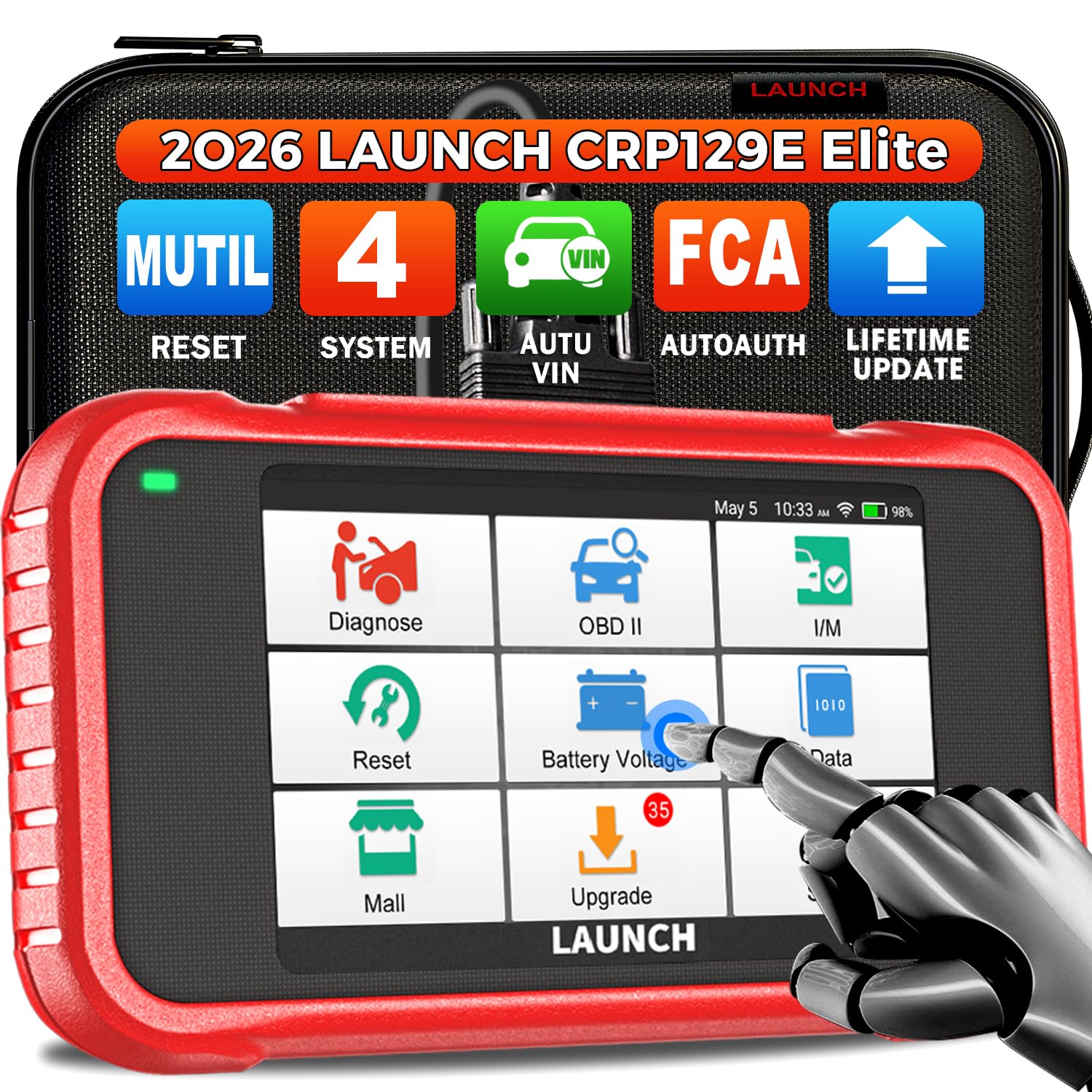
1. LAUNCH CRP129E Elite
Our pick — over 4.5★ from 700+ verified ratings; the strongest balance of quality and price.
The everyday hero that handles the eight resets your local shop charges you for.
The LAUNCH CRP129E Elite reads four core systems — engine, transmission, ABS, and SRS — which is the set most DIYers need. The standout upgrade adds three service functions—DPF regeneration, injector coding, and BMS reset—for a total of eight special services. That means you can change your oil, swap brake pads, rotate tires, register a new battery, and calibrate the steering angle sensor all without visiting a mechanic.
It updates over Wi‑Fi for life, and the FCA AutoAuth access lets you work on 2018-plus Chrysler, Dodge, Jeep, and Fiat vehicles with the security gateway — a must for a growing number of modern cars. The built-in DTC library holds 3,000-plus fault code explanations so you rarely need to reach for your phone. One buyer report sets the scene perfectly: “Successfully released electronic parking brake on 2022 Hyundai Tucson hybrid for brake job.”
What wins people over most here is how easy it is to navigate — the screen guides you through each reset step. The counterbalance is that where the tool works, it works great, though a few owners have had units that didn’t perform from the start, so a quick function check on arrival is wise.
What earns its keep
- Covers the eight most common daily resets – oil, EPB, SAS, TPMS, throttle, DPF, injector coding, and BMS – so you stop paying shops for button pushes.
- FCA AutoAuth is built in (no extra dongle needed) for 2018‑plus SGW-equipped vehicles.
- Lifetime free Wi‑Fi updates keep the vehicle database current without a subscription.
The honest trade-off
- Limited to four systems (engine, transmission, ABS, SRS) — if you need body control or climate diagnostics, look higher.
- No bidirectional control — you cannot command parts like pumps or windows to test them.
- A minority of buyers report units that did not function on arrival, so test it promptly.
Reach for this if: you do your own oil changes, brake jobs, and battery swaps and want a tool that guides you through each reset without guesswork.
Look elsewhere if: you need to command parts to run (bidirectional testing) or read body control and climate modules — this stays focused on the big four systems.
2. Vgate iCar Pro Wi-Fi
A micro-sized dongle that turns your phone into a diagnostic dashboard.
At 1.85 by 1.42 by 1.06 inches, the Vgate iCar Pro is designed to be plugged in and forgotten — you can leave it in the port permanently without it getting in the way. It pairs with your phone or tablet over its own Wi‑Fi signal, so you use apps like Torque, DashCommand, or BimmerCode to read and clear engine codes, view live data sensors, and run diagnostics. It works with 12-volt petrol vehicles from 1996 onward and light 12-volt diesel vehicles, but it does not cover heavy 24-volt diesel trucks.
What owners appreciate most is how well the device performs its core job — reading and clearing codes reliably across many makes. The functionality stands out, with connectivity and compatibility being more of a mixed bag. Some users report it never connects at all, while others praise it for specific cars: one owner used it on a 2018 BMW 530e and a 2016 BMW X5 via an iPhone and called it flawless for coding. Another paired it with a 2021 Subaru Forester and OBD Fusion to add coolant and oil temperature gauges. The trade-off is that because it’s an adapter, not a standalone tool, the experience depends heavily on which app you use and how your vehicle’s OBD2 implementation behaves.
The tiny size means it saves your car battery by drawing minimal power when the ignition is off. If your goal is a cheap, always-on window into your engine’s health using apps you already know, this is the one to grab.
Focus on this for: a £30-level entry point that works with popular diagnostic apps and fits permanently in the port. The catch: it only reads engine codes through apps — no built-in screen, no reset functions, and a fraction of owners mention connection failures that make the device unusable on their specific car.
Perfect for: app enthusiasts who want live data gauges and code reading without a dedicated screen. skip it if: you need to do resets like oil service or EPB release, or you want a tool that works standalone with no phone.
3. THINKCAR ThinkScan Plus S7
A seven-system scanner that picks up where basic code readers leave off.
The ThinkScan Plus S7 covers engine, ABS, SRS, transmission, body control (BCM), air conditioning (AC), and instrument cluster (IC) — that’s seven systems versus the typical four. It ships with a 5-inch touchscreen running Android 6.0, a quad-core 1.3GHz processor, and 32GB of expandable storage to hold the 94 car-brand software packages it supports. The real value is in the 5 special services (including throttle reset, injector coding, SAS calibration, ABS bleeding, and oil reset), letting you tailor the tool to the repairs you actually do.
The crowd favorite aspect here is the sheer functionality — owners trust it for thorough diagnostics across multiple car makes. The value-for-money sentiment is strong, and accuracy gets frequent praise, especially the crisp live data readouts. One owner noted it works reliably on 1996-1999 vehicles where some Bluetooth readers fail, though it runs a bit slow for basic OBD2 tasks. The setup and initial software update take time, so budget an hour for that before first use. Unlike the smaller Vgate, this is a standalone tablet, so you don’t need a phone — everything runs right on the screen.
FCA AutoAuth is supported, but you have to register your own account on the AutoAuth website. It’s also note the 28-service list is a menu — you only get five, so pick carefully based on the cars you own.
What stands out: the seven-system coverage (including BCM, AC, and IC) that few competitors in this range offer. The honest note: 5 special services, and the initial Wi-Fi update takes a while — set it up before you need it.
Best for: owners of multiple makes who want deep system scanning and don’t mind doing a one-time software update. Not for: someone who wants all 28 resets included or needs bidirectional active testing.
4. TOPDON AD600S

Upgraded hardware with nine resets in a package that feels worth more than its price.
The TOPDON AD600S runs Android 11.0 with a 5-inch, 1280×720-resolution screen — a spec bump over older models that makes the diagnostic menus look crisp. It scans four systems (engine, transmission, ABS, and SRS) and includes nine hot reset functions: oil, BMS, ABS, SAS, EPB, DPF, TPMS, throttle, and injector coding. That covers the most frequent jobs a home mechanic faces: oil changes, brake pad swaps, battery registration, tire rotations, and steering angle calibration.
What wins owners over here is the overall quality and reliability — those two aspects get the most praise. The tool is simple to use with user-friendly navigation, and the lifetime free Wi-Fi updates keep it current without any subscription. One owner describes it as an “amazing high-end scanner on a budget,” noting it reads and clears engine, ABS, SRS, and transmission codes and performs all nine resets easily. Another owner used it for DIY brake maintenance on a 2020 Honda CR-V and saved doing the rear pads themselves. The counterbalance: a few owners mention it can struggle with automatic VIN scanning, and the internal storage is limited, so you may need to manage your software installations.
The 10,000-plus model coverage spans 67 global brands, and the 24/7 tech support from TOPDON is a solid backup if you get stuck. For someone moving up from a basic code reader who wants resets without jumping to a bidirectional tool, this is the balance.
Why it works: the Android 11 OS and 1280×720 screen make navigation feel modern and fast. The reality: storage is limited and VIN auto-scan occasionally misses, but for the price, the nine resets plus lifetime updates are tough to top.
Reach for this if: you want all the common resets (oil, brake, battery, TPMS, injector) in a well-built tool with a clear screen and no subscription fees. pass on it if: you need body control or climate diagnostics, or you require bidirectional control to test parts.
5. OTOFIX D1 Lite
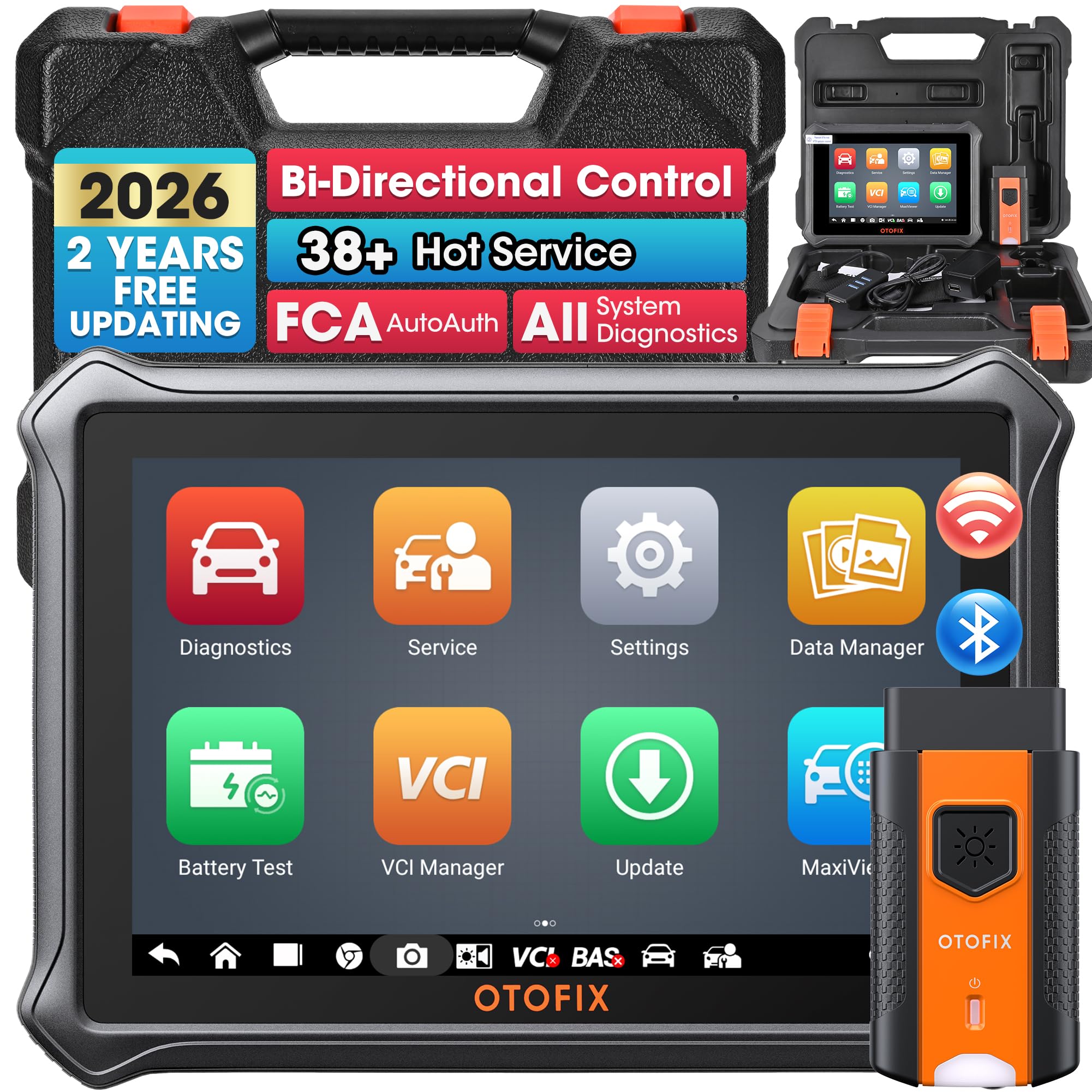
The cheapest way to get bidirectional control and 38 maintenance resets in one tool.
The OTOFIX D1 Lite is the most affordable entry into true bidirectional scanning — a function that lets you command parts like windows, wipers, and fuel pumps to test them directly. It also reads every system in the car at OE level, covering engine, transmission, ABS, EPB, BMS, TPMS, SRS, SAS, audio, body control, and air conditioning. The 7-inch 1280×800 touchscreen runs on Android 9.0 with 2GB RAM and 64GB storage, plus a 5800mAh battery that customers note lasts a full day of work.
With 38-plus reset services, this tool can handle nearly any common maintenance reset. The built-in CAN FD and DoIP protocols support the latest GM and European vehicles, and the FCA AutoAuth portal is available (though you need to purchase the registration yourself). The 2-year free update period is generous, and the tool serves 1996-2026 vehicles covering 10,000-plus American, Asian, and European models. Owners call it easy to use with excellent battery life, and one notes it can even print diagnostic reports. A few report reliability concerns after several months — one unit stopped charging after 4-5 months, though the company eventually replaced it.
For the price, you get features usually found on tools costing double. The catch is the longer wait times for some functions, but the tool always gets the job done.
The value proposition: bi-directional control and 38+ resets at a price that undercuts most competitors. The concern: a small number of owners experienced failures within months, so check the warranty and test it thoroughly on arrival.
Perfect for: a home mechanic or small shop that needs bidirectional testing and a wide range of resets without spending thousands. Who might hesitate: if reliability over many years is your top priority, you may want a more established brand.
6. KINGBOLEN K7
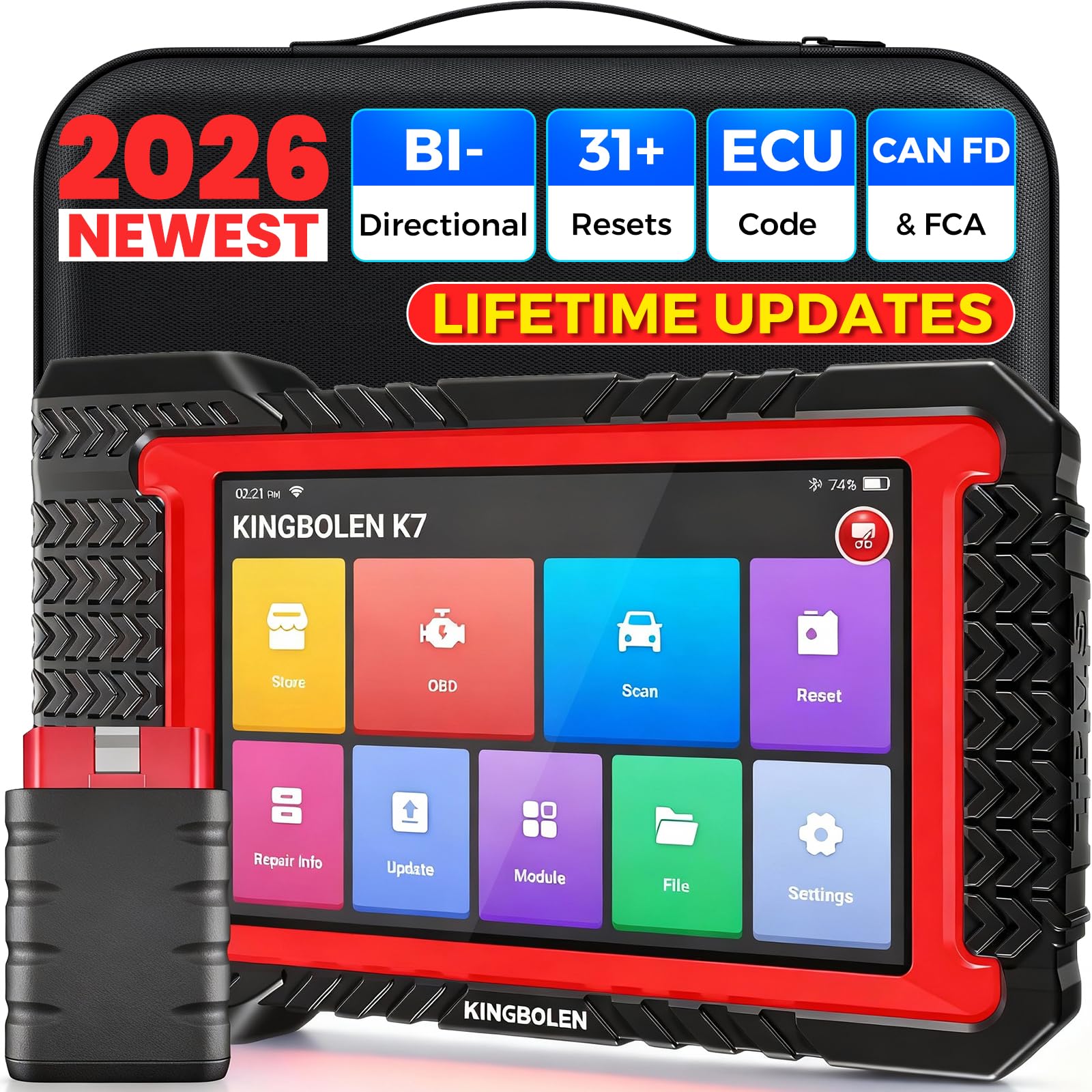
No annual fees, no subscription — just lifetime updates and a full bidirectional suite.
The KINGBOLEN K7 is built around one powerful idea: you buy it once and never pay for updates again. While many competitors charge /year after the first year, the K7’s lifetime updates are truly free. It runs Android 10.0 with a 1.8GHz quad-core CPU, 2GB RAM, 32GB storage, and a 6000mAh battery that lasts all day. The 7-inch tablet connects to the car wirelessly via Bluetooth (the VCI dongle is included), giving you freedom to walk around while diagnosing.
It scans every system at OE level — PCM, ECM, EPS, BCM, TPMS, SAS, AC — and reads live data in 4-in-1 graphic views for easy pattern spotting. The 31-plus reset functions include oil, SAS, EPB, TPMS, battery matching, ABS bleeding, and injector coding. The bidirectional active test lets you command windows, mirrors, sunroofs, wipers, solenoids, and headlamps. Owners consistently praise the functionality and scanning performance, calling it a fantastic all-in-one tool that’s intuitive and fast. One owner used it on a 2016 Ram to clear all codes and said it’s “full of useful features.” Another noted it found codes that other scanners missed. The counterbalance: the initial Bluetooth connection can be a bit slow, and some functions like key fob PIN retrieval are not supported.
The 10,000-plus car coverage spans 100-plus brands, and FCA AutoAuth is supported (with a separate purchase for the registration). For anyone who plans to own a scanner for years, the lack of annual fees alone makes this a compelling choice.
The standout feature: lifetime free updates that save you (or more) every year compared to subscription-based competitors. The small trade-off: initial connection is not instant, and very niche tasks like key fob PIN retrieval require a separate tool.
Best for: experienced DIYers who want a professional suite without paying yearly subscriptions. Think twice if: you need the absolute fastest first connection — the Bluetooth pairing takes a moment.
7. THINKCAR 689BT
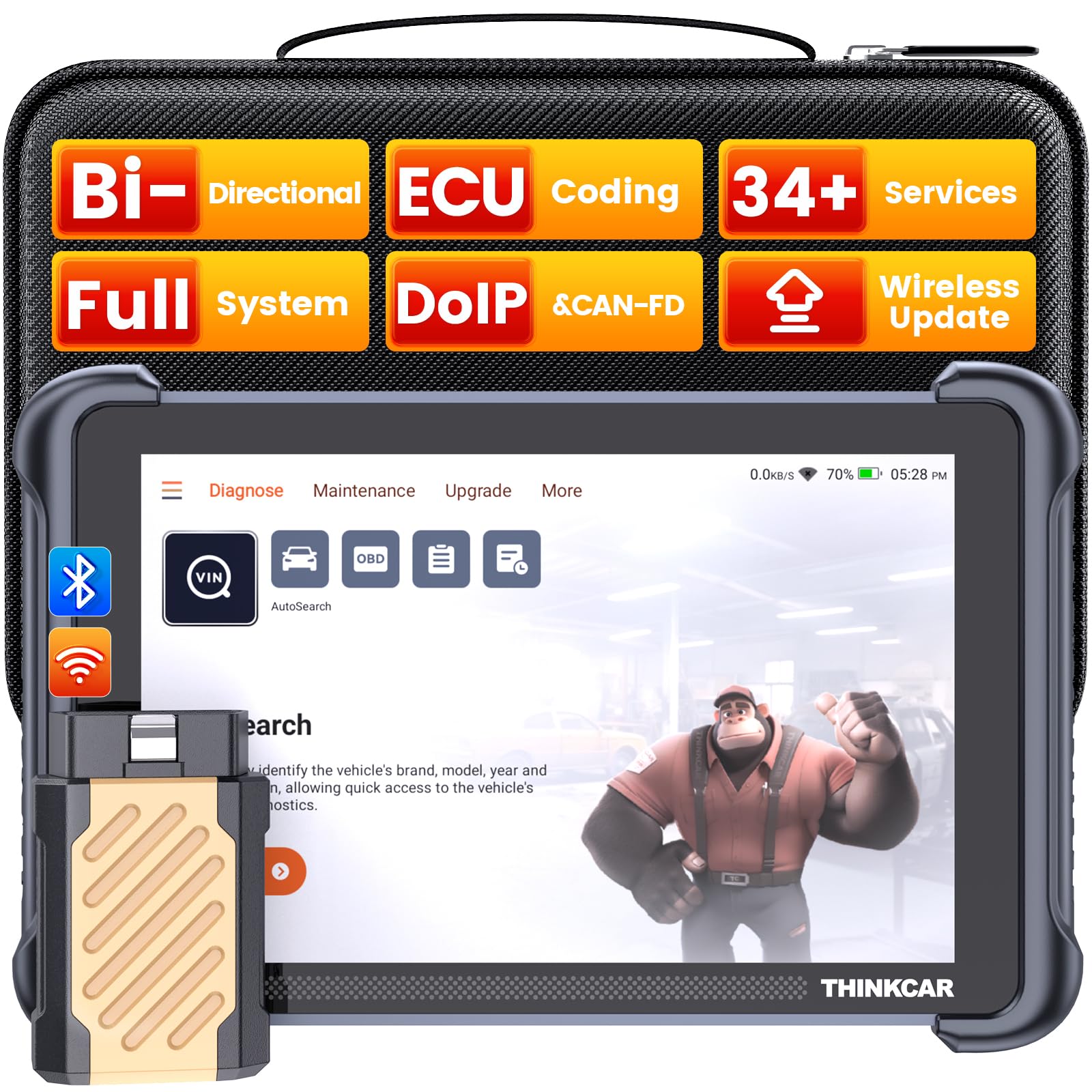
Pro-level ECU coding and 3,000 active tests — the tool that talks back to the car.
The THINKCAR 689BT is the next step up for anyone who has outgrown diagnosis-only tools. It runs Android 10.0 on an 8-inch 1280×720 screen with 4GB RAM and 64GB ROM — noticeably snappier than lower-tier models. The biggest draw is the 3,000-plus active tests it can perform: you command the EVAP system, injector buzz test, window, mirror, door lock, pump, and valve tests directly. It also adds ECU coding, which lets you change interior light colors, toggle auto hold on or off, customize dash kits, activate auto-folding mirrors, and disable auto start-stop — functions normally reserved for dealer tools.
The 34-plus services include clutch reset, ECU reset, FRM reset, gate reset, and turbo reset, alongside the usual oil, EPB, BMS, SAS, ABS bleeding, injector coding, gearbox match, suspension, and crankshaft relearn. Owners praise the functionality and quality equally — the top two praise-worthy aspects. One reviewer summed it up: “excellent DIY scanner: makes chipped keys, scans manufacturer codes, runs pro-level tests.” The device comes with a gateway accessory kit and an FCA SGW 12+8 bypass cable, saving you the cost of buying those separately. However, Wi-Fi auto-connect is reportedly weaker than typical tablets, and the FCA AutoAuth feature only provides a login portal — you still need to pay for your own FCA account and membership.
At this level, you are getting close to dealership-grade capability. The price is higher, but the feature set — especially the active tests and ECU coding — justifies the jump for serious home mechanics and small shops.
What makes it special: the 3,000+ active tests and ECU coding that let you diagnose and customize in ways most scanners cannot. The fine print: FCA AutoAuth is a login portal only — you still buy the subscription yourself, and the Wi-Fi auto-connect can be finicky.
Ideal for: advanced DIYers and small shop owners who need to code ECUs, run component tests, and access hidden vehicle settings without paying for dealer software. Not for: someone who just wants to read and clear codes — that is overkill and over budget.
8. MUCAR 892BT
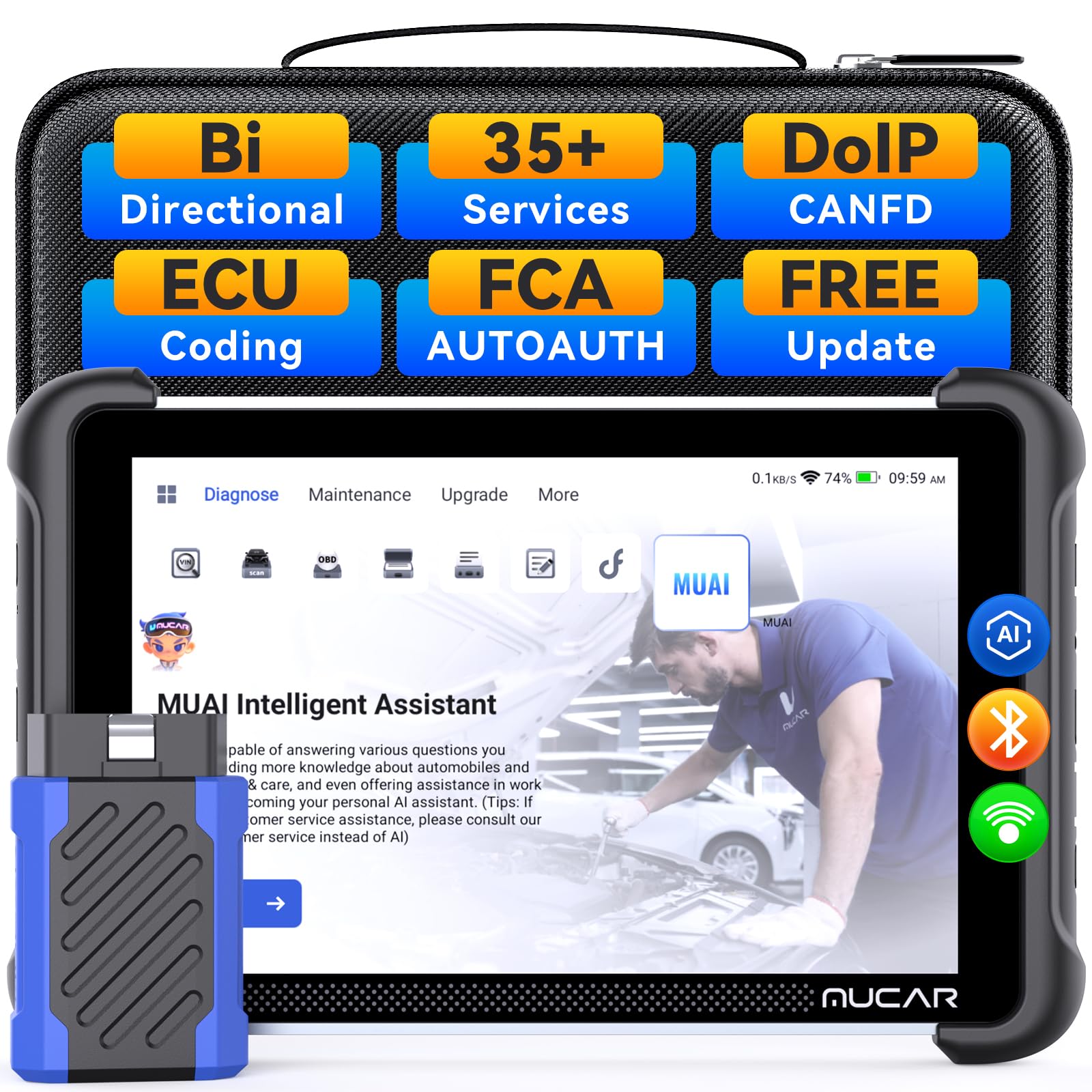
An AI-powered assistant that suggests fixes while you scan — like having a second mechanic beside you.
The MUCAR 892BT runs Android 10.0 on an 8-inch display with 4GB RAM and 64GB storage. The headline feature is the AI-assisted diagnostic engine — after reading fault codes, the scanner’s AI system analyzes the data and offers tailored repair solutions. There is also a built-in AI chatbot for real-time troubleshooting support, which could be a big help if you are learning how to fix certain issues. It covers over 140 car brands and 10,000 models, doing full system bi-directional diagnostics.
The 35-plus service functions include oil reset, ETS, gear learning, SAS calibration, injector coding, BMS reset, and brake reset. ECU coding is supported, so you can customize OEM settings like you would with a dealer tool. The tool uses a wireless Bluetooth connection and comes with free lifetime updates. Owners say it works as described, is easy to use, and finds the VIN and all DTCs quickly. One owner used it on a 2005 Chevy Colorado and was surprised to find it could diagnose an airbag issue and show live data for both the ECU and BCM. The trade-off: wireless connectivity can be a bit slow on initial connection, and some US automakers restrict specific functions that the tool can advertise but not fully perform. A few owners mention the screen arrived with micro scratches.
CAN FD and DoIP protocols are supported, and FCA AutoAuth is available (again, with a separate account). The MUCAR 892BT works immediately from the start without a complex registration process.
Why it stands out: the AI troubleshooting engine that suggests repairs — genuinely helpful if you are diagnosing a code for the first time. A few caveats: wireless pairing can be slow initially, and US manufacturer software locks may limit some functions on American cars.
Best for: a DIYer who welcomes AI-guided diagnosis and wants ECU coding plus a full suite of resets. Maybe not if: you primarily work on recent US cars and expect every advertised function to work — check compatibility first.
9. XTOOL D8W
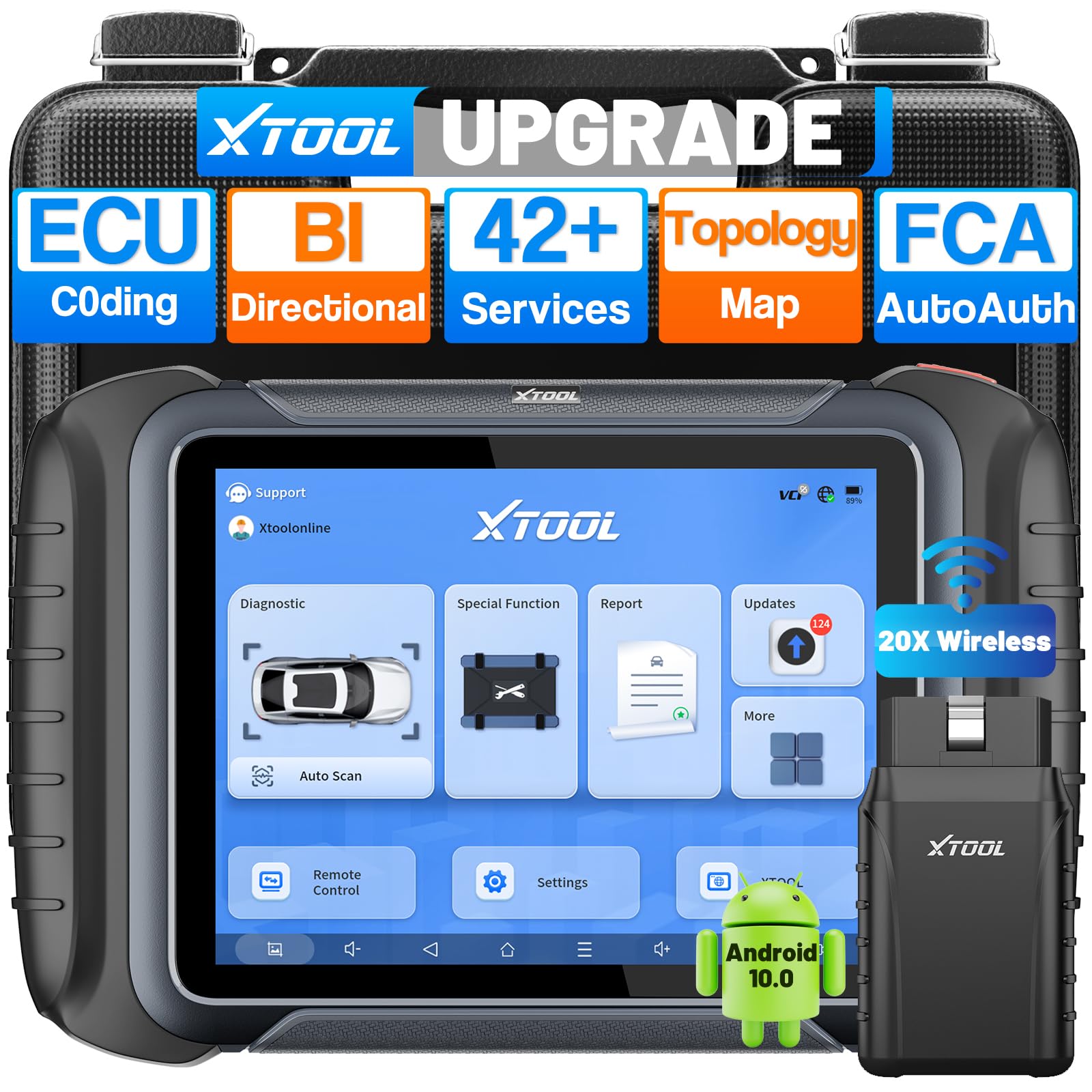
A fast, wireless scanner that maps your car’s modules like a dealer tool.
The XTOOL D8W brings topology mapping to a sub- tool — a feature normally found on tools costing double or triple. It builds a color-coded network diagram of every module in your car, highlighting faults so you can see the problem at a glance. The wireless connection runs over built-in Wi-Fi (not Bluetooth) with a max speed of 64 Mbps and a range of 33 to 66 feet, which owners call super-fast — even faster than a wired connection in some cases. The 8-inch Android 10 tablet with 64GB storage handles everything smoothly.
It covers 42-plus maintenance services (the most on this list), PMI function for Ford/Lincoln/Mazda ECU replacements, ECU coding, and 4,000-plus active tests. The 3-year free update window is the longest here, with frequent updates that keep adding vehicle coverage. The tool serves 88-plus car brands, 140 models, and 10,000 vehicles, including CAN FD for GM MY2020-plus and DoIP for BMW, Jaguar, and Land Rover. One owner reported it “paid for itself on day one” by programming two Toyota keys, saving roughly each. Another noted the topology feature found a bad module instantly that other scanners missed. The main downsides: the screen can be hard to read in direct sunlight (a screen protector may cause glare), and the basic TPMS UI lacks graphical tire pressure and temperature displays found on some competitors.
The pre/post scan feature gives you a clear before-and-after repair comparison, and the diagnostic report v2.0 is professional enough to share with customers. For serious home mechanics and small workshops, this is the most capable tool on this list.
What gives it an edge
- Topology mapping shows every module in a color fault diagram — a feature that competitors do not offer under.
- Wireless Wi-Fi connection is faster than wired in many cases, with rock-solid range up to 66 feet.
- 42+ resets, PMI function, and ECU coding cover the widest range of tasks here.
What to know
- Screen glare in sunlight can be an issue (a screen protector may be the cause).
- TPMS UI is basic — no graphical tire pressure or temperature display.
- 3-year free updates are good but eventually ends (extension costs extra).
Reach for this if: you want the fastest wireless connection and the module-mapping feature that lets you see the whole car’s network at once. Look elsewhere if: you mostly work in bright outdoor conditions or need a polished TPMS interface with live pressure and temperature graphs.
Understanding the Specs
System Coverage
This tells you how many of your car’s computers the scanner can talk to. A basic unit reads only the engine control module (ECM). A 4-system tool adds the transmission (TCM), antilock brakes (ABS), and airbags (SRS). A 7-system or all-system scanner also covers the body control module (BCM — for lights, locks, wipers), climate control (AC), and instrument cluster (IC). More systems mean you can find a problem in any part of the car, not just the engine.
Bidirectional Control
This means the scanner can send commands back to the car, not just read data. You tell a fuel pump to run, a window to roll down, or a brake caliper to retract. It is the most efficient way to confirm a part is truly dead before you buy a replacement. Without it, you can only see what the car reports — with it, you test components directly.
FAQ
What is the difference between Wi-Fi OBD2 and Bluetooth OBD2?
Will a Wi-Fi OBD2 scanner work with my specific car?
Can I use a Wi-Fi OBD2 scanner to reset my oil light or brake pads?
What is FCA AutoAuth and why do I need it?
How long do free software updates last on these scanners?
Can I keep the OBD2 adapter plugged in all the time?
What does CAN FD mean on a scanner?
Is bidirectional control worth the extra cost?
What is the difference between a code reader and a diagnostic scan tool?
Why do some scanners have a screen and others use my phone?
Final Thoughts: The Verdict
Across the board, the best wi-fi obd2 scanner winner is the LAUNCH CRP129E Elite because it covers the eight most common maintenance resets (oil, EPB, SAS, TPMS, throttle, DPF, injector coding, and BMS) at a price that pays for itself on your first brake job. If you want bidirectional control and the widest reset set, grab the XTOOL D8W for its topology mapping and 42+ service functions. And for a budget-friendly app-based pocket tool that lives in your port, the Vgate iCar Pro Wi-Fi is the one to reach for — it is the most popular choice among owners who just want to check engine codes and monitor live sensors without buying a dedicated screen.
How We Picked
We do not accept paid placement. Every pick is matched to a real buyer and a real use-case; we do not hands-on test units.
Sources & Methodology
Specifications: manufacturer listings and product documentation. Review insights: verified customer reviews, as of July 2026. Pricing: not shown on this page (it changes often); check the current price via the retailer link.
As an Amazon Associate, GoCarLife earns from qualifying purchases. This does not affect which products we feature.