
Our readers keep the lights on and the garage heater humming. As an Amazon Associate, I earn from qualifying purchases.
Specs are compiled from manufacturer listings and verified buyer reviews and can change over time — please confirm the key details on the product page before buying.
You have a gouge in the hull, a crack in the shower base, or a faded patch on the RV that makes the whole rig look tired. A white gel coat is the stuff that fills that damage and returns the surface to a factory-gloss finish — but not all gel coats handle sun, salt, and sanding the same way. Some flash-cure before you get a smooth stroke; others need multiple coats to hide the repair. This guide picks the nine best white gel coats on the market right now, sorted by what each does best, so you can match the right formula to your exact project.
Whether you are patching a 23-foot sailboat or resurfacing a 52-year-old trailer shower, the best white gel coat is the one that delivers the right wax profile, cure time, and coverage for your specific fiberglass repair.
Our Picks at a Glance


How To Choose The Best White Gel Coat
You need a white gel coat to repair or refinish fiberglass — it is a hard, thick polyester resin blend that bonds directly to the surface, not paint. The first decision you face is if you need wax in the formula. Waxed gel coat dries tack-free, so it works as a final topcoat. Unwaxed gel coat stays sticky, so later layers of resin or more gel coat can bond to it. That single difference drives most buying choices. After that, check cure time (how fast you must work), coverage area, and UV resistance if the repair sits in direct sunlight.
Wax vs. No Wax
Gel coat with wax contains a waxy additive that rises to the surface during curing. That wax blocks air, which allows the gel coat to harden fully and develop a tack-free surface. Use waxed gel coat when you are done applying layers and want a final finish you can sand and polish. Unwaxed gel coat stays tacky after curing, so the next coat or laminating layer bonds to it mechanically. Use unwaxed gel coat as a first coat inside a mold or as an intermediate layer.
Pot Life and Cure Time
Pot life is the window you have to apply the mixed gel coat before it hardens in the cup. Most formulas give you 8 to 25 minutes at 77°F, depending on how much MEKP catalyst you add. Cooler temps extend pot life; hotter temps shrink it. Cure time is how long the gel coat takes to reach a sandable hardness — typically 30 minutes to 24 hours. Fast-cure formulas can be sanded and polished the same day, but they demand quick, decisive application strokes.
Isophthalic NPG vs. Orthophthalic
Isophthalic NPG (neopentyl glycol) polyester gel coat resists water, UV, and blistering better than standard orthophthalic gel coat. The trade-off is a slightly higher cost per quart or gallon. For a boat hull or any surface that sees constant moisture and sun, isophthalic NPG gel coat is the smarter long-term choice. For an indoor shower or a quick cosmetic repair on a trailer, orthophthalic gel coat performs just fine at a lower price point.
Quick Comparison
| Model | Best For | Formula Type | Wax | Coverage | Amazon |
|---|---|---|---|---|---|
| Fiberglass Supply Depot Pint★ Best Overall | Small spot repairs | Isophthalic NPG | Wax | ~12.5 sq ft | Amazon |
| TotalBoat Marine Gelcoat QuartAlso Great | Marine touch-ups & layups | Isophthalic NPG | No Wax | ~12.8 sq ft at 1/8″ | Amazon |
| Marine Coat One Quart KitBest Value Kit | DIY repair with tinting | ISO/NPG | Wax | ~12.8 sq ft at 1/8″ | Amazon |
| Fiberglass Supply Depot Quart | UV-resistant topside work | Polyester Resin | Wax | ~12.8 sq ft at 1/8″ | Amazon |
| Gelcoat Products Boat/RV Kit | Color-matched marine repair | Resin Paste | N/A | 1 Count (kit) | Amazon |
| Polymer World Gallon | Large-scale hull restorations | Isophthalic NPG | Wax | ~80 sq ft | Amazon |
| Fiberglass Supply Depot Gallon | Big fly-deck & hull jobs | Isophthalic NPG | Wax | ~100 sq ft | Amazon |
| Fiberglass Warehouse Gallon | Mold layups & spray-up | ISO Polyester Resin | No Wax | 1 Gallon (no spec) | Amazon |
In‑Depth Reviews
1. Fiberglass Supply Depot White Gelcoat with Wax – Pint
Our pick — over 4.5★ from 350+ verified ratings; the strongest balance of quality and price.
This pint covers 12.5 square feet, ideal for small scratches and gouges on sailboats and canoes.
At 0.76 kg (about 1.7 pounds) with a 15cc hardener included, this pint is the lightest package in the lineup — 63% lighter than the TotalBoat quart. That small size is the reason to buy it: it covers roughly 12.5 square feet, which is exactly what you need for deep dock scratches on a 23-foot sailboat or a few scuffs on a hatch cover. The isophthalic NPG grafted polymer backbone gives it good water and blister resistance, plus a 5.5 to 6.5 percent elongation in tensile strength that reduces cracking around the repair.
The high-viscosity formula provides great coverage per stroke, so a little goes a long way. Owners using it on a canoe patch praised its durability and noted that the finish, while rough from the brush, protects the fiberglass extremely well. The biggest learning curve is that the gel coat can eat plastic mixing cups if left sitting, so have a metal or dedicated mixing container ready. Instructions are minimal — the mixing chart is printed on the cup, but new users often wish for more detail on hardener ratios.
Starter Size: This pint is the right size for first-timers and small-boat owners who do not want to waste a quart on a scratch repair. It is a proven performer on sailboats, canoe patches, and basketball backboards, as one owner noted.
Best for Small Patches: your repair is small — a few inches of scratches — and you want a waxed finish in one go.
Skip for Big Projects: you have a whole hull or deck to resurface; you will run out of pint fast.
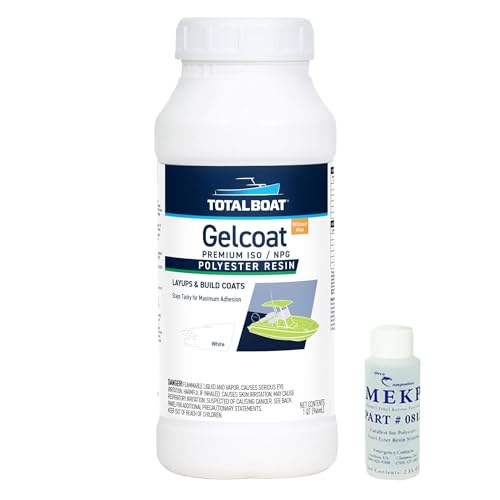
2. TotalBoat Marine Gelcoat for Fiberglass Repairs – White Quart, No Wax
This isophthalic NPG gel coat bonds aggressively to fiberglass for a repair that won’t delaminate.
This quart is built around a premium isophthalic NPG backbone that resists water and blistering far better than standard orthophthalic gel coats. It is designed as an unwaxed formula, which means it stays tacky as it cures — perfect for the first coat in a polyester resin layup or for bonding additional layers. At 77°F you get an 8-to-12-minute pot life, so you work fast and confidently. Coverage runs about 12.8 square feet at 1/8-inch thickness, enough for several cosmetic patches or a single large repair area.
What wins people over is how well this stuff sand and buffs. Buyers report that it sands very smoothly and polishes to a high-gloss showroom finish. Adhesion is the headline feature; one owner restored a sailboat that had been through a hurricane and said the gel coat stuck where other products had failed. The “bright white” tint is notably brighter than some factory whites, so test a small area first if matching an older hull. Durability is a mixed point — a few owners saw flaking after five months, but the overwhelming consensus across hundreds of reviews is that it holds up well for cosmetic and structural repairs alike.
Because this is a no-wax gel coat, remember that you need a waxed topcoat for the final layer if you want a tack-free finish. TotalBoat sells a separate wax additive, or you can switch to their waxed version for the last coat. For the majority of fiberglass repairs — boat hulls, motorcycle fairings, RV panels — this is the most reliable quart you can buy.
Trusted Marine Repair
- Premium isophthalic NPG formula resists water and blistering.
- Sands and buffs to a glossy finish without much effort.
- Excellent adhesion, even on non-molded surfaces.
- MEKP catalyst included — no separate purchase needed.
Limited Color Options
- No wax means it stays tacky — you need a waxed layer for a final finish.
- Bright white may not perfectly match older, yellowed gel coats.
- Pot life is very short at 8–12 minutes; mix small batches.
Best for Boaters: you need a strong, bondable first coat for a boat hull or a cosmetic repair that you will finish with a waxed topcoat.
Skip for Custom Colors: you want a one-step, tack-free final finish — choose a waxed formula instead.
3. Marine Coat One Iso/Npg Gel Coat White with Wax Quart Kit
This waxed kit includes six polyester pigments for custom color matching on white hulls.
This quart kit is packed with extras: the waxed gel coat itself, a 1-ounce bottle of MEKP catalyst, and six 1/4-ounce tinting pigments in white, black, yellow, blue, red, and brown. Adding up to 1% of a polyester-based colorant before the catalyst lets you dial in a near-perfect match for your boat’s original white. The ISO/NPG formulation resists UV fading and blistering, which directly addresses the problem of repairs becoming visible after a season in the sun.
Owners mention a gel time of 10 to 15 minutes and a cure that is hard enough for wet sanding in 30 to 45 minutes. That is impressively fast turnaround for a weekend project. The waxed formula cures tack-free, so this is a true one-step topcoat. One owner refinished a 52-year-old trailer bath and shower and said the gel coat mixed easily with an impact driver and produced a consistent, glossy finish. The main caution is color matching: the included pigments produce pastel shades when added to white, not deep or dark tones. For a subtle correction on a Grady White or a Boston Whaler, the tint range works fine. For a full-color change, you would need the neutral gel coat version and more pigment.
Kit Convenience: This is the kit for the DIY boater who wants color flexibility without buying extra supplies. If you need one kit to repair scratches, match a white hull, and apply a tack-free topcoat, this is the smartest value on the list.
Best for Quick Jobs: you want a complete tinting system with a waxed finish for a single-project fix.
Skip for Large Repairs: your repair is more than a quart — this kit is sized for touch-ups, not an entire hull.
4. Fiberglass Supply Depot White Gelcoat with Wax – UV-Resistant Quart
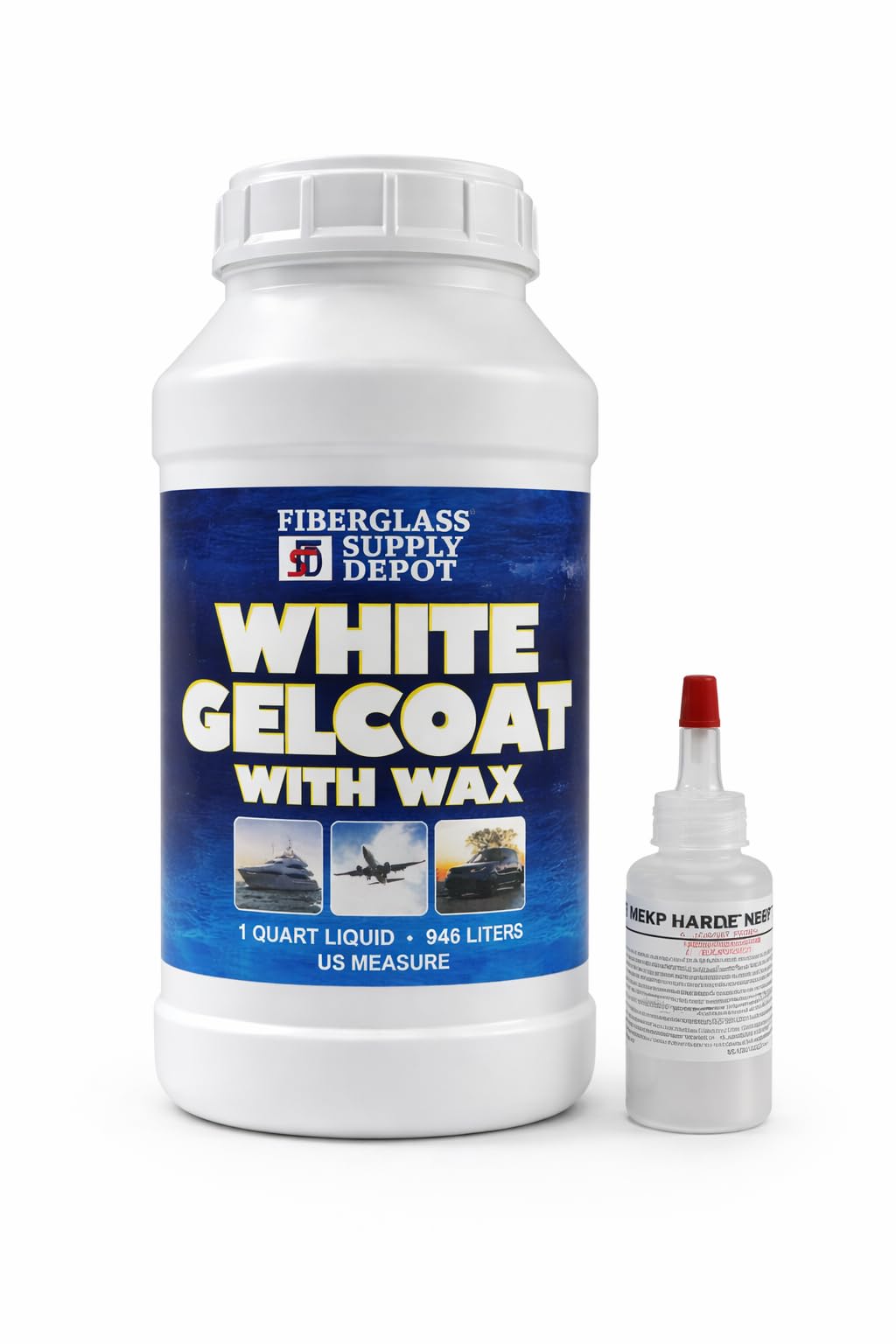
This UV-resistant waxed quart keeps white bright on boat topsides and RV caps exposed to direct sun.
This waxed quart resists UV rays, so the white stays white longer in direct sunlight — a real benefit for boat hulls, RVs, and motorcycle fiberglass. It is a marine-grade polyester gel coat. The 0.95-liter volume covers about 12.8 square feet at 1/8-inch thickness. Full cure takes 24 hours, but the pot life is a generous 20 to 25 minutes — the longest working window of any product here — which gives you, especially as a beginner, time to spread and level without rushing.
Buyers consistently praise the ease of application with a roller or brush. One owner covered a 21-foot boat below the waterline with two coats from a single quart. Another used it on a fiberglass shower base and found it very easy to apply, though they warned that the odor is intensely strong and a respirator is essential. Cure time varies with temperature: at 80°F you can sand in about 30 minutes; at 60°F expect 1 to 2 hours. The waxed formula delivers a tack-free, glossy surface that polishes beautifully.
UV Protection Added: If your repair sits in direct sun — a boat topside, an RV cap, a motorcycle fairing — this gel coat’s UV resistance is a real durability edge. The longer pot life is a bonus for anyone still building confidence with gel coat application.
Best for Outdoor Use: sun exposure is a concern and you want a slower-curing formula for a smoother finish.
Skip for Indoor Work: you need a gel coat that cures in under an hour for a same-day sanding job.
5. Gelcoat Products Boat and RV Repair Kit (Sea Ray White)

This paste kit matches Sea Ray and Grady White whites for a near-invisible repair.
This is a compact kit aimed squarely at boat owners who need a color-specific repair. The “Sea Ray white” color is a paste-form resin designed for fiberglass, ceramic, porcelain, and stone surfaces. It comes as a single kit — no hardener measuring needed — and works best for small scratches and scuffs. Performance is strong: owners say it hardens quickly and is easy to apply with tape protecting the surrounding area.
The color match is the main event here, and it gets mixed results. Some owners say it is a 95% accurate match for their Boston Whaler or Grady White. One buyer called it an “exact match” for a 2025 Grady Freedom 275. Others found a gray tint or an off-color for older Grady White models from the early 2010s. Drying time also varies — some say it cures fast and hard, while others note it takes too long at 70°F. This is a niche product: if your boat is a recent Sea Ray or a compatible white-hull brand with a known color formula, this kit is a shortcut to a near-invisible repair. If your hull is older or an off-brand white, expect some color trial-and-error.
Boat and RV Ready: This kit excels when your boat white is a known production color. For newer Grady White hulls and Sea Ray whites, it is a time-saver. For older gel coats, a tintable white quart gives you more control.
Best for Matching: you have a specific boat brand (Sea Ray, Grady White, Boston Whaler) and want a ready-to-use color match.
Skip for Universal Use: your boat is a generic white or an off-brand color — you will need a tintable gel coat.
6. Polymer World 1 Gallon White Gelcoat with Wax
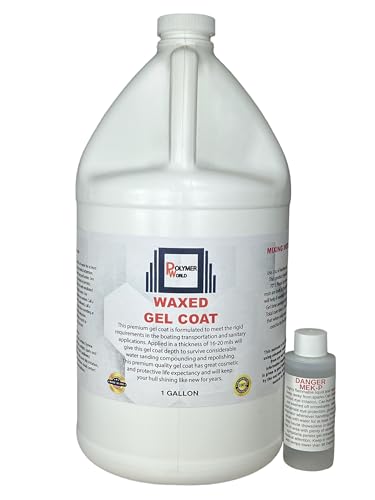
This fast-curing isophthalic NPG gallon covers 80 square feet for large hull restorations.
This gallon-sized can from Polymer World uses an isophthalic NPG formula with wax, so it is a one-step final topcoat that covers up to 80 square feet. The 2-ounce bottle of MEKP hardener is included, and the gel coat is designed to withstand sanding, compounding, and repolishing — meaning it holds up through repeated surface restoration. The Florida-based company has been in the boating industry for well over seven years, which gives confidence in its marine-specific formulation.
What owners rave about is the durability and ease of application for a non-professional. One owner said the product exceeded expectations and made a boat look new again with simple instructions. The main caution is the fast cure time — mix only what you can apply in about 10 minutes, or the whole batch hardens in the bucket. Another experienced user noted that the finish is not a high-gloss right out of the can; it requires sanding and polishing to achieve a mirror shine. For large-area repairs like an entire hull bottom or a deck, the gallon size makes this an efficient choice compared to buying multiple quarts.
Gallon Economy: This is a durable, value-packed gallon for boat owners who need to cover a lot of surface area. The fast cure rewards quick, confident application — beginners should mix in very small batches.
Best for Volume: you are tackling a large restoration and want a waxed gallon that goes on fast and holds up.
Skip for Small Jobs: you want a high-gloss finish straight from the can — this one needs buffing.
7. Fiberglass Supply Depot White Gelcoat with Wax – Gallon
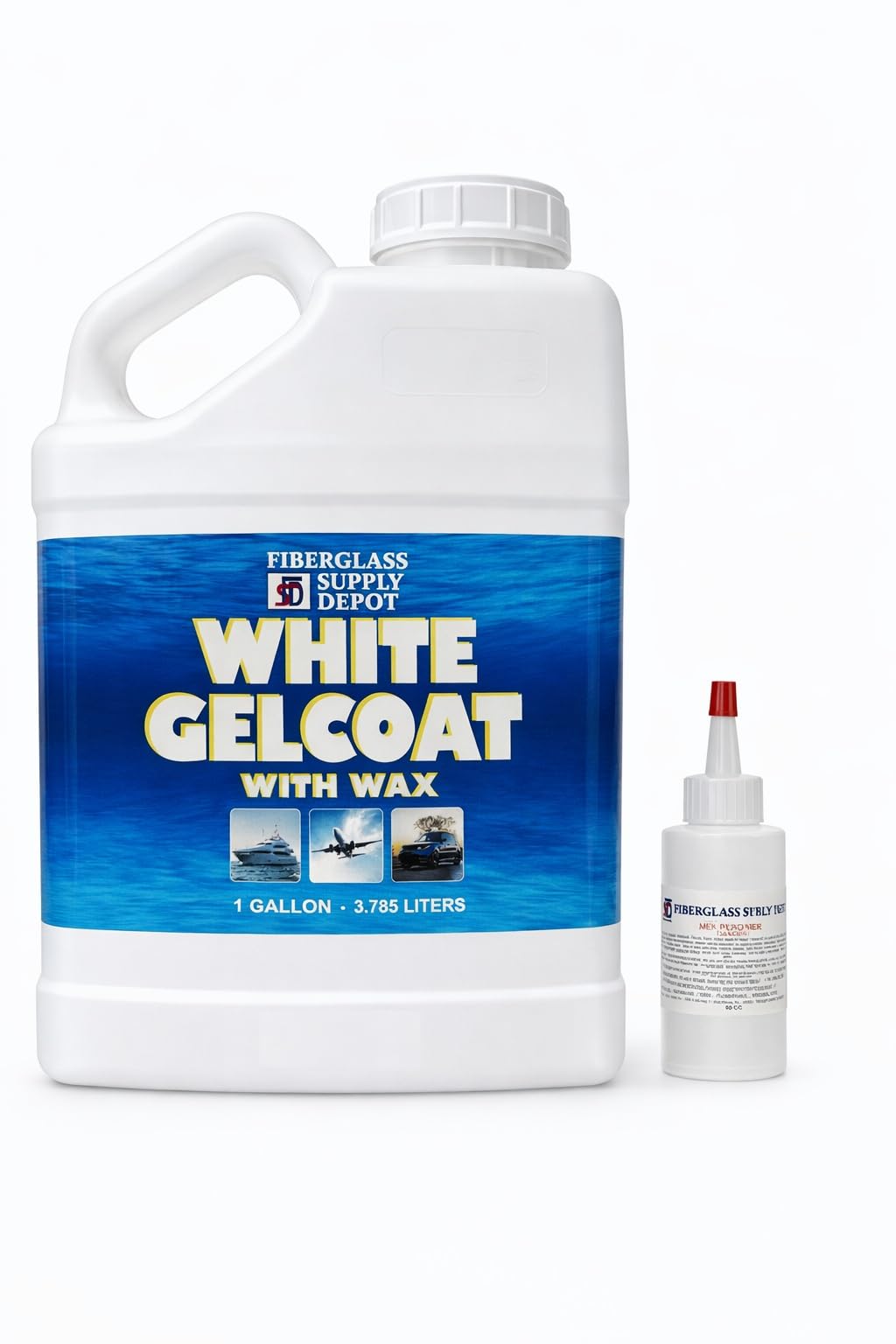
The gallon that covers 100 square feet of boat deck or hull.
It uses an exterior NPG/isophthalic grafted polymer backbone with 5.5 to 6.5 percent elongation in tensile strength to resist cracking. The waxed formula means a tack-free, sandable finish. It comes with a 60cc MEKP hardener, a measuring cup, and a catalyst chart, making it the most fully equipped gallon in terms of accessories.
Customers note using this on everything from a 30-square-foot sea-kayak bottom to a 20-by-38-foot houseboat fly deck. The kayak owner applied four coats, sanding between each, and said the result filled scratches and hid epoxy discolorations. The houseboat owner used 1.5 gallons total on the fly deck with a 3/4-inch roller and called the coverage amazing. Both owners noted the gel coat hardened in about one hour and set well overnight. The high viscosity means it does not run on vertical surfaces, which is a key advantage for hull sides and transoms. Some owners note that the waxed formula requires sanding between coats to get a flat finish, which adds time to the project.
Final Finish Focus: For the best coverage-per-dollar ratio, this gallon is the clear leader. If you are resurfacing a large area like a houseboat deck, an entire hull, or a camper, this is the most efficient gel coat on the list.
Best for Pros: surface area is your main concern — 100 square feet per gallon is the most coverage here.
Skip for Novices: you want a glossy finish in one coat — this waxed version needs sanding between coats.
8. Fiberglass Warehouse Gel Coat – 1 Gallon White Gelcoat (No Wax)

A builder’s unwaxed gallon for layups and mold work.
This gallon is formulated for professional boat builders and serious restoration work. It is a premium ISO polyester resin gel coat — unwaxed — designed for spray-up and hand layup. That means it stays tacky after curing so you can build up multiple layers or bond it to a polyester resin base. The 2-ounce MEKP catalyst is included, and the formula is compatible with polyester resin color pigments for custom tinting. Covering an entire 18-foot boat deck took two coats, and the gel coat effectively covered cracks and small holes.
Reviewers point out excellent coverage and a predictable cure with no reaction to release agents or polymer resins. One owner used it inside a mold to build up a part for a 26-year-old motorhome and said it thinned and sprayed well for a professional-looking result. Because this is an unwaxed gel coat, no sanding is required between layers, which speeds up multi-coat work. However, you absolutely need a waxed topcoat if you want a hard, tack-free final surface — otherwise, the finish stays sticky. The price is at the higher end of the list, which reflects the gallon size and the ISO polyester quality.
Warehouse Direct: This gel coat is for the builder or restorer who knows they are applying it as an intermediate or mold layer. If your project is a cosmetic touch-up on an existing hull, a waxed quart would be simpler. If you are building a part from scratch, this is the right base.
Best for Bulk: you are laying up a new part in a mold or need an unwaxed base coat for a multi-layer repair.
Skip for First Timers: you want a simple one-step topcoat — choose a waxed formula instead.
Understanding the Specs
Pot Life (Working Time)
This is the window from the moment you add the MEKP catalyst to the moment the gel coat becomes too thick to apply. Most white gel coats offer 8 to 25 minutes at 77°F. A shorter pot life (8–12 minutes) demands fast strokes and small batches. A longer pot life (20–25 minutes) gives beginners breathing room but means the final cure takes longer. Mix only what you can use in one working window — any leftover will harden in the cup.
MEKP Catalyst
Methyl ethyl ketone peroxide is the hardener that triggers the chemical reaction in polyester gel coats. Every product here includes it, but the amount you add controls cure speed. More catalyst (up to 2%) shortens pot life and cure time; less catalyst (down to 1%) extends both. Always measure by volume with the included syringe or cup — eyeballing it leads to uncured patches or flash-hardening.
FAQ
How much white gel coat do I need for my boat repair?
Can I use white gel coat below the waterline?
What is the difference between waxed and unwaxed gel coat?
How long does white gel coat take to cure before sanding?
Can I tint white gel coat to match my boat’s color?
Does white gel coat yellow over time in the sun?
What happens if I mix too much gel coat at once?
Can I apply gel coat with a brush or roller?
How do I store leftover white gel coat after opening?
Is gel coat safe to use indoors?
Final Thoughts: The Verdict
Across the board, the best white gel coat winner is the TotalBoat Marine Gelcoat Quart because it combines a premium isophthalic NPG formula, excellent adhesion, and smooth sanding performance that owners consistently praise. If you want a complete kit with six tinting pigments for color matching, grab the Marine Coat One Quart Kit. And for large-area hull restorations, the Fiberglass Supply Depot Gallon gives you the most coverage per dollar at 100 square feet per gallon.
How We Picked
We do not accept paid placement. Every pick is matched to a real buyer and a real use-case; we do not hands-on test units.
Sources & Methodology
Specifications: manufacturer listings and product documentation. Review insights: verified customer reviews, as of July 2026. Pricing: not shown on this page (it changes often); check the current price via the retailer link.
As an Amazon Associate, GoCarLife earns from qualifying purchases. This does not affect which products we feature.