
Our readers keep the lights on and the garage heater humming. As an Amazon Associate, I earn from qualifying purchases.
Specs are compiled from manufacturer listings and verified buyer reviews and can change over time — please confirm the key details on the product page before buying.
A snapped wheel stud mid-job turns a quick brake swap into a whole afternoon fight with a hammer and a stack of washers. A dedicated installer tool yanks that new stud home in seconds with a ratchet or impact wrench, no swearing, no three-handed balancing act. Whether you are working on a daily driver or a fleet truck, the right tool gets the job done right the first time.
I’m Mo Maruf — the founder and writer behind GoCarLife. This guide is built by comparing the manufacturers’ published specifications and the patterns across verified customer reviews, so you get each pick’s real strengths and trade-offs instead of marketing spin.
The seven picks below cover every budget and job size, from a pocket-size stud puller to a shop-grade C-frame that swallows Class 8 truck hubs, so you can find the exact wheel stud replacement tool that fits how you actually work.
Our Picks at a Glance


How To Choose The Best Wheel Stud Replacement Tool
You need a tool that fits your stud size, clears the hub you are working on, and can handle the torque you plan to apply. Here is what to check before you click buy.
Thread-On vs. C-Frame Design
Thread-on tools screw directly onto the stud shaft, then use a lug nut and a ratchet to pull the stud into the hub. They are compact and cheap. C-frame tools put a forcing screw behind the stud head and push it in from the back side, which avoids touching the threads at all. A C-frame is faster for high-volume work but costs more and takes more room to position.
Stud Size and Compatibility
Most kits include a range of thread sizes measured in millimeters (like M12 x 1.5) or inches. Check that a set covers the studs on your specific vehicle — a four-piece metric set handles the common sizes, while a single 0.87-inch tool may fit only domestic light trucks.
Drive Type and Torque Source
Some tools state “hand use only” and work with a breaker bar or ratchet. Others are built for an impact wrench, which cuts installation time dramatically. A 1/2-inch square drive is the standard, but some larger C-frame kits need a 3/4-inch impact gun to work efficiently.
Quick Comparison
| Model | Best For | Design Type | Included Pieces | Drive Size | Amazon |
|---|---|---|---|---|---|
| Lisle 22800★ Best Overall | Light-truck installs | Thread-on installer | Tool only | 1/2-inch square | Amazon |
| Assenmacher 203Premium Pick | Broken manifold studs | Roller friction set | 7 pieces | Ratchet / wrench | Amazon |
| Lisle 71200 | Broken stud removal | Split-socket remover | Single remover | 1/2-inch square | Amazon |
| Performance Tool W89414 | Metric thread extraction | Thread-on remover set | 4 pieces | 3/8 and 1/2-inch | Amazon |
| TUSK Set | ATV / motorcycle studs | Thread-on install & remove | 6 pieces | 1/2-inch square | Amazon |
| Bruno Wessel SRT-5 | Tire-stud removal | Pry-style remover | Single tool | Hand tool | Amazon |
| OTC 4295 | Class 8 truck hubs | C-frame push kit | Kit with case | 3/4-inch impact | Amazon |
In‑Depth Reviews
1. Lisle 22800 Wheel Stud Installer
Our pick — over 4.5★ from 4,500+ verified ratings; the strongest balance of quality and price.
The crowd-favorite installer that pulls studs fast on virtually any car or light truck.
This tool appears in nearly every garage recommendation thread for good reason. You position the tool over the stud shaft, tighten the lug nut against it, and the stud pulls itself into the hub. It works with a ratchet or an impact wrench and handles most automotive and light-duty truck wheel studs, import and domestic.
With 4.7 stars across nearly 5,000 owners, it beats the old nut-and-washer trick and can even be combined with that method if the hub lip prevents a direct fit. One owner ran it through all 24 studs on a Silverado 1500, noting that a breaker bar worked fine and the tool held up. The catch is honest and stated up front by the maker: the bearing will wear with use and is not warranted.
What Wins People Over
- Simple operation — position, tighten, done
- Works on imports and domestic light trucks
- Compatible with a ratchet or impact wrench
The Only Catch
- Bearing is a wear item, not warrantied by the maker
- Tool-only — no case or included adapters
Reach for this if: you want a proven, affordable stud installer for occasional home or shop use on cars and light-duty trucks.
Look elsewhere if: you need a full kit with multiple thread sizes or a tool designed for heavy-duty fleet work.
2. Assenmacher Specialty Tools 203 Stud Remover/Installer Set
The professional’s set of seven roller-style removers for broken and stubborn studs.
This set uses a roller friction method to grip the stud, which is very effective on broken bolts, exhaust manifold studs, and turbo flange fasteners where the threads are mostly missing. The quality is consistently praised — one owner who has used the same set over twenty years calls these tools “the brushes” of the stud removal art. Another successfully pulled stubborn manifold studs from a 75-year-old flathead engine, noting it was well worth the premium over cheap copies.
At 2.7 pounds across seven pieces in a 9 x 6 x 3-inch package, the set covers a wide range of sizes. There is a fair note, however: the same owner who loves them on broken studs found the roller friction method crushed threads and slipped on a tight engine stud where threads were still intact, so this set shines brightest when the stud is already damaged or broken.
Hands-down best for broken studs: if you regularly deal with snapped exhaust bolts and manifold studs, this pays for itself fast. skip it if the studs you remove still have decent threads — a thread-on puller may work better.
Best for: experienced mechanics and DIYers who need a reliable way to extract broken studs from exhaust flanges and engine blocks.
Who might pass: anyone removing undamaged threaded studs where a thread-on tool is faster and cheaper.
3. Lisle 71200 Stud Remover

A brute-force split-socket remover that grips and turns stubborn broken studs free.
When a stud is broken flush with a headless shaft but some shaft is still sticking out, the Lisle 71200 bites on and twists it out. The jaw capacity is 0.75 inches, and the tool uses a 1/2-inch square drive. Buyers report it successfully removed a stubborn 10mm motorcycle case stud after being heated red-hot and used with an 18-inch 1/2-inch drive ratchet — a stud the double-nut method could not budge. It also works on broken exhaust and cylinder head studs.
Users rave about its functionality — it just works when other methods fail. At 1.3 pounds it is not huge, but it is bulky, and a few owners note it can be too large for tight exhaust spots. Durability gets mixed feedback: some call it sturdily made, others report it breaking on first use.
The honest word: for the price, this is a great backup tool to throw in the box. It is not a subtle instrument — it uses brute clamping force — which is exactly why it works on studs that laugh at double nuts.
Reach for this if: you deal with rusted or broken-off studs where other removal methods slip.
Think twice if: you need a compact tool for tight engine-bay spaces where clearance is very limited.
4. TUSK Stud Removal & Installation Set
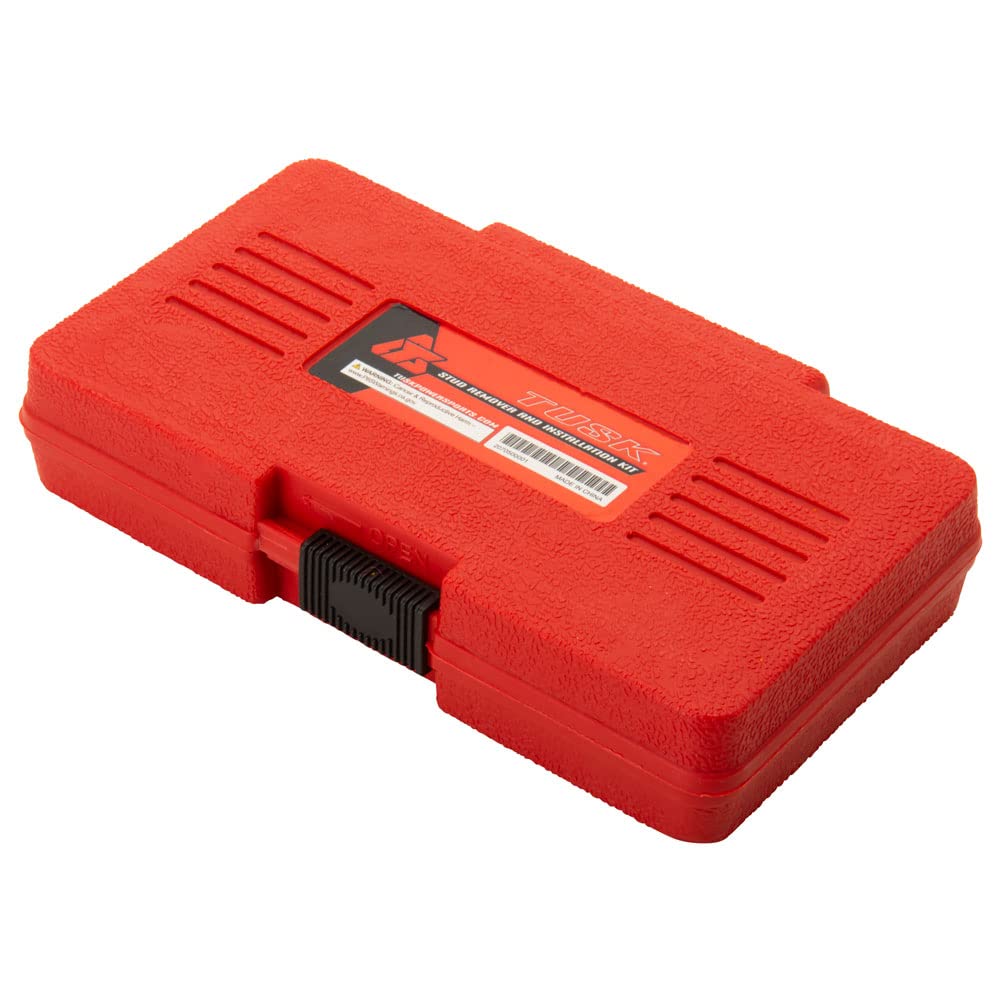
A do-it-all kit with both installers and removers in one carry case, made for power sport vehicles.
This TUSK set includes 6mm x 1.0, 8mm x 1.25, 10mm x 1.25, and 10mm x 1.5 stud installers, plus removal tools, and comes with a protective carrying case. The industrial quality steel has a black oxide finish to resist rust. The kit is especially popular on ATVs and motorcycles — owners say it worked great for removing head studs on a Blaster 200 and that buying this years ago would have been the smart move.
One unit showed a trade-off: after 8 studs the 10mm x 1.5 stud remover failed to thread, and the owner had to chase it with a tap. That sounds like a durability concern on that one piece, but the overall reaction is overwhelmingly positive. At 1.4 pounds and in a compact case, it is easy to keep in the trailer.
Where it wins: the convenience of having installers and removers in one box for the smaller thread sizes common on dirt bikes and ATVs. The catch is that one of the removers may wear faster than the rest of the set.
Best for: power sport owners who want a complete start-to-finish kit for stud work on ATVs, dirt bikes, and side-by-sides.
pass on it if: you work exclusively on full-size trucks with larger metric or SAE studs not covered by this set.
5. Performance Tool W89414 4-Piece Metric Stud Puller Set
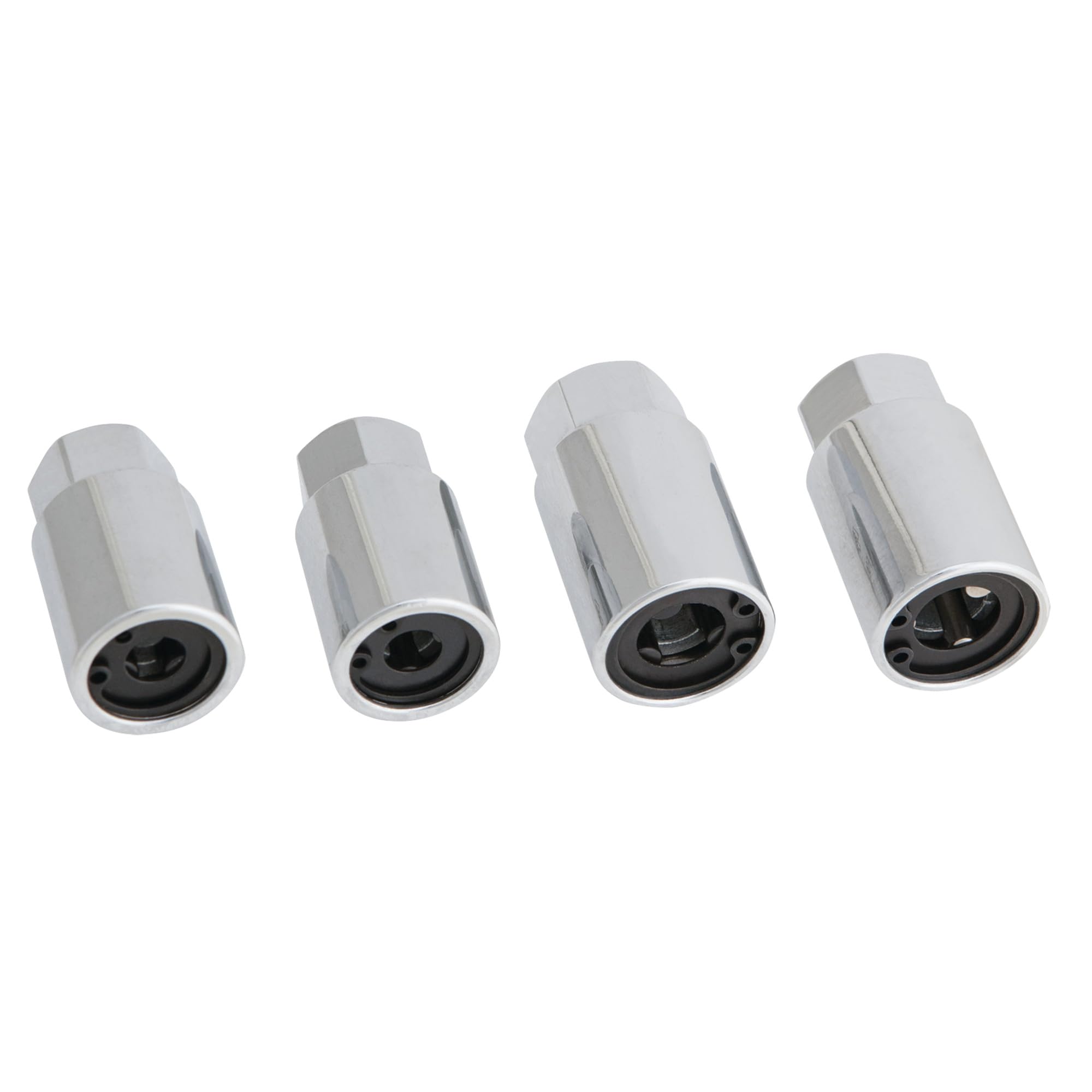
A four-piece metric set for quickly pulling studs out of hubs without damaging threads.
This set covers 6mm and 8mm drives at 3/8-inch, and additional sizes at the 1/2-inch drive, all in chrome vanadium steel. However, the instruction says “hand use only” — so no impact wrench. Owners mention it works as described, though one buyer offered a clear warning: don’t use these on studs you want to reuse because they do damage the threads. That is the honest trade-off of this design, which grips the threaded portion to remove the stud.
Another owner noted that in tight spaces the tool may not fit around the stud, requiring grinding or a different removal method. For 8.8 ounces and a low entry price, this is a handy roadside or occasional tool, but it is not for shop-level daily use.
The short take: works as an affordable extraction solution for metric studs you plan to replace anyway. The thread damage is not a flaw — it is how the tool works.
Reach for this if: you often replace metric studs and do not care about saving the old ones.
it’s not for you if: you need to remove a stud intact for re-use, or if you plan to use an impact wrench.
6. OTC 4295 Wheel Stud Service Kit

The shop-grade C-frame that pushes studs in from behind for heavy truck work in minutes.
OTC claims this kit removes and installs 10 studs in 10 to 15 minutes. It works on studs up to and including those on Class 8 trucks, and you do it without removing the hub. The C-frame uses a forcing screw that pushes on the stud head, so the threads never get touched. The set includes the frame, multiple adapters, and a blow-molded storage case. It is designed to be powered by an impact wrench, though owners who have used it recommend a 3/4-inch impact gun for efficiency — a 1/2-inch gun works but is slow.
Buyers who swapped 40 studs on a semi-tractor in a few hours call it a perfect tool. The recurring advice is to keep the forcing screw lubricated, especially with a high-torque impact. Functionality is consistently praised, though the kit is not compatible with Bendix disc brake systems due to clearance issues, requiring hub and rotor removal first in that case.
The honest picture: this is a professional-grade tool for shops that service heavy trucks. It is heavy, expensive, and overkill for a sedan in the driveway, but for fleet work it easily earns its keep.
Best for: commercial truck shops and serious fleet mechanics who change dozens of studs at a time.
Who should skip: home garage DIYers with a single light truck — a thread-on puller will do the same job much slower but for a fraction of the investment.
7. Bruno Wessel SRT-5 Tire Stud Removal Tool (5mm Tip)

A purpose-made pry tool for removing steel tire studs — but only fresh ones.
This tool is built specifically for steel-bodied passenger and light-truck tire studs in TSMI sizes 11 through 17. It uses a replaceable 5mm tip and a pry-action handle. The maker states clearly that it works on both new and used Bruno Wessel studs, and that it is not compatible with rally, motocross, aluminum, or Nokian prestudded tires. For drivers in Washington and Oregon who require 4.4mm lightweight steel studs, that tip is sold separately.
Feedback is the most divided in this roundup. Some owners say it works perfectly for removing studs from tires, but the review pages sum it up: it does not work on studs that have been driven upon because the exposed head mushrooms wider. Others note the handle slips during twisting and that the tool broke after about 75 stud removals. If you only need to remove fresh, undriven studs, it may work, but the wider consensus suggests a flathead screwdriver is more reliable for driven studs.
The honest verdict: this is a niche tool for a narrow use case. If you install new studs into fresh tires and need to remove a few immediately, it works. Do not count on it for studs that have touched pavement.
Reach for this if: you swap new tire studs on passenger cars and want a purpose-built tool for that specific job.
Look elsewhere if: you need to remove studs from tires that have already been driven on.
Understanding the Specs
Thread-on vs C-frame
The biggest decision. A thread-on tool screws onto the stud shaft and uses a nut to pull the stud into the hub. It is cheap, compact, and works on most cars and light trucks. A C-frame uses a forcing screw behind the stud head to push it in without touching the threads — faster and stronger, but much bigger and more expensive. Choose a C-frame only if you do high-volume work on heavy trucks.
Drive Size
Most stud installers use a 1/2-inch square drive that fits a standard ratchet or impact wrench. Some smaller metric removers work with a 3/8-inch drive or a 13/16-inch wrench. If you plan to use an impact wrench, make sure the tool is rated for it — many thread-on removers say “hand use only” and can break or strip under impact force.
FAQ
Can I use a thread-on stud installer with an impact wrench?
Will the Lisle 22800 fit my Silverado or F-150?
What size studs does the Performance Tool W89414 cover?
How do I remove a broken stud that has no head?
What is the difference between a stud installer and a stud remover?
Is the TUSK set good for ATV and motorcycle studs?
Do I need a special tool to remove tire studs?
How many studs can the OTC 4295 install in a typical job?
What is the Assenmacher roller friction method?
Can I reuse a stud I pull out with a thread-on remover?
Final Thoughts: The Verdict
Across the board, the wheel stud replacement tool winner is the Lisle 22800 because it is simple, proven across thousands of owners, and works on virtually any car or light truck at a price that pays for itself on the first job. If you handle broken and corroded studs regularly, grab the Assenmacher 203 set — the premium price is worth it when a snapped manifold stud costs you an afternoon. And for the commercial shop with Class 8 trucks, the OTC 4295 wins with its hub-on C-frame that swaps a full set of studs in well under an hour.
How We Picked
We do not accept paid placement. Every pick is matched to a real buyer and a real use-case; we do not hands-on test units.
Sources & Methodology
Specifications: manufacturer listings and product documentation. Review insights: verified customer reviews, as of July 2026. Pricing: not shown on this page (it changes often); check the current price via the retailer link.
As an Amazon Associate, GoCarLife earns from qualifying purchases. This does not affect which products we feature.