
Our readers keep the lights on and the garage heater humming. As an Amazon Associate, I earn from qualifying purchases.
Specs are compiled from manufacturer listings and verified buyer reviews and can change over time — please confirm the key details on the product page before buying.
You are under the car with 40 years of rust holding that exhaust manifold stud in place. The only thing you want is a tool that actually works instead of stripping another thread. The right wheel stud puller cuts a two-hour struggle down to a five-minute job. This guide covers nine stud pullers, from shop-floor sets to brute-force kits for Class 8 trucks (33,001+ pounds).
I’m Mo Maruf — the founder and writer behind GoCarLife. This guide is built by comparing the manufacturers’ published specifications and the patterns across verified customer reviews, so you get each pick’s real strengths and trade-offs instead of marketing spin.
If you are wrestling with broken bolts on an old Toyota, swapping out rocker studs (the pivot pins for valve rocker arms inside an engine) on a Chevy V8, or servicing a semi-tractor hub, the right tool is in this list of the best wheel stud puller solutions available on Amazon.
Our Picks at a Glance


How To Choose The Best Wheel Stud Puller
The wrong wheel stud puller will mangle the stud and worsen the job. Choose based on stud size, clearance, and whether you are removing or installing.
Stud Size and Thread Range
Every tool has a size window it can grab. Common passenger-car studs range from 1/4-inch to 3/4-inch, while heavy-truck studs can go up to about 7/8-inch. A metric set covering 6mm to 12mm covers most Japanese and European cars. Always verify the tool’s range matches your fastener.
Clearance Around the Stud
Some pullers spin around the stud and need a few inches of open space. Others are compact enough to wedge between an exhaust manifold (the pipe that carries hot gases from the engine head) and the cylinder head. If you are working in a tight engine bay, a short cam-action or roller-style tool is your only real option.
Install vs. Removal
A fair number of tools are pure installers — they use a bearing and a lug nut to pull a new stud into the hub. Others are strictly removers that grip a broken or rusted stud and twist it out. Dual-purpose tools are rare; know your job before buying.
Quick Comparison
| Model | Best For | Stud Size Range | Drive Size | Construction | Amazon |
|---|---|---|---|---|---|
| Lisle 28950★ Best Overall | Installing truck studs | Up to 22mm | Impact-rated | Grade 8 steel | Amazon |
| Powerbuilt 648639Rust Buster | Cam-action extraction | 1/4″ to 3/4″ | 1/2″ drive | High-carbon steel | Amazon |
| AST 203Pro Set | Roller-friction set | 1/4″ to 5/8″ | Hand / impact | Alloy steel | Amazon |
| ABN 0758 | Two-size installer | Up to 7/8″ | Impact-rated | Thrust bearing | Amazon |
| Shop Iron 16023 | Tight-space extraction | 1/4″ to 1/2″ | 3/8″ drive | Iron | Amazon |
| Performance Tool W89414 | Metric 4-piece set | 6mm & 8mm | 3/8″ & 1/2″ | Chrome vanadium | Amazon |
| Sunex 8804M | Metric 4-piece set | 6mm to 12mm | 1/2″ drive | Metal | Amazon |
| ProForm 66484 | Engine rocker studs | 3/8″ | Hand use | Alloy steel | Amazon |
| OTC 4295 | Class 8 truck hubs | All sizes | 3/4″ impact | Alloy steel | Amazon |
In‑Depth Reviews
1. Lisle 28950 Truck Wheel Stud Installer
Our pick — over 4.5★ from 400+ verified ratings; the strongest balance of quality and price.
This installer uses a thrust bearing to drive new studs with an impact wrench instead of a hydraulic press.
Built from Grade 8 steel (a high-strength alloy rated at 150,000 PSI tensile strength), it handles studs up to 22 millimeter (7/8″) in diameter. You spin a new stud into place with an impact wrench or ratchet — no need for a shop press. Buyers report installing 40 studs on a semi without a single failure. The one recurring issue: the bearing needs grease, and if the inner plastic melts after a long session (one owner did 26 studs in a row), the tool is done for that run.
Truck stud installer
- Makes installing hub studs easy using an impact or ratchet
- Grade 8 construction holds up to repetitive use
- Thrust bearing reduces friction and stud damage
Heavy truck only
- Bearing can separate or melt under high heat or sustained use
- Not a removal tool — installs only
Heavy-duty trucks: Anyone replacing wheel studs on a truck or heavy vehicle who wants a fast, reliable installer that fits up to 22mm studs.
Light vehicles: You need to remove broken studs, not install new ones; this tool does only installation.
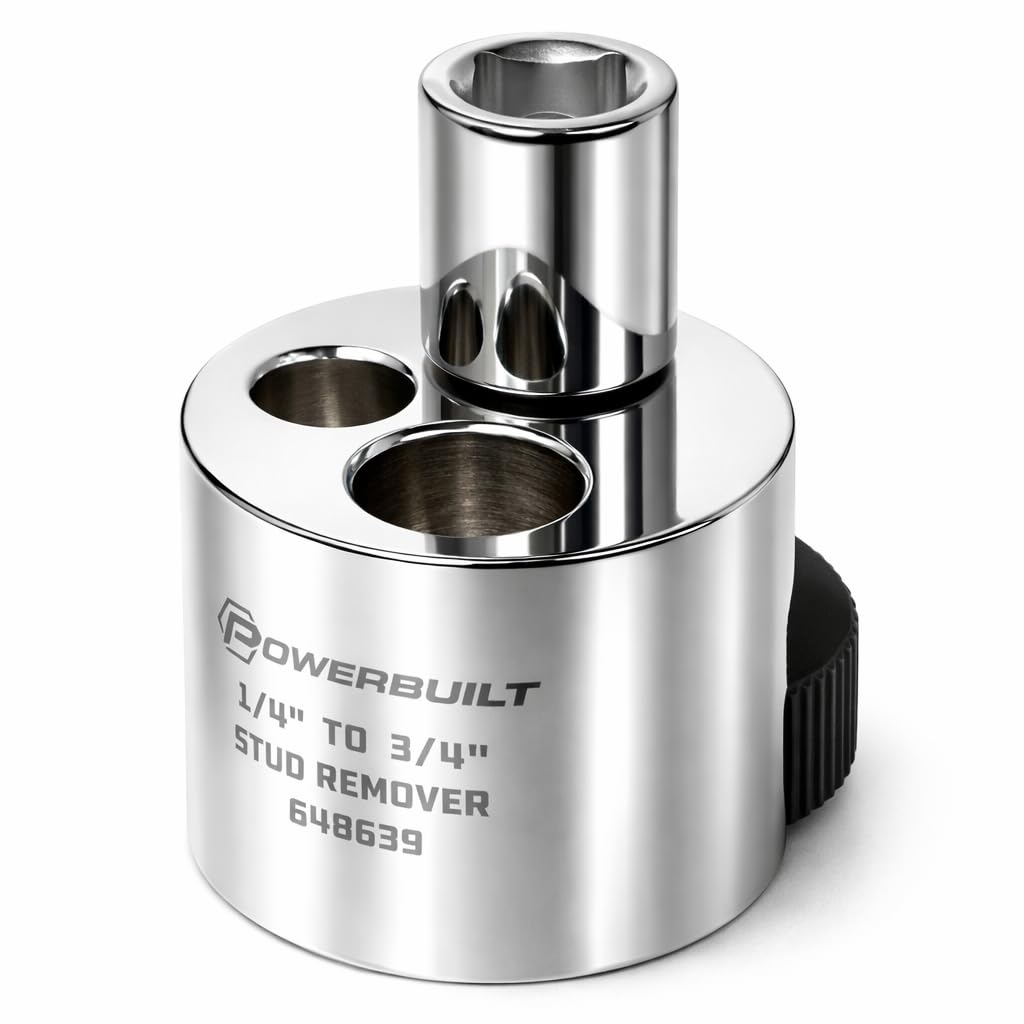
2. Powerbuilt Stud Extractor Tool 648639
This cam-action extractor uses a knurled roller that tightens as you turn, removing seized bolts in five minutes.
It works on studs ranging from 1/4 inch up to 3/4 inch in diameter and runs on any 1/2 inch drive ratchet or breaker bar. The knurled roller uses self-adjusting cam action (a tilting grip that tightens automatically as torque increases) to hold on rusted fasteners. Compared to the AST 203 roller-friction set, this tool digs in harder for extraction but can chew up threads on borderline studs. One reviewer says it removed a bolt that had resisted map gas and a torch.
Extractor for stuck studs
- Cam-action grip tightens automatically as you turn
- Removed bolts that failed with torch and vice grips
- Heavy-duty construction for tough extraction jobs
Requires existing threads
- Needs space to spin — hard to use in confined areas
- Can damage threads if not used carefully on soft studs
Stubborn studs: You regularly face rusted, broken, or seized studs and want a tool that grabs and pulls reliably with a 1/2-inch drive.
Smooth holes: Your working space is extremely tight; you will struggle to get the tool into position.
3. Assenmacher Specialty Tools 203 Stud Remover/Installer Set
Veteran mechanics call this seven-piece kit the best stud remover because its roller friction method (hardened rollers that grip the stud’s outer surface without camming down) preserves threads better than any cam-action tool.
Covering studs from 1/4-inch to 5/8-inch, it uses roller friction that grips without the camming force that can mark up threads. One owner who has used this same set for twenty years says these tools “are the brushes” for the art of stud removal — it even successfully pulled stubborn studs from a 75-year-old flathead engine. The trade-off: roller friction can crush thread peaks on very tight engine studs, causing slippage. A few owners found a simpler drill chuck remover worked better in those edge cases.
Precision remover installer
- Roller friction design minimizes thread damage during removal
- Seven-piece set covers a wide range of stud sizes
- Built to last through years of occasional heavy use
High cost
- Rollers can crush thread peaks on very tight, damaged studs
- Premium cost is higher than basic cam-action tools
Professional use: The pro DIYer or mechanic who wants a quality set that handles everything from turbo studs to vintage flathead engines without destroying threads.
Budget builds: You only need to remove one bolt today and want cheapest approach — a single cam-action puller is more cost-effective.
4. ABN Wheel Stud Installer Tool

Two bearings, two sizes, one smooth stud installer that keeps threads from stretching — it handles studs up to 7/8-inch (2.2cm) and 9/16-inch (1.4cm).
ABN’s kit includes two installer tools — a larger one that handles studs up to 7/8-inch (2.2cm) in diameter and a smaller one for studs up to 9/16-inch (1.4cm). The heavy-duty thrust bearings (a spinning ring inside the tool) ride on the hub so the bolt slides into place without the friction that can stretch and fatigue a stud. One owner says it worked smoothly on a 1997 Dodge 2500 using just a 1/2-inch breaker bar. The biggest catch: this is strictly an installer, not a remover — despite some listing claims. The bearing durability gets mixed reports; a few owners found the bearings wore out or the threads stripped after repeated use.
Universal wheel stud tool
- Rotating bearing design prevents stud stretching and damage
- Two-sized kit covers both 7/8″ and 9/16″ studs
- Works with impact wrench or ratchet for fast installation
Limited torque capacity
- Will not remove broken or damaged studs despite listing claims
- Bearing durability is mixed; some reports of wear after several uses
DIY installs: You need a straightforward wheel stud installer and want two size options in one package, including the larger 7/8-inch size for trucks.
High torque jobs: You need a removal tool — this one installs only, and some buyers complain the listing is misleading about its extraction ability.
5. Shop Iron 16023 Damaged Bolt and Stud Extractor
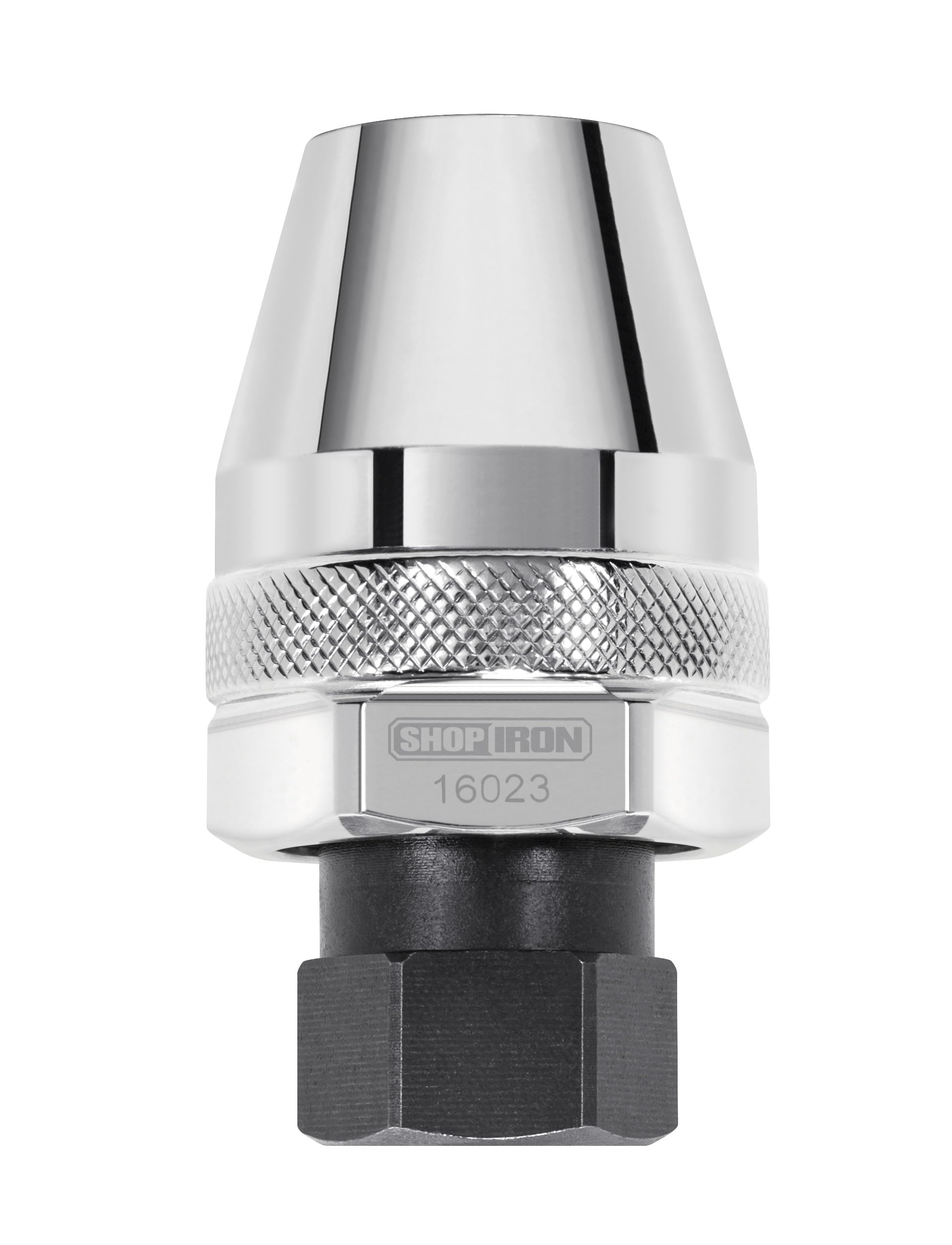
This tiny three-jaw extractor reaches studs no other tool can touch — it was the only tool that could reach a broken bolt on an outboard trim motor where a full-size puller would not fit.
It works on studs from 1/4 inch to 1/2 inch (6-12mm) and runs on a 3/8-inch drive impact gun or ratchet. The three-jaw design self-tightens as you turn counterclockwise, which is how it successfully removed two 40-year-old 10mm exhaust manifold studs from an aluminum head. You need about 2 inches of clearance around the stud for it to operate. The jaws open to a 9/16-inch maximum, so it is strictly for smaller fasteners. A few owners had the tool break on the first attempt with heavy torque, and getting the stud out of the jaws afterward can require serious wrench work.
Damaged bolt extractor
- Compact enough to reach bolts in extremely confined spaces
- Self-tightening three-jaw grip on damaged or rusted studs
- Impact gun compatible for fast removal
Not for standard removal
- Max jaw opening 9/16-inch — small studs only
- Some units broke on first use; construction quality varies
Broken bolts: Anyone working on exhaust manifolds, trim motors, or any rusty fastener in a space where a full-size puller cannot fit.
Routine removal: Your studs are larger than 1/2-inch diameter, or you need a tool for repeated heavy-duty shop work — build quality is mixed.
6. Performance Tool W89414 4-Piece Metric Stud Puller Set
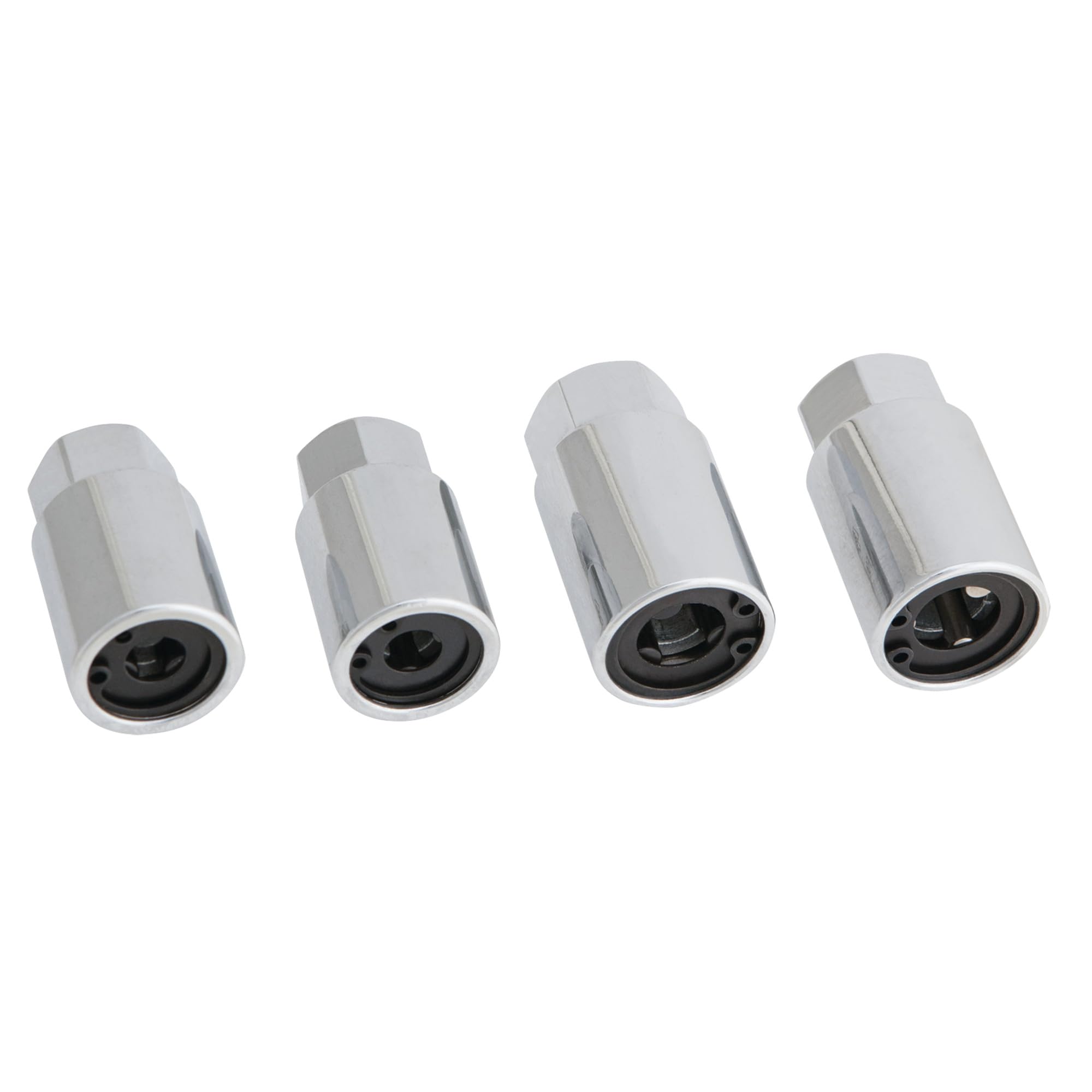
Two metric sizes in chrome vanadium steel for hand-powered stud removal — you turn it with a 3/8-inch or 1/2-inch square drive tool or a 13/16-inch wrench.
This set handles 6mm and 8mm studs and is built from chrome vanadium steel (a durable alloy that resists twisting). It works for removing both right and left threaded studs without damaging the threads, though some owners caution against using it on studs you want to reuse because the tool can chew up the thread surface. Space around the stud is the biggest hurdle — in some engine positions the tool simply cannot fit, and owners mention needing to grind it down or switch methods. This is a hand-use-only tool, so do not reach for an impact driver with it. It is a fair-value basic set, but the Sunex 8804M covers a wider 6mm to 12mm range for not much more.
Metric stud puller set
- Chrome vanadium steel construction for lasting strength
- Works on both right and left threaded studs
- Two sizes cover common metric fasteners
Metric only
- Hand use only — no impact driver compatibility
- Can damage threads on studs you intend to reuse
Metric systems: You need a simple, hand-driven metric set for occasional removal of 6mm or 8mm fasteners and will not be using an impact gun.
SAE applications: You need an impact-rated tool, work on larger fasteners, or want a set that does not mark up threads.
7. Sunex 8804M 1/2-Inch Drive 4-Piece Metric Stud Puller Set
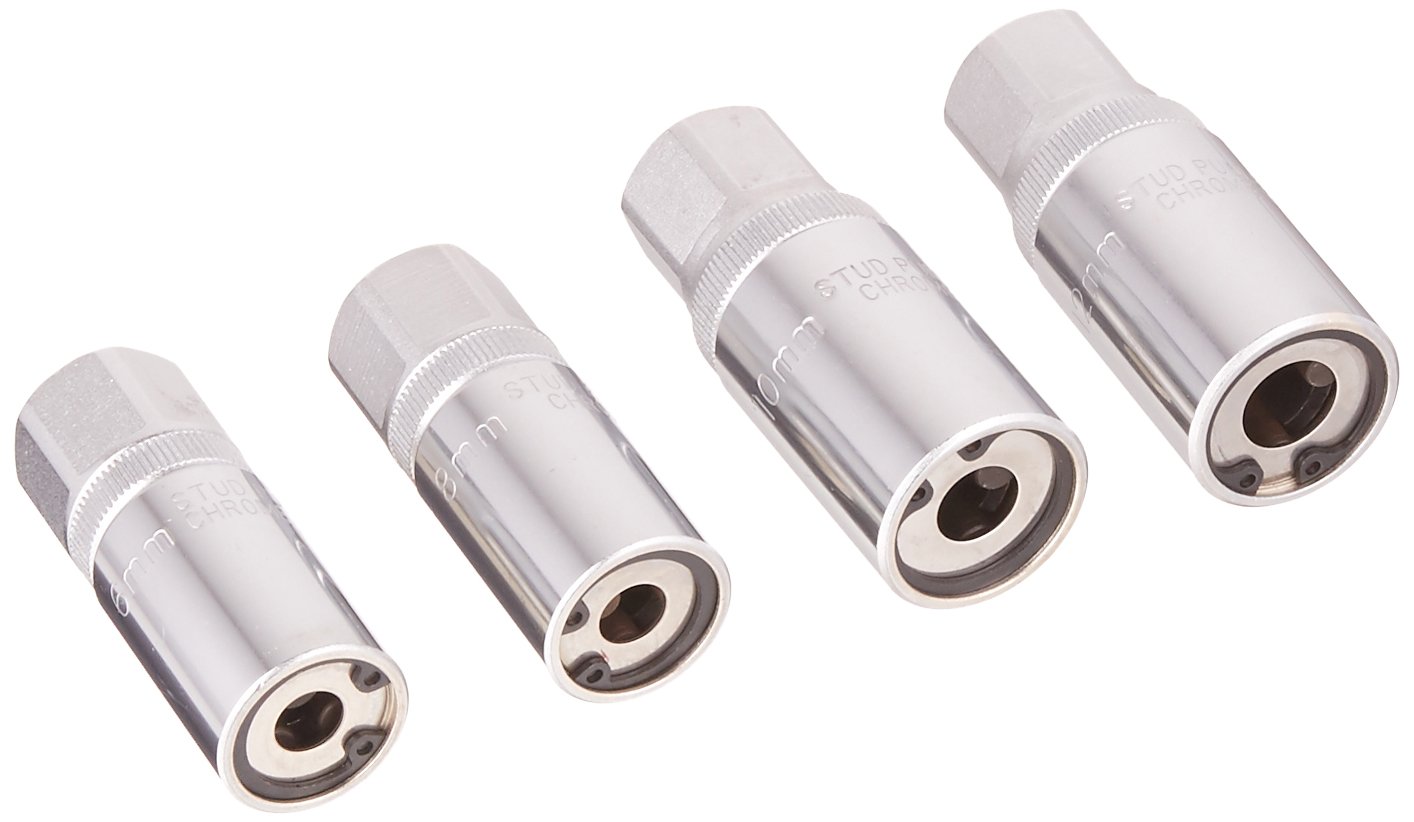
Four metric sizes in a metal case that pull and install without thread damage — it uses a binder mechanism comparable to pro-grade Matco tools.
The Sunex set gives you 6mm, 8mm, 10mm, and 12mm sockets in a metal storage case, covering more sizes than the Performance Tool W89414 (which only goes to 8mm). The binder mechanism (the internal jaws that clamp the stud) is similar to professional Matco tools, and customers note it does not damage threads during installation or removal. It successfully extracted exhaust manifold studs from an old Toyota and pulled ten studs in a single session without issues. The trade-off: a few reviewers point out that the socket broke on the first use, particularly on the smaller sizes under heavy torque. Getting the stud out of the puller after removal takes some finesse, and the warranty is less sturdy than the professional equivalent.
Durable metric puller
- Full metric range from 6mm to 12mm in one case
- Binder mechanism comparable to higher-priced pro tools
- Does not damage threads during removal
No SAE included
- Smaller sockets can break on first use under heavy torque
- Hard to remove the stud from the socket after extraction
Metric fleet: A home mechanic who works on Japanese or European cars and wants a complete metric set without paying Matco prices.
Mixed fasteners: You are tackling heavy rusted fasteners daily or need a tool that can survive repeated high-torque use in a shop.
8. ProForm 66484 Stud Puller

Pulls rocker arm studs (the threaded posts that hold valve rocker arms in Chevy V8 heads) in under two minutes without gouging threads — its thrust bearing spares the studs the damage a washer-and-nut method causes.
The ProForm is a dedicated tool for engine rocker arm studs, particularly on Chevy V8 heads. It uses a thrust bearing that prevents the tool from gouging threads the way a washer-and-nut method would. Shoppers say it pulls rocker studs in under two minutes and works even on studs with damaged threads, which is common on high-mileage engines. The main complaint: no instructions included, and without clear guidance the inner shaft can wedge and strip the nut and shaft threads after one use. One owner had the threads strip on the 15th stud. Greasing every stud before pulling is essential to avoid galling (welding of metal surfaces under pressure).
Compact stud puller
- Fast rocker stud removal — under 2 minutes per stud
- Thrust bearing protects threads from gouging
- Works on studs with existing thread damage
Light duty only
- No instructions included; can be assembled incorrectly
- Threads can strip after repeated use; grease heavily
Small engines: You are replacing rocker studs on a small-block Chevy or similar V8 and want a tool that does the job fast and prevents thread damage.
Heavy equipment: You want a tool for general stud work — this is very specific to engine rocker studs and has limited application elsewhere.
9. OTC 4295 Wheel Stud Service Kit

The C-frame (U-shaped press) that replaces 40 studs on a semi-tractor in hours without removing the hub — it removes and installs 10 studs in 10-15 minutes using a 3/4-inch impact gun.
The OTC 4295 is a C-frame with a forcing screw that removes and installs studs on most hubs, including Class 8 trucks (the heaviest semi-trucks, 33,001+ pounds), without needing to pull the hub. It works on all stud sizes and is powered by an impact wrench, not hydraulics. Owners confirm it removes and installs 10 studs in just 10-15 minutes on real semi-tractors using a 3/4-inch Milwaukee impact. The kit comes with multiple adapters and a blow-molded storage case. The catch: it is not compatible with Bendix disc brake systems at all because there is not enough room to fit the frame. You also need a powerful 3/4-inch impact gun to drive it efficiently — a 1/2-inch gun is painfully slow. Keeping the forcing screw lubricated is critical to avoid thread damage under the high torque.
Complete service kit
- Removes and installs studs without removing the hub
- 10 studs in 10-15 minutes with proper impact gun
- C-frame design works on all sizes including Class 8 trucks
Bulky storage
- Will not fit Bendix disc brake systems
- Requires a 3/4″ impact gun for efficient use
Full repair kit: Fleet mechanics and truck shops that service Class 8 trucks regularly and need a fast, hub-on stud replacement system.
Single tool needs: The home DIYer or anyone working on light vehicles — the C-frame is overkill and will not fit most passenger car hubs.
Understanding the Specs
Cam-Action vs. Roller Friction
This is the core mechanical distinction in stud pullers. A cam-action tool (like the Powerbuilt) has a knurled roller that pinches the stud tighter as you turn. That works brilliantly on rusted or damaged fasteners but can mark up threads if you over-torque. A roller friction tool (like the AST 203) uses a set of hardened rollers that grip the outside of the stud without the camming force — it is gentler on threads but can slip on very smooth or tight studs. Choose cam-action for extraction of badly corroded bolts; choose roller friction when you want to preserve the stud for reuse.
Drive Type and Impact Rating
Not every puller is safe to use with an impact gun. The drive size (3/8-inch or 1/2-inch square drive) tells you what ratchet or socket it connects to. The tool must be explicitly rated for impact use — hand-use-only tools like the Performance Tool set can shatter under impact torque. Heavy truck pullers like the OTC 4295 actually need a 3/4-inch impact to work efficiently. Always match the drive size and impact rating to the tool you own.
FAQ
Will a wheel stud puller also work on exhaust manifold studs?
Can I use a stud installer to remove a broken stud?
What size stud puller do I need for a semi-truck?
Is a hand-use stud puller strong enough for rusted bolts?
What does a thrust bearing do in a stud installer?
Can I use an impact wrench on any stud puller?
How do I keep a stud puller from damaging threads I want to reuse?
What is a C-frame stud puller and when do I need one?
Final Thoughts: The Verdict
For most people, the best wheel stud puller is the Lisle 28950 because it makes heavy truck stud installation easy with its Grade 8 construction and thrust bearing design — it handles up to 22