
Our readers keep the lights on and the garage heater humming. As an Amazon Associate, I earn from qualifying purchases.
Specs are compiled from manufacturer listings and verified buyer reviews and can change over time — please confirm the key details on the product page before buying.
You want your car or truck to look right and handle better, and a set of wheel spacers is one of the simplest ways to do that. They push your wheels outward to fill the fenders, stop bigger tires from rubbing, and sharpen cornering stability—but the wrong spacers can cause wobbles or worse. This guide helps you pick the right kit for your vehicle, from full-size trucks to compact tuners.
I’m Mo Maruf — the founder and writer behind GoCarLife. This guide is built by comparing the manufacturers’ published specifications and the patterns across verified customer reviews, so you get each pick’s real strengths and trade-offs instead of marketing spin.
Whether you drive an F-150 that needs a wider track (the distance between the tires) for big tires or a Miata that needs just a few millimeters of brake clearance, this breakdown of the wheel spacers for cars market steers you to a safe, durable, and well-reviewed kit for your specific build.
Our Picks at a Glance

How To Choose The Best Wheel Spacers for Cars
Picking a wheel spacer requires matching the bolt pattern, thickness, center bore, and hardware. You need the right thickness, the correct center bore (the hole in the middle of your wheel), and hardware that won’t fatigue. Nail down these three things before you buy.
Hub-Centric vs. Lug-Centric
A hub-centric spacer has a raised lip that fits snugly into the wheel’s center bore, centering the wheel perfectly on the hub. This eliminates the vibration and shimmy that lug-centric spacers can cause, where the lug nuts alone bear the centering load. For any daily driver or highway vehicle, hub-centric is the only choice for a smooth, safe ride.
Material and Manufacturing
Nearly all quality spacers are machined from 6061-T6 aluminum billet, not cast. Billet aluminum is stronger, more durable, and less prone to cracking under stress. Look for a black anodized finish for corrosion resistance against road salt and moisture.
Bolt Pattern and Center Bore
Your vehicle has a specific bolt pattern (measured as the number of lugs by the diameter of the circle they form, like 5×114.3mm), a center bore (the hole in the middle of your hub), and a stud thread pitch (like 12×1.5 or 14×2). All three numbers must match exactly. An incorrect center bore forces the spacer to be lug-centric, inviting vibration. Double-check these specs against your year, make, and model before ordering.
Quick Comparison
| Model | Best For | Thickness | Bolt Pattern | Hub Bore | Amazon |
|---|---|---|---|---|---|
| KSP 6×135★ Best Overall | Full-size Ford trucks | 1.5″ (38.1mm) | 6x135mm | 87.1mm | Amazon |
| ECCPP 5×4.75Best Value | Classic GM muscle & SUVs | 1″ (25mm) | 5×120.7mm | 70.5mm | Amazon |
| CMO 10mm 4×100Tuner’s Choice | Compact tuners (Miata, Corolla) | 10mm | 4x100mm | 54.1mm | Amazon |
| BDFHYK 5×4.5 1.5″ | Mustangs, Rangers, Explorers | 1.5″ (38mm) | 5×114.3mm | 70.5mm | Amazon |
| dynofit 5×4.5 1″ | Honda & Acura sedans | 1″ (25.4mm) | 5×114.3mm | 64.1mm | Amazon |
| Dynofit 2″ 5×4.5 | Jeeps & older Fords | 2″ (50.8mm) | 5×114.3mm | 80.5mm | Amazon |
| Richeer 6×5.5 1.25″ | GM full-size trucks (Silverado) | 1.25″ (31.75mm) | 6×139.7mm | 78.1mm | Amazon |
| FLYCLE 6×5.5 2″ | GM trucks needing extra clearance | 2″ | 6×139.7mm | 78.1mm | Amazon |
In‑Depth Reviews
1. KSP 6×135 Wheel Spacers for F-150
Our pick — over 4.5★ from 950+ verified ratings; the strongest balance of quality and price.
A 4-piece forged kit built for the heavy half-ton crowd that wants stance without compromise.
This is the set that truck owners on the forums keep coming back to. Machined from a single billet of 6061-T6 aluminum (a solid block of heat-treated alloy, not a poured casting), each 1.5-inch (38.1mm) spacer is both lighter and significantly stronger than a cast alternative. The black anodized surface adds a layer of corrosion resistance against winter road salt. The hub bore is a generous 87.1mm, fitting the tight factory hubs on 2004-2014 F-150s, 2003-2014 Expeditions, and Navigators.
Every one of the 987 reviews sums up the same story: quality (71 mentions) and fit (47 mentions) are the two things owners praise most. The 10.9 grade geomet bolts are heat-treated to eliminate vibration risk, and the included thread locker keeps those fasteners from backing out. Buyers report setups like “1.5” KSP spacers on F-150 with 2.5″ leveling kit” working without a single rub, and another owner drove 16,000 miles with zero cracks or issues.
At 19.05 pounds the set is substantial, but that heft translates into confidence on the road. The honest trade-off is thickness—at 1.5 inches, these push your wheels out significantly. Make sure your fenders and tires have the clearance, and note the recommended torque spec of 85-95 FT/LBS (foot-pounds, the standard unit for tightening fasteners with a torque wrench).
F-150 bolt-on ease
- Forged 6061-T6 construction resists cracks better than cast alternatives.
- Heat-treated 10.9 grade studs eliminate vibration at highway speed.
- Black anodized finish holds up against corrosion and looks clean.
thickness limits clearance
- The 1.5-inch thickness may require fender trimming on lower trucks.
- Does not fit models with a dual rear wheel setup.
truck lifters: F-150, Expedition, and Navigator owners who want a 1.5-inch hub-centric spacer with proven long-term durability.
stock suspension: At nearly 20 pounds, the set is on the heavier side—not a problem on a truck, but irrelevant for smaller cars.
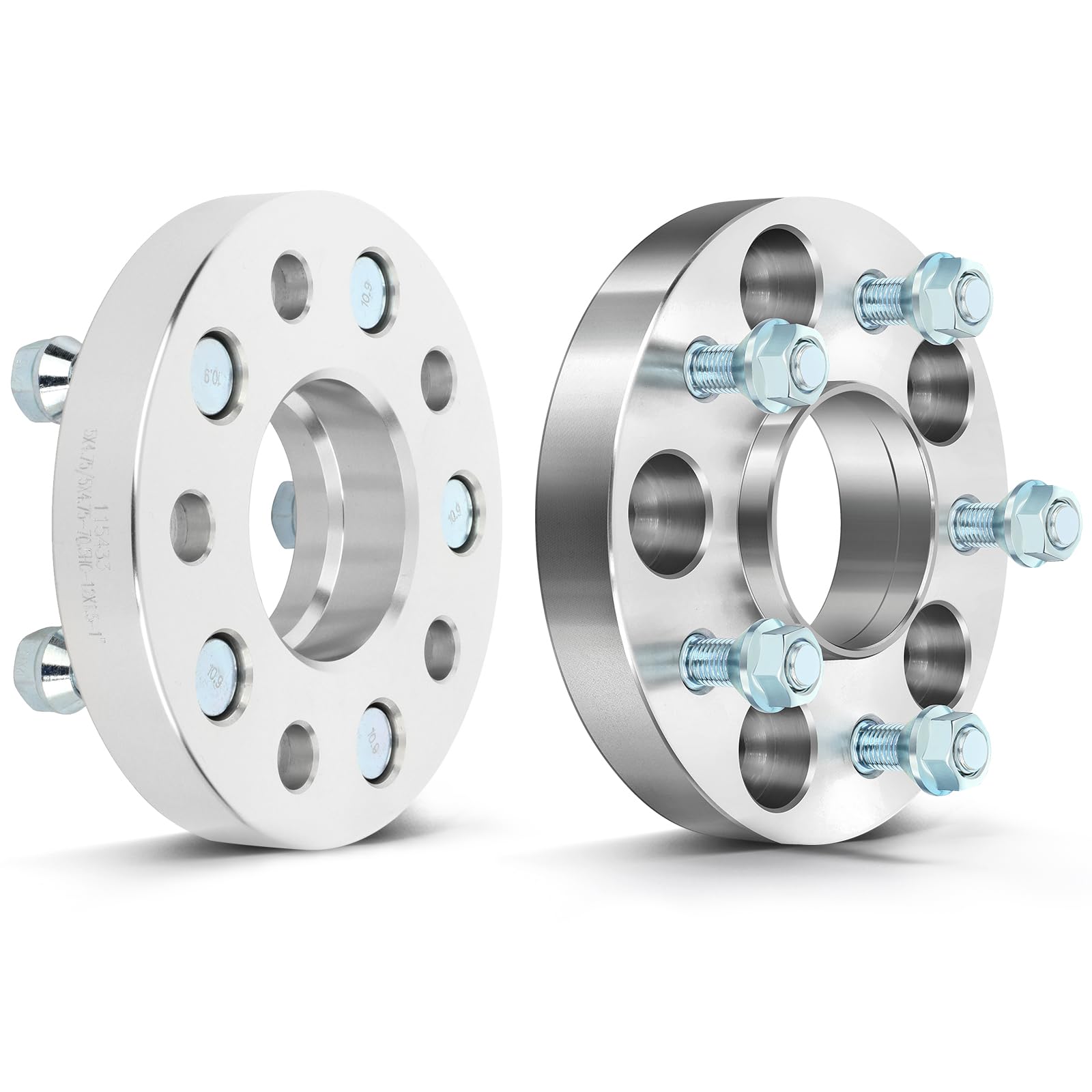
2. ECCPP 2PCS 1in 5×4.75 Wheel Spacers
An affordable two-piece set that covers decades of GM and Chevy muscle.
With a 1-inch (25mm) thickness and a 70.5mm center bore, this set fits an enormous range of vehicles—think 1964-1987 GTOs, 1968-2013 Corvettes, 1987-2005 Blazers, and 1990-2005 Jimmys. The billet T6 aluminum construction keeps weight down to just 5.8 pounds for the pair, while the 10.9 grade pre-installed studs handle the torque demands of a V8-powered chassis.
Fit (25 mentions) and quality (25 mentions) are the most-discussed aspects, and for good reason. One owner said they “fit perfectly on my Blazer 2wd front Hubs with 70.5 mm center bore.” Another, with three years on his first set, reports “been running my 1st set for about 3 years now with 0 issues.” The finish is painted black, and the machining is accurate enough to stay hub-centric rather than lug-centric. Durability draws mixed feedback—a small slice of owners note that the painted finish can wear faster than anodized units—so a dab of anti-seize (a paste that prevents metal-to-metal seizure) on the hub mating surface is a good idea if you live in a salt-belt state.
thin profile install: For the price of a single mid-range spacer, you get a proven 2-piece kit that has gathered nearly 400 ratings over eight years on the market. The catch is you get only two spacers—if you need four, you will need to buy two sets.
flush fitment: You need a reliable, budget-friendly option for a classic GM car, Corvette, or S10-era SUV.
vibration sensitive: Anyone needing four spacers at once should total the cost of two pairs before buying.
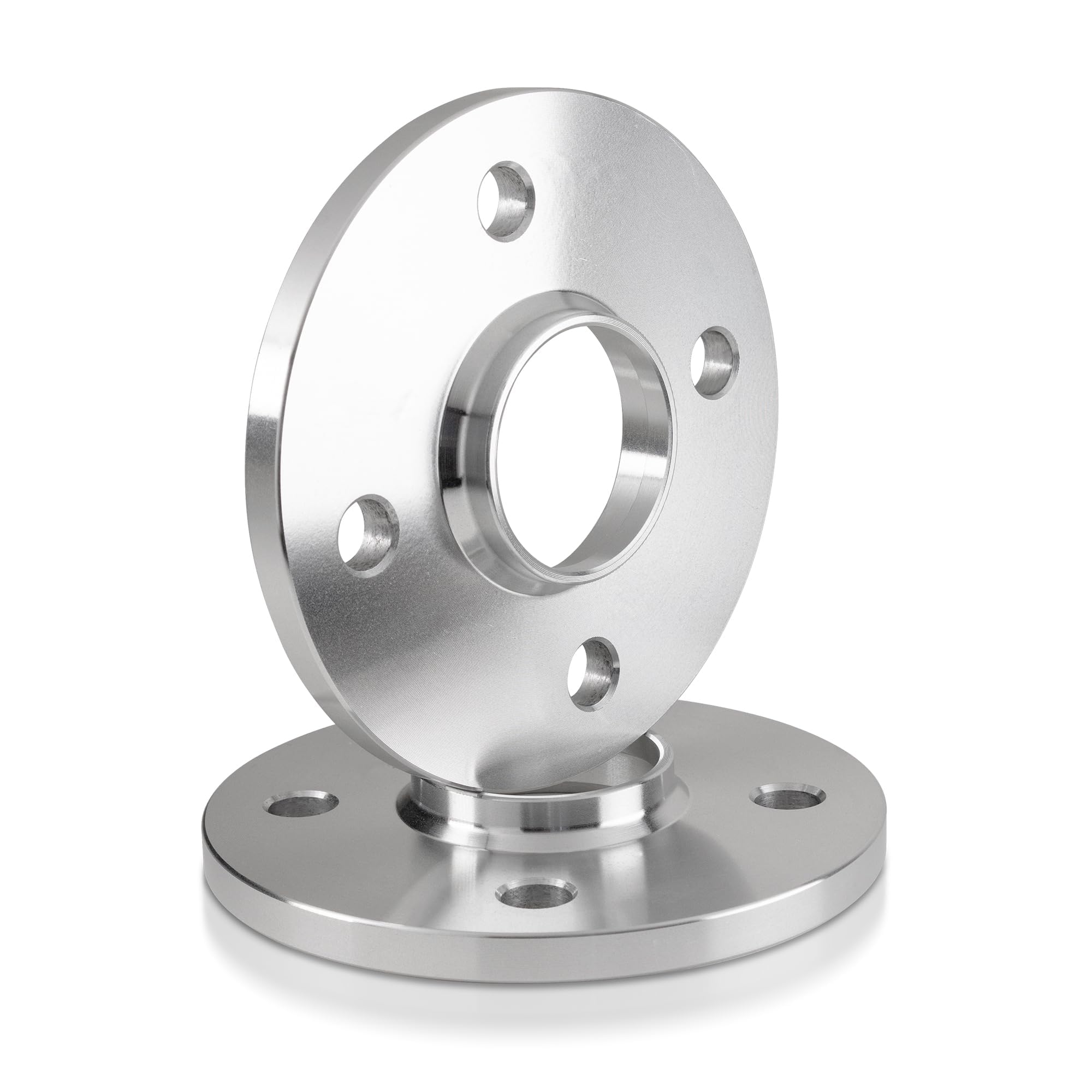
3. CMO 10mm 4X100 Wheel Spacers
A razor-thin 10mm spacer for imports that just need a nudge to clear big brakes.
For a Miata, Corolla, or Scion xB, every millimeter of clearance counts. These 10mm hub-centric spacers use a 54.1mm bore with a machined lip that fits the factory hub snugly. The result is zero wobble at speed.
Fitment (35 mentions) is the thing owners talk about most, and the reviews back it up. One owner running them on the front of a Miata to clear big brakes notes “overall quality is fantastic with no issues.” Another put them on a 1989 Toyota Corolla GTS and said “fits perfectly.” The catch is one that matters: these are 10mm spacers, meaning you will need extended studs, as the stock studs will not provide enough thread engagement for the lug nuts. The maker’s note says “EXTENDED STUDS ARE REQUIRED!” in all caps—do not skip that step.
hubcentric precision: At just 10mm, this is the thinnest spacer on the list. It is perfect for a subtle stance correction but will not give you the aggressive fender-flush look a 1.5-inch spacer provides. Durability is reported as mixed by a few owners, with an occasional report of lug nuts backing off—proper torque and Loctite (a brand of thread-locking adhesive) solve that.
tight tolerances: 1990-2005 Miata, 1993-2002 Corolla, 2004-2007 Scion xA/xB owners who need a thin spacer to clear brake calipers.
aggressive stance: Anyone who wants a “bolt-on and forget” install—extended studs are mandatory here.
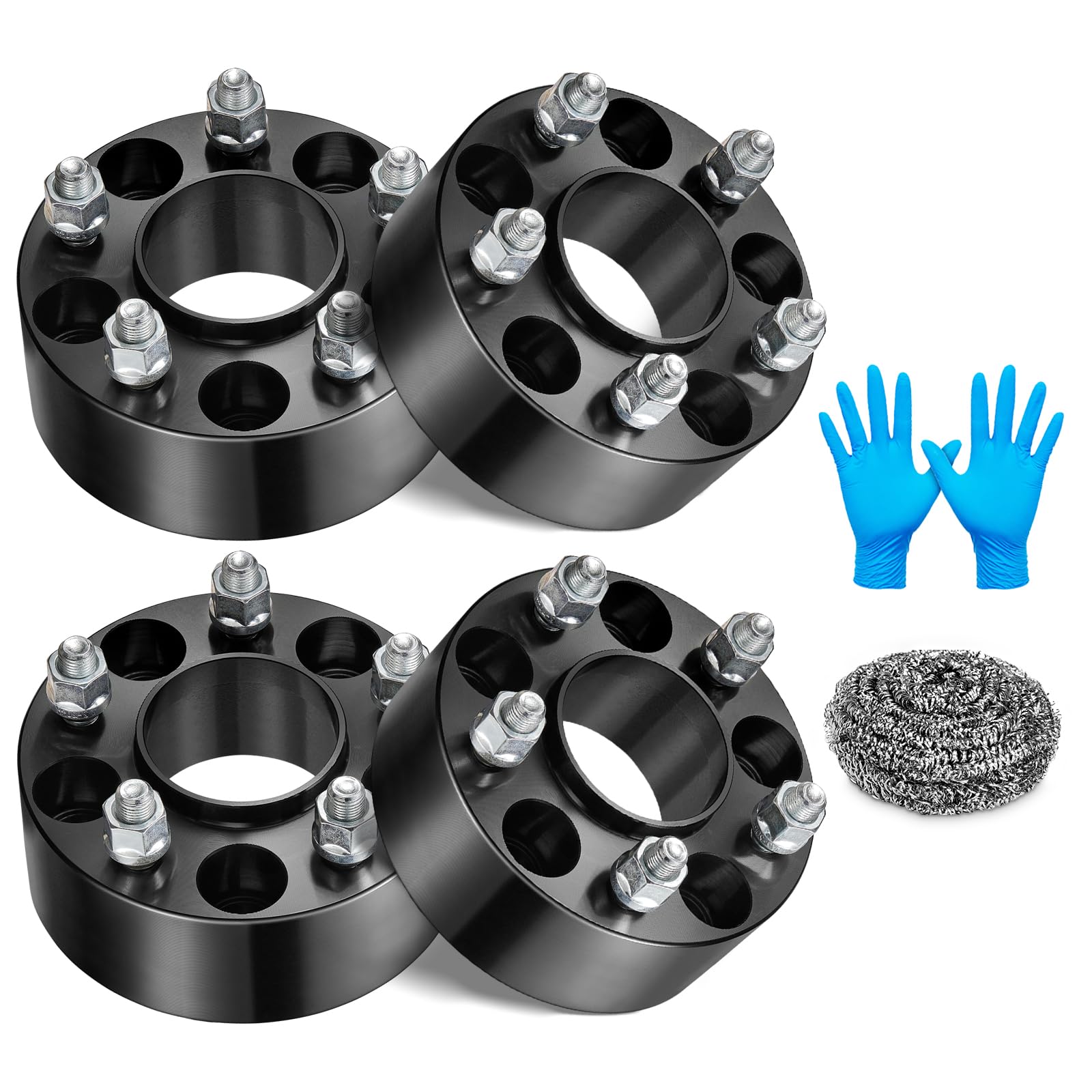
4. BDFHYK 1.5″ 5×4.5 Wheel Spacers
A 4-piece 1.5-inch set that covers classic Ford pony cars and Rangers with serious authority.
These spacers are forged from aviation-grade 6061 aluminum and then CNC-integrated (machined by a computer-controlled cutter) into their final shape. The surface gets an anodic oxidation treatment (a chemical process that hardens and seals the metal) for wear resistance, and the 10.9 class bolts are certified under the IATF 16949:2016 quality standard—a detail that signals serious manufacturing discipline. The 70.5mm center bore and 1/2-20 thread pitch match a massive range: 1964-2014 Mustangs, 1983-2012 Rangers, 1991-2010 Explorers, and 1992-2011 Crown Victorias.
Fit (24 mentions) and build quality (21 mentions) are the two most-discussed aspects. Owners mention “30k miles so far with zero issues” and note the factory studs sit almost flush with the spacer surface, which means no grinding required. The 14.19-pound set is significantly lighter than the KSP kit despite the same 1.5-inch thickness, because it serves a different bolt pattern and hub bore. The downside is that the painted exterior finish is less durable long-term than anodized options—a cosmetic detail, not a safety one, but note if you live in a corrosive climate.
budget build: You drive a Mustang, Ranger, Explorer, or Crown Victoria and want a proven 1.5-inch spacer that clears factory studs without modification.
high speed: If your vehicle lives in a road-salt state, an anodized spacer may hold up better over a decade.
5. dynofit 1″ 5×4.5 Wheel Spacers

A four-pack of 1-inch hub-centric spacers that cover two decades of Honda and Acura sedans.
With a 64.1mm hub bore, these spacers are designed specifically for the Honda/Acura family—2003-2025 Accord, 2006-2025 Civic, 1997-2025 CR-V, and nearly every TL, TSX, and ILX. The 1-inch (25.4mm) thickness is the balance for most daily drivers: enough to push the wheels flush with the fenders, but not so aggressive that you need to roll the fender lips (bend the metal inward for clearance).
Quality (40 mentions) is the top positive aspect, and the “forged manufacturing methods” are the reason. Unlike cast spacers, forged 6061-T6 aluminum cannot split in half under load. The 625 ratings and a 4.6-star average tell a consistent story. One owner with a lowered 2018 Civic Hatch Sport says the 20mm version provides “perfect fitment, no rubbing.” Durability gets mixed marks—a few customers note studs breaking during unmounting, which points to overtightening or corrosion between steel studs and the aluminum spacer. A smear of anti-seize (a corrosion-preventing paste) on install prevents that.
daily driver: Older and current Honda/Acura owners who want a reliable 1-inch hub-centric spacer with a 64.1mm bore.
wide tires: The 1-inch thickness means the stock studs are retained, but the spacer studs may sit 1/4-inch proud—still safe with proper torque, but worth confirming your wheels have deep enough pockets.
6. Dynofit 2″ 5×4.5 Wheel Spacers

A 2-inch brute that gives Jeeps and older Fords the aggressive stance they deserve.
This is the thickest spacer on the list, and it is built for off-road and full-size applications. With an 80.5mm hub bore and 1/2-20 thread pitch, it covers 1984-2013 Jeep Cherokee XJ, 1997-2006 Wrangler TJ, 1992-1998 Grand Cherokee ZJ, plus the entire Ford stable of Mustangs, Rangers, Explorers, and Crown Victorias. The 2-inch (50.8mm) thickness is enough to clear massive tires and suspension components on lifted rigs.
Crafted from forged 6061-T6 aluminum, the spacers use Grade 10.9 Dacromet studs (studs coated with a zinc flake finish for corrosion resistance that are designed to deform rather than snap under extreme stress)—a critical safety feature. The 874 ratings lean heavily positive on quality (27 mentions) and installation (19 mentions), with owners on Ford Aerostar Vans reporting “no issues after 2,000+ miles on pavement and muddy dirt roads.” Durability does get flagged as negative by 16 owners, with some reporting bolts breaking. The honest take is that 2-inch spacers place enormous leverage on the hardware—proper torque (75-85 FT/LBS) and red Loctite are non-negotiable here.
off-road look: You have a lifted Wrangler, Cherokee XJ, or older Mustang that needs a 2-inch spacer for tire clearance and a wide track.
low ride height: Anyone who wants a simple install—this thickness requires careful torque, thread locker, and periodic re-checking.
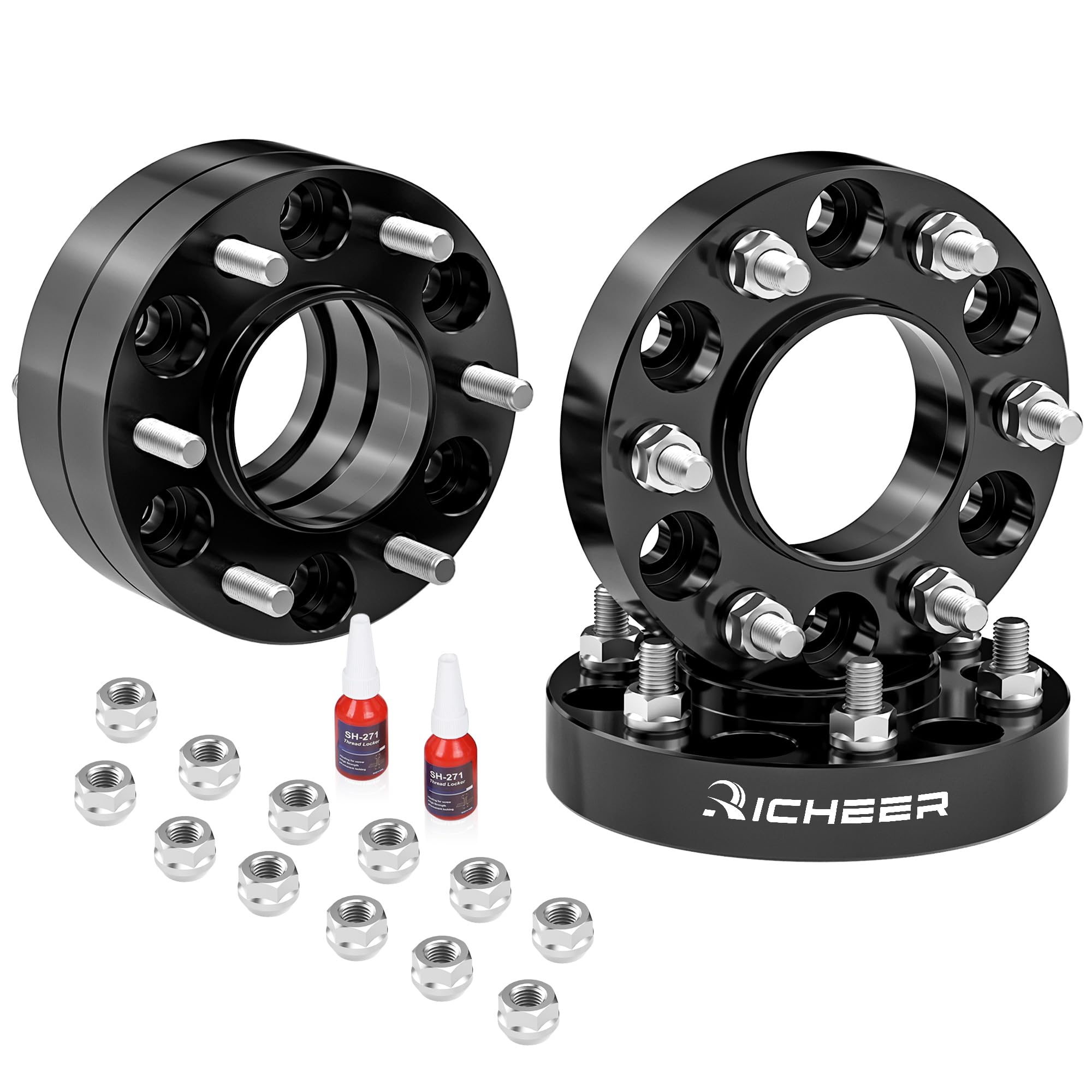
7. Richeer 1.25″ 6×5.5 Hubcentric Spacers
A 4-piece forged kit purpose-built for the GMT800/900 generation of Chevy and GMC trucks.
This set covers the massive GM truck family—1999-2025 Silverado 1500, 1995-2024 Tahoe, 2000-2024 Yukon, and the Cadillac Escalade. The 1.25-inch (31.75mm) thickness is a versatile middle ground: it gives the truck a noticeably wider stance but does not push the tires so far out that they hit the fender lips on a stock-height truck. The 78.1mm hub bore and M14x1.5 threaded studs are the exact spec for these platforms.
Quality (45 mentions) dominates the feedback, and the 12.9 grade studs are a step above the 10.9 grade you see on most budget kits. The CNC automatic processing ensures that each spacer’s hub-centric lip is machined to a tight tolerance, which eliminates vibration. One owner on a 2014 Silverado 1500 2WD reports “after 100 miles and up to 85 mph, no vibration or issues.” The rub is that fit (38 mentions) draws mixed reviews. Some owners find the hub-centric lip slightly oversized, requiring a gentle tap with a mallet to seat fully—a sign of tight tolerances, not poor quality, but worth knowing before install.
Chevy/GMC trucks: Silverado/Sierra 1500, Tahoe, Yukon, and Escalade owners who want a 1.25-inch forged spacer with premium 12.9 grade studs.
Ford specific: The tight hub-centric fit may require gentle persuasion during installation.
8. FLYCLE 6×5.5 2″ Wheel Spacers

A 2-inch, 4-piece set that pushes GM full-sizers to the limit of fender clearance.
For the same truck family as the Richeer set (1999-2026 Silverado, 2000-2026 Yukon, 1999-2026 Escalade), this FLYCLE kit goes to 2 inches of thickness. The result is a genuinely aggressive stance—the wheels sit well past the fenders, creating that “Bro-Dozer” look. The 78.1mm hub bore, 14×1.5 thread pitch, and 12.9 class studs mirror the premium build of the Richeer set, but the extra 0.75 inch of thickness changes the driving feel noticeably.
Quality (30 mentions) and fit (28 mentions) lead the feedback, with owners noting “excellent machining and hubcentric design ensure secure fit” and reporting “no vibrations.” Weight hits 23.4 pounds for the set, which is the heaviest on this list—that heft is a reminder that 2-inch spacers put your wheels and tires further out, amplifying the leverage on every stud. The recommended torque of 85-90 FT/LBS is tighter than the 75-85 range of the Dynofit 2-inch set, reflecting the larger stud diameter. Durability draws mixed feedback, and one owner’s candid review warns about aluminum spacers that “failed to torque, causing roadside emergencies”—a note that applies to any aluminum spacer at 2-inch thickness, not just this one. Use thread locker and re-torque after 100 miles.
spacer width: You want the maximum possible stance on a Silverado, Suburban, or Yukon and are prepared to check torque regularly.
hub bore match: Anyone who wants a simple install—2-inch aluminum spacers demand careful torque + Loctite + re-torque discipline.
Understanding the Specs
Bolt Pattern (PCD)
This is the number of lug nuts and the diameter of the circle they form. A “5×114.3mm” pattern means five lugs on a 114.3mm diameter circle. The spacer’s bolt pattern must match both your vehicle’s hub and your wheel’s mounting face exactly. A mismatch means the wheel will not bolt up at all.
Hub Bore and Hub-Centric Design
The hub bore is the large center hole on the spacer. A hub-centric spacer has a precision-machined lip that fits snugly into the wheel’s center bore. This centers the wheel perfectly on the hub, eliminating the vibration you get from lug-centric spacers that depend on the lug nuts alone for centering. For any vehicle driven on the highway, hub-centric is the gold standard.
FAQ
Are wheel spacers safe for daily driving?
Do I need extended studs for wheel spacers?
Will wheel spacers cause my tires to rub?
What is the difference between hub-centric and lug-centric spacers?
What does 6061-T6 aluminum mean?
Can I use wheel spacers on a lifted truck?
Will wheel spacers affect my alignment?
What torque should I use for wheel spacer lug nuts?
Final Thoughts: The Verdict
Across the board, the wheel spacers for cars winner is the KSP 6×135 set because it combines forged 6061-T6 build quality, a proven fit for the massive F-150 family, and a crowd favorite rating that beats every other full-size truck spacer on the market. If you want an affordable entry point for a classic GM muscle car, grab the ECCPP two-piece kit. And for tuners who need a thin 10mm spacer for brake clearance on a Miata or Corolla, the CMO 4×100 set is the one to reach for.
How We Picked
We do not accept paid placement. Every pick is matched to a real buyer and a real use-case; we do not hands-on test units.
Sources & Methodology
Specifications: manufacturer listings and product documentation. Review insights: verified customer reviews, as of July 2026. Pricing: not shown on this page (it changes often); check the current price via the retailer link.
As an Amazon Associate, GoCarLife earns from qualifying purchases. This does not affect which products we feature.