
Our readers keep the lights on and the garage heater humming. As an Amazon Associate, I earn from qualifying purchases.
Specs are compiled from manufacturer listings and verified buyer reviews and can change over time — please confirm the key details on the product page before buying.
Frozen toes and soaked socks can end a ride before it begins. The right pair of snowmobile boots keeps your feet warm, dry, and planted on the running boards through the worst of winter. When you are sitting on a sled at -20°F wind chill, what actually matters is waterproofing that holds up to snow spray, insulation that works, and a sole that grips ice—this guide focuses on those three things.
I’m Mo Maruf — the founder and writer behind GoCarLife. This guide is built by comparing the manufacturers’ published specifications and the patterns across verified customer reviews, so you get each pick’s real strengths and trade-offs instead of marketing spin.
From trail groomers to backcountry explorers, these are the waterproof snowmobile boots that riders trust to keep their feet warm and dry in deep powder and biting cold.
Our Picks at a Glance


How To Choose The Best Waterproof Snowmobile Boots
Snowmobile boots have a harder job than regular winter boots. You are not just walking through snow — you are standing on a vibrating machine moving 60 mph with snow and ice spraying at your feet. A good pair needs to seal out that moisture, hold heat, and grip the running boards.
Waterproofing Is Non-Negotiable
Look for a sealed waterproof membrane or a waterproof construction rather than a simple water-resistant finish. Snow spray at speed finds every tiny gap, so a boot with a proper waterproof layer and sealed seams is the difference between dry feet all day and a cold, soggy ride home.
Insulation Weight vs. Temperature Rating
Insulation is measured in grams (200g, 400g, 600g) of synthetic fill, but some brands publish a temperature rating instead, like -40°C. Lighter insulation works for active trail riding where you generate heat; heavier insulation suits deep-cold or low-activity riding like ice fishing alongside your sled.
Traction on Ice and Running Boards
Your feet move between the running boards and the snow all ride long. An aggressive lugged outsole gives you grip on icy surfaces, and a concave or kicked-out footprint helps keep your boots planted on the boards. A slippery outsole turns a fun ride into a dangerous one.
Quick Comparison
| Model | Best For | Insulation | Closure | Key Feature | Amazon |
|---|---|---|---|---|---|
| North Face Chilkat V★ Best Overall | Urban & trail versatility | 200g | Lace | Heel ridge for crampons | Amazon |
| KLIM Adrenaline GTXAlso Great | Serious snowmobilers | Premium | Lace | Gore-Tex waterproofing | Amazon |
| FXR X-Cross Pro BOAPremium Pick | Dial-fit convenience | 600g | BOA dial | -40°C rating | Amazon |
| Rocky Original Ride | All-day work & riding | 200g | Slip-on | 8-layer comfort system | Amazon |
| LaCrosse Aero Insulator | Extreme cold durability | Aeroform | Cinch strap | Flexible neoprene shell | Amazon |
| KEEN Revel 4 Polar | Wide feet & hiking | Polar insulation | Speed lace | Wide toe box | Amazon |
| Kamik Iceland | Snowmobiling & ice fishing | 3M Thinsulate | Lace | Genuine leather & rubber | Amazon |
| Merrell Speed Strike 2 | Winter hiking crossover | Thermo | Lace | Sticky trail outsole | Amazon |
| Kamik Greenbay 4 | Budget-friendly warmth | 8mm Thermal Guard | Bungee lace | -40°F rating | Amazon |
| SOREL Buxton Lite | Wet snow & city wear | Lightweight | Lace | Waterproof duck rubber | Amazon |
| Ice Fields Darrell | Deep snow value | Thinsulate | Velcro strap | Calf-high shaft | Amazon |
In‑Depth Reviews
1. The North Face Men’s Chilkat V Lace-up Waterproof Snow Boot
Our pick — over 4.5★ from 400+ verified ratings; the strongest balance of quality and price.
The lightweight workhorse that survived a year of six-day workweeks on its feet.
The Chilkat V earns its place with pure versatility. Its 200g of premium insulation (a lightweight synthetic fill that traps heat) keeps you warm for daily winter wear yet light enough to feel barely there, and one owner’s experience tells the durability story best: “Shoes lasted over a year with 6 day workweeks with long hours!” The heel ridge is built to work with snowshoes and crampons (spiked traction devices), and a D-ring lets you attach gaiters, making it genuinely useful off the sled as well as on it.
Owners consistently found these boots handle snowstorms, mud, creeks, and light snow well, with waterproofing and traction holding up in real conditions. The main catch is the fit across the top of the foot — it runs small there, so sizing up half a size is the repeated advice. One owner noted they tend to slide in heavier snow and uneven terrain, and the top heel pull loops tore out quickly, though the bottom loops held. For daily winter wear that crosses between trail and town, this is a strong all-rounder.
Daily versatility: The 200g insulation keeps it light and warm for everyday wear, while the heel ridge and D-ring expand its use to snowshoes and gaiters.
Grab it if: you want one waterproof boot that moves easily between the trail, the sled, and the city.
Size up: the fit runs small across the top of the foot, so a half size up is the safe move.
2. KLIM Adrenaline GTX Winter Waterproof Snowmobile Boots
The snowmobile-specific boot that riders forget they are wearing because their feet never get cold.
This is the boot built by a brand that started making snowmobile apparel in 1999 and has spent two decades solving exactly the problem you have. Riders who wore them all riding season report they “never had to even think about my feet being cold” — which is the highest praise a winter boot can earn. The Gore-Tex waterproofing keeps snow spray and slush out, and the fit is light enough that you barely notice the weight, even before the leather breaks in.
The main trade-off is the stiffness, which requires a break-in period. They arrive stiff and need a break-in period before they feel fully comfortable, and a few owners found the lacing system vulnerable — one lace loop broke after a single wear. A damaged insole on delivery is also a possibility, so inspect them when they arrive. But for riders who want a boot purpose-built for the sled, the warmth and dryness protection is exactly what the long season demands.
Rider verdict: A purpose-built sled boot from a brand that knows the sport, with waterproofing and warmth that riders trust for the whole season. The stiffness and lace-loop fragility are the honest trade-offs.
Reach for this if: you spend real hours on a sled each winter and want a boot engineered for that exact ride.
Look elsewhere if: you want a zero-break-in boot you can lace up and forget about immediately.
3. FXR Men’s X-Cross Pro BOA Winter Snow Boots
A twist of the dial replaces fumbling with frozen laces on the trail.
The standout here is the BOA M3 single reel system, which micro-adjusts the fit with a dial you can operate while wearing thick gloves. That matters when you are parked on the trail and your fingers are stiff. Underneath, a HYDRX waterproof membrane and 600g of insulation rated to -40°C seal out the cold at the extreme end of the temperature scale, while a 20mm EVA midsole absorbs the vibration and impacts of rough terrain.
The fur-lined interior is plush and keeps warmth locked in during long, low-activity riding sessions, and owners love the aggressive look and the convenience of twist tightening. The fit runs small, so sizing up is the recurring advice — one buyer found a labeled men’s 6.5 fit like a women’s 6.5. The concave outsole with toe and heel kicks gives you that planted feel on running boards and ice.
Dial-in comfort: The BOA system is the defining feature here, letting you adjust fit in seconds without removing gloves. The 600g insulation makes this one of the warmest boots in the lineup.
Best for: riders who want instant, precise fit control and extreme-cold insulation without the bulk.
Watch the sizing: order a half to full size up, as several owners found the fit tighter than expected.
4. ROCKY Original Ride 200G Insulated Waterproof Wellington Boot

A slip-on wellington that has earned an eight-year lifespan in daily use.
This boot is built for the long haul. The full-grain leather foot and 1,000 denier nylon upper are tough, and the 8-layer comfort system pairs support with cushioning for all-day wear. One owner’s first pair lasted eight years of daily use — a durability record few winter boots match. The 200g of Thinsulate insulation keeps you warm without turning the boot into a sweaty furnace, and the waterproof construction keeps your feet dry in slush and snow.
The genuine trade-off is the fit. Several owners found the boot runs narrow, to the point one called it “narrow as an arrow,” so wide-footed riders should size up or skip it. The heel cradle caused discomfort for one buyer until removed. It is also on the stiffer side through the calf. But the slip-on convenience and the proven longevity make this a strong pick for riders who want a do-it-all boot that lasts.
Built to last: The full-grain leather and 1,000 denier nylon combine with an 8-layer comfort system for serious all-day durability.
Grab it if: you want a tough slip-on that can handle years of riding, work, and cold weather.
Think twice if: you have wide feet or want a flexible, low-maintenance fit — this one runs narrow.
5. LaCrosse Aero Insulator Men’s Snow Boots
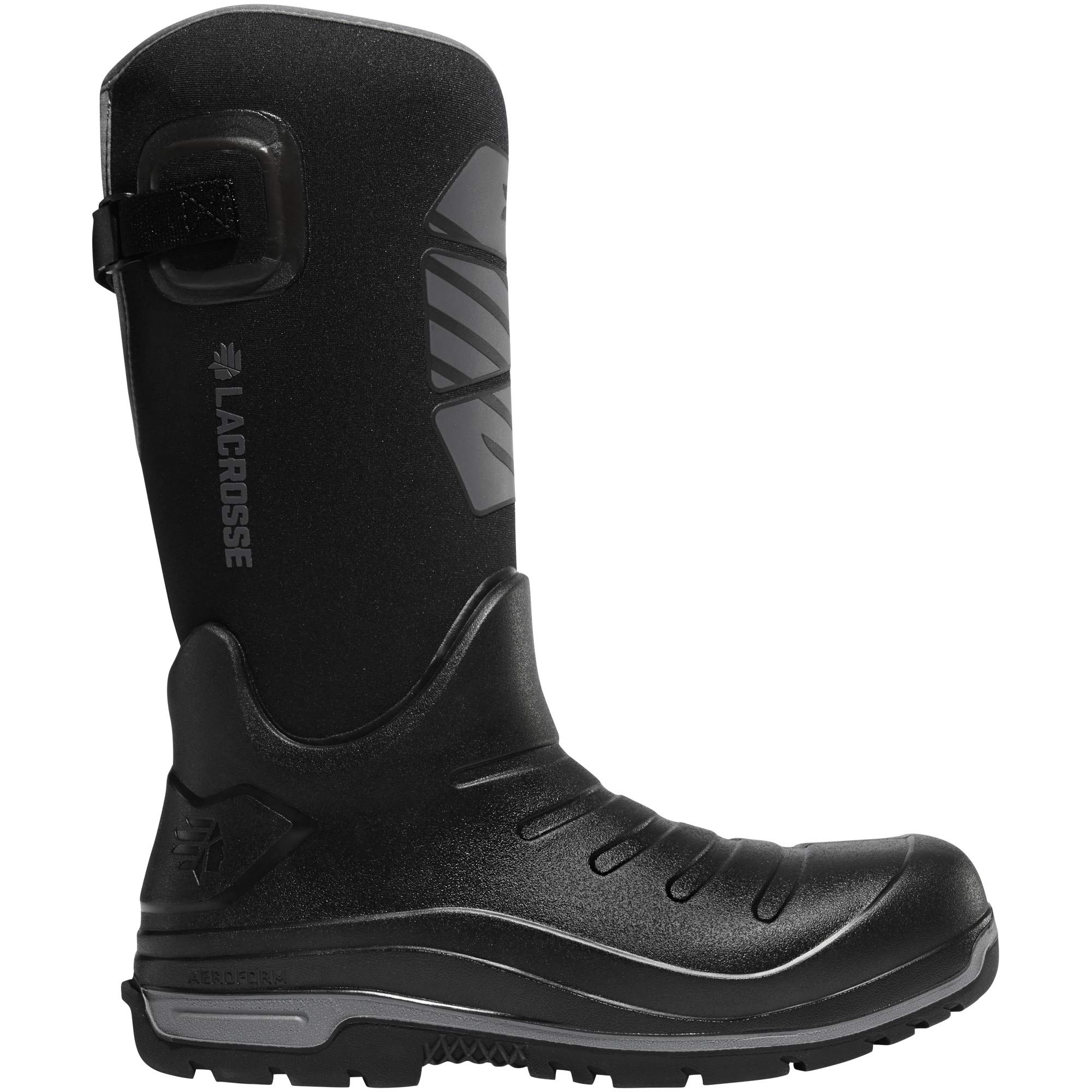
The do-it-all winter boot that stays flexible when the temperature plummets.
LaCrosse built this for exactly the kind of cold that makes other boots crack. The neoprene and polyurethane aeroform shell stays flexible in freezing temperatures, which means no stiff, clunky feel when you are walking on ice or shifting on running boards. One owner ice fished for 12+ hours in upper-20s weather with no cold feet, and another uses them daily in Fairbanks, Alaska — a serious cold-weather endorsement.
The 14-inch shaft with adjustable cinch straps keeps snow out while staying easy to put on and take off. The warmth is real, though one owner found toes got cold below 10°F despite a claimed -60° to 32°F rating, so the spec may be optimistic at the extreme end. The fit runs snug, especially through the arch, so sizing up is the consistent advice. The outer fabric also scuffs cosmetically over time, but the performance holds up.
Cold-weather performance: The aeroform shell delivers warmth without bulk and won’t crack in the cold, making it a favorite for ice fishing and snowmobiling.
Choose this if: you ride or fish in extreme cold and want a flexible, easy-on boot that holds up.
Size up: the arch runs tight, and a half size larger is the common fix.
6. KEEN Revel 4 Mid Height Polar Insulated Waterproof
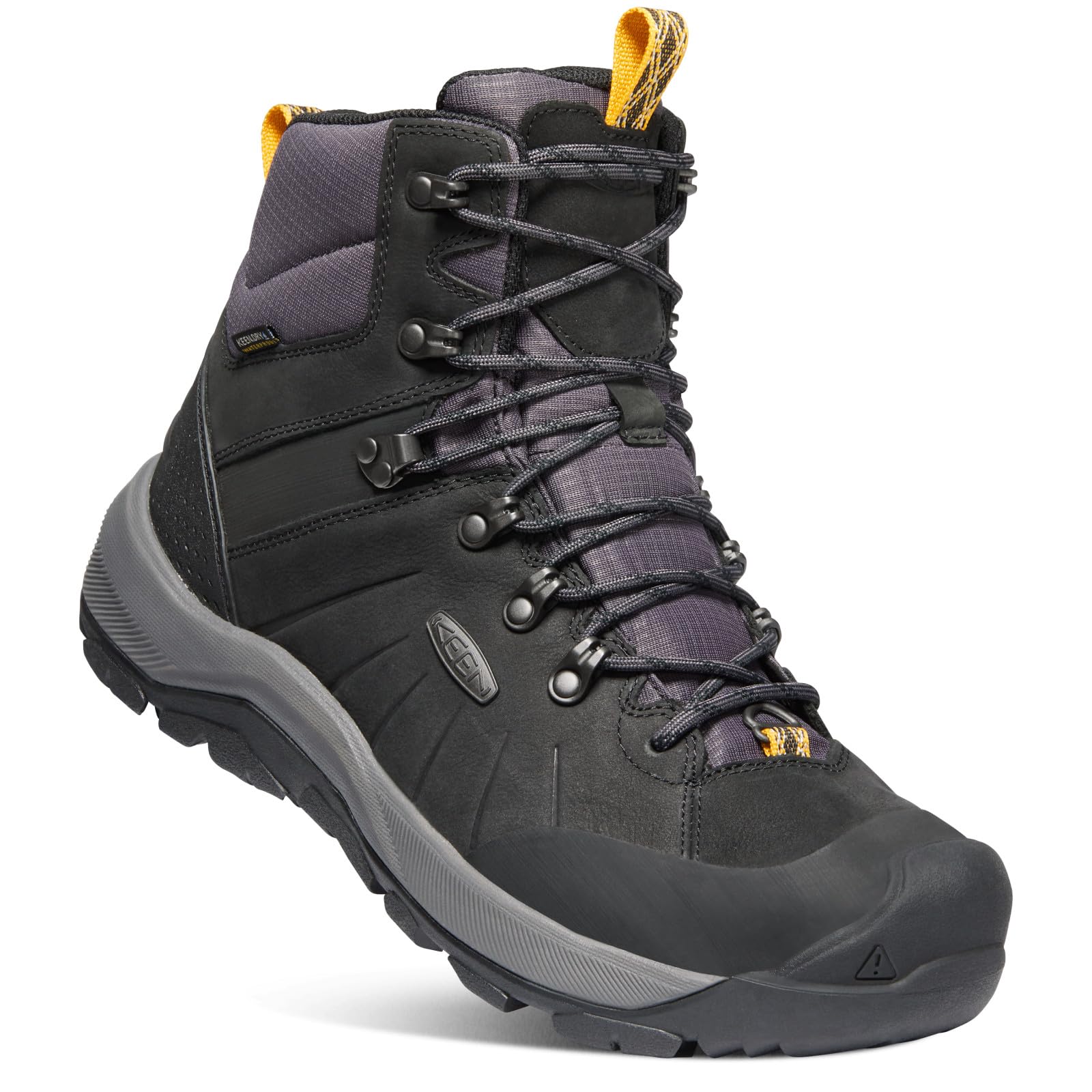
A roomy toe box that lets thick winter socks breathe and your toes wiggle.
KEEN builds its boots on a wider last, and that shows in the Revel 4’s spacious toe box — a lifesaver for riders with wide feet or anyone who layers thick wool socks. The thermal heat shield inside captures warmth while the waterproof, breathable construction keeps feet dry mile after mile. One owner wore them to climb a Colorado 14er in snow and ice at -5°F with winds, and reported feet stayed dry and warm the whole way.
The traction is a real highlight, with a soft tread that grips snow, ice, and muddy hillsides, and the speed lace webbing system makes adjustments quick. The durability is solid for most riders, though a few reported shoelace anchors breaking over time. One rider found only 200g of insulation too little for sitting still in a tree stand at 30°F, so low-activity users should consider heavier insulation.
Comfort-first design: The wide toe box is the defining feature, accommodating thick socks and wide feet without squeezing.
Best for: wide-footed riders and winter hikers who want waterproof warmth with real toe room.
Not for: long periods of sitting still in mild cold, where heavier insulation is a better call.
7. Kamik Iceland Men’s Snow Boots

The leather-and-rubber classic that was made for sled rides and ice fishing trips.
Kamik explicitly built the Iceland for snowmobiling, ice fishing, and cabin hangs. The combination of waterproof genuine leather and a seam-sealed rubber shell gives you a tough, good-looking boot that shrugs off snow and slush, with 3M Thinsulate insulation trapping heat inside. An owner took them to Iceland itself and kept feet warm and dry, and another found them “very warm and comfortable to walk in” right away.
The honest weakness is the sole. The fit is generally comfortable, though a few found laces too sloppy for serious hiking. For short sled rides and campfire hangs, this boot is a strong, cushioned choice.
Purpose-built: Designed specifically for snowmobiling and ice fishing, with genuine leather and a seam-sealed shell as the core protection.
Reach for this if: you want a classic, cushioned winter boot for sledding and short outdoor hangs.
Look elsewhere if: you need serious traction on hard-packed ice or maximum cold-weather insulation.
8. Merrell Speed Strike 2 Thermo Mid Waterproof

An athletic hybrid that warms your feet without turning them into sweat boxes.
Merrell calls this an athletic hybrid hiker, and the strength is the balance it strikes. The durable outdoor mesh upper and sticky trail outsole (a rubber sole designed to grip uneven, icy ground) give you confidence on slick surfaces, and owners consistently praise how waterproof it is “without being hot.” One rider used it for 90 minutes of shoveling and snowblowing at 20°F in 2 inches of snow on ice and came away with warm, dry feet and good ankle support—no cleats needed.
The fit is true to size, with a slight snugness that gives within a minute of wear and comfortably accommodates fairly wide feet. The warmth is solid for active winter use, though one owner in the Scottish Highlands found it “gets uncomfortably hot even with thin socks,” which tells you this leans toward high-energy activity. It is also heavier than some, with a brick-like feel, but the winter traction and zero break-in period win riders over.
Active warmth: The Thermo insulation keeps feet warm during high-energy winter work without overheating, while the trail outsole grips ice and snow.
Choose this if: you split time between riding and hiking, and want one boot that does both well.
Skip if: you want a heavyweight deep-cold boot — this runs warm and is built for motion.
9. Kamik Greenbay 4 Men’s Winter Boot
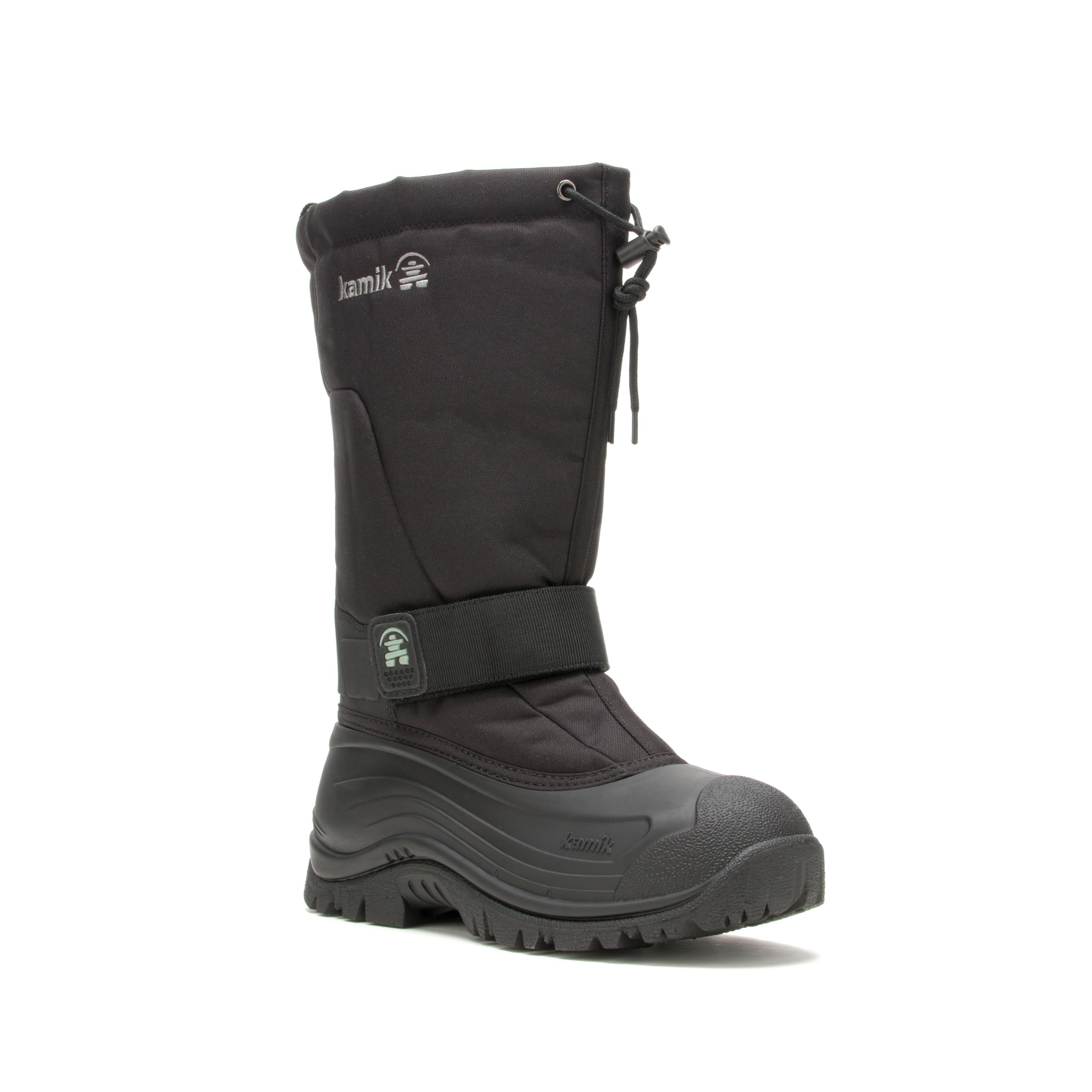
A slip-on winter boot with a -40°F rating that thousands of owners swear by.
The Greenbay 4 is the crowd favorite in this lineup, and the reason is simple: it delivers warmth and dryness at a price that makes it an easy decision. The waterproof nylon shell pairs with an 8mm Thermal Guard liner made from recycled materials, rated to -40°F — so deep-cold riders get serious protection without paying premium prices. Owners praise the slip-on design for how easy it is to get in and out of, and one rider tested it through an arctic blast in New Jersey and came away impressed with the warmth and traction.
The defining trade-off is the fit and the liner. The boots run slightly small, so sizing up is the near-universal advice, especially with heavy socks. The removable felt liner is the weak point over the long haul — several long-term buyers report the liners disintegrating after years, though the shell itself stays warm and dry and is easy to swap with wool socks. The rubber outsole provides solid grip on icy surfaces, and the whole package feels sturdy for the money.
Proven warmth: The -40°F rating and 8mm Thermal Guard liner are the core protection, backed by thousands of owner experiences in real winter conditions.
Best for: budget-minded riders who want dependable deep-cold warmth in an easy slip-on design.
Plan ahead: order a half size up, and expect to replace the liner after a few seasons of hard use.
10. SOREL Men’s Buxton Lite Lace Plus Waterproof Boot
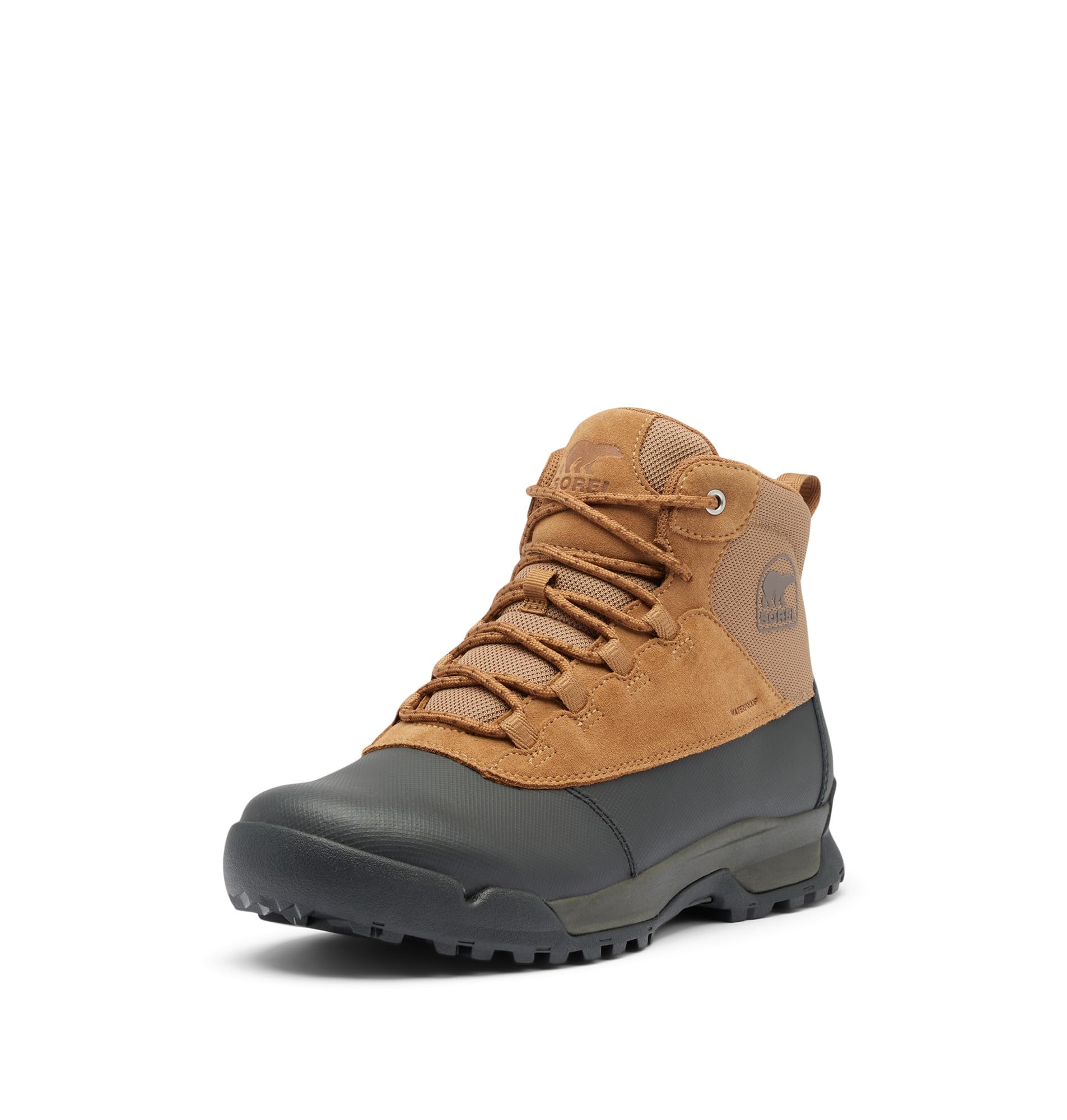
The waterproof hiker that kept feet dry where other boots failed.
SOREL built the Buxton to move between the outdoors and the everyday, and it delivers. One buyer’s test says it best: “Waterproof hiking boots kept feet dry where others failed” — real praise for a boot’s core job. The waterproof duck-style rubber lower pairs with a stylish upper that still looks new after a winter season, and the flexible sole makes it comfortable for driving and city wear, not just the trail.
The fit is the main decision point. SOREL boots fit snug by design, so wide-footed buyers should size up, while those with narrow feet can stick to true size for an enveloped fit. One owner found them too tight with work socks and would order extra wide, while another resolved a toe-box pinch by loosening the lower laces. The flexible sole, waterproofing, and durability through snowy conditions make this a versatile, good-looking pick.
Waterproof styling: The duck-style rubber lower and suede-mesh upper blend real waterproofing with a look that survives a full winter without showing wear.
Reach for this if: you want a waterproof, stylish boot that works for hiking, commuting, and light sled use.
Check the fit: the snug design means wide feet or heavy socks call for sizing up.
11. Ice Fields Darrell Snow Winter Boots for Men
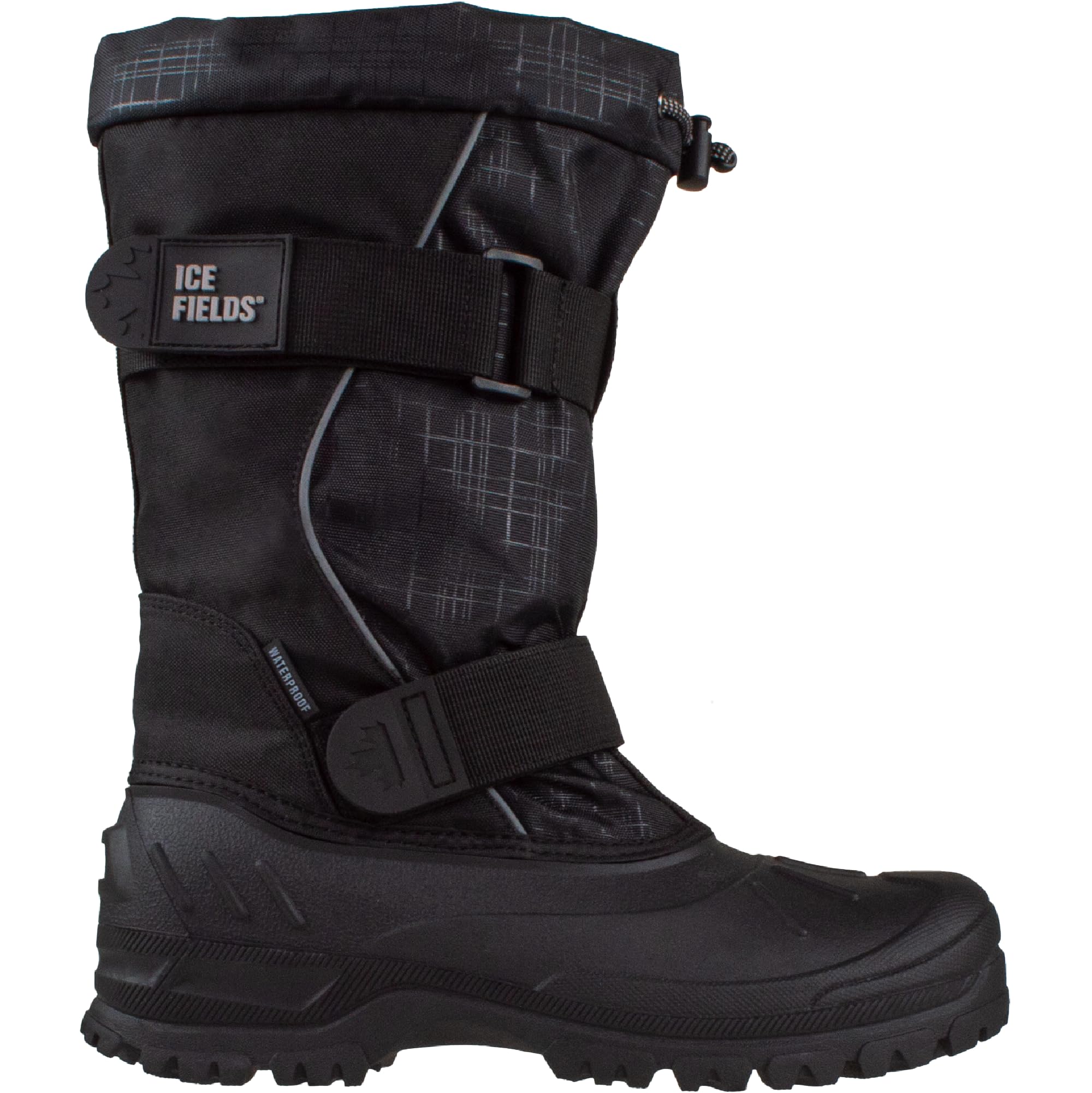
A calf-high boot that stays warm in 22 inches of powder without the premium price.
Ice Fields built the Darrell for deep snow, and owners found exactly that. The calf-high shaft with an elastic cinch blocks snow from getting in, and the Thinsulate lining (a thin synthetic insulation that traps heat) keeps feet warm even at a comfortable -50°C/-58°F rating. One buyer tested them in 22 inches of deep snow and praised the warmth, style, and easy Velcro closure—and the value is tough to top. The hook-and-loop strap lets you adjust the fit without fumbling with laces.
The honest catch here is sizing, and it is significant. Owners consistently report these run small, with advice ranging from “order 1 size above” to “order 2 sizes up,” particularly if you wear thick socks or toe warmers. The insulation itself eats into the interior space by about a size. One buyer in northern Maine bought them for her husband with diabetes and foot issues, and he found them very comfortable and warm — with a half size up for the right fit.
Deep-snow design: The calf-high shaft and elastic cinch block snow, while the Thinsulate lining holds warmth to -58°F — all at a budget-friendly price.
Best for: riders who want serious deep-snow warmth on a budget and do not mind a simple Velcro closure.
Size up generously: plan for one to two sizes larger to account for the snug interior.
Understanding the Specs
Insulation: Grams vs. Temperature Ratings
Insulation weight is measured in grams (like 200g or 600g) of synthetic fill, but some brands skip grams entirely and give a temperature rating instead, such as -40°C. Lighter insulation around 200g suits active riding where your body generates heat, while 600g or a -40°C rating is built for low-activity cold exposure like ice fishing. Higher numbers always mean warmer, but also bulkier.
The Waterproofing Layer
A waterproof boot uses a sealed membrane or waterproof construction to keep water out, which is different from a water-resistant coating that eventually wets through. For snowmobiling, look for an explicitly waterproof build with sealed seams, since snow spray hits your boots at speed and finds every gap. A boot that only says “water-resistant” will not last a full day of riding in wet snow.
FAQ
What is the difference between waterproof and water-resistant snowmobile boots?
How much insulation do I need for snowmobiling?
Do snowmobile boots run small?
Can I use regular winter hiking boots for snowmobiling?
What kind of traction should I look for?
How long do waterproof snowmobile boots last?
Is a BOA dial closure better than laces for snowmobile boots?
Are slip-on snowmobile boots worth considering?
What is the warmest insulation rating I can get?
Do I need a boot with a removable liner?
Final Thoughts: The Verdict
For most riders, the waterproof snowmobile boots winner is the KLIM Adrenaline GTX because it is purpose-built for the sled, and riders who wore it all season reported never once thinking about cold feet. If you want dial-in convenience and extreme-cold insulation at 600g rated to -40°C, grab the FXR X-Cross Pro BOA. And for a budget-friendly option that thousands of owners trust in deep cold, the Kamik Greenbay 4 is the one to reach for — just be sure to size up.
How We Picked
We do not accept paid placement. Every pick is matched to a real buyer and a real use-case; we do not hands-on test units.
Sources & Methodology
Specifications: manufacturer listings and product documentation. Review insights: verified customer reviews, as of August 2026. Pricing: not shown on this page (it changes often); check the current price via the retailer link.
As an Amazon Associate, GoCarLife earns from qualifying purchases. This does not affect which products we feature.