
Our readers keep the lights on and the garage heater humming. As an Amazon Associate, I earn from qualifying purchases.
Specs are compiled from manufacturer listings and verified buyer reviews and can change over time — please confirm the key details on the product page before buying.
Adding real horsepower to a forced-induction engine usually means walking a tightrope with detonation, heat, and timing. A water injection kit changes that by spraying a fine water-and-methanol mist into your intake charge, cooling the air so you can run more boost without the knock that wrecks pistons. This guide breaks down the best systems for new and seasoned tuners, what separates a smart controller from a simple switch, and which kit fits your power goals and your garage.
I’m Mo Maruf — the founder and writer behind GoCarLife. This guide is built by comparing the manufacturers’ published specifications and the patterns across verified customer reviews, so you get each pick’s real strengths and trade-offs instead of marketing spin.
Here is the honest shortlist of the best water injection kits for cooling intake temps, taming detonation, and open up safe boost on stock or built engines.
Our Picks at a Glance

How To Choose The Best Water Injection Kit
Picking a water injection kit starts with matching the system to how much power you actually plan to make. A stock truck that just needs a cooling safety net has totally different needs than a built motor with a huge turbo, so the tank size, pump, and controller all have to line up with your goal.
Match the Tank and Nozzles to Your Power Level
The fluid tank and nozzle flow rate set the ceiling for how long and how hard you can inject. Small tanks suit short bursts of cooling on the street, while a 5-gallon tank with anti-slosh baffles supports sustained pulls, towing, or heavy track use. Nozzles rated in cc/min (cubic centimeters per minute) determine flow — a 500cc/min injector covers modest setups, but big-horsepower builds need multiple 1,000cc/min nozzles to keep up.
Decide Between a Simple Switch and a Progressive Controller
The cheapest kits trigger injection with a boost pressure switch — full blast the moment you cross a set point. That works, but a controller with an internal MAP sensor (the sensor that reads intake manifold pressure) lets you dial in spray progressively as boost climbs. That means a gentle mist at low boost and a full hit at peak, which is smoother to drive and safer for the engine.
Check the Fittings, Tubing, and Install Footprint
A kit is only as good as its plumbing. Quick-connect fittings and high-temperature nylon tubing make installs far easier than threaded brass that needs sealant, and the pump’s diaphragm and seal materials determine whether it survives methanol long-term. Also measure the space you have — a kit with a 19-inch-long package needs more room in the engine bay than a compact controller unit.
Quick Comparison
| Model | Best For | Controller | Injection Style | Package Weight | Amazon |
|---|---|---|---|---|---|
| Stage 1 Boost Cooler (SNO-201)★ Best Overall | Stock trucks & diesel starters | Boost switch | On/Off at set boost | 8.5 lb | Amazon |
| AEM (30-3304) V2 Standard | Reliability & lean-out protection | Internal MAP sensor | Progressive | 15.8 oz | Amazon |
| Snow Performance 210 Gas Stage 2 | Dual-intake gas setups | Progressive controller | Progressive | 7.0 lb | Amazon |
| AEM (30-3301) V2 5-Gallon HD | Motorhomes & heavy sustained load | HD boost-dependent | Progressive, 2 injectors | 14.6 lb | Amazon |
In‑Depth Reviews
1. Stage 1 Boost Cooler™ Forced Induction Water-Methanol Injection Kit (SNO-201)
Our pick — over 4★ from 60+ verified ratings; the strongest balance of quality and price.
The proven starter kit that has kept diesel and gas trucks running cool for five-plus years.
For stock trucks and small turbo diesels, this kit earns its reputation by simply working. It triggers on boost pressure — one owner runs it on a 6BT with the switch set at 10PSI (pounds per square inch of boost) — and it pulls heat out of the charge air, keeping your engine safe under load. The engineering shows in how consistently it performs right from the start.
Long-term owners are the real testament here. Buyers report it still works flawlessly after about five years of continuous use, which speaks to the durability of the quick-connect fittings and red high-temp nylon tubing. It also earns praise for taking the fire out of the exhaust on turbo builds, a sign the injected mist is actually doing its job in the combustion chamber rather than just wetting the intake.
The honest trade-off is capacity. The included tank is built for short bursts of cooling, not sustained towing, and the nozzle selection is limited if you want to swap sizes. One owner notes you’ll need a larger nozzle once you push much past stock horsepower, and the stainless steel water nozzle can corrode from the inside out over time. For a mild build or a stock daily driver, this is still the smartest money in the category.
Boost Addicts: you want a reliable, field-tested boost-triggered system for a stock or lightly modified truck without overcomplicating the install.
Casual Drivers: you plan to tow hard or chase big horsepower — the small tank and single nozzle will leave you wanting more flow.
2. AEM (30-3304) V2 Water/Methanol Injection Standard Controller Kit

The featherweight controller that adds safety against lean-out on boosted builds.
What sets this AEM kit apart is the internal MAP sensor — the part that reads intake manifold pressure — which lets the controller spray progressively instead of all-at-once. That means you get a small mist as boost builds and a full hit at peak, which is exactly what you want when the goal is engine reliability. At just 15.8 ounces, this is a far lighter package than the 8.5-pound Stage 1 kit above, making it a clean fit for tight engine bays.
Owners mention it mixes water and methanol into the engine exactly as specified, giving you confidence that the engine won’t lean out under boost. It also works as a replacement controller: one owner swapped out a burnt-up Snow Performance controller and called this one “far better than the original,” a strong compliment given the legacy of the brand it replaced.
The catch is that AEM is very clear about methanol safety: it strongly recommends never exceeding a 50 percent methanol concentration, because 100 percent methanol is toxic and highly flammable. A couple of buyers were also unsure about unit condition right from the start, so it’s worth inspecting the seals before you commit to an install. If you want progressive, boost-referenced control in a compact and capable controller, this is the standout.
Tuning Enthusiasts: tuners who want progressive spray and lean-out protection without the bulk of a full 5-gallon system.
Plug-and-Play: keep methanol under 50 percent concentration as AEM directs, and check the controller seals when it arrives.
3. Snow Performance 210 Gas Stage 2
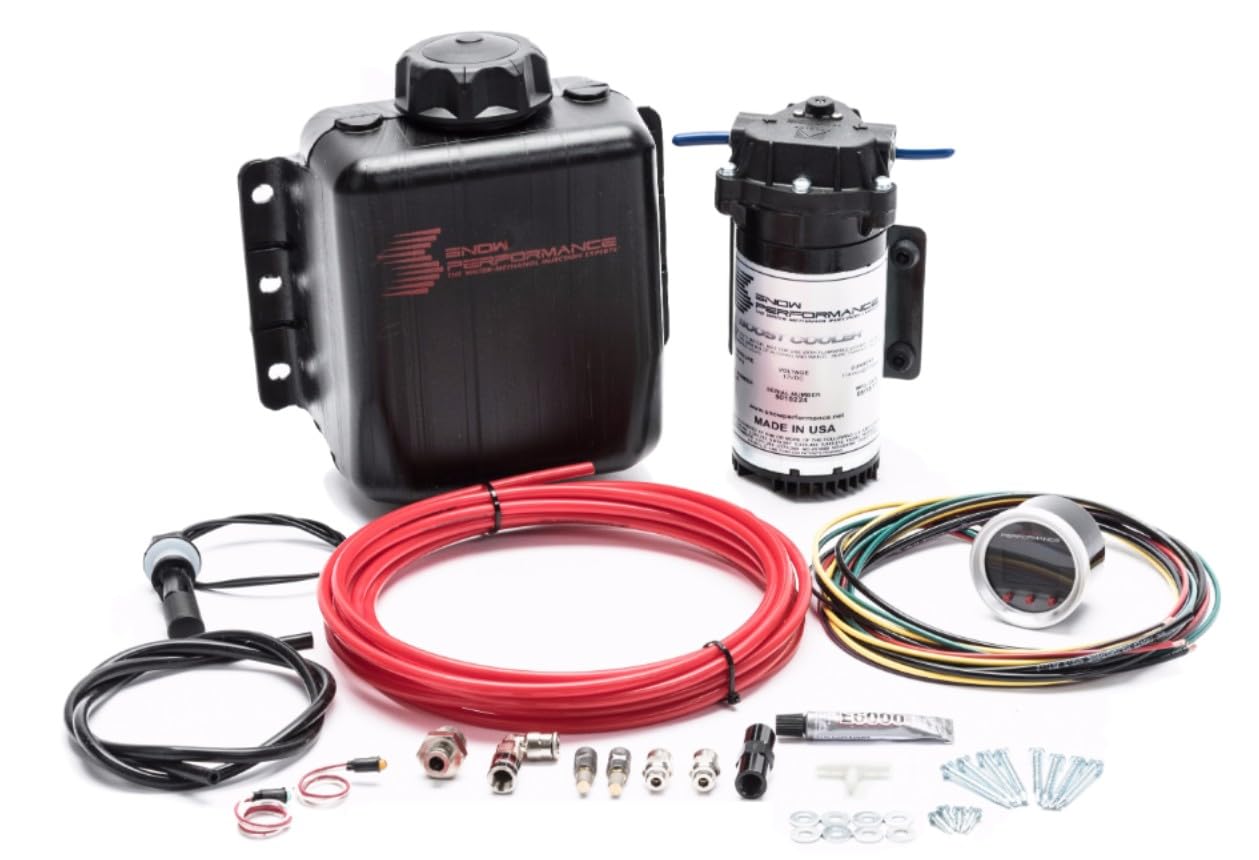
The progressive gas kit that owners praise for smooth, well-documented installs and real support.
Snow Performance builds this Stage 2 kit specifically for gas engines, and the standout feature is progressive injection — the system ramps spray in with boost rather than hitting full flow at once. Owners running it on a Tacoma report being very pleased so far, and the detailed instructions plus quality parts get consistent praise. When a buyer needed an extra nozzle for a dual intake setup, the technical support team was described as awesome, which matters when you are mid-install and stuck.
The progressive tuning is the thing everyone raves about — it’s the difference between a system that feels surgical and one that just dumps fluid. The 7.0-pound package sits between the Stage 1 kit’s 8.5 pounds and the featherweight AEM controller, giving you a solid middle-ground footprint for a bay with room to spare. This is the kit to reach for when you want staged, boost-following delivery on a gas car.
The recurring concern in the review history is receiving a returned unit — two separate buyers reported opened anti-static bags, scratches from prior installs, and missing parts. It’s an occasional fulfillment problem rather than a flaw in the kit itself, but it is worth checking the seal and contents immediately on arrival. When the kit arrives intact, it does exactly what it advertises.
Gas Tuners: gas engines where you want progressive spray with strong manufacturer backup if you have questions.
Diesel Users: inspect the box as soon as it lands — a small share of units arrive as returned goods with parts missing.
4. AEM (30-3301) V2 5-Gallon Water/Methanol Injection Kit with HD Controller
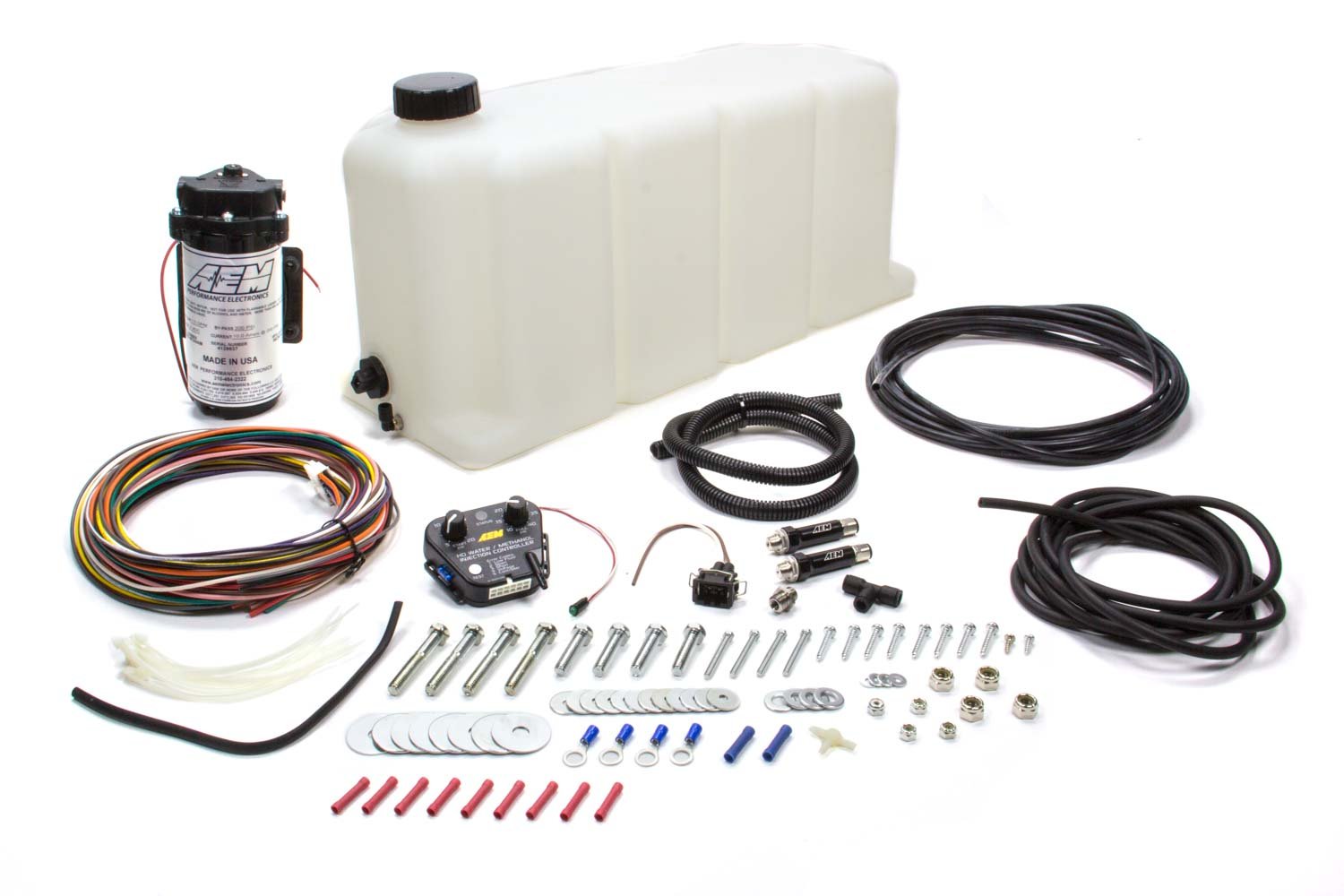
The 14.6-pound powerhouse built for long, sustained pulls that drain smaller tanks in minutes.
If you cannot afford to run out of fluid, this kit is for you. The 5-gallon tank with anti-slosh technology and a conductive low-fluid sensor lets you hammer on it repeatedly, and the 14.6-pound package — 72 percent heavier than the 8.5-pound Stage 1 — shows the heavy-duty internals inside. It ships with two precision-machined billet-aluminum injectors with integral check valves: one 500cc/min and two 1,000cc/min nozzles to cover a wide range of horsepower levels.
The HD controller is built for abuse too, with large adjustment knobs, an integrated fuse, and a covered status light plus test button for splash resistance. Customers note it turned a motorhome into a smooth cruiser, climbing the same hills 10-15 mph faster, which is the real-world payoff of having enough tank and pump to keep spraying under sustained load. The quiet pump operation is almost undetectable, a nice touch for a daily driver or RV.
The honest trade-off is the hit-or-miss experience some buyers have had. One unit arrived missing a part, and the supplier wanted the whole system returned rather than mailing a single replacement piece — a frustrating process. A separate owner reported leaks at connections, though that review was aimed at a different AEM model with a caveat that this kit “looks just as cheap.” For heavy, sustained use where a small tank fails you, this remains the most capable option here.
Long Haulers: towing, motorhomes, or track days where you need 5 gallons of fluid and dual injectors to keep up.
Tight Engine Bays: casual street drivers who want a simple, small-footprint install and would rather not wrestle a 14.6-pound system.
Understanding the Specs
Boost Pressure Switch vs. MAP Sensor Controller
The boost switch is the simplest trigger — a physical switch that closes a circuit when manifold pressure hits your set point, so injection is either fully on or fully off. A MAP sensor controller reads the intake manifold pressure continuously and varies the spray rate with it, which is why progressive systems feel smoother and safer: you get a light mist at low boost and full flow at peak. For a stock truck, a switch is plenty; for a tuned build chasing the last bit of safe power, the MAP-based controller is the right call.
Tank Capacity and Nozzle Flow Rate
Tank size sets how long you can inject before refilling — small tanks suit short street bursts, while a 5-gallon tank with anti-slosh baffles supports sustained towing and track sessions. Nozzle flow is rated in cc/min, which tells you how much fluid the injector can push per minute; a 500cc/min nozzle covers modest power, but high-horsepower builds need multiple 1,000cc/min injectors working together. Matching total nozzle flow to your power goal is what keeps the engine from running lean at the top end.
FAQ
What is the difference between a water injection kit and a methanol injection kit?
How does a MAP sensor controller improve injection over a boost switch?
What size water injection tank do I need for towing?
Will a water injection kit add horsepower to a stock truck?
What does cc/min mean on a water injection nozzle?
How much methanol should I mix for a typical water injection kit?
Can I install a water injection kit on a dual intake setup?
Why does the package weight matter when comparing kits?
Final Thoughts: The Verdict
For the majority of shoppers, the water injection kit winner is the Stage 1 Boost Cooler because it is the proven, field-tested starter that stock trucks and small turbo diesels have relied on for years. If you want progressive, boost-referenced control in a compact form, grab the AEM V2 Standard. And for a motorhome, tow rig, or any build that needs to spray hard and long, the AEM V2 5-Gallon HD is the one to reach for.
How We Picked
We do not accept paid placement. Every pick is matched to a real buyer and a real use-case; we do not hands-on test units.
Sources & Methodology
Specifications: manufacturer listings and product documentation. Review insights: verified customer reviews, as of August 2026. Pricing: not shown on this page (it changes often); check the current price via the retailer link.
As an Amazon Associate, GoCarLife earns from qualifying purchases. This does not affect which products we feature.