
Our readers keep the lights on and the garage heater humming. As an Amazon Associate, I earn from qualifying purchases.
Specs are compiled from manufacturer listings and verified buyer reviews and can change over time — please confirm the key details on the product page before buying.
A torn CV boot is that greasy mess you notice on the garage floor right before the clicking starts. That clicking means dirt has already ground into the joint, and the fix just went from a boot swap to a full axle replacement. The good news is that a quality velocity joint boot catches the problem early, keeps the grease in and the grit out, and costs a fraction of a new axle.
I’m Mo Maruf — the founder and writer behind GoCarLife. This guide is built by comparing the manufacturers’ published specifications and the patterns across verified customer reviews, so you get each pick’s real strengths and trade-offs instead of marketing spin.
You need a velocity joint boot that fits your vehicle, survives the road, and goes on without a full axle pull. Here are seven kits, each with a specific strength and a real trade-off, so you can pick the one that matches your ride and your skill level.
Our Picks at a Glance
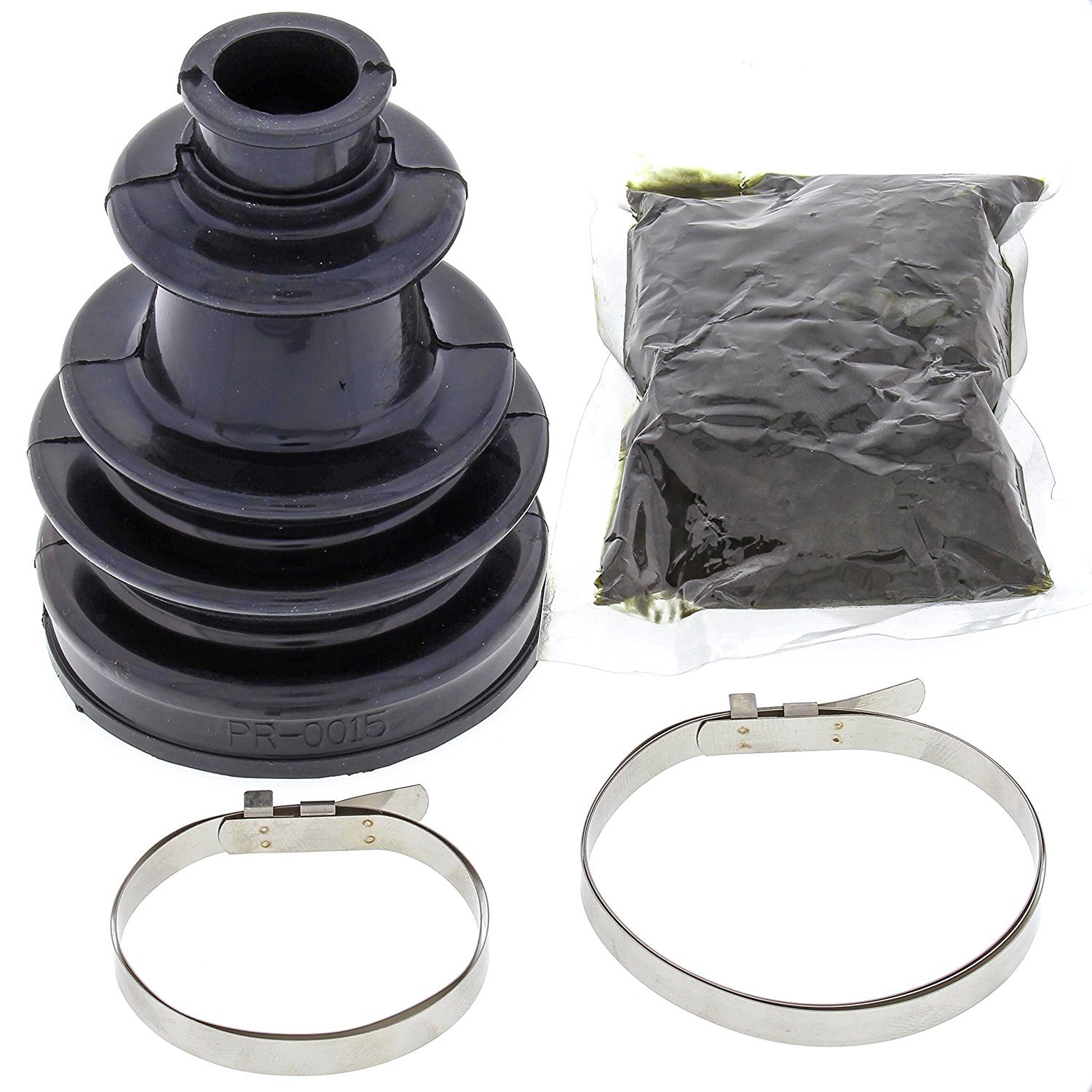

How To Choose The Best Velocity Joint Boot
Your first decision is whether to buy a vehicle-specific kit or a universal boot. A specific kit like the Beck/Arnley is engineered to match the original part, while universal boots give you flexibility across multiple vehicles but require you to measure carefully.
Match the material to your environment
Boots live in harsh conditions: heat, road salt, and mud. Neoprene resists oil and abrasion well, while some kits use specially formulated rubber tested to -40 degrees F for cold-weather performance. If you off-road or drive in extreme temperatures, the rubber compound matters more than the brand name.
Decide: pull the axle or leave it in place
Some boots are designed to be installed without removing the axle from the vehicle. These split or cone-method designs save hours of labor. Other kits assume you will remove the axle for a traditional install. Knowing your skill level and tools ahead of time changes which kit fits your driveway.
Quick Comparison
| Model | Best For | Material | Weight | Install Style | Amazon |
|---|---|---|---|---|---|
| All Balls Racing CV Boot Kit★ Best Overall | Off-road UTV/ATV durability | DCR66 Rubber | — | Traditional | Amazon |
| carleef 2PCS CV Boot KitBudget Champion | Budget universal quick fix | Silicone | 7.8 oz | Split/Cone | Amazon |
| Beck/Arnley 103-2314 | Honda/TSX exact fit | Rubber | 9.9 oz | Traditional | Amazon |
| FLEXX BOOT FB3001 | Large shaft no-axle removal | Rubber | 12.6 oz | Split/No removal | Amazon |
| Beck/Arnley 103-2968 | European/Asian exact fit | Neoprene | 10.88 oz | Traditional | Amazon |
| FLEXX BOOT FB3000K | Small shaft kit with cone | Rubber | 1.87 lb | Cone/No removal | Amazon |
| Toyota Genuine Boot Kit | Tacoma OEM reliability | Rubber | 2.12 lb | Traditional | Amazon |
In-Depth Reviews
1. All Balls Racing CV Boot Kit
Our pick — over 4.5★ from 150+ verified ratings; the strongest balance of quality and price.
The off-road specialist built to shrug off mud, cold, and rough trails without wearing thin.
The stand-out spec here is the material: this kit uses an OEM-grade DCR66 rubber compound that The maker claims this DCR66 rubber is 50% more abrasion resistant than conventional CV boot material.. For anyone who regularly drags a UTV or ATV through rocks and brush, that extra scrub resistance is exactly what keeps a boot intact season after season. It’s also tested to -40 degrees F, so cold-weather rides won’t make it brittle.
This kit earns its spot because it fits the 2016 Polaris Ranger 570 Midsize exactly, and buyers report a total install time under 30 minutes with no special tools beyond a clamp tool. The pack includes lithium-based molybdenum grease, a high-pressure lubricant that resists wear, so you won’t need to source lube separately. The kit does include two stainless steel clamps, but a recurring owner note is that the supplied bands aren’t as sturdy as factory ones — many simply reuse the original clamps, which fit fine.
The one ownership caveat: this is a rear-position kit designed for specific UTV and ATV models, so it won’t magically fit every machine. The thing everyone raves about is the build quality, with one owner calling it better than the OEM part it replaced. For a John Deere Gator owner, it saved a shaft that the dealer only sells whole — the boot alone got the machine back to work.
What wins owners over
- OEM-grade DCR66 rubber resists abrasion better than standard boots
- Cold-tested to -40 degrees F for harsh climates
- Complete kit with stainless clamps and grease
- Proven 30-minute install on popular Rangers
The honest trade-offs
- Supplied band clamps are the weak point — most reuse factory ones
- Vehicle-specific fit means checking compatibility first
Reach for this if: you ride a UTV or ATV hard and want a boot that’s built for the abuse.
Look elsewhere if: you need a universal car boot and don’t own a Polaris, Can-Am, or similar utility vehicle.
2. carleef 2PCS CV Boot Kit
A two-pack silicone fix that stretches over the joint and seals out grit for a fraction of axle cost.
At just 7.8 ounces and spanning 4.72 inches in length, this kit is the lightweight universal option designed to fit multiple vehicles, from a 2008 Silverado 1500 to a Mazda CX-9 aftermarket axle. You get two boots, four stainless steel clamps, and six cable ties, along with a mounting cone that slides the new boot over the joint when you can’t separate the axle end.
The silicone material here is the key. Its softness and elasticity let the boot hug the joint tightly, so it won’t loosen or slip off from normal vehicle vibration. The kit works across three different calibers — 2.55 inch/65 mm, 3.14 inch/80 mm, and 3.54 inch/90 mm — so you need to check your axle diameter before purchasing.
What wins people over is that the repair works and goes on easily. However, the honest reality is this is a thinner boot than what you’ll find from the factory. One owner noted the boots are a little thinner than the original but should work, and the included bands are thin enough that two broke during installation. Durability is the recurring question mark — this is a budget fix best treated as a stopgap, not a lifetime part.
Straight talk: it fits many cars and saves you real money, but the thin silicone and fragile bands mean it’s a temporary repair, not a set-and-forget fix.
Best for: a quick, low-cost repair on a car you don’t plan to keep for years.
skip it if: you want a boot that outlasts the next oil change — this one is truly entry-level.
3. Beck/Arnley 103-2314 CV Joint Boot Kit

The application-specific kit that drops onto Hondas and Acura TSX axles without any guesswork.
This kit is built for a defined family: 1985-2012 Honda Accord, plus the first-gen TSX and Honda Element. At 9.9 ounces and packaged for the left or right position, it matches OE form, fit, and function — which means nothing to file down, stretch, or shim. The boot material itself feels close to OEM, and the kit includes grease and both clamps right in the box.
Unlike the universal carleef kit, this is an application-specific part, not a universal one. That precision pays off in install speed and seal quality. The included grease has an extreme pressure additive that extends joint life. One owner called it a direct fit for a 2007 TSX 6spd inner right/passenger axle, and others report it works on an 06 CRV inner boot.
The trade-offs here are minor but real. The metal clamps are a genuine pain to tighten compared to pinch-style original clamps — a needle-nose plier does the job, but it’s fiddly. And this kit is not intended for tools that stretch the small end of the boot over the CV joint, so plan for the traditional install method. What wins people over is fit and quality, with one owner noting the rubber feels like OEM and time will tell on longevity.
Why owners pick it
- True application-specific fit for Hondas and TSX
- Grease includes extreme pressure additive
- Kit comes complete with clamps and grease
Worth knowing
- Metal ring clamps are hard to tighten by hand
- Not for stretch-over-tool installation methods
The verdict: the precise-fitting choice for Honda and Acura owners who want OEM behavior without the dealer markup.
The catch: be ready to wrestle with the clamp rings during install.
4. FLEXX BOOT FB3001 Large Shaft Universal CV Boot

The split-boot fix for full-size trucks that keeps the axle in place and the labor cost at zero.
This is the boot that saves you a weekend. Designed for cars and trucks with a large shaft, the FB3001 installs without removing the axle from the vehicle — a major win for anyone working on a 2009 Chevrolet Silverado 1500 or GMC Sierra without a lift. At 12.6 ounces, it’s heftier than the carleef kit, and owners mention it’s thicker and better quality than the OEM boot that came off.
The universal fit means it’s flexible, sometimes a little too much so. On the narrow axle side, one owner found it a bit loose and tricky to clamp, but it sealed and held. The included straps work, though some owners swapped them for their own stainless steel clamps for confidence. Customers note the ease of install is the headline — zip ties, grease, done — with one noting it saved about versus a new axle.
The rubber material here is stretchier than OEM, which is exactly why it can slip over a joint that hasn’t been dismantled. The trade-off, as one owner framed it, is that longevity is unknown. What wins people over is the value story: a full axle replacement runs into the hundreds, while this boot is a fraction of that. For a truck you plan to keep rolling, that math is hard to argue with.
Biggest value: no axle removal means a driveway-friendly repair that gets the truck back on the road the same day.
Who it fits: truck owners with large-shaft axles who want a fast repair without special tools.
Who should pass: anyone wanting a perfect factory-tight seal on a narrow axle — this universal boot runs loose there.
5. Beck/Arnley 103-2968 Constant Velocity Joint Boot Kit
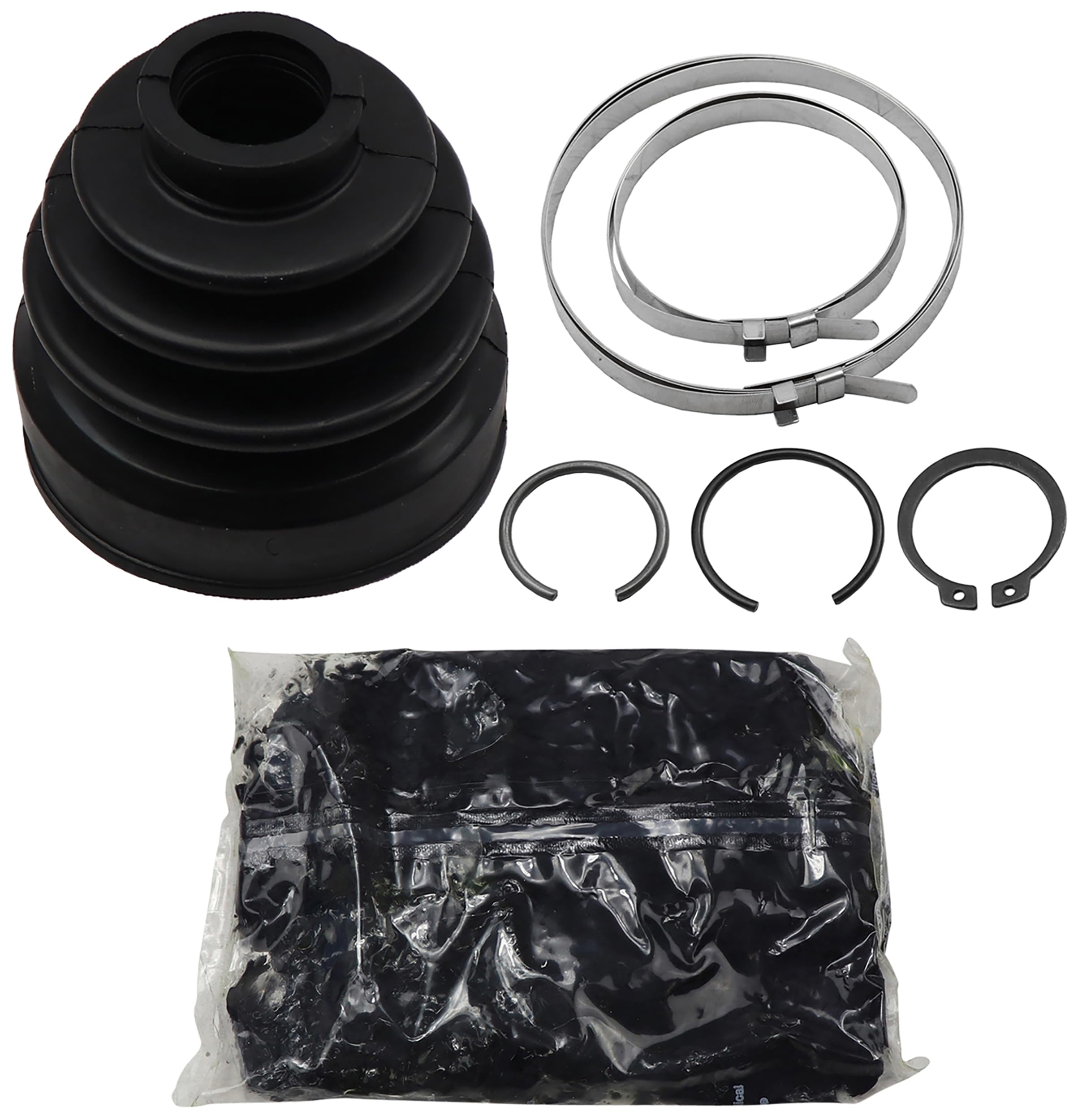
The flexible neoprene boot that molds onto European and Asian joints with an OEM-grade seal.
Where the 103-2314 handles Hondas, this 103-2968 kit branches out to a wider application net, including a 2010 Lotus Evora, a 2011 Kia Sorento AWD front inner, and a 2011 Honda Pilot. The defining spec is the material: a one-piece neoprene boot that is softer and more pliable than OEM, which makes it forgiving during install. At 10.88 ounces, it’s a mid-weight unit that carries the full kit — boot, grease, and hardware.
Application-specific engineering means the hardware matches the original design configuration. The grease supplied is decent, though one owner on a Honda Pilot found the packet ran about half of the spec amount and had to get a replacement sent free. That’s a small supply hiccup, not a fit problem — the install itself was smooth.
Owners praise the way this boot performs where it’s specified. On the Lotus Evora, it fitted the inboard CV perfectly, with the only caveat that the outboard joint needs a different part (the 103-2925). The one recurring gripe is packaging: a circlip was missing from one kit. What wins people over is the correct, precise fit across a range of cars that don’t share a common platform.
Built to impress
- One-piece neoprene is soft and flexible for easy installs
- Hardware matches original design specs
- Proven on Lotus, Kia, and Honda applications
Small annoyances
- Grease packet can run short on some vehicles
- Occasional missing circlip in the box
Confident verdict: the correct-fit boot for a wide range of European and Asian cars where OEM precision matters.
Not for: universal fits — this one demands you’re on the application list.
6. FLEXX BOOT FB3000K Small Shaft CV Boot Kit

A two-boot kit with a mounting cone that replaces worn CV boots without pulling the axle shaft.
This is the small-shaft sibling to the FB3001, and it brings a smarter install method. Instead of splitting the boot, you use the included installation cone to slide the new boot over the joint, which lets you repair the CV joint without removing the axle from the vehicle. The kit ships with two boots and one cone, plus grease, and weighs in at 1.87 pounds.
The material is specially formulated to be highly flexible and durable, which is essential since the boot has to stretch over the cone and the joint without tearing. It fits a Lexus IS250 axle perfectly, and one owner confirmed the grease supplied is good quality. The install is genuinely fast when it works — reviewers point out saving on labor costs and beating the price of an axle swap.
But this kit has the most divided feedback in the list. The functionality is praised across the board, yet the installation process gets mixed marks: some find it super easy, while others, particularly on Toyota Avalon OEM axles, report it doesn’t fit right. A few owners found the boot hard to stretch, warning it feels like a little more force would tear it. It’s a powerful tool in the right hands, but it demands patience.
Balanced read: the cone method saves real labor money when it fits, but the stretchy rubber can tear if you rush — follow the instructions slowly.
Pick this if: you’re handy, patient, and want to keep the axle in place during a small-shaft repair.
Think twice if: you drive a Toyota Avalon — that OEM axle has proven tricky for this boot.
7. Toyota Genuine Parts Boot Kit 04428-04010
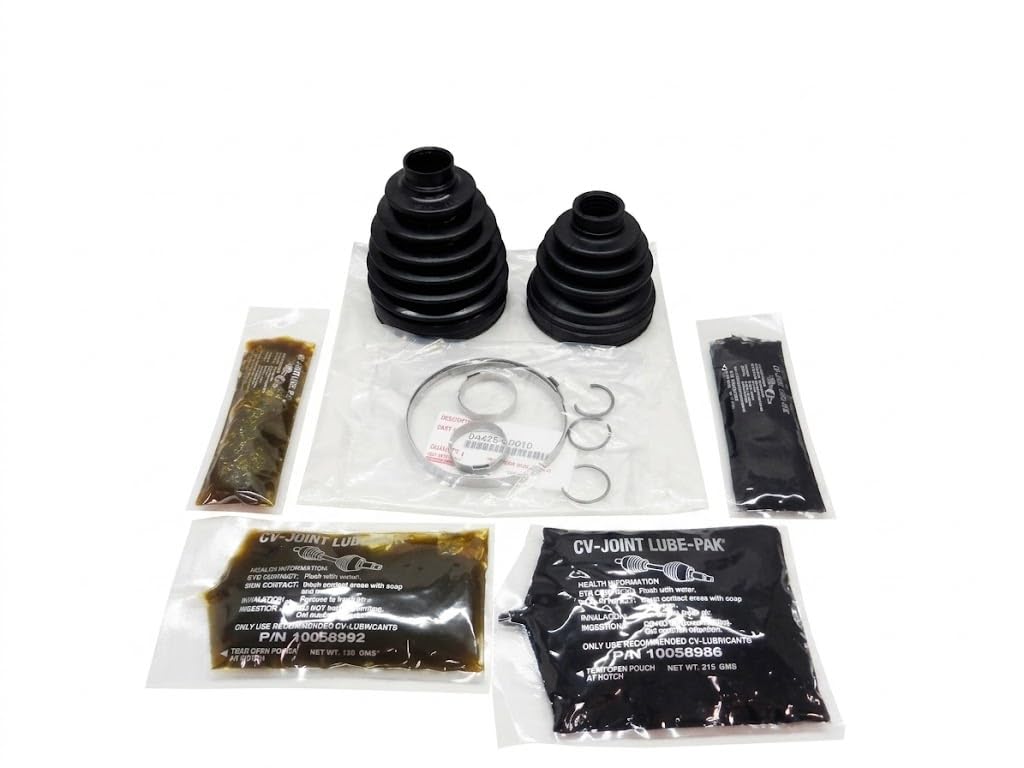
The factory-fresh Tacoma boot kit for owners who trust OEM quality over aftermarket guesses.
This is the only genuine OEM part on the list, and it shows. At 2.12 pounds and sized at 5 x 6 x 5 inches, this kit is purpose-built for the second-gen Tacoma 4×4, with owners confirming it fits a 2013, 2014, and 2016 TRD Off-road. You get the boot, clamps, grease, and clips — everything needed for a complete axle refresh without buying extra parts.
Owners rave about the OEM quality and the fact that it beats buying a whole new axle. One owner turned a cracked inner boot into a like-new CV axle with this kit, noting the DIY project saved a bucket of money. The fit on a 4.0 2nd-gen Tacoma 4×4 is rated at a modest difficulty of 3/5 — challenging but doable in a home garage.
The honest caveats come down to installation. The kit’s included clamp was called useless by one owner, who swapped it for a cheap adjustable clamp from the parts store. You’ll also need CV clamp pliers, and the spline alignment on the axle takes patience. Fitting the boot into position is the slowest part, and the inner and outer greases differ — dark moly on the outer, a yellow coconut-smelling one on the inner. An occasional mispack has been reported, so check your kit before you start.
The Toyota advantage
- Genuine OEM quality with a guaranteed fit
- Complete kit: boots, clamps, grease, clips
- Beats buying a new axle by hundreds
Garage reality
- Install is fiddly — spline alignment takes patience
- Kit clamp is weak; most swap in a better one
- Requires CV clamp pliers you may not own
For Tacoma owners: this is the safest bet for a stock, correct-fitting boot that will last like the factory one did.
For everyone else: it’s a Toyota-specific part — look at the universal options above instead.
Understanding the Specs
Rubber vs Neoprene vs Silicone
The boot material decides how long the repair lasts. Neoprene resists oil and abrasion and stays flexible, which is why it’s common in premium kits. Silicone is soft and easy to stretch, making it great for universal splits but thinner than factory rubber. The All Balls kit’s DCR66 rubber, tested to -40 degrees F, makes it the top pick for cold-weather and off-road use.
Small vs Large Shaft
Boots are sized by the shaft they wrap around, not by the vehicle brand. Measure the axle diameter at the joint before buying. A small-shaft kit like the FB3000K won’t seal a full-size truck, and a large-shaft FB3001 will run loose on a car axle. The carleef kit even lists three calibers — 65 mm, 80 mm, and 90 mm — so you can match your exact joint.
FAQ
Can I install a CV boot without removing the axle?
How do I know which boot size fits my car?
What happens if I drive with a torn CV boot?
Is a universal CV boot as good as an OEM one?
Why do the clamps matter so much?
How much grease should come with a boot kit?
Can a cheap boot kit damage my axle?
What tools do I need for a CV boot replacement?
Final Thoughts: The Verdict
For the majority of shoppers, the top velocity joint boot is the All Balls Racing CV Boot Kit because its DCR66 rubber compound outlasts standard boots in the rough conditions where boots fail first. If you want a precise factory-like fit for a Honda or Acura, grab the Beck/Arnley 103-2314. And for a fast, no-axle-removal repair on a full-size truck, the FLEXX BOOT FB3001 is the one to reach for.
How We Picked
We do not accept paid placement. Every pick is matched to a real buyer and a real use-case; we do not hands-on test units.
Sources & Methodology
Specifications: manufacturer listings and product documentation. Review insights: verified customer reviews, as of August 2026. Pricing: not shown on this page (it changes often); check the current price via the retailer link.
As an Amazon Associate, GoCarLife earns from qualifying purchases. This does not affect which products we feature.