
Our readers keep the lights on and the garage heater humming. As an Amazon Associate, I earn from qualifying purchases.
Specs are compiled from manufacturer listings and verified buyer reviews and can change over time — please confirm the key details on the product page before buying.
The right rust inhibitor buys you years, but the wrong one means re-spraying every season. This guide cuts through the chemistry to show which coatings stick, self-heal, and survive salt spray.
I’m Mo Maruf — the founder and writer behind GoCarLife. This guide is built by comparing the manufacturers’ published specifications and the patterns across verified customer reviews, so you get each pick’s real strengths and trade-offs instead of marketing spin.
Road salt, coastal air, and winter brine can eat your undercarriage fast. The right vehicle rust inhibitor stops that, but only if you match the coating chemistry to how and where you drive.
Our Picks at a Glance


How To Choose The Best Vehicle Rust Inhibitor
Not all rust fighters are the same; the right one depends on where the rust lives. A spray that protects your battery terminals might fail completely on a truck frame that gets blasted with road salt. Understand the three main jobs: blocking moisture, lubricating moving parts, and converting rust into a paintable surface.
Match the coating to the exposure
Consider whether the part faces constant salt spray, high humidity, or just a seasonal layer before winter. Thick waxy undercoatings shrug off high-pressure washing, while thin penetrating oils creep into tight threads and bolts but wash away faster. For an underbody that faces brine every day, you want the thick, self-healing barrier.
Know your application method
Most inhibitors come in aerosol cans, making box sections and inner panels easy to reach. Some cans include an extension tube for spraying inside frame rails. If you plan to coat a whole undercarriage, check whether the can sprays in any direction — even upside down — because you won’t always have a comfortable angle under the car.
Decide between barrier and converter
A rust converter chemically bonds with the rust and turns it into a paintable black surface. A barrier coating simply seals the metal off from moisture. If you have flaking rust, a converter preps the surface for paint. If you’re protecting clean metal, a moisture-blocking barrier is what you want. Some products do only one job, so read the label carefully.
Quick Comparison
| Model | Best For | Volume | Coating Type | Key Feature | Amazon |
|---|---|---|---|---|---|
| CorrosionX (16 oz)★ Best Overall | Marine & electronics | 16 oz | Dielectric film | 39,000V rating | Amazon |
| Jenolite WaxoilCavity King | Underbody cavities | 16.9 oz | Waxy film | Self-sealing | Amazon |
| Rust-Oleum ReformerInstant Converter | Rust conversion | 10.25 oz | Paintable primer | No sanding needed | Amazon |
| B’Laster Surface Shield | Winter undercoating | 2-pack | Lanolin coating | 2-year protection | Amazon |
| BOESHIELD T-9 | Tools & moving parts | 12 oz | Lubricating film | Non-slimy finish | Amazon |
| CorrosionX HD (12 oz) | Heavy equipment | 12 oz | Dripless barrier | 5-yr indoor life | Amazon |
| POR-15 Rubberized | Full undercarriage | 22 oz | Rubberized coat | Sound deadening | Amazon |
| CRC Heavy Duty | Saltwater trailers | 10 oz (4-pack) | Hard wax | 1.5-yr durability | Amazon |
| Eastwood Internal Frame | Inside frame rails | 14 oz | Gloss converter | 360° spray wand | Amazon |
In-Depth Reviews
1. CorrosionX 16oz Aerosol
Our pick — over 4.5★ from 800+ verified ratings; the strongest balance of quality and price.
The Navy-qualified penetrant that creeps along threads and leaves a self-healing shield behind
This is the one to grab when corrosion attacks from every angle at once — frozen bolts, battery terminals, and engine sensors all in the same afternoon. It builds a moisture-blocking dielectric barrier (a non-conductive film that stops electricity from jumping between metals) that molecularly bonds to the surface. The flash point sits at 132 °C, which tells you it handles engine-bay heat without thinning out into a mess.
What wins people over is the corrosion resistance, with lubrication close behind — and it shows in the real-world stories. Buyers report it freed a yacht’s engine room from rust, revived rusty chains, and revived battery connections with just a small amount of product. The film is rated to hold back over 39,000 volts, so it’s safe to spray right onto circuits and sensors without fear of shorts. As owners put it, “WD ain’t got anything on this.”
It carries the distinction of being qualified under a U.S. Navy military specification for advanced corrosion prevention — the flagship formula from a manufacturer that holds that qualification. The catch: it’s a thin oil-based penetrant, not a thick undercoating, so for a whole truck frame you’d want a heavier product. For bolts, electronics, and marine gear, this is the benchmark.
top-tier rust defense
- Dielectric film rated over 39,000 volts — safe on live electronics
- Self-healing, moisture-blocking barrier that creeps along threads
- Cold-weather and salt-spray proven on boats and jet skis
- Frees seized fasteners that other penetrants can’t touch
pricey per ounce
- Thin oil film, not built for thick underbody coating
- Small 16 oz can goes fast on a full-frame job
- Value perception varies — some find the price per ounce steep
best overall: you need one product that protects electronics, frees rusted bolts, and lubricates marine gear in salt-heavy air.
skip if budget: this is a penetrant, not a rubberized undercoating — for a full chassis, pair it with a heavier barrier.
2. Jenolite Waxoil Aerosol
This clear waxy film self-seals when scratched and refuses to wash off, so your undercarriage stays protected through slush and spray.
For the box sections, sills, and inner panels that you can’t reach with a brush, this thick waxy fluid drives out moisture and carries a rust killer that stops new corrosion from forming. The 16.9 oz can uses a simple spray application designed exactly for those awkward spots — door sills, wheel arches, chassis and underbody. It goes on clear and dries to a waxy film that stays active even if it gets scratched or punctured, because it self-seals.
The staying power is the story here. Owners mention it clings for months — one sprayed it on a coal stove exhaust pipe and it stayed shiny well after application. The review pages sum it up: “stuff is crisp and stays on really well.” Another owner treated front suspension parts on a Nissan Pathfinder with a single can and called the results great going into winter. That 16.9 oz volume gives you a 65% volume advantage over the Rust-Oleum Reformer’s 10.25 oz per can, so it stretches further on a full underbody pass.
The trade-off: it’s a waxy protectant, not a rust converter, so it won’t turn flaking rust into a paintable surface. Use it as preventative maintenance for clean or lightly rusted metal. If your frame is already crusty, knock the loose rust off first. But for sealing a healthy undercarriage before winter, this clear film is tough to top at its price.
best for cavities: coating hidden cavities, sills, and suspension parts before the salt flies — it self-heals if scratched.
skip if precise: you’re looking to convert existing heavy rust into paint-ready metal, not just seal it off.
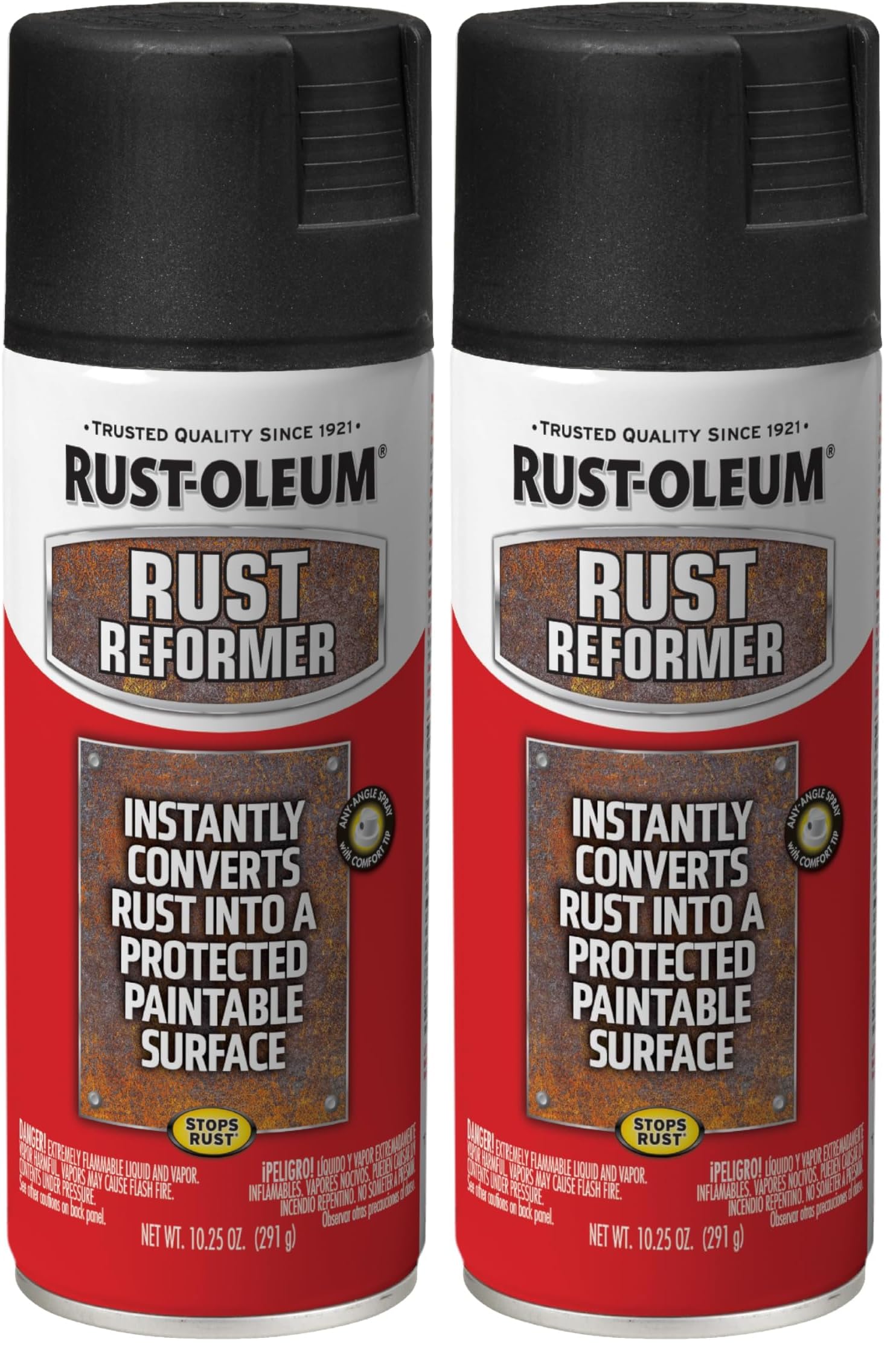
3. Rust-Oleum 248658 Rust Reformer
The no-sanding spray that converts rust into flat black and stops it from spreading
This is the shortcut every rust-belt homeowner wishes they’d found sooner — you don’t have to grind the metal down to bare steel. The oil-based formula chemically bonds with the rusty surface and instantly converts it to a flat black, paintable surface that blocks future rust. Each can covers about 10 sq ft, and the matte finish gives under-car parts a clean, uniform look.
Performance is what everyone praises — people living in the rust belt report spraying it on a frame without sanding, letting it dry a few hours, and watching the rust stop spreading entirely. As owners put it, “didn’t even sand the rust at all just sprayed this on.” It dries tack-free in 20-40 minutes, and you should wait the full 24 hours before laying down a topcoat. The any-angle spray technology means you can use it upside down to reach awkward spots under the car.
The 10.25 oz can (pack of two) is a converter, not a long-term barrier, so it works best as a rust-treatment step before paint or undercoating. It is not waterproof on its own, so for an exposed frame you’ll want a topcoat. The honest take: for converting crusty metal into a paintable surface with minimal effort, this is the fastest path.
best converter: the traditional sand-to-bare-metal routine — it saves the elbow grease entirely on surface rust.
skip if bare: anyone needing a waterproof final barrier, because this is a primer step, not a sealer.
4. B’Laster Surface Shield
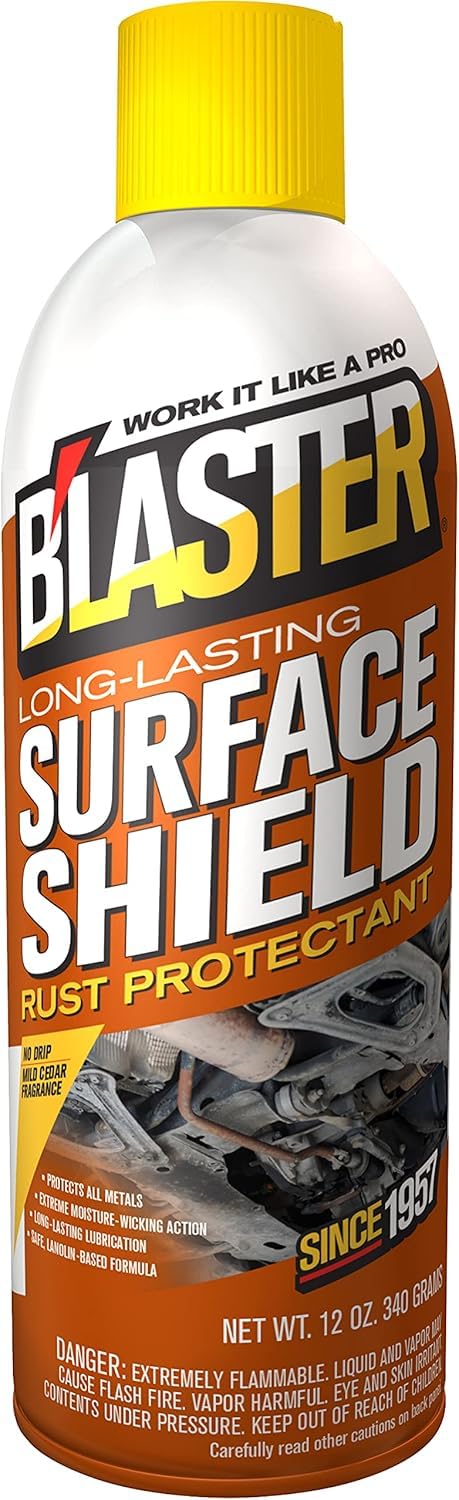
The thick lanolin barrier that clings without sagging and holds up to pressure washing
If you drive through Ohio or any brine-soaked winter, this is the undercoating that keeps an undercarriage looking new. The thick lanolin-based formula (a waxy grease derived from sheep’s wool) clings to metal without sagging or dripping, and it aggressively displaces moisture to stop corrosion in automotive, marine, and outdoor environments. One can covers roughly a third of a truck’s underside, so the 2-pack gives a solid start on a full-size vehicle.
It forms a waxy seal that doesn’t drip the way thinner oils do, yet it spreads back out if the coating gets dinged, which is the self-healing behavior you want in a winter barrier. It resists high-pressure washing, so your protection stays put when you blast the undercarriage at the car wash.
The recurring gripe is nozzle clogging — some cans spray unevenly or plug up, so shake the can well, especially if it’s been sitting in the cold. The formula can thicken in low temperatures, so a thorough shake before spraying is non-negotiable. For rust-belt winters, this is a proven, professional-grade option that understands the assignment.
best for salt: you want a thick, dripless undercoating that survives high-pressure washes and a full season of road salt.
skip if reapply: you can’t deal with a finicky nozzle — a few cans arrive with clogged spray heads that need clearing.
5. BOESHIELD T-9
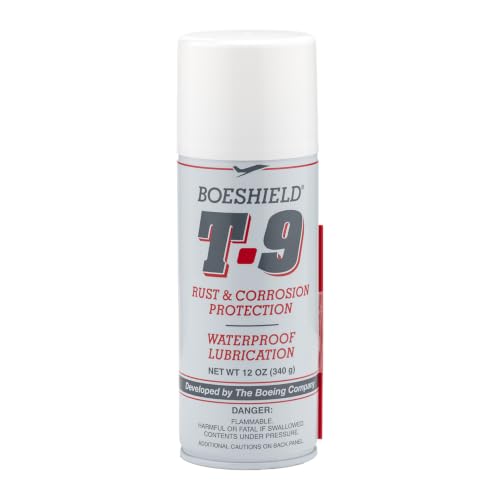
The lubricating protectant that stays dry and doesn’t attract a layer of grime
Boeshield T-9 is the product for the person who wants rust protection without the oily mess that picks up every speck of dust in the garage. It’s a lightweight spray that provides long-lasting rust and corrosion protection while also reducing friction on moving parts. The 12 oz can works across cars, boats, RVs, bicycles, and outdoor equipment, and it dries quickly to a film that doesn’t feel slimy.
Lubrication is what it’s known for — and the wet-environment performance is exceptional. Customers note it fixed a sagging microwave door latch by letting the handle hit the nylon rollers smoothly, and it keeps pool stainless parts from re-rusting after treatment. The thing users consistently note is that it’s not slimy like other protectants, and it doesn’t leave a gummy mess. It’s also biodegradable and non-toxic, which matters if you’re spraying near plants or in a workshop without perfect ventilation.
The catch is that greasiness gets mixed reviews — some find it keeps things clean while others report a gummy residue. It’s also a lighter film than a heavy undercoating, so it’s better suited to tools, latches, and moving parts than a full chassis. For a garage-kept vehicle or a tool collection, this is the clean, effective choice.
best for hinges: tools, latches, garage door tracks, and any moving part that needs protection without a greasy feel.
skip for frames: it’s a lubricating film, not an undercoating — don’t expect it to armor a salt-exposed frame.
6. CorrosionX Heavy Duty (12 oz)

The dripless, self-healing shield built for five years of indoor or two years of outdoor duty
This is the heavy artillery for boat trailers, barn doors, and agricultural equipment that live in harsh, saltwater environments. The thick, non-conductive formula is designed for larger terminals and connectors — battery posts, grounding lugs — where you need rugged sealing without harming sensitive components. It won’t drip, won’t wash away under pressure washing, and it flexes with your gear instead of flaking or cracking when machinery vibrates.
The defining spec is the lifespan: it keeps working for up to 5 years indoors and 2 years outside. That’s the reason marine owners keep coming back — one buyer used it monthly on a boat motor and watched salt corrosion stop completely, keeping parts looking new. It uses Polar Bonding, which locks onto surfaces to stop electrolysis and galvanic damage in places you can’t see, from engine bays to salty docksides. The formula works on metal, rubber, and plastic alike.
The honest trade-off is in the texture — it’s a thick, goopy coating that stains hands and clothes, and it attracts dirt that makes things look grimy after months. Some find the price steep for a 12 oz can, though the durability justifies it for marine use. If you need one product to armor a saltwater-trailer hitch or a winch that lives at the coast, this is the one.
best for chassis: you need multi-year protection on marine or agricultural equipment that faces salt spray and pressure washing.
skip if indoor: the sticky, staining texture means gloves and old clothes — and the grime it attracts is purely cosmetic.
7. POR-15 Rubberized Undercoating

The rubberized coat that blocks moisture and deadens road noise in one pass
When a classic car restoration needs undercarriage protection, this 22 oz black rubberized coating is the trusted name. It’s built on POR-15’s rust-preventive technology to shield the chassis and undercarriage against moisture, salt, chemicals, dust, heat, and cold. On top of corrosion protection, the rubberized formula creates a sound barrier that reduces vibration and deadens noise in wheel wells, quarter panels, and under the car.
The coverage is substantial — 20-25 sq ft per coat — and reviewers point out 7-8 cans covering an 8-foot truck bed and extended cab, with extra left for rockers and cab corners. Proper prep matters: remove loose rust, dirt, and grease, shake for at least a minute, and spray from 12-16 inches away. It dries in about an hour before you can touch it or recoat, and it’s best applied over POR-15 Rust Preventive Coating for maximum bond.
The verdict from owners is that it works beautifully with proper prep — one transformed a rusty spare tire well and blocked moisture and sound in one go. The recurring issue is nozzle clogging during use, which interrupts the spray. It also sprays thick and can drip if you over-apply. For a full underbody job on a restoration, this is premium armor that also quiets the ride.
best underbody: classic car restorations and wheel wells where you want rust armor plus road-noise reduction in one coat.
skip if quick: nozzle clogging is a known annoyance, and the thick spray demands careful, even application to avoid drips.
8. CRC Heavy Duty Corrosion Inhibitor (4-Pack)

The hard-wax film that stays on through pressure washing and lasts over a year
For saltwater boat trailers and rust-belt trucks, this 4-pack of 10 oz cans gives you a long-term, flexible corrosion inhibitor that dries to a hard, invisible wax. It protects and preserves metal surfaces, electrical connections, engine components, and fasteners that face salt spray and high humidity. The wax formula adheres better than lanolin products and survives pressure washing — a key test for any undercoating.
The durability numbers impress. Shoppers say a hitch and rear axle looking near-new after 6 years in the rust belt with annual fall reapplication. A 3-year test on a new Jeep Wrangler in a saltwater beach environment showed no rust after two coats. It dries like a hard wax that doesn’t wash off, and it’s self-healing when warm. The recommended lifespan is around 2 years, and some push it to 1.5 years comfortably before reapplying.
The trade-offs are real: the initial amber color looks like rust before it cures, the fine mist demands a mask and face shield, and the strong Cosmoline-like odor lingers for days. The cans also tend to clog in cold weather. For thorough coverage you’ll want 6+ cans for a full vehicle, but 2 cans handle targeted areas. It stays on far better than fluid film, and the 4-pack value is tough to argue with for serious undercoating work.
best for tools: you want a hard, invisible wax that shrugs off pressure washing and lasts a full winter on a saltwater trailer.
skip for cars: you’re sensitive to strong chemical odor or want an easy-breezy spray — this demands a mask and careful cold-weather handling.
9. Eastwood Internal Frame Coating

The rust converter and preventer that sprays inside frame rails with a 360-degree wand
Rust starts where you can’t see it — inside the frame rails. This 14 oz aerosol is a two-in-one rust prevention and removal formula designed specifically for internal chassis protection, with an extension tube that reaches into frame openings and bolt holes. It converts existing rust and prevents new formation in one application, eliminating the need for future maintenance on those hidden cavities.
The special 360 spray wand is the defining feature — it ensures the coating reaches every angle inside the frame. Buyers report it coats internal frame rails on a Jeep JKU beautifully, dries fast, and works precisely as advertised. The gloss black finish cures fully in 24 hours, and the 50 sq ft coverage per can stretches across a good portion of a truck frame. It’s also rated waterproof, so the protection holds against moisture.
The honest catches: the extension tube lacks support and can flail, and the fumes are potent enough that you’ll want open air or a well-ventilated space. Some cans arrive with spray issues, and the value perception is mixed given the price per can. Owners recommend ordering one more can than you think you need. For reaching the inside of a frame where rust silently spreads, this is the specialist tool.
reaches inside frames: the 360-degree wand makes short work of internal frame rails and bolt-hole cavities that other sprays can’t reach.
strong fumes: the fumes are seriously strong — use it outdoors, and budget a spare can because the tube wand can be fiddly.
Understanding the Specs
Dielectric Rating
A dielectric spray is a non-conductive coating that blocks electrical current. When a product lists a high voltage rating (like over 39,000 volts), it means you can safely spray it onto live battery terminals, sensors, and circuit boards without causing a short. This matters if you want to protect electronics and connections, not just bare metal.
Self-Healing Film
A self-healing coating flows back together when it gets scratched or punctured, so the metal underneath never gets exposed to moisture. Waxy and lanolin-based products tend to do this — as owners note, the coating “spreads back out if it gets dinged.” This is the difference between a barrier that lasts a season and one that lasts years.
FAQ
Can I spray a rust inhibitor over existing rust?
How long does a rust inhibitor actually last?
What is the difference between a rust converter and a rust barrier?
Can I use these sprays on electrical components?
Will an undercoating survive a pressure washer?
How do I spray inside a frame rail?
Is BOESHIELD T-9 safe for the environment?
What is lanolin and why do rust inhibitors use it?
Final Thoughts: The Verdict
For most drivers, the vehicle rust inhibitor to start with is the CorrosionX because its dielectric film and deep penetration protect electronics, free seized bolts, and lubricate marine gear all at once. If your main enemy is winter and you want a thick, dripless underbody barrier, grab the B’Laster Surface Shield for its self-healing lanolin coating. And for a crusty frame you’d rather not sand, the Rust-Oleum Reformer converts rust to paint-ready black in one spray — and at that crowd-pleasing 4.7-star score, it’s the value pick a lot of owners trust.
How We Picked
We do not accept paid placement. Every pick is matched to a real buyer and a real use-case; we do not hands-on test units.
Sources & Methodology
Specifications: manufacturer listings and product documentation. Review insights: verified customer reviews, as of August 2026. Pricing: not shown on this page (it changes often); check the current price via the retailer link.
As an Amazon Associate, GoCarLife earns from qualifying purchases. This does not affect which products we feature.