
Our readers keep the lights on and the garage heater humming. As an Amazon Associate, I earn from qualifying purchases.
Specs are compiled from manufacturer listings and verified buyer reviews and can change over time — please confirm the key details on the product page before buying.
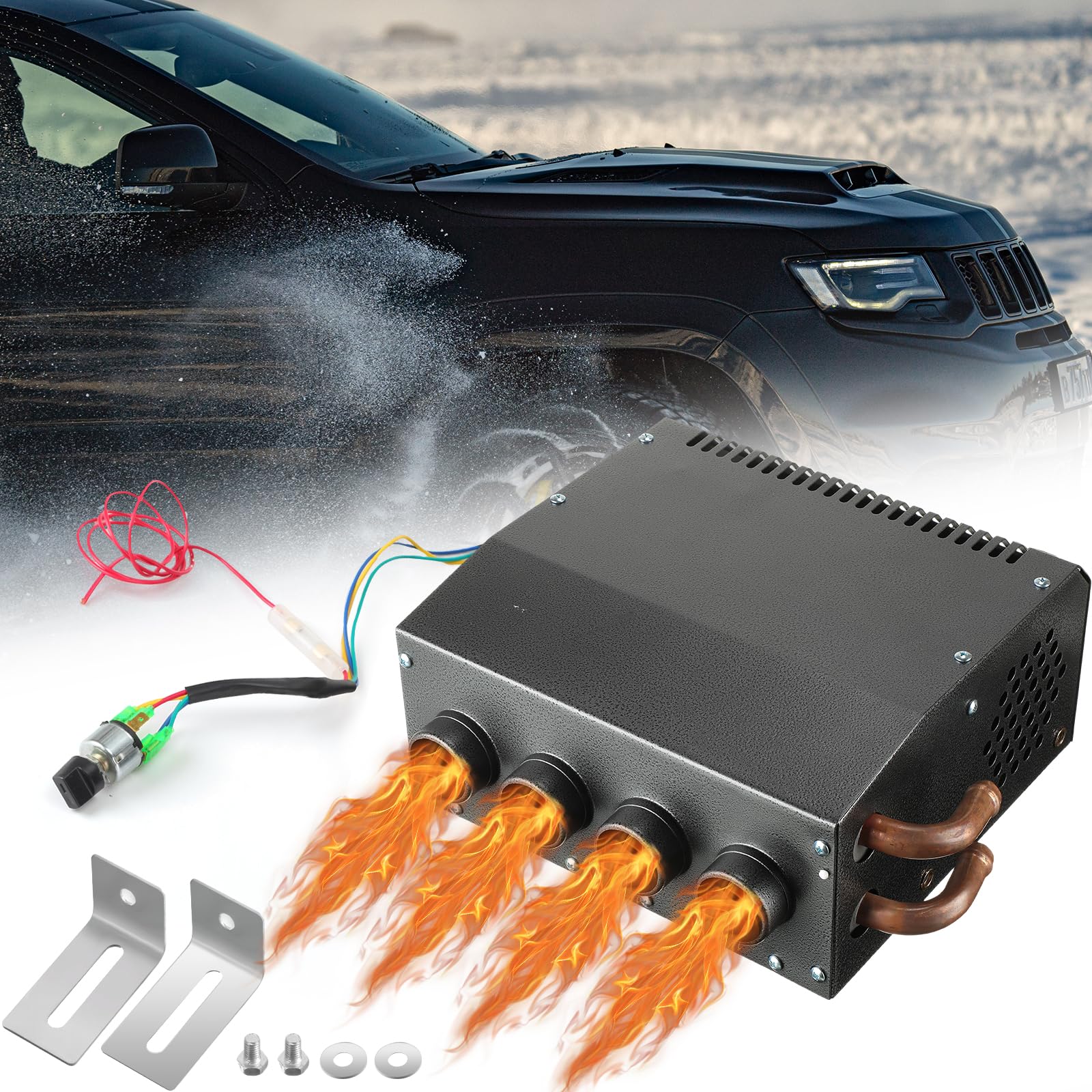
When your truck’s heater dies or your work rig never had one, you don’t have to freeze. A vehicle portable heater pulls heat from your engine’s coolant and uses your 12V (car battery) system to blow warm air into the cabin, clearing fog and frost without a costly shop repair. The real choice is between a unit that taps into your radiator hoses for serious warmth, or a simple plug-in model for a quick blast of air.
I’m Mo Maruf — the founder and writer behind GoCarLife. This guide is built by comparing the manufacturers’ published specifications and the patterns across verified customer reviews, so you get each pick’s real strengths and trade-offs instead of marketing spin.
Whether your daily driver lacks heat or you need cabin warmth on a frozen job site, the right vehicle portable heater turns a brutal commute into a bearable one without emptying your wallet.
Our Picks at a Glance
How To Choose The Best Vehicle Portable Heater
The biggest mistake buyers make is expecting a plug-in 12V fan to replace a real heater. Most of those only blow air at whatever temperature the cabin already is. For actual warmth, you need a coolant-based unit that routes your engine’s hot antifreeze through its own core.
Coolant vs. Electric: Know the Difference
A coolant heater connects to your vehicle’s heater hoses, using the engine’s already-hot antifreeze as the heat source. These produce serious BTU output. A simple 12V electric plug-in unit (like a 150-watt fan) is compact and portable, but it will only help defog a windshield slowly — it cannot match the raw warmth of a coolant unit. Decide which you need before you buy.
Hose Size and Installation Realities
Most coolant-based units require a 5/8″ (16mm) inner diameter water hose, which you’ll usually need to source yourself. Check your vehicle’s existing heater hose size before ordering. You’ll also want to confirm the included mounting brackets and clamps are up to the job — flimsy clamps are a recurring complaint across several of these heaters.
Quick Comparison
| Model | Best For | Heat Output | Weight | Ports | Amazon |
|---|---|---|---|---|---|
| 12V Car Heater Defroster★ Best Overall | Quick windshield defogging | Warm air blower | 7.92 lbs | 4 | Amazon |
| XuSha 8000 BTUTop Performer | Serious coolant-fed heat | 8000 BTU | 7 lbs | 4 | Amazon |
| Upgraded 12V Universal Heater | Underdash installation | High (coolant-fed) | 6.93 lbs | 4 | Amazon |
| Koolatron 12V | Portable plug-in fan/heater | 150 watts | 12.8 oz | 1 (fan) | Amazon |
| Saihisday 12V Auxiliary | Budget underdash warmth | Coolant-fed blower | 7.04 lbs | 4 | Amazon |
| TOP-MAX 50W | Compact tractors & RVs | 8500 BTU | 3.39 lbs | 3 | Amazon |
In‑Depth Reviews
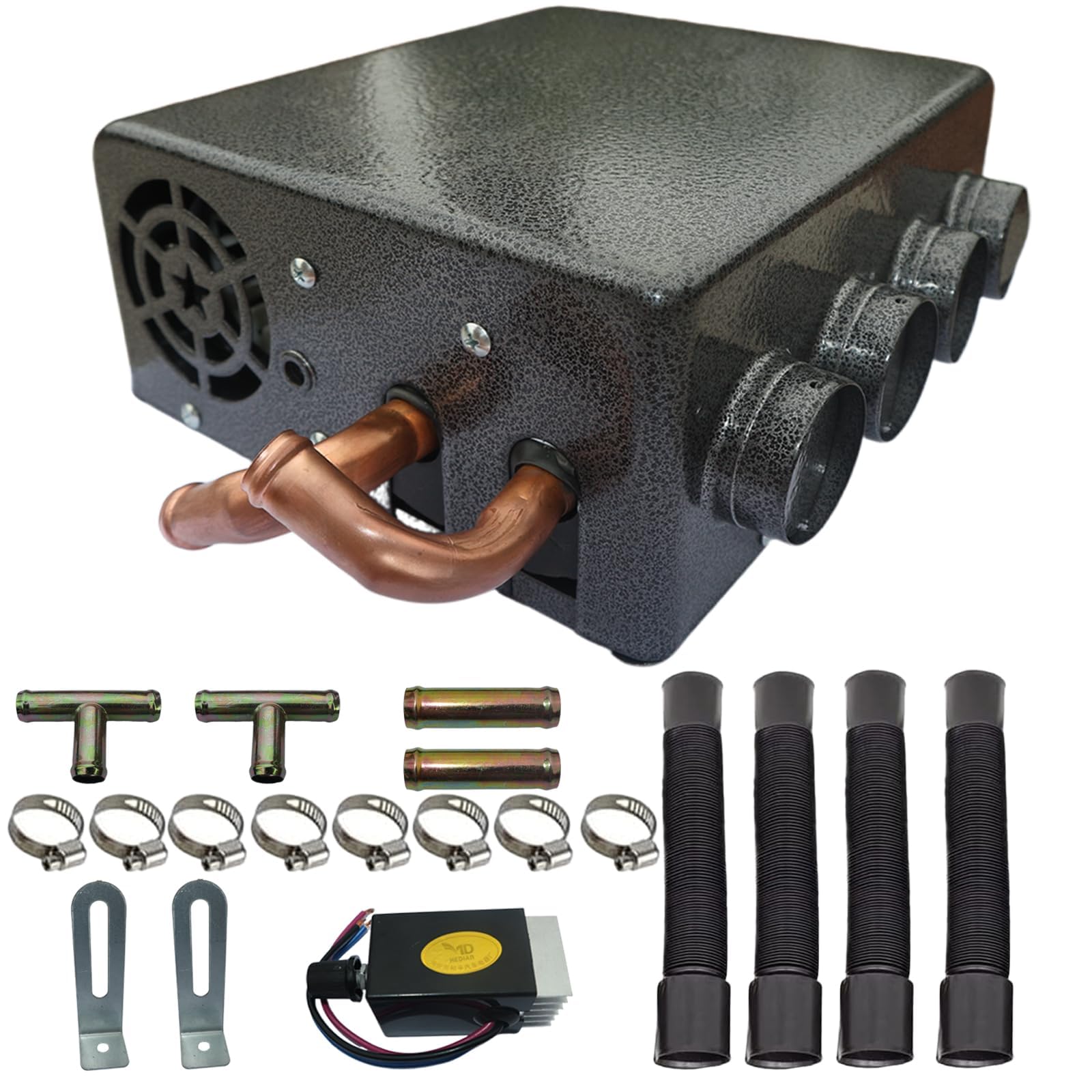
1. 12 Volt Car Heater Defroster 4 Ports
The versatile four-port defogger that revives a classic van’s missing heat.
If you drive a vintage truck or classic car with a missing or dead factory heater, this unit fits the bill. Its compact size — about 10.24 x 9.84 inches (26 x 25 cm) — mounts low under the dash so it won’t block your view, yet its strong blower pushes warm air through four ports aimed at the windshield and foot well. One owner used it to bring a 66 Ford Econoline back to life after the original heater assembly was gone entirely, and it performed well enough to earn a recommendation at its price.
Managing expectations matters here. Buyers report the output as “warm – not hot like my stock heater,” with strong fans and only a little whining noise. That’s fine for keeping a cabin “bearable” through a northeast winter, which is exactly what the reviews describe. The trade-off is that it’s more of a supplementary heat source than a roaring furnace, and a rare unit has arrived leaking with no heat at all — so give yours a bench test before a full install.
It clears fog, warms feet, and runs quietly on a 12V system, making it the most complete all-rounder for older vehicles.
Real-world verdict: A proven, well-rounded defroster for classics and daily drivers alike — just don’t expect stock-heater heat levels.
The honest catch: Hear it before you commit; a few units arrived leaking, and output is “warm” rather than hot.
Reach for this if: you drive an older vehicle missing its factory heater or need reliable multi-direction defogging.
Look elsewhere if: you demand roast-your-toes heat output — this is a strong blower, not a furnace.
2. XuSha 8000 BTU 4 Ports 12 Volt Universal Heater
The coolant-fed workhorse that keeps you warm wheeling on a 16° day.
When you need real heat, not just moving air, this is the unit that delivers. It’s rated at a serious 8000 BTU — the highest outright heat figure among coolant-based options here — and it taps straight into your existing heater hoses. The proudest owner story is a UTV with soft upper doors that kept its driver “warm wheeling on a 16° day,” which tells you this isn’t a cosmetic accessory. It’s a common workaround for bypassing a failed heater core buried in the dash.
Installation is straightforward but requires planning. You’ll need a 5/8″ (16mm) inner diameter water hose, which is not included, plus a coolant source. The unit itself is compact — 10.6 x 8.4 x 4 inches — so it fits neatly under a dash or in a tight cab. Owners praise its heat and function, though value opinions split—most call it a bargain that avoids a shop repair.
The honest downsides: some units arrive missing mounting screws (the bag may have been opened), and a handful report cab vibration and a switch that burned out. Since heating depends entirely on your vehicle’s water temperature, it won’t feel instant — but once the engine warms, this thing puts out plenty of heat for the money.
What wins people over
- Real 8000 BTU heat output from engine coolant
- Great for bypassing a failed heater core without a shop bill
- Compact low-profile size for tight underdash mounting
What to watch
- 5/8″ hose not included — you must supply your own
- Occasional missing mounting screws on arrival
- Noise and switch burnout reported by a few owners
Best for: UTV owners, hot rodders, and anyone with a dead heater core who wants genuine warmth on a budget.
Not for: buyers who want a quick plug-in-and-go setup — this needs coolant hoses and a bit of wrenching.
3. Upgraded 12V Universal Auxiliary Heater Underdash
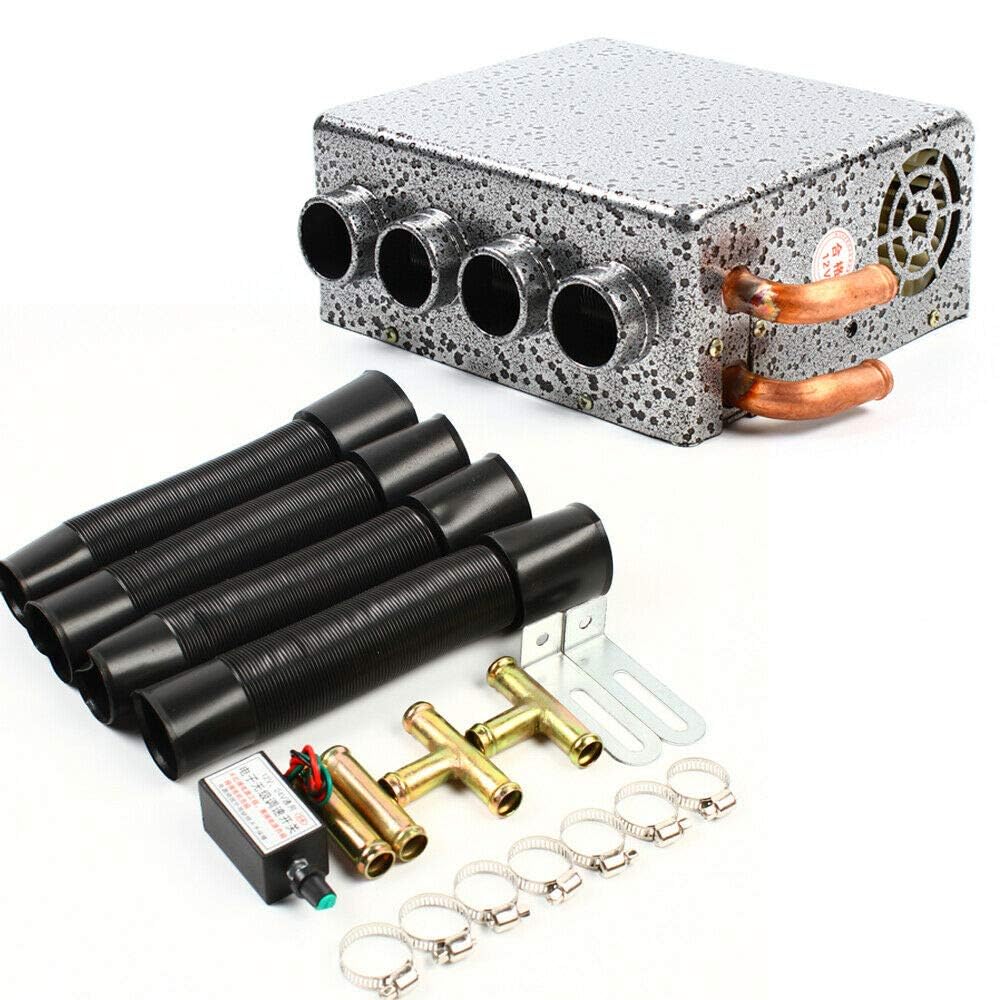
The underdash unit that resurrected a 2007 Ford Edge’s dead heater core.
This heater shines when your factory heat is gone and you want a clean, permanent-feeling fix. It’s designed for trucks, minivans, excavators, and harvesters, and it installs via 5/8″ (16mm) coolant hoses with included brackets and a speed control switch. The standout real-world story is a 2007 Ford Edge SEL owner who used it exactly when the core heater failed, wiring it through an 8A min/10A fuse and praising it as “excellent value.”
Construction is a step above the pack: a copper and thickened iron body built for tough environments, with a stepless adjustment knob for fine-tuning airflow. At 11 x 9 x 3.93 inches, it’s the largest of the coolant units here — slightly longer than the XuSha’s 10.6 inches — but that size accommodates a bigger core. It holds the strongest owner consensus on functionality and heat output in its price class, with one UTV snow-work owner calling it a “GOOD HEATER” and recommending it highly.
The recurring gripes are predictable: the provided clamps strip out under pressure, and some find it good for auxiliary heat but not a full replacement for a main heater. The electric switch and fan speed control are clearly printed with wiring directions, which resolved earlier confusion. Balancing build, heat, and price, this is the group’s value pick.
Bottom line: A durable, energy-saving coolant heater that solves a dead-core problem properly — if you beef up the clamps.
Fair warning: The included clamps are the weak link; budget for better hose clamps at install.
Choose it for: a permanent underdash fix in a daily driver, van, or heavy equipment cab.
skip it if: you want supplemental warmth only and can’t spare the underdash real estate.
4. Koolatron 12V Portable Car Heater & Defroster

The featherweight 12.8-ounce plug-in that fits any cupholder for a quick defog.
Need heat on the go without any installation? This portable unit plugs into any 12V outlet — no tools, hoses, or mounting required. At just 12.8 ounces, it’s far lighter than the 7-pound coolant-based models in this guide, and its 6.6-foot power cord lets you place it anywhere in the cabin. You can tilt the head 45° vertically or 90° horizontally to aim the airflow precisely, and it also works as a fan in summer.
At 150 watts of power draw, it’s the lowest-consumption option here, so it won’t strain your electrical system. The 1-year warranty adds some reassurance. But set your expectations: 150 watts of resistive heat is minimal, and owner reviews are sharply divided. Some say it “kicks” for napping at rest stops with windows cracked, while others report the air “is NOT heated at all” and it only barely helps defog. A few even mention burnout from drawing power from the car.
Honestly, this is a compact fan with a heating element, not a cabin warmer. It’s ideal for a quick windshield scuff or a bit of warm air on a short trip, and the adjustable angles are genuinely useful. For real winter heat, the coolant units above are far stronger—but they weigh nearly 7 pounds more and need installation.
Why it’s useful
- Tiny 12.8-oz size is truly portable and tool-free
- Adjustable 45° vertical and 90° horizontal aiming
- Doubles as a fan and comes with a 1-year warranty
Its limits
- 150 watts won’t produce serious heat — owners mention lukewarm or cool air
- Reports of burnout and power draw issues on some units
Grab it for: a cheap, portable defogger for occasional use or a rest-stop fan on mild days.
Don’t expect: cabin-warming power — this is a convenience accessory, not a heater replacement.
5. Saihisday 12V Car Auxiliary Heater, 4 Ports

The budget four-port unit that saved a Chevy S-10 owner hundreds of dollars.
If you want a budget coolant heater that delivers on its promise, this is it. A 1998 Chevy S-10 owner with no heat in a single cab installed it and said it “works pretty well for what it is,” while another called it “well worth the money” after saving hundreds compared to a shop repair. Its strong blower motor and four vent holes handle defrosting, demisting, and cabin warmth, and the front-facing design mounts neatly under the dash.
Its best feature is value — owners repeatedly call it a good deal, and one Polaris Ranger 900xp owner rated it 4/5 for a “good built unit” that installs easily under the dash. At 7.04 pounds, it matches the XuSha’s weight and uses the same coolant-hose hookup. Wiring is straightforward: red to positive, blue to negative on the motor, black to negative on the supply.
Where it falls short: the blower motor draws the most criticism, with multiple owners calling it weak, and the functionality verdict is mixed. The hose clamps are described as “garbage” that strip out under pressure, and a defective switch showed up in one unit. For the money, it’s a serviceable heater for a single cab or small UTV — just budget for better clamps and don’t expect hurricane-force airflow.
For the price: A solid basic heater that rescues a dead-core vehicle without a shop visit — bring your own clamps.
The catch: The blower is noticeably weaker than pricier rivals and one defective switch slipped through.
Smartest for: first-time buyers on a tight budget with a single-cab truck or small UTV.
Consider another if: you need strong forced-air circulation across a large cab.
6. TOP-MAX 12V 50W Car Truck Heater
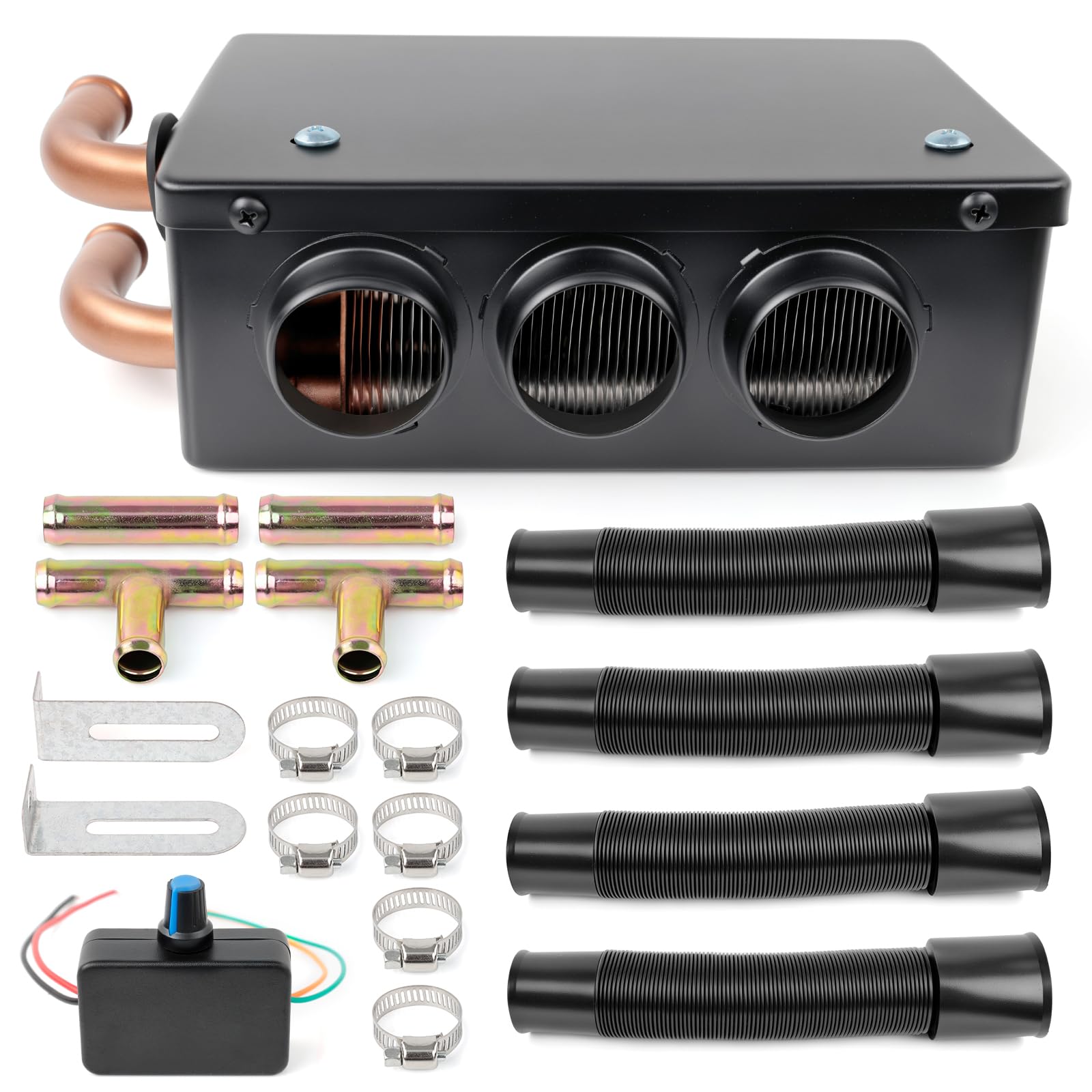
The featherweight 3.39-pound heater that warms a Kubota tractor cab with ease.
This lightweight specialist suits tractors, boats, and RVs where every pound counts. At just 3.39 pounds, it’s less than half the weight of the 7-pound coolant units here, yet it claims an 8500 BTU rating. The two built-in fans can spin to 6500 rpm, pushing air through three large 40mm (1.57 inches) outlets. A Kubota tractor owner called it a “great little heater” and a bargain, and a soft-cab tractor user said it “heats great” with a variable motor switch for speed control.
Its design uses quality materials—copper and iron shell, all-aluminum heat sink, and 8 thick copper tubes for rapid heat dissipation. The 50W power consumption keeps electrical draw minimal, and owners describe it as nearly silent. It runs on standard 12V at 10A, and the temperature range reaches approximately 175°F for quick fog and frost clearing.
The trade-offs are in the details. One unit arrived with water inlet tubes bent so badly that hoses couldn’t attach — and while it was well packaged, the tubes didn’t look new. Another owner had to swap the speed controller because the included one only ran at full blast. For a tiny cab or a soft-side tractor, this is a great fit; for a full-size pickup cabin, the airflow may feel modest.
Lightweight winner: Genuine BTU output in a 3.39-pound package — ideal for tractors and tight cabs.
Check before install: Inspect the inlet tubes on arrival; a unit has shipped with bent connections.
Perfect for: tractor cabs, boats, RVs, and anyone who wants heat without 7 pounds of extra hardware.
Not ideal for: large truck cabins that need high-volume airflow across a wide space.
Understanding the Specs
BTU (British Thermal Units)
This number tells you how much heat the unit can actually produce. The XuSha and TOP-MAX both claim 8000-8500 BTU, which is serious warmth for a cab. Lower-rated units with no BTU figure usually rely on simple electric elements — expect far less heat. For a coolant-based heater, the BTU rating reflects the core size and airflow, so it’s the first number to check.
Power Draw (Watts & Amps)
This is how much electrical load the unit puts on your 12V system. The Koolatron draws just 150 watts, making it light on your battery but weak on heat. The TOP-MAX uses 50W. Coolant-based units like the Sallurmose need at least an 8A min/10A fuse — they draw power for the blower motor only, since the heat comes free from your engine. Lower is easier on your electrical system but usually means less airflow.
Ports / Vents
The number of air outlets determines how much area you can cover and in how many directions. Four-port units spread warmth to the windshield, footwell, and across the cabin. Three-port units like the TOP-MAX focus airflow more narrowly. For defogging a wide windshield, more ports help; for a single-cab truck, three may be plenty.
Hose Fitting (5/8″ Inner Diameter)
Most coolant heaters connect to your vehicle’s heater hoses with a 5/8″ (16mm) inner diameter water hose. This is the standard size on most cars and trucks, but it’s often not included in the box — you’ll buy it separately. Measure your existing heater hose before ordering to make sure the unit will connect cleanly.
FAQ
Will a 12V plug-in car heater actually warm my cabin?
What size hose do I need for a coolant-based vehicle heater?
Can I use a coolant heater to replace a failed heater core?
How long does a vehicle portable heater take to get hot?
Will a 12V heater drain my car battery?
Is a plug-in heater or a coolant heater better for defrosting?
Can I install an underdash heater myself?
What’s the difference between a 3-port and 4-port heater?
Final Thoughts: The Verdict
For most people, the vehicle portable heater winner is the 12V Car Heater Defroster because it delivers reliable four-port defogging and cabin warmth at a friendly price point. If you need the most raw heat output for a UTV or hot rod, grab the XuSha 8000 BTU. And for a permanent underdash fix when your core heater dies, the Upgraded 12V Universal Heater is the one to reach for — just swap in better clamps at install.
How We Picked
We do not accept paid placement. Every pick is matched to a real buyer and a real use-case; we do not hands-on test units.
Sources & Methodology
Specifications: manufacturer listings and product documentation. Review insights: verified customer reviews, as of August 2026. Pricing: not shown on this page (it changes often); check the current price via the retailer link.
As an Amazon Associate, GoCarLife earns from qualifying purchases. This does not affect which products we feature.