
Our readers keep the lights on and the garage heater humming. As an Amazon Associate, I earn from qualifying purchases.
Specs are compiled from manufacturer listings and verified buyer reviews and can change over time — please confirm the key details on the product page before buying.
Plugging a laptop or mini-fridge into your car’s 12V socket asks that port to do something its tiny fuse was never designed for.. The real question is which adapter delivers clean, stable power without blowing a fuse or draining your battery overnight.. This guide sorts through plug-in chargers, hardwired sockets, and power inverters that earn their space in your glove box..
I’m Mo Maruf — the founder and writer behind GoCarLife. This guide is built by comparing the manufacturers’ published specifications and the patterns across verified customer reviews, so you get each pick’s real strengths and trade-offs instead of marketing spin.
You’ll learn which vehicle outlet power adapter matches your daily drive, your camping setup, or your work truck — and why wattage ratings often promise more than a cigarette lighter can safely deliver.
Our Picks at a Glance
How To Choose The Best Vehicle Outlet Power Adapter
Before you pick a model, you need to know what you’re actually powering. A phone charger and a laptop require completely different adapters, and a CPAP machine needs yet another type entirely. Match the adapter’s output to the heaviest device you plan to run, not the one you’ll use most often.
Match the Wattage to the Real Device
Check the power draw printed on your device’s charger brick. A phone pulls around 20W, a typical laptop wants 60-100W, and a mini-fridge or air compressor can demand 150W or more. If you plug a 300W-rated inverter into a cigarette socket to run a 300W appliance, you’ll trip the socket’s 10-amp fuse — car lighter circuits typically cap out near 120W-150W in practice.
Count Your Ports and Their Outputs
Not all USB ports charge at the same speed. Look for USB-C PD (Power Delivery) ports rated at 30W or higher for laptops and fast phone charging, and remember that a port’s wattage is the maximum — it splits across devices when you plug in several at once.
Think About Install and Battery Drain
Plug-in adapters are great for occasional use, but if you want a permanent setup, a socket you mount into a drilled hole and wire directly to the battery with a fuse gives you a cleaner result. Whatever you choose, look for a master power switch — without one, some adapters keep sipping power from your battery even when nothing is plugged in.
Quick Comparison
| Model | Best For | Output Power | AC Outlets | USB Ports | Amazon |
|---|---|---|---|---|---|
| Hapytrip 2-Pack Socket★ Best Overall | Hardwired DIY installs | 10A fuse | — | 2x QC 3.0 + 1x PD 3.0 | Amazon |
| SUPERONE 10-in-1 SplitterFamily Hauler | Multi-device families | 148W total | 3x 12V | 7x USB (1x 45W PD) | Amazon |
| vansoet 200W InverterEntry Inverter | Budget-friendly inverting | 200W cont. / 400W peak | 2x 110V | 2x PD (65W/30W) + 2x QC 18W | Amazon |
| LVYUAN 500W Inverter | Budget power tool charging | 500W rating | 2x 110V | 2x USB-A 1x PD 20W | Amazon |
| BESTEK 300W Classic | Proven road-trip workhorse | 300W cont. / 700W peak | 2x 110V | 2x 4.8A USB | Amazon |
| DrimMek 300W Inverter | Compact travel charging | 300W | 2x 110V | 1x 65W PD + fast USB | Amazon |
| Pro Chaser 400W Inverter | Mid-power mobility | 400W cont. / 800W peak | 2x 110V | 1x 65W PD + 1x QC 18W | Amazon |
| vansoet 400W Inverter | Clean LED status monitoring | 400W cont. / 800W peak | 2x 110V | 1x 30W PD + 1x 15W C + 2x 15W A | Amazon |
| BESTEK 300W Pure Sine | Sensitive electronics | 300W cont. / 700W peak | 2x 110V | 1x 30W PD + 1x QC 18W | Amazon |
In‑Depth Reviews
1. Hapytrip 2-Pack USB Outlet Socket
Our pick — over 4.5★ from 800+ verified ratings; the strongest balance of quality and price.
The permanent fix for anyone tired of dangling lighter-plug adapters..
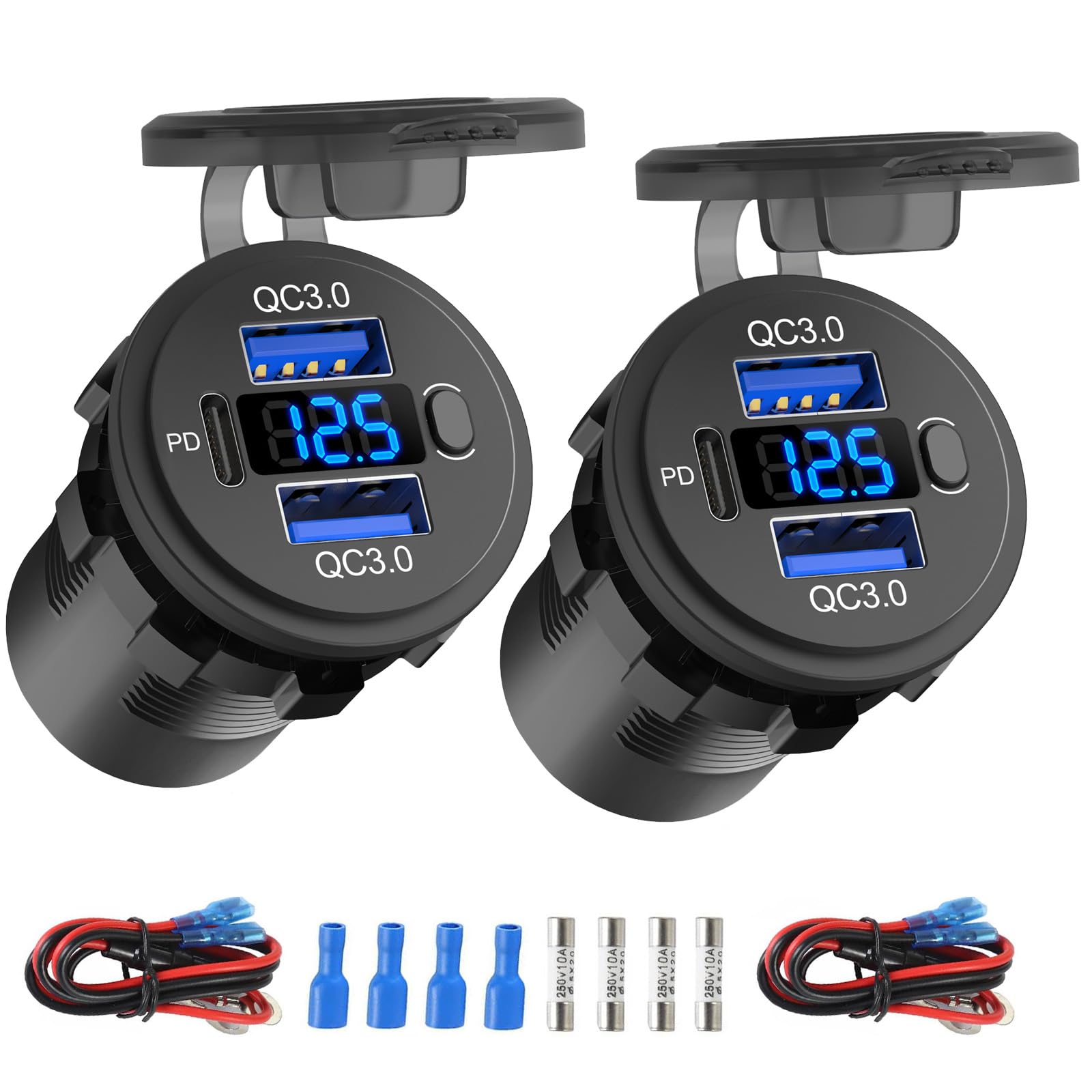
This package gives you two full socket units, each with three USB ports — two Quick Charge 3.0 and one PD3.0 USB-C. The 45W PD 3.0 USB-C port reliably powers an iPhone on CarPlay without rebooting., and buyers report the voltage display is accurate enough to trust. You drill a 1.18-inch hole, drop the socket in, and connect the red wire to the positive terminal and black to negative.
The push-button switch is the standout feature here, cutting power to both the voltmeter and the USB ports so your battery isn’t drained while the vehicle sits. People have flush-mounted these into RV cabinets and wired them straight to dual 12V batteries, adding four USB ports across their camper. On riding mowers and old pickups, the install has been called easy and the results very handy.
The catch is the fit — it requires a precise 1.18-inch hole, and some owners trimmed their openings to get a clean mount. It’s a 12V DC unit, so it won’t run AC appliances; this is purely for USB charging and voltage monitoring.
The Multi-Tool Mount
- Voltage display monitors battery and alternator health
- Push-button switch stops all standby power drain
- Two complete units in one box
DIY Demands
- Requires drilling and wiring, not plug-and-play
- Hole sizing needs a precise 1.18-inch bit
Reach for this if: you want a clean, professional USB setup wired into a truck, RV, or mower and never want to see a dangling adapter again.
Think twice if: you need to power AC appliances — this one is strictly 12V USB charging and monitoring.
2. SUPERONE 10-in-1 Splitter
The multi-device headquarters for a back seat full of tablets and phones.
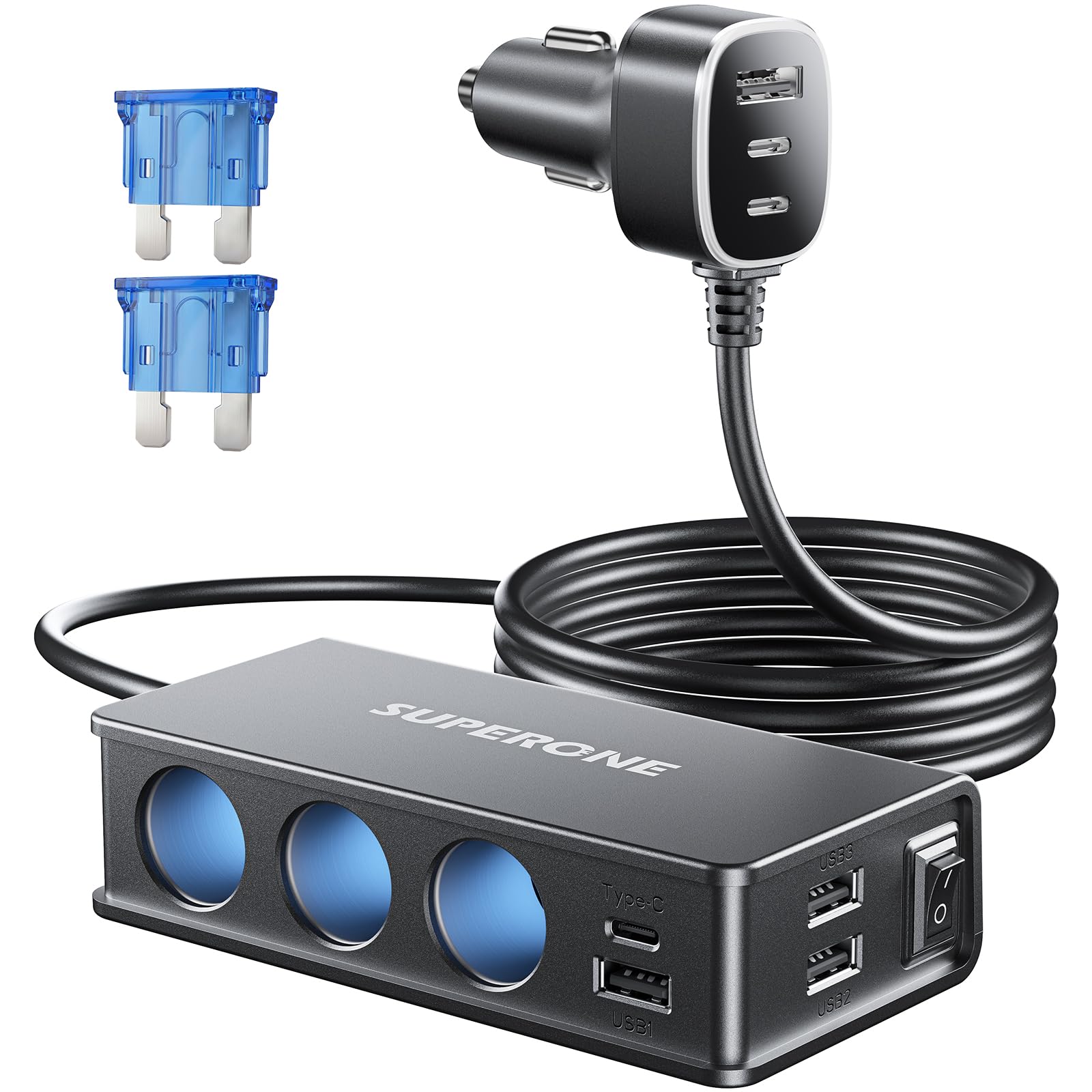
With three 12V sockets and seven USB ports pushing a total of 148W, this splitter can charge up to ten devices simultaneously. It’s the pick for road-tripping families and long-haul truckers who need GPS, dash cams, and a cooler running at once.
The 45W PD 3.0 USB-C port charges laptops and phones up to three times faster than a standard wall charger.. There’s a dedicated one-touch master switch that kills power to every port, eliminating battery drain when you park overnight. Owners love the ability to switch ports off without unplugging anything, and the indicator lights show exactly what’s live.
What wins people over is the cleanliness of the setup — no more playing socket roulette with a handful of chargers. The honest trade-off: the USB-A ports are noticeably weaker than the USB-C, with one buyer reporting a phone draining over four hours instead of charging.
The Control Center
- Total output of 148W across 10 ports
- 45W PD USB-C charges laptops on the go
- Master switch stops standby drain completely
Power Hierarchy
- USB-A ports output far less than the USB-C
- Compact footprint still takes up the whole lighter socket
Best for: families and truckers juggling a half-dozen gadgets who want one tidy hub with a hard kill switch.
Not for: anyone who needs AC outlets or relies on USB-A speed for a quick charge.
3. vansoet 200W Power Inverter
The budget-friendly bridge between USB-only and full AC power.
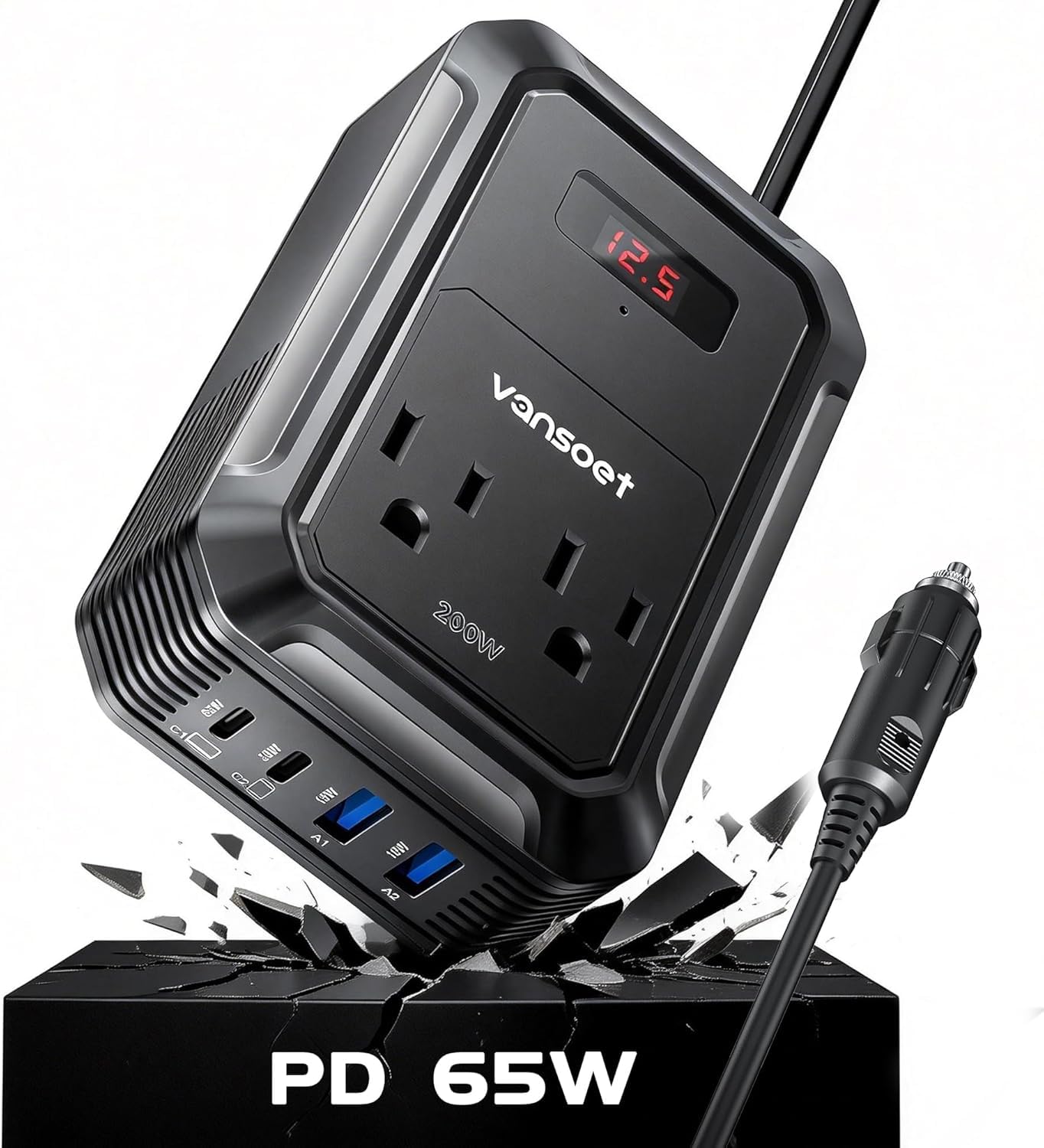
This compact unit converts your car’s 12V DC into 110V AC household power at 200 watts continuous, with a 400-watt peak for brief surges. It also packs two PD USB-C ports (65W and 30W) plus two QC 18W USB-A ports, so you can charge a laptop and phone while running a small appliance.
Buyers call it silent and cool-running, with the smart fan spinning up only as the load and temperature climb. A voltage display keeps an eye on your battery, and the whole thing tucks neatly into a glove box
There’s a real-world limit to respect: through the cigarette lighter plug, most owners advise staying under 120W or the fuse will blow. It’s ideal for laptops, string lights, and CPAP machines — not for high-watt appliances.
Quiet Workhorse
- Two PD USB-C ports charge laptops fast
- LCD display shows battery voltage
- ETL-certified with 18-month replacement warranty
The Lighter Limit
- Real-world power capped near 120W through the socket
- Not meant for high-watt heaters or kettles
Grab it for: a first inverter to charge laptops and phones across commutes and camping trips while staying affordable.
skip it if: you plan to run power tools or anything pulling sustained watts above its limit.
4. LVYUAN 500W Power Inverter
The aluminum-armored option that shrugs off bumps and keeps working.
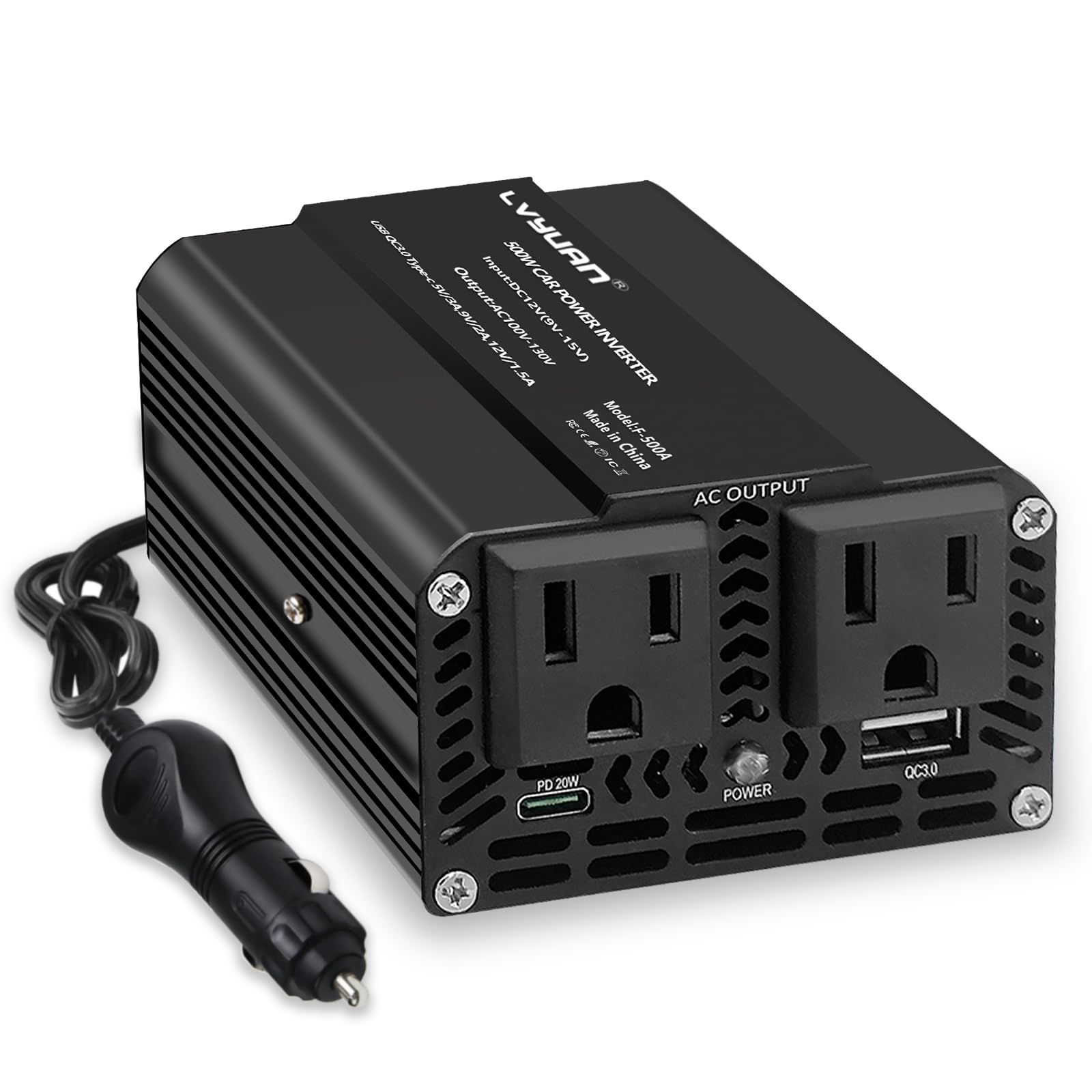
Rated to deliver 500 watts, this inverter pairs two 110V AC outlets with a PD 20W USB-C port and two USB-A ports. The full aluminum alloy housing means it handles drops and vibration better than most plastic rivals, and a built-in cooling fan ramps up to keep conversion efficient.
Buyers have run DeWalt tool battery chargers, power banks, and even an air mattress pump without trouble. The fan is audible when it kicks on, but not annoyingly so.
There’s an important warning that comes up repeatedly: this is not for heaters or anything else drawing heavy wattage from the lighter socket. One owner found the socket flipped and needed replacing after attempting a heater load.
Aluminum durability: the housing makes it unusually tough for the price, surviving drops that would crack plastic competitors.
Wattage honesty: rated 500W, but real-world use through a cigarette port is far more limited — treat the 500W as headroom, not a daily target.
5. BESTEK 300W Car Plug Inverter
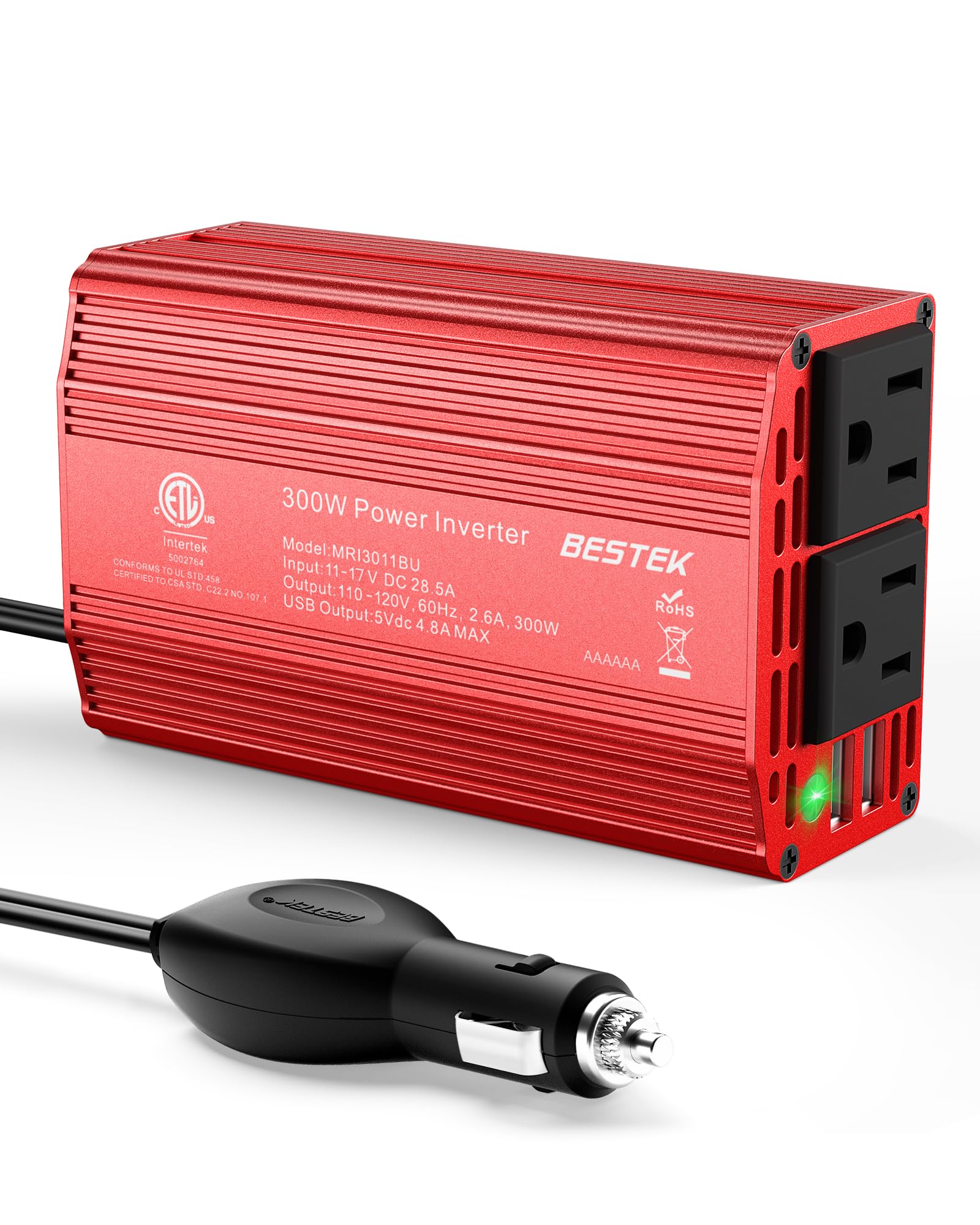
The road-trip legend with the fan that never stops watching your load.
This is the crowd favorite — a best-selling inverter that’s been proving itself for years. It delivers 300 watts continuous and 700 watts of instantaneous peak power to two 110V AC outlets, plus dual 4.8A USB ports for phones and tablets. The 32-inch cable reaches nearly anywhere in the cabin.
Buyers have inflated queen air mattresses, charged laptops, and run cordless tool battery chargers on the road. The aerospace aluminum housing survives drops, and the smart cooling fan runs silent until output climbs past 70W. The built-in 40-amp fuse protects everything downstream.
The honest limit is the car socket itself — at 180W the unit runs hot, and it can shut off around 240W. A 15-20A fuse on a car’s 12V circuit caps practical output near 150W.
The Trusted Traveler
- iPhone-sized design stores anywhere
- 5-year warranty from a leading inverter brand
- 70W+ fan curve keeps it quietly cool
Socket Ceiling
- No clamp option for bypassing the lighter port
- Runs hot near 180W sustained loads
The verdict: the default choice for campers and commuters who want a proven, compact inverter with a real warranty.
The caveat: plan to stay under 150W through the socket, and you’ll never meet its shutoff limit.
6. DrimMek 300W Inverter
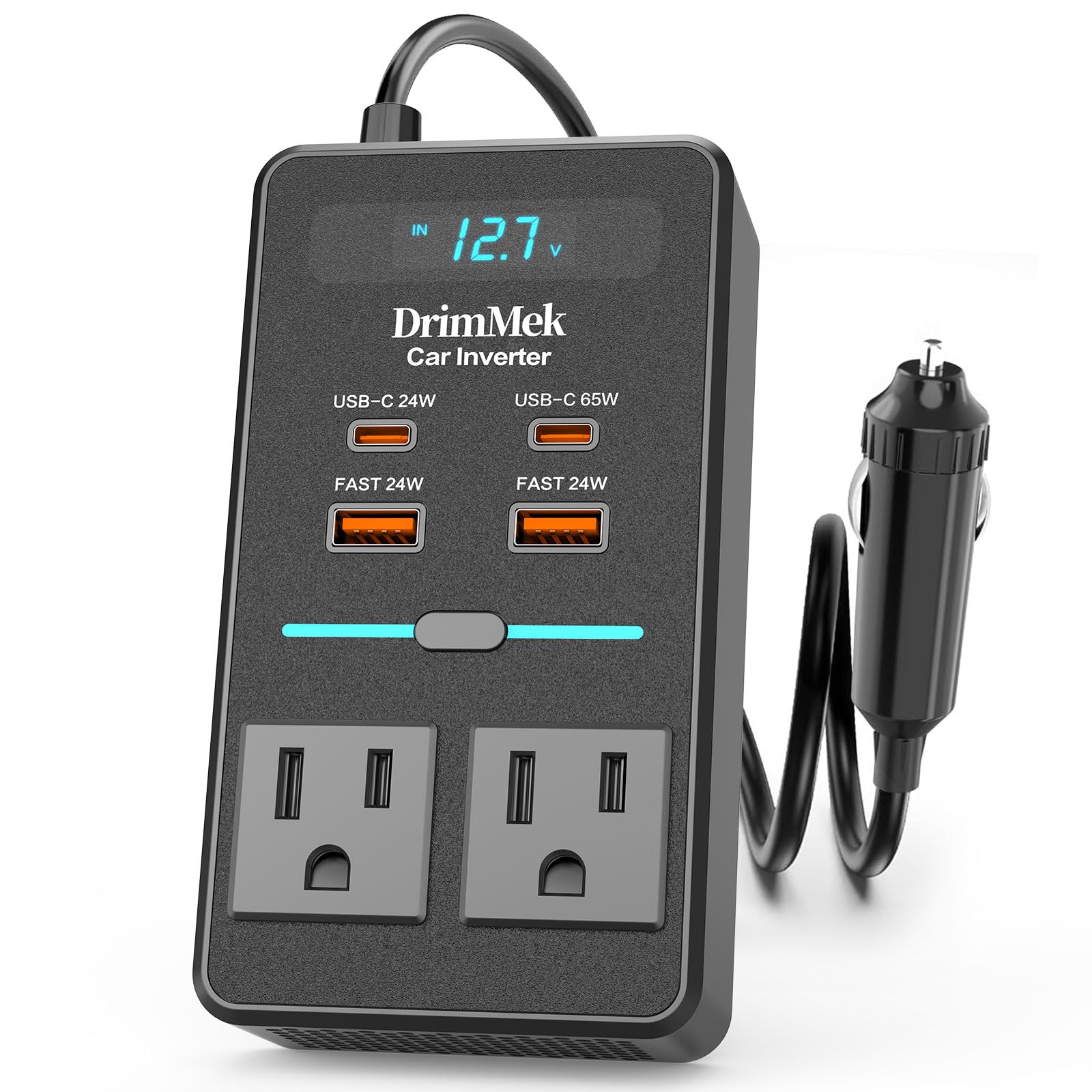
A slim, LCD-equipped companion for the working traveler.
At just 8 ounces and 5.5 x 3 x 1.4 inches, this 300W inverter slips into a glove box or center console without a second thought. It charges laptops through a 65W USB-C PD port alongside two AC outlets, and an LCD screen keeps you posted on the battery voltage in real time.
Owners call it a lifesaver for working from the car on road trips. A 45W charger performs excellently through the USB-C, and the AC outlets handle laptops and game systems with ease. The design is compact and modern, and it runs quietly.
The manual button press to activate is a deliberate anti-drain feature, but some owners miss a dedicated switch for the second outlet — it runs when the main unit is on.
On-the-go design: purpose-built for travel work — compact enough that buyers forget it’s there until they need it.
Safety budget: a one-year replacement-only warranty with 24-hour support backs the built-in overload and low-voltage protections.
7. Pro Chaser 400W Inverter
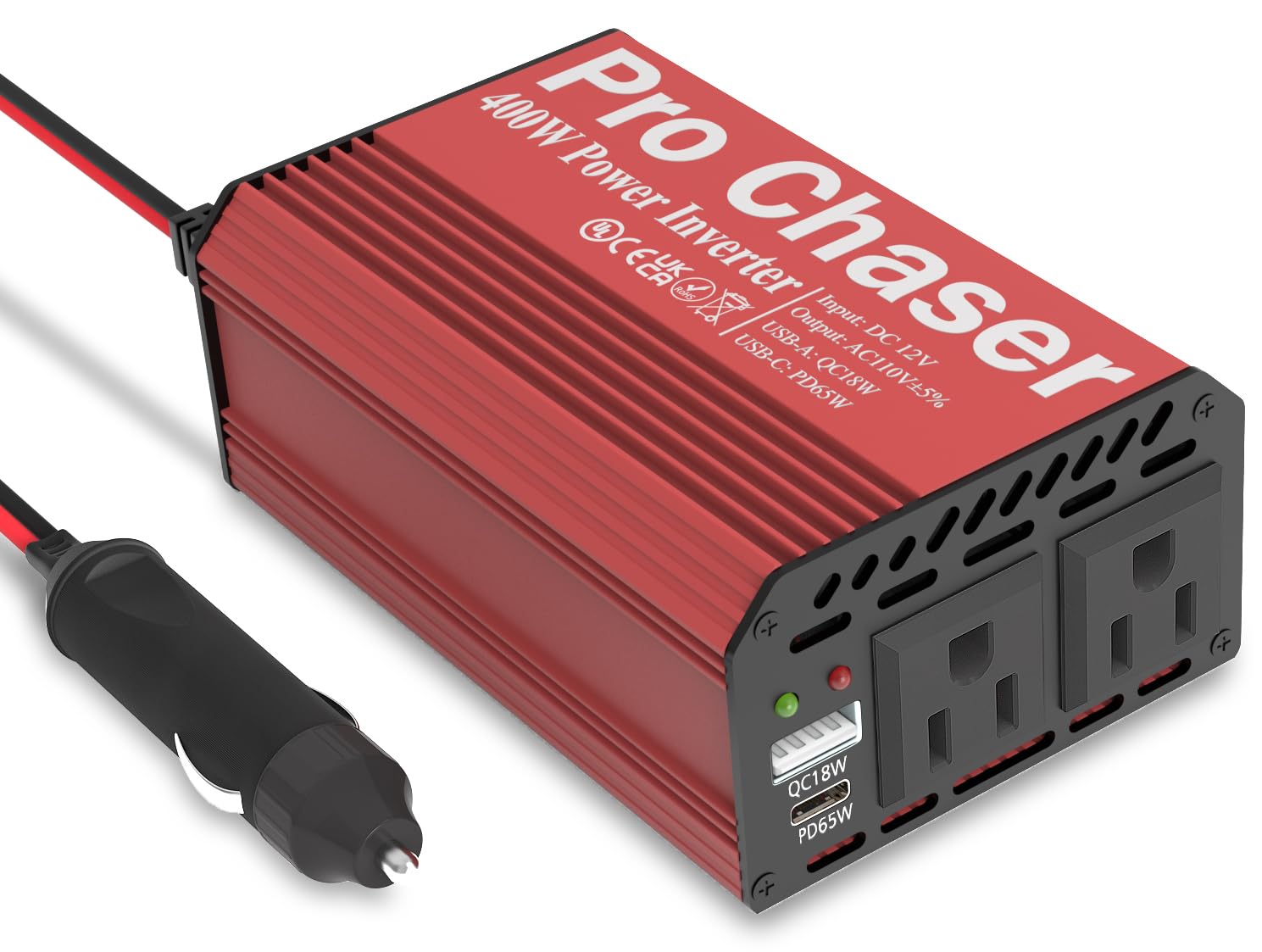
The extra reach that lets you power gear from the back seat.
With 400 watts of continuous power and an 800-watt peak, this inverter handles laptops, DVD players, and even bottle warmers through two AC outlets. A 30-inch (75 cm) cord stretches to the back seat, and the compact body rides easily in a glove box.
Owners mention it handles laptops perfectly under the 65W PD USB-C port, while the cooling fan stays quiet and the unit stays cool. The aluminum build feels solid, and the lighter-socket fit is secure.
The instruction is clear: connect one high-power device at a time. Running the PD65W port alongside a heavy AC load can exceed the vehicle socket’s limit, so plan your charging order.
Reach and capacity: the 30-inch cord plus dual outlets makes it the pick for back-seat device setups.
Fan logic: activates automatically at 113°F (45°C), keeping things quiet until the unit genuinely needs cooling.
8. vansoet 400W Inverter
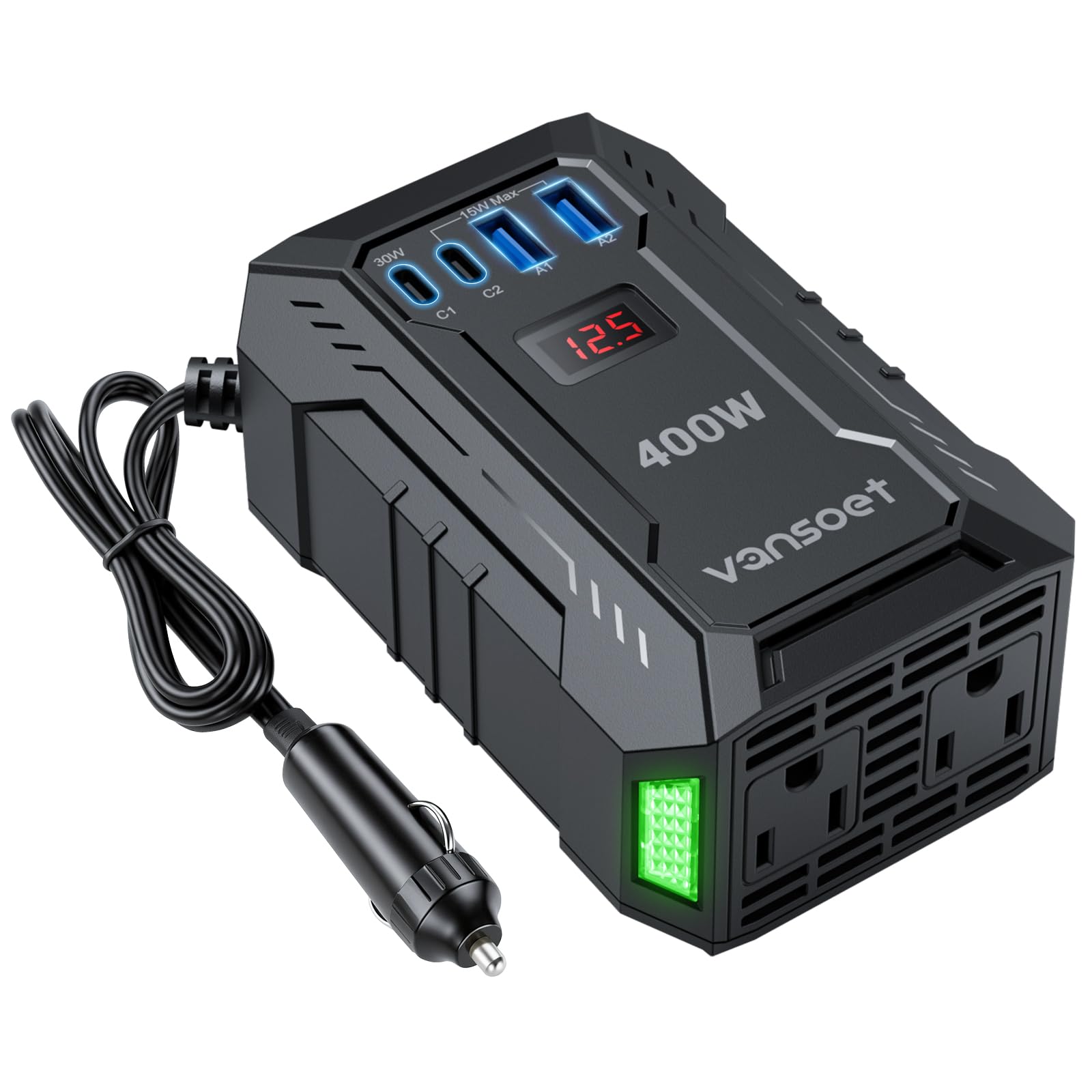
The status-light watchdog that tells you exactly what’s wrong.
This 400W inverter delivers clean 110V power to two AC outlets, joined by a 30W PD USB-C port, a 15W USB-C, and two 15W USB-A ports. The signature feature is a clear LED indicator: solid green means normal, red means a fault like overload or overheating.
It also has a dedicated AC switch so you can kill the outlets independently without unplugging the whole unit, and an intelligent fan that runs only when needed. Customers note a phone charging from 10% to 100% in about an hour..
The build gets mixed notes on plastic quality, and one owner found the 110V outlets spaced tightly for bulky plugs. The 12V plug can pull out with a hard tug.
The Watchdog
- Red fault light pinpoints over-voltage or short circuits instantly
- Dedicated AC switch saves power without unplugging
- Compact enough for a glove box
Plastic Reality
- Housing feels less premium than rivals
- Tight spacing between AC outlets
It beats the rest for: anyone who wants real-time fault monitoring and independent AC control in a 400W package.
Where it falls short: the plastic shell and tight outlet spacing make it better for basic use than heavy-duty abuse.
9. BESTEK 300W Pure Sine Inverter
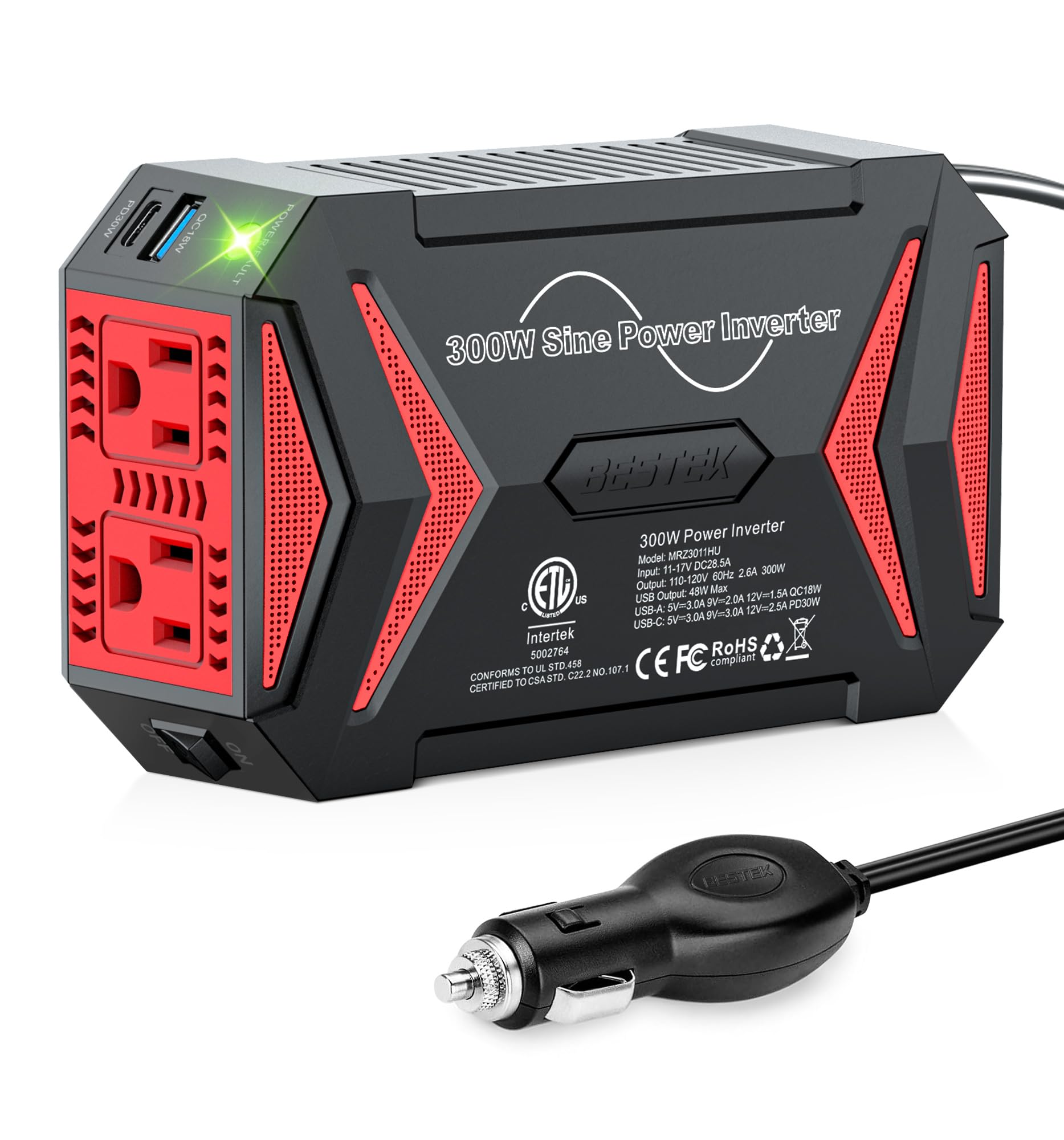
The clean-power specialist for electronics that hate dirty electricity.
This is the premium option because it outputs pure sine wave power instead of modified sine wave. That means the power coming out of the 110V outlets is as clean as your home wall socket — ideal for sensitive electronics like gaming laptops, medical nebulizers, and high-end audio gear.
It delivers 300W continuous and 700W peak, with a 30W PD USB-C and an 18W QC USB-A port alongside the two AC outlets. A 24-inch cord with a lighter plug reaches conveniently, and a patented power conversion tech keeps things efficient.
In real use, a 130W gaming laptop runs cleanly with no buzzing or cutoffs, and a 10-hour drive charging a laptop and two phones produced no overheating.. The smart cooling fan stays quiet, and the ETL certification covers the safety side. Buyers disagree on whether it pulls too much power in some vehicles, so check your alternator’s headroom.
Clean Output
- Pure sine wave protects sensitive electronics
- Quiet operation even with a load
- 180-day refund plus 18-month replacement warranty
Power Appetite
- Draws more from the battery than modified-sine rivals
- Heavier and larger than compact 300W options
Choose this for: laptops, CPAP machines, and any device where clean, stable power beats raw wattage.
Pass on it if: you’re on a tight budget or only charge phones — the premium buys purity you won’t notice with simple loads.
Understanding the Specs
Continuous Watts vs. Peak Watts
Continuous wattage is what the inverter can deliver steadily for hours — that’s the number that matters for your laptop or cooler. Peak wattage is a surge capability for a few seconds when a device like a fridge compressor kicks on. A 700W peak on a 300W continuous inverter is normal and healthy, not a marketing trick.
Modified vs. Pure Sine Wave
Modified sine wave power is fine for most phones, laptops, and simple appliances. Pure sine wave output matches the shape of household utility power, which is safer for sensitive electronics like medical devices, audio gear, and some chargers. If a device hums or buzzes on a modified-sine inverter, it may need pure sine output instead.
FAQ
Can a 300W inverter actually deliver 300W through a cigarette lighter?
What is the difference between a vehicle outlet adapter and a power inverter?
How do I know how many watts my laptop needs from a car adapter?
Will a vehicle outlet adapter drain my car battery when the engine is off?
What does USB-C PD mean for car charging?
Can I use a car power inverter with a CPAP machine or nebulizer?
Is a hardwired 12V socket better than a plug-in adapter?
Why does my car adapter shut off under a heavy load?
Final Thoughts: The Verdict
If you want one dependable pick, the vehicle outlet power adapter winner is the BESTEK 300W because it’s the proven, popular choice with the real-world track record to back its 300W continuous output. If you want the cleanest power for sensitive electronics, grab the BESTEK Pure Sine with its pure sine wave output. And for a permanent, tidy install in a truck or RV, the Hapytrip 2-Pack is the one to reach for.
How We Picked
We do not accept paid placement. Every pick is matched to a real buyer and a real use-case; we do not hands-on test units.
Sources & Methodology
Specifications: manufacturer listings and product documentation. Review insights: verified customer reviews, as of August 2026. Pricing: not shown on this page (it changes often); check the current price via the retailer link.
As an Amazon Associate, GoCarLife earns from qualifying purchases. This does not affect which products we feature.