
Our readers keep the lights on and the garage heater humming. As an Amazon Associate, I earn from qualifying purchases.
Specs are compiled from manufacturer listings and verified buyer reviews and can change over time — please confirm the key details on the product page before buying.
You need a vehicle front camera that captures clear evidence when an incident happens—not a blurry plate at dusk or a lens that misses the side of your car. The strongest models below balance sharp daytime footage, reliable night vision, and easy phone access. Compare their specs and real owner experiences to find the one that fits your daily commute, family SUV, or rideshare shift.
I’m Mo Maruf — the founder and writer behind GoCarLife. This guide is built by comparing the manufacturers’ published specifications and the patterns across verified customer reviews, so you get each pick’s real strengths and trade-offs instead of marketing spin.
Understanding the difference between a 4K single-lens unit and a multi-channel system is the first step, and we break down exactly what makes a dependable vehicle front camera worth your attention.
Our Picks at a Glance

How To Choose The Best Vehicle Front Camera
The best front camera for you depends on three things: how much of the car you want covered, how sharp the footage needs to be, and whether you drive for work or just for errands. A basic front-only unit covers the road ahead, while a 3-channel system adds the cabin and rear view for full protection.
Resolution and clarity
The front lens resolution is what determines if you can read a license plate after an event. A 4K front camera captures four times the detail of standard 1080P, which is the difference between identifying a car and just seeing a blur of motion.
Low-light performance
Most incidents happen when lighting is poor, so check the aperture and night vision features. A larger aperture like F1.55 lets in more light than a standard F2.0 lens, which keeps footage usable in tunnels or on dark streets without a bright blur.
Channels and coverage
Decide if you need the cabin recorded for rideshare safety or a rear view for parking protection. A 3-channel system records the road, the interior, and the space behind you at once, while a front-only camera keeps things simple and discreet.
Quick Comparison
| Model | Best For | Front Resolution | Front Aperture | Max Card Size | Amazon |
|---|---|---|---|---|---|
| TERUNSOUl 4K 3-Channel★ Best Overall | Full coverage families | 4K UHD | F1.6 | 512 GB | Amazon |
| WANLIPO A13Best Value | Budget dual recording | 4K + 2.5K | F1.8 | 256 GB | Amazon |
| Yonvim 2.5KEasiest Setup | Easy daily commutes | 2.5K | F1.8 | 64 GB | Amazon |
| AVAPOW 4K Front | Parked car protection | 4K | — | 512 GB | Amazon |
| Tehclife 4-Channel | Fleet and rideshare | 2.5K | F1.8 | 256 GB | Amazon |
| HGLEQ 3-Channel | Family SUVs | 2.5K | — | 256 GB | Amazon |
| 70mai T800E Front+Interior | Priority night clarity | 4K | F1.55 | 512 GB | Amazon |
| 70mai T800E 3-Channel | Rideshare pros | 4K | F1.55 | 512 GB | Amazon |
| AZDOME M550 Max | Advanced evidence detail | 4K | — | 512 GB | Amazon |
In‑Depth Reviews
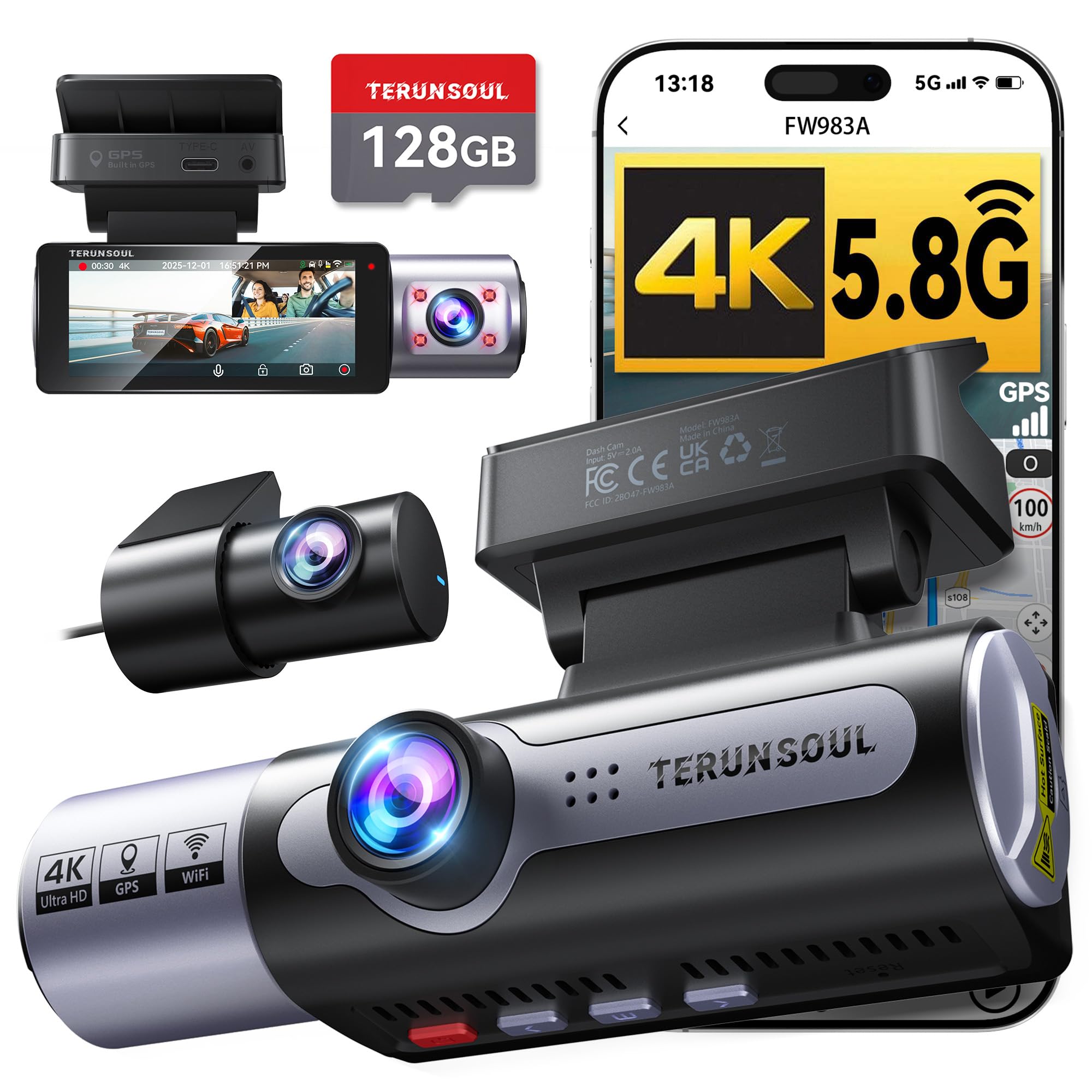
1. TERUNSOUl 4K Dash Cam Front and Rear
Our pick — over 4.5★ from 400+ verified ratings; the strongest balance of quality and price.
The triple-lens powerhouse that turns every drive into a 360-degree safety net.
The TERUNSOUl records the road ahead in UHD 4K, the rear in 1080P, and the cabin in 1080P at the same time, which means you get near-panoramic coverage of every driving scenario. The front lens sweeps a 170° ultra-wide view, while the rear and cabin each capture a 165° angle, so you can see broad road views and in-car details simultaneously for all-around protection.
What wins people over is the pre-installed 128GB memory card that lets you start recording immediately, plus the collision sensor that locks and saves footage automatically when a severe impact is detected. The built-in high-precision GPS embeds driving routes, real-time speed, location, compass, and timestamp directly into the videos, giving you solid evidence if you ever need it.
You can preview and download footage instantly on your iOS or Android phone via the free app, thanks to 5.8GHz WiFi (a faster wireless band) that transfers at 20MB/s. The starlight-grade five-layer lens (designed for low light) with an F1.6 aperture (a wide opening that lets in more light) and HDR (high dynamic range, balancing bright and dark areas) keeps nighttime details clear, so number plates stay readable after dark. Owners consistently report sharp video both day and night, and the 3-channel coverage (front, rear, and interior) gives you a full view of any incident.
Sharp 4K clarity
- 3-channel coverage captures front, rear, and cabin simultaneously
- Comes with a 128GB pre-installed memory card
- GPS data embedded directly into footage for evidence
- 5.8GHz WiFi with 20MB/s fast downloads
Cable management fuss
- Parking mode needs a separate hardwire kit to function
- Rear cable length is manageable but could be longer
crisp front view: you want complete coverage of the road, rear, and cabin in a single unit that is easy to install and ready to use from the start.
wiring patience: you refuse to buy any extra accessories, because 24-hour parking mode requires a separate hardwire kit.
2. WANLIPO A13 Dual Channel Dash Cam
A 4K front and 2.5K rear dual-cam setup that punches far above its price class.
The WANLIPO A13 captures the front in Ultra HD 4K (3840*2160P) and the rear in 2.5K, which means you can clearly identify road signs and license plates with ease. The 170° wide-angle front lens and 120° rear lens work together to reduce blind spots and provide comprehensive coverage during collisions.
Owners praise the camera quality above all else, calling it high-quality with crisp, clear video and good value for the money. The 5GHz WiFi with a free app delivers download speeds up to 8MB/s, while the built-in GPS logs your speed, route, and real-time latitude and longitude for extra evidence. It comes with a 64GB SD card pre-installed and supports up to 256GB, so you can start recording continuously without worrying about running out of space.
The F1.8 aperture and 6-layer optical lens with WDR technology enhance clarity in low-light conditions, and the built-in G-sensor locks relevant footage automatically when it detects an impact. While the camera quality and easy installation are the most-discussed positives, a few owners hit connectivity snags, and a rare unit had settings that reset on each start.
cheap two-cam: budget-conscious buyers who want a sharp 4K front camera and a capable rear view without spending premium money.
low-light gaps: an occasional connectivity issue with the app, and the need to buy extra cable clips for a cleaner rear-camera install.
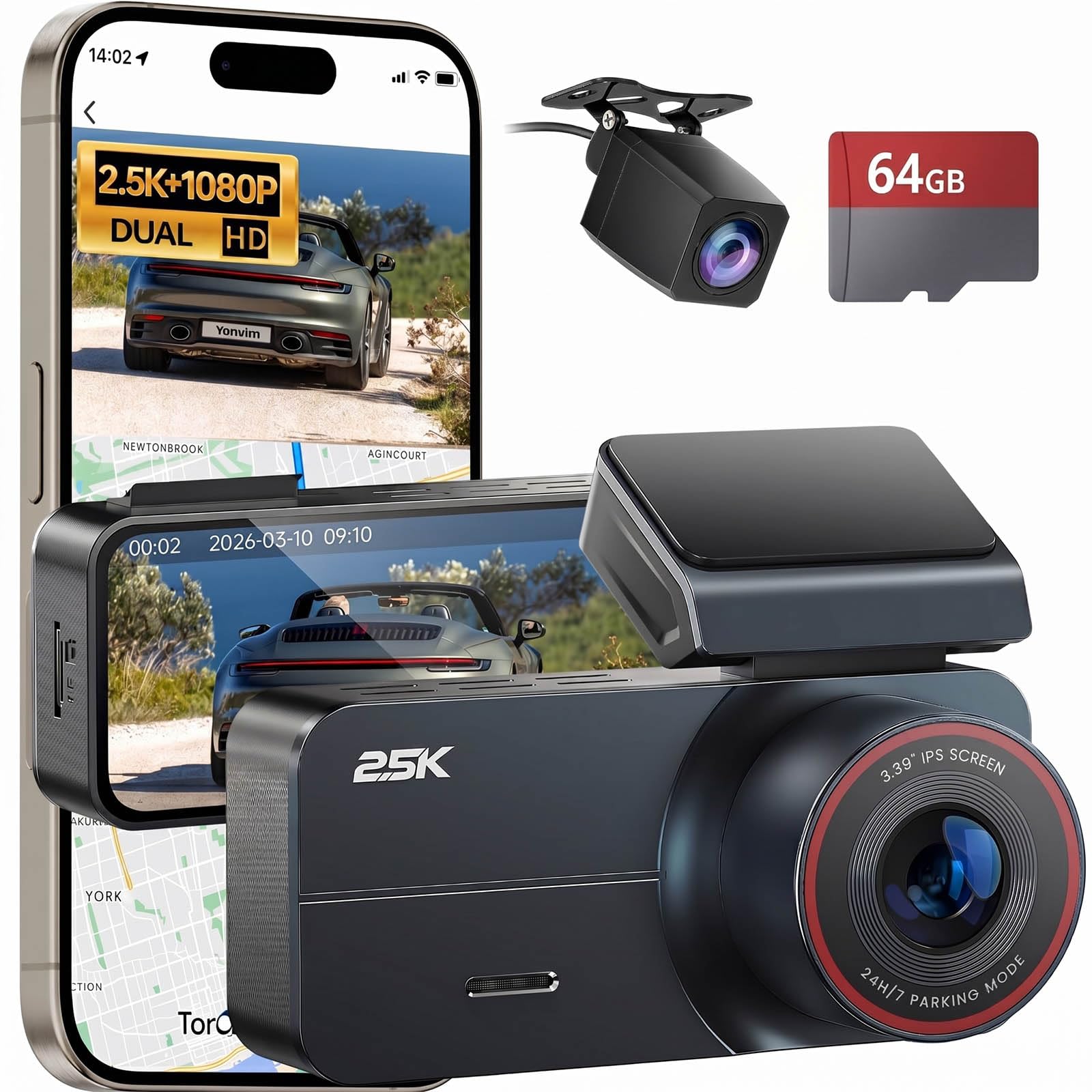
3. Yonvim 2.5K Dash Cam Front and Rear
A 2.5K dual-cam that gets you running in about 30 minutes with a crisp display.
The Yonvim is built for people who want a reliable camera without a complicated install, and the adhesive mount plus clear instructions have you recording in about 30 minutes. The 3.39-inch IPS screen lets you check settings and view live footage easily, while the GPS stamps your speed and location onto every recording for valuable evidence.
What stands out is the night vision that actually works, thanks to an F1.8 large aperture that pulls in more light than standard f2.0 lenses and an 8-layer glass lens that reduces glare from headlights and streetlights. Combined with WDR technology, you can read license plates at dawn, dusk, and in urban nighttime driving. Owners call it easy to use and install, praising the high-quality materials and clear video and photo resolution.
The 64GB micro card comes pre-installed, loop recording overwrites the oldest footage automatically, and the G-sensor locks clips when it detects sudden impact or braking. The recurring gripe is the adhesive mount, which some owners found failed to stick reliably over time, so plan for a replacement pad if you park in the heat.
balanced quality: daily commuters who want a wide-angle clear picture and a simple setup that doesn’t obstruct the driver’s view.
app annoyance: the adhesive mount drew mixed feedback, so check the pad’s hold on hot days.
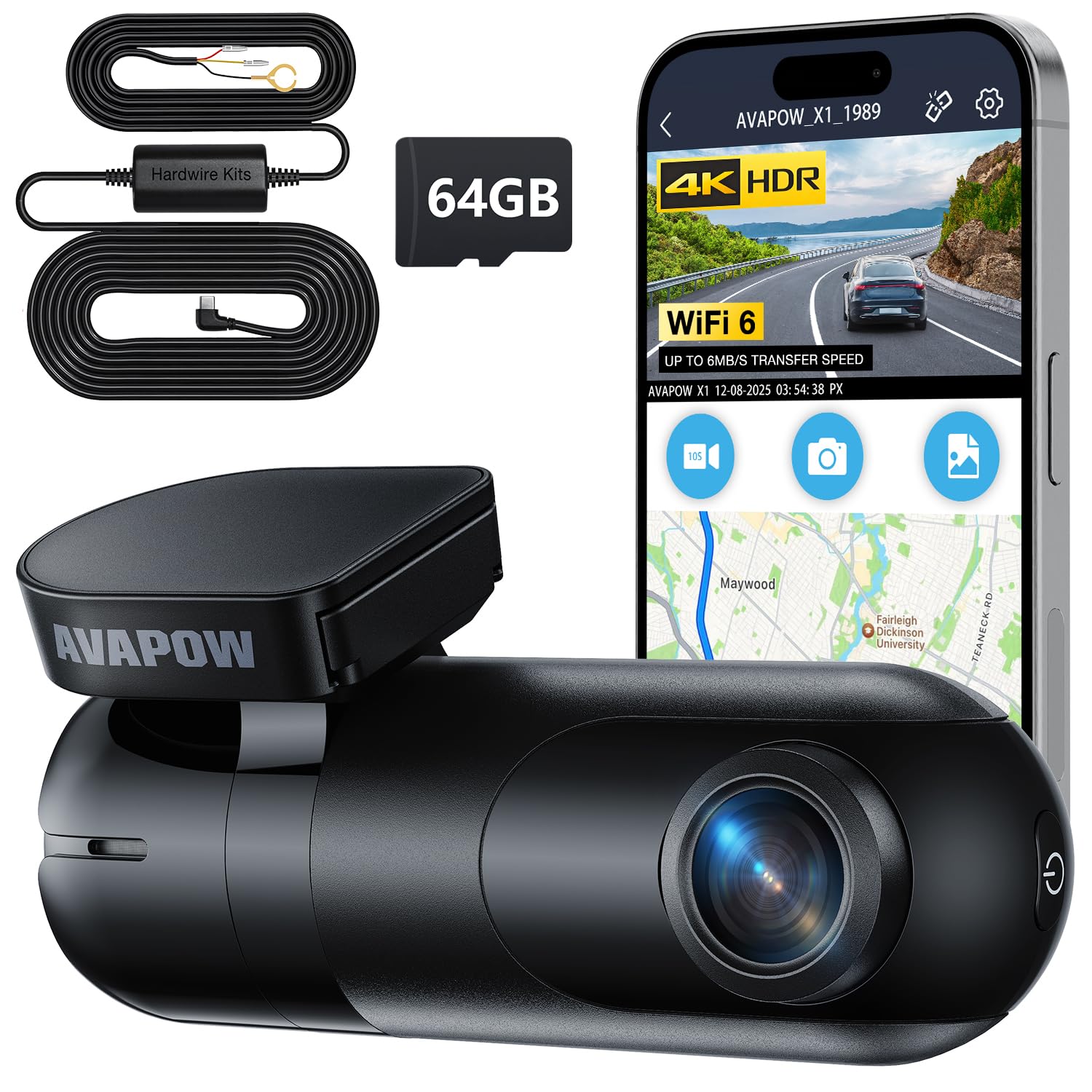
4. AVAPOW 4K Dash Cam Front
A true 4K front cam that watches your car even when the engine is off.
The AVAPOW captures every drive in ultra-sharp 3840×2160P at 30fps with a 170° wide-angle front lens, so you see every license plate and road sign clearly day or night. The standout feature is the hardwire kit included in the box, which enables 24/7 parking protection using timelapse recording, motion detection, and collision detection while your car is parked.
Owners highlight the sharp 4K footage and the fast WiFi 6 app connection, with one noting it reads plates clearly at night and another praising the easy setup in under 10 minutes. The built-in G-sensor detects impacts or collisions and automatically locks the footage, so you never lose important video evidence. It comes with a 64GB SD card and supports up to 512GB for extended recording.
The compact, hidden design takes up minimal windshield space and stays out of sight, which is a big plus for a clean, uncluttered look. The main trade-off is the app, which a few owners found glitchy after months of use, and the instructions could be clearer for first-time users.
front-only simple: drivers who park on the street or in lots and want round-the-clock protection without buying extra accessories.
rear blind spot: the app received mixed feedback over time, so have the manual handy for the first setup.
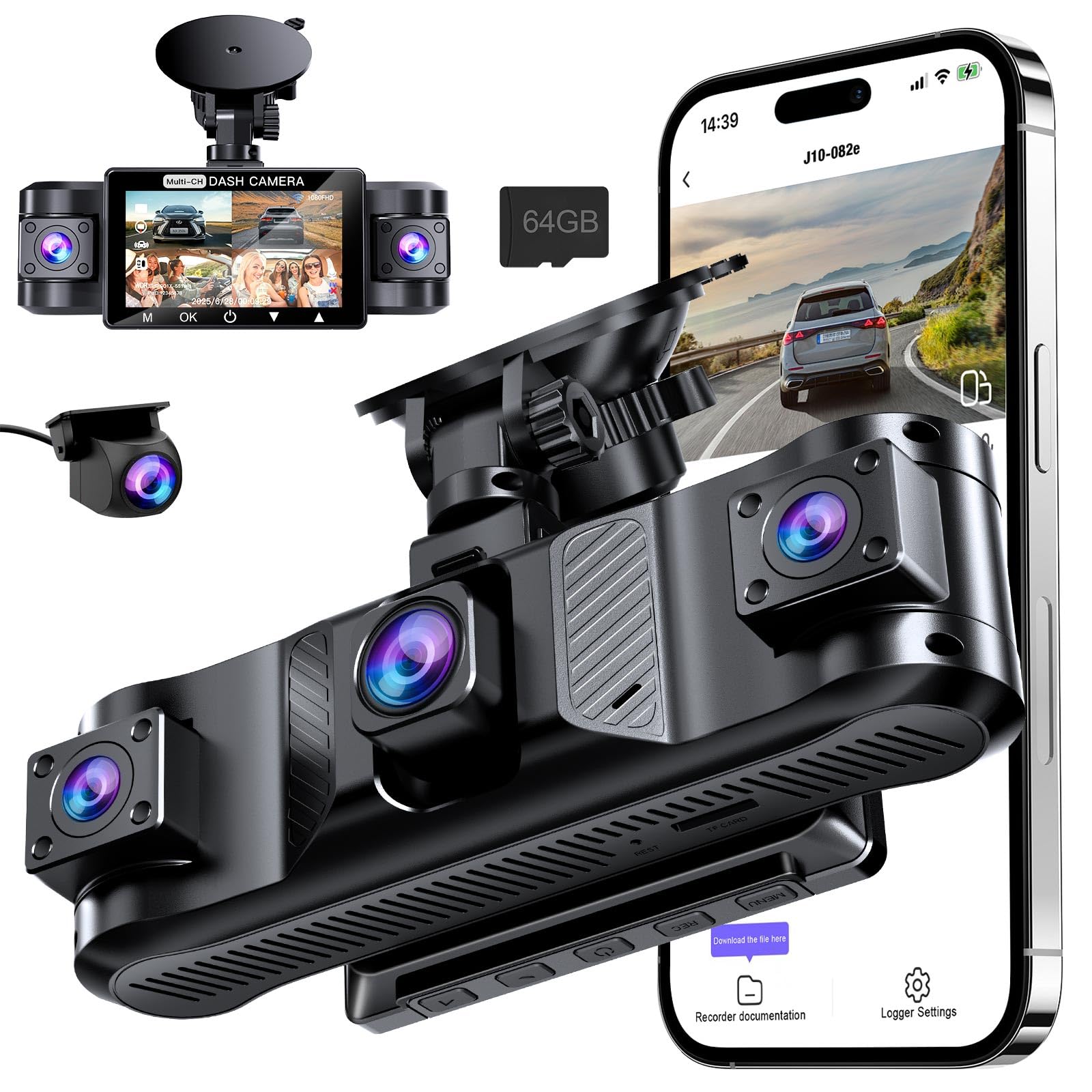
5. Tehclife 4-Channel 360° Dash Cam
Four lenses that watch front, rear, left, and right for total all-around evidence.
This 4-channel system records the front, rear, left, and right simultaneously with four lenses, providing 360° all-around protection that is ideal for Uber, Lyft, taxi, truck, and fleet drivers. The front camera captures 2.5K QHD video while the other three record in 720P HD, and the split-screen display lets you view all 4 channels at once or switch to any camera with one click.
The front 2.5K lens uses a large F1.8 aperture that captures more light than standard F2.4, delivering sharper details than 1080P and clear license plates even at high speed or low light. The 8 infrared IR LEDs provide true night vision for the interior camera, so you get clear footage inside the cabin even in complete darkness, which is essential for 24-hour rideshare drivers.
Wireless transfer happens locally through 5GHz WiFi and the free Viidure app with no subscription fees, and the parking mode locks recordings when the G-sensor detects a collision. Owners call the install easy with clear front and rear views, and the included 64GB card plus waterproof rear camera make it ready to use. Just know that parking mode requires a separate ACC hardwire kit for constant power.
all-around eyes: commercial and rideshare drivers who need complete evidence from every angle of the car in case of accidents or disputes.
bulky mount: you need a separate ACC hardwire kit if you want 24-hour parking coverage.
6. HGLEQ 3-Channel Dash Cam Front and Rear Inside
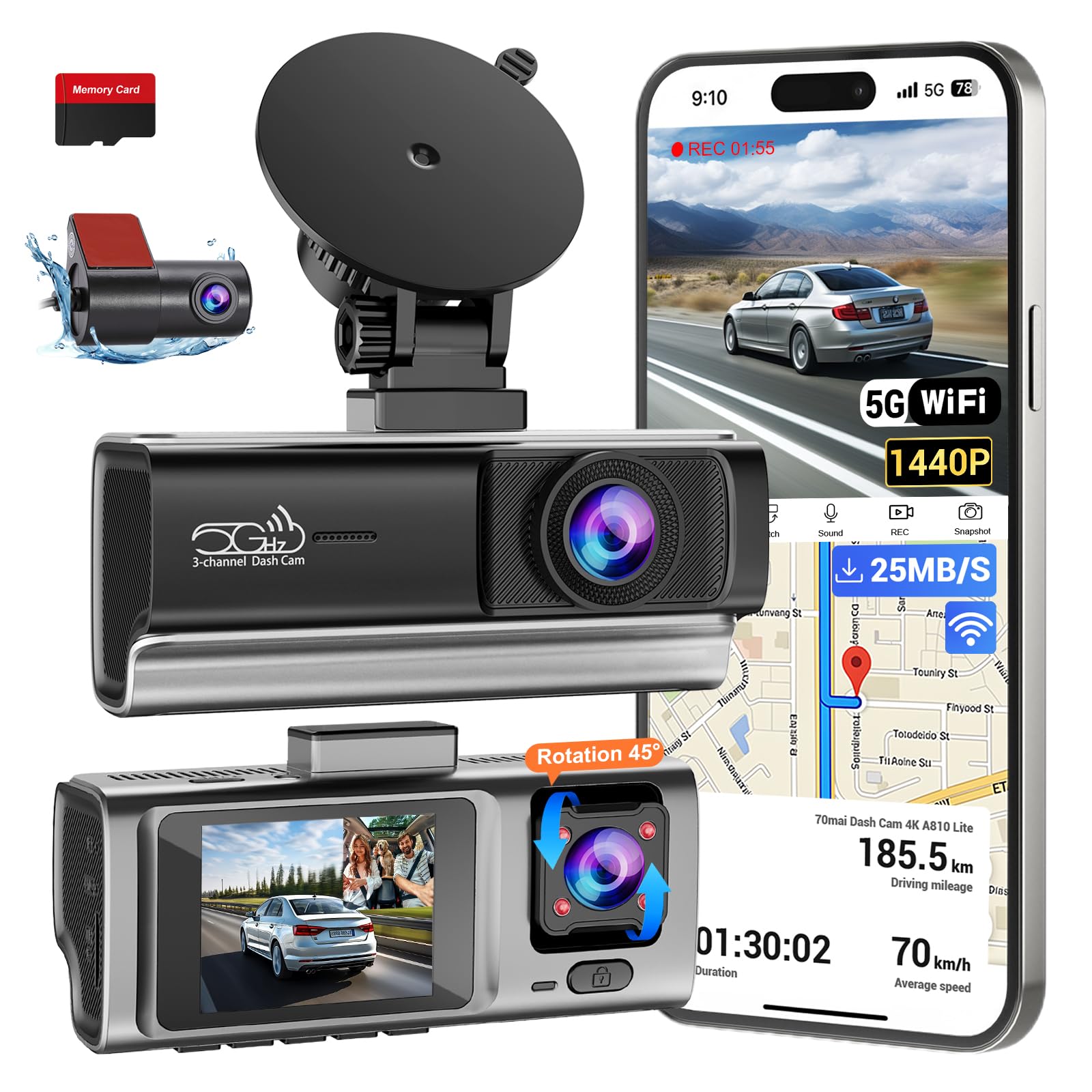
A 3-channel system that records the road, your family, and what’s behind you at once.
The HGLEQ records what happens ahead, inside your vehicle, and behind you at the same time, with a front-facing camera, an infrared cabin camera, and a rear camera. The front records in 2.5K, while the interior and rear cameras record in 1080P, and the cabin camera uses 850 nm infrared night vision to capture activity in low-light conditions without distracting the driver.
Owners praise the high-definition image quality that stays clear both day and night, along with the smooth app connection and comprehensive coverage of front and back views. The built-in multi-axis G-sensor locks the current recording when it detects an impact, and you can choose 1-, 2-, or 3-minute loop recording intervals to keep files organized. It ships with a 64GB SD card pre-installed and supports up to 256GB.
You can review footage right on the camera using its 2-inch LCD screen, without needing your phone. The 2.4GHz WiFi (a standard wireless band) lets you transfer clips to your phone when you need them. This is a dependable pick for families and commuters who want to confirm everyone in the car is safe—though if you need faster transfers, the 5.8GHz model above is quicker.
cabins included: families and commuters who want the cabin and rear recorded for full security without a complex setup.
thermal watch: the front records in 2.5K, which is sharp but not quite the 4K detail of the premium picks.
7. 70mai 4K Dash Cam Front and Interior
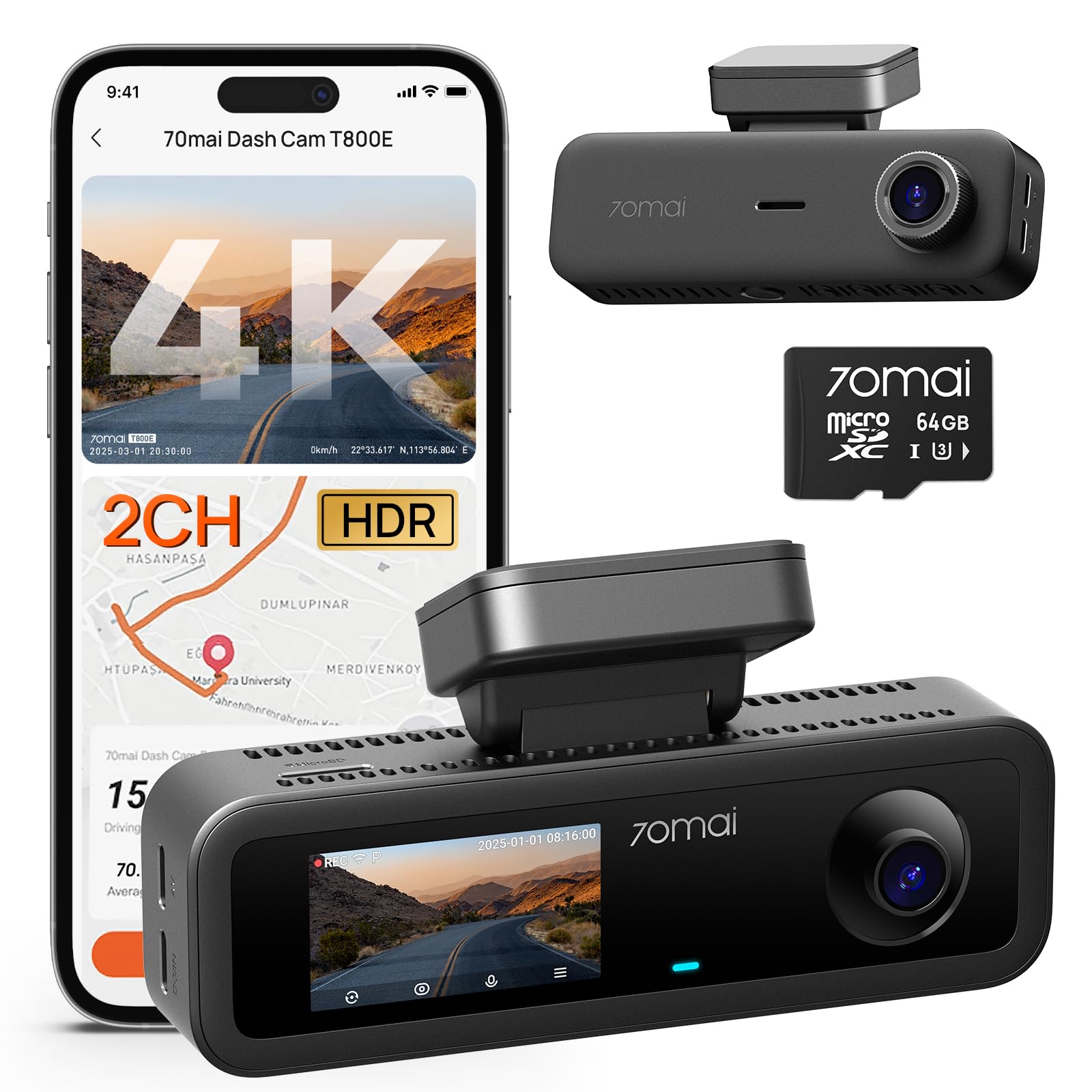
A 4K front cam with the widest aperture here for the clearest nighttime evidence.
The 70mai captures critical road details with a 4K front camera featuring HDR and a large F1.55 aperture, which lets in more light for brighter, clearer footage in both daytime and low-light conditions. The built-in 1080P interior camera records clearly in-cabin activity, making this front-and-interior setup ideal for accident evidence and rideshare monitoring.
What sets this apart is the imaging technology: MaiColor Vivid+ enhances color accuracy, contrast, and image sharpness in complex lighting, while 70mai Night Owl Vision reduces noise and preserves detail at night. Together they deliver vivid, reliable footage in tunnels, city streets, and nighttime driving where visual accuracy is essential. Owners call the 4K front camera incredibly sharp with effective night vision and HDR.
The 24-hour smart parking surveillance uses time-lapse recording to reduce power consumption while monitoring your vehicle when parked, and Wi-Fi 6 plus voice control lets you operate it hands-free. It includes a 64GB microSD card, supports up to 512GB, and features a heat-resistant supercapacitor instead of a lithium battery for safer performance in hot cars.
ride recorder: you do most of your driving after dark and want the sharpest low-light footage in a front-and-interior setup.
share carefully: the cabin camera only tilts up and down, and the app can drop the connection if your phone is paired to car Bluetooth.
8. 70mai T800E 3-Channel Dash Cam

The 3-channel T800E adds a 1080P rear view to the sharpest 4K front on this list.
This 3-channel system captures a 4K front, 1080P interior, and 1080P rear, using ultra-wide lenses and an F1.55 aperture to deliver excellent visibility day and night for Uber, Lyft, or family drivers. The interior camera features switchable infrared recording, so you can turn on IR for clearer night footage inside the vehicle or turn it off when not needed.
The built-in 5-mode GPS gives ultra-accurate location, speed, and route tracking, and Wi-Fi 6 makes file transfer through the 70mai App up to 5× faster than standard Wi-Fi 4, reaching speeds up to 10 MB/s. Owners praise the easy install, the clear video quality even at night, and the free app, with several noting it is a great value for the price. Hands-free voice control lets you take photos, start recording, or lock important footage while driving.
The super capacitor ensures stable performance in extreme temperatures from 14°F to 140°F, eliminating the risks associated with lithium batteries. It comes with the RC21 rear camera and a 64GB SD card for continuous loop recording, and supports up to 512GB for extended storage.
premium multi-cam: rideshare professionals who need front, cabin, and rear proof of every trip with the sharpest front lens available.
budget stretch: the app connection can be tricky or unreliable at times, so learn the workarounds before you need them.
9. AZDOME M550 Max 4K 3-Channel Dash Cam
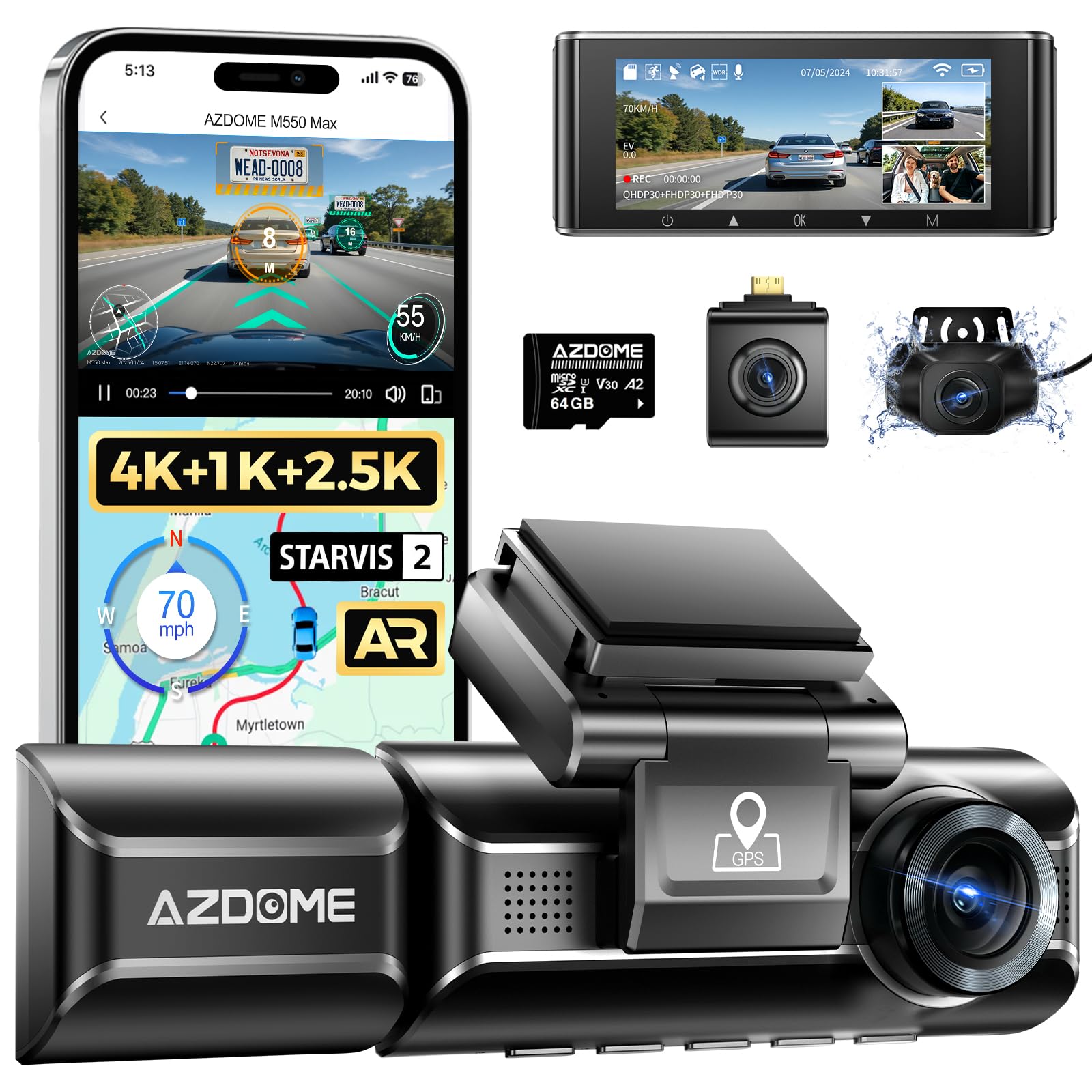
A 4K front and 2.5K rear combo that keeps plates readable in tailgating disputes.
The AZDOME records 4K in front, 1080P in the cabin, and an upgraded 2.5K rear camera, so plates stay readable in tailgating, parking lot contact, and rear-end collision disputes where standard rear footage misses the detail. The Dual STARVIS 2 sensors (IMX675 and IMX662) with WDR keep detail in backlit roads, garage exits, and low-light driving, and six IR LEDs light the cabin after dark.
Built-in GPS records speed and route so every trip replays on a map in the AZDOME app, and the AR Effects overlay license plate recognition, AR lane assistance, and real-time distance monitoring on recorded videos. The 24-hour parking mode offers motion detection, collision-triggered recording, and time-lapse parking, so the camera documents far more than just the moment of impact.
The magnetic mount removes and reattaches in seconds, the IP68 rear camera handles rain and road spray, and the 3.19-inch screen makes setup simple. Owners praise the clear video quality and excellent night vision with infrared, calling it comprehensive 360-degree coverage. A few noted the cables run short for larger vehicles like minivans, so measure your routing before you commit to the install.
ultra HD trio: drivers who want the highest rear resolution available and advanced app features like license plate recognition for extra evidence detail.
card capacity: the power and rear cables were too short for a minivan in some owner installs, so plan your cable routing ahead.
Understanding the Specs
4K vs 2.5K Front Resolution
The front lens resolution is the single most important spec for reading license plates after an event. A 4K front camera (3840×2160P) captures four times the detail of standard 1080P, which lets you identify a car instead of just seeing a blur. 2.5K QHD (2560×1440P) sits in the middle and is plenty sharp for most daily commutes, while 1080P rear cameras handle the space behind you.
Aperture and Night Vision
A larger aperture (the F-number) lets in more light, so a camera with F1.55 captures brighter footage in low light than a standard F2.0 lens. This matters most for night driving, tunnels, and garage exits where evidence quality drops fast. WDR (Wide Dynamic Range) balances bright headlights and dark shadows, and infrared IR LEDs light the cabin without distracting the driver.
Loop Recording and G-Sensor
Loop recording automatically overwrites the oldest footage when the memory card is full, so you never have to manage files manually. The G-sensor detects sudden impact or braking and locks that clip to protect it from being overwritten. Together, these features ensure you always have the most recent footage and that critical evidence from a collision is preserved.
Parking Mode and Hardwire Kits
Parking mode lets the camera keep monitoring your car after the engine is off, using motion detection, collision-triggered recording, or time-lapse. Most cameras need a separate hardwire kit connected to the fuse box to run 24/7, though some premium picks include it in the box. Without a hardwire kit, the camera turns off when the engine does.
FAQ
Will a front camera fit my car and how hard is the install?
Do I need a 3-channel camera or is front only enough?
What size memory card do I need for a 4K front camera?
Will the camera keep recording while my car is parked?
How does the G-sensor protect my footage?
Is 4K front resolution worth the extra cost over 2.5K?
Can I view footage on my phone without removing the SD card?
What is the difference between WDR and HDR in a dash cam?
Final Thoughts: The Verdict
For most drivers, the vehicle front camera winner is the TERUNSOUl 4K 3-Channel because it pairs a sharp 4K front with rear and cabin coverage, a pre-installed 128GB card, and GPS evidence in one easy package. If you want the absolute best nighttime clarity, grab the 70mai 4K with F1.55 aperture. And for rideshare or fleet work, the Tehclife 4-Channel 360° covers every angle of your car with a waterproof rear camera.
How We Picked
We do not accept paid placement. Every pick is matched to a real buyer and a real use-case; we do not hands-on test units.
Sources & Methodology
Specifications: manufacturer listings and product documentation. Review insights: verified customer reviews, as of August 2026. Pricing: not shown on this page (it changes often); check the current price via the retailer link.
As an Amazon Associate, GoCarLife earns from qualifying purchases. This does not affect which products we feature.