
Our readers keep the lights on and the garage heater humming. As an Amazon Associate, I earn from qualifying purchases.
Specs are compiled from manufacturer listings and verified buyer reviews and can change over time — please confirm the key details on the product page before buying.
Buying a van tow hitch isn’t about picking the shiniest steel—it’s about matching the exact receiver to your van’s frame, your towing weight, and your willingness to spend an afternoon with a torque wrench. Every hitch here fits a van (not a truck or SUV), uses a 2-inch receiver, and is rated to actually haul. Because fitment varies by model year, this list uses flexible, human-like matching across the 2-inch standard, so not every pick is the exact number searched; the nearest same-type size serves the same purpose.
I’m Mo Maruf — the founder and writer behind GoCarLife. This guide is built by comparing the manufacturers’ published specifications and the patterns across verified customer reviews, so you get each pick’s real strengths and trade-offs instead of marketing spin.
From the class 3 workhorse for Chevy Express vans to the class 5 brute for heavy hauling, here’s the breakdown of the van tow hitch options that actually hold up on the road.
Our Picks at a Glance
How To Choose The Best Van Tow Hitch
Picking the right hitch starts with your van’s make and model year, not the price tag. A hitch built for a Ford Transit won’t bolt onto a Chevy Express, and forcing it means drilling into your frame—something you want to avoid. Each hitch here is vehicle-specific, so your first filter is always compatibility.
Match the Class to Your Load
Hitch classes rank by strength. Class 3 hitches handle most everyday towing—small campers, utility trailers, and heavy bike racks—with ratings typically around 3,500 to 6,000 lbs of Gross Trailer Weight (GTW, the total weight of your trailer plus everything on it). Class 4 and Class 5 step up the capacity for bigger trailers, and they’re the right call if you regularly haul near your van’s limit. The catch: a hitch rated for more than your van can pull doesn’t make your van stronger, so always stay under your vehicle’s own rating.
Tongue Weight and Weight Distribution
Before you pick a hitch, know your Tongue Weight (TW)—the downward force the trailer puts on the hitch ball, typically 10-15% of total trailer weight. Exceeding your hitch’s TW rating strains the receiver and the van’s rear suspension, so check that number first. If you’re towing a heavy travel trailer, look for a hitch that’s “weight distribution ready”: a Weight Distribution (WD) hitch spreads that load across the van’s axles, and a higher WD rating gives you more headroom for level, stable towing—so your van stays balanced on the highway.
Installation Reality Check
Most van hitches bolt on using existing frame holes, and the data shows the majority of owners finish the job in under an hour with a floor jack and basic sockets. Heavy hitches (40+ lbs) are easier with a second person, and a torque wrench is non-negotiable—most specs call for 86 to 110 lb-ft on the mounting bolts. Check whether the hitch needs drilling; some older vans have undercoating or brackets that block holes, and a few buyers report having to clear threads or enlarge holes.
Quick Comparison
In-Depth Reviews
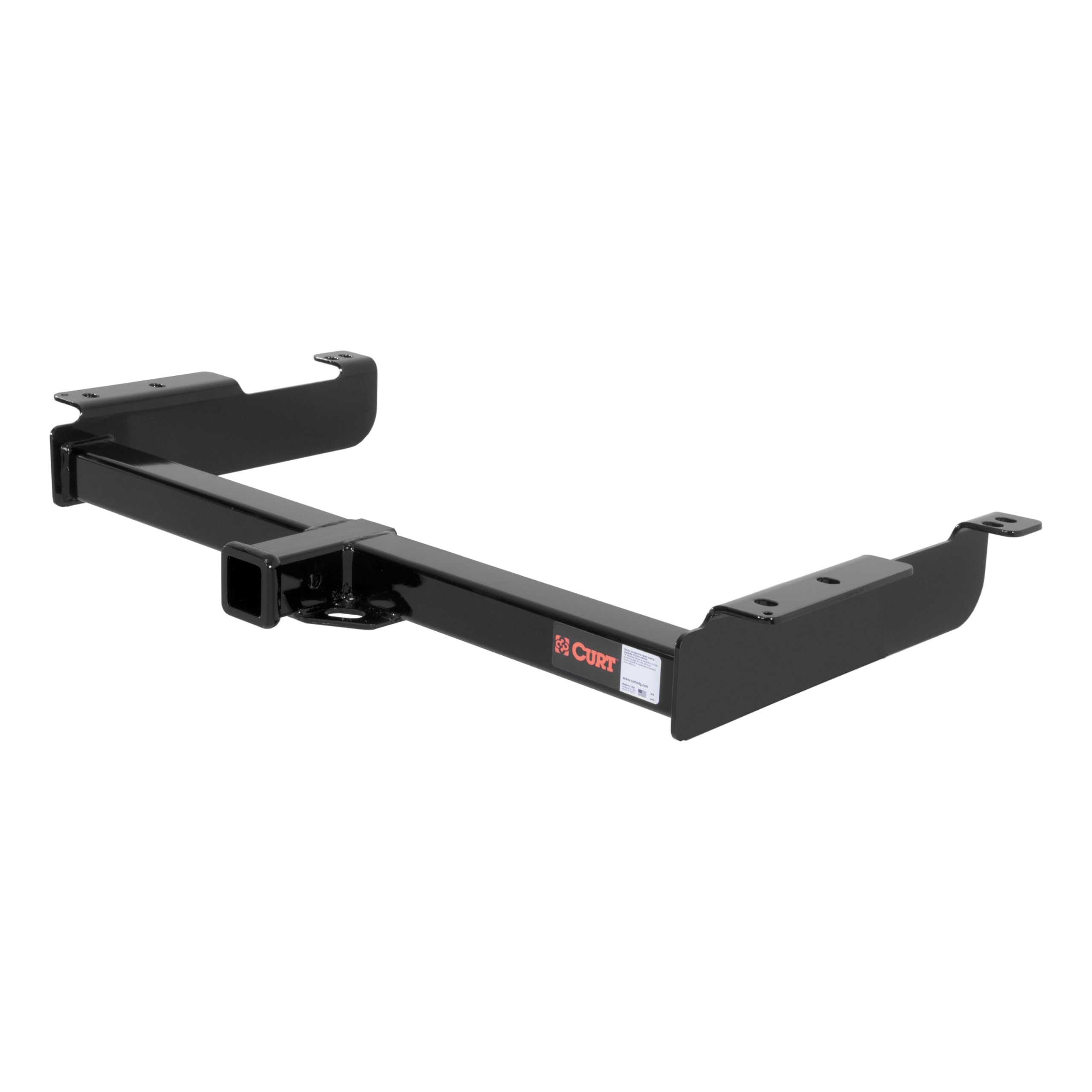
1. CURT 13040 Class 3 Trailer Hitch
The Express and Savana bolt-on that turns a weekend install into an hour-long job.
This is the crowd favorite for Chevy Express and GMC Savana owners—and it’s easy to see why. Rated for 6,000 lbs of Gross Trailer Weight (the full weight of your loaded trailer) and 600 lbs of tongue weight (the downward force on the ball), it covers everything from a utility trailer to a small camper. Add a weight distribution hitch and it steps up to 10,000 lbs, which gives you real headroom for heavier setups.
The install stories are remarkably consistent: owners on 2002 Express 2500s and 2005 Express 3500s report the bolt holes line up tightly and accurately, and the whole thing goes on in under an hour.
One honest note: on a 3500 short bus, no pre-drilled holes matched, and the owner drilled all six with a 1/2-inch bit for a skoolie conversion. That’s the exception, not the rule, but it’s worth knowing if you’re working with a cutaway or modified van.
What wins people over
- Installation is the #1 praised aspect by far—70 owners single out how easy it is
- Holes align precisely for a true factory-like fit on most Express/Savana models
- All nuts, bolts, and hardware included in the box
- SAE J684 tested at CURT’s Detroit engineering facility
Keep in mind
- At 39 lbs, you’ll want a floor jack or a helper for the lift
- Occasional modified vans need drilling—verify your frame holes first
Reach for this if: you drive an Express or Savana and want the most proven, easiest bolt-on hitch for typical towing up to 6,000 lbs.
Look elsewhere if: you’re towing near 10,000 lbs regularly—the heavier Class 4 and Class 5 picks below carry that load with more margin.
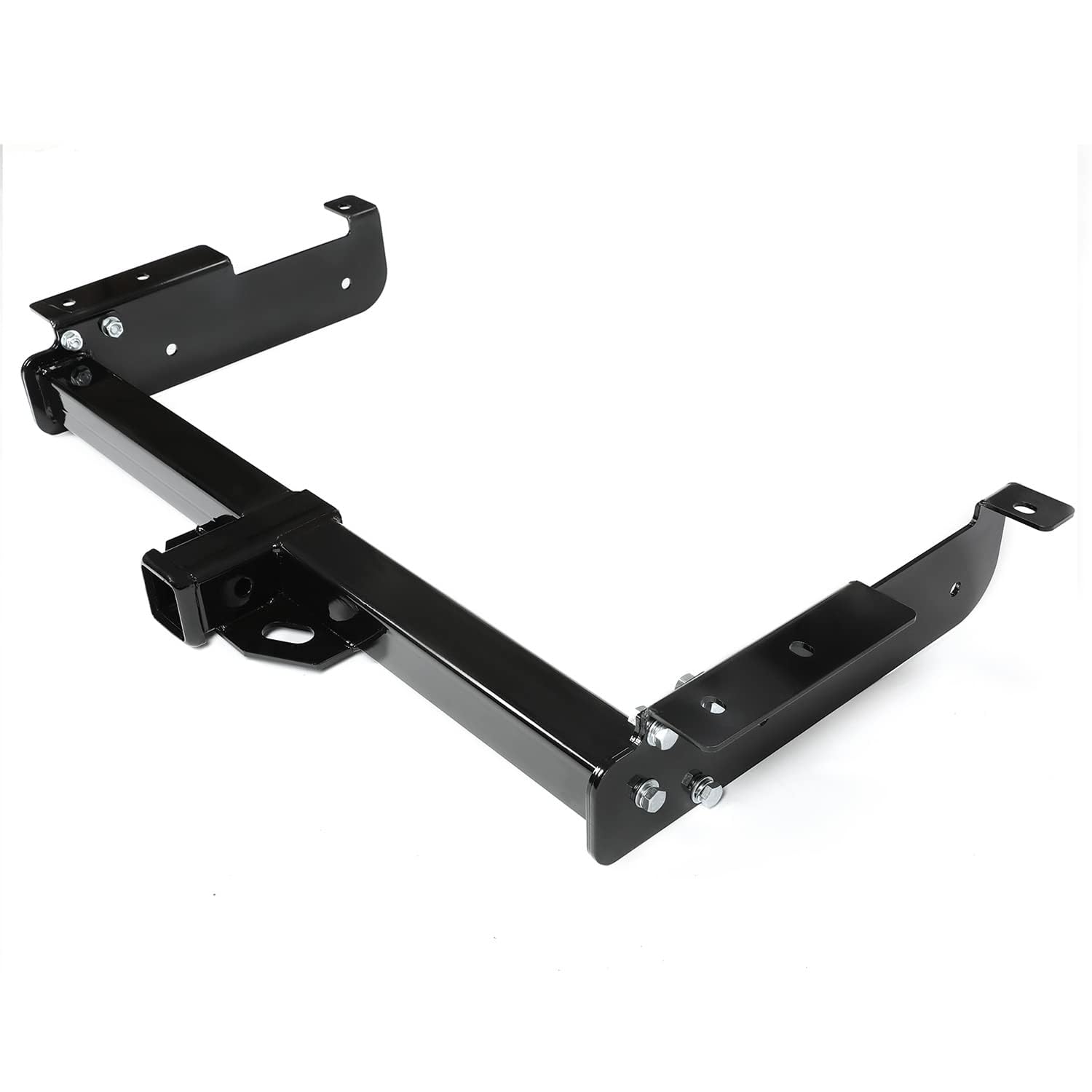
2. KUAFU Class 3 Trailer Hitch
The entry-level Express and Savana hitch that skips the frills but not the strength.
If your towing stays under 5,000 lbs Gross Trailer Weight and 500 lbs tongue weight, this KUAFU unit delivers the essentials at a friendlier price than the big-name rivals. It’s a 2-inch receiver (the standard size that fits most bike racks, cargo carriers, and tow hooks), so you’re not locked out of accessory compatibility. The steel body wears a black powder coat finish, and the rust resistance is a real talking point—owners mention: “I’m in Michigan where everything rust fast and it’s holding up well.”
Installation is where this hitch earns its keep. Owners describe mounting it without a problem, with all the needed hardware in the box, and one person managing the job solo. It accepts a weight distribution setup up to 7,500 lbs GTW, which is a surprising amount of headroom for the price tier.
The trade-off is fitment consistency. While many customers note a perfect fit, a few found the alignment off—it’s the one aspect where experiences genuinely split, so double-check your van’s specific model year against the compatibility list before ordering.
Solid value: quality construction and an easy solo install at a budget-friendly price—just confirm your van’s fitment first since that’s where opinions divide.
Best for: casual towers who want a dependable 5,000-lb hitch without paying for capacity they won’t use.
Think twice if: your van is an unusual configuration—fitment is the least predictable thing about this one.
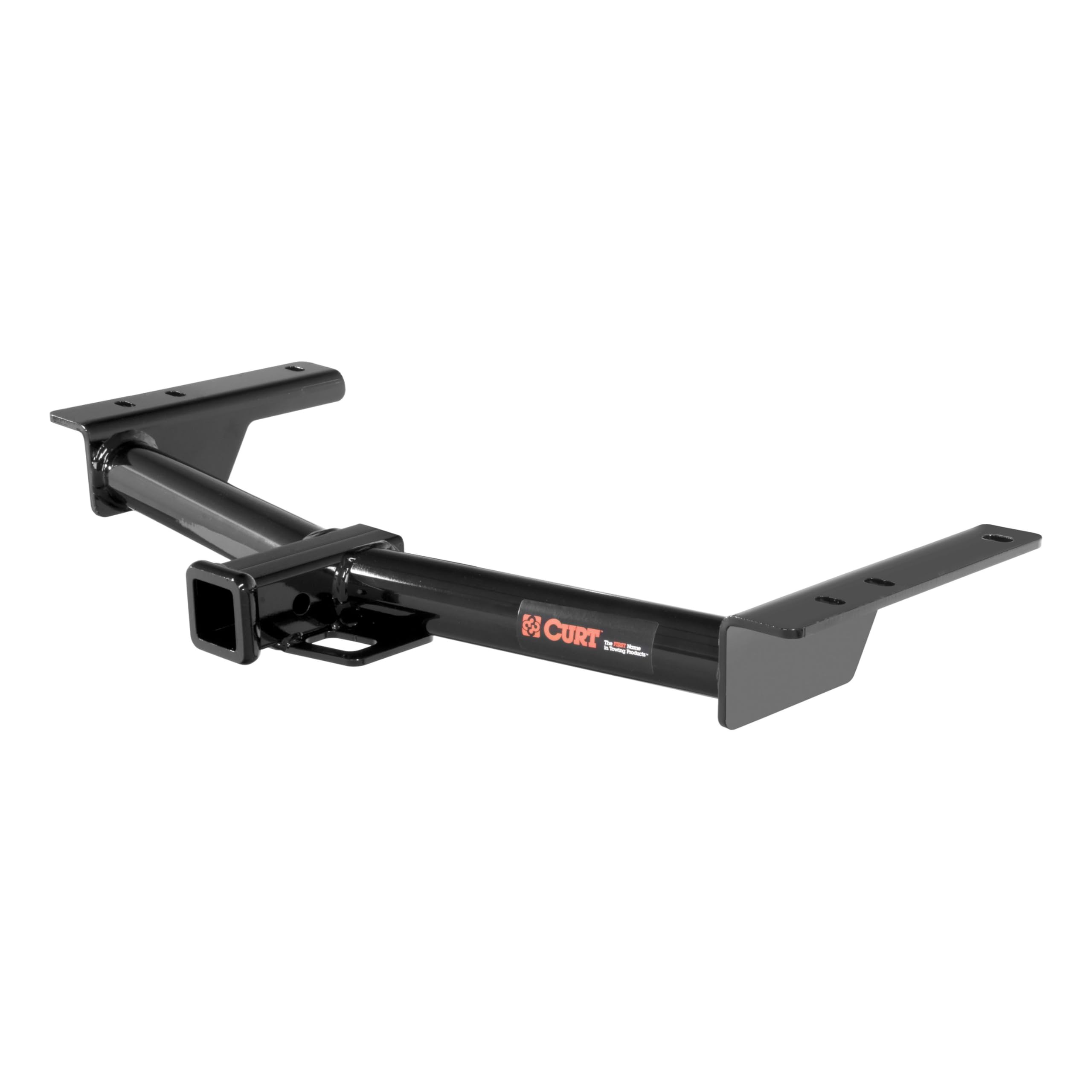
3. CURT 13193 Class 3 Trailer Hitch
The Ford Transit’s favorite hitch, with a tongue weight ceiling that beats most rivals.
Ford Transit and E-Transit owners have a standout option here. At 31 lbs, it’s also lighter than the Chevy hitch, which makes the solo install more manageable.
No-drilling fitment is the selling point, and owners back it up. Reviewers point out: “Took 30 minutes including looking for tools.. just buy the correct size tap and do it.” The recurring advice across reviews is to run a tap through the frame threads before bolting up—it clears the factory coating and makes the self-starting bolts go in cleanly. A single person can mount it by using the van’s exhaust as a rest to lift one side at a time.
There’s a mixed note on durability, with some owners confident it’ll last years while others mention the thread-cutting bolts can be finicky—hence the tap advice. The round tube main body is gloss powder-coated, and the brand’s reputation for quality welds comes through in the reviews.
Standout spec: the 900 lb tongue weight is the highest among the Class 3 picks here, and the 31 lb weight makes it one of the lightest to lift into place.
Grab it if: you own a Transit or E-Transit and want a high tongue-weight ceiling without any drilling.
Note: run a tap through the threads before install—it’s the single most repeated tip from owners.
4. CURT 13370 Class 3 Trailer Hitch
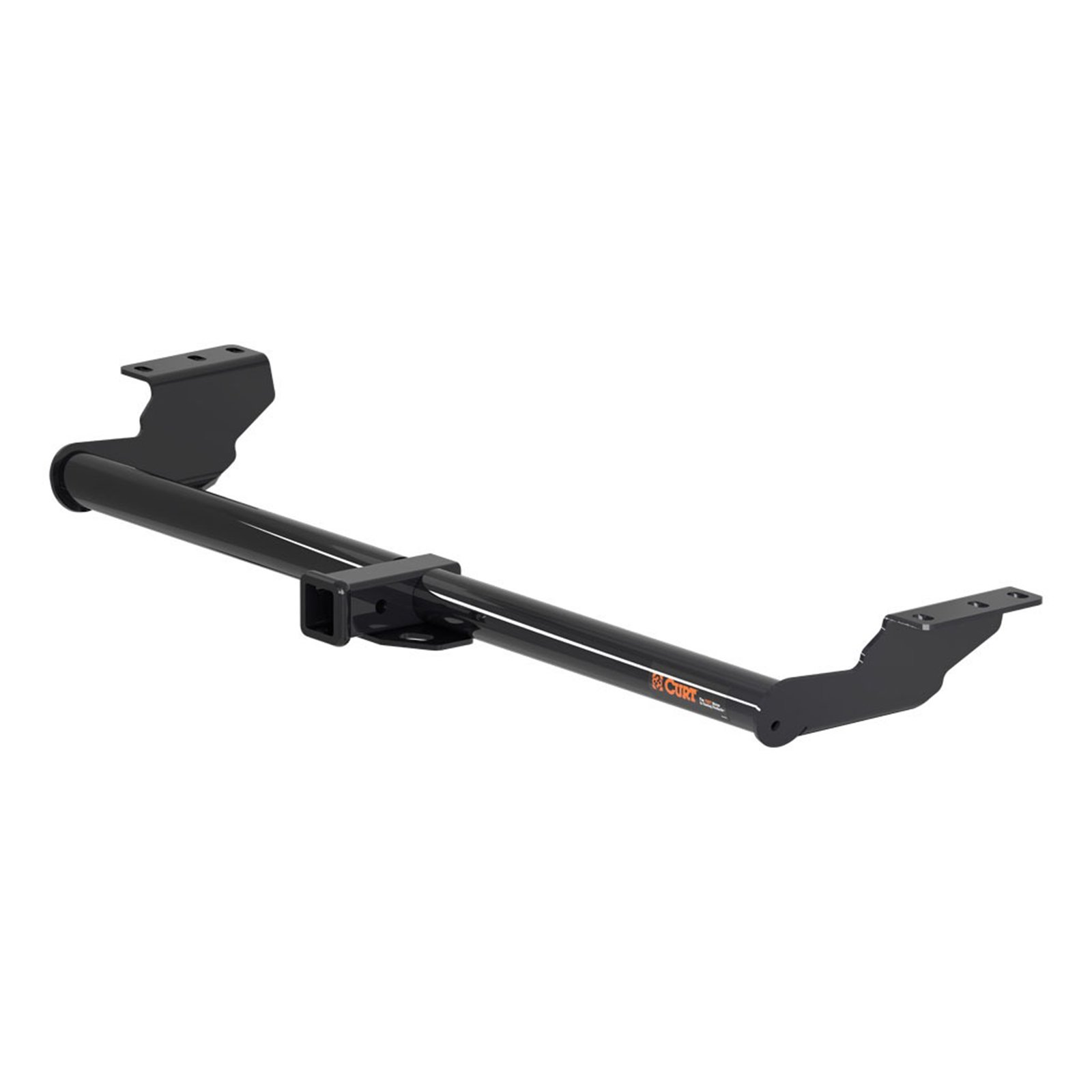
The Honda Odyssey hitch that clears curbs and hides behind the bumper.
Minivan owners get a purpose-built option in this CURT Class 3 for the 2018-2026 Honda Odyssey. It’s rated for 3,500 lbs Gross Trailer Weight and 525 lbs tongue weight—plenty for a small camper, a loaded bike rack, or a cargo basket full of gear. One detail owners consistently love is the low profile: it clears curbs up to 8 inches high and doesn’t protrude past the bumper, so it looks factory-installed.
The install is a DIY-friendly 1-2 hours, but it’s not a one-person job—the 34 lb weight means you’ll want jack stands or a helper. The trickiest step is the muffler hanger, which some owners remove for better access. The receiver has an open-back design, which means you can push a cleaning rod or spray through it to keep the square tube free of grime and moisture.
Owners praise the sturdiness and the value, with one noting it’s ideal for a heavy bike rack. The finish holds up well, and the SAE J685 tested design (a slightly different safety standard than J684) means it’s been validated for real-world use.
Low-profile win: the curb clearance and hidden receiver are the two details Odyssey owners rave about most—both make daily driving feel stock.
Choose this if: you have acessory’s requirements.
FAQ
Will a Chevy Express hitch fit my GMC Savana?
Can I install a van hitch by myself?
What’s the difference between GTW and tongue weight ratings?
Do I need a weight distribution hitch for my van?
Is a Class 5 hitch better than a Class 3?
Can I use a bike rack with a van tow hitch?
How long does a van hitch installation take?
What tools do I need to install a van hitch?
Does a van hitch reduce ground clearance?
Which hitch works for my Ford Transit?
Are these hitches rust-resistant?
Final Thoughts: The Verdict
If you want one dependable pick, the van tow hitch winner is the CURT 13040 because it pairs class-leading install ease with dependable 6,000 lb capacity and true factory-like fitment on the most common full-size vans—the Chevy Express and GMC Savana. If you want a no-drill Transit option with the highest tongue weight ceiling in this list, grab the CURT 13193. And if your towing regularly pushes past 10,000 lbs, the CURT 14090 Class 4 is the heavy-duty pick that still installs in half an hour.
How We Picked
We do not accept paid placement. Every pick is matched to a real buyer and a real use-case; we do not hands-on test units.
Sources & Methodology
Specifications: manufacturer listings and product documentation. Review insights: verified customer reviews, as of August 2026. Pricing: not shown on this page (it changes often); check the current price via the retailer link.
As an Amazon Associate, GoCarLife earns from qualifying purchases. This does not affect which products we feature.