
Our readers keep the lights on and the garage heater humming. As an Amazon Associate, I earn from qualifying purchases.
Specs are compiled from manufacturer listings and verified buyer reviews and can change over time — please confirm the key details on the product page before buying.
A van is a rolling tin can until you fix its biggest flaw: the drum-like body panels that turn every mile of highway into a constant roar. The fix is layered sound deadening — a sticky butyl mat that kills vibration, then a foam layer that soaks up the airborne noise. This guide sorts through the real options so you can tell a genuine performance upgrade from a cheap roll that just adds weight.
I’m Mo Maruf — the founder and writer behind GoCarLife. This guide is built by comparing the manufacturers’ published specifications and the patterns across verified customer reviews, so you get each pick’s real strengths and trade-offs instead of marketing spin.
Whether you’re building out a camper or just tired of shouting over the drone, the right van sound deadening plan starts with a mass-loaded butyl layer that stops panels from vibrating in the first place.
Our Picks at a Glance


How To Choose The Best Van Sound Deadening
Van sound deadening isn’t one product — it’s a system. You need a dense butyl mat to stop big metal panels from vibrating, and then a softer layer to absorb the noise that’s already in the air. Understanding which layer does what is the difference between a quiet build and a disappointing one.
Start with the Butyl Mass Layer
This is the sticky, foil-covered mat you press onto bare metal. Its job is to add mass so panels stop resonating — think of it as turning a drum into a solid block. Thickness is measured in mils (a mil is one-thousandth of an inch), and thicker usually means better vibration control. An 80 mil mat is the common starting point, while 120 mil and up is for those chasing maximum quiet.
Don’t Forget the Absorber Layer
Butyl stops vibration, but it does little for noise bouncing around the cabin. That’s where a second layer comes in — closed-cell foam for heat and moisture resistance, or polyester insulation like 3M Thinsulate for all-season temperature control. Many van builders pair a butyl layer with a foam or fiber layer for the best of both worlds.
Quick Comparison
| Model | Best For | Thickness | Coverage | Material Type | Amazon |
|---|---|---|---|---|---|
| KILMAT 80 mil★ Best Overall | Best Overall Vibration Control | 80 mils | 36 sq ft | Butyl & Foil | Amazon |
| CHAOGANG 200 milHeat Shield Layer | Heat & Noise Foam Layer | 200 mil / 5mm | 36.16 sq ft | Closed Cell PE Foam | Amazon |
| CUKWUYBY Butyl 80 mil | Doors & Tailgate Rattles | 80 mils | 36 sq ft | Butyl | Amazon |
| VEVOR 50 mil | Budget-Friendly Coverage | 1.3 mm / 50 mil | 52 sq ft | Butyl Rubber | Amazon |
| Siless Max 120 mil | Premium Vibration Damping | 120 mils | 30 sq ft | Rubber (Bmastic) | Amazon |
| 3M Thinsulate SM600L | Temperature & Sound Absorption | 1.65 inches | 50 sq ft | Polyester & Polypropylene | Amazon |
| SoundSkins Pro | All-in-One 3-Layer Solution | 4.5 mm / 180 mil | 11 sq ft | Butyl, Foil & Foam | Amazon |
In‑Depth Reviews
1. KILMAT 80 mil 36 sqft
Our pick — over 4.5★ from 26,000+ verified ratings; the strongest balance of quality and price.
The crowd-tested 80 mil workhorse that turns panel vibration into a non-issue.
This is the gold-standard starting point for a van build. The 80 mil butyl and foil construction adds real mass to large panels, and the adhesive is famously aggressive — owners note it sticks so firmly it will take paint off if you ever try to remove it. The 17-pound roll of 36 square feet is enough for two trunks or a solid start on a van’s floor and lower walls.
What makes it special is the built-in installation check: the foil has an embossed pattern that must be rolled flat and smooth, which is your visual confirmation the mat is fully bonded to the metal. Pre-scored squares make measuring and cutting with a box cutter straightforward, even for a first-timer. Buyers consistently report a significant drop in road noise and a more solid door-closing thunk..
It’s still the most proven, most-reviewed option here, making it the safest first purchase for a full van treatment.
Why It Wins
- Proven, strong adhesion that stays put even after heating
- Embossed foil gives you a visual “installed correctly” check
- Pre-scored sheets make DIY cutting and fitting simple
Know Before You Buy
- At 80 mil, it’s not the thickest option if you want maximum mass
- Some owners preferred the thicker 120 mil Siless for extreme cases
The pick for most builds: this is the balanced, no-surprises choice for anyone deadening a van floor or walls for the first time.
Reach for the thicker stuff if: you’re chasing maximum vibration control on a large, flat panel and don’t mind paying more per square foot.
2. CHAOGANG 200 mil 36.16 sqft
The second-layer specialist that kills heat and airborne noise, not just vibration.
This is not a replacement for butyl — it’s the foam partner that goes on top. At a thick 200 mil (5mm), this closed-cell PE foam with a 5A grade aluminum foil facing is built for heat rejection and sound absorption. It’s designed to work in a temperature range from -40°C to +149°C, so it holds up in a baking van roof or a freezing winter build.
Owners using it on Ram trucks and VW Taos found the winning formula: pair this foam with a butyl mat underneath. One detailed report noted that with butyl matting and 100 mil closed-cell foam, road noise became inaudible at 55 mph with the A/C on.. The 315″L x 16.5″W roll covers 36.16 square feet with nearly no creases, and ships ready to cut with a carpet knife.
The honest caveat here is the adhesive — it’s the most-discussed aspect, and it earns a mixed verdict. The foam itself is a bit fragile and the stick isn’t the strongest, so you need to be deliberate and gentle during installation. If you pair it with a butyl layer beneath, the adhesion matters less because the foam isn’t carrying the full load.
Its Superpower
- Closed-cell foam won’t absorb moisture and has no odor
- Wide 5A aluminum foil blocks heat and UV radiation
- Soft roll ships without creases for clean cutting
Handle With Care
- Foam is fragile and the adhesive is not the strongest
- Works best as a second layer over butyl, not alone
Grab this for: a van roof, firewall, or any panel where heat and airborne noise matter more than pure vibration.
Expect to pair it: with the KILMAT or another butyl layer underneath for a complete two-step deadening system.
3. CUKWUYBY Butyl 80 mil 36 sqft (33 pcs)
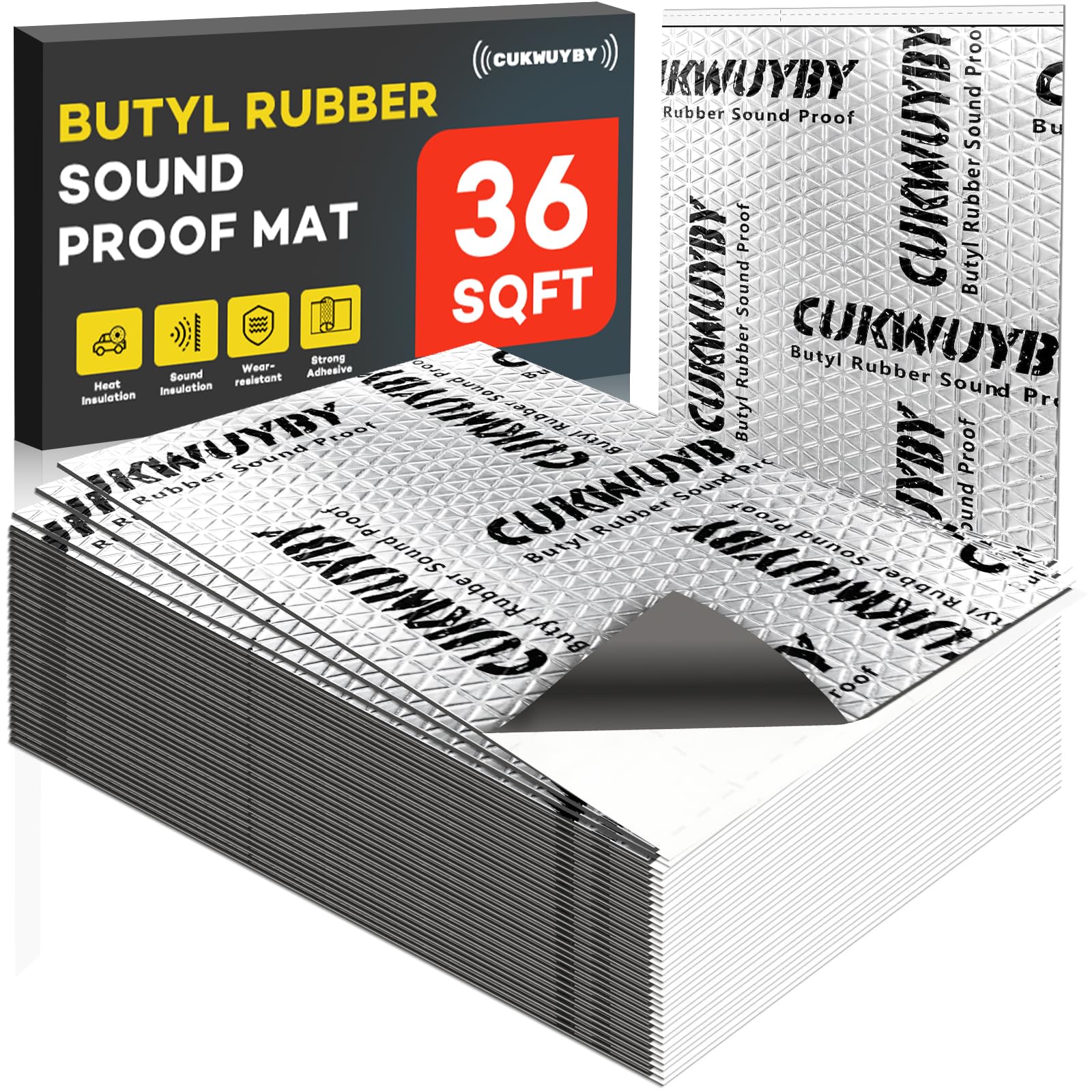
The 33-piece kit that makes short work of door and tailgate rattles.
This one arrives as 33 individual sheets rather than one giant roll, which makes it immediately easier to handle in a cramped van interior. The 80 mil 3-layer build — an 8-wire reinforced foil over a butyl rubber core with high-tack adhesive — is engineered for one thing: killing the resonance and rattling that aftermarket audio and rough roads create.
Buyers report dramatic fixes, from a 2018 Durango where it eliminated severe rattling to two full Bronco builds where a single layer greatly reduced panel resonance and made doors feel solid.. As owners put it: “It cut easy and stuck in place great.” The adhesive is strong enough that removal pulls paint, and it reportedly sticks even in 20-degree weather.
Quality is the highest-count praise here, with adhesiveness close behind. The one mixed note is thickness — it’s a true 80 mil, so it’s not the thickest option, and the foil can lift on tight curves. Plan your seams flat and it performs like a far more expensive brand.
Built for DIY
- 33 pre-cut sheets are easy to position and press into place
- Adhesive holds firm even in freezing weather
- Cutting guide lines speed up measuring on every sheet
Keep It Flat
- Foil can lift on tight radii — plan flat seams
- Thickness is standard 80 mil, not a max-mass option
Choose this for: a van where rattling doors and panels are the main complaint, especially alongside a stereo upgrade.
skip it if: you need one continuous roll to cover a massive flat floor without seams.
4. VEVOR 50 mil 52 sqft

The lightweight 52-square-foot roll that stretches a budget across a whole van.
VEVOR takes the opposite approach from the thick mats: a thinner 50 mil (1.3mm) butyl that’s noticeably lighter and gives you 52 square feet of coverage — far more surface area than most competitors sell at this price. For a camper van where weight matters, that lighter profile is a genuine advantage, especially when you’re adding insulation on top.
Owners have used it on Promaster camper panels and wheel wells, pairing it with spray foam and Thinsulate with excellent results.. The 3-layer composite — heat-resistant foil, low-permeability butyl, and a strong adhesive — delivers “massive NVH and heat reduction” when combined with a mass insulation system. It cuts cleanly and stays odorless.
The catch is coverage planning. One detailed Transit 148 build found 52 sq ft covered walls and ceiling but fell short of a full treatment, with a recommendation for 65 sq ft. The weight is also the most mixed aspect — it’s lighter, which is great for some but a sign of less mass for others. If you’re lining a full-size van, buy generously.
Max Coverage
- 52 sq ft of coverage
- Lighter 50 mil build is ideal with added insulation
- Strong adhesive holds even in high temperatures
Plan Your Layout
- 52 sq ft may not fully cover a mid-roof Transit 148
- Thinner means less mass for the most extreme vibration
Best for: budget-conscious camper builds where covering the most square footage matters more than maximum panel mass.
Order extra if: you’re doing a full-size van interior — plan closer to 65 sq ft for complete coverage.
5. Siless Max 120 mil 30 sqft

The 120 mil heavyweight that owners say transformed a 10-year-old Civic into a Lexus.
This is the mat that the KILMAT reviewers were comparing against — and for good reason. At a beefy 120 mil thick, the Siless Max uses a proprietary Bmastic compound to deliver serious mass. Owners mention it’s 50% thicker than standard options., with an aluminum coating that helps dissipate heat. The 16.53″L x 9.52″W sheets are easy to manage.
The difference is felt immediately on doors and floors. Buyers describe eliminating the “tinny” sound of a Ford Ranger’s doors and tightening up the sound system’s bass response. It cuts easily with scissors, molds into place, and has no off-gassing smell. Installation is a simple peel-and-place with a hand roller to ensure full contact.
The trade-off is pure math: 30 square feet is less coverage than the budget options, so it costs more per foot. But for a builder who wants the best damping on the most important panels — doors, floor, and back wall — this is the material that earns its premium. The indents on the foil even show you where you’ve properly rolled it.
Maximum Mass
- 120 mil thickness outclasses standard 80 mil mats for superior damping
- Aluminum coating adds heat dissipation
- Cuts cleanly with scissors and molds into place
The Cost of Premium
- 30 sq ft covers less area than budget rolls
- 30 sq ft at
Reach for this when: you want the best possible vibration damping on a door, floor, or firewall and are willing to pay for the extra thickness.
Budget for two rolls if: you’re covering a full van floor and walls, as 30 sq ft goes quickly.
6. 3M Thinsulate SM600L 60″ x 120″
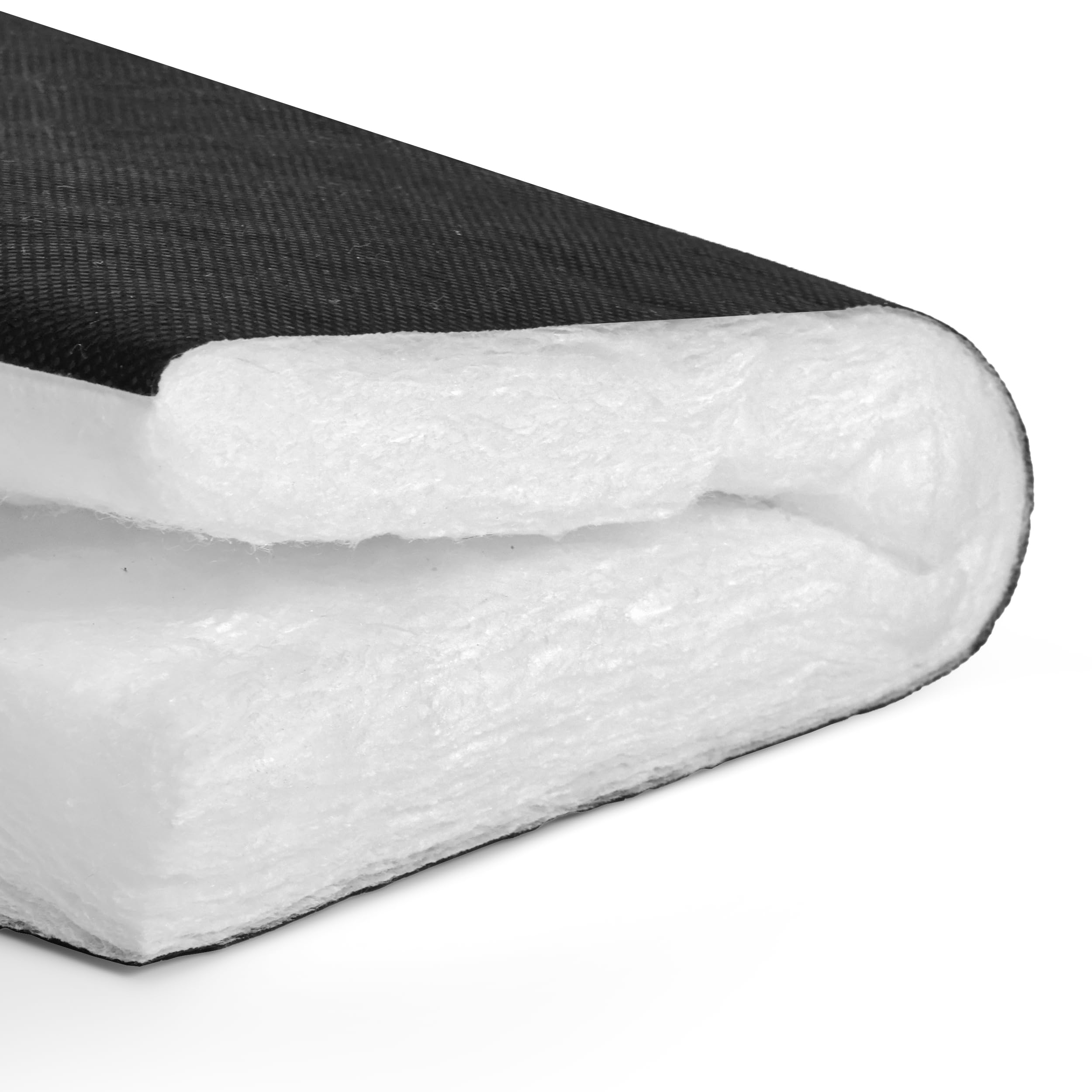
The fluffy polyester layer that keeps a camper van calm in both summer heat and winter cold.
This is the critical second layer that butyl mats can’t provide. At 1.65 inches thick, this polyester and polypropylene insulation is built for temperature control — it holds heat in during winter and slows heat gain in summer. With an R-value of 5.45 per inch, it’s a serious thermal barrier, and its FMVSS 302 certification means it’s tested for vehicle use.
Van builders praise it for being genuinely easy to work with — no respirator needed, no itching, and it cuts cleanly with a utility knife. Customers note it “helped with temperature and sound control” in door panels and tested so well in a van cab that the owner committed to using it throughout the entire build. Its hydrophobic nature means it resists moisture without needing an extra vapor barrier.
The honest note: quality is praised most, but the black backing can melt if you’re not careful, and roll consistency varies. It’s also the priciest option here, but as one owner put it, “a little pricey but it’s definitely worth it.” For a full camper build, this is the difference between a tin can and a comfortable home.
Comfort Creator
- R-value of 5.45 per inch for real thermal control
- Moisture-resistant, so no extra vapor barrier needed
- No itch and no respirator needed during installation
Handle With Care
- Black backing can melt if overheated during install
- Pricing varies, and there are no smaller size options
Add this after the butyl layer: for a camper van where keeping the cabin comfortable in all seasons is as important as killing road noise.
Use 3M spray adhesive: to bond it cleanly to panels and keep the backing from shifting.
7. SoundSkins Pro SSK-SSPRO-1

The do-it-all triple-layer panel that combines butyl, foil, and foam in one sheet.
SoundSkins Pro is the shortcut for builders who want a complete system without buying separate rolls. At a substantial 180 mil (4.5mm) thick, it layers pure rubber butyl, a metal foil, and closed-cell acoustic foam into a single peel-and-stick sheet. It claims to cut unwanted noise and vibration by up to 50%., and it carries an R-value of 3.12 per inch for thermal help too.
Reviewers point out it outperforms Dynamat for panel damping., with the foam layer absorbing sound that plain butyl lets through. In a Toyota Corolla with a high-end Audiofrog system, it created a “bank-vault quiet” interior and dramatically improved mid-bass response.. Installation is simple, and the dense foam is under 0.20 inches thick, so it fits inside door panels without binding.
The honest catch is coverage. The 11 sq ft kit is marketed as enough for “one car,” but buyers quickly found it only handles two doors on a compact car. It’s the most expensive per square foot here by a wide margin, and the value-for-money verdict is mixed. For a full van, you’d need many kits — so this is best reserved for a few critical panels or a premium audio upgrade.
One-Step System
- 3-in-1 butyl, foil, and foam in a single sheet
- Foam dampens panels and absorbs airborne sound
- Creates a superb sealed enclosure for speakers
Coverage Caution
- 11 sq ft only does about two doors on a compact car
- for 11 sq ft — plan many kits for a van
Perfect for: the audio enthusiast upgrading a van’s sound system who wants maximum damping on doors and speaker mounting points.
Think twice if: you’re covering an entire van interior — the cost adds up fast versus a butyl-plus-foam two-layer approach.
Understanding the Specs
Thickness in Mils and Millimeters
This is the single most important spec for vibration control. A mil is one-thousandth of an inch, so 80 mil is 0.08 inches thick. Standard mats sit at 50-80 mil, while premium options go to 120 mil or even 180 mil. Thicker means more mass, which means better damping of large panel vibrations — but it also means more weight and cost per square foot.
Coverage Area in Square Feet
This tells you how much surface you can actually treat. A 36 sq ft roll covers a couple of doors and a trunk, while a full-size van interior needs closer to 65 sq ft for walls and ceiling. Always buy more than you think you need — the material disappears fast when you’re fitting around wheel wells, ribs, and curves.
FAQ
How much sound deadening do I need for a full van?
Is thicker always better for sound deadening?
Do I need both butyl and foam or fiber insulation?
Will sound deadening reduce heat in my van?
How do I install peel-and-stick sound deadening?
Will the adhesive hold up in hot weather?
Is butyl or closed-cell foam better for van sound deadening?
Does sound deadening improve my van’s stereo?
Final Thoughts: The Verdict
You want to quiet your van without wasting money on the wrong material, so here is the short answer: the KILMAT 80 mil is the best van sound deadening for most builds because it sticks aggressively and lets you verify the install as you go, at a coverage size that suits real projects. If you need maximum vibration damping on your most important panels, choose the Siless Max 120 mil instead. For a comfortable camper, add the 3M Thinsulate layer on top to lock in the quiet and tame the temperature.
How We Picked
We do not accept paid placement. Every pick is matched to a real buyer and a real use-case; we do not hands-on test units.
Sources & Methodology
Specifications: manufacturer listings and product documentation. Review insights: verified customer reviews, as of August 2026. Pricing: not shown on this page (it changes often); check the current price via the retailer link.
As an Amazon Associate, GoCarLife earns from qualifying purchases. This does not affect which products we feature.