
Our readers keep the lights on and the garage heater humming. As an Amazon Associate, I earn from qualifying purchases.
Specs are compiled from manufacturer listings and verified buyer reviews and can change over time — please confirm the key details on the product page before buying.
The most annoying part of camping isn’t the bugs—it’s the constant rocking every time someone walks across the floor, rolls over in bed, or steps outside. That motion isn’t just annoying; it can make you feel seasick in a driveway. A solid stabilizer bar setup kills that shake at the source by bracing your rig against the ground, and the right one depends entirely on whether you drive an RV, tow a trailer, or haul a truck camper.
I’m Mo Maruf — the founder and writer behind GoCarLife. This guide is built by comparing the manufacturers’ published specifications and the patterns across verified customer reviews, so you get each pick’s real strengths and trade-offs instead of marketing spin.
From bolt-on RV kits to adjustable car sway bar links, these picks cover every rig type, so you can find the universal stabilizer bar that matches your vehicle and the way you camp.
Our Picks at a Glance

How To Choose The Best Universal Stabilizer Bar
Before you buy, you need to know what kind of vehicle you are stabilizing. A truck camper needs a bar that ties into bed-mounted tie-downs, while a travel trailer needs a bar that reaches from the frame to the ground. The “universal” label means the bar is adjustable, not that one size fits every rig perfectly.
Match the type to your rig
RV and trailer stabilizers are the bars that brace a parked camper against rocking. Sway bar end links are a different beast—they are suspension parts that connect your car’s sway bar to the control arm, keeping the body flat in corners after a lift or lowering kit. Buying the wrong one means it won’t bolt on at all.
Measure clearance before you order
Every stabilizer has a minimum and maximum height range for a reason. If your trailer frame sits at 27 inches off the ground, a bar that only adjusts from 12 to 26.5 inches will never reach. Measure from the ground to the frame where you plan to mount it, then confirm that number falls inside the bar’s stated range.
Quick Comparison
| Model | Best For | Max Height/Length | Material | Install Type | Amazon |
|---|---|---|---|---|---|
| BAL Lock-Arm★ Best Overall | Travel trailers & 5th wheels | 30 in bar | Alloy Steel, Aluminum | Bolt-on | Amazon |
| DAZZLAIT End LinksTop Performer | Lifted/lowered cars | 150 mm | Aluminum, Steel | Bolt-on | Amazon |
| XCPMC Drop Links | SUVs & trucks with lifts | 350 mm | Aluminum | Bolt-on | Amazon |
| VEVOR RV Stabilizer | Tool-free RV camping | 28 in | 6061 Aluminum | No tools | Amazon |
| Beech Lane Stabilizer | Fold-away RV storage | 26.5 in | Aluminum, SS | No tools | Amazon |
| Safoner Stabilizer | Uneven terrain support | 29 in | Thick Aluminum | Locking pins | Amazon |
| HappiJac 182971 | Truck campers | 59.25 in | Steel | Frame mount | Amazon |
In‑Depth Reviews
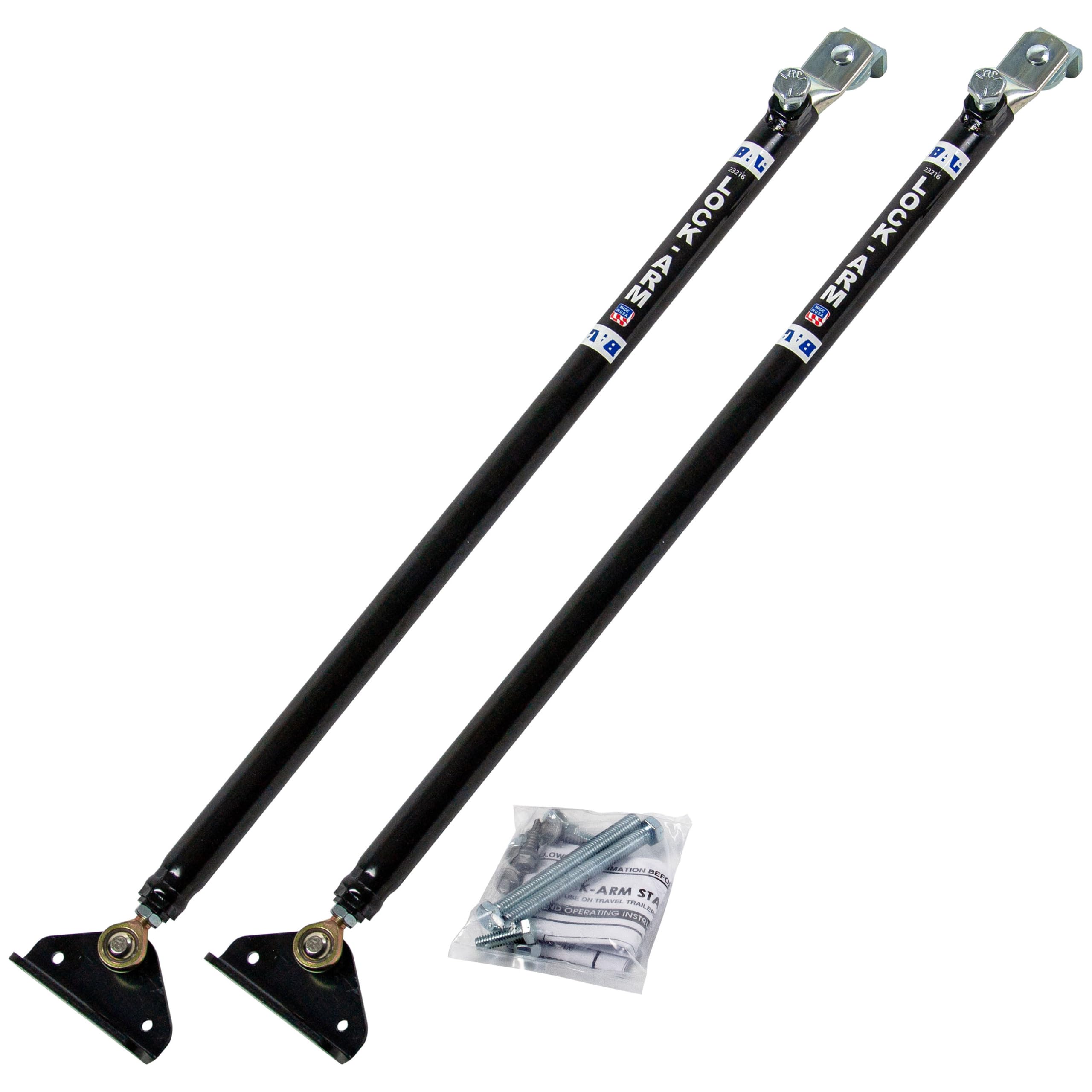
1. BAL 23216 Lock-Arm Stabilizer Bar System
Our pick — over 4.5★ from 450+ verified ratings; the strongest balance of quality and price.
The bolt-on bracket that turns a rocking trailer into a solid platform
If you tow a travel trailer or 5th wheel and you are tired of the side-to-side sway every time someone moves inside, this is the kit that owners consistently call a night-and-day fix. It works by bracing your existing stabilizing system—scissor jacks, landing gear, or single-leg stabilizers—so the whole chassis stops flexing. The bars themselves are a black steel outer arm with a zinc-plated inner arm, built in the USA to resist corrosion from years of road salt and rain.
The install is a one-time bolt-on job that stores on your RV, and buyers report it takes roughly 45 minutes to an hour once you have the hardware laid out. A common thread in feedback is the dramatic reduction in movement: trailer owners describe killing nearly all the shaking from walking, wind, and even pets moving around. One owner of a 25-foot Heartland Sundance confirmed the rear bars delivered a “huge improvement, no movement,” though they needed custom 1.5×4 C-channel shims to align with their crossmember.
This is the pick with the deepest owner trust in the RV category—a 4.6-star average across hundreds of verified buyers—and the consensus is that it is worth the money for the solidity it brings. The one recurring note of caution is that the hardware kit sometimes ships incomplete, so it is smart to inventory the bolts before you start. The bars come in a 2-bar box, and you can buy 1, 2, or 3 boxes to build a 2, 4, or 6-bar setup that matches your trailer’s layout.
Why owners trust it
- Slays side-to-side rocking on trailers and 5th wheels
- Corrosion-resistant zinc-plated inner arm for outdoor life
- Stores on the RV, so it is always with you
Fair warnings
- Hardware can occasionally arrive missing a piece
- Some frames need custom shims to align the mount
The anchor pick: this is the bar to choose if you tow a trailer or 5th wheel and want proven shake-killing performance.
Check first: confirm your crossmember alignment so you are not hunting for shims on install day.
2. DAZZLAIT 125mm-150mm Adjustable Sway Bar End Links
The adjustable link that keeps a lowered or lifted car flat through corners
This one is for car owners, not campers. When you lower or lift your ride, the factory sway bar end links are suddenly the wrong length, which lets the body roll and the suspension bind. These DAZZLAIT links fix that with a stud-to-stud adjustment range of 125mm to 150mm, so you can spin the center rod to hit the exact length your setup needs after the height change.
You get a stabilizer bar that installs without guesswork, thanks to the reverse threading on one end—you mount the joints first, then spin the rod to extend or shorten it, unlike cheaper links that force you to pre-set the length. The center rods are lightweight, corrosion-resistant aluminum, the ball joints are strong steel, and the dust covers are neoprene, which resists oxidation and abrasion better than ordinary rubber. Buyers describe the links as rugged and sturdy the moment they come from the start, with zero issues during installation.
The honest trade-off is durability in harsh conditions, which draws mixed feedback. Some owners say the links are tough, while at least one reports rust beginning after just two weeks of use. The fit also demands that you measure carefully—one buyer of a lifted vehicle found the length claims did not match their setup, though the manufacturer’s customer service fixed the issue quickly. Weigh the rust reports against the fact that quality is the single most-praised aspect of this product.
Best for lifted cars: the reverse-thread adjustment makes fine-tuning far easier than the cheaper alternatives.
Think twice if: you live in a wet, salty climate where surface rust on a painted exterior is a real concern.
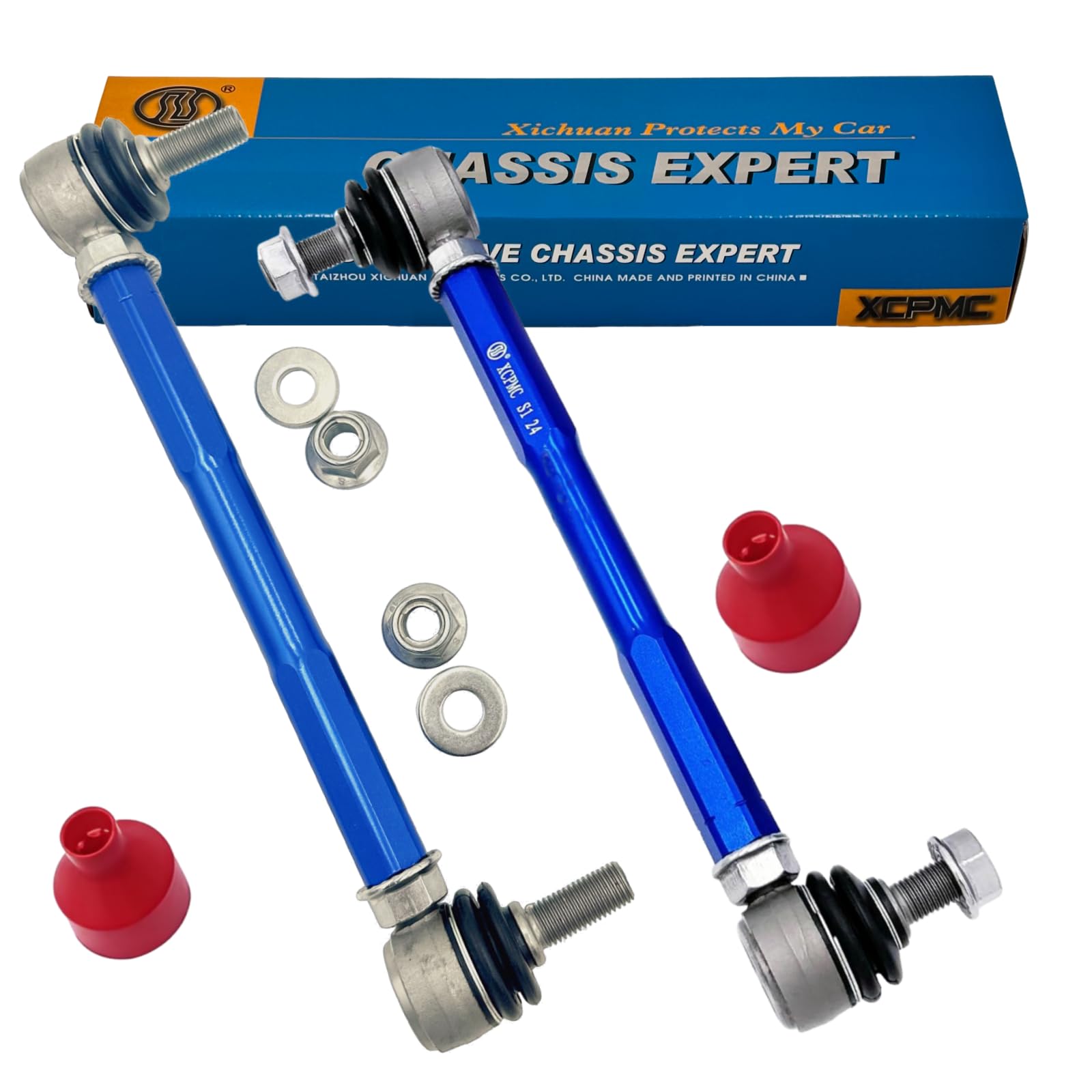
3. XCPMC 300-350mm Adjustable Stabilizer Sway Bar Link (2-Pack)
The long-reach link that finally completes a 2-inch lift kit
When your factory links just will not reach after a lift, this pair steps in—the extended length of 350mm (13.8 inches) fits heavy-duty trucks, SUVs, and even agricultural or mining equipment. A Subaru Crosstrek owner with a 2-inch lift kit captured the consensus: “they solve the problem finally the right bolt size everything very sturdy and heavy duty.”
The universal design fits front and rear sway bars of identical configuration, and the adjustable length means you can set the bar to avoid stressing the suspension after a ride-height change. Owners mention the links work perfectly for both front and back applications, and most recommend ordering two pairs if your bolt sizes match front to rear, so you can replace all four corners. The pair is made of aluminum with painted exterior finish, keeping the weight down while holding up under the strain of a lifted rig.
The recurring quality note is strong—quality is the most-praised aspect here, with fit close behind—but one owner flagged a thread that seemed to bind on a single link and a ball joint that loosened after two weeks. That is a single data point against a product that otherwise earns consistent praise for fit and performance, so it reads as a tolerance hiccup to inspect on arrival, not a pattern to avoid.
Reach for these if: you just lifted an SUV or truck and need long, adjustable links that fit front and rear.
Look closer if: you are not comfortable checking the threads and ball joints on arrival for a rare defect.
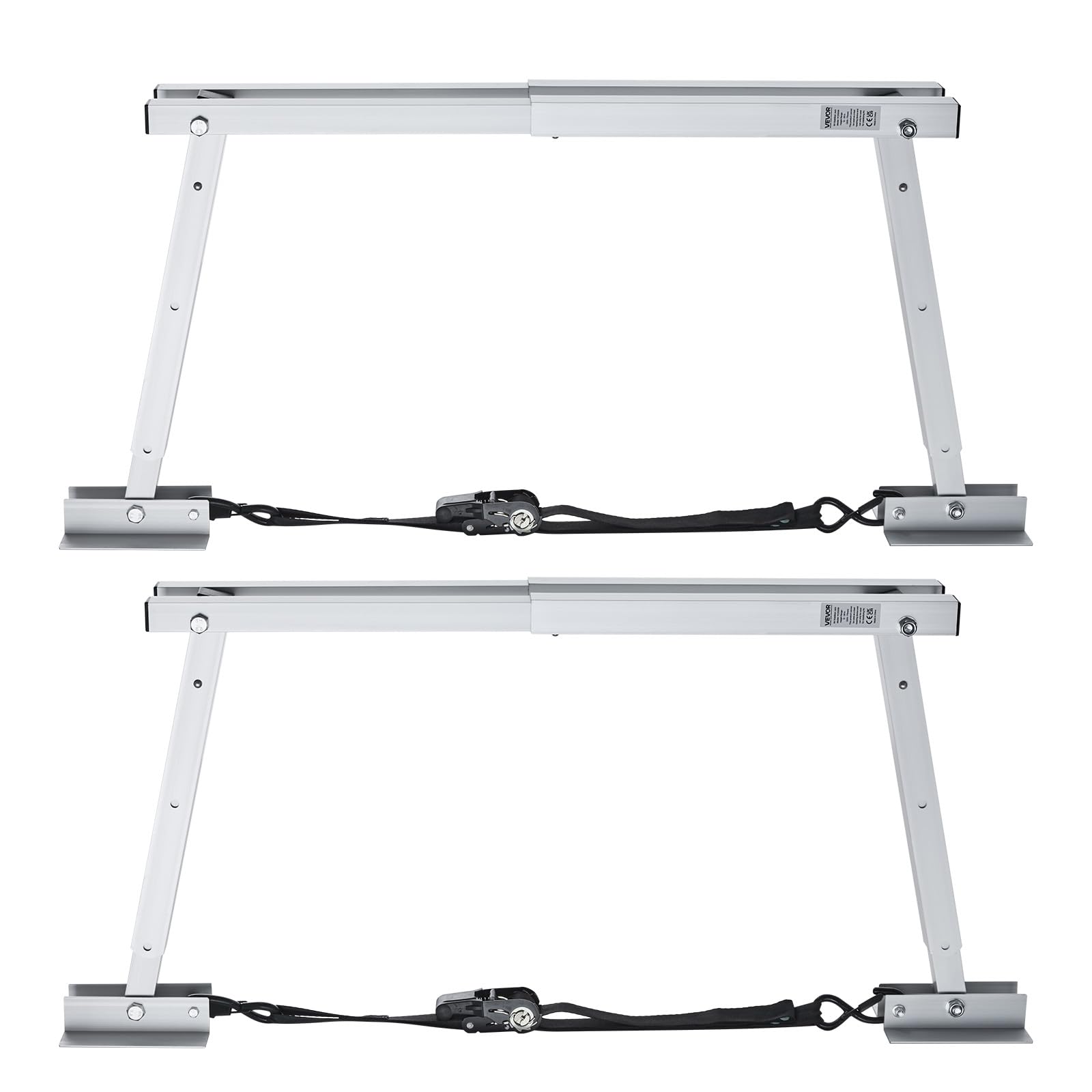
4. VEVOR Universal RV Stabilizer (2-Pack)
The tool-free stabilizer that unfolds, pins, and steadies a trailer in minutes
If the idea of wrenching under your trailer makes you cringe, this VEVOR set is the antidote. There are no tools required at all—you unfold the bar, slide it to the right height, and lock it with a pin. The adjustable height spans 12 to 28 inches, and the whole thing folds in half so it tucks into a toolbox or storage bay without hogging space.
Owners praise its stability, noting it keeps the trailer’s rear steady on uneven ground. One owner with a trailer that shook with every step called it “100 percent better than it was,” though they recommend ordering a third bar for the center section to chase the last bit of rock. The frame is 6061 aluminum alloy, chosen for a good strength-to-weight balance, and the kit ships as two complete stabilizers with pins and a ratchet strap.
At a mid-range price, it matches pricier foldable stabilizers in performance while offering simpler setup than bolt-on options. Tool-free and pin-based bars are less rigid than bolted steel brackets, so a slight residual movement may remain. It suits daily parking use but is not a permanent frame brace.
The smart buy: the simplest setup of any stabilizer here, delivering real shake reduction without a single wrench.
Know the limit: a pin-locked foldable bar cannot match a bolted bracket for absolute rigidity, so a third unit helps.
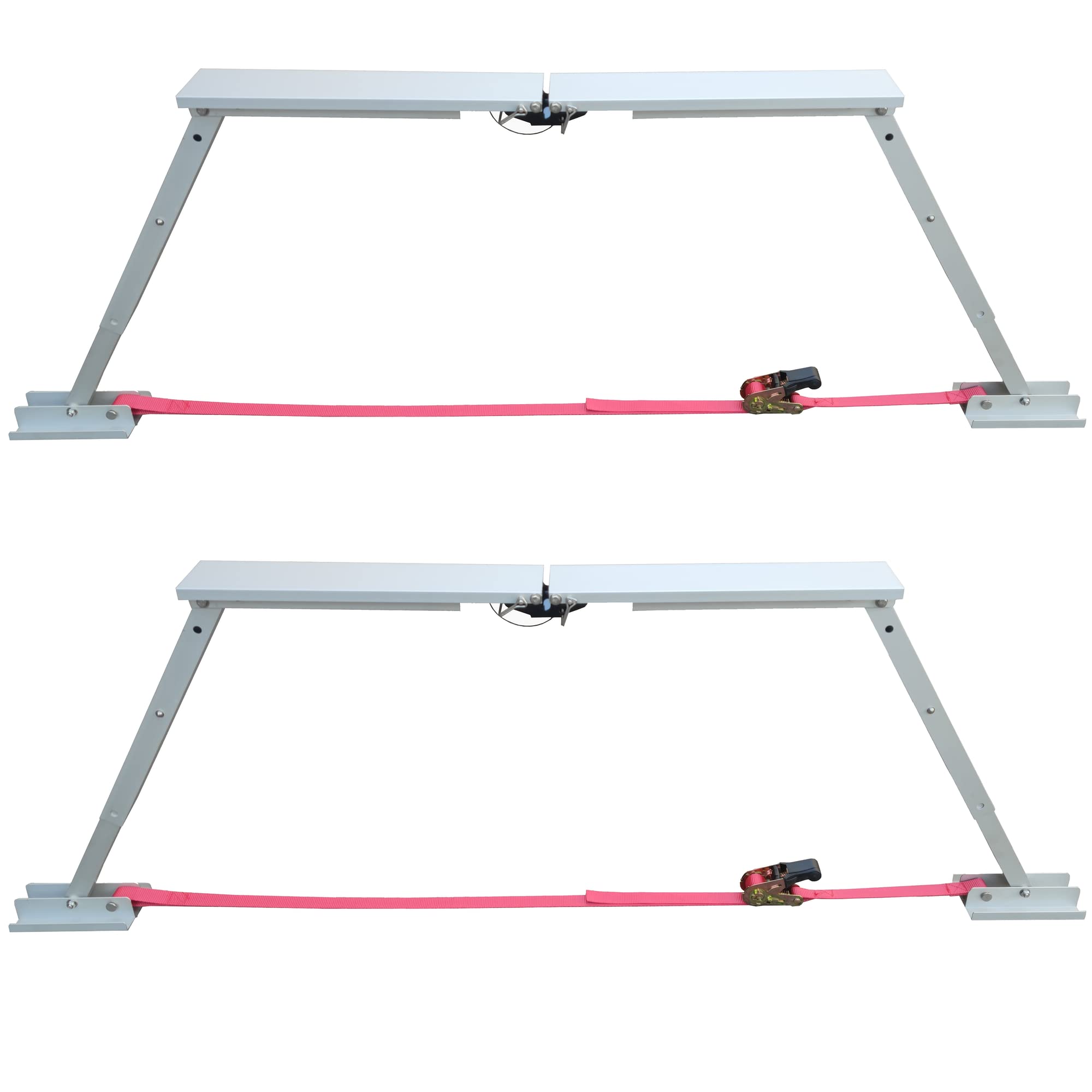
5. Beech Lane Universal RV Stabilizer (2-Pack)
The fold-in-half stabilizer that eliminates nearly all wobble without tools
Storage space is precious in an RV, and that is exactly what this Beech Lane design protects. The patented hinged top bar folds the stabilizer in half, cutting the storage footprint by 50% compared to competitors, and it sets up without tools in seconds. The adjustable height spans 12 to 26.5 inches off the ground, fitting motorhomes, fifth wheels, trailers, and pop-up campers within that range.
You get a stabilizer that spreads the load—the top bar is wider than typical designs to cover more of the RV frame, and the construction uses corrosion-resistant aluminum with marine-grade stainless steel hardware for years of outdoor life. Owners on Class C motorhomes report the wobble nearly vanishes—one owner placed a pair near the rear wheels and reported “99% of wobble gone,” with a second unit at the front taking out the tire bounce entirely.
This one carries a lifetime warranty, which is a strong vote of confidence from the maker, and the foldable design plus included storage bag make it the easiest unit here to live with between trips. The only real downsides are the height ceiling—26.5 inches means tall trucks or high-clearance trailers are out—and the recurring owner advice to run three, not two, for the most complete coverage. If your frame sits within range, this is the easiest premium stabilizer you can buy.
The premium edge
- Folds in half for a storage footprint that beats the competition
- Marine-grade SS hardware resists corrosion for years
- Backed by a lifetime warranty
Where it hits a wall
- Top height of 26.5 inches rules out tall rigs
- Owners consistently find a third unit tightens things further
Pick this for: motorhome and trailer owners who want tool-free setup, easy storage, and near-total wobble elimination.
Measure first: verify your frame sits under 26.5 inches, or this premium option will not reach.
6. Safoner Heavy-Duty RV Stabilizer
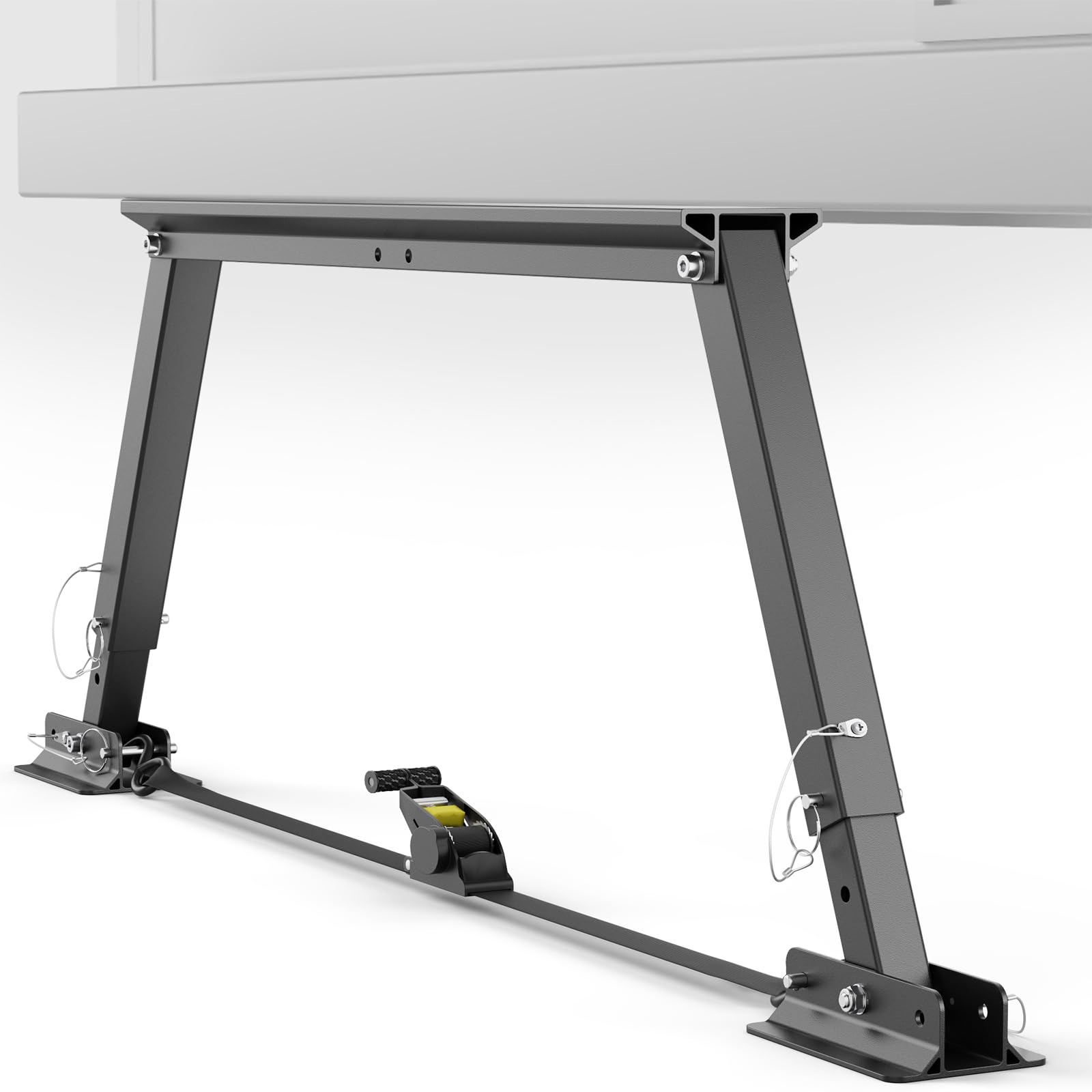
The thick-wall stabilizer with seven pin positions for tricky terrain
Uneven campsites are the enemy of a rocking trailer, and this Safoner unit is built to handle them. The adjustable height runs from 14 to 29 inches of ground clearance with 7 locking positions, giving you far more precise adjustment than a simple two-pin design. The legs lock with stainless steel pins instead of a press-to-lock mechanism, which owners find more durable and easier to use over time.
The heavy-duty construction is the defining trait here: the aluminum is 3mm thick, and the top bar is a wide 3.5 inches to increase contact with your RV frame so there are no weak points or seams. At 10.8 pounds, it is not the lightest stabilizer, but that weight is exactly what delivers the solid, planted feel owners describe. Feedback is largely positive, with buyers noting it “work really well” and that their husband found it easy to set up, with a noticeable stability gain.
One dissenting owner found it “did absolutely nothing to change the rocking”—a single report against the broader positive consensus, likely a fit or placement issue rather than the bar itself. With a thick 3mm wall and the wide top bar, this is the most sturdy foldable stabilizer in the lineup, and the pin-based adjustment suits terrain that changes site to site.
Built for rough ground: the 14-29 inch range and seven locking positions handle campsites that flatter two-position bars.
Not a cure-all: a single report found no improvement, so confirm contact pressure on install.
7. HappiJac 182971 Universal Stabilizing Bar (59.25 Inch)

The steel crossbar that keeps a heavy truck camper from racking the bed
This is a completely different job from the ground-brace stabilizers above. The HappiJac bar is a 59.25-inch steel tube that mounts directly to your truck frame and ties into a frame-mounted tie-down system, keeping the truck bed square under the weight of a heavy camper. Owners with F-250 trucks describe it as essential to stop the load from yanking on the bed walls and bowing the front of the bed.
The bar is simple square tubing with stamped holes, and it mounts direct-to-frame with the matching HappiJac tie-down kit. The whole system installs easily and works great, with buyers noting it is a “must have” for a heavy camper—one owner said it is very necessary to keep the bed from bending when the camper shifts. The catch is that HappiJac sells the bar separately from the tie-downs, and the recurring owner frustration is that you simply cannot complete the install without both pieces.
Quality and fit are the most-praised aspects, and the bar works as advertised, but the separate purchase rankles. The 5-pound steel bar itself is built to do one job for years, and it does that job well. This is strictly for truck camper owners with a frame-mount tie-down system already in place or on the way—if you tow a trailer instead, this is the wrong tool entirely.
What it nails
- Keeps the truck bed square under a heavy camper load
- Simple stamped steel tubing with proven fit on F-250 trucks
- Direct-to-frame mount for a rigid tie-down link
The frustration
- Sold separately from the tie-down kit you need to complete the job
- Only suits truck camper setups, not trailers
Choose this if: you haul a truck camper and already run HappiJac frame-mount tie-downs.
Look elsewhere if: you tow a trailer or RV—this bar needs a truck bed to do its job.
Understanding the Specs
Adjustable height range
The single number that decides whether a stabilizer can reach your rig. Every ground-brace bar has a minimum and maximum height, like 12 to 28 inches on the VEVOR or 12 to 26.5 inches on the Beech Lane. Measure from the ground to your frame where you will mount the bar, and make sure that measurement sits inside the range. Too-short bars never touch the ground, and too-tall bars leave your trailer rocking.
Locking mechanism
How a bar holds its set height matters for long-term rigidity. Pin-based designs use stainless steel locking pins that lock into pre-drilled holes across the adjustment range, which is more durable than a press-to-lock mechanism on heavier trailers. Tool-free stabilizers use a pin plus a ratchet strap for tension. Bolt-on kits like the BAL use set screws and pivot bolts to clamp the bar to your existing jacks—the most rigid option, but the slowest to set up.
FAQ
What is the difference between a stabilizer bar and a leveling jack?
Will a universal stabilizer bar fit my trailer?
How many stabilizer bars do I need?
Can I use a car sway bar end link on my RV?
What length sway bar link do I need after lifting my truck?
How long does installation take?
Are aluminum stabilizer bars strong enough?
Will a stabilizer bar stop my truck camper from moving?
Final Thoughts: The Verdict
Across the board, the universal stabilizer bar winner is the BAL Lock-Arm because it delivers the most proven shake-killing performance on trailers and 5th wheels, backed by the strongest owner trust in the category. If you want tool-free setup and easy storage for a motorhome, grab the Beech Lane. And for lifted cars and trucks needing suspension links, the XCPMC pair is the one to reach for.
How We Picked
We do not accept paid placement. Every pick is matched to a real buyer and a real use-case; we do not hands-on test units.
Sources & Methodology
Specifications: manufacturer listings and product documentation. Review insights: verified customer reviews, as of August 2026. Pricing: not shown on this page (it changes often); check the current price via the retailer link.
As an Amazon Associate, GoCarLife earns from qualifying purchases. This does not affect which products we feature.