
Our readers keep the lights on and the garage heater humming. As an Amazon Associate, I earn from qualifying purchases.
Specs are compiled from manufacturer listings and verified buyer reviews and can change over time — please confirm the key details on the product page before buying.
When your check engine light glares or your air-fuel-ratio gauge reads wrong, the usual culprit is one part: the universal O2 sensor. Picking the wrong one can waste a weekend and risk damaging your car’s electronics, because “universal” covers everything from a splice-in 4-wire unit to a plug-and-play 5-wire wideband. Your real decision is if you need an OE-style replacement or a sensor that works with your aftermarket tuning controller.
I’m Mo Maruf — the founder and writer behind GoCarLife. This guide is built by comparing the manufacturers’ published specifications and the patterns across verified customer reviews, so you get each pick’s real strengths and trade-offs instead of marketing spin.
Find the right fit by matching wire count, connector, and sensor length, and the universal o2 sensor you choose will save you time, money, and a second trip under the car.
Our Picks at a Glance

How To Choose The Best Universal O2 Sensor
An oxygen sensor reads the leftover oxygen in your exhaust and sends that signal to the engine computer so it can balance the fuel mixture. Choose the wrong type and your car will run rich or lean, which hurts fuel economy and can damage the catalytic converter over time.
Know your wire count first
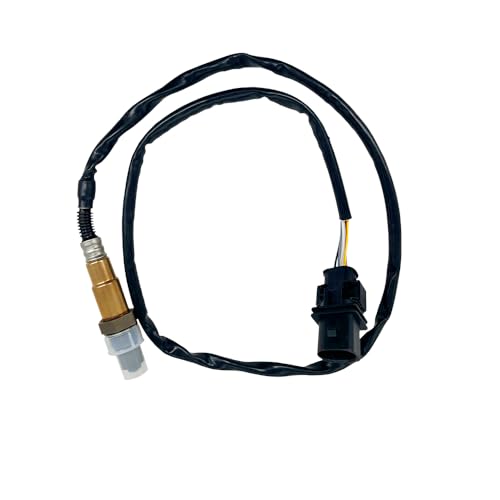
The simplest 1-wire sensors use the exhaust pipe itself as the ground, while 2-, 3-, and 4-wire versions add a heater circuit that helps the sensor reach operating temperature faster. Wideband sensors, typically 5-wire, are a different animal: they are used with aftermarket air-fuel-ratio gauges and tuning systems, not the factory computer in most cars.
Check the plug and the length
Before you order, look at the connector shape and the length of the sensor body plus its wiring. A sensor that fits the threads can still fail to reach your car’s harness, and many returns happen because the plug looks different from the original. If your factory connector is damaged, a universal unit with a splice-in harness is the right call.
Match accuracy to your goal
For a stock daily driver, a standard narrowband sensor is plenty. For tuning with a wideband gauge, accuracy matters: a sensor rated at ±0.5% is measurably tighter than one rated at ±1%, which translates to a more reliable air-fuel reading at the edges of your tune.
Quick Comparison
| Model | Best For | Type | Accuracy | Material | Amazon |
|---|---|---|---|---|---|
| Walker 350-34414★ Best Overall | OE-style daily drivers | OE Replacement | — | Ceramic | Amazon |
| HOAVEED LSU 4.9Best Value | AEM wideband controllers | 5-Wire Wideband | ±0.5% | Ceramic, Metal | Amazon |
| Automotive-leader 17025 | PLX and Innovate gauges | 5-Wire Wideband | ±1% | Stainless Steel | Amazon |
| Bosch 15740 | Damaged factory harnesses | 4-Wire Universal | — | Ceramic | Amazon |
| AULINK 234-5029 | Hyundai and Kia 2.4L pairs | Up/Downstream Pair | — | Stainless Steel | Amazon |
| Denso 234-4210 | Wiring-savvy DIYers | Universal Splice-in | High | Zirconium | Amazon |
| QIJIAUTO 234-5430 | Hyundai and Kia singles | Up/Downstream | — | Metal | Amazon |
In-Depth Reviews
1. Walker Products 350-34414 Oxygen Sensor
Our pick — over 4.5★ from 150+ verified ratings; the strongest balance of quality and price.
The drop-in OE replacement that has owners clearing trouble codes by the next morning
When you want the least drama possible, this Walker unit mirrors the factory part: it is a 100% OE replacement with a laser-welded body and shield, plasma-sprayed protective coating, and high-temperature sleeving. The ceramic element and dual lower shield design are built to survive the heat soak of a catalytic converter, which is where a cheap sensor dies young. Owners reporting an exact seal and anti-seize pre-applied on arrival means you can wrench it in the same afternoon.
Buyers report a “long wiring harness” that reaches easily on a 3.0L V6 Ranger, and one notes 2000 miles with zero issues. The best story is the reader who ordered in the afternoon, got it next morning, bench-tested it, cleared the check engine light, and saw no faults on the scanner. On a 2011 Ford Expedition, the job was “the easiest one to change out” thanks to open access on the driver side.
The catch here is modest: this is a standard narrowband sensor, so it is not the tool for a wideband tuning setup. The OE-style connector also means it is not meant for repairing a damaged factory harness — it replaces the sensor, not your wiring. Weighing 3.36 ounces, it is about 19% heavier than the HOAVEED wideband below, which speaks to the sturdier build.
What owners cheer
- Arrives sealed with anti-seize already on the threads
- Clears the check engine light and scanner faults
- Laser-welded body and shield for heat resistance
Who should pass
- Not for wideband tuning setups
- OE connector means no harness repair
Reach for it when: you want a factory-grade swap with zero wiring guesswork on a daily driver.
Look elsewhere if: you are feeding an aftermarket AFR gauge, not the stock computer.
2. HOAVEED LSU 4.9 Wideband O2 Oxygen Sensor
The budget wideband that holds its own against the Bosch it replaces
This is the sensor to grab when your AEM wideband controller needs a fresh lung. It is a 5-wire UEGO unit rated at ±0.5% measurement accuracy with a measuring range of 10:1 to 18:1 air-fuel ratio, which is tighter than the ±1% rating on the Automotive-leader 17025. Built from ceramic and metal with a plug-in mount, it directly replaces Bosch 17025 and 0258017025 with no modifications.
The real-world endurance is the headline: owners mention one install that is “still strong” after 10 months, and another that survived 9-12 months in a boosted S2000 running an Innovate MTX-L Plus. It calibrated fine and gave accurate readings, and the verdict was that it outperforms Bosch in some cases. One owner’s only knock was that Bosch has sturdier wire sheathing, which is a fair note if your engine bay sees a lot of vibration.
Here is the honest caveat: one buyer hit wildly jumping AFR readings after install and swore off the brand entirely, calling it “garbage” and telling others to spend on a Bosch. That is a single failed unit against a string of 5-star drives, so treat it as a reminder that wideband sensors occasionally ship with internal faults — buy from a seller with a good return policy. The 12-month warranty is a solid safety net.
Editor’s read: at 4 ounces it is the lighter, cheaper wideband option with a tighter accuracy spec, but wideband sensors are a lottery; the warranty is your protection.
Snag it for: an AEM 30-4110, 30-0300, or 30-0310 controller on a budget build.
skip it if: you want the bulletproof wire sheathing of a name-brand wideband for a harsh off-road rig.
3. Automotive-leader 17025 LSU 4.9 5-Wire WideBand

The 1000mm-reach wideband that fits an enormous range of Ford, Honda, Toyota, and Chevy models
If you need a wideband that physically reaches, this is your sensor. The 5-wire unit has a total length of 1000mm (about 39 inches), so it directly fits many vehicles: 2011-2015 Ford Focus 2.0L, Honda Accord and CR-V, Toyota Camry and RAV4, plus the Chevy Cruze. Its stainless steel body and flange mount resist corrosion, and the 1-year warranty protects you against premature failure, the biggest worry with widebands.
For tuners, compatibility is strong. It works as a spare for an Innovate PSB1 AFR/boost gauge on a Mitsubishi Evo X, with the harness “very close to the original.” One owner runs it in a Holley Sniper EFI setup and says it works as good as the OEM sensor while costing much less than what Holley sells. It also has a ±1% accuracy rating with a 10.0-18.0 AFR measuring range, which is wider but slightly less precise than the HOAVEED above.
The downside is real and worth flagging: one buyer got a slow, laggy reading right from the start, then an E8 error code that means a faulty sensor element. After recalibration the fault returned, and the unit went back for a refund. That is the risk of a budget wideband, and this one earns the most-discussed reliability complaints in this list. Buy with a return window and test it before you button up the car.
What wins owners over: the sheer coverage — one part number spans dozens of engines and multiple gauge brands.
Choose this for: a tuner who wants one spare wideband that fits several cars and gauges.
Think twice if: you cannot afford a dead-on-arrival unit; the failure reports are louder here than anywhere else.
4. Bosch 15740 Premium 4-Wire Universal Oxygen Sensor

The universal fitment king with a no-solder connector for wrecked harnesses
Bosch invented the oxygen sensor in the late 1960s, and this 4-wire unit is the one you buy when the factory connector on your car is toast. The OE Smart Link Connector requires no soldering, and the sensor comes with 25.6 inches of wire and two feet of sensor lead to let you reach past damaged sections of harness. It is compatible with select mid-1990s to late-2010s vehicles from most domestic and Asian manufacturers, and the stainless steel body is totally submersible and sealed tight.
The factory testing and anti-seize on the threads get consistent praise. Owners describe a “five minute diy” if you have a slotted socket set and decent access, and the plug fits cleanly. On a 1992 Jaguar XJ6 and a 2003 Camry 4-cylinder, the fit is perfect and the engine runs smoother with better performance. It is the ideal solution when your vehicle side cables are too damaged to reuse an exact-fit sensor.
Know the limits: this is a narrowband 4-wire sensor, so it is not for wideband tuning. It is also a universal, meaning you are expected to connect it to your existing harness, not plug it into a factory connector. If your original wiring is healthy, an exact-fit sensor is easier; if the harness is mangled, this is the pick. There is a reason the crowd favorite across the board — tens of thousands of owners — sits here.
Why it leads
- No-solder OE Smart Link Connector
- 25.6 inch wire reaches a damaged harness
- Stainless steel body is fully submersible
Keep in mind
- Universal splice-in, not a direct plug
- Narrowband only, no wideband support
Grab it when: your car side connector is beyond saving and you want a solder-free way to rebuild it.
Pass it by if: you expect a factory plug-and-play drop-in for an intact harness.
5. AULINK 234-5029 234-4238 Oxygen Sensor Upstream Downstream
Two sensors in the box for a Hyundai or Kia 2.4L, rated to survive 1562°F of exhaust heat
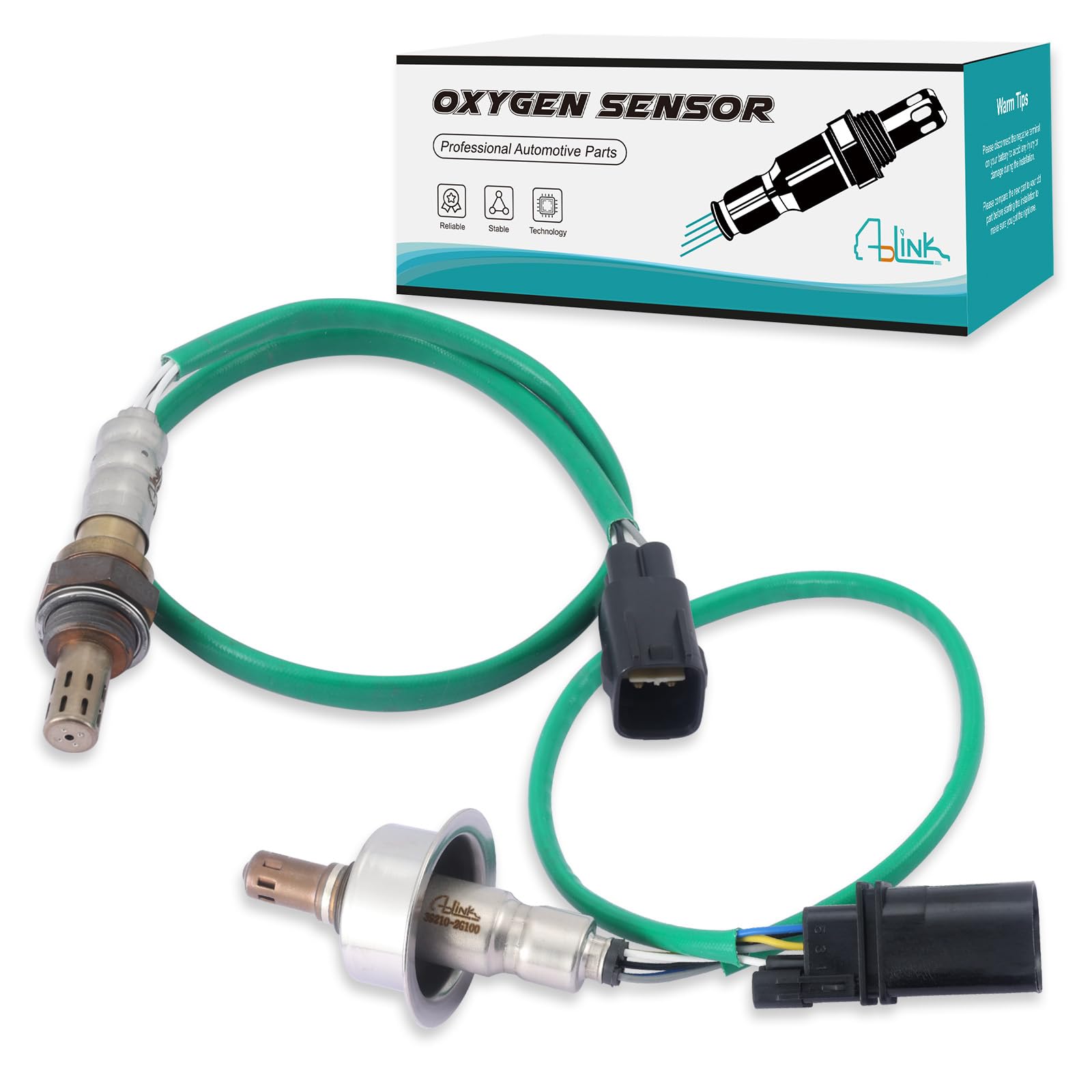
If you own a Santa Fe, Sonata, Tucson, Optima, or Sorento with the 2.0L or 2.4L engine, this two-pack you will appreciate. It includes both the upstream (234-5029) and downstream (234-4238) sensors, and the double laser-welded stainless steel body is totally submersible to seal tight and resist corrosion. The upper temperature rating hits 1562°F, which matters for a part bolted right into the exhaust stream, and the casing allows atmospheric oxygen in without letting water clog the filter.
Owners call it a “perfect fit genuine part,” and the install is straightforward: one wrote it “took care of the problem” right after installation. The fitment list is broad, covering the Sonata 2009-2014, Santa Fe 2010-2012, Tucson 2010-2014, Sorento 2011-2015, and Sportage 2011-2016, among others. The 1-year or 50000 km warranty adds a long tail of protection.
Here is the honest fit note: quality and reliability come back as mixed in the reviews, and the most common complaint is a connector that did not match a specific vehicle — one Kia Rondo 2009 owner found the Amazon fitment checker wrong. Another notes it would not work with a 2013 Hyundai Sonata. This is a compatibility gamble, not a quality failure, so confirm your exact engine code and connector before ordering.
Bottom line: great value if it matches your car, but the fitment checker is not always right — verify the plug style first.
Pick it for: doing both upstream and downstream sensors on one Hyundai or Kia job.
Beware if: you cannot confirm the connector shape ahead of time, since fit is the top risk.
6. Denso 234-4210 Universal Oxygen Sensor

The zirconium-core universal that fights silicone and lead poisoning flat out
The standout engineering here is the aluminum oxide trap, an extra layer that helps protect the sensing element from silicone and lead poisoning — the two contaminants that kill O2 sensors early. That, plus a porous Teflon filter and stainless steel housing, is what Denso claims makes this sensor last longer and run cleaner. It is a threaded universal unit that requires splicing, so it is for the DIYer who is comfortable with a wiring diagram.
The value angle is strong: one buyer swapped the downstream sensor on an SUV and paid half of what a local chain store wanted for the same manufacturer, noting a single purchase covered a third of a Prime subscription. The zirconium element and “high” measurement accuracy rating make it a solid narrowband replacement. If your car’s original harness is intact, you can reuse the factory connector and splice the four leads.
The recurring gripe is the missing connector: this sensor ships with bare wires and no plug, so you have to butt-splice the leads onto your old connector. One Denso loyalist sent it back for that reason and bought a Motorcraft instead, and another called it “works ok, but no connector on end.” It also does not include a clamp, and one owner found it did not work in a 1999 Jeep XJ. If splicing does not scare you, this is a smart value; if you want plug-and-play, keep looking.
Who it fits: the wiring-confident DIYer who turns a color-code chart into a clean splice and calls it a day.
Ideal for: a budget swap where the old connector is healthy and you want the protection of an oxide trap.
Not for: anyone expecting a factory plug, or who lacks the tools for a clean butt-splice.
7. QIJIAUTO 234-5430 234-4445 Oxygen Sensor Upstream and Downstream
A silver-alloy joint for easy install and a 1200°F rating for the Accent and Elantra crowd
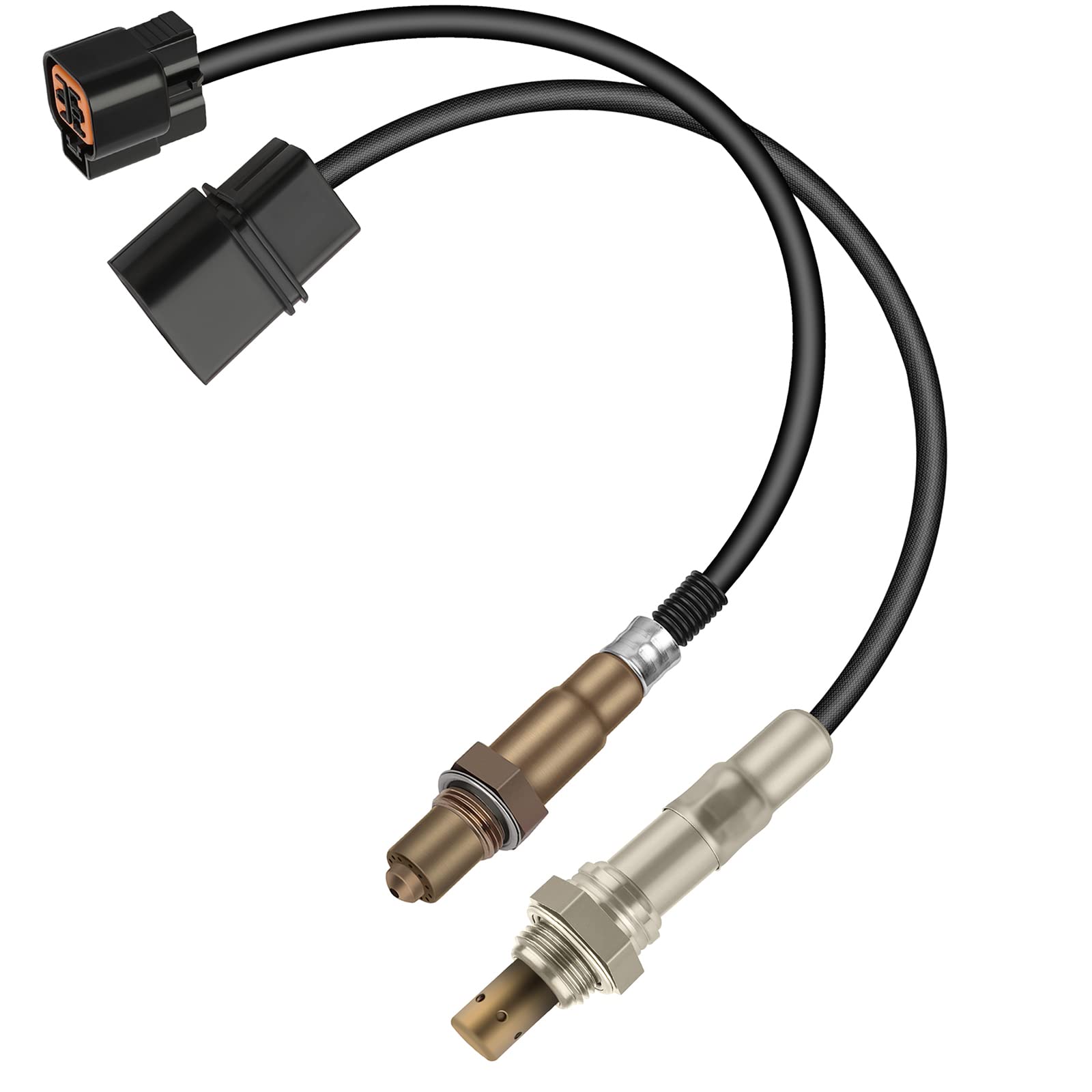
This pair targets older Hyundai and Kia compacts: the Accent 2000-2011, Elantra 2001-2012, Tucson 2005-2009, and Kia Rio 2006-2011. The digital output and flange mount keep it simple, and QIJIAUTO adds a unique protective layer to prevent sensor poisoning, plus a silver alloy joint that is meant to make installation easy. The upper temperature rating is 1200°F, which is lower than the AULINK pair above but still within range for most factory exhausts.
When it fits, it works. Owners call it a “good match for the original sensors that were supplied with the car,” and the swap is a “perfect fit, no problem replacing either 02 sensor.” For a budget dual-sensor job on an older Korean compact, this covers both upstream and downstream positions in one box, which beats buying them separately.
The catch is fitment consistency. One owner found the upstream sensor would not fit and spent at a parts store to finish the job, while another reported only the upstream sensor matched and the downstream did not. The product description overstates compatibility, so this is the one to double-check with your exact model and engine before you commit. When it matches, it is cheap insurance; when it does not, you are stuck with a return.
Strengths
- Covers upstream and downstream in one order
- Good match when it fits the listed models
- Protective layer guards against sensor poisoning
Weaknesses
- Fitment consistency is the weakest point
- Lower heat rating than the premium pair
Buy it for: a budget two-sensor refresh on an Accent, Elantra, Tucson, or Rio that matches the part numbers.
pass on it if: you need guaranteed fit — the description overstates what fits, so verify first.
Understanding the Specs
Wire count and sensor type
The number of wires tells you what the sensor does. A 1-wire sensor uses the exhaust pipe as ground, while 2- and 3-wire versions add a heater. A 4-wire sensor has a dedicated heater and ground circuit, which is what most modern narrowband setups use. A 5-wire sensor is a wideband unit that reads a much broader air-fuel range and is used with aftermarket tuning controllers, not the factory computer.
Accuracy and measuring range
Accuracy, like ±0.5% or ±1%, describes how precisely the sensor reports the air-fuel ratio. A narrower accuracy band means a more reliable reading, which matters most for tuning. The measuring range, like 10:1 to 18:1, shows the span of air-fuel mixtures the sensor can read — wideband units cover a far wider span than narrowband sensors, which only read near the ideal 14.7:1 ratio.
FAQ
What is the difference between a 4-wire and 5-wire O2 sensor?
Will a universal O2 sensor work with my car?
Can I replace just one O2 sensor or should I do both?
How long does a universal O2 sensor usually last?
What is upstream and downstream O2 sensor position?
Do I need anti-seize on a new O2 sensor?
Why does my check engine light stay on after replacing the sensor?
Is a narrower accuracy spec worth paying for?
Final Thoughts: The Verdict
For most drivers, the universal o2 sensor winner is the Walker 350-34414 because it delivers a true OE-style drop-in with anti-seize pre-applied and a build that survives real exhaust heat. If you run a wideband gauge and want the best accuracy per dollar, the HOAVEED LSU 4.9 brings ±0.5% precision for a slim price. And if your factory harness is damaged and you want to rebuild it without soldering, the Bosch 15740 is the crowd favorite to reach for.
How We Picked
We do not accept paid placement. Every pick is matched to a real buyer and a real use-case; we do not hands-on test units.
Sources & Methodology
Specifications: manufacturer listings and product documentation. Review insights: verified customer reviews, as of August 2026. Pricing: not shown on this page (it changes often); check the current price via the retailer link.
As an Amazon Associate, GoCarLife earns from qualifying purchases. This does not affect which products we feature.