
Our readers keep the lights on and the garage heater humming. As an Amazon Associate, I earn from qualifying purchases.
Specs are compiled from manufacturer listings and verified buyer reviews and can change over time — please confirm the key details on the product page before buying.
Hot engine bay air is the silent killer of horsepower — it robs your intake of the dense, cool air it needs to make power. A universal heat shield wraps or blocks that radiant heat so your engine pulls cooler air, This yields sharper throttle response and steadier performance.. This guide breaks down three very different ways to shield your intake, from a bolt-on filter cover to a roll of reflective material you can shape yourself.
I’m Mo Maruf — the founder and writer behind GoCarLife. This guide is built by comparing the manufacturers’ published specifications and the patterns across verified customer reviews, so you get each pick’s real strengths and trade-offs instead of marketing spin.
Your engine bay’s heat can rob your intake of performance, so the right universal intake heat shield keeps cooler air flowing. Your choice between wrapping a cone filter or forming a reflective barrier depends on your setup and bay heat..
Our Picks at a Glance
How To Choose The Best Universal Intake Heat Shield
Your first decision is simple: do you need to cover a cone filter, or shield a length of intake piping? A filter cover is a pre-shaped sleeve, while a forming sheet gives you the freedom to wrap pipes, boxes, and intercooler tubes. Match the shield style to your bay’s hot spots..
Match the heat rating to your setup
Intake components near the exhaust manifold or turbo see brutal temperatures. Check the shield’s continuous operating temperature against the worst heat your bay produces. A shield rated for 1100 degrees Fahrenheit continuous is a different beast than one that only handles casual engine heat.
Consider the fit and installation effort
Universal parts mean you do the adapting. Some shields clamp around a cone filter in minutes, while flexible sheets need cutting and forming by hand. Be honest about your skill level — a professional install is recommended for products that arrive with zero instructions.
Quick Comparison
| Model | Best For | Style | Heat Rating | Fit | Amazon |
|---|---|---|---|---|---|
| Kyostar Steel Cover★ Best Overall | Cone filter protection | Pre-formed cover | — | 2.5″ – 3.5″ filters | Amazon |
| Design Engineering Form-A-Barrier | Custom-shaped barriers | Formable sheet | Up to 1300°F | 12″ x 24″ sheet | Amazon |
| Heatshield Products CIS Sleeve | Intake pipe wrapping | Adjustable sleeve | 1100°F continuous | 3-4″ ID x 3′ | Amazon |
In‑Depth Reviews
1. Kyostar Universal Steel Air Filter Heat Shield Cover
Our pick — 4.5★ from 800+ verified ratings; the strongest balance of quality and price.
The drop-in steel cover that keeps dust and heat off your cone filter.
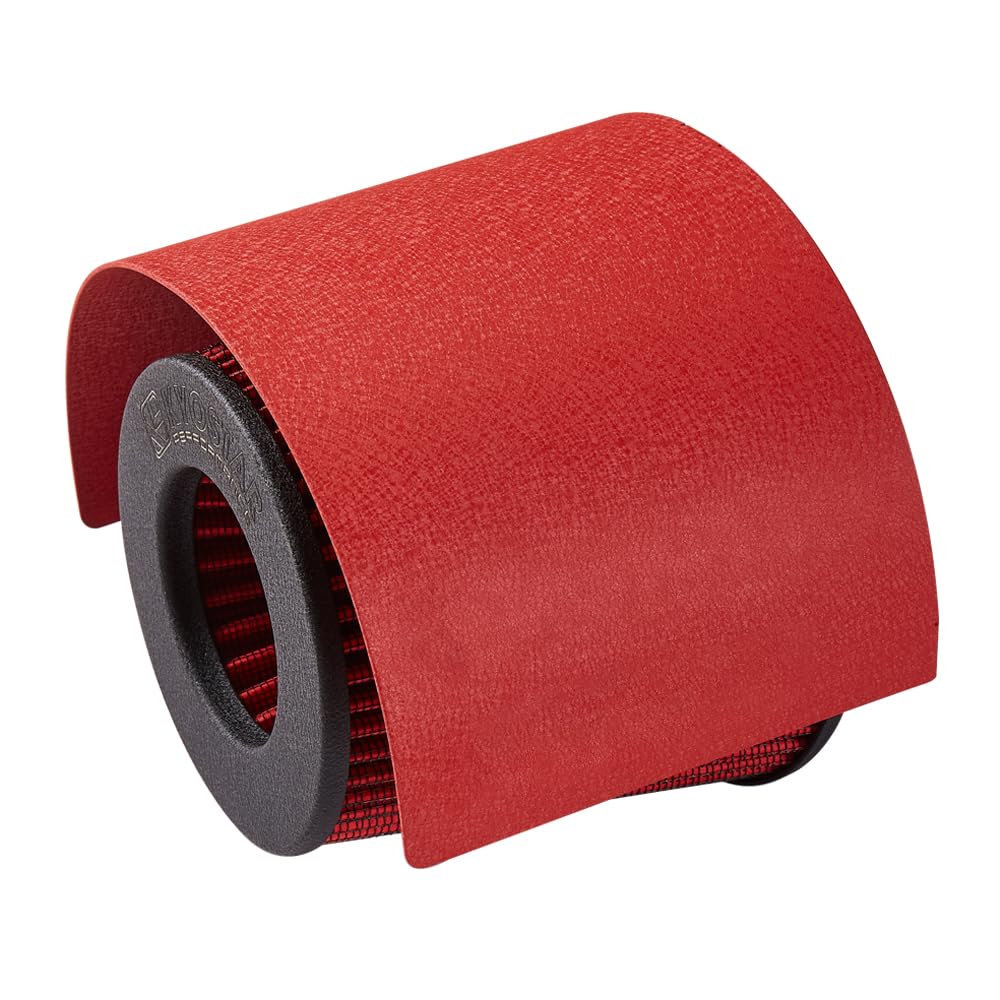
This pre-formed stainless steel cover slides over any cone or cylinder filter with a 2.5″ to 3.5″ diameter, which makes it a genuine universal fit for most aftermarket intakes. Unlike the flexible sheets below, this one needs no cutting — you clamp it on and drive. Buyers report a snug installation with a clamp that feels solid, and the material quality wins people over; the toughest endorsement comes from a miner who runs it in heavy dust and confirms “nothing gets in.”
It is a filter sock-style cover, so it shields the filter element from both radiant engine heat and physical debris. The trade-off versus the sheet-style shields up top is that this is a cover, not a full barrier — it protects the filter itself but does not box in a long stretch of piping. Buyers call it a smart alternative to high-dollar brand filters, delivering plenty of airflow for the money. If you run a big turbo or V8 with a serious cold-air demand, the design holds up.
The honest catch here: there is no installation instruction in the box. The listing itself recommends professional installation if you are not comfortable improvising a mount. Fit is the second most-mentioned win — owners on a 2006 Honda Civic Hybrid got it seated perfectly — but a rare unit can shed loose filter material from the cage seam, so peek inside before first use.
What owners love
- Build quality is the top praise, with 46 buyers calling it out
- Snug, easy fit on 2.5-3.5 inch cone filters
- Stainless steel withstands dust and heat soak
Know before you buy
- No installation guide included
- Occasional leftover filter material at the cage seam
Reach for this if: you want a bolt-on cover for a cone filter with zero fabrication.
Look elsewhere if: you need to wrap long pipes or odd-shaped components rather than just the filter element.
2. Design Engineering Form-A-Barrier 12″ x 24″ Lightweight Heat Shield

A bendable reflective sheet that shapes to whatever odd geometry your bay throws at it.
This is the DIY problem-solver of the group. It is a 12″ x 24″ lightweight sheet with reflective material on both sides, giving you thermal protection up to 1300°F while staying easy to cut and form by hand. Owners mention it made a clean heat shield for a cold air intake with a simple install, and it resists most automotive chemicals, so it holds up around fluids. The dual-sided reflectivity means you can mount it either way and still bounce heat away.
Compared to the bolt-on Kyostar cover above, this sheet trades convenience for freedom. You can wrap, bend, and cut it to fit a battery, an intake box, or a pipe run that no pre-shaped part would match. Buyers mention it works great as a battery heat shield too, which speaks to how adaptable the material is. At 16 ounces, it is genuinely light, so mounting it does not add meaningful weight to the bay.
The honest catch: it is a flat piece, not a pre-formed box, so you cannot get a crisp square-cornered enclosure from it. A couple of owners found the sheet flimsy, noting it dents and has sharp edges, and one felt the heat resistance was questionable. If you need a rigid, structural heat box, mold this around a frame instead of expecting it to hold its own shape.
Modular by design: form it around the part, not the other way around.
The catch: it is a flat, flexible sheet — expect to build your own shape rather than bolt on a finished box.
3. Heatshield Products 274400 CIS Cold Intake System 3-4″ ID x 3′ Adjustable Air Intake Intercooler Heat Shield

A 3-foot wrap that slashes radiant heat on intake and intercooler pipes.
This is the serious performer for anyone wrapping intake piping. It is an adjustable sleeve sized for 3″ to 4″ inner-diameter pipes, stretching 3 feet long, with a continuous operating reflective temperature of 1100°F and a 2000°F intermittent ceiling. The manufacturer claims it blocks up to 90 percent of radiant heat., and a Mustang owner with a radiator hose touching the intake swears by it: “This product really works!” That real-world proof of cooler intake temps is exactly what this category is about.
Unlike the flat Design Engineering sheet, this is a wrap designed to circle a pipe, so it feels purpose-built for intakes and intercooler tubes. A heat test from one buyer showed the inside stayed barely warm after 15 seconds while the outside got very hot — the kind of isolation that keeps induction air dense. Because it is electrically conductive, the maker warns you to insulate any terminals that might touch it, a small but important install note.
This one demands patience. Buyers call the install time-consuming on angled intake pipes, and one found it a poor fit around a 4-inch pipe despite the spec. It works best on straight pipe runs; on a post-turbo charge pipe, one owner saw temps rise because the wrap trapped internal heat. Pre-turbo or on a straight section, though, it does exactly the job.
Why it leads on heat
- 1100°F continuous rating handles extreme turbo heat zones
- Buyers confirm it keeps engine bay heat off the intake
- 3-foot length covers long pipe runs in one piece
Setup notes
- Hard to fit on angled pipes — straight runs are the balance
- Electrically conductive; must insulate nearby terminals
Pick this when: you have a straight intake or intercooler pipe baking in engine heat and want serious temperature reduction.
Think twice if: your piping is sharply angled or you want a no-cut, no-fuss install.
Understanding the Specs
Continuous vs. Intermittent Heat Rating
The continuous rating is the temperature the shield can handle all day without breaking down, while the intermittent rating covers short spikes, like a hard pull right after a heat soak. A shield rated 1100°F continuous, like the Heatshield Products sleeve, is built for the brutal heat near a turbo. The Design Engineering sheet’s 1300°F ceiling covers most gas-engine bays with margin to spare.
Filter Diameter and Pipe ID Fit
Universal shields communicate fit through diameters. The Kyostar cover fits cone filters from 2.5″ to 3.5″ across, while the Heatshield sleeve wraps pipes with a 3″ to 4″ inner diameter. Measure your filter base or pipe before buying, because a universal part only works if the math lines up.
FAQ
Will a universal heat shield fit my intake?
What is the difference between a filter cover and a pipe wrap?
How hard is it to install a universal heat shield?
Does a heat shield actually add horsepower?
What does a continuous heat rating of 1100 degrees Fahrenheit mean?
Can I form a flat heat shield sheet around an odd shape?
Are heat shields safe near electrical components?
Which heat shield is best for a turbocharged engine?
Final Thoughts: The Verdict
For most buyers, the universal intake heat shield winner is the Kyostar Steel Cover because it delivers a snug, quality fit on 2.5-3.5 inch cone filters with zero fabrication — and the crowd backing it is huge. If you want to wrap pipes and shape your own barrier, grab the Design Engineering Form-A-Barrier for its 1300°F-rated flexibility. And for serious turbo or intercooler heat, the Heatshield Products sleeve is the one to reach for, assuming your piping is mostly straight.
How We Picked
We do not accept paid placement. Every pick is matched to a real buyer and a real use-case; we do not hands-on test units.
Sources & Methodology
Specifications: manufacturer listings and product documentation. Review insights: verified customer reviews, as of August 2026. Pricing: not shown on this page (it changes often); check the current price via the retailer link.
As an Amazon Associate, GoCarLife earns from qualifying purchases. This does not affect which products we feature.