
Our readers keep the lights on and the garage heater humming. As an Amazon Associate, I earn from qualifying purchases.
Specs are compiled from manufacturer listings and verified buyer reviews and can change over time — please confirm the key details on the product page before buying.
The biggest headache with a universal intake is the filter-to-pipe seal. A gap here lets hot, dirty air sneak past the filter, which defeats the whole point of the upgrade. The right box seals this gap cleanly; the wrong one needs a silicone bead to fix it.
I’m Mo Maruf — the founder and writer behind GoCarLife. This guide is built by comparing the manufacturers’ published specifications and the patterns across verified customer reviews, so you get each pick’s real strengths and trade-offs instead of marketing spin.
Whether you are swapping an engine or just want cooler induction, the universal air intake box that fits your build is the one worth measuring twice before you cut once.
Our Picks at a Glance


How To Choose The Best Universal Air Intake Box
Start with the diameter of your existing intake tube. A 3-inch box is the most common size for street cars, while a 4-inch opening suits bigger engines and supercharger builds that gulp more air. Measure your pipe before you buy anything else.
Match the CFM to your engine’s appetite
CFM — cubic feet per minute — tells you how much air the box can flow. A stock small block might be happy with 450 CFM, but a blown engine pulling hard needs 600 CFM or more to avoid feeling restricted. Undersizing here strangles horsepower instead of adding it.
Decide between oiled and dry filter media
Oiled cotton filters trap more dirt but need periodic cleaning and re-oiling. Dry filters are simpler: just blow them out and keep driving. If you spend time on gravel roads, the dry style saves you the mess of dealing with oil residue.
Quick Comparison
| Model | Best For | Inlet Size | CFM Rating | Filter Type | Amazon |
|---|---|---|---|---|---|
| Airaid AIR-100-400★ Best Overall | Custom engine swaps | 4 inch | — | Reusable | Amazon |
| PTNHZ Carbon Fiber KitBudget Champion | Budget cold air builds | 3 inch | — | Cone filter | Amazon |
| Aiydachy Induction KitEnclosed Design | Enclosed airbox design | 3 inch | — | Washable | Amazon |
| KAX 3″ Universal Kit | Sedan and SUV bolt-ons | 3 inch | — | Oiled cotton | Amazon |
| Spectre 9833 Inline Box | Snorkel hookups | 3 inch | 450 CFM | Lifetime HPR | Amazon |
| Spectre 9832 Inline Box | Big airflow builds | 4 inch | 600 CFM | Lifetime HPR | Amazon |
| K&N RC-5052AB | Street performance gains | 2.75 inch | — | Oiled cotton | Amazon |
| Banks 42210-D | Diesel truck upgrades | — | — | Dry filter | Amazon |
In‑Depth Reviews
1. Airaid AIR-100-400 UBI (U-Build-It) Intake Kit
Our pick — over 4.5★ from 100+ verified ratings; the strongest balance of quality and price.
The 4-inch pipe kit that turns an LS swap into a straight-forward weekend job.
This is the kit for builders, not bolt-on buyers. Instead of a pre-shaped box, you get 4-inch pipe and parts you cut and route yourself, so it fits whatever engine bay you are working with. Owners building custom cold air intakes call this the ideal starting point — it is easy material to work with and does not soak up engine bay heat.
What wins people over is the customization freedom — far more owners praise that than any single other trait. The quality gets the second-most mentions, with buyers noting the material is thick enough to stand up to under-hood temperatures. You can realistically build two complete intake systems from a single kit.
The honest trade-off is the asking price for what is essentially tubing. One buyer put it bluntly: incredible expense for a plastic tube, but the design is perfect for their project. If you are dropping an LS into anything, buyers report this is exactly what you want to build a custom cold air intake.
Builder’s Strengths
- Does not soak up heat or corrode in the engine bay
- One kit can yield two separate intake systems
- Washable, reusable filter cuts long-term cost
Reality Check
- Premium price for what is fundamentally pipe and fittings
- No pre-shaped box means you handle the fabrication
Your build, your rules: this suits anyone doing an engine swap or fabricating a one-off cold air intake.
Skip the guesswork: if you want a bolt-on box with zero cutting, a pre-shaped housing serves you better.
2. PTNHZ Universal 3″ Racing Carbon Fiber Cold Feed Induction Kit
The carbon fiber 3-inch kit that delivers way more looks than its price suggests.
This budget pick relocates the filter outside the engine compartment to pull the coolest air possible, and the carbon fiber shell keeps heat away from the flow. Owners consistently rate the filter quality as the best thing here — it is the single most-mentioned positive trait, well ahead of the easy installation.
It works in some surprising places. The inline design made the transition from carb to snorkel easy on a Jeep, and it paired cleanly with an off-road snorkel on another build. One Audi owner called it a cheap way to add a cold air solution to a twin-turbo setup.
The catch is the sealing — it is the most-discussed downside, with several owners noting the filter does not quite seat perfectly. As owners mention: “just a bit of silicone fixes that.” The carbon fiber is sturdy and the cone filter is genuinely good, so the fix is minor for the value you get.
Style meets savings: the carbon fiber shell and solid cone filter make this the smart entry point for a first cold air build.
Seal check: budget a tube of silicone before you install, and you will not be disappointed.
3. Universal Induction Pipe Hose Kit Intake Air Filter (Aiydachy)
The enclosed airbox that stores fresh air and dodges the stumbling when oil returns.
Unlike open cone filters, this kit uses a proper airbox design that holds a reserve of fresh air, so the engine does not get caught short on intake while oil returns. The carbon fiber shell looks like a far more expensive part than it is, and owners were genuinely surprised to find real carbon fiber at this price point.
Filter quality earns the most praise, with value for money close behind — customers note the flow rate is great and it is easy to clean. One owner dropped it into a 1986 4Runner with a Ford 5.0, cutting the carbon fiber down to fit while pulling clean cool air from a snorkel. After 10,000 miles of use, reviewers point out the item still looks new with no signs of wear from the engine compartment.
The mixed note here is fit. The tube that ships in the box does not match every application, so you may need your own piping to mate it cleanly. The filter inside is on the small side, but with a proper pipe setup owners got intake temps pretty low while still retaining a filter.
Boxed-in benefits: the enclosed housing and washable cartridge make this the value pick for builders who want a filter that lasts.
Plan the plumbing: treat the included hose as a bonus, not a guarantee, and measure your own pipe run first.
4. KAX 3″ Universal Cold Air Intake Kit System

The mandrel-bent aluminum kit that promises 95% better filtration than a paper filter.
This is aimed at the sedan and SUV crowd — the fitment list covers Civics, Camrys, CR-Vs, Wranglers, and a long line of family haulers. The powder-coated aluminum tube keeps airflow smooth, and the two-layer oiled cotton filter traps dirt while keeping flow up. Owners like how it looks bolted into a truck.
There is one hard rule to check before buying: it only works on vehicles where the MAF sensor sits on a standalone round intake tube. If your MAF is molded into the air box or a one-piece hose, this kit will not fit your car.
The recurring complaints are honest ones. There are no instructions in the box, which trips up first-time installers. And on a 2024 Ram 1500, the intake box did not sit perfectly and needed some trimming to mount correctly. For the listed fitments it works great, but confirm yours is on the list first.
Family-car upgrade: the reusable oiled cotton filter and powder-coated tube make this a tidy bolt-on for common sedans and SUVs.
Check your MAF: if your sensor is integrated into the hose, this one is not for you.
5. Spectre Performance 9833 3″ Inline Air Box

The polished aluminum 3-inch box that mates perfectly to a snorkel kit.
This is the inline box the off-road crowd keeps coming back to. The 3-inch opening was a perfect fit for a Jeep XJ Cherokee snorkel kit, letting owners ditch the stock airbox entirely and even free up space for a second battery. The polished aluminum housing looks sharp sitting in the engine bay.
Functionality gets the most praise by a wide margin — it flows great on supercharged engines up to redline and survives serious dust. After five years of daily use in a dusty lot with the intake sitting 12 inches off the ground, there was zero dirt behind the filter. That is the kind of sealing you want on a trail rig.
The mixed feedback centers on the fit. Some say it fits like a glove, while others find the filter smaller than expected and the rolled housing edges can interfere with installing a replacement filter. The filter ships with protective plastic inside — remove it before running or the engine will stall.
Built for the Bush
- 450 CFM rating flows enough for a supercharged 1.6
- Compact polished aluminum housing lasts for years
- Seals clean — zero dust gets past the filter
Trail Notes
- Housing edges are rolled and can block filter swaps
- Included filter runs smaller than some expect
Grab it for a snorkel build: this is the go-to inline box for Jeep XJ owners and custom intake fabricators.
Mind the edges: a little hammer work flattens the rolled lip if you plan to swap filters often.
6. Spectre Performance 9832 Inline Air Box with 4″ Inlet Filter

The 4-inch 600 CFM box that keeps the air path nearly straight for blown engines.
This is the bigger brother in the Spectre line, stepping up from 3 inches to a 4-inch opening and jumping the flow rating to 600 CFM. That extra capacity is why it mates so well with a supercharger — one owner dyno-confirmed the 4-inch inline filter meets supercharger airflow on an LSA blower.
Quality is what owners rave about most here. The housing looks formed from 1/8-inch thick aluminum, giving it a solid, premium feel that cheaper boxes lack. It is also very compact, which owners love for tight engine bays where space is scarce. You can mount it to the fender with the inlet below the bumper for a ram-scoop effect.
It is a step up in price, and one owner did return it because it ran small for their needs — they wanted an even larger custom unit. The included 2-inch coupler is thin, so budget a beefier rubber coupler for durability on a serious build.
Built for big air: the 600 CFM rating and straight-through path make this the pick for supercharged and high-flow builds.
Size check: measure your space carefully — compact is great, but this box runs small for oversized custom setups.
7. K&N High-Flow Original Lifetime Universal Air Intake System RC-5052AB

The round reverse-tapered K&N that owners say sips less fuel up hills.
This K&N brings the brand’s familiar four-layer oiled cotton gauze to a universal round filter, with a 2.75-inch flange and a 4.875-inch filter height. Performance is the most-praised trait by a clear margin — shoppers say better throttle response, stronger uphill pulls, and a 2-4 mpg improvement in gas mileage on some builds.
The deep intake sound gets its own share of love, with owners describing it as wonderful and noting the even airflow. One buyer measured 10-15% better MPG than an open filter, and a Subaru Outback owner ran it through blizzards from Alaska to Texas with no power loss. It also fits well with minor hose clamp mods, installing in under an hour.
The maintenance story is strong: K&N says it only needs cleaning every 75,000 miles under normal highway driving, which works out to roughly once every five years based on 15,000 miles a year. There is one durability gripe — a single owner found the plastic thin and flexing, calling it only fit for show cars — but that is the rare exception against a long run of positive owner experiences.
Street-smart power: the 2.75-inch flange and lifetime cotton media make this the logical pick for daily drivers chasing MPG and sound.
Throttle response, not top end: expect a sharper pedal and cleaner burn more than a dramatic peak-horsepower jump.
8. Banks 42210-D Air Intake System
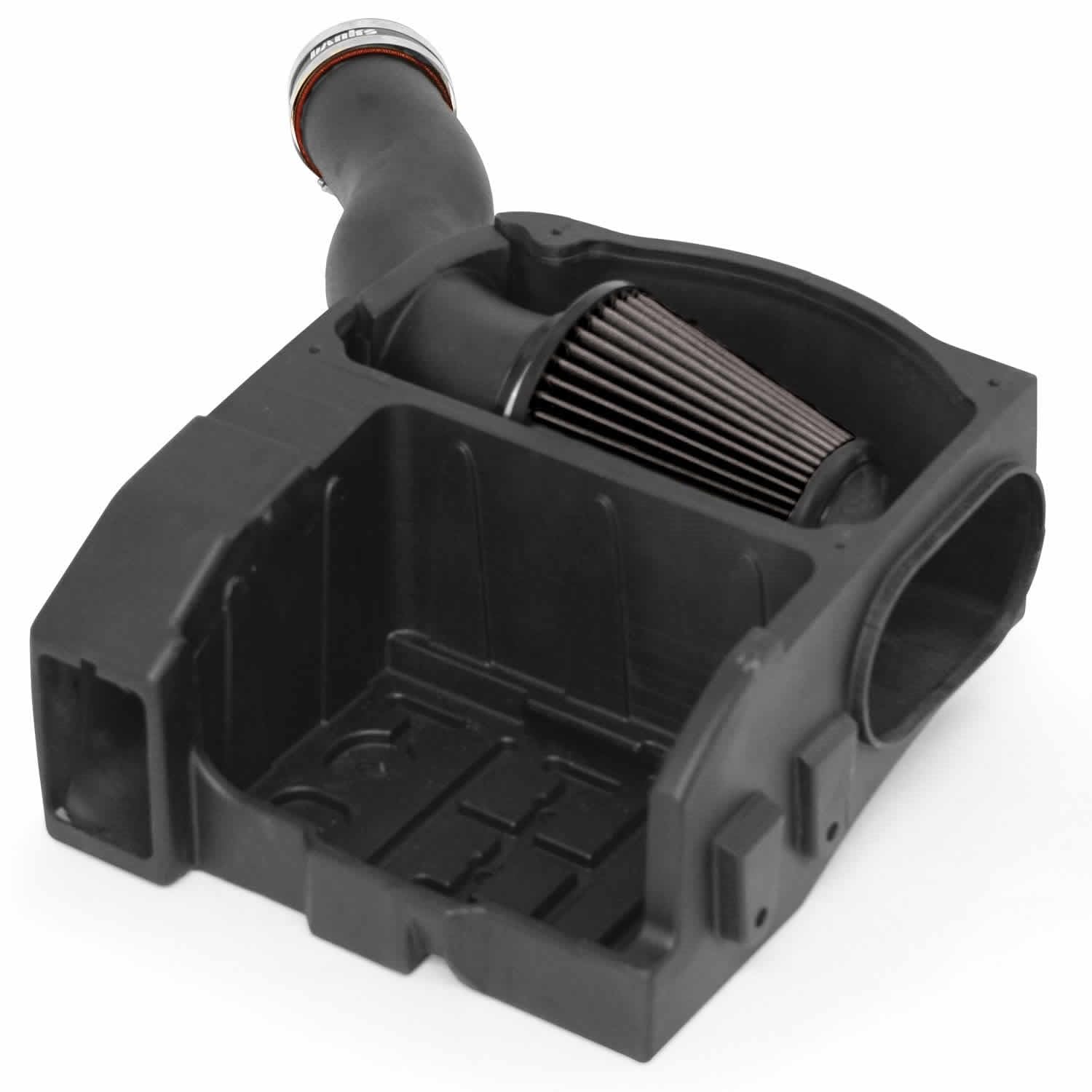
The dry-filter diesel intake that swaps out an oily K&N with no mess.
This is the premium pick for diesel trucks, and the 18-pound package signals the build quality before you even open it. Owners running Ford F250s and F350s report true plug-and-play installation with noticeable performance gains and no check-engine lights. The turbo sound gets its own applause — the induction note is a big part of the appeal.
The dry filter is the standout feature for dusty off-road use. One owner ditched an old K&N setup for this dry unit specifically to end the oil mess and waiting time, calling it best for dust. The decision to go dry means no re-oiling, just blow it out and keep going.
Fit is not universal across every truck though. A 2002 F450 7.3L owner needed a crowbar approach — forcing the box square, cutting a battery notch, and gluing the AIT sensor. And one F250 owner found it did not flow noticeably more air than the stock setup on a turbo. Check your exact year and model before committing.
Diesel daily driver: the dry filter, easy install, and turbo sound make this the premium pick for modern Ford trucks.
Verify your year: older 7.3L trucks may need serious trimming to fit, so confirm compatibility first.
Understanding the Specs
CFM Rating
CFM — cubic feet per minute — measures how much air the box can flow in one minute. A 450 CFM box suits a stock small block, while a 600 CFM unit handles a supercharger or big diesel. If you undersize it, the engine feels like it is breathing through a straw.
Filter Media Types
Oiled cotton filters use layered gauze that traps dirt but needs periodic cleaning and re-oiling. Dry filters need no oil at all — just blow them out and keep driving. In dusty off-road conditions, the dry style saves you the mess of handling oil every few thousand miles.
FAQ
How do I know if a universal intake box fits my car?
What does the CFM rating actually mean for my engine?
Is an oiled cotton filter better than a dry filter?
How often do I need to clean a reusable intake filter?
Will a universal intake box really increase my horsepower?
What do I do if the filter does not seal properly?
Can I use a universal intake box with a snorkel?
Is a universal kit better than a vehicle-specific intake?
Final Thoughts: The Verdict
For most people, the universal air intake box winner is the Airaid AIR-100-400 because its 4-inch pipe kit turns any engine swap into a clean, custom cold air intake that resists heat and corrosion. If you want a snorkel-ready box with proven sealing, grab the Spectre 9833. And for a budget carbon fiber start, the PTNHZ kit is the one to reach for.
How We Picked
We do not accept paid placement. Every pick is matched to a real buyer and a real use-case; we do not hands-on test units.
Sources & Methodology
Specifications: manufacturer listings and product documentation. Review insights: verified customer reviews, as of August 2026. Pricing: not shown on this page (it changes often); check the current price via the retailer link.
As an Amazon Associate, GoCarLife earns from qualifying purchases. This does not affect which products we feature.