
Our readers keep the lights on and the garage heater humming. As an Amazon Associate, I earn from qualifying purchases.
Specs are compiled from manufacturer listings and verified buyer reviews and can change over time — please confirm the key details on the product page before buying.
The single biggest mistake in a DIY paint job is grabbing one can of primer and hoping it works on bare steel, old paint, and plastic bumpers all at once. The truth is, the right primer is a chemical decision, not a color decision — acid etch for bare metal, epoxy for a moisture barrier, high-build urethane for filling scratches. This guide breaks down the types of automotive primer paint so you match the chemistry to your panel and your prep level, not the other way around.
I’m Mo Maruf — the founder and writer behind GoCarLife. This guide is built by comparing the manufacturers’ published specifications and the patterns across verified customer reviews, so you get each pick’s real strengths and trade-offs instead of marketing spin.
You’ll learn which primer chemistry suits your project, how to read dry times and coverage, and where each formula excels, all in one clear rundown of the types of automotive primer paint.
Our Picks at a Glance


How To Choose The Best Types of Automotive Primer Paint
Primer exists to do three jobs: stick to the surface, seal it from moisture, and give your topcoat something smooth to bite into. No single formula does all three best, so your first move is deciding which job matters most for your panel.
Match the chemistry to the surface
Bare steel or aluminum that’s been stripped clean needs an acid etch primer, which literally bites into the metal for grip. If the panel is already painted or covered in body filler, a high-build urethane is the better call because it fills sanding scratches instead of just coating them. Epoxy sits in between as the ultimate sealer — it locks out moisture and rust but doesn’t fill much.
Understanding 2K vs 1K
The “K” stands for component. A 1K primer is ready to spray straight from the can and dries by evaporation. A 2K primer has a separate hardener that you mix in, creating a tougher, more chemical-resistant film. In aerosol form, 2K cans contain both parts in separate chambers that you activate before spraying. That extra strength is why professional shops use 2K almost exclusively.
Quick Comparison
| Model | Best For | Primer Type | Dry Time (Hours) | Size | Amazon |
|---|---|---|---|---|---|
| Speedokote Super Fill★ Best Overall | Filling scratches before paint | High-Build Urethane | — | 128 fl oz | Amazon |
| Raptor Acid Etch AerosolBest Value | Bare metal panels & rub-throughs | Acid Etch (1K) | 1 | 13.2 oz | Amazon |
| SprayMax 2K Epoxy BlackRust Shield | Rust protection on steel & aluminum | 2K Epoxy | 12 | 12.5 oz | Amazon |
| SEM Flexible Primer Surfacer | Flexible plastic bumpers | Primer Surfacer | 1 | 13 oz | Amazon |
| SprayMax 2K Epoxy Gray | Wheel & aluminum refinishing | 2K Epoxy | — | 12 fl oz | Amazon |
| U-POL ACID#8 | Large bare metal areas before bedliner | Acid Etch (1K) | — | 1 Liter | Amazon |
| Custom Shop KEP Epoxy | Direct-to-metal with anti-corrosion | 2K Epoxy (1:1) | 1 | 1 Quart Kit | Amazon |
| U-POL High Build Urethane | Thick fills & minor bodywork | High-Build Urethane | — | 1 Gallon | Amazon |
| Eastwood 2K Urethane | Priming an entire vehicle | 2K Urethane (4:1) | 3 | 1 Gallon | Amazon |
In‑Depth Reviews
1. Speedokote SS-2790G/SS-2790A Super Fill High Build Primer Gray gallon kit
Our pick — over 4.5★ from 300+ verified ratings; the strongest balance of quality and price.
A high-build urethane that fills 80-grit scratches in one thick coat.
If your panel looks like it fought a losing battle with coarse sandpaper, this is the primer that rescues you. Speedokote’s high-build formula is designed to lay down thick and fill minor imperfections, so you spend less time chasing scratches with more sanding and more time moving toward color. It comes with the activator included in the kit, so you have everything to mix a full 128 fluid ounces for a big project.
The real-world feedback here is remarkable for its depth of experience. Buyers report that a bodywork veteran with over 50 years in the trade says this product “has never let me down,” having sprayed it on plastic, metal, fiberglass, and even ceramic. The consensus is that it’s easy to sand, dries well, and hides small blemishes effectively — the exact trio of traits you want from a surfacer.
One practical tip from the reviews: use a slow or medium reducer to get a nice, even flow through the gun. A 1.8 tip works well for spraying this primer, according to owners. The satin finish is a good neutral base for your topcoat, and the grey color makes it easy to see where you’ve covered.
What makes it the top pick
- High-build formula actively fills scratches and small dings
- Activator is included, so the kit is ready to mix and spray
- Proven on metal, plastic, fiberglass, and even ceramic
What to watch for
- A few units arrived with the gallon seal damaged, causing leaks in transit
- It’s a big purchase — you’re committing to a full gallon of material
Your best bet if: you’re doing a full panel or vehicle and want one reliable, easy-sanding high-build primer that professionals have trusted for decades.
Think twice if: you’re just touching up a small spot — a spray can will be more practical than mixing a whole gallon.
2. Raptor Acid Etch Primer 1K Aerosol, 13.2 OZ
An acid etch aerosol that chemically bonds to bare aluminum and galvanized steel.
This is the primer you reach for when you’ve stripped a panel down to bare, shiny metal and need something that will actually stick. The Raptor Acid Etch uses a phosphoric acid ester formula that bites into tough surfaces like galvanized steel and aluminum, creating a chemical bond rather than just a physical one. It’s a one-step process — it etches and primes in a single pass, so you don’t need a separate prep step.
Owners mention it works exceptionally well on aluminum, and it’s particularly popular as a base layer before spraying on Raptor’s bed liner. One owner noted that after repainting running boards without stripping the factory paint, the “finish was great and still lasting,” confident in the primer’s grip because the liner stayed adhered. The flat fan nozzle delivers a wide, even pattern, and you can topcoat directly without sanding.
Compared to the Speedokote above, this is a much faster, smaller-scale solution. It dries in just 1 hour, making it a same-day option. The main trade-off is the aerosol delivery — it’s fantastic for small panels and hard-to-reach spots, but you’ll go through cans quickly on a big job.
Why it’s a smart buy
- Dries in just 1 hour for same-day progress
- No sanding needed before topcoating
- Forms a solid anti-corrosion barrier on bare metal
Keep in mind
- The aerosol nozzle can clog on some cans — keep a spare ready
- Coverage is limited per can, so large jobs need multiple units
Pick it up for: treating bare metal panels, engine bays, or rock rails where adhesion is everything.
skip it if: you’re covering a huge, smooth surface — a quart of acid etch will go further for the money.
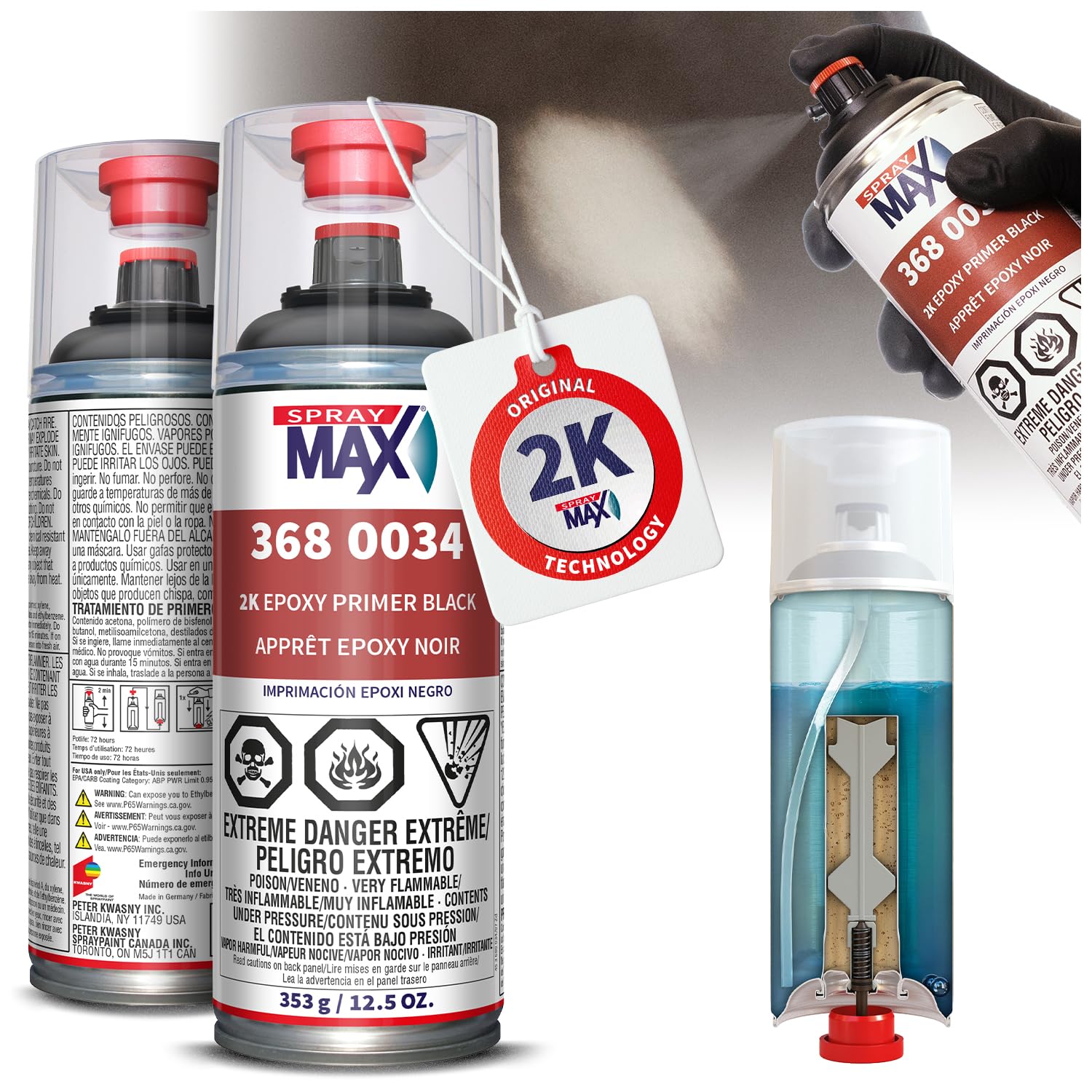
3. SprayMax 2K Epoxy Primer Black
A true 2K epoxy aerosol that seals bare steel against rust without a spray gun.
Epoxy primer is the gold standard for sealing out moisture, and this SprayMax can delivers a true 2K epoxy system that you activate by pressing a button on the bottom of the can. This advanced 2K technology gives you professional-grade bonding strength and a smooth surface seal that’s ideal for steel, aluminum, and galvanized metal. It’s the primer you want if rust protection is your top priority on a car, motorcycle, or restoration project.
The spray is engineered for control with a variable nozzle, and it dries fast — dust-dry in just 15 minutes and ready to sand within hours. However, the full cure takes 12 hours, which is important to know before you start rubbing it down. One owner reported that a single can “covered door and rocker panel,” which is efficient coverage for a 12.5 oz can.
The main thing buyers praise is the quality of the finish and the adhesion. It’s a massive step up from rattle-can primer in terms of durability. The recurring criticism centers on the spray mechanism — some cans have issues with propellant-only output or sputtering near the end, so it’s worth having a plan to finish a coat with a fresh can if needed.
Pro-grade performance
- True 2K epoxy means real chemical and rust resistance
- Dust-dry in 15 minutes keeps your workflow moving
- Excellent adhesion on bare metal and existing coatings
The honest trade-offs
- Full cure takes 12 hours before sanding
- Some cans sputter or output propellant instead of paint at the end
Reach for this if: you’re sealing bare steel or repairing rust and want maximum corrosion resistance without buying a spray gun setup.
Look elsewhere if: you need to fill deep scratches — epoxy builds up slowly; a high-build primer does the filling.
4. SEM 39133 Flexible Primer Surfacer – 13 oz.

A flexible primer surfacer that moves with plastic bumpers to prevent paint cracking.
Plastic bumpers are the one surface where a rigid primer will fail you — as the bumper flexes, the paint film cracks and flakes. SEM designed this primer surfacer with a flexible formulation specifically to move with the plastic underneath. It’s ready to spray straight from the can, dries quickly in about 1 hour, and is easy to sand for a smooth finish, making it a go-to for bumper repairs.
Reviewers consistently report great results on car bumpers, with one noting it “fills in bumper imperfections perfectly” on a new 2005 Honda Accord bumper install. Another detailed a full interior dash repaint using the complete SEM kit — adhesion promoter, this primer, color, and clear — that cured to a hard, chip-free finish after light wet-sanding with 800-grit between coats. The flexibility is the defining trait here; it’s the primer that won’t crack when your bumper takes a bump.
The main complaints are about the aerosol delivery, which some find spits or sputters, and the price for the coverage. A single can covers roughly 10 square feet, so it’s best for bumpers and trim rather than whole vehicles. That’s the trade-off for a specialty flexible formula.
Built for plastic parts
- Flexible formulation resists cracking on bumpers
- Quick 1-hour dry time keeps the job moving
- Sands easily for a smooth base
Watch out for
- Coverage is limited to about 10 square feet per can
- Some cans sputter during application
Choose it for: any flexible plastic part — bumpers, trim, or interior pieces — where paint cracking is the real risk.
Pass it by if: you’re working on bare metal; an acid etch or epoxy is the right foundation there.
5. SprayMax 2K Epoxy Primer Gray 12.5 oz
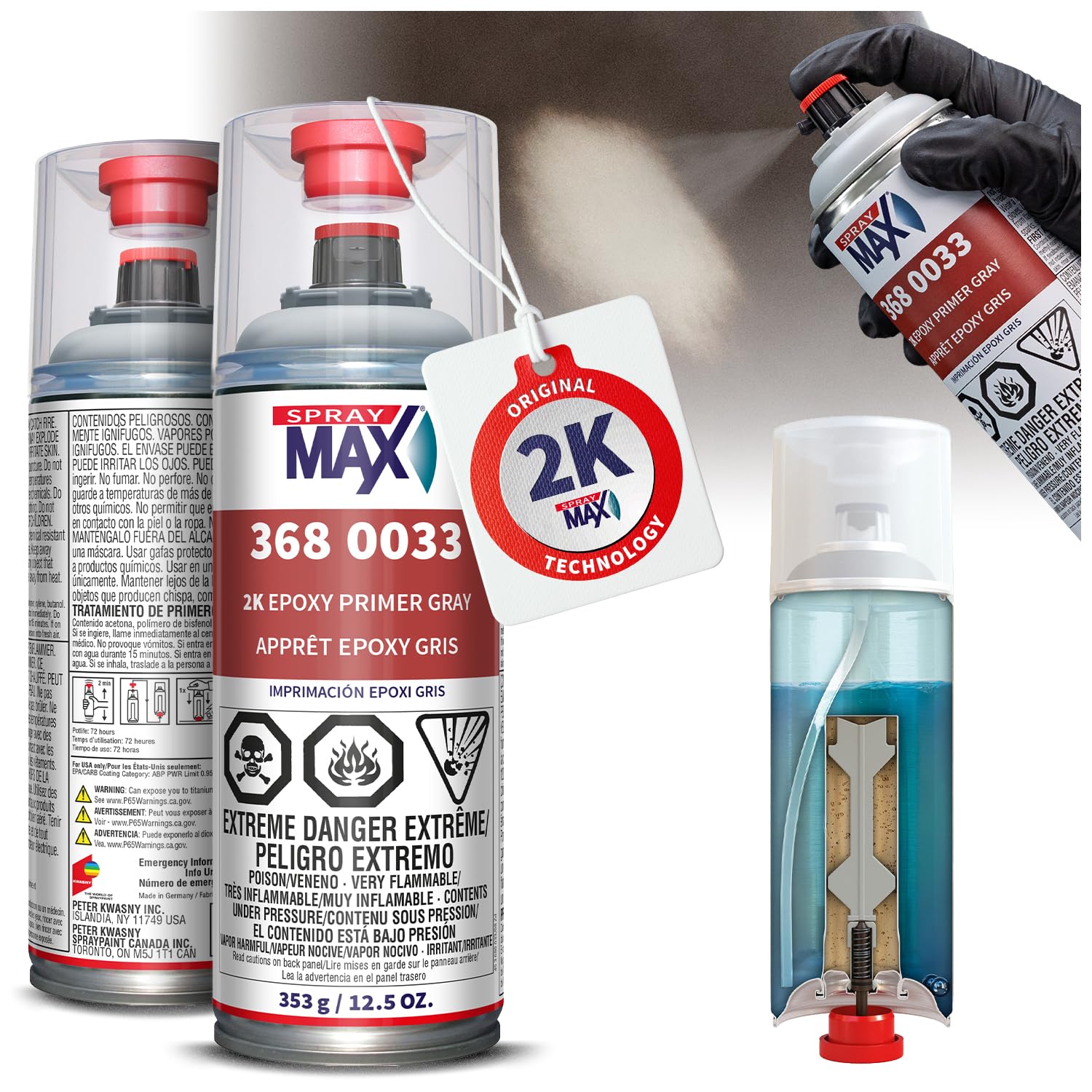
A gray 2K epoxy aerosol that adheres to aluminum wheels and resists brake dust.
This is the gray sibling to the black SprayMax epoxy above, and it shares the same core strength — professional-grade adhesion and corrosion resistance in a convenient aerosol. What makes this one stand out is how well it works on aluminum, which is why it shows up so often in wheel refinishing projects. The 2K chemistry gives it the durability to handle the abuse wheels take from brake dust and road grime.
Customers note using it as an excellent epoxy barrier primer between an etching primer and acrylic lacquer, with no burn-through issues when the color coat is applied within the recommended window of 15 minutes to 12 hours. It’s also proven effective on bare metal rust repair, sealing out rain and rust with multiple smooth coats. The adjustable nozzle gives you control, but some cans do drip — wiping the sprayer frequently is the workaround to avoid paint drops on your finish.
It’s fast-drying and sandable, with a matte finish that’s a great neutral base. The one thing to verify is your spray technique; the nozzle needs adjustment, and the spray performance gets mixed feedback depending on how it’s handled. As a 12-fluid-ounce can, it’s priced for smaller jobs like individual wheels or fenders.
Wheel-ready strength
- Excellent adhesion specifically on aluminum surfaces
- Works as a flawless barrier between etch primer and color
- Dust-dry in 15 minutes for rapid layering
Handle with care
- Cans tend to drip — you’ll be wiping the nozzle frequently
- Spray performance is mixed and depends on nozzle adjustment
Grab it for: wheel refinishing, aluminum panels, or as a rock-solid sealer between etch primer and your color coat.
Not the right fit: for large, flat body panels where the drip issue becomes a bigger hassle than a gun-applied product.
6. U-POL ACID#8 Acid Etch Primer, 1L

A 1-liter acid etch primer for gun-spraying large bare-metal areas before bedliner.
When you need acid-etch adhesion across a large area, this 1-liter tin from U-POL is the practical choice. The phosphoric acid ester formula is the same chemistry that makes the Raptor aerosol work, but in a larger format that you can pour into a spray gun for proper coverage. It’s built for new bare metal panels and rub-throughs where you need a strong, lasting foundation before color.
The best real-world testament comes from owners pairing this with Raptor bed liner. One used it on a bare steel truck bed, degreased it, sprayed the ACID#8, then applied the liner — after 3 years outdoors in the Northeast, there’s no rust. Another shot it out of a 1.5 fluid tip and found it laid down beautifully on awnings before finishing with bedliner spray. The flat fan nozzle delivers a large, even pattern, and you can topcoat directly with no sanding.
It’s a no-thinning-required formula that works better through a siphon gun than an HVLP for fender work, according to owners. The one honest note is coverage — it doesn’t go as far as you’d hope, so order extra for a full-size bed. One liter is the perfect amount for 2 coats in a 6.5-foot bed before bedliner, per one review.
Larger-format etch
- 1-liter tin gives you gun-sprayable volume for big areas
- No thinning required before spraying
- Proven adhesion base for Raptor bed liner
Budget your volume
- Coverage is less than expected — you’ll likely need more than one liter
- Works better with a siphon gun than HVLP for some jobs
Ideal for: bare steel truck beds, awnings, or any large metal surface headed for a bedliner or heavy-duty topcoat.
Consider another if: you only have a small rust spot — the aerosol Raptor is more cost-effective for tiny jobs.
7. Custom Shop KEP Series Black DTM Epoxy Primer/Sealer

A 1:1 mix DTM epoxy that seals bare metal and resists corrosion.
This is an epoxy primer that’s explicitly designed to be used DTM — Direct To Metal — with a simple 1:1 mix ratio that takes the guesswork out of measuring. The KEP Series uses an advanced resin system that offers superior adhesion to bare metal, steel, bare aluminum, fiberglass, gelcoat, body fillers, and properly prepared rigid plastics. It’s also lead and chromate free, with a rich blend of anti-corrosive additives for maximum rust defense.
For a beginner, the 1:1 mixing ratio is a huge plus — there’s no complicated math. Owners describe it as durable and easy to spray, even in a garage during a Texas summer, with a smooth finish when reduced properly. It’s a fast-dry product with a pot life of 4 hours once mixed, giving you a solid window to work. One reviewer who was skeptical at first was won over, saying the finish came out great and it “sprayed and laid very nice with a good amount of coverage.”
The honest caveat is consistency. Some units arrive with a hard ball of settled solids at the bottom that a paint shaker can’t break up — manual stirring is required, and occasionally a stubborn batch just won’t mix properly. It’s a known fit issue with this specific kit, so budget time to thoroughly agitate before spraying.
Why pros like it
- Simple 1:1 mix ratio is beginner-friendly and precise
- Anti-corrosive formula with excellent salt spray resistance
- Works as both a DTM primer and a sealer for topcoats
The known quirk
- Hardened solids can settle in the can, requiring manual stirring
- Consistency between batches is mixed
Best for: you, if you want a simple to use 1:1 epoxy that goes straight onto bare metal and seals like a pro product.
Avoid if: you’re not prepared to thoroughly stir the can — settled solids are a real possibility here.
8. U-POL 1 Gallon High Solids High Build Urethane Primer Kit

A high-solids high-build urethane that fills minor bodywork imperfections in thick coats.
This European-style primer is a 3-in-1 direct-to-metal solution that behaves like a product costing twice as much. It’s a high-build urethane with impressive opacity and hiding power, meaning you need fewer coats to block out what’s underneath. With a 4:1 mixing ratio and a standard temperature hardener for 60 to 95 degrees Fahrenheit, it’s ready for a proper spray gun.
The thickness is the defining feature. Buyers who have used many primers note they’ve “never used a primer as thick as this” — and they mean it as high praise. It cures well, sands beautifully (including wet sanding), and takes out minor bodywork imperfections that would normally require a skim coat of filler. One owner used it to clean up bullseyes on a hood after fixing peeling paint, and it leveled perfectly.
It’s also tintable, so you can adjust the color closer to your topcoat. The functionality and value for money get strong positive feedback. The recurring negative isn’t about the primer itself but the shipping — several buyers received damaged cans with leaking rims, so inspect the seal before you commit to a full spray session.
Filler-level build
- Exceptionally thick formula fills minor imperfections aggressively
- Wet-sands cleanly and cures to an easy-sand finish
- Tintable to match your topcoat color
Shipping roulette
- Cans frequently arrive with damaged rims or leaks
- It weighs 15 pounds, so shipping damage is a real risk
Pick this for: a full body job where you want maximum fill from your primer and minimal time spent on skim coating.
Pass if: you’re not set up for a spray gun — this is a professional application product, not a rattle can.
9. Eastwood 2K Urethane Car Primer Gray 4:1 Gallon
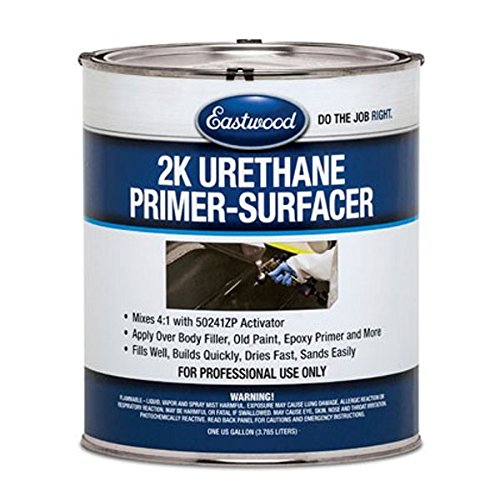
A gallon-sized surfacer with the coverage to wrap an entire vehicle in one mix.
This is the high-build urethane primer for the person who’s committed to a full respray. A single gallon of this 2K primer, mixed with Eastwood’s separately-sold activator (50241ZP), expands into five sprayable quarts covering 140 square feet — ideal for an average car or small truck. It’s a multipurpose surfacer that you can lay over bare metal, body filler, epoxy primer, or even existing paint.
what separates it is the color holdout — it maintains excellent topcoat color accuracy even when baked up to 150 degrees. Owners who used it to prime an entire 8-foot truck bed confirmed it “sprays good and seems to fill in spots well,” and it wets-sands easily when you need to level it out. The 4:1 mix ratio gives it that professional 2K toughness that dries in about 3 hours.
The honest feedback reveals it’s very, very thick straight from the can. Some owners found it wouldn’t spray through a standard priming gun without significant thinning, so budget for reducer and patience. It’s a premium product with a premium price tag, and it’s made in the USA — a point of pride for many buyers. If you’re doing a full car, the 140-square-foot coverage is a solid planning number.
Whole-vehicle capability
- One gallon makes five quarts covering 140 square feet
- Holds color exceptionally well up to 150 degrees
- Made in the USA with lifetime tech support
Plan for thickness
- Requires a separate activator, which is sold separately
- Very thick consistency demands significant thinning for spray guns
Commit to this if: you’re spraying a complete vehicle and want a USA-made, high-build primer with predictable coverage.
Hold off if: you’re doing a fender or door — the cost and volume of a gallon is overkill for spot repairs.
Understanding the Specs
Primer Chemistry
The chemical base determines the primer’s job. Acid etch primers use phosphoric acid to bite into bare metal for adhesion. Epoxy primers provide the strongest moisture and corrosion barrier. High-build urethanes are formulated thick to fill sanding scratches and minor imperfections.
Dry Time & Pot Life
Dry time is how long until you can sand or topcoat. A 1-hour dry time means same-day progress, while a 12-hour full cure requires planning. Pot life is how long mixed 2K primer stays usable before hardening — a 4-hour pot life gives you a solid work window, but you must spray within that time.
FAQ
What is the difference between acid etch primer and epoxy primer?
Can I use one primer on both bare metal and plastic bumpers?
What does 2K mean in automotive primer?
How long should I wait before sanding primer?
Do I need to sand before applying acid etch primer?
Is high-build primer the same as regular primer?
What is direct-to-metal (DTM) primer?
Will a primer spray can cover a whole car panel?
Final Thoughts: The Verdict
For most people, the types of automotive primer paint winner is the Speedokote Super Fill because it combines professional-grade filling power with an included activator and a track record that spans decades of bodywork. If you want the purest bare-metal adhesion, grab the Raptor Acid Etch. And for maximum rust protection on a motorcycle or restoration, the SprayMax 2K Epoxy is the one to reach for.
How We Picked
We do not accept paid placement. Every pick is matched to a real buyer and a real use-case; we do not hands-on test units.
Sources & Methodology
Specifications: manufacturer listings and product documentation. Review insights: verified customer reviews, as of August 2026. Pricing: not shown on this page (it changes often); check the current price via the retailer link.
As an Amazon Associate, GoCarLife earns from qualifying purchases. This does not affect which products we feature.