
Our readers keep the lights on and the garage heater humming. As an Amazon Associate, I earn from qualifying purchases.
Specs are compiled from manufacturer listings and verified buyer reviews and can change over time — please confirm the key details on the product page before buying.
You ride hard, and the last thing you want is a seized piston at wide-open throttle. The right racing oil is your only real insurance, and it depends on how well it holds its film strength (the oil’s ability to stay on metal under extreme heat). This guide breaks down the top shelf options that keep rings sealed and power ports clean, so you can ride hard without worrying about the top end.
I’m Mo Maruf — the founder and writer behind GoCarLife. This guide is built by comparing the manufacturers’ published specifications and the patterns across verified customer reviews, so you get each pick’s real strengths and trade-offs instead of marketing spin.
The best two-stroke racing oil balances extreme film strength with low deposit build-up for maximum piston life and clean power.
Our Picks at a Glance

How To Choose The Best Two-Stroke Racing Oil
Choosing a two-stroke racing oil means balancing three things: how tough the lubricating film is, how clean it burns, and how it mixes with your fuel. A premium oil that leaves carbon on the piston crown will rob you of power over time, just like a thin oil that shears off under load will cost you a piston.
Castor Blends vs Full Synthetics
Castor-based oils (made from castor beans) cling to metal under extreme heat, giving you legendary film strength. The trade-off is they can leave more residue, so they fit riders who rebuild top ends regularly. Full synthetics burn cleaner, which keeps power valves and exhaust ports free of carbon for longer service intervals.
Mix Ratio and Your Engine
The mix ratio (like 50:1 or 32:1) tells you how much oil to add per gallon of fuel. A richer mix means more lubrication but can foul plugs, while a leaner mix burns cleaner but demands a tougher oil. Always follow your engine manufacturer’s recommendation first, then adjust based on how you ride and what the oil’s data sheet suggests.
Quick Comparison
| Model | Best For | Base Stock | Volume | Mix Ratio | Amazon |
|---|---|---|---|---|---|
| Red Line 40603★ Best Overall | Clean synthetic racing | Synthetic | 16 fl oz | 50:1 | Amazon |
| Castor 927Castor Classic | Aggressive riders | Castor | 493 ml | 40:1 | Amazon |
| Yamaha Yamalube 2R | OEM factory spec | Synthetic blend | 32 fl oz | 32:1 | Amazon |
| Maxima Formula K2 | Hardcore top-end life | 100% Synthetic | 16 fl oz | 50:1 | Amazon |
| Klotz BeNOL | Castor scent lovers | Castor | 32 fl oz | 20:1-32:1 | Amazon |
| Klotz R-50 | Power valve motors | 100% Synthetic | 128 fl oz | 32:1-50:1 | Amazon |
| Motorex Cross Power 2T | Bulk KTM owners | 100% Synthetic | 4 Liters | — | Amazon |
In‑Depth Reviews
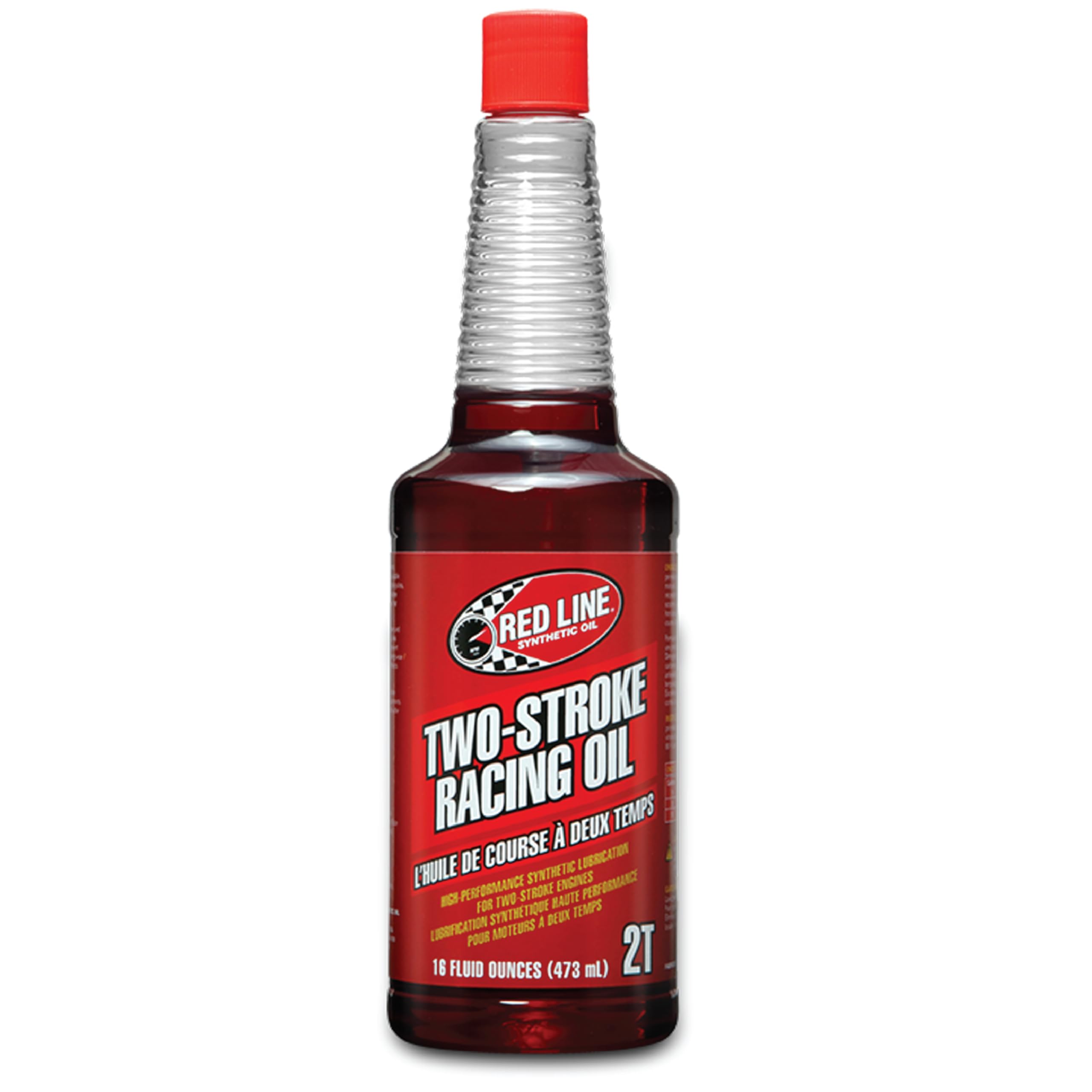
1. Red Line 40603 Two-Stroke Oil Racing Synthetic
Our pick — over 4.5★ from 850+ verified ratings; the strongest balance of quality and price.
The dyno-proven synthetic that keeps pistons looking brand new after a dozen years
Red Line is the pick for riders who want factory-race cleanliness without the castor cleanup duty. It is a 100% synthetic ester-based oil designed to hold up under extreme heat, and the data backs it: Dyno tests show a 3-5% power gain over longer runs.. That means you are not just protecting the engine — you are getting measurable output from the same fuel.
The cleanliness story is what wins people over. High-temp stability here prevents deposits from forming on combustion chambers, exhaust ports, the upper ring, and the piston crown — the exact spots where carbon kills two-stroke performance. Riders report over 12 years of use with pistons looking brand new.. That is the kind of longevity that makes a 16-ounce bottle feel cheap at any price.
You can tune the mix to your engine’s needs: it is suggested at 50:1, but useful up to 100:1 depending on operating conditions. Some owners prefer a touch more oil at 45:1 for confidence, and they report no problems ever. The bottle is smaller than the Yamaha’s quart at 16 fluid ounces, so frequent riders will burn through it faster — but the protection is worth the refill trips.
Why It Wins
- Dyno-proven 3-5% power gain over longer runs.
- Prevents carbon deposits on rings and piston crown
- Virtually no smoke and extremely clean burn
- Works in motorcycles, marine, and snowmobile racing
What To Know
- 16 oz bottle is small for high-volume riders
- Value opinions are mixed — some want a bigger size
Reach for it if: you want a clean-burning synthetic that protects pistons through years of hard use and adds measurable power.
Think twice if: you ride so often that a half-quart bottle will have you ordering every week.
2. Castor 927 Racing Premix
The sweet-smelling castor blend that has protected aggressive riders for 25 years
Castor 927 is the choice for riders who want maximum hardware protection and are not afraid of a little castor residue. Rated #1 in independent surveys for film strength., and its exotic esters and highly-refined castor oil maintain oil film thickness even under the most aggressive throttle. That film is what keeps bearings and rings alive when the engine is at its absolute limit.
The surface-active chemistry here aggressively attaches to engine surfaces, keeping them clean and protected rather than letting deposits build up. Riders who run it at 40:1 for trail riding say it does the job perfectly, and the exhaust smells like you are at the races — that castor aroma is half the appeal. Some owners have used it continuously for 25 years..
The honest trade-off is that castor blends produce more spooge if you are lugging the engine too much, and owners recommend testing different ratios for your specific use case. It also has no color to the oil, so there is a real risk of an unmixed tank if you are not careful — add oil first, label the can, and shake before use. At just 1 pound and 493 ml, it is a smaller bottle than the Yamaha’s quart, so you will buy refills more often.
The scent factor: owners consistently praise the sweet castor smell, calling it the best part of burning this oil in the woods.
The catch: it spooges if you lug it, and the uncolored oil demands careful measuring to avoid an unmixed tank.
3. Yamaha Yamalube Racing 2R 2 Stroke Engine Oil

The factory-backed purple oil that adds 30 hours of piston life over the competition
Yamaha Yamalube 2R is the genuine OEM oil used by the two-stroke Yamaha Factory Race Team, which tells you it meets the standard where it counts — at the finish line. Its special base stocks protect against wear and breakdown while keeping carbon deposits low on pistons, rings, and exhaust ports. The reduced friction is what allows for maximum horsepower, and the flash point of 124 °C means it holds up under serious heat.
The longevity story here is the strongest in this guide. Switching to Yamalube extends piston life by about 30 hours. — a concrete, measurable gain in top-end life. At 32:1 in their Yamahas, they have used it for 12 years and noticed a significant difference in piston longevity. That is the kind of track record that makes it the default choice for anyone on a blue bike.
It comes in a full 32-fluid-ounce quart, which is double the Red Line’s 16-ounce bottle and gives you twice the mixable fuel per purchase. The purple color also helps you see when the mix is uniform in the can, a small detail that prevents the unmixed-tank problem castor users face. Some owners find it a little pricey compared to aftermarket oils, but they still call it a great deal for the protection — and for vintage sleds, it is a go-to.
The 30-hour edge: Buyers report pistons lasting 30 hours longer after switching—a claim no other oil matches..
The price reality: it sits at a premium versus generics, and the OEM badge carries a cost.
4. Maxima Formula K2 100% Synthetic Racing Premix

The race-track synthetic making 107 hard hours look like a fresh top end
Maxima Formula K2 is the pick for riders who measure their engine’s life in hours, not rides. It was developed on the race track with factory race teams, and its world-class proprietary additive system and esters combine to virtually eliminate wear. The optimal ring seal it provides is what ensures maximum power output — a tight seal means every combustion stroke pushes the piston instead of blowing past it.
The real-world proof comes from a KX65 owner who rebuilt the top end after 107 high-revving hours and found the old piston looked brand new. No measurable wear in the ring gaps after all those hours of hard riding is exactly what you want to hear from a racing premix. Riders also find it brings old machines back to life — one owner says it really brought our old Polaris back to life, which speaks to how well it cleans and protects tired engines.
It works great in Stihl blowers at 50:1, and some owners run it at 100:1 fuel ratios without issue, making it more versatile than most racing oils. The smoke level is a big positive — it burns clean with little to no smoke, so you are not fogging out the trail behind you. At 16 fluid ounces it matches the Red Line bottle size, so high-volume riders will want to stock up.
What Shines
- Virtually eliminates wear with esters and additives
- 107 hours of hard riding with no measurable ring gap wear
- Works at 50:1 and even 100:1 fuel ratios
- Little to no smoke while burning
What To Know
- Has a different smell when burning, which some notice
- 16 oz size means frequent reorders for weekly riders
Best for: riders who log serious hours and want proof that the top end stays fresh — the 107-hour test speaks for itself.
Look elsewhere if: you want a big jug; the 16 oz bottle runs out fast when you ride every weekend.
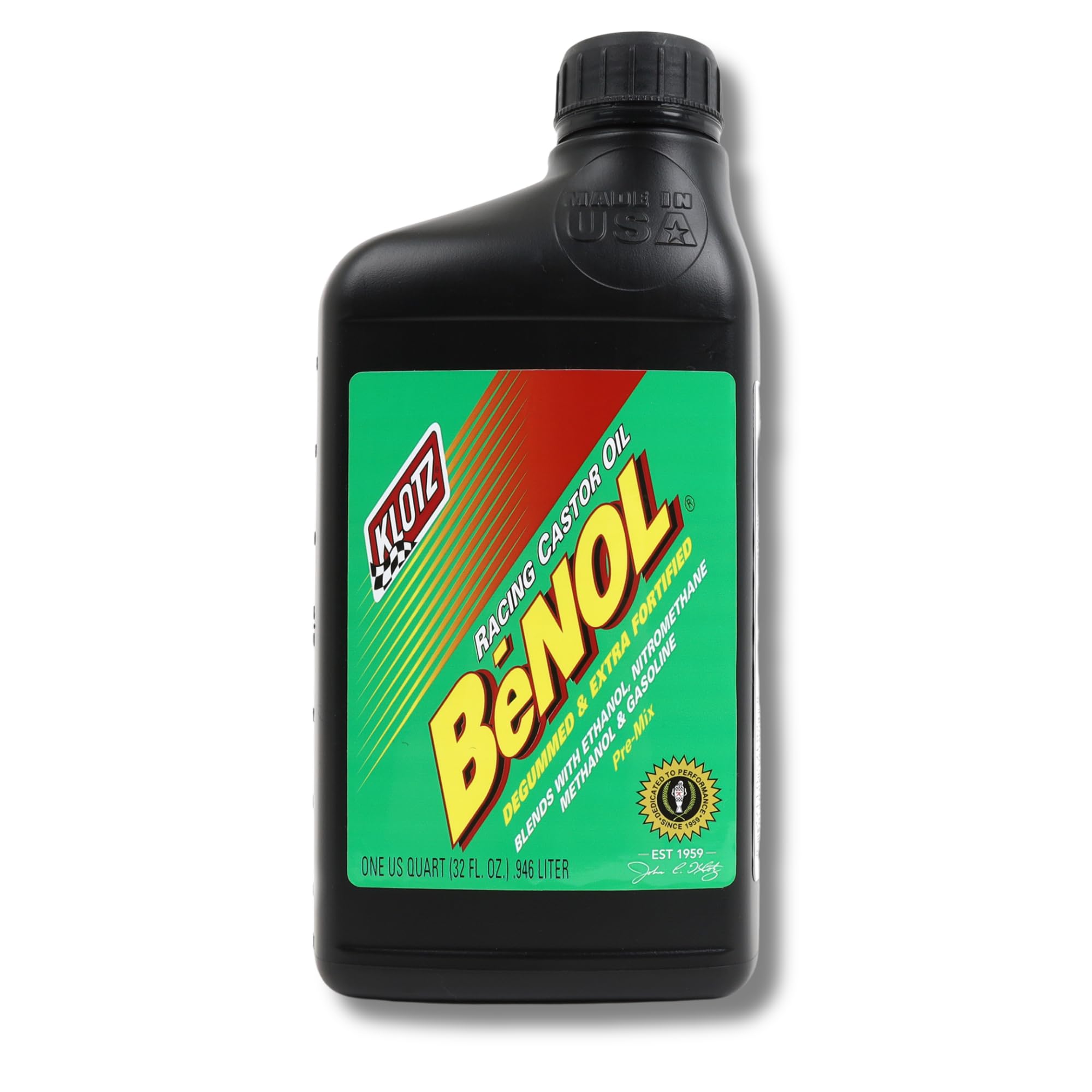
5. Klotz BeNOL Pre-Mix Castor Oil
The 74-year-old rider’s pick that smells exactly like race day used to
Klotz BeNOL is for riders who remember the golden era of two-stroke racing and want that castor scent back in their exhaust. It is a top-performance lubricant made with highly refined castor base stocks, and it is specially formulated to provide double the film strength and load-carrying capacity of conventional castor oils. That extra film strength is what prevents scuffing and protects bearings and piston rings under extreme pressure.
The scent is the thing everyone raves about — owners say it smells like race day and reminds them of the old Castrol R from decades past. One 74-year-old rider still riding his old 89 YZ250 calls it one of the best oils he has used in 50-some-odd years. The clean burn technology reduces smoke generation and mitigates carbon deposits, so you get the castor protection without the usual smoke screen.
It is extra fortified and de-gummed, and it blends with methanol alcohol, ethanol, nitromethane, and gasoline, making it among the most flexible castor options here. Mix ratios are clearly spelled out: air-cooled engines at 20:1 to 32:1, water-cooled at 32:1 to 50:1, and racing kart engines at 16:1 to 20:1. Note that it is intended for pre-mix only and is not suitable for oil injection systems, so check your setup before pouring.
The nostalgia factor: owners describe the scent as the smell of their childhood and race day — it is a huge part of the appeal.
The reality: as a castor blend it demands regular top-end attention, and the pre-mix-only rule rules out oil-injected motors.
6. Klotz R-50 Racing TechniPlate Synthetic Pre-Mix Oil

The full-gallon synthetic built to keep power valves spotless and plugs fouling-free
Klotz R-50 is the gallon-jug answer for riders with power-valve engines who are tired of carbon gunk. It is a 100% fully synthetic formula developed exclusively for high-RPM two-stroke racing engines with power valves, refined through six decades of Klotz motorsports experience. The surface-active anti-wear chemistry protects against bearing and piston ring wear while the dispersants mitigate carbon and varnish deposits.
The power valve cleanliness is the defining feature — a clean power valve means consistent power delivery and no sticky actuation. It is also formulated to prevent plug fouling, which improves horsepower and throttle response for fast starting and increased RPMs. Owners mention a clear difference in throttle response and overall engine performance after switching, and they love that smell — the R-50 scent is part of the Klotz appeal.
At 128 fluid ounces, this is a full gallon, which blows past every other bottle in this guide for value per mix. Mix ratios are spelled out: motocross and dirt track at 32:1 to 50:1, racing karts at 16:1 to 20:1, and snowmobile and marine at 40:1 to 50:1. It is ideal for powered paragliding too, per owners, and the smoke-free performance keeps the air clean around you.
Why It Stands Out
- Full gallon jug for serious value per ounce
- Keeps power valves clean and prevents plug fouling
- Smoke-free performance with a great scent
- Six decades of Klotz racing development
What To Know
- Pre-mix only — not for oil injection systems
- Bigger upfront cost even though per-ounce value is strong
The standout: a full gallon of power-valve-friendly synthetic that keeps plugs clean and throttle crisp.
skip it if: you have an oil-injection system — this is strictly for pre-mix setups.
7. Motorex Cross Power 2T

The KTM-recommended bulk jug for riders who never want to think about reordering
Motorex Cross Power 2T is the bulk buy for riders who want a 100% synthetic, high-performance two-stroke oil and a 4-liter jug that lasts. It is recommended by KTM, which gives it instant credibility for anyone on an Austrian machine. The quality is consistently excellent — it mixes smoothly, burns clean, and provides dependable performance every time.
The 4-liter size is the defining feature here, lasting a long time even for riders who top off often. Owners describe it as their go-to two-stroke oil and appreciate that one purchase covers many rides. The low smoke level is confirmed by riders who use it frequently, and the value for money gets strong praise — especially compared to buying the same brand at a local store.
It is a vehicle-specific fit for motorcycles, so it is designed with bikes in mind rather than being a one-size-fits-all outboard oil. Some owners use it exclusively in their KTMs, while others trust it across different types of two-stroke equipment. The trade-off is the upfront cost of a 4-liter jug, but for frequent riders the per-ride cost drops significantly versus quart bottles.
The bulk appeal: one 4-liter purchase covers dozens of tanks, and owners call the per-ride value unbeatable versus store prices.
The catch: it is a bigger upfront investment, so it suits committed riders more than first-time buyers.
Understanding the Specs
Film Strength and Castor Content
Film strength is how well the oil clings to metal surfaces under extreme heat and pressure. Castor oils offer the highest film strength, which is why aggressive riders love them, but they leave more residue and require more frequent top-end rebuilds. Synthetics trade a little film strength for much cleaner burn and longer service intervals.
Mix Ratio and Fuel Volume
The mix ratio tells you how much oil to add per unit of fuel, like 50:1 meaning one part oil to 50 parts gas. A richer mix like 32:1 gives more lubrication but can foul plugs, while a leaner 50:1 burns cleaner but demands a tougher oil. Always follow your engine manufacturer’s number first, then adjust based on how you ride.
FAQ
What is the difference between castor oil and synthetic two-stroke oil?
What mix ratio should I use for my two-stroke racing engine?
Can I use racing premix oil in an oil injection system?
How long does a bottle of racing oil last?
Will racing oil work in my chainsaw or leaf blower?
Is synthetic two-stroke oil better than castor for power valves?
Why does castor oil smell so good when burning?
What does a higher flash point mean for my engine oil?
Final Thoughts: The Verdict
Across the board, the best two-stroke racing oil winner is the Red Line 40603 because it combines dyno-proven power gains with the cleanest burn in this guide, Protects pistons through over 12 years of hard use.. If you want that classic castor scent and maximum film strength for aggressive riding, grab the Castor 927. And for riders with power-valve engines who want a full gallon that keeps everything spotless, the Klotz R-50 is the one to reach for.
How We Picked
We do not accept paid placement. Every pick is matched to a real buyer and a real use-case; we do not hands-on test units.
Sources & Methodology
Specifications: manufacturer listings and product documentation. Review insights: verified customer reviews, as of August 2026. Pricing: not shown on this page (it changes often); check the current price via the retailer link.
As an Amazon Associate, GoCarLife earns from qualifying purchases. This does not affect which products we feature.