
Our readers keep the lights on and the garage heater humming. As an Amazon Associate, I earn from qualifying purchases.
Specs are compiled from manufacturer listings and verified buyer reviews and can change over time — please confirm the key details on the product page before buying.
Picking the wrong oil for your snowmobile can mean carbon buildup on the piston crown and exhaust ports, leading to a costly engine tear-down in the middle of winter. You need to decide between a mineral oil for a vintage sled, a synthetic blend for everyday trail riding, or a full-racing synthetic for a high-output two-stroke. The picks below keep engines clean, lubricated, and starting strong in subzero cold.
I’m Mo Maruf — the founder and writer behind GoCarLife. This guide is built by comparing the manufacturers’ published specifications and the patterns across verified customer reviews, so you get each pick’s real strengths and trade-offs instead of marketing spin.
We’ve matched each formula to the engines it serves best, so you can confidently pick the right two-cycle snowmobile oil for your sled.
Our Picks at a Glance


How To Choose The Best Two-Cycle Snowmobile Oil
The most critical first step is checking what your owner’s manual specifies. Modern direct-injection engines like Rotax E-TEC often require a full synthetic oil specifically engineered for them, while older carbureted sleds may run perfectly — or even better — on a mineral-based oil that won’t cause seal swelling.
Match the base oil to your engine
Mineral oils are refined directly from crude and are ideal for vintage or carbureted engines that were designed before synthetics existed. Synthetic blends mix mineral and synthetic base stocks to offer better high-temp protection without the premium cost. Full synthetics are engineered molecules that resist breakdown at high heat and flow better in extreme cold, making them the top choice for high-performance and racing applications.
Read the pour point and detergency
The pour point is the lowest temperature at which the oil will still flow — critical for a sled that sits in an unheated shed at -30°F. A lower pour point means the oil injection system can deliver lubrication the instant you fire the engine. Detergency is what keeps combustion chambers, exhaust ports, and spark plugs clean; a strong additive package directly reduces carbon deposits that rob power over time.
Quick Comparison
| Model | Best For | Base Oil Type | Size | Pour Point | Amazon |
|---|---|---|---|---|---|
| Red Line 40605★ Best Overall | Racing & extreme cleanliness | Full Synthetic | 1 Gallon | — | Amazon |
| Lucas Oil 10847Best Value | Value & reliable trail riding | Synthetic Blend | 1 Gallon | — | Amazon |
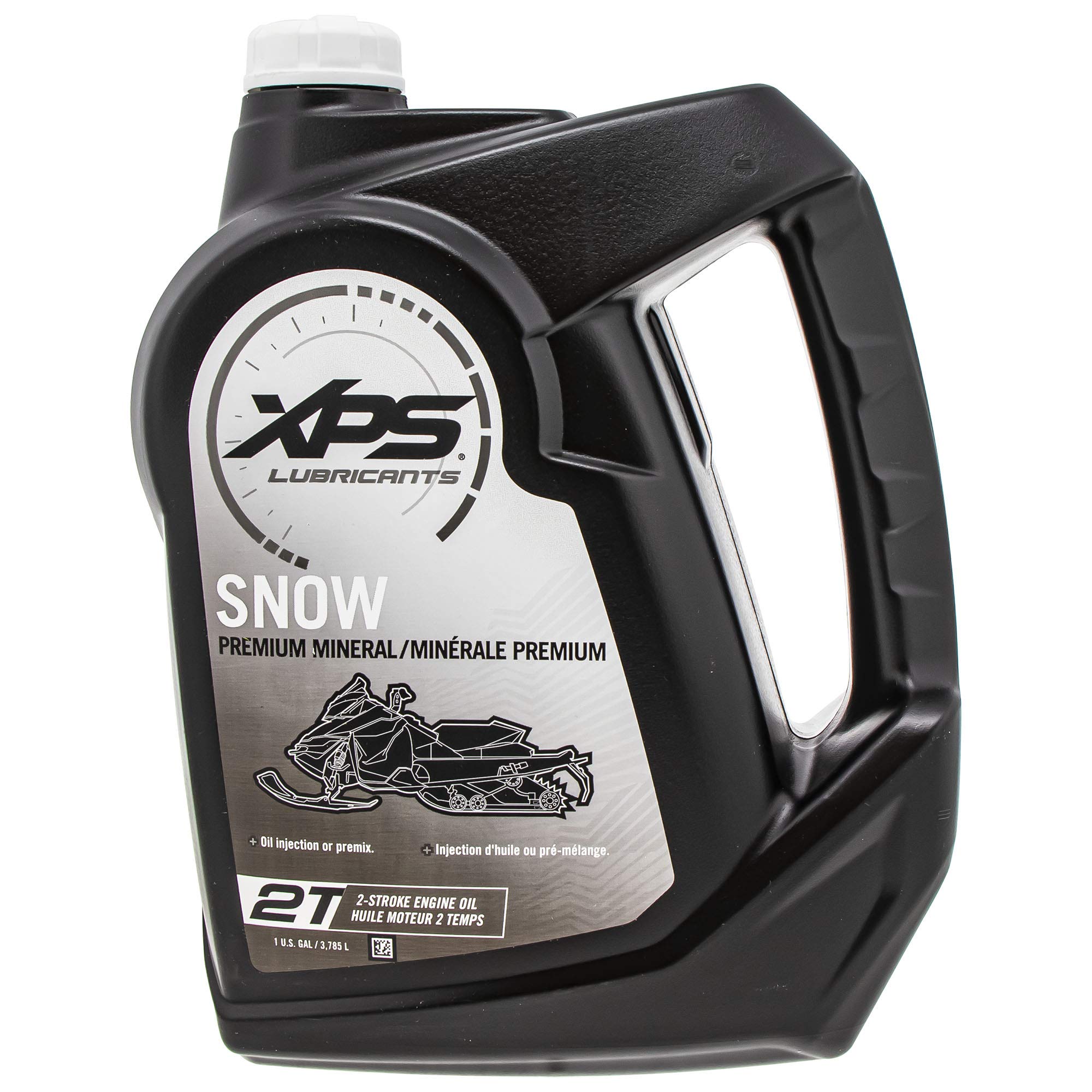
| Can-Am XPS MineralVintage Pick | Vintage Rotax engines | Mineral | 1 Gallon | -40°F / -40°C | Amazon |
| Polaris Blue | Non-exhaust-valve Polaris engines | Synthetic Blend | 1 Gallon | — | Amazon |
| Valvoline TCW-3 | Multi-purpose 2-cycle equipment | Mineral (Non-synthetic) | 6 x 1 QT | — | Amazon |
| BRP XPS Synthetic | Rotax E-TEC engines | Full Synthetic | 1 Gallon | — | Amazon |
| Maxima Premium 2 | Low-smoke premix & injector | Synthetic Blend | 2 x 1 Gallon | -50° | Amazon |
| Sea-Doo XPS 3-Pack | Stocking up for multiple seasons | Full Synthetic | 3 x 1 Gallon | — | Amazon |
In‑Depth Reviews
1. Red Line 40605 Two-Stroke Oil Racing Synthetic
Our pick — over 4.5★ from 450+ verified ratings; the strongest balance of quality and price.
The race-bred jug that keeps plugs tan and ports clean under hard throttle.
If you push a two-stroke hard, the Red Line 40605 shrugs off the heat and keeps working. Its extreme cleanliness is the headline — the additive package stops deposits from forming on combustion chambers, exhaust ports, and the piston crown, exactly where carbon kills power in a sled run wide open across a frozen lake.
Dyno testing shows 3-5% power gains over standard oils, with sustained output on long, hard runs. Buyers report pulling spark plugs after 23 hours of operation and finding “the perfect level of tan” — the exact color a healthy two-stroke plug should be. It’s suggested at a 50:1 premix ratio, but it stays useful up to 100:1 depending on your operating conditions and engine setup.
The 7-pound jug is the heaviest full-synthetic gallon here, 6% heavier than the Lucas blend, reflecting its dense ester-based formula. It earns its place at the top for anyone who treats their sled like a race machine rather than a commuter.
Racing synthetic edge
- Dyno-proven power gains of 3-5% over standard oils
- High-temp stability prevents carbon deposits on critical parts
- Versatile 50:1 to 100:1 premix range
Pricey per bottle
- Premium racing-grade price per gallon
- Heavier jug at 7 pounds adds shipping weight
Track-day pick: you ride hard, race, or want maximum protection and cleanliness for a high-output two-stroke.
Casual rides: your sled is a vintage carbureted model that needs mineral oil to keep seals happy.
2. Lucas Oil 10847 Synthetic 2-Cycle Snowmobile Oil
The gallon that delivers OEM-level additives without the OEM-level price tag.
Lucas built the 10847 on a simple promise: give snowmobilers the detergents and lubricants of a factory blend at a price that doesn’t make you wince every time you top off the injection tank. The special synthetic blend is formulated specifically for snowmobile applications, and owners of big-bore Arctic Cats report it runs perfectly with minimal smoke even in high-output engines.
Long-term trust is the theme of the review pages here — one sled owner reports running it in a 2017 ZR 8000 LXR for two years and roughly 1,500 miles with zero issues and a good price. The consensus is that it stacks up against the big-name synthetics while undercutting them on cost, which is why value for money is the most-praised aspect among owners.
This is the sensible pick for the rider who puts on serious trail miles every season and wants full protection without paying racing-brand freight. It also works in smaller two-strokes — a scooter owner confirms it runs perfectly there too — making it a versatile gallon for a multi-machine garage.
Snowmobile cold flow: The recurring praise is value for money — owners get genuine synthetic-blend protection at a price that beats dealer shelves.
Limited to sleds: A few report container leakage in shipping; pour into a clean jug or check the seal on arrival.
3. Can-Am 1 Gallon XPS 2-Stroke Mineral Oil
The OEM mineral juice that older Rotax engines genuinely prefer.
Sometimes the factory engineers knew best. This BRP XPS mineral oil is designed specifically for carbureted Rotax engines, with a detergency package engineered exclusively for them — crucial if you own an older Sea-Doo or Ski-Doo that cannot, or should not, run synthetic oil. It keeps vintage two-strokes running without seal issues.
Cold performance is a genuine strength: this oil flows down to -40°F / -40°C, so the injection system stays fluid even when the sled has sat overnight in a deep-freeze garage. At 7.4 pounds per jug, it’s the heaviest gallon here, 6% heavier than the Red Line synthetic, due to its mineral base stock.
Owners consistently praise its quality and value, especially in SeaDoo GTI 720 and SkiDoo XP TNT 600 engines. If you’re running a 2003 Sea-Doo GTI, this is the oil the engineers had in mind when they built it.
Entry-level buy: owners of older carbureted Rotax engines — Sea-Doos, Ski-Doos, and Can-Ams — that need mineral oil specifically.
High-load runs: your sled is a modern E-TEC or high-performance engine that demands a full synthetic formula.
4. Polaris Blue Synthetic Blend 2-Cycle Oil
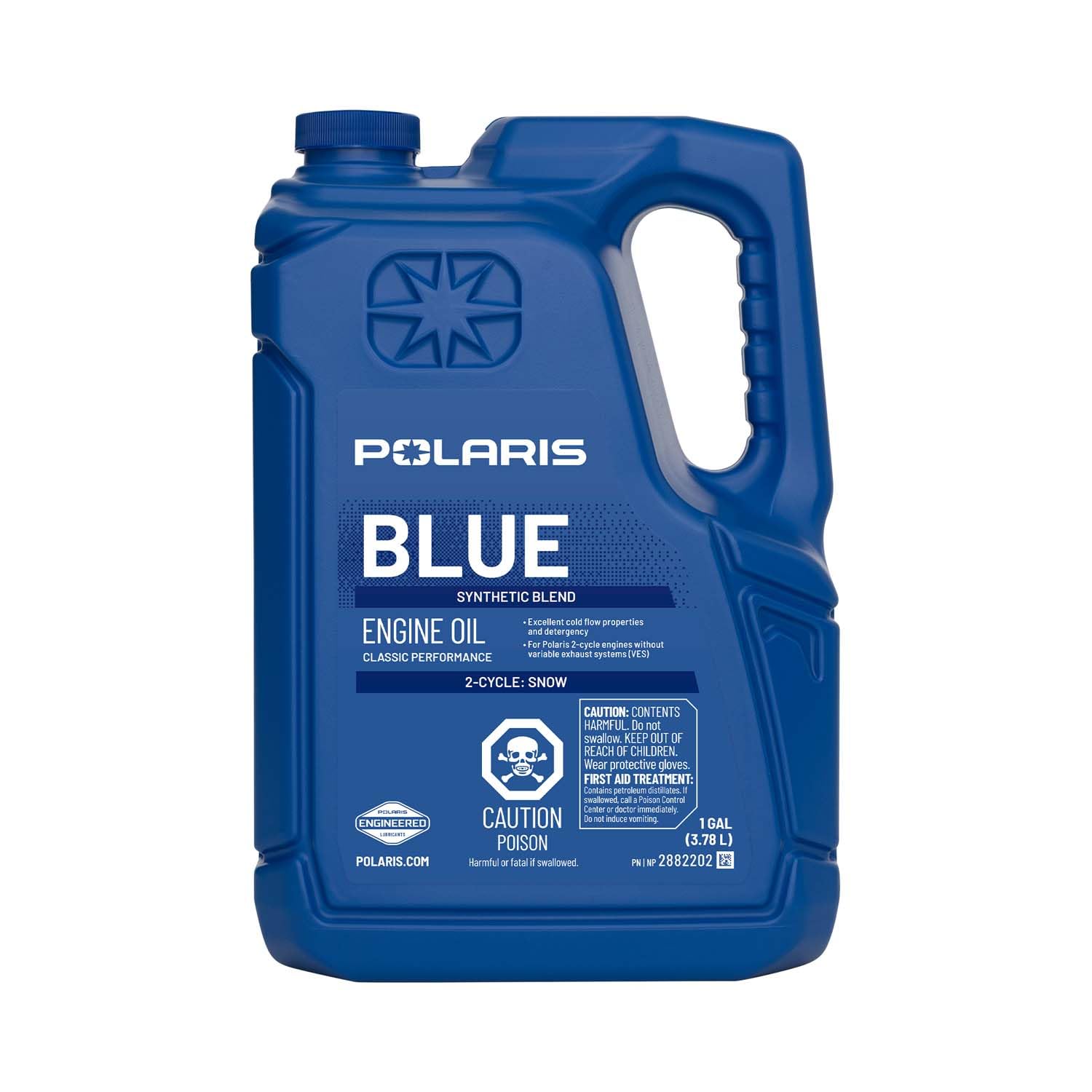
Factory-formulated for the entire non-exhaust-valve Polaris lineup, old and new.
Polaris Blue is the OEM answer for any Polaris two-stroke without exhaust valves — fan-cooled models, vintage sleds, injector or premix applications all fall under its umbrella. The semi-synthetic blend pairs mineral and synthetic base stocks so it lubricates reliably whether you’re idling through a trail or pinned on a straightaway.
The proprietary anti-wear and detergency additives are the real story: they’re engineered to burn clean with less carbon deposits and buildup on critical engine components. That means fewer power-valve cleanings and a healthier top end over a season of hard riding. Cold-flow properties deliver instant lubrication and cold-start protection even in subzero temps, and it maintains a protective oil film on hot internal parts after shutdown.
The review pages lean heavily into enthusiasm — owners mention helping their sled “go BRAPPPPP” and getting a great deal on genuine Polaris fluid. It supersedes part number 2875036, so if that’s what your manual lists, this 2882202 jug is the direct replacement.
Everyday value: you own a Polaris fan-cooled, vintage, or non-exhaust-valve sled and want the factory-specified blend.
Extreme duty: your machine is a Rotax or Arctic Cat — this is formulated for Polaris engines specifically.
5. Valvoline 2-Cycle Multi-Purpose TCW-3 Motor Oil
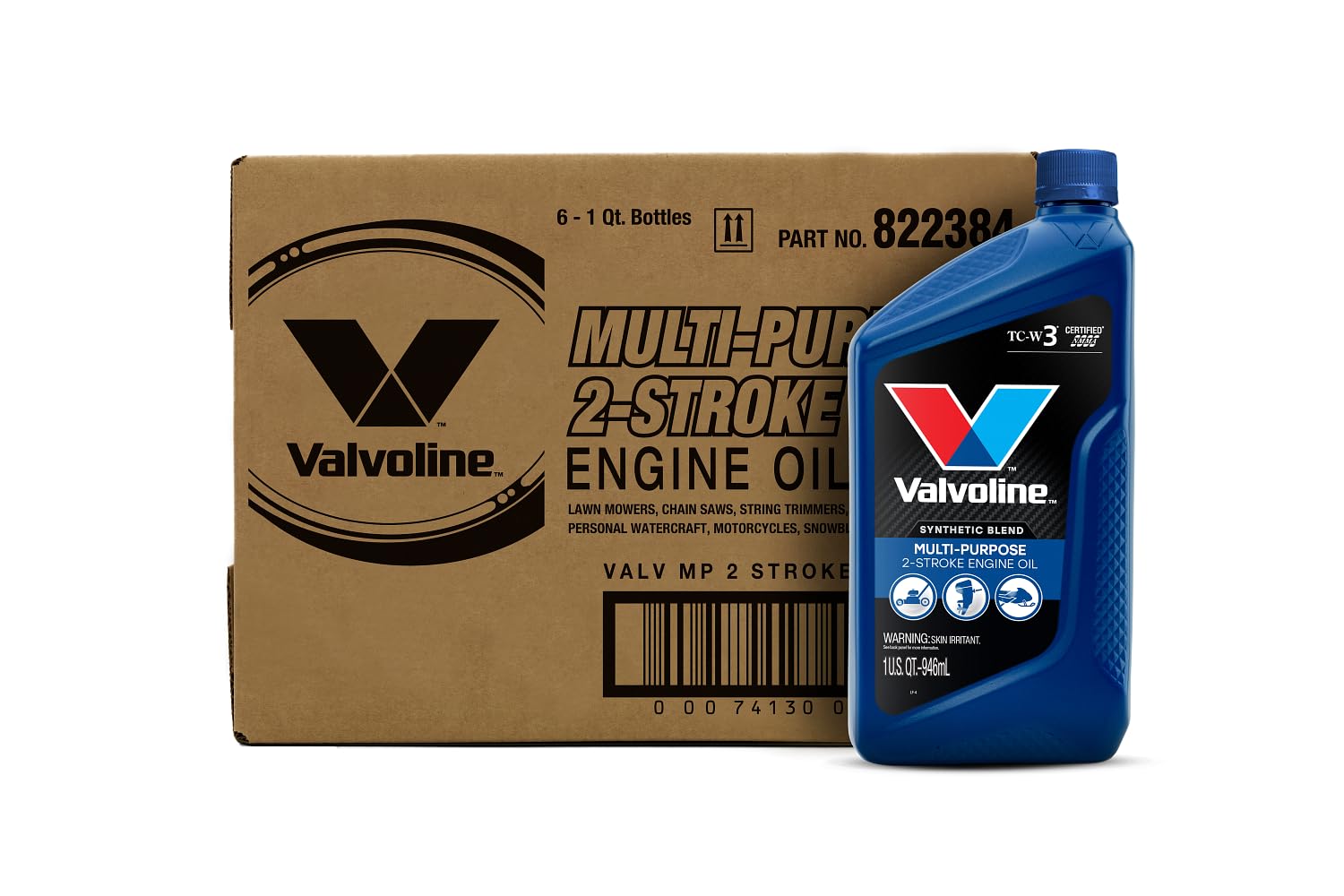
A six-pack of dependable TCW-3 that’s as happy in a leaf blower as a sled.
The Valvoline TCW-3 is the utility player of this lineup — a non-synthetic, multi-purpose formula that’s compatible with lawn mowers and snowmobiles alike. For riders who also maintain a stable of outdoor power equipment, this case of six quart bottles means one oil covers the snowmobile, the weed wacker, and the chainsaw without needing separate jugs.
It’s a mineral-based oil that mixes easily with gasoline — owners note it adds a green tint to the fuel mix, which is handy for confirming your premix is properly blended in the tank. A commercial lawn business owner called it an excellent value for money, and performance feedback across all 2-cycle engines is consistently positive with a flash point of 390°F.
The trade-off is that TCW-3 is not a synthetic, so it’s not the first choice for high-performance sleds needing maximum cold-flow protection. But for a reliable, budget-friendly gallon-equivalent that keeps a fleet of small engines running, the six-quart case is tough to top on practicality.
Multi-purpose TCW-3: This is the jack-of-all-trades oil for the multi-engine owner who wants one trusted bottle for everything.
Not race-grade: As a non-synthetic, it’s not ideal for extreme-cold racing or high-output engines.
6. BRP XPS 2-Stroke Synthetic Oil Gallon

The factory full-synthetic that Rotax E-TEC engines were designed around.
This BRP XPS full synthetic is specifically engineered to meet the unique needs of Rotax engines, with maximum protection against wear in E-TEC powerheads. The low-smoke, low-odor formula keeps the engine lubricated and free of wear while allowing maximum performance — which is exactly what a direct-injection two-stroke needs to stay healthy for thousands of miles.
The highly-evolved additive package is the difference-maker here, keeping parts lubricated and clean without the carbon deposits that plague lesser oils. Owners who run Sea-Doos and Ski-Doos say the properties are ideal for E-TEC engines, and mechanics in the know consider full synthetic a must on certain performance machines.
It costs more than generic jugs, but owners insist the genuine OEM formula is worth the premium over off-brand alternatives. The 3785 ml bottle delivers one gallon of genuine OEM protection, which owners call cheap insurance for a high-dollar machine.
Dealer approved: you own a Rotax E-TEC ski-doo or Sea-Doo and want the exact synthetic the factory specifies.
Aftermarket deals: you’re on a strict budget or running an older carbureted engine that prefers mineral oil.
7. Maxima Racing Oils Premium 2 Smokeless 2-Stroke Oil
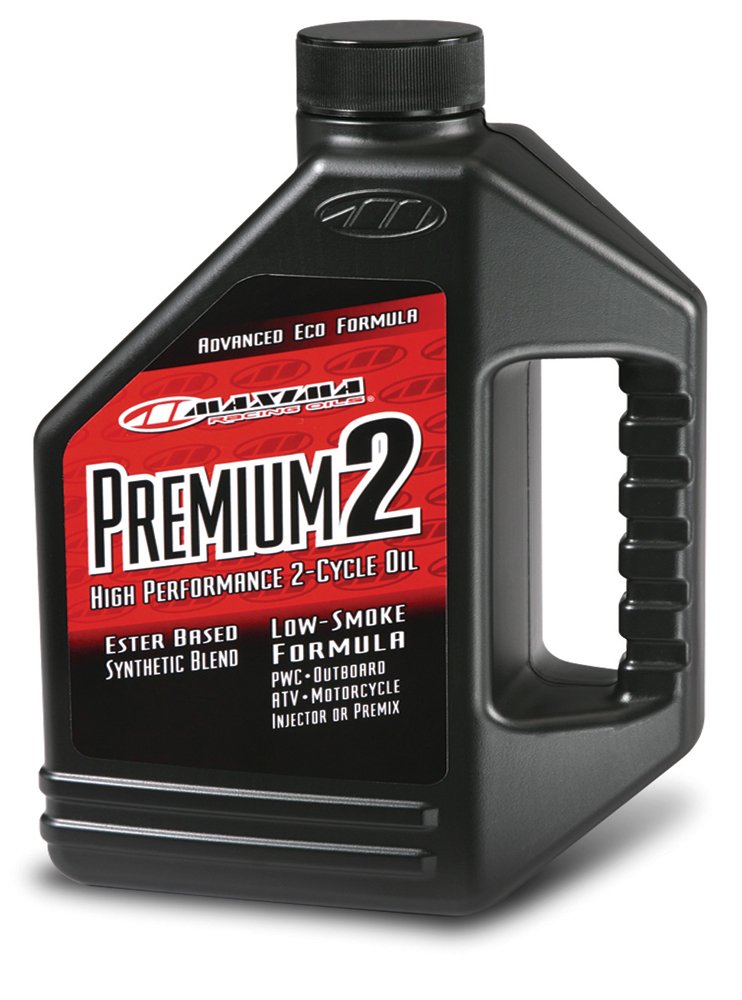
The low-smoke blend that keeps power valves free and plugs from fouling.
If the cloud of two-stroke smoke is your pet peeve, Maxima Premium 2 targets it directly. This synthetic blend combines polyolester, polybutene, and petroleum base stocks with ashless additives that deliver outstanding anti-wear protection and virtually no carbon deposits. It exceeds API TC, ISO-E-GD, and JASO-FC standards, and meets all OEM requirements.
The NMMA TC-W3 certified formula is extremely low-smoke, keeping rings and power valves free so they operate at peak performance. Owners of old two-stroke hot rods — like a 350 Odyssey or a 1975 Yamaha RD 350 — report it cuts smoke way down and keeps plugs from fouling, with engine builders recommending it for vintage machines that need clean running.
With a pour point of -50°, it’s rated for snowmobiles as well as outboards, personal watercraft, motorcycles, karts, and ATVs. The honest caveat from owners is that it’s “not smoke free” but noticeably less smoky than normal oil, and opinions on value split — some call it great, others find it pricey at the 2-pack level.
Clean burn: you want the lowest-smoke synthetic blend that also suits vintage and modern two-strokes alike.
Budget mixing: you’re a high-mileage trail rider who burns through gallons — the 2-pack price is premium.
8. Sea-Doo/Ski-Doo XPS 2 Stroke Synthetic Oil 3 Pack

Three gallons of OEM synthetic so you’re never hunting for oil mid-season.
For the rider who goes through multiple gallons a season, this three-pack of BRP XPS full synthetic is the practical way to buy. The special additives protect the engine from wear over time and resist oxidation at higher temperatures, so the oil lasts longer than conventional blends — which is why the manufacturer frames it as years of trouble-free service.
The 3-gallon pack (384 fluid ounces) uses the same 779127 formula as the single gallon, delivering factory-spec XPS for Ski-Doo and Sea-Doo engines. Owners running newer fuel-injected Ski-Doos say it doesn’t gum up, is designed for the Rotax, and is worth using on anything 2010 or newer.
It’s the biggest upfront investment on this list, but the per-gallon cost works out more favorably than buying singles. For a household with multiple sleds or a serious mileage habit, having three factory gallons stacked in the garage means the only thing you’ll run out of is snow — as the review pages say, “pray for snow!”
Fleet refill: you run a modern fuel-injected Ski-Doo or Sea-Doo and burn multiple gallons each season.
Single test: you’re not sure this is the exact spec you need yet, or you only ride a handful of weekends.
Understanding the Specs
Pour Point and Cold Flow
This is the temperature at which the oil stops flowing, and it matters enormously for a machine that lives in unheated storage. For deep-winter riders, a lower pour point is a genuine safety margin for the top end.
Detergency and Carbon Control
The detergency package is what keeps combustion chambers, exhaust ports, and spark plugs free of carbon. A two-stroke burns oil by design, so whatever doesn’t combust completely becomes deposit — and over time, that buildup restricts exhaust flow and robs power. High-detergency oils, especially full synthetics, are formulated to burn cleaner and leave far less residue behind, which is the difference between a healthy engine at 5,000 miles and one that needs a top-end job.
FAQ
What is the difference between mineral and synthetic two-stroke oil?
Can I run a full synthetic oil in my vintage carbureted snowmobile?
What does the pour point rating mean for my sled?
What premix ratio should I use with these oils?
Is TCW-3 oil suitable for my snowmobile engine?
How do I know which oil matches my Polaris engine?
Why does my two-stroke produce smoke and how can I reduce it?
What does the JASO-FC and ISO-E-GD certification mean?
Final Thoughts: The Verdict
For anyone who demands race-proven cleanliness and the power gains that come with it, the two-cycle snowmobile oil winner is the Red Line 40605 — its dyno-verified performance and deposit-fighting formula is why it’s the crowd favorite among serious riders. If you want the best balance of protection and price for daily trail miles, grab the Lucas Oil 10847. And for owners of vintage carbureted Rotax machines, the Can-Am XPS Mineral Oil is the factory-correct choice that keeps old engines happy.
How We Picked
We do not accept paid placement. Every pick is matched to a real buyer and a real use-case; we do not hands-on test units.
Sources & Methodology
Specifications: manufacturer listings and product documentation. Review insights: verified customer reviews, as of August 2026. Pricing: not shown on this page (it changes often); check the current price via the retailer link.
As an Amazon Associate, GoCarLife earns from qualifying purchases. This does not affect which products we feature.