
Our readers keep the lights on and the garage heater humming. As an Amazon Associate, I earn from qualifying purchases.
Specs are compiled from manufacturer listings and verified buyer reviews and can change over time — please confirm the key details on the product page before buying.
Every time you lift off the throttle, pressure builds in your turbo system and has to go somewhere. The blow-off valve (BOV) vents that pressure, and the wrong pick can cause lost boost, rough idle, or fitment issues. We compare three distinct valves—a budget universal vented BOV, a precision VAG diverter, and a billet recirculating bypass—so you know exactly what you’re buying.
I’m Mo Maruf — the founder and writer behind GoCarLife. This guide is built by comparing the manufacturers’ published specifications and the patterns across verified customer reviews, so you get each pick’s real strengths and trade-offs instead of marketing spin.
We’ve weighed the specs and owner feedback for the top models to find the best turbocharger blow-off valve for your specific build and driving style.
Our Picks at a Glance
How To Choose The Best Turbocharger Blow-Off Valve
When you close the throttle, the compressed air your turbocharger just pushed into the engine has nowhere to go, so it surges back against the compressor wheel. A blow-off valve (BOV) or bypass valve vents that pressure to protect your turbo and keep it spinning, so you get quicker, more responsive spool-up when you get back on the gas. Your choice hinges on your car’s platform, boost pressure, and if you want the loud “psshh” or a quiet recirculating setup.
Match the valve type to your engine management
Modern cars often use a diverter valve that recirculates the air back into the intake, which keeps the air/fuel mixture correct and avoids a rough idle. A vented blow-off valve dumps that air to the atmosphere, which sounds aggressive but can cause running rich between shifts on some setups. Check whether your car needs a recirculating bypass valve or a genuine diverter valve like the GFB T9381, which is designed to replace the factory part entirely.
Boost pressure and piston design
Your valve needs to hold the boost level your turbo can produce. A budget valve might claim a high rating, but a weak internal piston or a cheap spring can stick or fail to seal, causing a leak you can hear as a hiss. Look for a piston-style valve machined from aluminum with a quality brass or anodized core, and compare the stated maximum pressure (like 75 psi on the Boomba) to your own tune’s peak boost.
Quick Comparison
| Model | Best For | Valve Type | Material | Max Pressure | Amazon |
|---|---|---|---|---|---|
| Yhikguszi 50mm BOV★ Best Overall | BMW N54 budget builds | Vented BOV | Aluminum Alloy | 26 psi | Amazon |
| GFB T9381 dv+ | VW/Audi (VAG) daily drivers | Diverter Valve | Anodised Aluminium | — | Amazon |
| Boomba Racing BPV | Civic Type R / Accord 2.0T | Piston Valve | Billet Aluminum | 75 psi | Amazon |
In-Depth Reviews
1. Yhikguszi 50mm BOV Turbine Pressure Relief Valve
A budget-friendly 50mm vented valve built for the BMW N54 crowd chasing a loud, aggressive release.
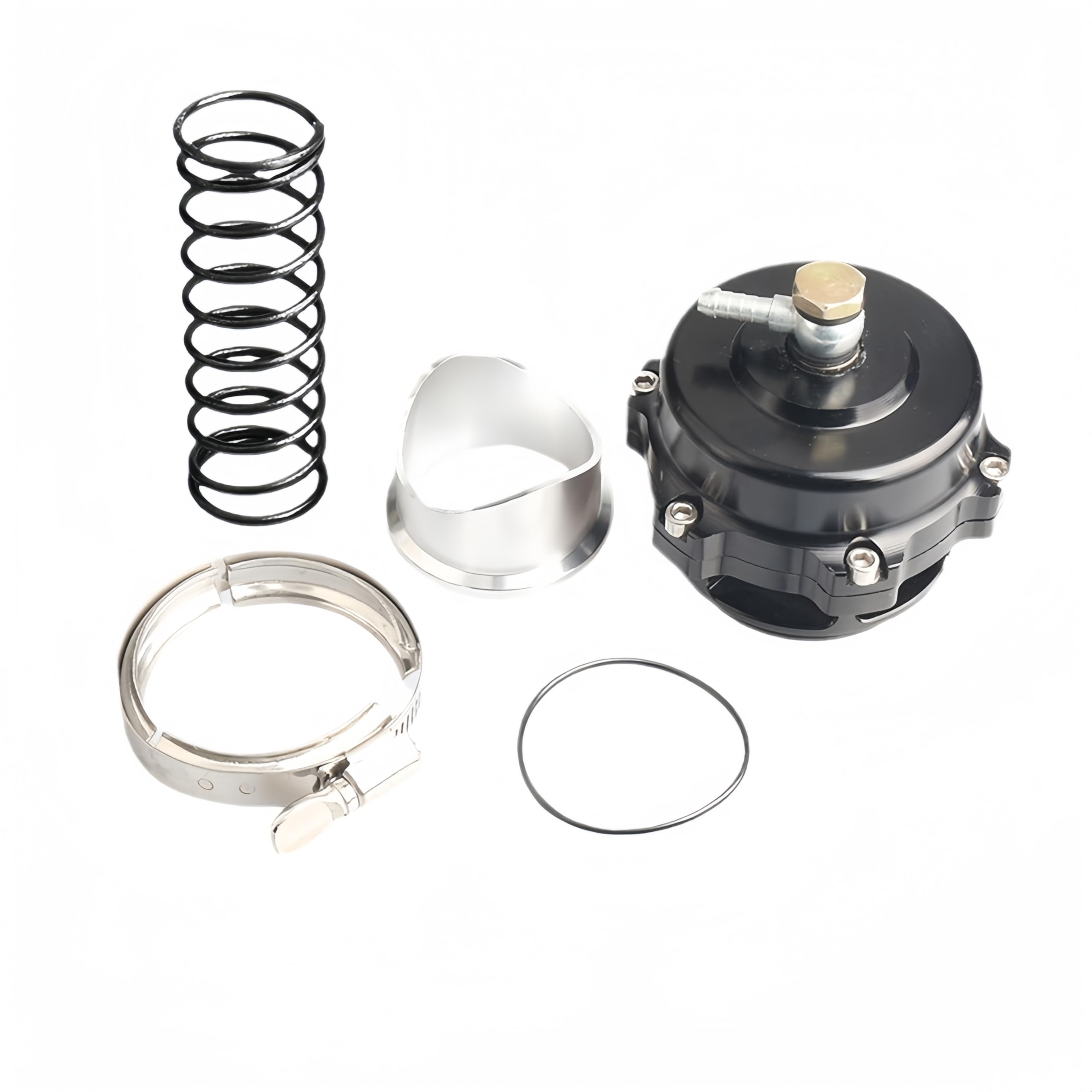
This Yhikguszi valve is a universal 50mm blow-off valve that bolts onto BMW series models including the N54 E82 E88 E90 E92 135i and 335i. It’s machined from aluminum alloy and stainless steel with a silicone coupler, and it comes as a full 4-piece kit, so you have everything you need for the intake pipe setup. The 1.97-inch inlet and outlet connections use compression fittings to clamp onto your charge pipe.
Owners running serious power report it handles real pressure—one buyer on a Precision 5858 turbo confirms it holds 26 psi without issue, which is the kind of real-world validation a spec sheet can’t give you. The anodized black finish looks the part in the engine bay, and the simple design makes installation straightforward, though no fitting instructions are supplied and professional installation is highly recommended.
The trade-off at this price is consistency. Multiple buyers praise the fitment on a VRSF Tial charge pipe and the overall quality, but an occasional unit arrives with a stuck valve fresh from the start, and one owner found the V-band clamp bolt too soft to tighten without self-destructing. It’s a solid budget entry, but inspect the clamps and piston before installation.
Reach for this if: you have a BMW N54 and want a cheap, loud vented BOV that’s already proven to hold 26 psi on a big turbo build.
Look elsewhere if: you want a guaranteed bolt-on with better factory hardware, since the quality control on the clamps and piston can be hit or miss.
2. GFB T9381 dv+ EA888 VAG Diverter Valve

A precision VAG diverter valve that replaces the whole factory unit to lock in boost and sharpen throttle response.
This is a different animal from a traditional vented blow-off valve—it’s a diverter valve for VW and Audi EA888 engines that recirculates air instead of dumping it. What makes the GFB T9381 special is its low-profile integrated solenoid, which makes it shorter and more compact than even the factory diverter, so it fits the tightest engine bays. It comes with the integrated solenoid and cable included, and it’s machined from anodised aluminium.
The core benefit is consistent boost. Owners on a B9 Q5 report that boost is held better and stays consistent “vs always fluctuating by a pound or two,” plus a noticeable improvement in throttle responsiveness. Because it replaces the entire factory diverter valve rather than reusing your solenoid, it’s the right choice if your original solenoid is already faulty or you simply want a cleaner install.
The defining benefit buyers keep coming back to is that rock-steady boost curve—no more watching the gauge bounce around during a pull. It’s for daily drivers wanting OEM-like reliability with upgraded durability, not for those chasing a loud “psshh” sound.
Boost lock-in: the compact anodised aluminium body with the integrated solenoid is the reason this holds boost so steadily—the integrated solenoid means fewer failure points and a shorter overall profile than the factory part.
Who it’s for: VAG owners who want sharper throttle response and consistent boost on a daily driver, not the loud vented sound.
3. Boomba Racing Full Recirculating Bypass Valve

A beefy billet recirculating valve rated to 75 psi for aggressive turbo builds on the Honda 2.0T.
This Boomba Racing valve is precision machined from aircraft grade billet aluminum, which is a serious upgrade over the cheap plastic factory piece in your Civic Type R or Accord 2.0T. The internal brass piston design is pressure tested to withstand up to 75 psi, so it can complement even the most aggressive turbo builds without blowing its seals. The spring pre-load controls the pressure differential needed for the piston to open and release the pressurized intake charge.
It replaces the OEM bypass valve with no tuning required, working on stock or aftermarket tunes. Boomba claims it won’t trigger check engine lights, won’t cause turbo lag, and won’t make the vehicle stutter between shifts, which is exactly what you want from a recirculating valve that keeps things driveable.
The biggest caveat is fitment on the Type R specifically. One owner warns that despite people calling it a tight fit, it actually pushes up on the turbo coolant line very hard and can cut into it, calling it a design flaw and not worth the risk. A few also report the valve not closing fully after use, which creates an air leak sound. On paper it’s a beautifully built part, but check your specific chassis clearance before you commit.
What the build gives you
- Aircraft grade billet aluminum body is far stronger than a plastic factory valve.
- Rated to handle up to 75 psi, so it suits high-boost setups.
- Works on stock or aftermarket tunes with no tuning required.
Fitment watch-outs
- On the Type R the valve can press hard against the turbo coolant line.
- The piston may occasionally fail to fully close, causing an audible air leak.
The standout spec: a 75 psi-rated billet body with a brass piston is genuinely impressive hardware for a 2.0T.
Think twice if: your car is a Type R and you can’t verify clearance, since the coolant line interference is a real reported issue.
Understanding the Specs
Vented BOV vs Recirculating / Diverter Valve
A vented blow-off valve releases pressurized air to the atmosphere, giving you the loud “psshh” sound. A recirculating bypass valve or diverter valve sends that air back into the intake, keeping the air/fuel mixture correct so you don’t run rich between shifts. If your car uses a mass airflow sensor, a diverter valve is often the safer choice to avoid a rough idle.
Max Pressure Rating and Piston Design
Your valve must hold more pressure than your turbo actually produces, or it will leak. A piston-style valve with a brass or metal core (like the Boomba’s 75 psi rating) tends to seal better than a cheap diaphragm design. The spring pre-load sets how much pressure difference is needed before the valve opens, which affects how quickly it responds when you lift off the throttle.
FAQ
What is the difference between a blow-off valve and a diverter valve?
Will a blow-off valve fit my specific car model?
How much boost pressure can these valves handle?
What is a recirculating bypass valve?
Can I install a blow-off valve myself?
Will a blow-off valve cause a check engine light?
What is a piston-style valve vs a diaphragm valve?
Why does my turbo car need a bypass valve at all?
Should I get a vented or recirculating valve for daily driving?
Final Thoughts: The Verdict
If you drive a VW or Audi EA888 car and want sharper throttle response with rock-steady boost, the GFB T9381 is the strongest pick on this list because it replaces the whole factory diverter with a compact, consistent unit. For BMW N54 owners who want a loud vented valve on a budget, the Yhikguszi 50mm is the value choice, proven to hold 26 psi. And the Boomba Racing valve offers premium billet construction and a 75 psi rating, though you’ll want to verify Type R clearance before installing.
How We Picked
We do not accept paid placement. Every pick is matched to a real buyer and a real use-case; we do not hands-on test units.
Sources & Methodology
Specifications: manufacturer listings and product documentation. Review insights: verified customer reviews, as of July 2026. Pricing: not shown on this page (it changes often); check the current price via the retailer link.
As an Amazon Associate, GoCarLife earns from qualifying purchases. This does not affect which products we feature.