
Our readers keep the lights on and the garage heater humming. As an Amazon Associate, I earn from qualifying purchases.
Specs are compiled from manufacturer listings and verified buyer reviews and can change over time — please confirm the key details on the product page before buying.
Switching to tubeless is the single biggest upgrade you can make to your mountain or road bike short of a new frame. You drop the inner tube, add sealant, and suddenly pinch flats mostly disappear while traction and ride comfort climb. This guide breaks down the best tubeless-ready tires across trail, enduro, and road riding, with the real strengths and trade-offs of each pick.
I’m Mo Maruf — the founder and writer behind GoCarLife. This guide is built by comparing the manufacturers’ published specifications and the patterns across verified customer reviews, so you get each pick’s real strengths and trade-offs instead of marketing spin.
Whether you’re chasing downhill grip, fast road rolling, or puncture-proof commuting, these are the tubeless-ready bike tires worth your money, ranked by real-world owner experience and performance.
Our Picks at a Glance

How To Choose Tubeless-Ready Bike Tires
Before you buy, you need to know what kind of riding you actually do. A downhill monster is miserable on a long pavement spin, and a slick road tire will wash out on loose gravel. Match the tire to your terrain, and you’ll get the performance you paid for.
Match the Tread to Your Terrain
Aggressive knobs with wide spacing are for loam, mud, and loose rock where you need bite. Closely packed, low-profile tread rolls faster on hardpack and pavement. If you split time between trail and road, look for a center tread that rolls smoothly with grippier shoulder knobs for corners.
Casing and Sidewall Protection Matter More Than You Think
The casing is the tire’s fabric body, and it comes in different strengths. Tougher casings resist cuts and pinch flats but add weight. Sidewall protection like EXO adds a cut-resistant layer exactly where trail debris strikes. If you ride sharp rocky terrain, you want the extra layer even if it costs a few grams.
Width and Diameter Are Non-Negotiable
Your rims dictate what tire diameter you need — 26, 27.5, or 29 inches for mountain bikes, 700c for road. Width is more flexible but check your frame and fork clearance first. A 2.8-inch tire won’t fit a frame built for 2.2-inch rubber, so measure before you order.
Quick Comparison
| Model | Best For | Diameter | Width | Weight | Amazon |
|---|---|---|---|---|---|
| Maxxis Minion DHR II★ Best Overall | Downhill grip | 26 inches | 2.3 inches | 0.78 kg | Amazon |
| Continental Cross KingBest Value | Versatile all-rounder | 29 inches | 2.2 inches | 300 g | Amazon |
| Michelin Wild EnduroEnduro Pick | Enduro durability | 27.5 inches | 2.8 inches | 3 pounds | Amazon |
| Maxxis Aggressor | Fast-rolling rear trail | 27.5 inches | 2.3 inches | 0.6 kg | Amazon |
| Schwalbe Pro One TLE | Fast road racing | 70 cm | 30 mm | 340 g | Amazon |
| Pirelli Cinturato Velo | Long-distance road | 70 cm | 2.6 cm | 290 g | Amazon |
| Pirelli P7 Sport | Durable everyday road | 70 cm | 1.1 inches | 300 g | Amazon |
| HEB VIPERESS Fat Tire | Ebike all-terrain | 27.6 inches | 4 inches | — | Amazon |
| Continental GP 5000 S TR | Race-day speed | 62.2 cm | 25 mm | — | Amazon |
In‑Depth Reviews
1. Maxxis Minion DHR II
Our pick — over 4.5★ from 700+ verified ratings; the strongest balance of quality and price.
The downhill dominator that turns steep descents from scary to thrilling.
The Minion DHR II is the crowd favorite for a reason — riders rave about its grip, traction, and durability across rocky and desert terrain. The real magic is in the side knobs, borrowed from the legendary Minion DHF but widened for more support when you lean into a turn. It seals up tubeless with no leaks and holds air well, exactly what you want from a setup you’ll trust at speed.
That downhill mastery comes with a caveat: it’s a rear-specific tire that fights you on the climbs. Buyers report average climbing performance and a lack of bite on steep, rocky paths. If you live for the descent and tolerate the climb, this is your tire — but if you want one tire to do everything, keep reading.
At 2.3 inches wide on a 26-inch diameter, it’s built for aggressive mountain biking, not pavement cruising. The EXO casing adds cut and abrasion resistance right where you need it, and the E25 rating means it’s compatible with light-duty e-bikes up to 16.1 MPH. One owner ran it at 18-20 psi and found the grip intoxicating — this is a tire that rewards confidence.
What Wins Riders Over
- top-tier cornering and braking traction on descents
- Seals tubeless easily and holds air without leaks
- Durable EXO sidewall shrugs off rocky trail abuse
Where It Falls Short
- Average climbing performance on steep paths
- Rear-specific design — not ideal as a front tire
- Hard compound prioritizes longevity over sliding play
Grab it for: riders who measure their ride by how hard they can push downhill.
Consider elsewhere if: your trails are mostly climbs or you want a single versatile tire.
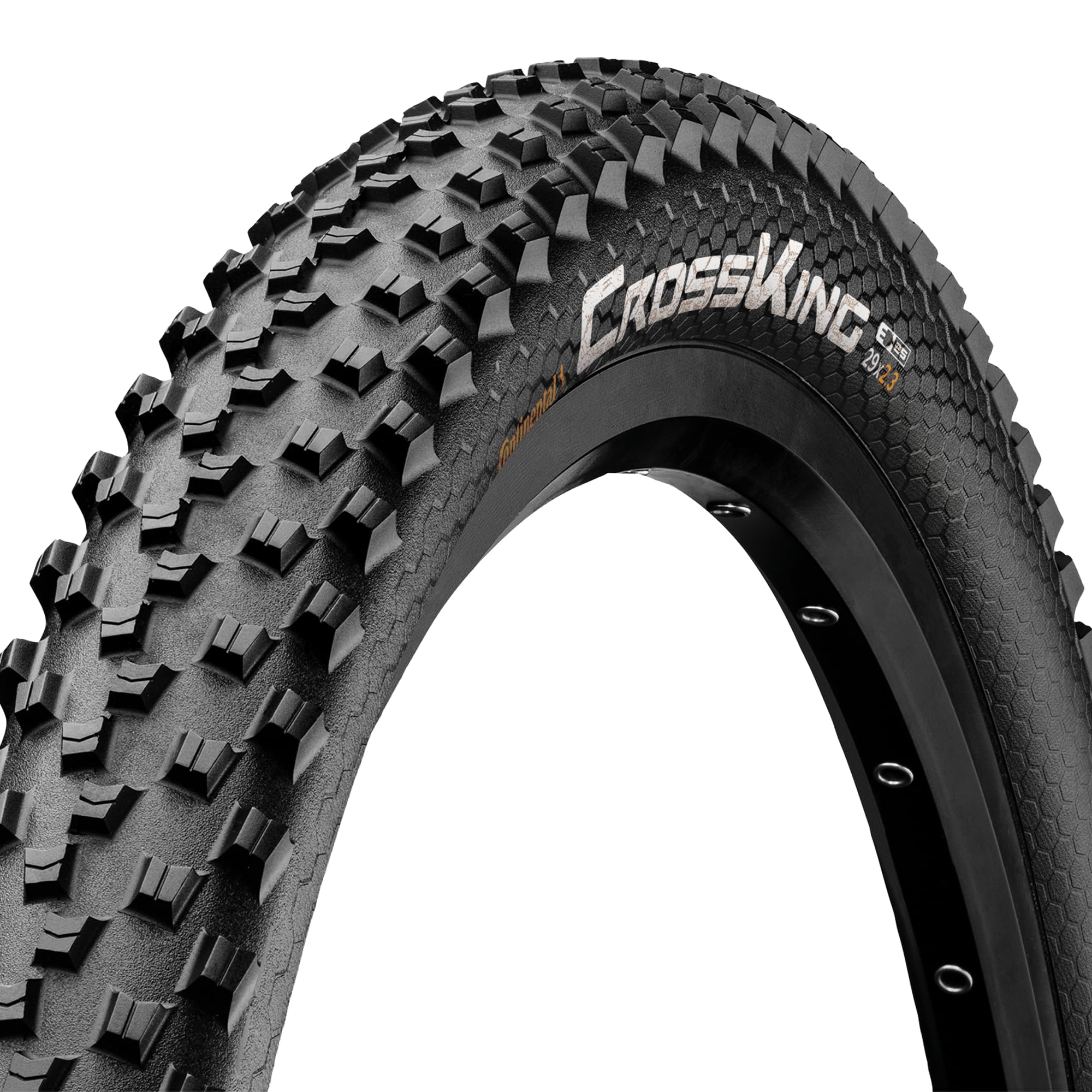
2. Continental Cross King
The smooth-rolling all-rounder that adapts to pavement and trail without complaint.
You get a smooth, fast ride on pavement and still grip loose rocks on hardpack trails with the Cross King, which earns its “all-rounder” nickname. Owners praise its quality and fit, with one noting it handles the transition between different terrains smoothly. If you ride to the park, you get there quickly and stay confident in corners — a solid pick for trail riders who mix road and dirt.
At 29 inches in diameter and 2.2 inches wide, it’s a full 3 inches narrower in diameter than the Michelin Wild Enduro mentioned later — but that’s a different class of tire for a different rider. The Cross King’s PureGrip Compound, derived from an activated silica compound, delivers a balance of grip and durability that keeps it rolling fast. The ShieldWall casing adds all-round protection without weighing you down.
The E25 rating means this tire is built to handle the extra force from e-bikes up to 16.1 MPH, with puncture protection to reduce premature wear. Owners note it works great with Stan’s sealant and is easy to inflate on hardpack to slightly slick trails. It’s a dependable, do-everything tire that won’t punish you for picking the wrong trail.
What Makes It Versatile
- Rolls smooth and easy on pavement for a trail tire
- Good grip on hardpack and loose rock
- E25 rated for light e-bike duty
The Trade-Off
- Durability gets mixed feedback across owners
- Not aggressive enough for deep mud or loam
Pick this if: you want one tire that handles the commute and the weekend trail ride.
Look elsewhere if: you ride mostly aggressive downhill or deep mud.
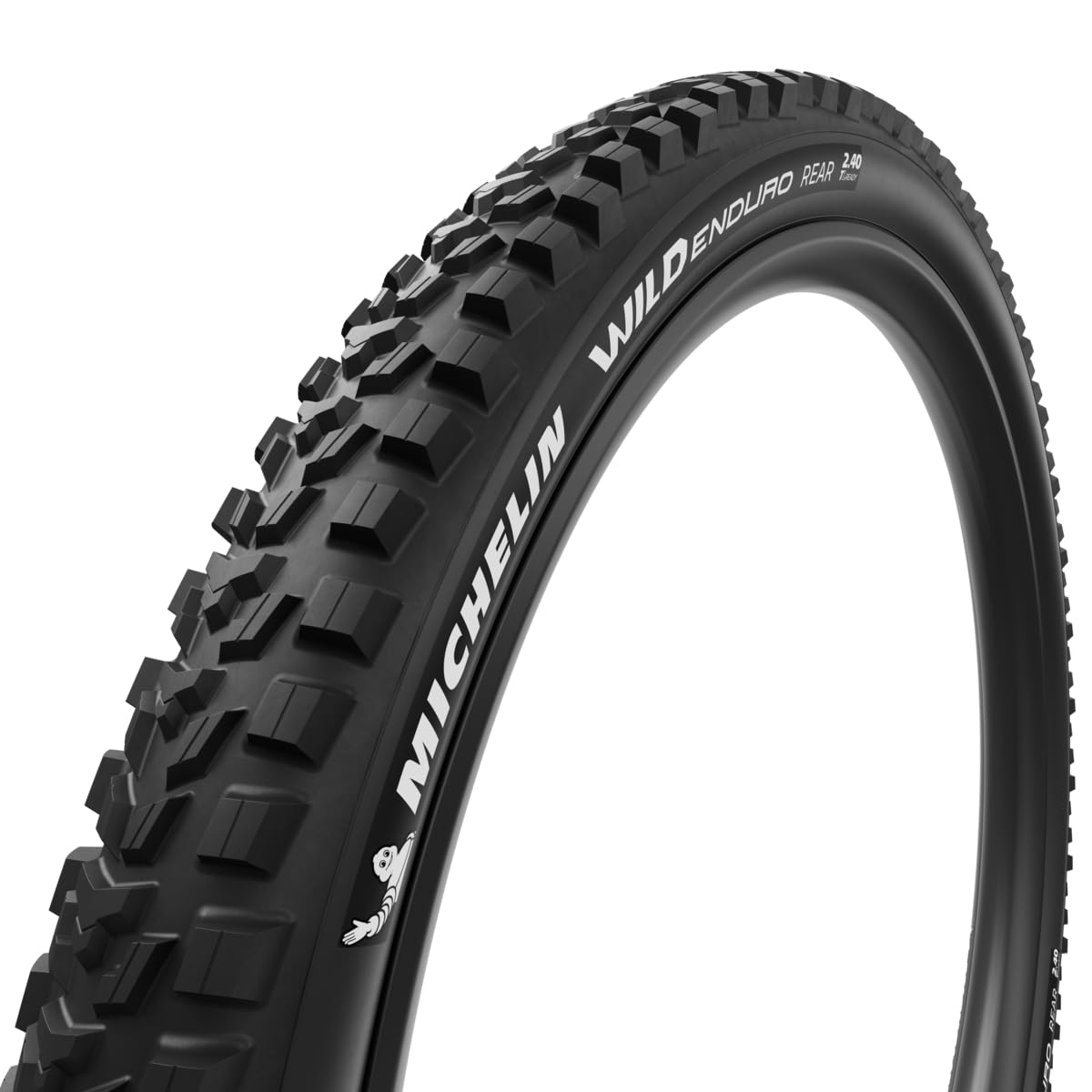
3. Michelin Wild Enduro
The wide-format enduro tire that trades a little rolling speed for serious durability.
At 2.8 inches wide, the Wild Enduro is a full 0.6 inches fatter than the Continental Cross King — a massive difference in footprint that translates to more stability and traction on demanding enduro and gravity trails. It’s engineered with Michelin’s GUM-X compound and GravityShield casing for durability and lightweight performance, and it’s built to handle up to 50 PSI.
Owners describe it as a “solid solid front tire” that rolls faster than a DHF with only slightly less grip. The 3×33 TPI casing uses high-density fibers for puncture resistance and flexibility. The honest trade-off owners mention: an 800-mile lifespan that wears quicker than a Maxxis, though they still call it a good winter tire and a cheaper alternative.
The lug pattern is designed for progressiveness — you get predictable grip during braking and confidence on technical descents. Developed with EWS riders, this tire is built for riders who push hard and want grip on tap. If you’re on a 27.5-inch wheel and ride aggressive trail, this is a serious contender.
Why It Shines
- Massive 2.8-inch width for stability and grip
- GravityShield casing resists punctures
- Faster rolling than a DHF
The Honest Catch
- Wears quicker than Maxxis options
- High road resistance on pavement sections
Reach for this if: you ride enduro and want a durable tire that grips hard on the way down.
Pick something else if: you log huge yearly mileage and want a tire that lasts.
4. Maxxis Aggressor

The rear tire that pedals fast on hardpack and still bites when you brake hard.
The Aggressor is designed specifically for high-speed, hard-packed rocky trails, and it’s at its best as a rear tire paired with a Minion DHF or Assegai up front. Owners consistently praise the grip and fast rolling resistance — one 205-pound rider ran it at 28.5 psi through shale, mud, rocks, and roots with no punctures and minimal wear after a year of weekly riding.
At 27.5 inches in diameter and 2.3 inches wide, it weighs 0.6 kg, making it lighter than the DHRII/DHF combo it often replaces. The Dual Compound tread balances rolling resistance against grip, and the EXO sidewall adds cut resistance. The trade-off owners note is a slight rolling-resistance increase vs. the Minion SS, but you gain major uphill and braking grip in return.
This tire rewards deliberate riding. One owner swapped a DHR for the Aggressor on a hardtail and found predictable rear slides on slick surfaces with improved braking — better for XC and trail than enduro, sacrificing a bit of corner grip for straight-line speed. If you want to go fast without dragging a heavy tire, this is the smart pick.
Its Superpowers
- Fast rolling with excellent braking grip
- Light at 0.6 kg for a trail tire
- Durable — no punctures after a year of weekly rides
Keep in Mind
- Sacrifices corner grip for speed vs. a DHR
- Designed as a rear tire, not a front
Best for: trail riders who want a fast-rolling rear tire that still grips under braking.
skip it if: you need maximum cornering bite and don’t mind the rolling resistance.
5. Schwalbe Pro One TLE

The road tire that feels supple, rolls fast, and seals itself up tight.
The Pro One TLE is a 28-inch road tire built for ambitious cyclists who want speed and comfort in one package. The Addix Race Compound delivers low rolling resistance and strong grip, while the Super Race carcass adds smoothness. Customers note it holds pressure for weeks and survived a 3-inch step at 50 psi without flatting — real confidence for rough roads.
Installation is genuinely easy: one owner mounted it tool-free and seated the bead with a hand pump. That’s a rare compliment in the tubeless world. The TLE version seals perfectly and holds air, though you must use sealant in a tubeless setup. The transparent sidewall gives it a distinctive look that some riders love.
At 30 mm wide and 340 g, it’s a touch wider than pure race tires, which translates to more comfort and grip. One owner logged 1000+ miles with self-sealing punctures and noted the tire near its wear limit, a solid lifespan for a performance road tire. If you want to feel the road but stay protected, this is a strong pick.
Where It Excels
- Tool-free mounting with a hand pump
- Low rolling resistance with strong grip
- Seals and holds pressure for weeks
The Fine Print
- Must be used with sealant in tubeless setup
- Transparent sidewall isn’t for everyone
Choose this if: you want a fast, comfortable road tire that’s genuinely easy to set up tubeless.
Look past it if: you want a pure race tire with the absolute lightest weight.
6. Pirelli Cinturato Velo

The endurance road tire that shrugs off cuts and keeps rolling through the worst conditions.
The Cinturato Velo is built for long-distance cycling across varied landscapes, with SmartNET Silica technology optimizing grip on smooth roads and challenging surfaces. Owners love it for winter and road use, with one reporting ~2,500 miles on a rear tire while keeping it light and grippy. That’s a serious lifespan for a performance road tire.
The Armour Tech protection uses a high-density nylon layer and aramid fibers — the same stuff used in bulletproof vests — for superior puncture resistance against harsh conditions. At 290 g, it’s lightweight despite the protection. One owner mounted it tubeless on non-tubeless rims with orange sealant and had zero sealing issues.
It’s a clincher tire that’s tubeless-ready, meaning you can run it with a tube or go tubeless. Available in sizes from 26-622 to 35-622, it adapts to Granfondo events and extended adventure rides. One caveat: owners note it’s slightly larger and heavier than comparable Vittorias, but the puncture resistance makes the trade worthwhile for long rides.
Why Endurance Riders Love It
- Excellent puncture resistance with aramid fibers
- Light at 290 g with a long lifespan
- Works tubeless on non-tubeless rims
Consider This
- Slightly larger and heavier than comparable tires
- No directional indicator on the tire
Reach for this if: you ride long distances and want a tire that won’t let a cut end your day.
Pick another if: you’re chasing the absolute lightest race setup.
7. Pirelli P7 Sport
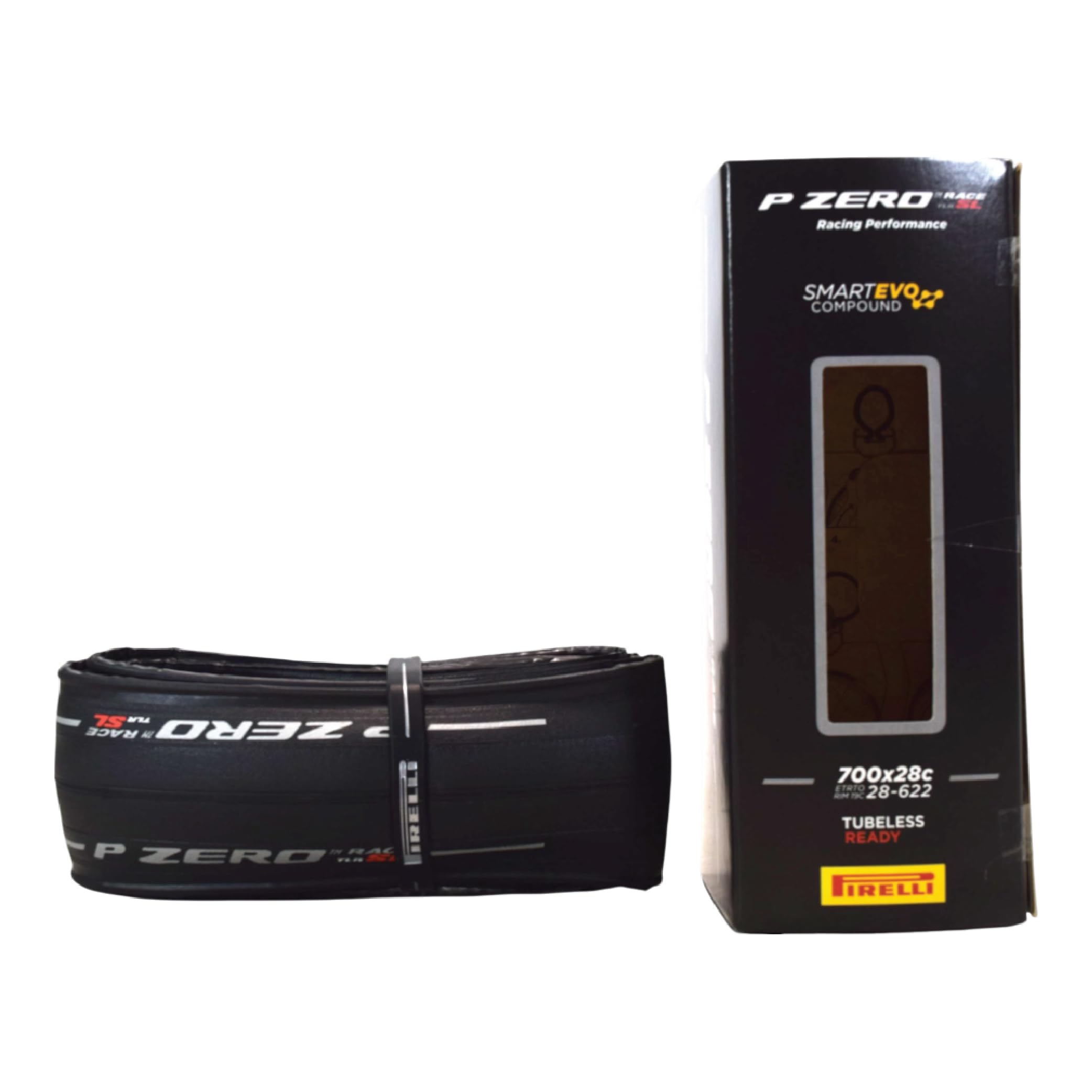
The no-nonsense road tire that delivers smooth speed and solid puncture resistance for daily miles.
The P7 Sport is Pirelli’s everyday workhorse, delivering a smooth road ride with great grip and good performance. Reviewers point out no flats after 500 miles, with one rider logging 2,000 miles on the rear and 3,000 on the front, calling it better than GP5000s. That kind of longevity makes this a smart buy for commuters and club riders.
At 700x26c (26-622), it fits tight frames and rolls fast. One owner describes it as a smooth, fast upgrade over stock Bontrager tires, with solid puncture resistance on NYC roads. The trade-off: some riders report sidewall tears from potholes and broken pavement, and installation gets mixed feedback — some find it easy, others find it a struggle.
It’s a 1.1-inch wide tire at 300 g, built for everyday durability rather than race-day ultralight weight. If you want a tire that disappears into your ride and just works, this is it. The tan sidewall option adds a classic look that owners appreciate.
Its Strengths
- Fast and grippy with a smooth ride
- Long lifespan — up to 3,000 miles on the front
- Great value versus premium race tires
The Challenges
- Installation is hit-or-miss
- Sidewall tears possible on rough roads
Best for: everyday riders who want dependable speed and durability without the race-day price tag.
Consider alternatives if: your roads are full of potholes and you need maximum puncture armor.
8. HEB VIPERESS Fat Tire
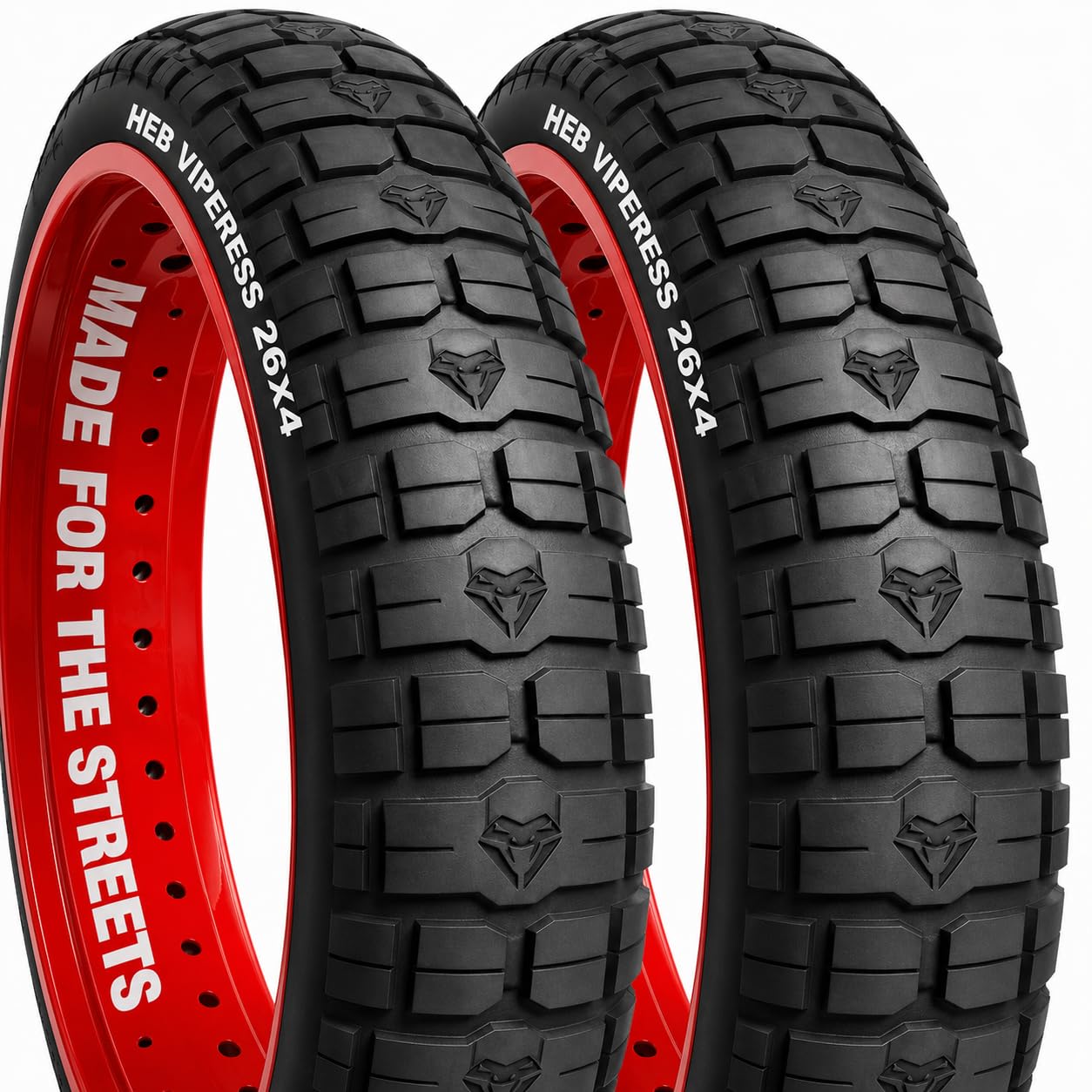
The 4-inch-wide fat tire that turns an ebike into an all-terrain cruiser.
At a massive 4 inches wide, the VIPERESS is built for fat bikes and ebikes that need serious footprint. Owners call it well-built, smooth on roads, and surprisingly quiet — one rider notes the tread is great for dirt paths and quieter than previous knobby tires. Shoppers say 4000+ miles of durability, making it a long-lasting choice.
The knobby tread handles street and trail riding, and the tubeless designation means it’s ready to run sealant. One owner reports “insane grip” but notes it’s heavy at roughly 4.5 pounds, which can reduce top speed — the classic trade-off with fat tires. Installation is split between easy and painful, with zip-tie shipping that can deform the tire until it’s warmed and cycled.
Puncture resistance gets mixed feedback: some find them tough, while others report punctures that sealant failed to fix. The included 2 tires (26×4) are a solid value for a bike that needs serious rubber. If you ride an ebike and want stability and grip above all else, this is worth a look.
What Stands Out
- Smooth, quiet ride on pavement and dirt
- Insane grip on trails
- Impressive reported durability
The Trade-Offs
- Heavy — reduces top speed
- Puncture resistance is inconsistent
Grab these if: you ride a fat-tire ebike and want a smooth, quiet, all-terrain upgrade.
Think twice if: you need maximum puncture protection or weigh speed above stability.
9. Continental Grand Prix 5000 S TR

The race-day tire that’s lighter, faster, and tougher than the standard it replaced.
The Grand Prix 5000 S TR is the new standard in road tubeless technology, and owners call it the best tire they’ve owned in 25 years of riding. The BlackChili Compound blends synthetic and natural rubber for tune grip and rolling speed, while the Vectran Breaker — made from liquid crystal polymer — offers cut protection that’s lighter and stronger than nylon. One owner reports a 2mph speed gain in zone 2 efforts.
At 700×25 with a 73 psi tensile strength, it’s built for speed. The LazerGrip tread has micro-profile shoulders for outstanding cornering control, and Active Comfort Technology (ACT) adds vibration damping for a smoother ride. Buyers report 3000+ miles per set with no abnormal wear, exceptional for a performance tire.
The 2-pack includes two tires, and it’s Tubeless Ready. The honest downside: the fit is extremely tight. One owner says it can break tire levers during installation. But that tight fit means the tire stays put. If you want race-day speed with real durability, this is the benchmark.
Why It’s the Benchmark
- Extremely low rolling resistance
- Vectran Breaker for lightweight cut protection
- 3000+ miles per set with no abnormal wear
The Frustration
- Extremely tight fit can break tire levers
- Transparent sidewall look isn’t for everyone
Choose this if: you race or ride fast and want the best combination of speed, grip, and durability.
Pass if: you hate struggling with tire installation and want a quick mount.
Understanding the Specs
Tubeless Ready Explained
Tubeless-ready tires are built to run without an inner tube. The bead locks into your rim and sealant inside the tire plugs small punctures automatically. You still need to add sealant — the tire isn’t airtight on its own. This setup means fewer flats and lets you run lower pressure for more grip and comfort.
Casing TPI and Sidewall Protection
TPI (threads per inch) describes how tightly woven the casing fabric is. Higher TPI means a lighter, more supple tire, while lower TPI means tougher, more puncture-resistant rubber. Sidewall protection layers like EXO, ShieldWall, and GravityShield add cut resistance where trail debris strikes — worth the extra weight on rocky terrain.
FAQ
What does tubeless-ready actually mean?
Do I need special rims for tubeless tires?
Will a 27.5-inch tire fit a 29-inch wheel?
What’s the difference between tubeless-ready and tubeless-easy?
How long do tubeless tires last?
Can I use a tubeless-ready tire with a tube?
What sealant should I use?
Is a wider tire always better?
What does the E25 rating mean on a tire?
Can I use a mountain bike tire on my road bike?
Final Thoughts: The Verdict
For most riders, the tubeless-ready bike tires winner is the Maxxis Minion DHR II because it delivers race-winning grip and durability that owners consistently praise across rocky and desert terrain. If you want a versatile trail tire that rolls smoothly on pavement, grab the Continental Cross King. And for road riders chasing race-day speed, the Continental GP 5000 S TR is the one to reach for. Every pick on this list has earned its place through real owner feedback — pick the one that matches your terrain and ride on.
How We Picked
We do not accept paid placement. Every pick is matched to a real buyer and a real use-case; we do not hands-on test units.
Sources & Methodology
Specifications: manufacturer listings and product documentation. Review insights: verified customer reviews, as of August 2026. Pricing: not shown on this page (it changes often); check the current price via the retailer link.
As an Amazon Associate, GoCarLife earns from qualifying purchases. This does not affect which products we feature.