
Our readers keep the lights on and the garage heater humming. As an Amazon Associate, I earn from qualifying purchases.
Hey there, fellow gearheads and shutterbugs! Ever tried to capture that perfect gleam off a freshly waxed hood, or the dynamic lines of a classic cruising down the highway, only to find your photos just don’t do it justice? It’s a common frustration, and I get it. Your ride deserves to be immortalized with the same passion you have for it, and the right lens is absolutely crucial to making that happen.
I’m Mo Maruf — the founder and writer behind Go Carlife. This guide is built on each lens’s published specifications and Amazon listing data — focal length, maximum aperture, mount, filter thread and weight — so you can check every number here against the product page.
The lens you choose can dramatically transform a mere snapshot into a breathtaking work of art, highlighting every curve and shadow with precision and depth. For automotive photographers seeking to capture vehicles with breathtaking clarity and artistic flair, this guide reveals the best lens for car photography available today.
How To Choose The Best Lens For Car Photography
Selecting the perfect lens for capturing your automotive passion isn’t just about megapixels; it’s about matching the right tool to your vision. Whether you’re aiming for dramatic wide-angle shots that encompass the entire scene or sharp telephoto details of an emblem, understanding a few key factors will make all the difference.
Focal Length & Perspective
The focal length dictates your perspective. Wide-angle lenses (14-35mm) are fantastic for showing a car in its environment, capturing expansive car show scenes, or creating dynamic, slightly distorted close-ups that emphasize speed or scale. Standard lenses (50mm) offer a natural, true-to-life perspective, perfect for classic portraits of vehicles. Telephoto lenses (85mm-300mm+) compress the background, making subjects stand out, ideal for isolating a car from a busy backdrop, capturing rolling shots, or getting intricate details from a distance. Consider what kind of story you want your photos to tell.
Aperture & Lighting Control
A lens’s maximum aperture (e.g., f/1.4, f/2.8, f/4) is crucial for controlling depth of field and low-light performance. A wider aperture (smaller f-number) creates a shallower depth of field, blurring out backgrounds beautifully to make your car pop – a dream for vehicle portraits. It also lets in more light, allowing for faster shutter speeds in dim conditions, which is essential for freezing motion or shooting indoors. For crisp, all-in-focus shots of cars in a landscape, a narrower aperture (larger f-number) might be preferred, but a fast lens offers versatility.
Autofocus Speed & Build Quality
When shooting moving vehicles or quickly changing scenes, rapid and accurate autofocus is non-negotiable. Look for lenses with advanced AF motors. Durability is also key; automotive photographers often work outdoors, so a robust build quality and weather sealing can protect your investment. Consider the weight and balance with your camera body, especially for handheld shooting over long periods.
Quick Comparison
On smaller screens, swipe sideways to see the full table.
| Model | Type | Best For | Key Feature | Amazon |
|---|---|---|---|---|
| Nikon 24-120mm f/4G ED VR AF-S NIKKOR | Zoom | Overall Versatility | Constant f/4 aperture, VR II | Amazon |
| Nikon AF-S FX NIKKOR 85mm f/1.4G | Prime | Pro Portraits | Ultra-fast f/1.4 aperture | Amazon |
| Nikon AF-S NIKKOR 200-500mm f/5.6E ED VR | Super Zoom | Long Range | 500mm reach, f/5.6 constant aperture | Amazon |
| Nikon AF FX NIKKOR 28mm f/1.8G | Wide Prime | Dynamic Wide | Fast f/1.8 aperture, Nano Crystal Coat | Amazon |
| Rokinon AF 14mm F2.8 Ultra Wide Lens | Ultra-Wide | Immersive Views | 113.9° angle of view, F2.8 aperture | Amazon |
| Nikon AF-S DX NIKKOR 55-300mm f/4.5-5.6G ED VR | Telephoto Zoom | Budget Telephoto | 5.5x zoom, VR II Image Stabilization | Amazon |
| Meike 85mm F1.8 SE II Lens | Prime | Affordable Bokeh | Large f/1.8 aperture, STM autofocus | Amazon |
| Altura Photo 8mm f/3.0 Professional Wide Angle Lens Aspherical Fisheye | Fisheye | Creative Angles | 180° fisheye view, metal build | Amazon |
| YONGNUO YN35mm F2 Lens | Wide Prime | Versatile Prime | F/2 aperture, AF/MF modes | Amazon |
| Canon EF 75-300mm f/4-5.6 III Telephoto Zoom Lens | Telephoto Zoom | Beginner Zoom | 75-300mm range, lightweight | Amazon |
| YONGNUO YN50mm F1.8 Lens | Standard Prime | Classic Nifty | F/1.8 large aperture, auto focus | Amazon |
| Sigma 24-70mm F2.8 DG DN Art (Sony E) | Zoom | Pro Standard Zoom | Constant f/2.8, 82mm filter, 830g | Amazon |
| VILTROX 35mm F1.8 II EVO FE | Prime | Fast Wide Prime | f/1.8 APO design, 0.34m close focus | Amazon |
| Tamron 70-300mm f/4.5-6.3 Di III RXD | Telephoto | Track Telephoto | 545g, moisture-resistant, 6-year warranty | Amazon |
In‑Depth Reviews
1. Nikon 24-120mm f/4G ED VR AF-S NIKKOR

This Nikon 24-120mm f/4G ED VR AF-S NIKKOR lens is a true workhorse for any automotive photographer looking for versatility without compromise. With its constant f/4 aperture across the entire zoom range, you get consistent exposure and beautiful background separation, whether you’re shooting a wide scene or a tighter detail. The Vibration Reduction (VR II) system is a game-changer, allowing for sharp handheld shots even in challenging lighting conditions, making it perfect for dynamic car shows or capturing vehicles on the move.
Nikon builds this one around 2 extra-low dispersion elements and 3 aspherical elements, with Nano Crystal Coat to cut ghosting and flare and a rounded 9-blade diaphragm for the out-of-focus areas. A Silent Wave Motor drives autofocus, an M/A switch hands you manual override without a delay, and internal focusing keeps the barrel length fixed as it focuses. Nikon rates the VR II system at up to 4 stops, closest focus is 0.45m, and the lens weighs 710g on the Nikon F (FX) mount. In the box you get the CL-1218 soft case, the HB-53 bayonet hood and front and rear caps. On Amazon it averages 4.5 stars from 779 ratings.
For enthusiasts and professionals alike, this lens delivers exceptional image quality and practical functionality. It’s ideal for those who need a single lens that can cover a broad spectrum of car photography needs, from capturing the full grandeur of a classic car rally to isolating intricate design elements. Its balance of performance, features, and price makes it a truly outstanding choice for any serious automotive photographer.
Why it’s great
- 2 ED elements, 3 aspherical elements and Nano Crystal Coat
- Constant f/4 aperture across zoom range
- Effective VR II image stabilization
- Versatile focal range for various shots
Good to know
- Listed at 710g before you add a body
- Nikon F (FX) mount, and listed as not water resistant
2. Nikon AF-S FX NIKKOR 85mm f/1.4G

When it comes to isolating your subject with buttery-smooth bokeh and delivering razor-sharp details, the Nikon AF-S FX NIKKOR 85mm f/1.4G is in a league of its own. This ultra-fast prime lens is a dream for automotive portraiture, making cars pop off the background with a stunning three-dimensional quality. The f/1.4 aperture allows for incredible low-light performance and the ability to blur distracting elements into a creamy oblivion, focusing all attention on the vehicle.
The spec sheet is straightforward: a single 85mm focal length, f/1.4 wide open down to f/16, a 9-blade diaphragm and a 77mm front filter thread. Nano Crystal Coat and Nikon’s Super Integrated Coating handle flare, an ultrasonic motor with internal focusing is what Nikon credits for fast, quiet autofocus, and an M/A switch lets you grab the focus ring mid-shot. It weighs 595g, focuses no closer than 0.85m, and covers FX, DX and FX-in-DX-crop bodies. Amazon shoppers have it at 4.7 stars from 355 ratings, and Nikon covers it for one year on parts and labour.
If your goal is to create impactful, artistic portraits of vehicles, showcasing their form and design with exquisite detail and a beautifully blurred background, this 85mm f/1.4G is an indispensable tool. It’s perfectly suited for car show photography, studio shots, or any scenario where you want to emphasize the car as a singular, striking subject.
Why it’s great
- Exceptional f/1.4 aperture for bokeh and low light
- Nikon lists it as optimized for edge-to-edge sharpness on FX and DX
- Fast and quiet autofocus
- Ships with the CL-1118 case, HB-55 hood and front and rear caps
Good to know
- No image stabilization (common for fast primes)
- Higher price point due to premium optics
3. Nikon AF-S NIKKOR 200-500mm f/5.6E ED VR
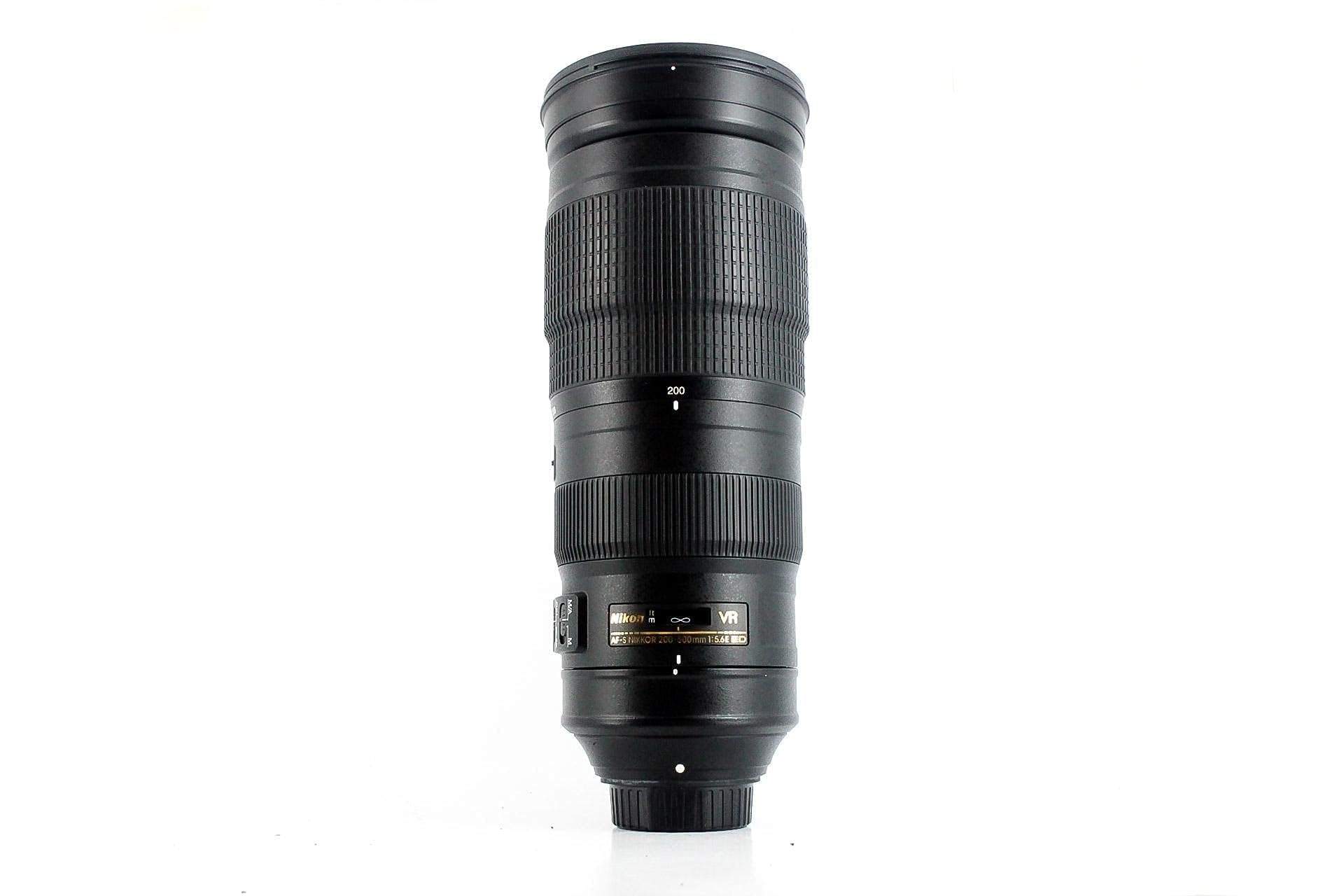
For those times you need serious reach, whether it’s capturing race cars on a track or wildlife-style shots of vehicles in their natural habitat, the Nikon AF-S NIKKOR 200-500mm f/5.6E ED VR is an outstanding choice. This super-telephoto zoom runs the full 200mm to 500mm on Nikon’s F mount, bringing distant subjects right into view. The constant f/5.6 aperture is what keeps exposure steady and the background soft across the whole range, and the listing specifies optical image stabilisation, although it does not quote a stop rating. It holds a 4.4-star average across 271 Amazon ratings.
The optical package is built around a 9-blade diaphragm and Nikon’s Nano Crystal Coating. Focusing runs through Nikon’s Internal Focusing system, with a Silent Wave Motor for autofocus and a separate ring for manual focus, and the listed shooting modes include a Sport setting for following the action. It is a big lens — Nikon lists it at 2,090g — which is the trade you make for a constant f/5.6 all the way out to 500mm.
This lens is perfect for photographers who need to capture detailed shots of vehicles from a significant distance, such as motorsports events, car rallies, or even spotting rare classic cars on the open road. Its telephoto compression and ability to isolate subjects make it a powerful tool for creating dramatic and focused automotive images, and the 2.5:1 zoom ratio means one lens covers everything from pit-lane portraits to the far end of the back straight.
Why it’s great
- Exceptional telephoto reach up to 500mm
- Constant f/5.6 aperture for consistent exposure
- Optical image stabilisation listed on the spec sheet
- Silent Wave Motor autofocus with a separate manual focus ring
Good to know
- It is a heavy lens at 2,090g, often requiring a monopod/tripod
- Takes large front filters — the listing gives a 9.5cm (95mm) filter size
4. Nikon AF FX NIKKOR 28mm f/1.8G

For automotive photographers who love to capture vehicles within their environment, showcasing sweeping backdrops or dynamic perspectives, the Nikon AF FX NIKKOR 28mm f/1.8G is a standout choice. This fast, wide-angle prime lens offers a versatile focal length that’s wide enough for environmental shots without introducing excessive distortion, making it perfect for capturing cars on scenic roads or in urban landscapes. The f/1.8 aperture is fantastic for low-light conditions and creating a subtle, pleasing background blur, even at a wider angle.
The optical design uses aspherical elements with Nikon’s Nano Crystal Coat and Super Integrated Coating, which is what Nikon credits for keeping ghosting and flare down — useful when you are shooting cars with reflective surfaces or straight into a low sun. A ring-type ultrasonic Silent Wave Motor drives autofocus, an M/A switch hands you manual override, and rear focusing means the barrel does not change length as it focuses. The aperture runs f/1.8 to f/16 through a 7-blade diaphragm, the front filter thread is 67mm, and Nikon lists the lens at 330g and roughly 73mm by 80.5mm — genuinely compact for a fast wide prime. It carries a 4.4-star average from 264 Amazon ratings.
This 28mm prime is ideal for creative automotive photographers who want to tell a broader story, placing the vehicle in context with its surroundings. It excels at capturing the atmosphere of car meets, the grandeur of a vehicle against a stunning landscape, or dynamic low-angle shots that emphasize a car’s aggressive stance. It’s a lens that encourages creativity and delivers professional-grade results.
Why it’s great
- 67mm filter thread on a 330g barrel
- Fast f/1.8 aperture for low light and subtle bokeh
- Nano Crystal Coat reduces flare and ghosting
- Silent Wave Motor autofocus with M/A manual override
Good to know
- Fixed focal length requires “zooming with your feet”
- No image stabilisation, and listed as not water resistant
5. Rokinon AF 14mm F2.8 Ultra Wide Lens

For those who want to push the boundaries of perspective and capture entire scenes with dramatic flair, the Rokinon AF 14mm F2.8 Ultra Wide Lens for Sony E-mount cameras is a fantastic tool. This lens offers an expansive 113.9° angle of view, perfect for showcasing a car within a vast landscape, capturing entire car show booths, or creating dynamic, slightly exaggerated close-ups that emphasize the vehicle’s presence. The bright F2.8 aperture makes it suitable for low-light environments and helps create appealing background separation, even at such a wide focal length.
The body is aluminium alloy with a built-in petal-style hood that shields the front element, and the optical formula runs 14 elements in 10 groups — three aspherical and two extra-low dispersion — under Rokinon’s Ultra Multi-Coating. Autofocus comes from an internal motor built to work with Sony’s hybrid focusing system, with manual override on tap, and the aperture spans F2.8 to F22 through a rounded 7-blade diaphragm. It focuses down to 7.9 inches (0.20m), covers full-frame and APS-C sensors, and carries a one-year manufacturer warranty. On Amazon it averages 4.2 stars from 182 ratings.
This Rokinon 14mm lens is an excellent addition for automotive photographers looking to experiment with unique perspectives and create highly immersive images. It’s particularly well-suited for capturing car interiors, dramatic low-angle shots, or wide environmental portraits where the car is a key element in a grander scene. It delivers professional results and encourages a fresh approach to vehicle photography.
Why it’s great
- Expansive 113.9° ultra-wide angle of view
- Bright F2.8 aperture for low light
- 14 elements in 10 groups, with three aspherical and two ED
- Fast and accurate autofocus for Sony E-mount
Good to know
- No image stabilisation, so you lean on the body
- Sony E-mount only — no Canon or Nikon fit
6. Nikon AF-S DX NIKKOR 55-300mm f/4.5-5.6G ED VR

For Nikon DX-format users seeking a versatile telephoto zoom without breaking the bank, the Nikon AF-S DX NIKKOR 55-300mm f/4.5-5.6G ED VR lens is an excellent value. This lens provides a substantial 5.5x zoom range, taking you from a standard view all the way to a powerful telephoto, perfect for capturing distant details of vehicles, tracking cars in motion, or compressing backgrounds for artistic effect. The built-in VR II Image Stabilization is a huge asset, helping to keep your shots sharp even at the longer focal lengths where camera shake is most noticeable.
Nikon’s spec sheet puts two extra-low dispersion elements and an HRI element in the optical path, with a Silent Wave Motor for autofocus and a 9-blade diaphragm. VR II is quoted at 4 stops and includes tripod detection, the filter thread is 58mm, and the lens focuses no closer than 4.6 feet (1.4m). The aperture runs f/4.5-5.6 wide open down to f/32, it mounts on Nikon F DX bodies, and Nikon lists it at 1.3 pounds with a one-year parts and labour warranty. It is also the most-reviewed Nikon lens in this guide, averaging 4.6 stars across 5,533 Amazon ratings.
This lens is an ideal choice for budding automotive photographers on a budget who want to explore telephoto photography. It’s particularly well-suited for capturing details from a distance, isolating vehicles from busy backgrounds, or experimenting with different perspectives at car events. It offers fantastic value, allowing you to get closer to the action and achieve more dynamic shots.
Why it’s great
- Extensive 55-300mm zoom range
- Effective VR II Image Stabilization
- Two ED elements plus an HRI element in the design
- Listed at 1.3 pounds with a common 58mm filter thread
Good to know
- Variable aperture means it’s less ideal in low light
- Nikon F DX mount, and listed as not water resistant
7. Meike 85mm F1.8 SE II Auto Focus Portrait Lens
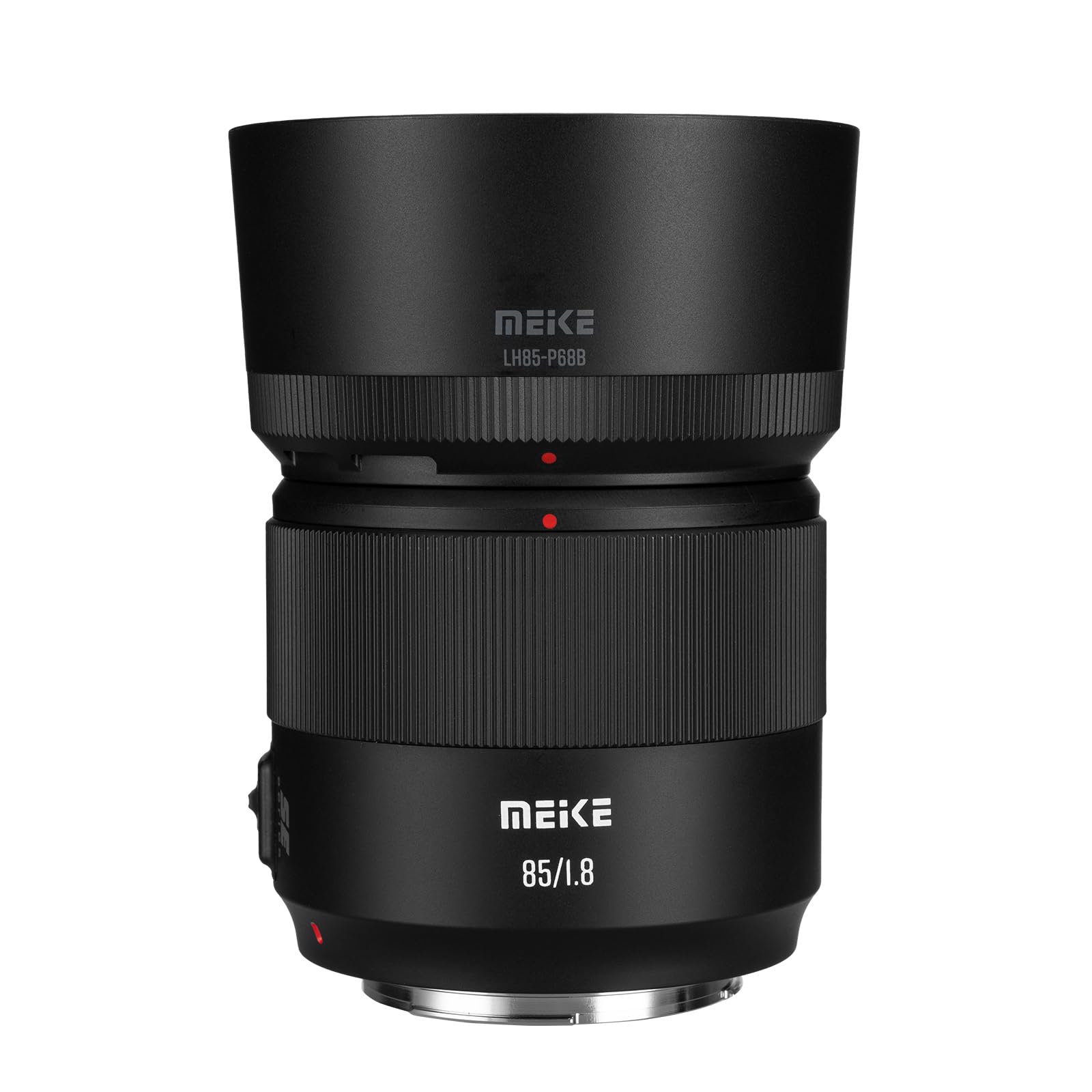
The Meike 85mm F1.8 SE II gives Canon EF shooters the classic portrait focal length with a genuinely fast aperture for a fraction of what a first-party 85mm costs. On a full-frame body that f/1.8 opening throws a busy paddock or a cluttered car park completely out of focus, which is exactly what you want when the subject is a single car and everything behind it is noise.
Autofocus runs on an STM stepping motor, which Meike rates as fast, accurate and quiet enough for video as well as stills. The optical formula is 11 elements in 7 groups with an ED element and a high-refraction element, multi-coated on both sides to hold down chromatic aberration, flare and ghosting — which matters when you are shooting chrome trim and clear coat under low sun. The diaphragm has nine blades and stops down to f/16.
It mounts on Canon EF full-frame and APS-C DSLRs — 5D Mark IV, 6D Mark II, 90D, 80D, 7D, T8i and the rest of that family — and Meike says it will also run on EOS R bodies through an EF-EOS R adapter. Firmware updates go over a USB-C port, though Meike notes the updater is Android-only, not Mac. There is no image stabilisation, so keep an eye on shutter speed handheld. It currently holds a 4.9-star average from 15 Amazon ratings.
Why it’s great
- Fast f/1.8 aperture for creamy background separation
- Quiet, accurate STM autofocus that is also usable for video
- ED elements and multi-coating control chromatic aberration and flare
- Full-frame and APS-C Canon EF compatibility
- USB-C port for official firmware updates
Good to know
- No image stabilisation
- Canon EF mount — EOS R bodies need an EF-EOS R adapter
- Newer release, so the rating count is still small
8. Altura Photo 8mm f/3.0 Professional Wide Angle Lens Aspherical Fisheye

For automotive photographers who love to inject a unique, artistic flair into their shots, the Altura Photo 8mm f/3.0 Professional Wide Angle Aspherical Fisheye Lens is an exciting option for Canon DSLR users. This fully manual fisheye lens delivers a stunning 180° field of view, creating dramatic distortion and an immersive perspective that can make a car look incredibly dynamic and impactful. It’s a fantastic tool for capturing the entire interior of a vehicle, a sweeping car show scene, or a truly unique exterior shot.
Altura builds it with metal lens construction, a hybrid aspherical element and multi-layer coating, and ships it with a removable hood and a custom protective case. Everything is manual — the listing specifies manual focus and manual exposure control — and the aperture sits at f/3.0 through a 6-blade diaphragm. It weighs 1.1 pounds and covers a 180-degree angle of view on Canon EF and EF-S bodies. Fit it to a full-frame camera and Altura warns you will get a circular image with black vignette borders instead, and it is not compatible with Canon’s R and M mirrorless bodies. On Amazon it averages 4.3 stars from 592 ratings.
This fisheye lens is perfect for the creative automotive photographer who wants to stand out from the crowd. It’s not a general-purpose lens, but for specific artistic shots, capturing unique perspectives of car interiors, or creating a sense of grand scale at events, it’s an incredibly rewarding tool. If you’re looking to add a distinctive visual signature to your car photography, this Altura Photo fisheye is a great value.
Why it’s great
- Dramatic 180° fisheye perspective
- Solid metal build quality
- Hybrid aspherical element and multi-layer coating
- Removable hood and a custom protective case included
Good to know
- Manual focus and aperture only
- Significant distortion (inherent to fisheye design)
9. YONGNUO YN35mm F2 Lens

The YONGNUO YN35mm F2 Lens offers Canon EF mount users a highly versatile wide-angle prime at an incredibly accessible price point. A 35mm focal length is a favorite among many photographers for its natural perspective, making it excellent for environmental car portraits, street photography capturing vehicles in urban settings, or even interior shots of larger vehicles. The f/2 aperture provides good low-light performance and the ability to create pleasing background blur, allowing your automotive subjects to stand out.
The numbers behind it are modest but sensible: a 5-group, 7-element multi-coated design, a 7-blade diaphragm, an aperture range of f/2 to f/22 and a 63-degree diagonal angle of view. It focuses to 0.25m (0.8ft) for a 0.23x maximum magnification, takes 52mm filters, measures about 73mm by 59mm and weighs 180g. Yongnuo uses a chrome metal bayonet and gold-plated contacts, supports both autofocus and manual focus, and writes aperture data into the EXIF. On Amazon the lens averages 4.2 stars from 2,394 ratings.
This 35mm prime lens is an excellent choice for automotive photographers who want to experiment with a classic focal length without a significant investment. It’s versatile enough for a wide range of scenarios, from capturing the full scene at a car meet to more intimate details. If you’re looking for a capable and affordable wide-angle prime to add to your Canon kit, the YN35mm F2 is certainly worth considering.
Why it’s great
- Versatile 35mm focal length
- Good f/2 aperture for low light and bokeh
- 52mm filter thread and 0.25m minimum focus
- Metal lens mount for durability
Good to know
- Canon EF mount only — no Nikon or Sony fit
- No hood in the box — lens, caps and manual only
10. Canon EF 75-300mm f/4-5.6 III Telephoto Zoom Lens

For Canon SLR users just dipping their toes into telephoto photography, the Canon EF 75-300mm f/4-5.6 III Telephoto Zoom Lens offers an incredibly accessible entry point. This lens provides a substantial zoom range, allowing you to capture distant automotive subjects, compress backgrounds for a more dramatic look, or get tighter shots of details from a comfortable distance. It’s a lightweight option that won’t weigh down your camera bag, making it a good companion for car shows or casual outdoor shoots.
The optical system is 13 elements in 9 groups with Canon’s Super Spectra Coating, and Canon says it is the same system used in the 75-300mm USM version — the difference is that this III drives autofocus with a DC motor instead of a USM. There is no image stabilisation. It focuses no closer than 4.9 feet, takes 58mm filters, covers a diagonal angle of view from 32 to 8 degrees, and weighs 16.8 ounces in a barrel 2.8 inches across and 4.8 inches long. Canon backs it with a one-year limited warranty, and on Amazon it averages 4.7 stars from 5,817 ratings — the biggest rating count in this guide.
This lens is perfectly suited for new automotive photographers who want to experiment with telephoto perspectives without a large financial commitment. It’s great for capturing cars at a track from the stands, taking rolling shots (with good technique), or simply getting closer to the action at a car meet. It provides a solid foundation for developing telephoto photography skills and understanding how focal length affects your automotive compositions.
Why it’s great
- Very affordable entry into telephoto photography
- Broad 75-300mm zoom range
- Listed at 16.8 ounces and 4.8 inches long
- 58mm filter thread and 4.9ft closest focus
Good to know
- Lacks image stabilization
- Autofocus runs on a DC motor rather than Canon’s USM
11. YONGNUO YN50mm F1.8 Lens

The YONGNUO YN50mm F1.8 Lens is often dubbed the “nifty fifty” for Canon EF mount, and for good reason: it offers an incredibly fast f/1.8 aperture at an unbelievably low price. This standard prime lens is a fantastic tool for automotive photographers, providing a natural perspective that closely mimics human vision, making it excellent for classic car portraits, details, or capturing vehicles in their environment without distortion. The wide aperture excels in low light and creates beautiful, creamy background blur, making your car the undeniable star of the shot.
Yongnuo keeps the spec sheet simple: a 5-group, 6-element multi-coated design, a 6-blade diaphragm, f/1.8 down to f/22 and a 46-degree diagonal angle of view. Minimum focus is 0.45m, and the lens supports both autofocus and manual focus on full-frame and APS-C Canon EOS bodies in M, Av, Tv and P modes, writing aperture data into the EXIF. Gold-plated metal contacts and a one-year warranty round it out. On Amazon it averages 4.4 stars from 5,361 ratings.
If you’re looking for an affordable way to achieve professional-looking car photos with stunning background blur and excellent low-light capability, the YONGNUO YN50mm F1.8 is an absolute must-have. It’s perfect for capturing classic car portraits, isolating intricate details like emblems or wheels, and experimenting with a prime lens’s unique perspective. This lens offers tremendous value, making high-quality automotive photography accessible to everyone.
Why it’s great
- Extremely fast f/1.8 aperture for bokeh and low light
- Multi-coated 5-group, 6-element design, f/1.8 to f/22
- Works on full-frame and APS-C Canon EOS bodies
- Natural 50mm perspective
Good to know
- Canon EF mount only — no Nikon or Sony fit
- No image stabilisation, and no hood in the box
12. Sigma 24-70mm F2.8 DG DN Art (Sony E)

If you can only carry one lens to a car shoot, a fast 24-70mm is the one that comes home with usable frames every time. Sigma’s 24-70mm F2.8 DG DN sits in the company’s Art line and covers the whole working range of automotive work on a Sony E-mount full-frame body: 24mm is wide enough for a low three-quarter hero shot or a cabin shot from the passenger footwell, and 70mm tightens up to badge, wheel and headlight detail without distorting the car’s proportions.
The constant f/2.8 is what makes it a rolling-shot lens rather than just a walkaround. The aperture does not drift as you zoom, so exposure stays put while you pan alongside a moving car, and the extra stop over an f/4 zoom buys shutter speed in a dim car park or a covered paddock. It stops down to f/22 when you want the whole scene sharp, and the 3:1 zoom ratio starts from an 84.1-degree angle of view at the wide end.
Physically it is a serious piece of glass: 830 grams, an 82mm front filter thread, and a build that matches the price. It is made in Japan and carries a four-year warranty, and it holds a 4.8-star average across 2,015 Amazon ratings.
Why it’s great
- Constant f/2.8 across the whole 24-70mm range
- One lens covers wide interiors through tight detail shots
- 4.8-star average from 2,015 Amazon ratings
- Art-series build, made in Japan, four-year warranty
Good to know
- Heavy at 830g, and it takes big 82mm filters
- Sony E-mount full-frame only — no Nikon or Canon fit
- Listed as not water resistant
13. VILTROX 35mm F1.8 II EVO FE
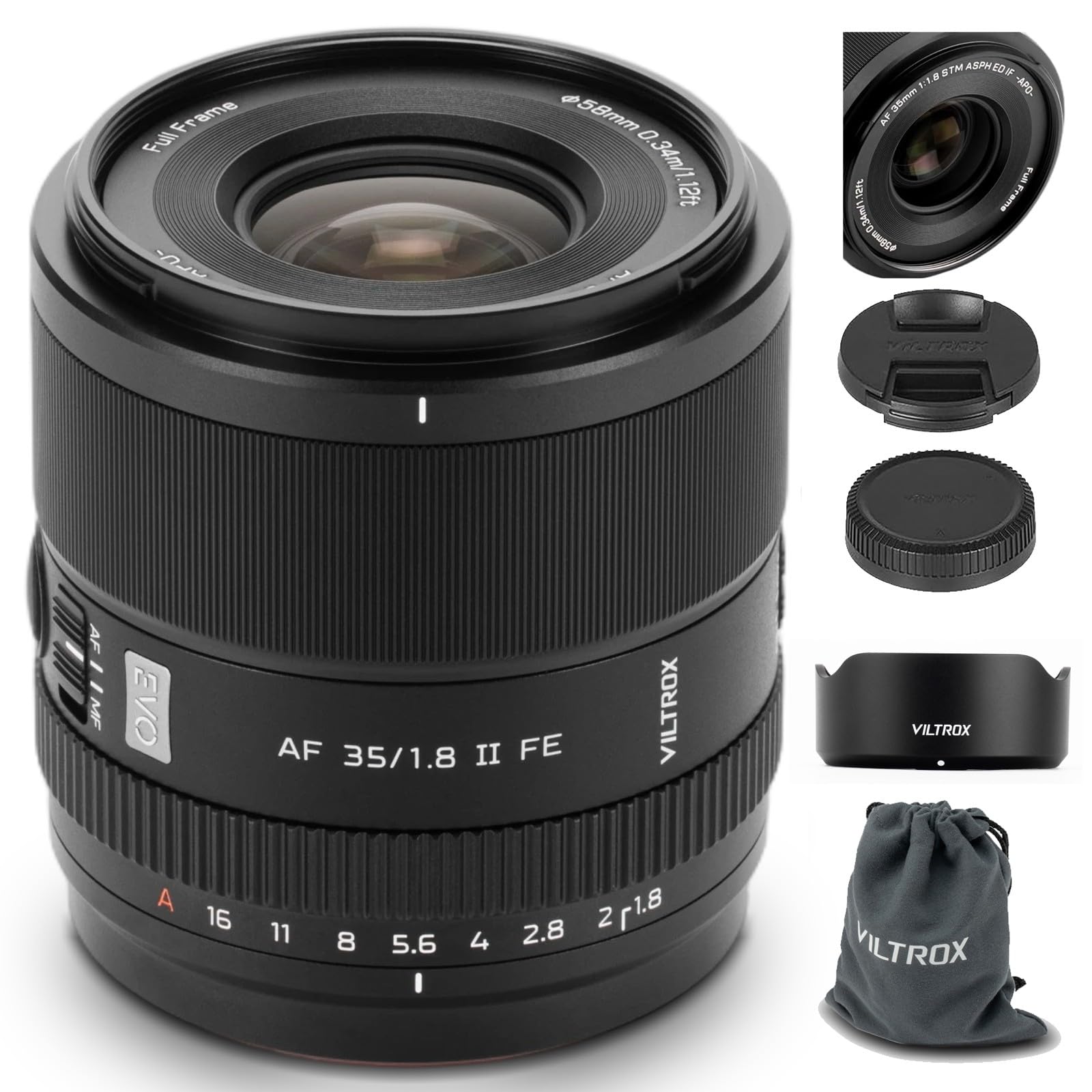
A 35mm prime is the classic car-photography focal length: wide enough to place a car in its surroundings, tight enough that the proportions still read correctly. Viltrox’s 35mm F1.8 II EVO FE is a full-frame Sony E lens built around an APO design — 13 elements in 10 groups including two ED, three HR and one UA element — aimed squarely at keeping colour clean and detail crisp.
The f/1.8 aperture is the reason to reach for it after dark. Underground car parks, dusk rollers and lit night shoots are exactly the conditions Viltrox pitches it at: the listing promises cleaner, lower-noise files indoors, at dusk and in low light. Minimum focus is 0.34m, close enough to fill the frame with a wheel or a badge without swapping to a macro, and the aperture stops down to f/16.
Handling is better than the price suggests: there is a dedicated Fn button, a CLICK switch for the aperture ring and an AF/MF switch, with an STM stepping motor driving autofocus. Viltrox also lists a rubber-sealed mount and a water- and smudge-resistant front element. The item weight is given as 0.33kg — the manufacturer’s own description quotes about 355g for the bare lens — and it takes 58mm filters and ships with a hood, pouch, caps and a cleaning cloth. The listing carries a 4.6-star average across 450 Amazon ratings.
Why it’s great
- Bright f/1.8 aperture for low light and night shoots
- APO optical design with ED, HR and UA elements
- 0.34m minimum focus for badge and wheel detail
- Fn button, CLICK switch and AF/MF switch on the barrel
- Listed at 0.33kg and takes common 58mm filters
Good to know
- No image stabilisation — you lean on in-body IS
- Fixed 35mm view, so you zoom with your feet
- Sony E-mount only
14. Tamron 70-300mm f/4.5-6.3 Di III RXD
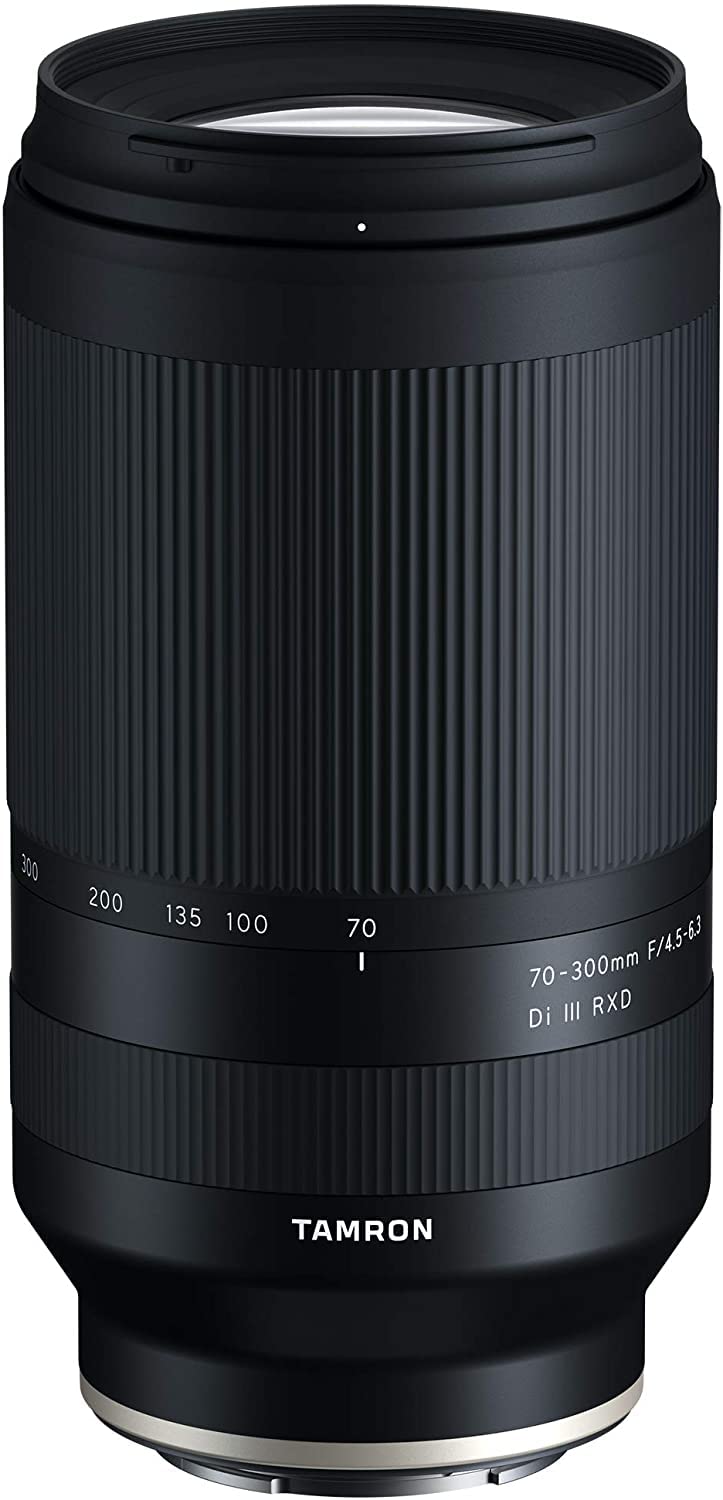
Track days and hillclimbs are where a telephoto earns its keep, and the Tamron 70-300mm f/4.5-6.3 Di III RXD is the lightest sensible way to get 300mm onto a Sony E-mount body. It weighs 545 grams — 1.2 pounds — which is the whole point: you can hold it up through a full session at a fence line without a monopod, and it does not fight you when you pan.
Optically it runs 15 elements in 10 groups with Tamron’s BBAR coating to hold back flare when you are shooting into low sun across a circuit. The RXD stepping motor drives autofocus quietly and quickly, which matters when you are tracking a car through a corner, and the 4.29:1 zoom ratio takes you from a full-car frame at 70mm to a tight driver-and-mirror crop at 300mm without moving your feet.
It is also more usable up close than most telephotos: minimum focus is 31.5 inches at the wide end and 59.1 inches at 300mm, so paddock detail is on the table. Construction is moisture-resistant, it takes common 67mm filters, and Tamron backs it with a six-year USA warranty. It holds a 4.6-star average across 689 Amazon ratings.
Why it’s great
- Only 545g, so handheld panning all day is realistic
- Quiet, quick RXD stepping-motor autofocus
- Moisture-resistant construction for trackside weather
- Common 67mm filter thread
- Six-year Tamron USA warranty
Good to know
- No optical stabilisation — you need a stabilised body
- Variable f/4.5-6.3 aperture gets slow at the long end
- Sony E-mount only
Understanding the Specs
Focal Length
This refers to the distance from the lens’s optical center to the camera’s sensor when the subject is in focus. Shorter focal lengths (e.g., 14mm-35mm) are wide-angle, capturing more of the scene and creating a sense of expansiveness. Longer focal lengths (e.g., 85mm-300mm+) are telephoto, compressing perspective and making distant subjects appear closer. For car photography, a range of focal lengths is useful: wide for environmental shots, standard (around 50mm) for natural perspective, and telephoto for isolating details or capturing moving vehicles.
Aperture
Expressed as an f-number (e.g., f/1.4, f/4, f/16), aperture controls the amount of light entering the lens and the depth of field. A wider aperture (smaller f-number) lets in more light, allowing for faster shutter speeds and creating a shallow depth of field (blurry background, sharp subject). A narrower aperture (larger f-number) lets in less light, requiring slower shutter speeds but producing a greater depth of field (more of the scene in focus). For car photography, a wide aperture is fantastic for isolating a vehicle, while a narrower aperture might be preferred for showcasing a car within its environment.
FAQ
What focal length is best for car photography?
Do I need image stabilization for car photography?
Can I use phone lens attachments for professional car photography?
What is a CPL filter and why is it useful for car photography?
Final Thoughts: The Verdict
For most drivers, the best lens for car photography winner is the Nikon 24-120mm f/4G ED VR AF-S NIKKOR Lens because it pairs a constant f/4 aperture with Nikon’s VR II stabilisation across a 24-120mm range that covers most of what car photography asks for. If you want the widest aperture in this guide, grab the Nikon AF-S FX NIKKOR 85mm f/1.4G Lens. And for distant action at the track, reach for the Nikon AF-S NIKKOR 200-500mm f/5.6E ED VR Zoom Lens.