
Our readers keep the lights on and the garage heater humming. As an Amazon Associate, I earn from qualifying purchases.
Ever hit the road, cranked up your favorite track, and thought, “This could sound so much better?” You’re not alone. The factory audio in most vehicles leaves a lot to be desired, often lacking the clarity, depth, and punch that truly brings music to life. That’s where a Digital Signal Processor (DSP) comes in—it’s the brain of your car audio system, allowing you to sculpt sound with incredible precision.
I’m Mo Maruf — the founder and writer behind Go Carlife. My 15+ years in car audio are built on dissecting countless schematics, analyzing thousands of real-world tuning experiences, and comparing performance data to help you achieve sonic perfection.
Whether you’re battling road noise, correcting speaker placement, or just chasing that perfect bass drop, a quality DSP is your secret weapon for transforming your commute into a concert hall. Achieving unparalleled sonic clarity in your vehicle is now within reach, as this guide presents the best dp for car audio to refine your vehicle’s acoustic environment.
How To Choose The Best DSP For Car Audio
Selecting the right DSP can seem daunting with the array of features and technical jargon. But don’t worry, I’ll break down the crucial aspects to consider, ensuring you pick a unit that truly elevates your in-car sound experience without overcomplicating things.
Inputs and Outputs: Connectivity is Key
The number of input and output channels on your DSP dictates how many speakers and audio sources you can connect and control independently. If you’re running a complex multi-speaker, multi-amplifier setup—think separate tweeters, mid-range, woofers, and subwoofers—you’ll need a DSP with ample output channels. High-level inputs are crucial if you’re retaining your factory head unit, allowing the DSP to accept speaker-level signals directly. RCA inputs are standard for aftermarket head units. Consider if you need digital inputs (like TOSLINK or coaxial) for the absolute cleanest signal path from a high-resolution audio player.
Tuning Capabilities: Precision at Your Fingertips
A DSP’s core value lies in its tuning prowess. Look for extensive equalization (EQ) bands—both graphic and parametric. Graphic EQs offer broad control, while parametric EQs allow you to pinpoint and adjust specific frequencies, ‘Q’ factor (bandwidth), and gain, which is vital for correcting acoustic anomalies in your vehicle. Crossover filters with adjustable slopes (e.g., Butterworth, Linkwitz-Riley at 12, 18, or 24 dB/octave) are essential for directing the right frequencies to the right speakers, preventing distortion and maximizing efficiency. Time alignment is another game-changer, delaying the sound from closer speakers so all sound waves arrive at your listening position simultaneously, creating an incredibly focused soundstage.
Software and Control: Ease of Use
Even the most powerful DSP is useless if it’s too difficult to configure. Many modern DSPs offer Bluetooth connectivity and dedicated smartphone or tablet apps for real-time adjustments from the driver’s seat. Others rely on PC software, which often provides a more detailed graphical interface. Consider your comfort level with technology and whether you prefer wireless convenience or the precision of a laptop connection. Features like saving multiple presets can be incredibly useful for switching between different listening preferences or music genres.
Quick Comparison
On smaller screens, swipe sideways to see the full table.
| Model | Type | Best For | Key Feature | Amazon |
|---|---|---|---|---|
| Rockford Fosgate DSR1 | DSP | Factory Integration | Integrated iDatalink Maestro Module | Amazon |
| Hertz SPL Show S8 DSP | DSP | Hi-Res Audio | 96 kHz / 24-bit resolution, Hi-Res certified | Amazon |
| Banda Audiopart X8AiR | DSP | Advanced Tuning | 79-Band EQ per channel, Bluetooth App | Amazon |
| Marts Digital BTX8-DSP | DSP | Extensive EQ | 32-band graphic + 16-band parametric per output | Amazon |
| JBL DSP4086 | Amp + DSP | All-in-One Solution | 8-Channel Class D Amplifier with DSP | Amazon |
| Expert PX8.2CONNECT | DSP | Bluetooth Control | 8-Channel, 15-Band EQ, 3 Parametric EQ | Amazon |
| Audison bit Ten | DSP | Audiophile Tuning | 31-band graphic EQ, Linkwitz filters | Amazon |
| Dayton Audio DSP-408 | DSP | DIY Customization | 4 Input 8 Output, 10-band parametric EQ | Amazon |
| miniDSP 2×4 HD | DSP | Versatile Application | USB audio DAC, FIR/IIR filters, 4 presets | Amazon |
| AudioControl DM-810 | DSP | Professional Setup | 8 by 10 Channel Matrix, Input/Output RTA | Amazon |
| B2 Audio White 4v 12 Channel DSP | DSP | Multi-Channel Systems | 6-input, 12-output, 96 kHz, 32-bit resolution | Amazon |
| PRV AUDIO DSP 2.8X | DSP | Basic Enhancement | 8 Channel, 15-band graphic EQ, Sequencer | Amazon |
| Timpano TPT-SP4BT | DSP | Compact Control | 4 Output Channel, Bluetooth App, Built-in Voltmeter | Amazon |
| Stetsom STX 2436 Bluetooth DSP PRO | DSP | Wireless Convenience | 12 Band Graphic Equalizer, Bluetooth App | Amazon |
| Unknown DSP | DSP | Budget Starter | Affordable Entry Point | Amazon |
In‑Depth Reviews
1. Rockford Fosgate DSR1

The Rockford Fosgate DSR1 stands out as a top-tier solution for anyone looking to seriously upgrade their car audio while retaining their factory head unit. Its integrated iDatalink Maestro module is a game-changer, allowing seamless integration with Ford and Chrysler vehicles, and preserving all factory controls. This DSP essentially replaces the factory amplifier, providing a clean, flat signal to build your aftermarket system upon.
Owners consistently praise the DSR1 for its extensive customization options, including an impressive 245 bands of equalization and precise time alignment. Many find the companion app (Apple iOS/Android) incredibly intuitive for real-time tuning, though some experienced users prefer a tablet for the larger interface. Drivers appreciate the ability to fine-tune every aspect of their sound, transforming a mediocre factory system into a high-fidelity experience, often citing improved clarity and the signature “Punch EQ boost.”
While the initial setup can involve a learning curve, especially with the multiple programming steps, the effort pays off handsomely. The DSR1 provides eight channels of output, offering immense flexibility for complex speaker configurations, from multi-way component sets to dedicated subwoofer channels. Its robust build quality and comprehensive tuning suite make it an excellent investment for audiophiles and car audio enthusiasts seeking professional-grade results from their existing vehicle setup.
Why it’s great
- Seamless factory head unit integration with iDatalink Maestro.
- Exceptional 245 bands of EQ for precise sound sculpting.
- Intuitive app control for real-time adjustments.
- 8 channels for versatile system configurations.
Good to know
- Initial setup requires patience and attention to detail.
- Bluetooth range can be limited for tuning.
- Requires a robust understanding of audio tuning principles.
2. Hertz SPL Show S8 DSP

The Hertz SPL Show S8 DSP is engineered for those who demand uncompromising audio fidelity. With its 96 kHz / 24-bit resolution and Hi-Res certification from the JAS (Japan Audio Society), this DSP ensures that every nuance of your music is reproduced with stunning clarity. Housed in a durable, corrosion-free metal and composite case, it’s built for the demanding automotive environment.
Enthusiasts report that this compact unit significantly cleans up the signal from OEM head units, capable of summing front and rear signals to create a full-range output for precise EQ adjustments. The CONFIGURATOR App for Apple and Android devices provides wireless control over all parameters, making tuning accessible, though some users note a learning curve for saving presets. The SPDIF coaxial input is a major plus for connecting Hi-Res players, delivering an unadulterated digital signal.
Despite some reports of initial setup glitches or software quirks, the consensus among users is that the sound quality is exceptional. It dramatically improves mids, tightens bass, and offers crystal-clear highs, bringing car audio systems to life. Its small footprint allows for discreet installation, even behind a glove box, without inducing noise. This DSP is a strong contender for those seeking audiophile-grade performance and extensive control in a premium package.
Why it’s great
- Hi-Res Audio certified for superior sound quality.
- Compact size allows for flexible, discreet installation.
- Wireless control via dedicated Apple/Android app.
- Differential inputs ensure crystal-clear, noise-free sound.
Good to know
- Setup can be tedious with a learning curve for the app.
- Some users reported initial connectivity issues.
- Premium price point.
3. Banda Audiopart X8AiR

The Banda Audiopart X8AiR offers a high-performance DSP experience without breaking the bank. Featuring a 32-bit/96kHz processor, it promises precise multi-channel tuning, cleaner sound, and reduced distortion. Its impressive 79-band equalizer per channel is a standout feature, providing an almost surgical level of control over your audio frequencies.
Drivers consistently highlight the X8AiR’s advanced tuning capabilities, especially the 8 addressable EQ bands per output channel and adjustable Q factor—features often found in much pricier units. The Bluetooth DSP with a dedicated mobile app allows for wireless, real-time adjustments of EQ, crossovers, time alignment, and phase control, making it convenient to dial in the perfect sound from the driver’s seat. Many users found the app intuitive after a brief learning period, praising its straightforward interface.
This compact and lightweight unit is celebrated for its ability to transform sound systems, bringing vocals center on the hood and delivering tight, accurate bass. While some noted minor app quirks like the limiter defaulting to auto, the overall value and sound quality for the priceare exceptional, making it a fantastic choice for budget-conscious audiophiles and those looking for a powerful starter DSP.
Why it’s great
- Exceptional 79-band EQ per channel with adjustable Q factor.
- Bluetooth app control for convenient real-time tuning.
- 32-bit/96kHz processing for clean, precise audio.
- Supports complex multi-amplifier and speaker setups.
Good to know
- Some minor app quirks reported, like limiter defaulting to auto.
- Bluetooth connection can occasionally be tricky to establish.
- Best for those willing to spend time on detailed tuning.
4. Marts Digital BTX8-DSP
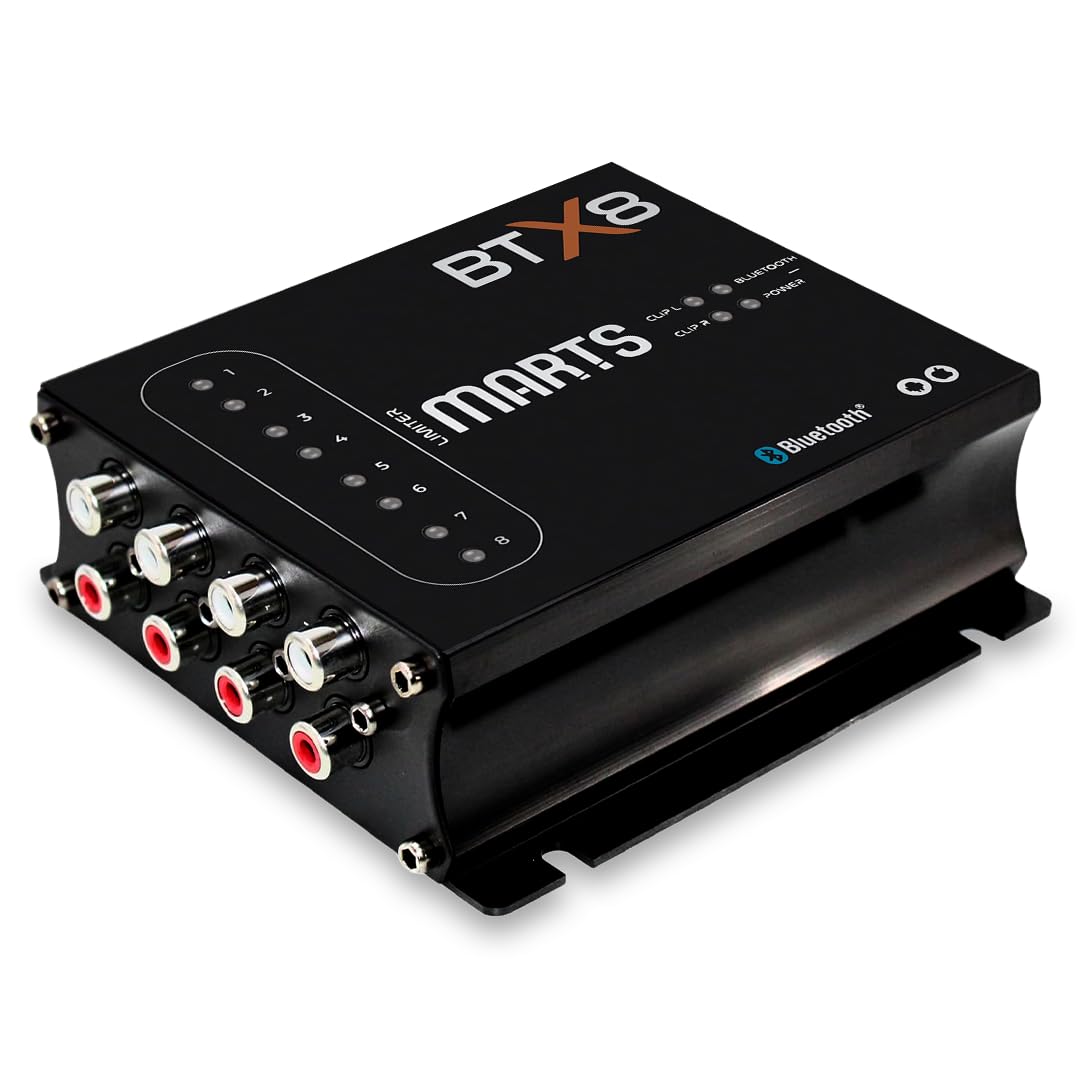
The Marts Digital BTX8-DSP offers an astonishing level of control for its price point, making it a highly attractive option for serious audio enthusiasts. With 4 RCA inputs and 8 RCA outputs, it provides ample connectivity for intricate system designs. The real power lies in its equalization: a 32-band graphic EQ for main inputs and a 16-band parametric EQ for each of the 8 output channels, allowing for incredibly granular sound shaping.
Users are particularly impressed by the sheer amount of tuning capability, noting that they can achieve remarkable sound quality by correctly matching voltages, setting crossovers, and flattening the EQ. The unit produces nearly 5 volts output with minimal distortion, ensuring amplifiers run efficiently and cool. Many find the Bluetooth connection fast and the app user-friendly, despite some initial challenges reported with specific Android versions or needing to find an older app version.
This DSP is highly recommended for those looking to fine-tune every speaker to their liking, offering master gain, channel gain, time corrections, and a limiter. Its robust build quality and premium packaging add to the overall positive experience. For enthusiasts building four-way systems or seeking extensive control over their sound, the Marts Digital BTX8-DSP delivers incredible value and performance.
Why it’s great
- Extensive 32-band graphic EQ and 16-band parametric EQ per channel.
- 8 output channels for highly versatile system configurations.
- User-friendly app and fast Bluetooth connectivity.
- Produces nearly 5 volts output with very low distortion.
Good to know
- Some Android users may need to find specific app versions for full functionality.
- Bluetooth indicator light may continuously blink even when connected.
- Requires a good understanding of audio tuning to unlock full potential.
5. JBL DSP4086
The JBL DSP4086 offers a compelling all-in-one solution, combining an 8-channel Class D amplifier with robust digital signal processing. Its small footprint makes it ideal for mounting in tight spaces, such as behind the glove box or in place of an OEM amplifier. This unit is designed to simplify system upgrades, providing both power and precise tuning capabilities in a single device.
Installers appreciate its versatility, noting that it can accept both RCA and speaker-level inputs, making it compatible with both aftermarket and factory head units. The tuning interface, while primarily PC-based, is described as straightforward enough for most to understand and control, even if some wish for direct text input for EQ ranges rather than sliders. Many found it powerful enough to drive aftermarket speakers effectively, significantly improving sound quality over lackluster stock stereos.
While some feedback mentions minor quality assurance issues like occasional channel hissing or poor crimping on the harness, these seem to be isolated incidents. The overall consensus is that the JBL DSP4086 delivers excellent clarity and precision for its size and price. Its ability to upmix channels for a broader soundstage and its convenient bass control knob further enhance the driving experience, making it a strong choice for those seeking an integrated amplifier and DSP.
Why it’s great
- All-in-one amplifier and DSP solution saves space.
- Versatile inputs (RCA and speaker-level) for broad compatibility.
- Simple tuning interface with powerful features.
- Convenient wired remote for bass control.
Good to know
- PC software is required for tuning, no Android app.
- Some users reported minor quality assurance issues.
- Parametric EQ lacks ability to import generated files.
6. Expert PX8.2CONNECT

The Expert PX8.2CONNECT is a robust 8-channel DSP designed for serious audio enthusiasts seeking detailed control over their sound. With 15 bands of input EQ and 3 bands of parametric EQ per channel, it offers significant flexibility for sculpting your audio. Its Bluetooth interface allows for wireless tuning via a dedicated app, providing convenience for real-time adjustments.
Users consistently praise its ability to clean up music and enhance clarity, with many considering it a “game changer” for their systems. The Bluetooth connectivity is a highlight, allowing tuning from a distance of 20 feet or more, a feature that makes dialing in the soundstage much easier. The app’s ability to mute individual channels, adjust crossover points, gains, and EQ on each channel works like a charm, making it a powerful tool for precise audio configuration.
Despite some initial confusion regarding the correct app (Expert RLINE is the one to use) and potential idle noise if the main gain is set too high, this DSP is highly recommended for its value and performance. Many consider it a “best bang for the buck” option, comparable to much more expensive units. Its comprehensive features, including time alignment, phase control, and a limiter, make it an excellent choice for anyone looking to achieve a professional-level sound in their vehicle.
Why it’s great
- Extensive 15-band input EQ and 3-band parametric EQ per channel.
- Reliable Bluetooth connectivity for wireless tuning via app.
- Individual channel control for gain, crossover, EQ, and time alignment.
- Excellent value for its feature set.
Good to know
- Requires the “Expert RLINE” app, not the generic “Expert” app.
- Can produce low-level noise if main gain is not adjusted correctly.
- Some users reported issues with remote output voltage over time.
7. Audison bit Ten

The Audison bit Ten is a highly regarded signal interface processor, celebrated for its ability to significantly enhance sound quality in car audio systems. With 4 input channels and 5 output channels, it’s a solid choice for those building a premium 4-channel plus subwoofer setup. Its 31-band graphic equalizer per output channel and Linkwitz crossover filters provide the precision needed for audiophile-level tuning.
Owners consistently report a dramatic improvement in overall sound quality, with music becoming much cleaner and more powerful. The accompanying software, which runs on a computer, allows for deep customization and the ability to flatten the factory stereo’s EQ curve, providing a neutral canvas for tuning. Many find the installation straightforward, requiring basic connections for power and speaker signals, but emphasize that tuning requires patience or professional assistance to truly unlock its potential.
This “little box” is praised for enabling the integration of premium sound systems with factory head units, a critical feature for many modern vehicles. While some users noted a preference for non-Windows software and rare cold-weather issues, the general consensus is that the Audison bit Ten is worth every penny for its excellent tunability and ability to create an increased soundstage. It’s a device that truly allows you to manipulate sound beyond words, delivering exceptional clarity.
Why it’s great
- Significant improvement in sound quality and clarity.
- 31-band graphic EQ per output for precise tuning.
- Retains factory head unit functionality while upgrading audio.
- Excellent tunability and increased soundstage.
Good to know
- Tuning requires patience or professional expertise.
- Software is Windows-only, which can be a drawback for Mac users.
- Some rare reports of cold-weather related issues.
8. Dayton Audio DSP-408

The Dayton Audio DSP-408 is a powerful and flexible digital signal processor that offers real-time signal processing and complete audio customization, making it a favorite among DIY audio builders. With 4 inputs and 8 outputs, it provides ample channels for complex active setups, including 3-way front speakers, rear-fill, and subwoofers, all configurable from a simple left and right input.
Users rave about its signal mixing system and the 10-band parametric EQ available for each of the eight output channels, allowing for incredibly precise adjustments. The selectable high-pass and low-pass filters with various slopes (6db/12db/18db/24db) further enhance tuning capabilities. Many found the Windows app straightforward and effective for tuning, though they advise using a PC over the optional Bluetooth dongle and app for serious configuration. Once properly tuned, it can transform a system, delivering concert-quality audio.
While some drivers initially experienced alternator whine when using RCA inputs in car applications, this was often resolved by utilizing the high-level inputs or using balanced output preamps, as the unit’s RCA inputs are unbalanced. The DSP-408 is praised for its lack of turn-off noise and minimal turn-on noise. For those willing to invest time in learning the software and tuning principles, this DSP offers fantastic value and the potential for an amazing sound system.
Why it’s great
- Flexible signal mixing system for complex setups.
- 10-band parametric EQ per output channel for precise tuning.
- Strong 3.5 volt RMS output.
- Excellent value for its advanced features.
Good to know
- PC software is essential for effective tuning; phone app is limited.
- RCA inputs may be susceptible to noise in car applications; high-level inputs recommended.
- No built-in Bluetooth; requires optional dongle.
9. miniDSP 2×4 HD

The miniDSP 2×4 HD is a highly versatile digital audio signal processor that transcends typical car audio applications, finding favor among DIYers, speaker builders, and home theater enthusiasts alike. Combining a USB audio DAC with a powerful 400MHz DSP processor, it offers a wide range of processing blocks, including PEQ, crossovers, delay, FIR, and IIR filters.
Users praise its ability to integrate subwoofers seamlessly into existing audio systems, providing precise crossover filters and slopes for perfect blending. The device allows for completely independent adjustment of input and output channels, making it ideal for creating complex sonic environments, whether in a car or a dedicated listening room. Its software is described as simple and intuitive, and the unit can store up to four presets, accessible via the included remote control.
While not exclusively a car audio DSP, its robust capabilities make it a strong contender for those seeking ultimate sound customization in their vehicle, especially if they value high-fidelity sound and detailed system tuning. Many find that pairing it with a high-quality linear power supply further unlocks its full potential, delivering increased resolution and deeper soundstages with zero noise. It’s an excellent investment for anyone looking to achieve sonic ecstasy, regardless of the listening environment.
Why it’s great
- Highly versatile for both car and home audio applications.
- Powerful DSP with a wide range of processing blocks (PEQ, FIR/IIR filters).
- USB audio DAC for high-quality digital input.
- Intuitive software and ability to store 4 presets.
Good to know
- Not specifically designed for car audio, may require additional components.
- Initial unit connectivity issues reported by some users.
- Optional linear power supply recommended for optimal performance.
10. AudioControl DM-810

The AudioControl DM-810 is a sophisticated 8-input by 10-output matrix digital signal processor, built for professional-grade car audio tuning. It’s equipped with an input and output Real-Time Analyzer (RTA), providing precise and informed tuning capabilities that allow enthusiasts to truly understand and optimize their system’s acoustic response.
Users who dive into the DM-810’s capabilities praise its comprehensive control over every part of their system. The 30-band equalizer offers extensive sound shaping, and the optional ACR-3 remote provides convenient preset recall and level control. While the wired USB connection for laptop tuning is effective, some feedback suggests the micro USB port and cable could be improved for durability and updated to USB-C, and the software lacks presets for common EQ curves.
Despite reports of some units experiencing issues with not shutting down properly or intermittently losing audio, and a few complaints about customer service, many find the DM-810 to be a solid, well-built processor that solves complex audio issues. It’s a powerful tool for those with the technical know-how to leverage its full potential, offering deep customization that can transform a budget setup into a high-performance system. This DSP is definitely for the serious tuner who wants detailed data and control.
Why it’s great
- Input and Output RTA for precise, data-driven tuning.
- Extensive 30-band equalizer for detailed sound shaping.
- 8 inputs and 10 outputs for complex system configurations.
- Robust build quality and comprehensive control features.
Good to know
- Micro USB port and cable are prone to wear and could be updated.
- Some users reported intermittent unit malfunctions and customer service issues.
- Requires a laptop connection for full tuning; Bluetooth adapter is optional and app needs work.
11. B2 Audio White 4v 12 Channel DSP
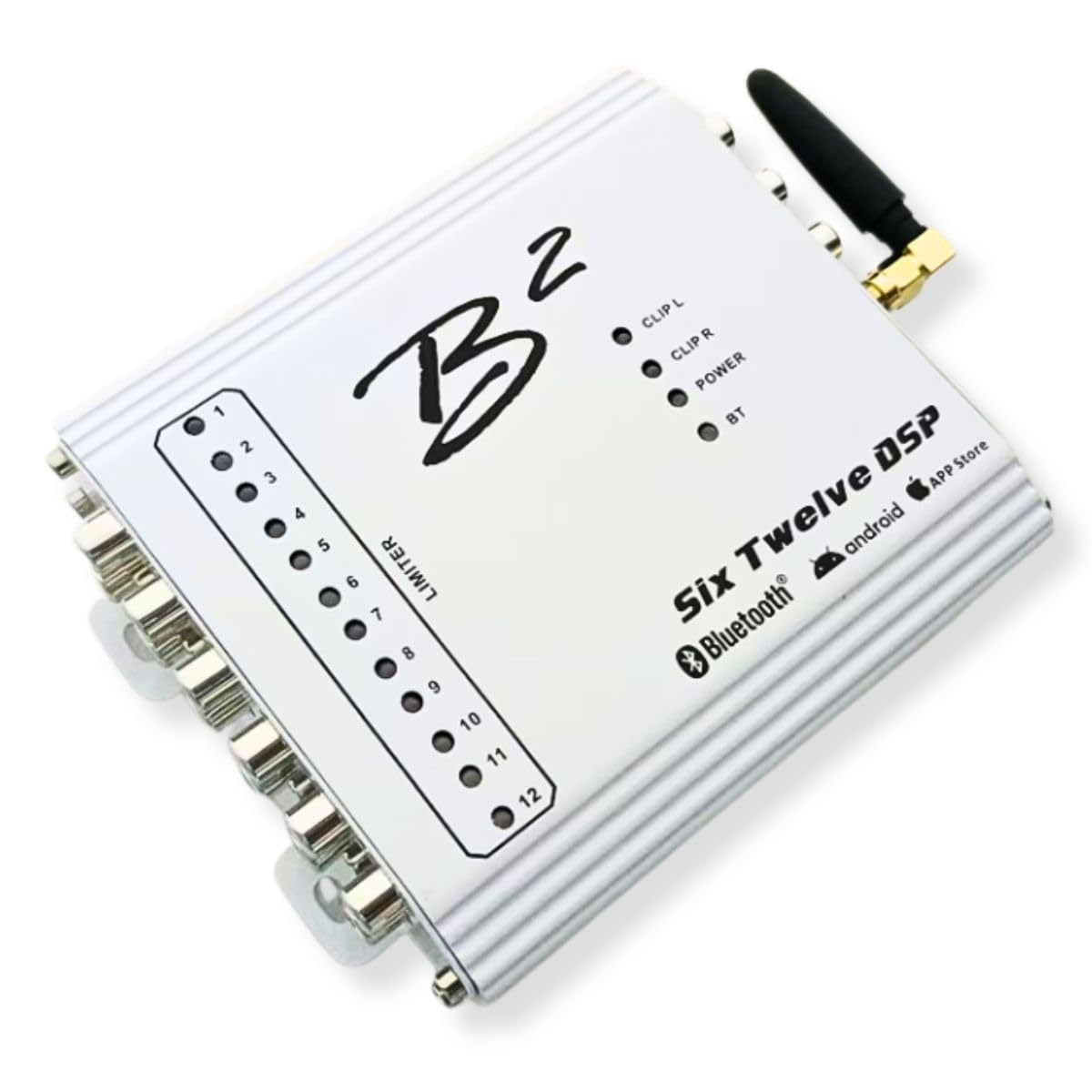
The B2 Audio White 4v 12 Channel DSP is an advanced digital signal processor offering a significant channel count and high-resolution audio processing. With 6 inputs and 12 outputs, along with 96 kHz, 32-bit resolution, it provides crystal-clear audio and precise tuning capabilities for even the most elaborate car audio systems. This unit is designed for those looking to run multiple amplifiers and speaker sets.
Users find it to be a solid DSP that offers a lot of “bang for your buck,” particularly appreciating its 6-in/12-out configuration. The companion app for iOS and Android is generally considered easy to use for setting EQ, gain, delay, and crossovers, though some note it works best in landscape mode and has minor quirks like requiring a password every time you connect. The removable Bluetooth antenna is a thoughtful touch, allowing for extension if needed.
While some drivers reported random “boom” noises on startup and a few found the EQ setup in the app fiddly, these issues seem manageable. A crucial update for some units addresses random muting, highlighting the importance of firmware updates. For those who are comfortable with smartphone interfaces and possess a good understanding of audio tuning, the B2 Audio DSP provides incredible value and flexibility for building a high-performance, multi-channel system.
Why it’s great
- High 6-input, 12-output channel count for complex systems.
- 96 kHz, 32-bit resolution for crystal-clear audio.
- User-friendly app for comprehensive tuning control.
- Removable Bluetooth antenna for flexible placement.
Good to know
- App requires password entry upon each connection.
- Some users reported random startup noises or app interface quirks.
- Firmware updates may be necessary to address certain issues.
12. PRV AUDIO Car Audio DSP 2.8X

The PRV AUDIO DSP 2.8X is an accessible and highly effective digital signal processor, offering impressive features for its budget-friendly price. With 2 audio inputs and 8 independent output channels, it provides solid flexibility for managing various speaker configurations. Its integrated 15-band graphic equalizer, along with a 1-input and 1-output parametric equalizer, allows for detailed sound adjustments.
Drivers are consistently surprised by the significant improvement in audio fidelity and clarity this unit brings, often stating they’ll “never install another system without one of these.” The intuitive interface and LCD display allow for real-time adjustments, and many found learning to use it a matter of watching a few tutorials. Features like the sequencer for sequential triggering of amplifiers and time alignment are highly valued, with users noting a dramatic enhancement in soundstage and overall listening experience.
While some users pointed out minor quirks, such as the built-in pink noise generator potentially being inaccurate or the menu occasionally going dead (resolved by a car restart), the overall sentiment is overwhelmingly positive. It’s praised for being easy to install, functioning exceptionally well, and providing phenomenal sound for the money. For those seeking an effective, affordable DSP to elevate their car audio without a huge investment, the PRV AUDIO DSP 2.8X is a fantastic choice.
Why it’s great
- Excellent value for money, significantly improves sound quality.
- Intuitive interface with LCD display for real-time adjustments.
- 8 independent output channels and 15-band graphic EQ.
- Sequencer feature for controlled amplifier triggering.
Good to know
- Built-in pink noise generator may not be entirely accurate.
- Menu occasionally freezes, requiring a vehicle restart.
- Lacks some detailed customization found in higher-end units.
13. Timpano TPT-SP4BT Bluetooth DSP

The Timpano TPT-SP4BT is a remarkably compact and budget-friendly DSP that offers powerful control directly from your smartphone or tablet via Bluetooth. This 4-output channel processor is an excellent tool for optimizing custom sound systems, whether you’re working with an aftermarket unit or integrating with a factory radio, thanks to its versatile input options.
Users consistently praise its ease of programming and operation, finding the free Bluetooth app (Android or iOS) to work perfectly for real-time modifications of equalization, crossover filters, time alignment, and gain control. Many appreciate its low input noise and wider dynamic range compared to competitors, making it a great limiter. The exclusive sequencer feature for programmed startup/shutdown of other products is also a notable convenience.
While adjusting it isn’t necessarily for beginners, those willing to learn or seek expert advice will find it incredibly rewarding. It’s highly effective at overcoming factory-tuned EQ curves and bass rolloff, making it a strong recommendation for anyone amplifying a factory head unit. Its small size, low profile, and well-made power terminals contribute to its appeal, making it a very capable DSP for its price.
Why it’s great
- Ultra-compact size for easy, discreet installation.
- Bluetooth app control from smartphone or tablet.
- Low input noise and wide dynamic range.
- Includes sequencer feature and built-in voltmeter.
Good to know
- Adjusting is not for absolute beginners.
- Specific Bluetooth connection steps may be required (e.g., using app’s connect button).
- Flimsy RCA jacks; requires careful handling during installation.
14. Stetsom STX 2436 Bluetooth DSP PRO

The Stetsom STX 2436 Bluetooth DSP PRO offers an amazing range of customizable sound adjustments in a compact package, all controllable wirelessly from your smartphone or tablet. This unit is designed for convenience, providing a 12-band graphic equalizer and high-precision crossover filters to fine-tune your car’s audio environment.
Drivers appreciate the ease of Bluetooth control, allowing them to adjust high and low tones from anywhere within a 49-foot unobstructed range. Many find that it makes everything sound “really good,” offering lots of control at a very good price. The ability to set crossovers to any frequency with different slopes is a valuable feature for optimizing speaker performance, and the noise and frequency generation functions can be handy for testing.
While some feedback mentions the build quality could feel cheaper and the RCA jacks might be fragile, many consider it a good budget DSP that delivers on its promises. There were also comments about the EQ only having one custom setting and a low-level hiss noticeable when no music is playing (which can be mitigated by adjusting levels). For those seeking an affordable DSP with strong wireless control for tuning their music, the Stetsom STX 2436 offers excellent value.
Why it’s great
- Convenient Bluetooth control via Android and Apple apps.
- 12-band graphic equalizer for broad sound adjustments.
- High-precision crossover with various filter slopes.
- Good budget option for enhancing car audio.
Good to know
- Build quality and RCA jacks may feel less robust.
- Only one custom EQ setting available.
- Some users reported a low-level hiss at low volumes.
15. Unknown DSP
This “Unknown” DSP represents the most budget-friendly entry point into the world of digital signal processing for car audio. At a mere $49, it’s designed for those who want to experiment with sound tuning without a significant financial commitment. While specific features are not detailed, its price suggests a focus on basic equalization and crossover functions.
Given its extremely low price, this unit is likely best suited for simple systems or for drivers who are just beginning to explore the benefits of a DSP. It would be a suitable choice for correcting fundamental frequency imbalances or setting basic crossover points for a 2-way system plus a subwoofer. Expectations should be tempered regarding advanced features like extensive parametric EQs, time alignment, or sophisticated app control.
For someone looking for an absolute bare-bones DSP to get their feet wet and hear a noticeable improvement over a completely untuned system, this could be a viable option. However, without detailed specifications or user reviews, it’s hard to gauge its true performance or reliability. It’s a “try it and see” product for the most cost-conscious enthusiast.
Why it’s great
- Extremely affordable entry point into DSP technology.
- Allows basic sound adjustments for untuned systems.
- Minimal financial risk for experimentation.
Good to know
- Lack of detailed specifications makes performance uncertain.
- Likely limited in advanced tuning features.
- No user reviews available to assess real-world performance.
Understanding the Specs
Channels: Inputs vs. Outputs
When we talk about DSP channels, it’s crucial to distinguish between inputs and outputs. Input channels determine how many audio sources (e.g., front, rear, subwoofer signals from your head unit) the DSP can receive. Output channels dictate how many individual speakers or groups of speakers the DSP can control independently. A DSP with 4 inputs and 8 outputs, for instance, can take a stereo signal and process it for a 3-way front stage (tweeter, mid-range, woofer) plus a subwoofer, giving you precise control over each component. More output channels mean more granular control over your soundstage.
Equalization Bands: Graphic vs. Parametric
Equalization (EQ) is your primary tool for shaping sound. Graphic EQs offer fixed frequency bands (e.g., 15-band, 31-band) that you can boost or cut. They’re good for broad adjustments. Parametric EQs, however, are far more powerful. They allow you to select a specific frequency, adjust its gain (boost/cut), and control its “Q” factor, which determines the bandwidth or narrowness of the adjustment. This precision is invaluable for correcting specific acoustic issues in a car’s challenging interior, like resonances or harsh peaks, without affecting surrounding frequencies.
FAQ
What does a DSP do for car audio?
Do I need a DSP if I have an aftermarket head unit?
How difficult is it to install and tune a DSP?
Can a DSP fix bad speakers?
Final Thoughts: The Verdict
For most drivers, the best dsp for car audio winner is the Rockford Fosgate DSR1 because of its unparalleled factory integration and extensive tuning capabilities. If you want a truly premium, Hi-Res audio experience, grab the Hertz SPL Show S8 DSP. And for advanced tuning on a budget, nothing beats the Banda Audiopart X8AiR.