
Our readers keep the lights on and the garage heater humming. As an Amazon Associate, I earn from qualifying purchases.
Wheels are the part of a car that get judged the fastest… and forgiven the least. You can have a shiny paint job and a spotless interior, but if your wheels are wearing a gray film of brake dust, the whole car reads “tired.” And here’s the cruel bit: wheels are also where people accidentally scratch their own car most often. One gritty brush, one exposed metal tip, one overconfident shove between a caliper and barrel… and suddenly you’ve got a scar you can’t unsee.
The fix isn’t “more scrubbing.” It’s choosing a brush that matches your wheel design and cleaning style. Some wheels need a slim, controlled tool that slides between tight spokes. Others need a fluffy, suds-heavy mop that cleans a wide barrel quickly. And if you’ve got gloss black or delicate clear-coated wheels, “soft” isn’t enough—you need soft + contamination control, because grit trapped in plush fibers can scratch just as easily as a stiff bristle.
This guide is built like a real detailer’s decision tree. I’m going to show you how to read your wheel geometry, how to avoid the three most common wheel-cleaning mistakes, and which tools make the job easier without turning your hands into a science experiment.
If you’re here because you want the best car wheel brush for your exact situation (tight calipers, multi-spoke faces, ceramic-coated wheels, or just a weekly maintenance routine you’ll actually stick to), you’re in the right place. Let’s get your wheels clean in a way that feels controlled, safe, and oddly satisfying.
In this article
How to Choose the Best Car Wheel Brush for Your Wheels
Before you buy anything, do this: crouch next to your wheel, look through the spokes, and answer one simple question—where does the dirt actually live on your setup? Brake dust and road film don’t distribute evenly. The barrel (inner hoop) collects the most grime, the caliper area traps the most grit, and lug pockets hide the darkest “why is it still dirty?” residue. Your brush choice should match those zones, not a marketing photo.
1) Your Wheel Has 4 Cleaning Zones (and each wants a different tool)
- Wheel Face: Spokes, lip, and the showy outer area. This is where you want controlled agitation and minimal splatter.
- Wheel Barrel: The inner hoop behind the spokes. This is where long brushes, bendable heads, or flat “blade” tools win.
- Calipers + Rotor Hat Area: Tight, gritty, and easy to scratch if a tip goes rogue. Thin profiles and protected ends matter.
- Lug Pockets + Center Cap: Small cavities that hold dense grime. Dedicated lug tools (or smart built-ins) save you from endless twisting.
2) The “Clearance Test” that prevents buyer’s remorse
Most wheel brushes fail for one reason: they’re too thick for the space you need to clean. Here’s how to test your wheel before buying:
- Spoke Opening Test: Measure the narrowest spoke gap you can see. If your wheel has tight, multi-spoke styling, you need a slim brush or a flat-profile tool.
- Caliper Clearance Test: Look at the space between the caliper and the barrel. If it’s tight, bulky “woolies” can get stuck or smear grit.
- Barrel Depth Test: If you can’t comfortably reach the back of the barrel with a wash mitt, you want a longer working end (or a bendable core).
This is why some people love big fluffy brushes and others hate them: they’re both right—for their wheel design.
3) Material matters more than softness
Soft is good. Soft with a dirty load of grit is a scratch machine. When you pick a brush, ask how it handles contamination:
- Microfiber / Chenille Covers: Great for holding suds and being gentle, especially when removable and washable. The win is cleanliness between uses.
- Nylon / “Nylex” Style Bristles: Often safer than people assume because they rinse clean easily. Great for intricate areas when the tips are feathered.
- Synthetic Woolies: The kings of suds and speed on open wheels. On tight or gloss black wheels, they demand frequent rinsing and a lighter touch.
- Foam Drill Attachments: Incredible for speed and uniform application (cleaner or sealant), but only when used with control and the right wheel design.
4) Tip protection and handle ergonomics aren’t “nice to have”
The damage usually happens from the part you’re not watching: the end of the brush, or the hard edge of a handle bumping the wheel face. Look for:
- No exposed wire or sharp core: especially if you clean gloss black wheels.
- Rubber bumpers or tips: great—until they wear. The best habit is checking the tip before every wash.
- Grip that stays put when wet: because slipping hands create accidental contact.
5) What to buy first (if you’re building a wheel kit)
If you’re starting from scratch, don’t buy fifteen brushes. Build a “minimum effective kit”:
- One barrel tool (long brush or flat blade) to reach deep.
- One controlled face brush (soft bristles or microfiber) for spokes and lip.
- One lug pocket tool (small detail brush or a dedicated lug sponge).
- One tire scrubber (stiffer bristles) if you want truly clean rubber before dressing.
That setup gets you 90% of a “pro level” wheel clean with 10% of the clutter.
And yes—if you only want one single do-it-all choice, we’ll still help you. But the best results usually come from pairing one “reach” tool with one “control” tool. That’s the real secret behind a best car wheel brush setup that stays scratch-free.
Quick Comparison: 15 Wheel Brushes & Kits Worth Considering
I’ve ordered these from higher-commitment “keep-forever” tools down to starter kits and basic sets, so you can choose based on how serious you are about wheel cleanliness (and how much you hate the job).
On smaller screens, swipe or scroll sideways to see the full table.
| Model | Type | Best For | Key Strength | Amazon |
|---|---|---|---|---|
| EZ Detail Big & Little Combo | Bristle Set | Most Wheels | Two sizes + flexible, safe bristles | Amazon |
| Autofiber Barrel Blade | Microfiber Blade | Tight Caliper Clearance | Flat head + removable, washable cover | Amazon |
| Meguiar’s Supreme Microfibre (Large) | Microfiber | Delicate Finishes | Thick pile + no metal parts | Amazon |
| Speed Master Wheel Brush | Bristle | Weekly Maintenance | Shape-memory bristles + bendable stem | Amazon |
| WoollyWormit Wheel Brush Kit | Microfiber Frame | Low-Splatter Cleaning | Flat profile + integrated lug tool | Amazon |
| Adam’s Angled Wheel Detailing Brush | Angled Bristle | Ergonomic Barrel Reach | 45° approach + chemical-resistant fibers | Amazon |
| Chemical Guys Rimpaca (2‑Piece Set) | Woolie Set | Open Spokes | Fluffy heads + angled access | Amazon |
| ExoForma Bendable Brush Set | Adjustable | Custom Angles | Two widths + bend-and-hold design | Amazon |
| Chemical Guys Ball Buster (Drill) | Drill Tool | Speed + Consistency | Drill-powered reach into spokes & barrels | Amazon |
| VIKING Wheel & Fender Brush | Long Handle | Wells + Grilles | Soft flagged bristles + bumper ring | Amazon |
| Suds Lab WB Premium Wheel Brush | Microfiber | Gentle Barrel Agitation | Thin fibers reach well; easy rinsing | Amazon |
| FantastiCLEAN 6‑Piece Wheel Pro Kit | Kit | Starter Arsenal | Multiple tools for rims, tires, and details | Amazon |
| NIKCOSMK 12‑Piece Wheel Brush Kit | Big Kit | Everything-In-One Bag | Multiple brushes + mitt/towel/storage | Amazon |
| NIKCOSMK 7‑Piece Wheel Kit | Compact Kit | Wheel + Tire Dressing | Includes tire shine pads + long rim brush | Amazon |
| oesee / BYTTME 4‑Pack Long Handle Kit | Essentials | Budget Basics | Two woolies + tire brush + lug detail brush | Amazon |
In‑Depth Reviews: 15 Wheel Brushes That Solve Real Problems
Below, I’m not just repeating product descriptions. I’m matching each tool to real wheel designs, real pain points, and the kinds of “aha” moments people only get after using the wrong brush for too long.
1. EZ Detail Big & Little Brush Combo – The Two-Brush Solution That Actually Works
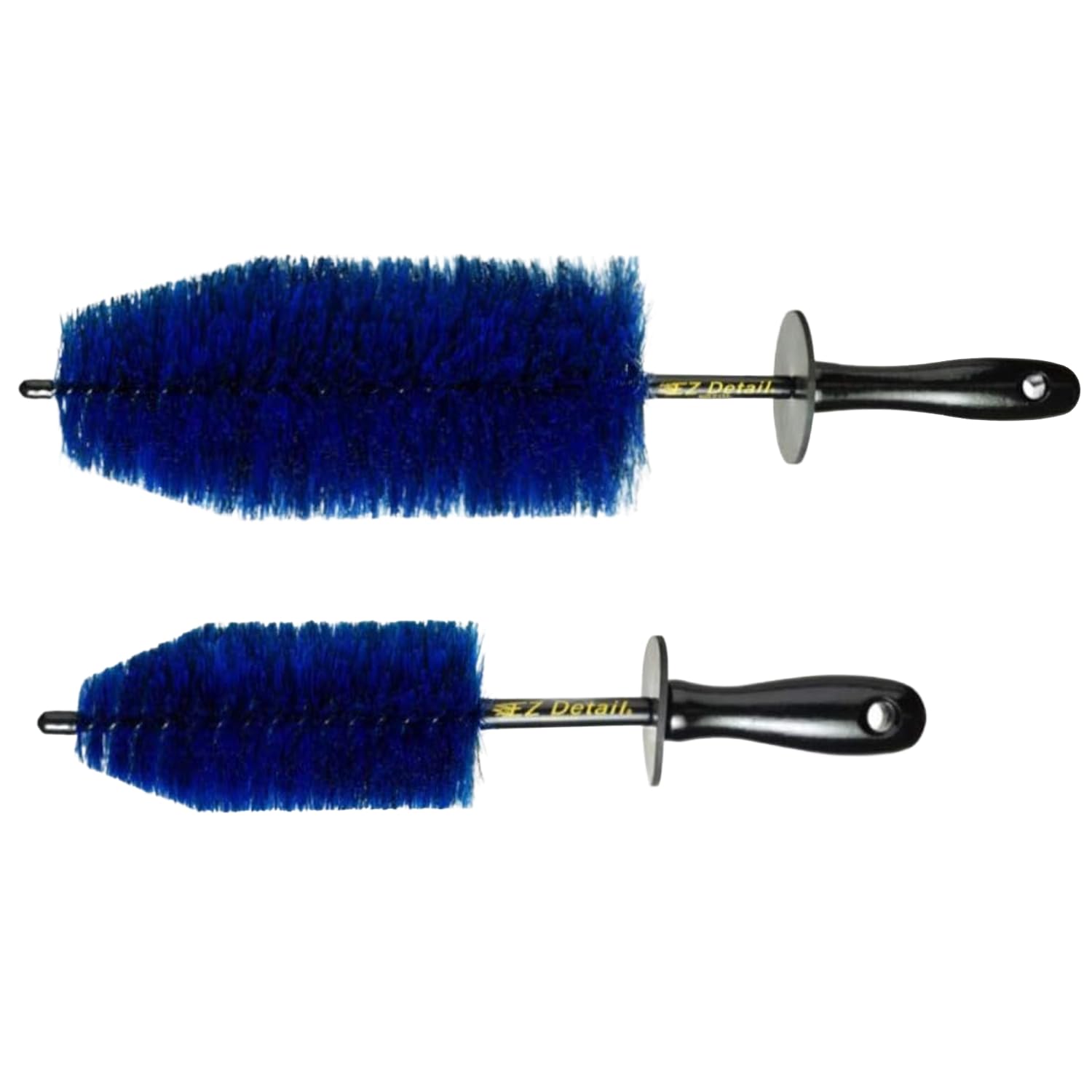
If you want one purchase that covers the most wheel designs with the least drama, this combo is it. The “big” brush does the barrel efficiently, while the “little” brush is the cheat code for calipers, tight spokes, and the places where your hand simply doesn’t belong. Owners who’ve tried multiple brands often come back to these because they feel purpose-built, not gimmicky.
The real advantage is bristle behavior. These soft nylon-style bristles compress to fit odd gaps, then spring back, which means you get reach without needing a bulky head. It’s also one of those rare tools where “soft” still has enough backbone to agitate brake dust—especially when paired with a good wheel cleaner and a proper rinse routine.
One pro-level move: use the big brush for the barrel first (before you touch the wheel face), rinse, then switch to the small brush for caliper edges and spoke roots. This keeps the dirtiest grit from getting dragged across the prettiest surfaces.
Why it earns “Best Overall”
- Two real sizes: Barrel coverage + tight-detail control in one set.
- Wheel-safe feel: Soft enough for finishes, strong enough to clean.
- Flexible core: Reaches behind spokes and around calipers without forcing it.
- Long-term tool: Built more like a “shop staple” than a disposable brush.
Good to know
- Like any bristle brush, it can sling water if you yank it out fast—pull slowly and rinse often.
- You’ll still want a tiny detailing brush for very deep lug pockets.
Ideal for: Anyone who wants one “smart buy” that fits most wheels—daily drivers, enthusiasts, and even motorcycles.
2. Autofiber Barrel Blade – Flat Microfiber Control for Narrow Spokes & Calipers

Most wheel brushes are designed like a “round mop.” The Barrel Blade flips the script with a flat, blade-style head—and that changes everything for tight wheels. If you’ve ever tried to push a thick woolie between a caliper and barrel (and felt your stress level rise), you’ll understand why a flat tool is a big deal.
Here’s the expert angle: flat tools give you directional control. Instead of swirling in place and pushing grime around, you can sweep the barrel like a squeegee, guiding the microfiber exactly where it needs to go. The bendable core is also practical: you can set a gentle curve to follow the barrel’s contour and keep even contact without brute force.
The removable cover is the unsung hero. Washable, replaceable microfiber means you can keep the working surface truly clean. That’s how you reduce “mystery scratches” on sensitive finishes: clean fiber, clean technique, consistent results.
Why it’s special
- Flat head advantage: Slides into spaces round brushes can’t fit.
- Washable cover: Keeps the cleaning surface fresh between washes.
- Bend-and-hold core: Set your angle once, clean confidently.
- Soap retention: Plush microfiber holds suds for longer barrel passes.
Good to know
- On some ultra-tight setups, thickness can still be the limiter—measure your caliper clearance.
- It’s a “control tool,” not a tire scrubber; pair it with a dedicated tire brush.
Ideal for: Tight-caliper wheels, narrow spokes, performance brakes, and anyone who wants “precision cleaning” over “big fluffy swiping.”
3. Meguiar’s Supreme Microfibre Wheel Brush (Large) – Gentle Power for Painted, Alloy & Chrome

Meguiar’s nailed the “don’t hurt my wheels” brief with this one. Thick microfiber pile, no metal bits waiting to ruin your day, and a premium shaft that feels like it’s meant to survive real use. Owners with higher-end wheels often gravitate to this style because it feels controlled and finish-friendly.
The large head is the point—and also the limitation. On open wheels (classic 5-spokes, larger spoke windows), it cleans quickly and evenly. On tight multi-spoke wheels, it may simply be too large to access the areas you care about most. That doesn’t make it a bad brush; it makes it a “right wheel” brush.
Pro technique: treat this brush like an applicator first and an agitator second. Let your cleaner loosen the dust, then use the microfiber pile to lift and carry grime away. Rinse the head frequently so the microfiber doesn’t become a grit sponge.
Why people keep it
- Finish safety: Microfiber contact with no metal parts is confidence-inspiring.
- Big coverage: Great for open wheel faces and easy barrel access.
- Durable feel: Solid shaft and quality build.
- Easy care: Rinse thoroughly and drip dry for consistent performance.
Good to know
- Large size can struggle in tight spoke windows or narrow caliper gaps.
- If you push it into cramped spaces, it can create splatter—slow, steady passes work best.
Ideal for: Open wheel designs, delicate finishes, and anyone who prioritizes “safe contact” over ultra-tight access.
4. Speed Master Wheel Brush – The Bendable Classic That Keeps Its Shape

This is one of those “it’s been around forever for a reason” tools. The bristles compress into tight spaces, then rebound—so you’re not left with a brush that looks like it went through a blender after three washes. People who wash often (biweekly routines, ceramic-coated wheels, etc.) tend to appreciate that consistency.
Where it shines is behind spokes and around calipers. The stem bends to the shape you need, but the bristles still have enough structure to scrub film and dust. It’s also a good match for wheels that aren’t neglected—because when the wheels are maintained, you don’t need a brute-force brush, you need reliable agitation and reach.
The “grown-up” habit with this brush: inspect the tip. Some users note that rubber tip caps can wear over time. The brush can still be used safely if you keep the tip protected, but you never want a sharp core touching a wheel finish. Quick check, every wash.
Why it’s a staple
- Shape recovery: Bristles rebound for consistent reach and feel.
- Bendable stem: Makes awkward wheel geometries easier.
- Effective agitation: Enough “bite” without feeling harsh.
- Great for routine washes: Perfect when wheels are maintained.
Good to know
- Pulling it out quickly can sling dirty water—slow extraction is cleaner.
- Tip caps can wear; check and replace/cover before it becomes risky.
Ideal for: Weekly or biweekly wheel maintenance, intricate spoke designs, and anyone who wants a proven bendable bristle tool.
5. WoollyWormit Wheel Brush Kit – Flat, Safe Cleaning + Lug Pocket Trickery

If traditional bristle brushes make you look like you lost a fight with a mud puddle, you’re going to like this style. The flat chenille/microfiber cover grabs grime instead of flinging it, and the low-profile design lets it slide between spokes and into barrels with less drama than a bulky woolie.
The standout feature is the lug nut setup: foam sponges that twist inside lug pockets and actually lift the dark residue that detailing brushes sometimes just smear around. Once you find the sponge size that fits your lug recess, it’s a “why didn’t I do this sooner?” moment.
A pro tip: don’t treat the handle as mandatory. Many users get better control by going handle-less (shorter, closer grip) for tight wheels, then attaching the handle when they need extra reach. Also, rinse often—microfiber is gentle, but it still collects grit.
Why it’s different
- Low splatter: Microfiber cover reduces fling compared to bristle brushes.
- Flat profile: Fits tricky areas that round heads struggle with.
- Lug pocket system: Dedicated sponges can clean lug holes fast.
- Washable: Remove the cover and clean it between uses.
Good to know
- The handle design can feel awkward until you find your best grip style.
- For the wheel face, a mitt or soft brush can still be better for complex spoke shapes.
Ideal for: Anyone who hates splatter, wants a safer flat profile tool, and cares about truly clean lug pockets.
6. Adam’s Angled Wheel Detailing Brush – The Wrist-Saving Barrel Cleaner

Angle is underrated. A straight brush forces your wrist into awkward rotations and makes it harder to keep the head flat against the barrel. Adam’s angled approach makes “reach” feel natural—you can scrub behind spokes without smashing your knuckles or contorting like you’re solving a puzzle.
The fibers are designed to handle stronger chemicals without turning into a sad, frayed mop. That matters if you use wheel cleaners regularly. Users also love how the brush holds soapy solution; it stays “loaded” long enough to clean the inside of the wheel without constant dunking.
The only nuance: when the head is fully soaked, it can feel heavy—especially if you press too hard. The best technique is to let chemistry do the work: spray cleaner, let it dwell briefly, then agitate with controlled, lighter passes.
Why it’s a favorite
- 45° angle: Easier barrel access with less wrist strain.
- Grip security: Stays controllable with wet, soapy hands.
- Suds retention: Fibers hold solution for longer passes.
- Wheel routine friendly: Great for regular clean-and-rinse washes.
Good to know
- Very open wheels benefit most; extremely tight spoke windows may need a slimmer tool.
- Heavy when saturated—use light pressure and rinse often.
Ideal for: Home detailers who want an easy-to-control brush that makes barrel cleaning feel effortless instead of awkward.
7. Chemical Guys Rimpaca (2‑Piece Set) – Big, Fluffy Coverage for Open Wheels

Think of the Rimpaca set as “maximum suds, minimum effort” on wheels that have room to work. The heads are fluffy and hold a ton of shampoo, which is fantastic for quickly wiping down barrels and spokes on more open designs. The angled handle also helps you reach behind the wheel face without wrestling the tool.
But woolie-style brushes have a rule: they reward gentle technique and punish sloppy technique. On gloss black and tight multi-spoke wheels, some users report that these can struggle to fit and can even mark sensitive finishes if the head picks up grit and you push too hard. That’s not unique to this set—it’s the nature of plush fibers.
If you use these, rinse constantly. Think “two or three passes, rinse, reload.” The moment the head feels gritty or heavy, it’s time to flush it out. Used correctly, it’s a lovely tool. Used aggressively, it’s the kind of brush that makes people swear off woolies forever.
Why people like it
- Foam/suds capacity: Great for fast, lubricated cleaning.
- Angled access: Reaches behind spokes without awkward hand angles.
- Multi-use: Also handy for grilles, exhaust tips, and dusty interiors (dry use).
- Two sizes: Better coverage across wheel shapes.
Good to know
- Bulky heads can be too large for tight spoke windows.
- Plush fibers must be rinsed often to avoid carrying grit against the finish.
Ideal for: Open wheel designs and owners who want a suds-rich, gentle “wipe and rinse” wheel cleaning experience.
8. ExoForma Bendable Brush Set – Custom Angles for Awkward Wheel Geometry

Some wheels are easy: open spokes, generous caliper clearance, simple shapes. And then there are the wheels that feel like they were designed by someone who hates cleaning. This set is built for that second category. Being able to bend the brush into your preferred angle—and have it stay there—turns “I can’t reach it” into “oh, that’s not bad.”
The two-width setup is the smart part: the wider brush covers more barrel quickly, while the narrower brush fits into tighter spoke areas and around the caliper zone. Owners love the time savings when they can clean the back side of the wheel from the front without removing wheels.
The caution is also practical: if any part of the core or end becomes exposed, it’s a scratch risk. Also, if the handle grip loosens, it can reduce control when wet. Neither is a deal-breaker—just the kind of thing you want to notice early so you can secure it and keep cleaning safely.
Why it works
- Bend-to-fit: Custom angles for your exact spoke/cap/caplier layout.
- Two widths: Better chance of fitting tight wheels without forcing.
- Knuckle saver: Reach behind the wheel face more comfortably.
- Good “coverage vs access” balance: Not too specialized, not too bulky.
Good to know
- If you apply too much pressure, very flexible brushes can “wander”—use lighter, guided passes.
- Check ends and grip regularly to ensure no scratch-prone core exposure.
Ideal for: Wheels with awkward access points where a fixed-shape brush keeps missing the dirty zones.
9. Chemical Guys Ball Buster (Drill Attachment) – Speed Cleaning with the Right Wheel Design

This is the “I value my time” tool. If your wheels have a spoke design that allows access, a drill attachment can cut your wheel-cleaning time dramatically. The shape is designed to reach into spokes and along inner areas more efficiently than hand agitation—especially for regular maintenance washes where you’re removing film and dust, not years of neglect.
The real skill here is control. Variable speed is your friend. Start slower than you think you need. Let the cleaner do the heavy lifting. Use the foam for consistent contact and quick agitation, not as a “grind the grime away” weapon.
Many experienced users end up with two workflows: one Ball Buster for cleaning tasks and a second reserved for applying sealant or wheel protection, so you’re not cross-contaminating. Also, avoid sharp edges and curb rash areas—foam and sharp damage don’t mix.
Why it’s worth it
- Huge time savings: Drill power does the repetitive scrubbing.
- Uniform agitation: Great for consistent results on accessible designs.
- Excellent for protection steps: Handy for applying sealants evenly.
- Feels “pro” quickly: Once you dial in speed control, it’s addictive.
Good to know
- Not for every wheel: tight spokes can limit access or cause bounce.
- Foam can tear if it hits sharp edges or damaged wheel areas.
Ideal for: People who want faster cleaning on compatible wheel designs and enjoy the “power tool detailing” approach.
10. VIKING Wheel & Fender Brush – Gentle Coverage for Wheel Wells, Bumpers & More

Not every “wheel brush” is for wheel barrels. This one is the helper that makes your wash look more complete: wheel wells, fender liners, grilles, bumper textures, and the kind of surfaces that trap dust and mud. Users often mention how well it rinses clean and how the bumper ring saves the day when you accidentally bump something.
On wheels, it’s best used for the face (on simpler designs) and the surrounding areas rather than deep barrel work. The bristles are soft and cover a lot of area quickly, but the head is simply not shaped for tight spoke access. Think of it as a “support brush” that upgrades your overall exterior cleanliness.
If you’re building a wheel kit, this pairs nicely with a dedicated barrel tool. Use the barrel tool first for the deep grime, then use this for wheel wells and surrounding areas for the satisfying “finished” look.
Why it belongs in a kit
- Great coverage: Quickly scrubs wells, liners, and textured plastics.
- Bumper ring: Helps prevent accidental hard-contact marks.
- Comfortable handle: Easy to hold and control when wet.
- Rinses clean: Practical for muddy or dusty surfaces.
Good to know
- Too big for many tight wheel designs and barrel access.
- Not stiff enough for heavy caked-on well grime unless chemistry does most of the work.
Ideal for: Wheel wells, fenders, grilles, and the “support brush” role in a well-rounded wash routine.
11. Suds Lab WB Premium Wheel Brush – Thin Microfiber for Easy Access (Gentle Style)

This brush wins on “getting in there.” Thin microfiber profiles can reach barrel areas that thick woolies sometimes miss, especially on wheels with moderate clearance. Users like the softness and how it can clean without leaving weird “dirty/clean stripes” that thicker brushes can create when they don’t conform evenly.
The important detail: this is not a heavy-scrubbing tool. It’s a gentle agitator meant to work with your cleaner. If your wheels are hammered with baked-on brake dust, you’ll want chemistry (and possibly a stronger agitation tool) to do the hard work first, then use this to refine and lift.
Some owners report longevity issues over time (fibers breaking down). My take: treat it as a maintenance brush, rinse it often, and don’t grind it into gritty corners. Used in that lane, it’s a pleasant tool. Used like a wire brush replacement, it’s the wrong match.
Where it shines
- Access: Thin microfiber can reach deeper than bulkier heads.
- Finish-friendly: Soft contact for delicate wheel surfaces.
- Comfort: Easy to hold and maneuver in tight areas.
- Great for maintained wheels: Fast, simple agitation.
Good to know
- Not designed for aggressive scrubbing of baked-on grime.
- Durability can depend heavily on how gently you treat the fibers.
Ideal for: Regular wheel upkeep, delicate finishes, and people who want a softer barrel brush that’s easy to maneuver.
12. FantastiCLEAN 6PCS Wheel Cleaning Pro Kit – A Smart “Separation of Tools” Bundle

If you’re new to wheel detailing, the biggest upgrade isn’t “more power”—it’s using the right tool in the right place. This kit is appealing because it gives you multiple brush styles for different zones: something for the barrel, something for the face, something for detailing crevices, and pads for controlled application work.
The reason kits work when they’re good is tool separation. You don’t want the same brush touching tires (brown, gritty rubber) and then touching wheel faces (painted, glossy finishes). A bundle like this lets you keep “wheel tools” and “tire tools” distinct, which is how you reduce swirl risks and keep results consistent.
Durability feedback is mixed—some users are thrilled, others notice wear sooner than expected. My practical advice: use the kit to learn your wheel routine, then upgrade the one tool you use most (usually the barrel brush) once you know exactly what your wheels demand.
Why it’s a strong starter
- Multiple tools: Better chance you’ll have the right shape for your wheel zones.
- Separation benefit: Helps keep tire grime away from wheel finishes.
- Convenient kit logic: Builds good habits quickly.
- Multipurpose use: Some pieces can work on grilles, badges, and trim.
Good to know
- As with many kits, the “hero piece” may wear faster than premium single brushes.
- Use gentle technique on sensitive wheels—don’t treat kit brushes like heavy-duty scrubbers.
Ideal for: Beginners and casual detailers who want a functional starting kit and a cleaner process right away.
13. NIKCOSMK 12Pcs Wheel Brush Kit – The “Everything You Need” Bundle for New Detailers

This is the kit for the person who wants to open a bag and feel instantly prepared. Two microfiber-style wheel brushes, multiple detailing brushes, a tire brush, mitt, towel, and storage—everything is there. For a first-time wheel cleaning setup, this reduces the guesswork dramatically.
The reality with big kits is simple: quality tends to be “pretty good across many pieces” rather than “amazing in one piece.” That’s not a complaint; it’s the trade. If you’re learning, that trade is often worth it because it helps you identify what you actually use. Most owners end up loving a few tools and retiring a few extras.
The best way to use a kit like this is to assign jobs and never mix them: one brush for barrels, one for faces, one for tires, and keep the small detailing brushes for lug pockets and emblem/trim cleanup. Treat that separation as non-negotiable and you’ll get far better results than a single “do everything” brush.
Why it makes sense
- Complete set: Covers wheels, tires, and tight details.
- Easy organization: Bag helps you keep tools separate and clean.
- Multiple brush sizes: Useful for learning what fits your wheels.
- Great “first kit” momentum: Makes you more likely to maintain wheels regularly.
Good to know
- Don’t expect every piece to be premium-grade; think “solid starter.”
- Replace your most-used barrel tool first if you become serious about detailing.
Ideal for: Beginners who want a one-bag solution and plan to refine their kit over time.
14. NIKCOSMK 7Pcs Wheel Brush Kit – Small Kit, Smart Add-On: Tire Shine Pads

This kit is smaller, but it adds a genuinely useful finishing touch: tire shine applicator pads. That’s more important than it sounds. Tires look “clean” when they’re actually scrubbed (brown film removed) and then dressed evenly. Pads help you apply dressing without slinging product onto your freshly cleaned wheels.
The long brush in the kit is the barrel tool, and for many wheels it does the job nicely—especially when you’re maintaining rather than rescuing. Some users note that on certain wheel designs, the brush may not compress thin enough to fit between narrow openings. That’s the theme of wheel tools: fit matters.
Used as a compact setup, this kit covers the basics: barrel, tire scrub, light detail work, and a clean finishing step. If you want “small but effective,” it’s a practical pick.
Why it’s handy
- Tire shine pads: Makes the final look more professional and controlled.
- Compact: Enough tools without the “extra stuff” overload.
- Comfortable grips: Generally easy to hold during a full wash.
- Solid value setup: Covers wheels + tires + finishing step.
Good to know
- Very tight spoke designs may require a slimmer barrel tool.
- Small detailing brush may feel basic compared to dedicated pro-grade detail brushes.
Ideal for: People who want a compact wheel kit that also helps them finish tires cleanly and evenly.
15. oesee / BYTTME 4 Pack Long Handle Wheel Brush Kit – The Minimal, Practical Set

This kit is the “get the job done” option: two soft woolies for wheel surfaces and cracks, a small detail brush for lug cavities, and a stiffer tire brush for rubber. It covers the essentials without a bunch of extras, which is why it’s popular with people who want function more than a fancy toolkit.
The woolies are your “lubricated cleaning” tools—use them with a good shampoo mix and a rinse bucket so you’re not dragging grit across the finish. The stiff tire brush is the real MVP for tires because it can scrub the brown film out of the rubber texture, which is what makes dressing actually look good instead of patchy.
The smartest way to use this kit is to keep strict roles: one woolie for barrels, one for the wheel face, and never let either touch the tire. That single rule instantly upgrades the results.
Why it’s a solid basic kit
- Essentials covered: Wheel contact tools + tire scrub + small detail brush.
- Easy learning curve: Straightforward shapes and roles.
- Good “separation” potential: Two woolies help you keep barrel vs face distinct.
- Practical for regular use: Fits into weekly wash routines easily.
Good to know
- As with all woolies, frequent rinsing is mandatory on sensitive finishes.
- Very tight wheels may still require a slimmer specialty brush.
Ideal for: Budget-minded buyers who want the core tools for wheels and tires without a giant bundle.
The Scratch‑Free Wheel Cleaning Method (That Makes Any Brush Work Better)
A great brush with bad technique still creates bad outcomes. The good news: wheel cleaning becomes easy when you treat it like a process instead of a workout. Here’s the method that reduces scratching risk, cuts time, and makes results predictable.
1) Cool wheels only (and why it matters)
Hot wheels evaporate cleaners and shampoo faster, which reduces lubrication. Less lubrication means more friction, and friction is where scratches happen. If you just drove, give the wheels time to cool. It’s not about being precious—it’s about being consistent.
2) Pre-rinse like you mean it
The most important step for “no scratches” is removing loose grit before you touch the wheel with anything. A thorough rinse knocks off the sand and road debris that would otherwise get trapped in your brush head. This single step is what separates “soft brush scratches” from genuinely safe contact cleaning.
3) Clean in the correct order: barrel → caliper zone → face → lug pockets
- Barrel first: It’s the dirtiest zone. If you clean the face first, you’ll splash barrel grime onto your clean spokes and feel personally attacked.
- Caliper/behind spokes next: Use the thinnest, most controlled tool here. Slow movements reduce splatter and accidental contact.
- Face last: This is the “pretty zone.” Use the cleanest tool and the lightest touch.
- Lug pockets last: Small brush or dedicated sponge. This is where “almost clean” becomes “detailer clean.”
4) Let chemistry do the hard work
A wheel cleaner’s job is to loosen and soften brake dust and road film. Your brush’s job is to gently agitate and lift. If you find yourself scrubbing hard, something is off: either the cleaner didn’t dwell long enough, or the brush is the wrong shape for the area.
5) Control the “pull-out splash”
Most wheel splatter happens when you yank a brush out of a tight spoke window like you’re starting a lawn mower. Instead, rotate the brush slightly and withdraw it slowly, letting water fall back into the wheel. Your clothes will thank you.
6) Wash and store your brushes like tools, not toys
- Rinse thoroughly after every use: especially plush microfiber and woolies.
- Hang dry: moisture trapped in fibers can lead to funky smells and premature wear.
- Inspect tips and ends: if a rubber cap or cover shifts, fix it before the next wash.
- Keep wheel tools separate from paint tools: the safest wash is a “never cross-contaminate” wash.
When you follow this process, even a modest brush feels more effective—and premium tools feel almost unfairly good.
FAQ: Wheel Brushes & Real-World Use
Do I need more than one wheel brush?
What’s the #1 cause of scratches when using soft brushes?
How do I wash wheel brush heads and covers?
Final Thoughts: My Best Car Wheel Brush Picks
If you want one do-it-all purchase that fits the widest range of wheels, the EZ Detail Big & Little Combo is the smartest “covers most scenarios” choice. If your wheels are tight around the calipers and you want controlled access, the Autofiber Barrel Blade brings a flat profile advantage that many round brushes simply can’t match. And if you want to clean faster on compatible wheel designs, the drill-powered Chemical Guys Ball Buster can turn wheel cleaning into a quick, repeatable routine.
Pick the tool that matches your wheel geometry, follow the scratch‑free method above, and wheel cleaning stops being a dreaded chore—it becomes the quickest way to make your whole car look “freshly detailed.”