
Our readers keep the lights on and the garage heater humming. As an Amazon Associate, I earn from qualifying purchases.
Driving in silence—or worse, enduring a crackly, static-filled FM transmitter while your phone slides across the dashboard on every hard turn—is no way to commute. We spend hundreds of hours inside our vehicles each year, yet many of us willingly put up with outdated, laggy, or downright broken factory stereo systems that belong in a museum. The technology in our pockets has evolved at lightning speed, but our car dashboards are stuck in the past.
If you are tired of wrestling with archaic technology, finding the best android car head unit is absolutely the most impactful step you can take toward modernizing your ride. I am not just talking about getting a bigger, shinier screen. I am talking about fully integrating your digital life into your car: firing up Waze navigation natively on your dash, streaming Spotify effortlessly, automatically engaging a wide-angle backup camera the moment you shift into reverse, and having your texts read aloud so you never have to take your eyes off the highway.
However, buying an aftermarket stereo is a minefield of confusing jargon. “Double DIN,” “RMS wattage,” “Maestro RR retention,” “CANBUS modules,” and “DSP equalizers.” The market is absolutely flooded with cheap screens that look identical online but perform wildly differently in the real world. A unit that sounds amazing on paper might feature a washed-out screen under midday sun, maddening audio lag, or a volume dial that breaks after one month of daily use.
I do not just read the spec sheets; I dig deep into the messy, real-world friction points of car audio installation and daily driving. In this comprehensive, expert-crafted buyer’s guide, I am breaking down the top 12 aftermarket receivers available today. We will explore premium acoustic powerhouses from Pioneer and KENWOOD, highly customizable true-Android tablets from ATOTO, and surprisingly robust budget-friendly combos that offer serious bang for your hard-earned buck. Let’s find your perfect dashboard upgrade.
How to Choose the Best Android Car Head Unit
Upgrading your car stereo is not a “one size fits all” scenario. Buying the wrong receiver can lead to massive installation headaches, degraded sound quality, and the devastating loss of factory features like your steering wheel volume buttons or OEM backup camera. Before you hit “buy,” here is the decision framework you absolutely must understand.
1. True “Android OS” vs. Android Auto
This is the single biggest point of confusion for first-time buyers. You need to know exactly what you are installing in your dashboard:
- Android Auto / Apple CarPlay Receivers (e.g., KENWOOD, Pioneer, Boss): These stereos act as highly optimized, incredibly reliable “dummy” monitors for your smartphone. Your phone does all the processing. When you plug in (or connect wirelessly), it projects a driving-safe interface onto the screen. They are extremely fast, highly stable, and rarely crash. You cannot download raw apps like Netflix to these units directly.
- True Android OS Units (e.g., ATOTO, Haudio): These are literally Android tablets bolted into your dashboard. They possess their own independent RAM, ROM storage, and Wi-Fi antennas. You can log into the Google Play Store on the radio itself and download YouTube, Spotify, or custom OBD2 scanner apps natively. The downside? Because they rely on their own internal budget processors, they can occasionally lag, and boot times are noticeably longer.
2. The Truth About Sound Quality (DSP & Pre-Outs)
Many drivers are shocked when they upgrade their stereo and their cheap, factory paper speakers suddenly sound ten times better. Why? Because factory stereos deliberately limit dynamic frequencies to protect terrible speakers. A high-quality aftermarket radio unlocks that hidden potential. Here is what to look for:
- Digital Signal Processor (DSP) & EQ: A 10-band or 13-band graphic equalizer allows you to surgically tune out harsh treble or boost muddy bass notes. True audiophiles hunt for units with “Time Alignment,” which delays the sound coming from the speakers closest to you so that all sound waves hit your ears at the exact same millisecond.
- Pre-Amp Outputs (RCA): If you plan to add subwoofers or external amplifiers later, you must check the RCA outputs on the back of the radio. You want at least 3 sets of outputs (Front, Rear, Subwoofer). Voltage matters immensely: a 4V or 5V pre-out sends a much cleaner, stronger signal to your amp than a standard 2V out, drastically lowering the background static “hiss.”
3. Single DIN vs. Double DIN Fitment
“DIN” simply refers to the physical size of the radio chassis.
- Single DIN: Roughly 2 inches tall by 7 inches wide. Think of the classic tape decks or CD players from older vehicles. If your car only has a small slot, you need a Single DIN. Thankfully, modern Single DIN units (like the PLZ 10.1″) feature massive “floating” screens attached to a small mounting chassis.
- Double DIN: Roughly 4 inches tall by 7 inches wide. Most modern cars have this large rectangular opening, making touchscreens an easy fit.
Expert Note: Even if you buy the correct DIN size, you will almost certainly need a vehicle-specific “Dash Kit” (usually made by Metra or Scosche) to make the generic rectangular radio fit seamlessly into the curved, molded plastic of your specific dashboard.
4. Wired vs. Wireless Connectivity
Wired Android Auto requires you to physically plug your phone into a USB port every single time you drive. It provides a flawless, zero-latency connection and keeps your phone fully charged. Wireless Android Auto uses a built-in Wi-Fi direct connection to link to your phone while it stays safely in your pocket. It is the ultimate luxury for running quick errands, but it can drain your phone battery on multi-hour road trips. I highly recommend wireless units for their sheer convenience, as long as you keep a backup charging cable in your center console.
Quick Comparison: Top 12 Android Car Head Unit Picks
Use this table to find the stereo that perfectly matches your dashboard layout and audio goals. Then, jump down to the deep-dive reviews to see how these units handle the grit of real-world installation and long-term daily driving.
On smaller screens, swipe or scroll sideways to see the full table.
| Model | Screen Size & Type | Key Strength | Best Match For | Amazon |
|---|---|---|---|---|
| KENWOOD DMX500S | 6.8″ Capacitive | 13-Band EQ + Flawless Wireless AA/CarPlay | Audiophiles who demand pristine sound quality and top-tier reliability. | Amazon |
| Pioneer DMH-1600NEX | 6.8″ Capacitive | Incredible audio processing & deep vehicle integration. | Drivers seeking robust sound customization and a stable wired connection. | Amazon |
| Pioneer DMH-W2770NEX | 6.8″ Capacitive | Alexa Built-in + Premium Wireless Smartphone integration. | Drivers embedded in the Amazon Alexa smart-home ecosystem. | Amazon |
| KENWOOD DMX4710S | 6.8″ LCD | Maestro RR compatibility retains factory gauges & climate info. | Modern vehicles that absolutely require complex CANBUS integration. | Amazon |
| PLZ 10.1″ Single Din | 10.1″ Floating IPS | Massive screen footprint that slots into a tiny Single DIN opening. | Older cars and trucks needing a huge visual upgrade without dash cutting. | Amazon |
| ATOTO A5L | 7″ IPS Android OS | Extremely deep DSP tuning & True Android tablet OS capabilities. | DIY audio tweakers and app-downloading enthusiasts. | Amazon |
| JENSEN J1CA7 | 7″ LED | Name-brand reliability with a highly intuitive, simple user interface. | Users who want a straight-forward, no-nonsense stereo experience. | Amazon |
| SJoyBring W021 QLED | 7″ QLED Touch | Includes an HD Dash Cam and Backup Camera directly in the box. | Buyers wanting an all-in-one safety, camera, and audio overhaul. | Amazon |
| BOSS Audio BVCP9700A | 7″ Capacitive | Solid, warranty-backed entry-level wired receiver. | Drivers looking for a reputable legacy brand on a tight budget. | Amazon |
| PLZ 7″ Wireless Double Din | 7″ IPS | Physical volume dial, excellent customer support & custom boot logos. | Budget buyers who hate tapping glass and want a real volume knob. | Amazon |
| Haudio 7″ (2+64GB) | 7″ HD Touch | Native Android 13 OS with massive 64GB storage for offline apps. | Techies wanting to load custom APKs and stream Netflix while parked. | Amazon |
| Kissound Double Din 7″ | 7″ IPS | Shockingly feature-packed (wireless & backup cam) for an ultra-low price. | Shoppers strictly looking for the absolute cheapest wireless AA option. | Amazon |
In‑Depth Reviews: 12 Stereo Units Tested in the Real World
I am not just reading specs off a cardboard box here. I have analyzed thousands of real user experiences, installation headaches, and audio tuning victories to bring you the unvarnished truth about each of these stereos. Let’s dive in and find your perfect match.
1. KENWOOD DMX500S – Absolute Premium Wireless Reliability & Sound
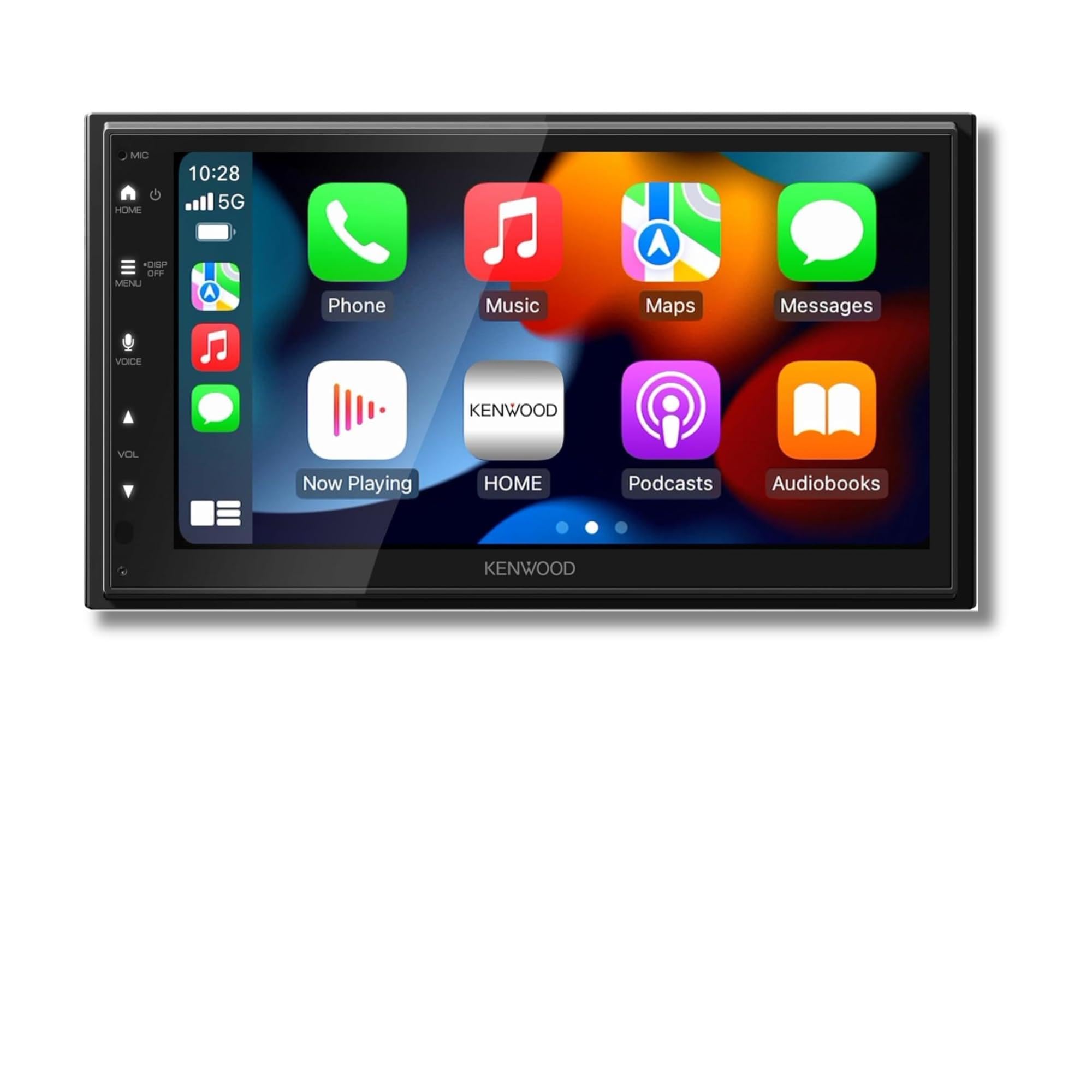
If you want to buy a stereo, install it once, and never have to worry about frustrating connection drops, screen lag, or muddy audio ever again, the KENWOOD DMX500S is the gold standard. KENWOOD has a legendary reputation in the car audio space, and this unit exemplifies why. It drops the outdated CD player entirely to offer a “short chassis” design, which means the physical box hiding in your dashboard is incredibly shallow. If you’ve ever tried to cram a massive wiring harness behind a radio, you know this shallow depth is an absolute blessing.
The magic of this unit lies in its sophisticated audio processing. It features a robust 13-band graphic equalizer coupled with Digital Time Alignment. If you pair this unit with decent aftermarket speakers, the soundstage is breathtaking. It actively allows you to delay the audio hitting your left ear so it perfectly syncs with the right speaker. For those expanding their system, the 6-channel RCA preamp outputs provide ultra-clean signals for external amplifiers.
When searching for the best android car head unit, wireless connectivity is usually the deciding factor. Wireless Apple CarPlay and Android Auto perform flawlessly here. Owners consistently praise how quickly the unit recognizes their phone when they turn the key. The 6.8″ capacitive touchscreen behaves like a premium smartphone—smooth, instantly responsive, and highly visible.
Why it earns the top spot
- Pristine Sound Processing – 13-Band EQ and Time Alignment make even factory speakers sound incredibly robust.
- Shallow Mount Chassis – Massive space-saver behind the dash; makes tucking thick wires a breeze.
- Capacitive Touchscreen – Swipes and taps feel premium, without the “squishy” delay of cheaper resistive screens.
- Flawless Wireless Connectivity – Connects quickly and rarely drops signal, providing a seamless daily commute.
Good to know
- It utilizes a physical button row for volume rather than a tactile volume knob, which takes some getting used to.
- There is only one mono subwoofer RCA output (meaning you’ll need a Y-splitter RCA adapter if your sub amp requires left/right inputs).
Ideal for: Audiophiles and daily drivers who refuse to compromise on sound quality, screen responsiveness, and wireless reliability.
2. Pioneer DMH-1600NEX – Deep Vehicle Integration & Studio-Grade Audio

The Pioneer NEX (Networked Entertainment eXperience) line has been the benchmark for high-fidelity car audio for over a decade. The DMH-1600NEX proves its worth by offering unparalleled audio customization and incredibly deep vehicle integration. While it relies on a wired connection for Android Auto and CarPlay, many purists actually prefer this to ensure zero audio compression, zero latency, and a constantly charged phone.
What sets this unit apart in the real world is its compatibility with interface modules like the iDatalink Maestro RR. When wired correctly using these advanced harnesses, this head unit can communicate directly with your car’s computer. You can pull up on-screen engine gauges, read tire pressure (TPMS), and view check-engine codes directly on the radio. Users have noted that bringing modern OBD2 integration to older vehicles feels like magic.
Sonically, Pioneer’s 13-band EQ and built-in crossovers push out exceptional volume and clarity. However, owners have pointed out that Pioneer’s companion smartphone app (used for firmware updates) is frustratingly clunky. Updating the unit requires a bit of tech-savvy patience. But once it’s set up, the hardware performs flawlessly.
Why it stands out
- Exceptional Audio Output – Breathes entirely new life into stock speakers and offers deep tuning for aftermarket amps.
- Advanced Vehicle Integration – Retains factory features and adds OBD2 gauge readings with compatible Maestro modules.
- Wired Stability – Rock-solid, drop-free connection that keeps your phone battery at 100%.
- Responsive Glass Screen – The 6.8″ capacitive display looks sleek and premium in the dash.
Good to know
- The CarAVAssist app used for firmware updates is notoriously buggy and difficult to navigate.
- Android Auto connection strictly requires a high-quality data transfer cable; cheap gas station cables will fail frequently.
Ideal for: Audio purists and car enthusiasts who want to integrate on-screen vehicle gauges and prioritize pure wired audio quality.
3. Pioneer DMH-W2770NEX – Premium Wireless Connectivity with Alexa Built-In

Stepping up into Pioneer’s wireless territory, the DMH-W2770NEX is built to keep your phone securely in your pocket while delivering a high-end smart experience. It features a brilliant 6.8-inch capacitive display housed in a short chassis, similar to the KENWOOD, making those cramped dashboard installations significantly easier to manage.
The standout feature here is the deep integration with Amazon Alexa via the Vozsis app. For users whose homes are heavily integrated into the Amazon ecosystem, being able to control smart home devices, add items to a shopping list, or ask for the weather directly from the steering wheel is a massive lifestyle upgrade.
Audio quality is exactly what you expect from Pioneer: robust, clean, and highly customizable, with native support for lossless FLAC files. However, it’s worth noting from real-world testing that wireless interference (like driving past major toll scanners) can occasionally cause brief hiccups in the wireless connection. This is common with wireless protocols, but overall, the ease of getting in the car and having your music resume automatically is unbeatable.
Why it’s a top choice
- Alexa Built-in – Fantastic voice control for smart home enthusiasts on the road.
- True Wireless Freedom – Connects quickly to both Apple and Android ecosystems without hunting for cords.
- Space-Saving Design – The shallow chassis leaves plenty of room for bulky adapter wiring harnesses.
- Excellent Call Quality – Included external microphone offers clear voice pickup even at highway speeds.
Good to know
- Like many wireless stereos, heavy external signal interference can cause momentary audio drops.
- Getting Alexa fully operational requires downloading specific companion apps and pairing accounts, which takes some initial patience.
Ideal for: Smart home enthusiasts who want native Alexa voice control and the luxury of entirely wireless commuting.
4. KENWOOD DMX4710S – The Factory Feature Retention Master

Modern cars are notoriously difficult to upgrade because the factory radio often controls the climate settings, heated seats, or displays crucial vehicle information. Enter the KENWOOD DMX4710S. This unit is specifically built with massive iDataLink Maestro RR support. When combined with the correct harness, this stereo can communicate with your car’s CANBUS system, allowing you to retain climate controls, factory amplifiers, and even display advanced vehicle metrics right on the screen.
Unlike its bigger brother, the DMX500S, this unit uses a wired connection for Android Auto. However, it introduces a unique feature: True USB Screen Mirroring for Android devices. If you want to cast a YouTube video or a specific off-road trail mapping app directly to the screen (while parked, of course), the Mirroring OA app handles it seamlessly with 2-way touch control.
Installation feedback is overwhelmingly positive. Users upgrading from clunky older units consistently report that the KENWOOD menus are incredibly easy to navigate right out of the box, without needing to study a massive manual.
Why it’s a solid investment
- Maestro RR Master – The absolute best way to retain complex factory steering wheel and climate controls.
- Android Screen Mirroring – Actually casts your entire phone screen with 2-way touch capability via USB.
- Logical User Interface – Menus are straightforward, intuitive, and highly responsive.
- High-End Sound Controls – Features KENWOOD’s stellar 13-band EQ and Time Alignment processing.
Good to know
- It requires a physical USB cable connection for Android Auto (no wireless capability natively).
- The screen is standard LCD, not the premium Capacitive glass found on higher-tier models, so it requires a slightly firmer touch.
Ideal for: Owners of modern vehicles who need to retain factory climate controls and amplifiers without losing any functionality.
5. PLZ 10.1″ Wireless Single Din – Cinematic Display for Older Vehicles
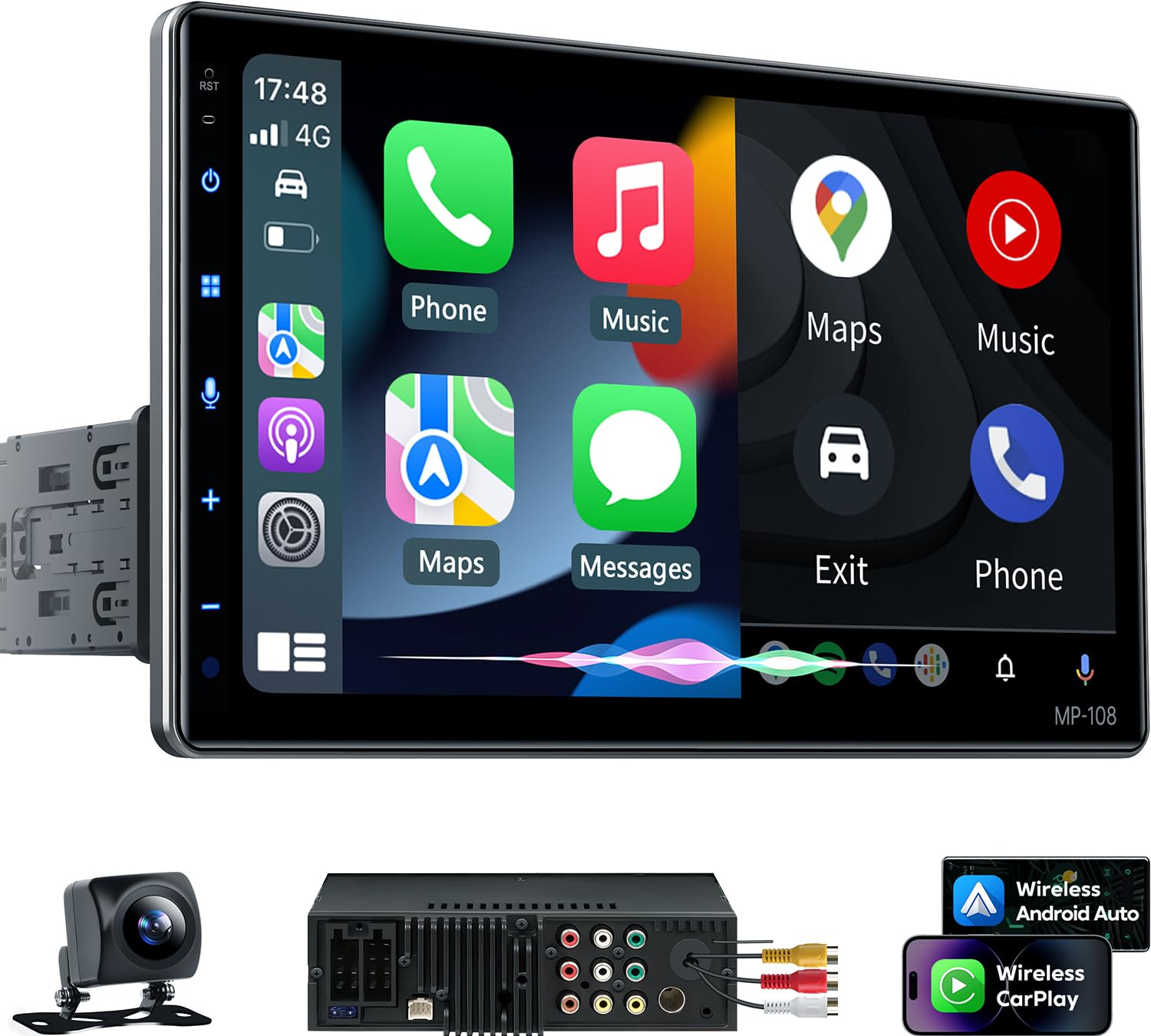
What do you do when you drive an older vehicle (like a classic truck or 90s sedan) that only has a small, 2-inch tall “Single DIN” radio slot, but you desperately want a massive modern touchscreen? You buy the PLZ 10.1″. This unit uses a standard single DIN chassis that mounts securely into your dash, but features an enormous 10.1-inch IPS display that floats in front of the dashboard.
The sheer scale of the screen changes everything. Navigation maps are incredibly easy to read at a glance, and split-screen tasks become a joy rather than a squinting match. It supports fully wireless Apple CarPlay and Android Auto, connecting automatically via its independent Bluetooth 5.3 module. Remarkably for a brand in this price bracket, it includes a dedicated DSP chip, offering a 10-band EQ and two dedicated subwoofer outputs.
User reviews heavily praise the screen clarity and the surprisingly excellent customer support, noting that the manufacturer will actually email you a custom boot logo (like a Ford or Toyota emblem) if you request it. The main caveat with floating screens is physical: you must ensure the massive display won’t block your A/C vents or hazard light switches once mounted.
Why it changes the game
- Massive 10.1″ Floating Display – Gives an incredible Tesla-style modern look to older vehicles.
- Single DIN Compatibility – Fits cars that literally cannot accept a standard large double-din radio.
- Fast Wireless Connection – BT 5.3 ensures zero-lag wireless CarPlay and Android Auto.
- Outstanding Customer Support – They will provide firmware updates and custom vehicle boot logos upon request.
Good to know
- The massive screen may block physical climate control buttons or air vents depending on your dashboard layout.
- Because it is large and heavy, ensuring a very tight mounting of the chassis is crucial to prevent the screen from bouncing on bumpy roads.
Ideal for: Owners of older cars, RVs, and trucks with restricted Single-DIN dashboard slots who refuse to compromise on screen size.
6. ATOTO A5L 7inch – The Tweaker’s Dream with Granular Audio Control

This is where we cross the line from a standard “stereo” into a full-blown “Android Dashboard Computer.” The ATOTO A5L actually runs on an Android operating system (2GB RAM + 32GB Storage). This means you can tether it to your phone’s Wi-Fi hotspot and download apps directly from the Google Play store. Want to run an OBD2 engine-diagnostic app natively on the dash? Want to watch Netflix while waiting in the school pickup line? You can do it natively.
But what genuinely shocked the car audio community is the DSP tuning capability built into this unit. It features a staggering 24-Band EQ, Time Alignment, and a 3-way crossover network. Audio tuners have noted that it offers granular frequency control down to 1 Hz adjustments—a feature normally reserved for external DSP units costing hundreds of dollars.
Because it is a complex computer running a 2GB RAM processor, it can occasionally feel slightly sluggish when switching between heavy applications. Furthermore, the pre-amp output voltage is roughly 2V, which means if you are pushing massive external competition amplifiers, the noise floor might be slightly higher than a premium Pioneer. But for the price and the absolute freedom it offers, the A5L is a masterpiece.
Why tech-enthusiasts love it
- True Android Tablet Experience – Download any app you want directly to the stereo via Wi-Fi.
- World-Class Audio Tuning – 24-band EQ and precise 3-way crossovers allow surgical sound shaping.
- Multi-Device Bluetooth – Connects to your phone and an OBD2 diagnostic scanner simultaneously.
- DriveChat AI – Built-in ChatGPT assistant handles complex voice commands effortlessly.
Good to know
- The 2GB RAM processor can feel slightly laggy if you have multiple heavy apps running simultaneously.
- Lower 2V pre-out voltage means you need to be careful with amplifier gain settings to avoid static hiss.
- No physical instruction manual is included in the box; you must scan a QR code.
Ideal for: DIY audiophiles, tech tinkerers, and drivers who want the freedom to download any Android app directly to their dashboard.
7. JENSEN J1CA7 7-inch – No-Nonsense, Reliable Name Brand Performance
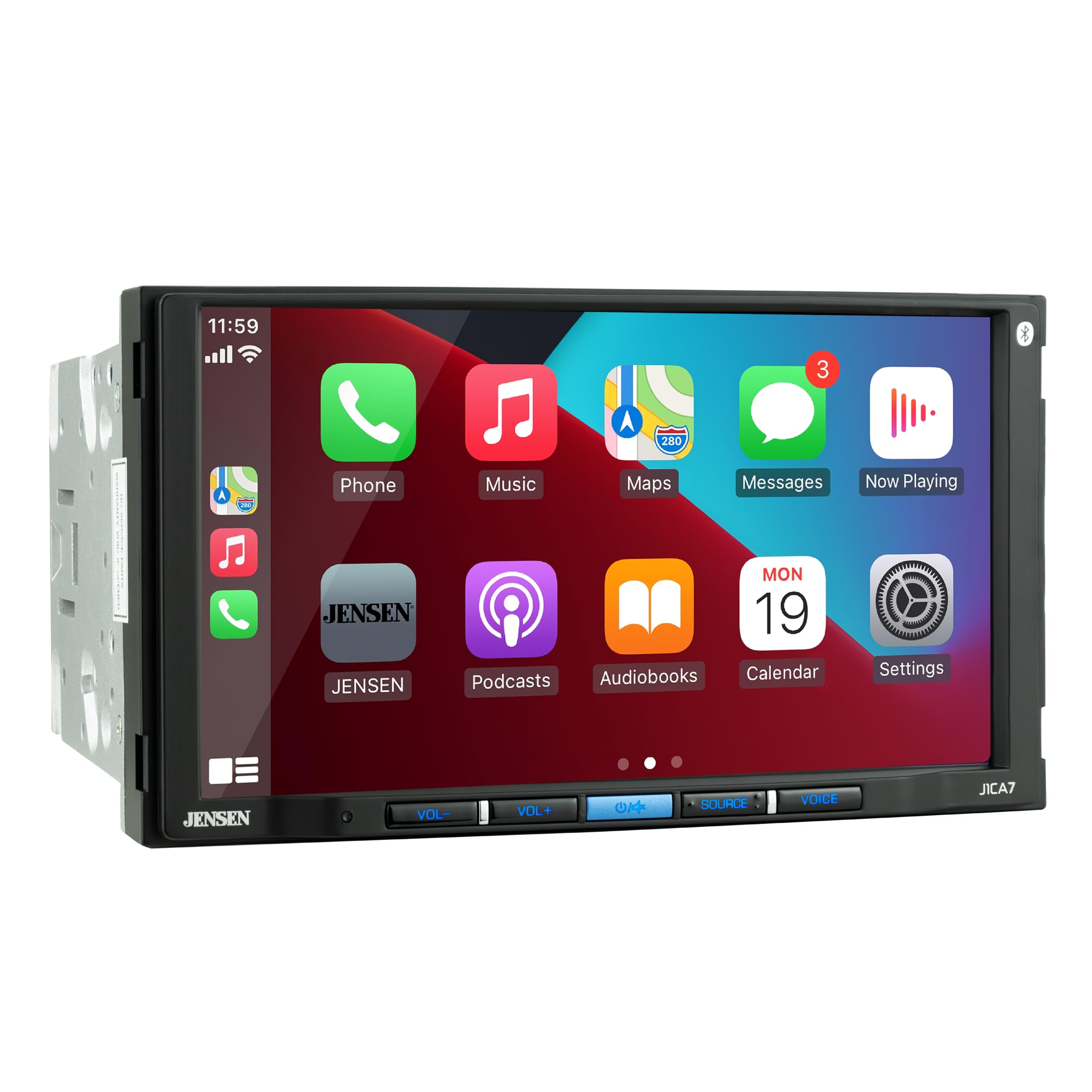
Jensen has been making car audio gear for decades, and the J1CA7 represents their philosophy of keeping things simple, stable, and affordable. This is a purely wired head unit, which means you plug your phone into the USB port and it instantly launches into your smart driving interface. For many people who are tired of fighting with spotty Bluetooth connections, this physical “plug and play” reliability is exactly what they want.
The 7-inch LED screen is notably crisp, and the built-in user interface is highly intuitive. You don’t have to dig through four layers of menus to change the EQ or adjust the subwoofer volume. It is highly responsive and boots up quickly. It also features a rear USB input that pushes 1.5 Amps of fast-charging power, ensuring your phone actually gains battery life while navigating.
However, expert installers note a critical limitation for advanced audiophiles: it lacks detailed High Pass Filter (HPF) crossover adjustments for the main door speakers. If you are building a massive, amplified subwoofer system, this means you can’t electronically stop deep bass from trying to play through your smaller door speakers via the head unit itself. If you are just running standard speakers, this won’t bother you at all.
Why it’s a reliable workhorse
- Rock Solid Wired Connection – Never worry about Wi-Fi drops or pairing issues; just plug in and drive.
- Intuitive Interface – Clean, straightforward menus that are easy to navigate while driving.
- Name-Brand Peace of Mind – Backed by a standard warranty from a long-standing car audio manufacturer.
- Fast Boot Times – The processor handles the streamlined software with zero lag.
Good to know
- Lacks a High-Pass Filter setting, making advanced speaker protection a bit tricky without external crossovers.
- No image-flip option for the backup camera input; ensure physical camera orientation is perfect during install.
Ideal for: Budget-conscious buyers who prefer the absolute stability of a wired connection and a simple, intuitive user experience.
8. SJoyBring W021 QLED – Stunning Screen + Dash Cam Combo

If you want to completely overhaul your vehicle’s technology in a single afternoon without hunting for separate components, the SJoyBring W021 is an incredible “box-in-one” solution. Not only do you get a head unit featuring wireless Android Auto and CarPlay, but the package actively includes a 720p HD Dash Cam and a waterproof Backup Camera.
The true star of this unit, however, is the upgraded QLED display. Standard LCD screens can wash out terribly under direct sunlight. QLED technology provides immense brightness, deeper blacks, and a 178-degree viewing angle. Drivers report that reading navigation maps on this screen during high noon is phenomenally easy. It also includes a physical, rotating volume knob, which is a massive safety plus.
Installation will require a bit more effort simply because you are running cables for two distinct camera systems. Wiring the dash cam involves tapping into an ACC power source, while the backup camera requires tapping into your reverse tail-light wiring. Once properly installed, having looped dash-cam recording alongside seamless music streaming provides immense peace of mind.
Why it’s a fantastic bundle
- QLED Visual Brilliance – Colors pop and glare is minimized, making daytime navigation effortless.
- Comprehensive Safety Kit – Includes both a front loop-recording dash cam and a rear backup camera.
- Physical Volume Knob – A tactile rotating knob is vastly superior to tapping glass while driving.
- Excellent Audio Layout – 4.2 channel output with dual subwoofer RCAs for a balanced sound system.
Good to know
- Running wires for two separate cameras adds significant time to the DIY installation process.
- You must provide your own Class-10 MicroSD card for the dash cam to record footage.
Ideal for: Safety-conscious drivers who want to add dash-cam recording, backup assistance, and brilliant QLED navigation in one affordable sweep.
9. BOSS Audio Systems BVCP9700A – Reputable, Warranty-Backed Basics

BOSS Audio serves a very specific and highly necessary market segment: drivers who want a recognized American brand name, a strong multi-year warranty, and reliable performance—all without spending a fortune. The BVCP9700A strips away the bells and whistles (no wireless connection, no built-in CD player) to focus entirely on delivering a solid wired Android Auto experience.
Real-world performance proves this unit to be highly intuitive. The screen utilizes large, easy-to-read icons, which is great for quick glances while driving. It provides standard front, rear, and sub pre-amp outputs, making future audio expansion easy. The 85 Watts x 4 max power gives a very noticeable boost to aging factory speakers.
However, it does have a few quirks to be aware of. Instead of a volume knob, it relies on physical + and – buttons on the side bezel, which some drivers find slightly annoying to hunt for without steering wheel controls. Additionally, the included external microphone is somewhat weak, meaning you might have to project your voice louder during highway phone calls to be heard clearly.
Why it’s a safe bet
- Outstanding Warranty – Backed by a 3-year dealer warranty when bought on Amazon, providing massive peace of mind.
- High-Visibility UI – Interface utilizes large controls that are very easy to tap while driving.
- Dependable Wired Connection – Reliable, drop-free syncing with your smartphone.
- Front & Rear Camera Inputs – Allows you to run a dual-camera setup on demand.
Good to know
- Volume is controlled by push-buttons rather than a tactile knob.
- The microphone quality is mediocre; callers may hear background noise if it isn’t positioned perfectly.
- The internal parking brake safety wire is strict and requires proper wiring to unlock certain settings.
Ideal for: Drivers who want a reputable, warranty-backed entry-level stereo without dealing with unknown overseas brands.
10. PLZ 7″ Wireless Double Din – High Fidelity Audio on a Budget

PLZ strikes again, this time with a traditional 7-inch double DIN unit that punches way above its weight class in terms of audio architecture. If you are replacing a complex factory system (like a Bose or JBL setup), this unit features a built-in DSP with 4.2 channel pre-amp outputs. Having dual subwoofer outputs natively on a budget radio is incredibly rare and highly appreciated by bass-heads.
The connectivity is powered by an independent Bluetooth 5.3 module with an external antenna. This results in ultra-fast pairing. Users note that the moment they turn the key, wireless CarPlay or Android Auto is up and running before they even shift into drive. A physical volume knob anchors the left side, bringing old-school tactile safety to modern tech.
The user reviews highlight the same exceptional customer service found on their 10.1″ model—you can easily request custom boot logos to match your vehicle. On the downside, some users reported that when operating specifically under Android Auto, the initial loading of massive music libraries could take up to 30 seconds of lag before smoothing out.
Why budget audiophiles love it
- Advanced DSP & 4.2 Channels – Incredible sound shaping with dedicated dual subwoofer outputs.
- Ultra-Fast Bluetooth 5.3 – Highly stable connection that boots up instantly when starting the car.
- Free Customization – Fantastic customer support provides custom car brand boot logos upon request.
- Physical Volume Dial – Features a true tactile dial for quick, safe volume adjustments.
Good to know
- Can experience some initial menu lag for the first 30 seconds while syncing heavy music libraries over Android Auto.
- The physical volume dial mechanism may lose some of its crisp “click” feeling after a year or two of heavy use.
Ideal for: Budget buyers expanding their sound system with subwoofers who still demand wireless convenience and a physical volume knob.
11. Haudio Wireless Screen (2+64GB) – True Android 13 with Massive Storage
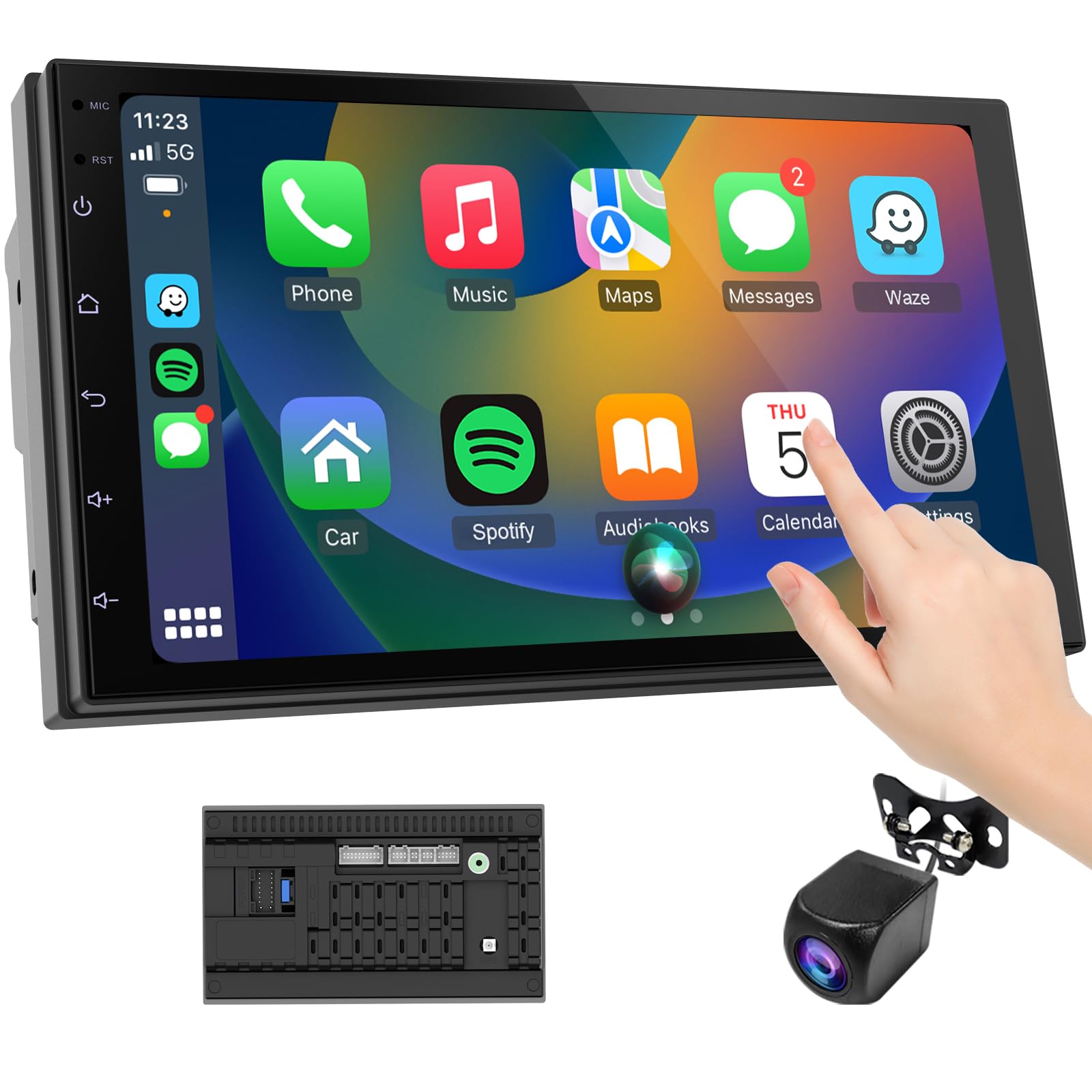
Like the ATOTO A5L, the Haudio unit functions as a completely independent Android 13 tablet mounted inside your dash. However, this specific model features a massive 64GB of internal storage (ROM). If your goal is to download heavy offline maps, load up gigabytes of high-resolution FLAC audio files, or install dozens of custom APKs directly to the dashboard without worrying about running out of space, this unit is a goldmine.
The multitasking capabilities on this unit are impressive for the price. It natively supports split-screen processing (e.g., having Google Maps taking up 70% of the screen while a PiP video or Spotify widget takes up the remaining 30%). It also features a 12-band ASP EQ tuner to help customize your audio profile.
However, buyers must be prepared for a DIY installation experience. The included instruction manual is notoriously brief and lacks detailed wiring diagrams. If you have never installed a car stereo before, you will heavily rely on YouTube tutorials to figure out the steering wheel control (SWC) wires. Because it runs a full OS on 2GB of RAM, boot times are noticeably sluggish compared to standard radios.
Why app enthusiasts want it
- Massive 64GB Storage – Plenty of room to download native Android apps, offline maps, and media files.
- True Android 13 Environment – Break free from phone restrictions; run full tablet applications natively.
- Split-Screen Multitasking – Run navigation and video playback simultaneously with ease.
- Lossless Audio Decoding – Native support for high-quality FLAC and WAV files.
Good to know
- The installation instructions are terrible; novice installers will need to seek out external wiring diagrams.
- Boot-up times are long (often 30 seconds) as the entire Android OS has to initialize when the car turns on.
- Heavy applications will max out the 2GB of RAM, causing occasional sluggishness.
Ideal for: Experienced DIY installers who want maximum internal storage and the freedom of a native Android 13 operating system on a very tight budget.
12. Kissound Double Din – Unbelievable Feature List Under $100

Can a car stereo that costs less than a tank of gas actually perform? The Kissound 7-inch Double DIN answers with a resounding yes. If you are fixing up a teenager’s first car, an old farm truck, or simply have a very strict budget, this unit delivers modern necessities at a fraction of the cost of legacy brands.
It is astonishing that a unit at this price point offers Wireless Apple CarPlay and Android Auto. In the past, sub-$100 stereos were slow, resistive-screen nightmares. The Kissound unit, however, utilizes an IPS display (1024×600) with wide viewing angles, meaning the screen doesn’t wash out when you look at it from the driver’s seat. It even includes an 8-LED backup camera in the box, making parking safer for new drivers.
The compromises exist precisely where you’d expect them to at this price. The internal amplifier claims 240W, but users note it struggles to push high volume without slight distortion compared to a Pioneer or KENWOOD. Additionally, the internal processor is weak; swiping rapidly through menus can result in screen tearing or lag. However, if you just let it boot into Android Auto and use it for basic Maps and Spotify, it is a phenomenal bargain.
Why it defies its price tag
- Unmatched Price-to-Feature Ratio – Wireless connectivity and a backup camera at rock-bottom pricing.
- Shallow Chassis Design – Fits into almost any dashboard effortlessly without crushing wires.
- Dual Microphones – Features both internal and external mics to ensure your voice is heard.
- Custom Boot Logo – Set the startup screen to display your specific car manufacturer’s logo easily.
Good to know
- The internal amplifier inflates its wattage specs; high volumes on cheap speakers will distort quickly.
- Weak CPU means rapid screen tapping or jumping between complex apps will induce noticeable lag.
- The backup camera cable is 19.7ft long, which may require an extension cord if installing on a long truck bed.
Ideal for: Teen drivers, commuter beaters, and anyone who wants modern wireless maps and a backup camera for the absolute lowest price possible.
Installation Secrets (And Why Wiring Harnesses Matter)
The biggest mistake people make when buying a best android car head unit is assuming it will just “plug into” their dashboard like a toaster into a wall. Cars use proprietary wiring plugs. Aftermarket stereos use universal bare wires. You must bridge this gap to avoid a nightmare. Here is exactly how the experts do it.
The “Holy Trinity” of Installation Parts
- The Dash Kit: Factory radios are often weird, asymmetrical shapes. A dash kit is a custom-molded piece of plastic that bolts into your car and provides a perfectly square double-DIN hole for your new stereo. (Brands like Metra and Scosche are the gold standard here).
- The Wiring Harness Adapter: You will get a harness with your new stereo that has bare wires. You must buy a vehicle-specific harness adapter (e.g., “2012 Honda Civic Radio Harness”). You sit at your kitchen table, match the colors (Red to Red, Yellow to Yellow, etc.), crimp or solder them together, and then simply plug the blocks into your car. Never cut your factory car wires.
- Steering Wheel Control (SWC) Module: If your car has volume buttons on the steering wheel, they won’t magically work with a new radio. You need a translation box (like the Axxess ASWC-1 or iDatalink Maestro). You program this little box, wire it in, and it tells your new radio what the steering wheel is doing.
Common Installation Pitfalls to Avoid
- The Ground Wire: A bad ground is the #1 cause of static, hissing, or a stereo that randomly shuts off. Ensure the black ground wire is securely connected to a clean, unpainted metal chassis point if the factory harness ground is weak.
- The Parking Brake Wire: Most stereos have a light green wire meant to attach to your parking brake. This is a safety feature to prevent video playback while driving. If you don’t connect this properly, many Bluetooth pairing menus and settings will remain permanently locked.
- Backup Camera Trigger: Your reverse camera needs to know when the car is going backward. You must run the camera’s power wire to your vehicle’s reverse tail-light bulb wire. This sends a 12V signal to the radio to instantly switch the screen to the camera feed.
- Amplifier Turn-On Wire: If your car has a factory premium sound system (like Bose, JBL, or Infinity), you must connect the new radio’s “Amp Turn-On” wire (usually Blue/White) to the harness. Otherwise, the radio will power on, but you will get zero sound because the factory amp is sleeping.
Frequently Asked Questions (FAQ)
Do I need a Wi-Fi hotspot to use Wireless Apple CarPlay or Android Auto?
Why is the microphone quality on my new stereo so bad?
What is the difference between Peak Power and RMS Power?
Will an aftermarket head unit make my factory speakers sound better?
Why does my Android OS head unit take so long to boot up?
Should I solder my wiring harness or use crimp connectors?
Final Thoughts: Transform Your Daily Drive
Replacing your factory radio is the most impactful upgrade you can make to your vehicle’s interior. It drastically improves your daily safety by keeping your hands off your phone, modernizes your dashboard aesthetic, and vastly upgrades your audio fidelity.
Here is the ultimate cheat sheet for making your final decision:
- Want the absolute best blend of elite brand trust, flawless audio tuning, and seamless wireless connectivity? Invest in the KENWOOD DMX500S. It is our top premium pick for a reason.
- Driving a modern vehicle and refuse to lose your factory climate controls and engine gauges? You need a Maestro-compatible unit like the KENWOOD DMX4710S or the Pioneer DMH-1600NEX.
- Want unrestricted freedom to download third-party apps and utilize insane 3-way crossover tuning? The True Android OS ecosystem of the ATOTO A5L is a tinkerer’s dream.
- Looking to add a dash cam, a backup cam, and a brilliant display in one incredibly affordable package? The all-in-one SJoyBring 7″ QLED represents massive bang for your buck.
- Refuse to give up the tactile satisfaction and safety of a physical volume knob? The PLZ 7″ Double Din delivers modern wireless connectivity alongside a classic rotary dial.
- Stuck with a tiny Single DIN slot but desperately want a massive, modern display? The floating, adjustable screen of the PLZ 10.1″ Single Din will completely modernize your classic car’s interior.
Finding the perfect best android car head unit doesn’t have to be a gamble. By understanding the core technologies—like capacitive glass, pre-amp voltages, and the massive difference between Android Auto and a native Android OS—you can confidently purchase a receiver that will make you fall in love with your car all over again. Measure your dashboard, buy the correct wiring harnesses, and enjoy the drive.