
Our readers keep the lights on and the garage heater humming. As an Amazon Associate, I earn from qualifying purchases.
Ah, the unmistakable rumble of a classic engine, the scent of vintage leather, the gleam of chrome under the sun – there’s nothing quite like it. Owning a classic car isn’t just about driving; it’s about preserving a piece of history, an engineering marvel from a bygone era. And just like any prized possession, these beauties demand specific, loving care, especially when it comes to the lifeblood of their engines: the oil.
I’m Mo Maruf — the founder and writer behind Go Carlife. My expertise comes from years of deep market analysis, comparing specialized oil formulations, and scrutinizing feedback from classic car owners to ensure your cherished ride gets the precise care it deserves.
Modern oils, while fantastic for contemporary vehicles, often lack the crucial components that vintage engines, particularly those with flat tappet camshafts, desperately need. To ensure your cherished classic car runs optimally and lasts for decades, selecting the precise lubricant is essential, and this guide helps you choose the best oil for classic cars.
How To Choose The Best Oil For Classic Cars
Picking the right oil for your classic isn’t just about grabbing a bottle off the shelf; it’s about understanding the unique needs of older engines. They operate differently from modern vehicles, and their internal components, especially flat tappet camshafts, require specific lubrication to prevent premature wear. Let’s break down the key factors.
Viscosity & ZDDP Levels
The first thing to consider is the oil’s viscosity. Classic car engines, especially those with looser tolerances or higher mileage, often benefit from thicker oils like 10W-30, 10W-40, or 20W-50, which provide a more robust film strength under high operating temperatures. Crucially, look for high levels of Zinc Dialkyldithiophosphate (ZDDP). This anti-wear additive, reduced in modern oils due to catalytic converter concerns, is vital for protecting flat tappet camshafts and other metal-on-metal components found in most vintage engines.
Conventional vs. Synthetic & Additives
While synthetic oils offer superior modern protection, many classic car enthusiasts stick with conventional (mineral) oils. This is because older engine seals might not always react well to the detergents and smaller molecules in synthetics, potentially leading to leaks. If you do opt for a conventional oil, ensure it has adequate ZDDP. Alternatively, specialized classic car oils are formulated with the right balance. Additives like zinc boosters or stop-leak products can also be invaluable for addressing specific issues in high-mileage or leaky classic engines.
Storage & Specific Engine Needs
Many classic cars aren’t daily drivers; they spend significant time in storage. For these vehicles, oils with enhanced rust and corrosion inhibitors are a major plus, ensuring internal components remain protected during extended downtime. Always consult your vehicle’s original owner’s manual or a trusted classic car mechanic for specific recommendations. Factors like engine design (e.g., flat tappet, roller cam), intended use (street, track, show), and climate can all influence the ideal oil choice.
Quick Comparison
On smaller screens, swipe sideways to see the full table.
| Model | Type | Best For | Key Feature | Amazon |
|---|---|---|---|---|
| Lucas Oil 10679 Hot Rod & Classic Car | Conventional | Overall Protection | High Zinc, Moly, Phosphorus | Amazon |
| Driven Racing Oil HR-5 Hot Rod Conventional | Conventional | Dedicated Classic Performance | No ZDDP Additives Required | Amazon |
| Valvoline VR1 Racing SAE 20W-50 | Conventional | High-Stress Engines | 2X More Zinc & Anti-Foaming | Amazon |
| Castrol GTX Classic 20W-50 | Conventional | Flat Tappet Engines | High Zinc and Phosphorus | Amazon |
| Shell Rotella T4 Triple Protection 15W-40 | Diesel | Versatile Heavy-Duty | Triple Protection Technology | Amazon |
| Motul Classic Eighties 10W40 | Semi-Synthetic | Modern Classic Vehicles | High-Zinc & Moly for Storage | Amazon |
| Valvoline Heavy Duty Synthetic Blend 15W-40 | Synthetic Blend | Bulk Diesel & Select Classics | 35% Better Wear Protection | Amazon |
| Lucas Oil 10631 SAE 30 Racing Engine Break-in Oil | Conventional | New Engine Break-in | Quicker, More Efficient Ring Seal | Amazon |
| Castrol GTX 20W-50 Conventional Motor Oil | Conventional | General Older Engines | Maximum Viscosity Protection | Amazon |
| Motul 110621 Classic Performance 20W50 | Mineral | Performance Classics | High-Zinc & Moly Blend | Amazon |
| Motul 104509 Classic SAE 30 Mineral Engine Oil | Monograde Mineral | Pre-1950 Vehicles | Low Detergent Level | Amazon |
| Idemitsu Full Synthetic Rotary Racing 20W-50 | Full Synthetic | Rotary Engines | Special Molybdenum Agents | Amazon |
| Bar’s Leaks Rislone 4405 Engine Oil Supplement | Additive | ZDDP Boost | Boosts Zinc & Phosphorous | Amazon |
| Marvel Mystery Oil Original Motor Treatment | Additive | Multi-System Treatment | Cleans & Lubricates Fuel/Oil | Amazon |
| Lucas Oil 10278 Engine Oil Stop Leak | Additive | Seal Rejuvenation | Renews Worn Seals | Amazon |
In‑Depth Reviews: Best Oil for Classic Cars
1. Lucas Oil 10679 Hot Rod & Classic Car SAE 10W-30

For classic car enthusiasts who demand nothing but the best for their vintage rides, the Lucas Oil 10679 Hot Rod & Classic Car SAE 10W-30 is a true standout. This isn’t just any oil; it’s meticulously crafted with high-quality paraffinic base oils and a unique additive package, including crucial zinc, molybdenum, and phosphorus. It’s designed to provide a tougher, thicker additive film, essential for maximum protection in older engines.
Owners of vintage and performance vehicles consistently report a noticeable difference, with engines running smoother and quieter. Many mention its ability to improve pressure in worn engines, effectively reducing oil burning and ensuring optimal performance. Its compatibility with various fuels, including methanol and racing blends, further solidifies its versatility, while its rust and corrosion prevention capabilities are a huge plus for cars that see intermittent use or storage.
This oil truly feels like a special treat for your engine, delivering peace of mind and tangible performance benefits. It’s a highly recommended choice for anyone looking to keep their classic purring like a kitten, offering excellent protection against wear and tear without breaking the bank. For a robust, reliable, and classic-specific lubrication solution, this Lucas Oil blend is tough to beat.
Why it’s great
- High levels of zinc, molybdenum, and phosphorus for superior wear protection.
- Improves film strength between cylinder wall and piston rings.
- Reduces oil burning and improves pressure in worn engines.
- Prevents rust and corrosion, ideal for stored vehicles.
Good to know
- Viscosity may need to match specific engine requirements.
- Best for flat tappet and hot rod applications.
2. Driven Racing Oil HR-5 Hot Rod Conventional 10w-40

For those with serious classic and muscle car builds, especially C2 Corvettes and engines with flat tappet cams, the Driven Racing Oil HR-5 Hot Rod Conventional 10w-40 is practically a legend. This oil is specifically formulated so that no additional ZDDP or additives are required, offering a robust, all-in-one solution for optimal protection. It’s designed to meet the demanding needs of high-performance older motors.
Enthusiasts frequently highlight its high zinc content, which is crucial for flat tappet camshafts, ensuring longevity and performance. Beyond wear protection, this oil also includes specialized storage protection additives that guard against rust and corrosion, making it an excellent choice for vehicles that aren’t driven daily. Many consider it the best oil out there for classic engines, praising its ability to keep their prized possessions running strong.
If your classic car is more than just a cruiser—it’s a performance machine or a meticulously maintained show car—this Driven Racing Oil is a top-tier investment. It delivers on its promise of superior protection and specialized care, ensuring your engine runs as beautifully as it looks. The convenience of a 12-quart case also makes it a practical choice for regular maintenance.
Why it’s great
- Formulated with high zinc, eliminating the need for separate ZDDP additives.
- Includes storage protection against rust and corrosion.
- Ideal for flat tappet camshaft applications in classic and muscle cars.
- Provides excellent lubrication and wear protection.
Good to know
- Premium price point due to specialized formulation.
- Sold in a case of 12 quarts, which might be more than some need.
3. Valvoline VR1 Racing SAE 20W-50 Motor Oil
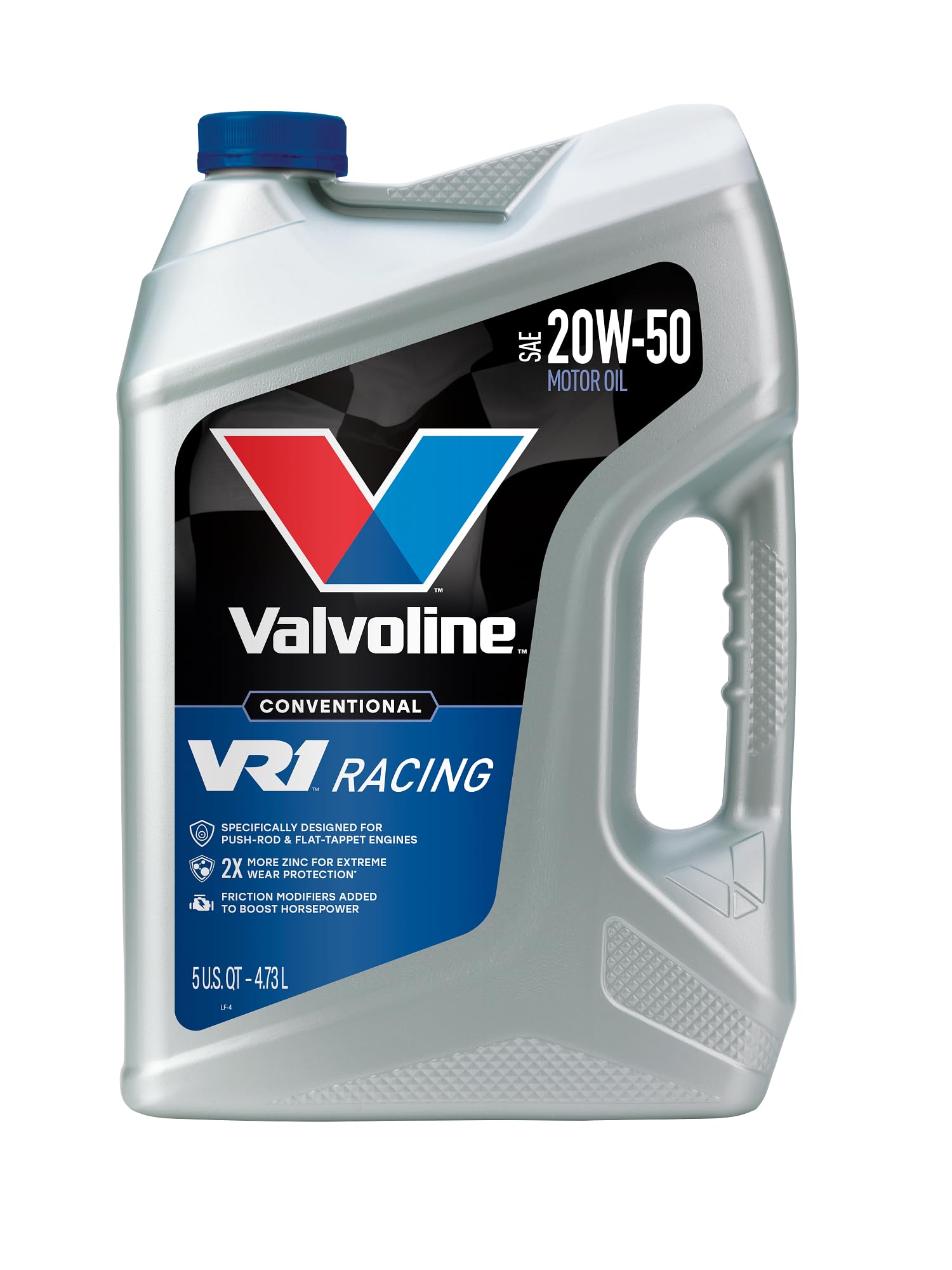
The Valvoline VR1 Racing SAE 20W-50 Motor Oil carries a legacy dating back to 1965, making it a trusted name for motorsports and muscle car enthusiasts. This oil is engineered with high levels of ZDDP, combining phosphorus and double the zinc for superior film strength and extreme anti-wear protection. It’s a go-to for safeguarding pistons, cams, and bearings in high-compression motors.
Drivers of hot rods and classic cars appreciate its robust formulation, noting that it has the zinc needed for their vintage engines. The enhanced anti-foaming agents and maximum resistance to thermal breakdown are critical features, particularly for engines that experience extreme stress. Many users, including owners of a 1960 BT7 Healey 3000, attest to its effectiveness in keeping their classic engines running smoothly and reliably.
If you’re looking for a proven, high-performance conventional oil that can stand up to the rigors of both track and street service, the Valvoline VR1 Racing is an excellent choice. Its dedication to protecting high-compression engines from extreme stress and potential failure makes it a favorite among those who push their classics a little harder, ensuring peak performance under pressure.
Why it’s great
- Formulated with 2X more zinc for extreme anti-wear protection.
- Enhanced anti-foaming agents and thermal breakdown resistance.
- Proven track record in motorsports and muscle cars since 1965.
- Compatible with gasoline and partial alcohol fuels.
Good to know
- May not be suitable for certain emissions systems due to high zinc.
- Heavier 20W-50 viscosity might not be ideal for all climates or engines.
4. Castrol GTX Classic 20W-50 Conventional Motor Oil

For owners of older air-cooled engines and those with flat tappet camshafts, the Castrol GTX Classic 20W-50 Conventional Motor Oil offers a tailored solution. This oil is specifically designed with high zinc and phosphorus content, providing the extreme wear protection that modern oils often lack. It’s built to maintain a tough and thick oil film, even under severe operating conditions.
Many classic car owners, including those with 1972 VW Super Beetles and 1960 MGAs, praise this oil for its high-zinc additive, which is essential for preserving older engine components. Users find it to be a great alternative to adding zinc supplements to standard oil, offering a convenient and effective way to protect their vintage rides. Its high resistance to thermal degradation and minimal foaming are also frequently cited benefits.
If you’re navigating the delicate balance of finding an oil that respects your classic engine’s original design while offering modern protective qualities, this Castrol GTX Classic blend is an excellent choice. It provides the necessary ZDDP and robust film strength for push-rod, flat tappet engines, and performance cam applications, ensuring your engine runs reliably for years to come.
Why it’s great
- High zinc and phosphorus levels for extreme wear protection.
- Maintains tough and thick oil film under severe conditions.
- Minimal foaming and high resistance to thermal degradation.
- Great for flat tappet engines and performance cam applications.
Good to know
- 20W-50 viscosity may be too heavy for some engines or colder climates.
- Some users wish it was offered in 10W-40 viscosity.
5. Shell Rotella T4 Triple Protection 15W-40 Diesel Engine Oil
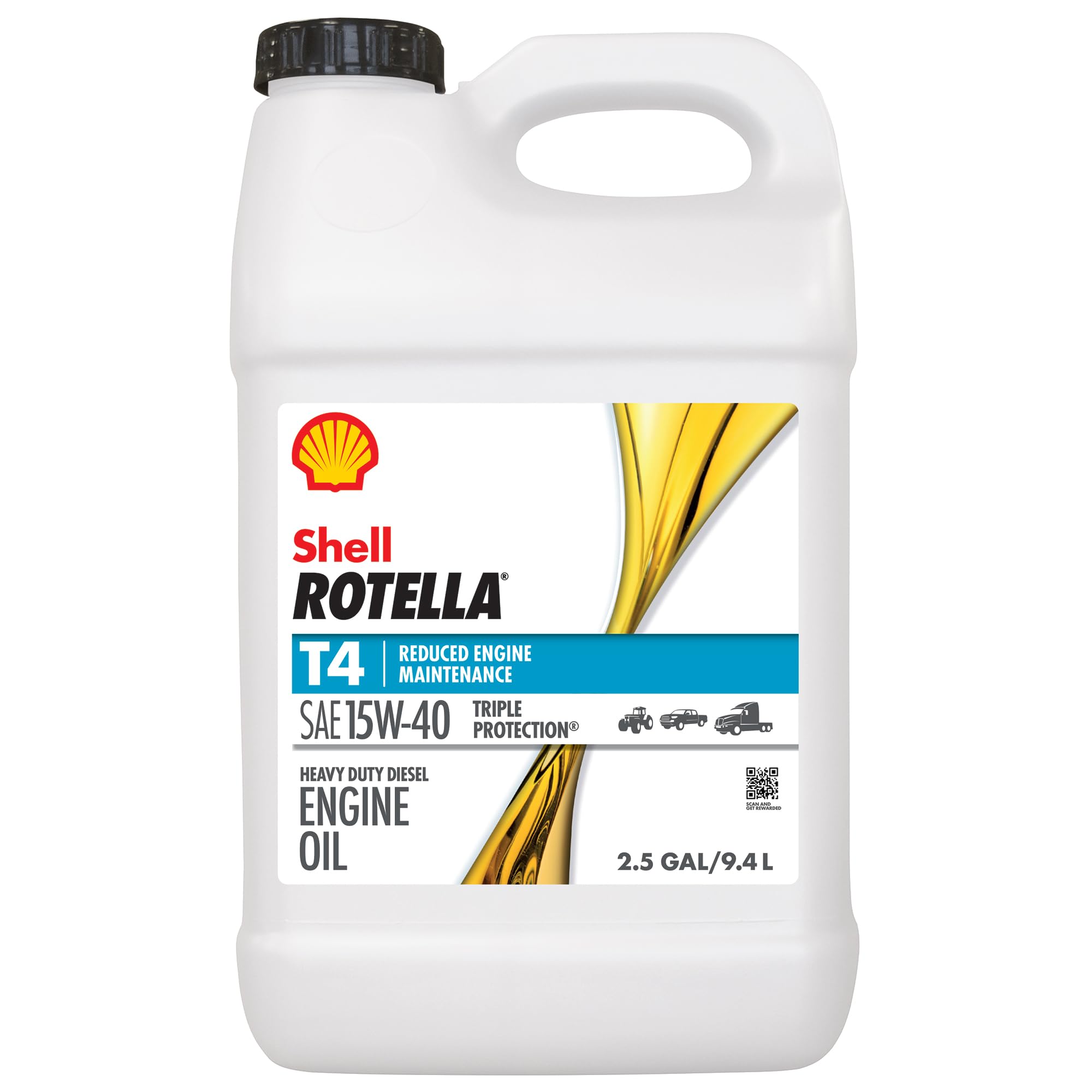
While primarily known as a diesel engine oil, the Shell Rotella T4 Triple Protection 15W-40 has found a dedicated following among classic car owners for its robust wear protection and higher ZDDP content, which is beneficial for older, flat tappet engines. Its Triple Protection technology guards against wear, deposits, and oil breakdown, offering a comprehensive shield for vintage powerplants.
Owners of 70s-era SBC 350s, in particular, have lauded its ability to stop leaks that synthetic oils might exacerbate, and appreciate its reliable performance. Its enhanced shear stability ensures better viscosity control and optimal engine oil pressure, which is crucial for engines with higher mileage. The fact that it comes in a 2.5-gallon jug also makes it a great value, especially for those with multiple classic projects or larger sumps.
If you’re seeking a heavy-duty oil that provides excellent protection and has proven its mettle in a variety of older engines, including some classic gasoline applications, the Shell Rotella T4 is a compelling option. Its robust formulation, originally designed for demanding diesel environments, translates well to the needs of many classic cars, offering peace of mind and solid performance, particularly in warmer climates.
Why it’s great
- Triple Protection technology guards against wear, deposits, and oil breakdown.
- Higher ZDDP content beneficial for older, flat tappet engines.
- Enhanced shear stability for better viscosity control and oil pressure.
- Good for older engines prone to leaks with synthetic oils.
Good to know
- Primarily a diesel engine oil, though effective in some classic gasoline engines.
- Thicker viscosity may require longer warm-up in colder conditions.
6. Motul Classic Eighties 10W40 Engine Oil

The Motul Classic Eighties 10W40 Engine Oil is a semi-synthetic multigrade blend specifically formulated for modern classic vehicles from the 1970s, 1980s, and 1990s. It meets or exceeds API SL standards of its era, ensuring compatibility and optimal performance for these specific generations of classic cars. This oil stands out with its blend of high-zinc (ZDDP) and molybdenum, providing class-leading anti-wear protection.
Owners of these “younger” classics appreciate its unique additives that bring excellent long-term storage protection, a crucial benefit for vehicles that might not see daily use. The cool metal tin jar packaging also adds a touch of vintage flair that resonates with enthusiasts. While reviews are concise, they consistently point to its quality and suitability for vehicles like an ’83 Prelude.
If your garage houses a classic from the 70s, 80s, or 90s, this Motul Classic Eighties oil is tailor-made for its needs. It strikes an ideal balance between classic formulation requirements (like ZDDP) and modern semi-synthetic performance, ensuring superior anti-wear protection and peace of mind during storage. It’s a thoughtful choice for preserving the engines of this specific classic car era.
Why it’s great
- Semi-synthetic multigrade oil for 1970s-1990s classics.
- Formulated with high-zinc (ZDDP) and molybdenum for anti-wear protection.
- Excellent long-term storage protection.
- Meets/exceeds API SL standards of the era.
Good to know
- Specific to “modern classic” vehicles, not older models.
- Comes in 2-liter cans, which might require multiple purchases for a full oil change.
7. Valvoline Heavy Duty Synthetic Blend 15W-40 Diesel Engine Oil
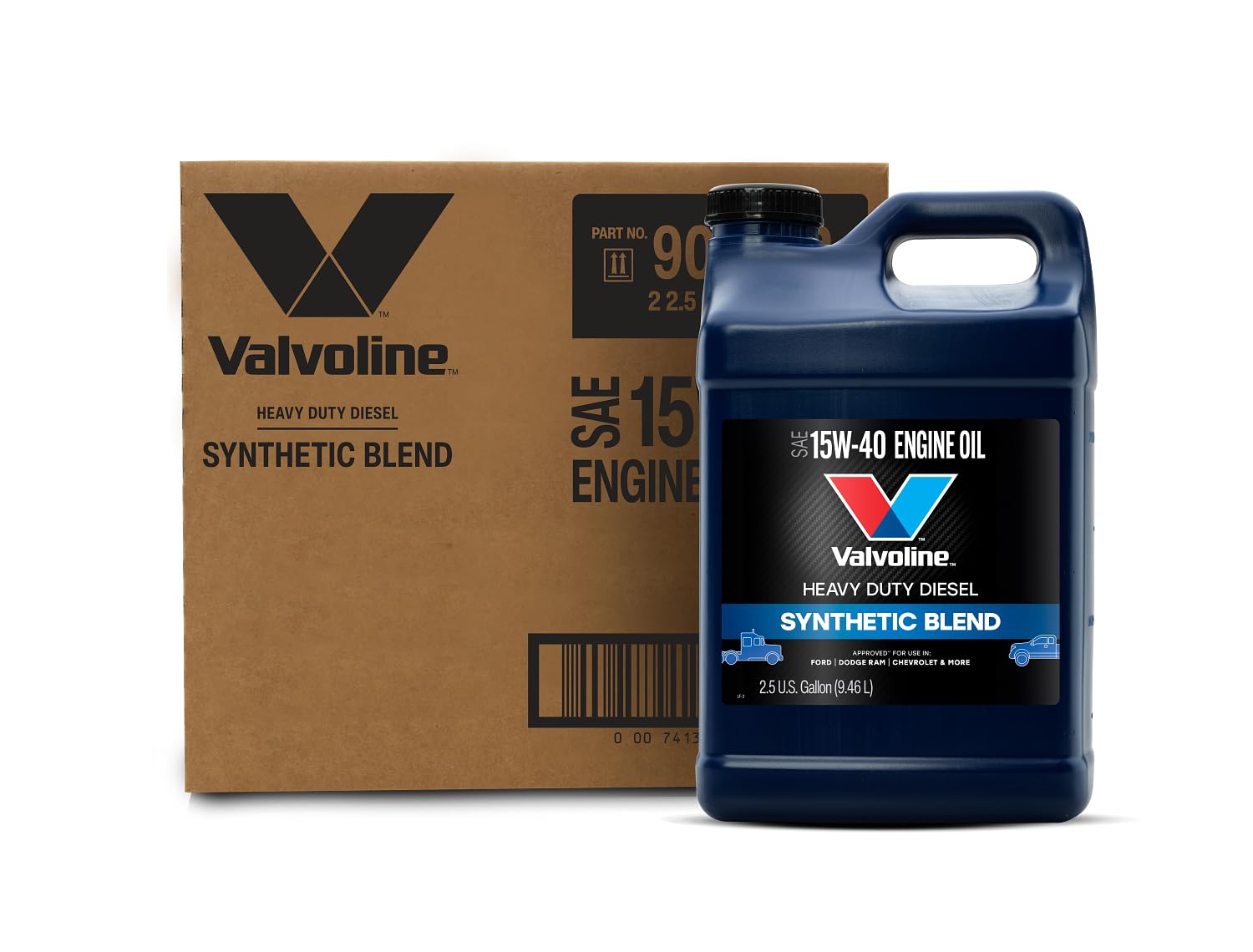
The Valvoline Heavy Duty Synthetic Blend 15W-40 Diesel Engine Oil, while designed for modern heavy-duty diesel trucks, offers a robust synthetic blend formulation that can be attractive for certain classic applications, particularly those with diesel engines or specific requirements for enhanced wear protection. It boasts 35% better wear protection compared to industry standards, engineered to control wear, deposits, and oil breakdown even in high heat.
This oil is praised by users for its excellent value, especially when purchased in the 5-gallon case. Its proven ability to maximize diesel engine life and meet low emission requirements speaks to its advanced additive technology. While not explicitly for gasoline classics, its high-performance characteristics and robust protection profile make it a consideration for classic trucks or modified vehicles that can benefit from a heavy-duty synthetic blend.
If you’re maintaining a classic diesel truck or a specific classic car that requires a heavy-duty, long-life oil with superior wear protection, this Valvoline Synthetic Blend is a strong contender. Its targeted additive technology ensures critical component protection in extreme operating conditions and temperatures, providing reliability and extended oil life. It’s an economical choice for those who need quality oil in bulk.
Why it’s great
- 35% better wear protection than industry standard.
- Designed for extended oil life in high heat conditions.
- Controls wear, deposits, and oil breakdown.
- Excellent value for bulk purchase (5 gallons).
Good to know
- Primarily formulated for diesel engines, not all gasoline classics.
- Synthetic blend might not be suitable for all older seal types without prior testing.
8. Lucas Oil 10631 SAE 30 Racing Engine Break-in Oil
When you’ve just invested in a fresh engine rebuild or a new crate motor for your classic, the break-in period is absolutely critical. The Lucas Oil 10631 SAE 30 Racing Engine Break-in Oil is specifically formulated for this crucial stage, ensuring a quicker and more efficient ring seal and providing maximum protection for both flat tappet and roller camshaft applications during initial run-in.
Engine builders and classic car restorers consistently report excellent results, noting that it provides great lubrication and protects critical components when the engine is most vulnerable. Users confirm that it helps seat rings properly and maintains its viscosity without breakdown during the demanding break-in process. One enthusiast specifically mentioned a perfect break-in for a Pontiac 455 flat tappet engine, with the cam surviving and running strong a month later.
This break-in oil is an indispensable tool for anyone undertaking an engine rebuild or installing a new engine in a classic car, motorcycle, or small engine. It sets the foundation for engine longevity and performance, ensuring that your investment starts off on the right foot. Don’t skip this vital step; proper break-in with a dedicated oil like this Lucas blend is key to years of reliable classic motoring.
Why it’s great
- Specifically designed for initial break-in of new or rebuilt engines.
- Promotes quicker and more efficient ring seal.
- Provides maximum protection for flat tappet and roller camshafts.
- Excellent lubrication during critical run-in period.
Good to know
- Intended for temporary break-in use, not long-term lubrication.
- SAE 30 monograde viscosity may not be suitable for all climates during break-in.
9. Castrol GTX 20W-50 Conventional Motor Oil

For decades, Castrol GTX has been a trusted name in conventional motor oils, and their 20W-50 blend continues to serve owners of older vehicles well. This oil offers maximum protection against viscosity and thermal breakdown, a crucial benefit for classic engines that can run hotter and have looser tolerances than their modern counterparts. Its unique TriShield technology also provides superior deposit protection.
Owners of classic cars, including a 1974 Jeep CJ5 with a 304 V8 and even a 1987 model car since 1990, attest to its consistent performance and reliability. Many prefer conventional oils like this to avoid potential leaks that can sometimes occur when switching older engines to synthetics. Drivers in hotter climates particularly appreciate the heavier 20W-50 weight for its robust lubrication and film strength.
If you’re looking for a straightforward, reliable conventional motor oil for your classic car that doesn’t necessarily require specialized racing formulations, the Castrol GTX 20W-50 is a solid, economical choice. It provides the essential protection against heat and wear, helping to extend the life of your engine and keep it running smoothly, especially in warmer regions where a thicker oil is beneficial.
Why it’s great
- Maximum protection against viscosity and thermal breakdown.
- TriShield technology provides superior deposit protection.
- Trusted conventional oil for older engines, helping prevent leaks.
- Excellent performance and lubrication, especially in hot climates.
Good to know
- Lacks the explicit high-zinc formulation of dedicated classic oils.
- 20W-50 viscosity might be too thick for very cold starts or specific engine designs.
10. Motul 110621 Classic Performance 20W50 Engine Oil

The Motul 110621 Classic Performance 20W50 Engine Oil is a mineral multigrade blend with a medium detergent level, specifically crafted for classic cars that demand robust anti-wear protection. Formulated with a blend of high-zinc (ZDDP) and molybdenum, it exceeds API SF/CC standards, providing class-leading protection and performance for vintage engines.
Owners looking for dedicated protection for their older engines specifically call out its high zinc content as a key benefit. This ensures that critical components like flat tappet camshafts receive the necessary lubrication to prevent premature wear. The mineral base and medium detergent level are often preferred by classic car enthusiasts to avoid issues with older seals while still keeping the engine clean.
If your classic car requires a performance-oriented mineral oil with elevated anti-wear additives, this Motul Classic Performance blend is an excellent choice. It’s designed to deliver superior protection and smooth operation, ensuring your vintage engine remains healthy and responsive. Just be mindful of the 2-liter packaging, which might mean purchasing multiple bottles for a complete oil change.
Why it’s great
- High-zinc (ZDDP) and molybdenum blend for superior anti-wear protection.
- Mineral multigrade oil with medium detergent level for older engines.
- Exceeds API SF/CC standards, suitable for performance classics.
- Good for engines requiring specific classic formulations.
Good to know
- 2-liter bottle size may be inconvenient for larger oil capacities.
- 20W-50 viscosity is best suited for warmer climates or high-performance use.
11. Motul 104509 Classic SAE 30 Mineral Engine Oil
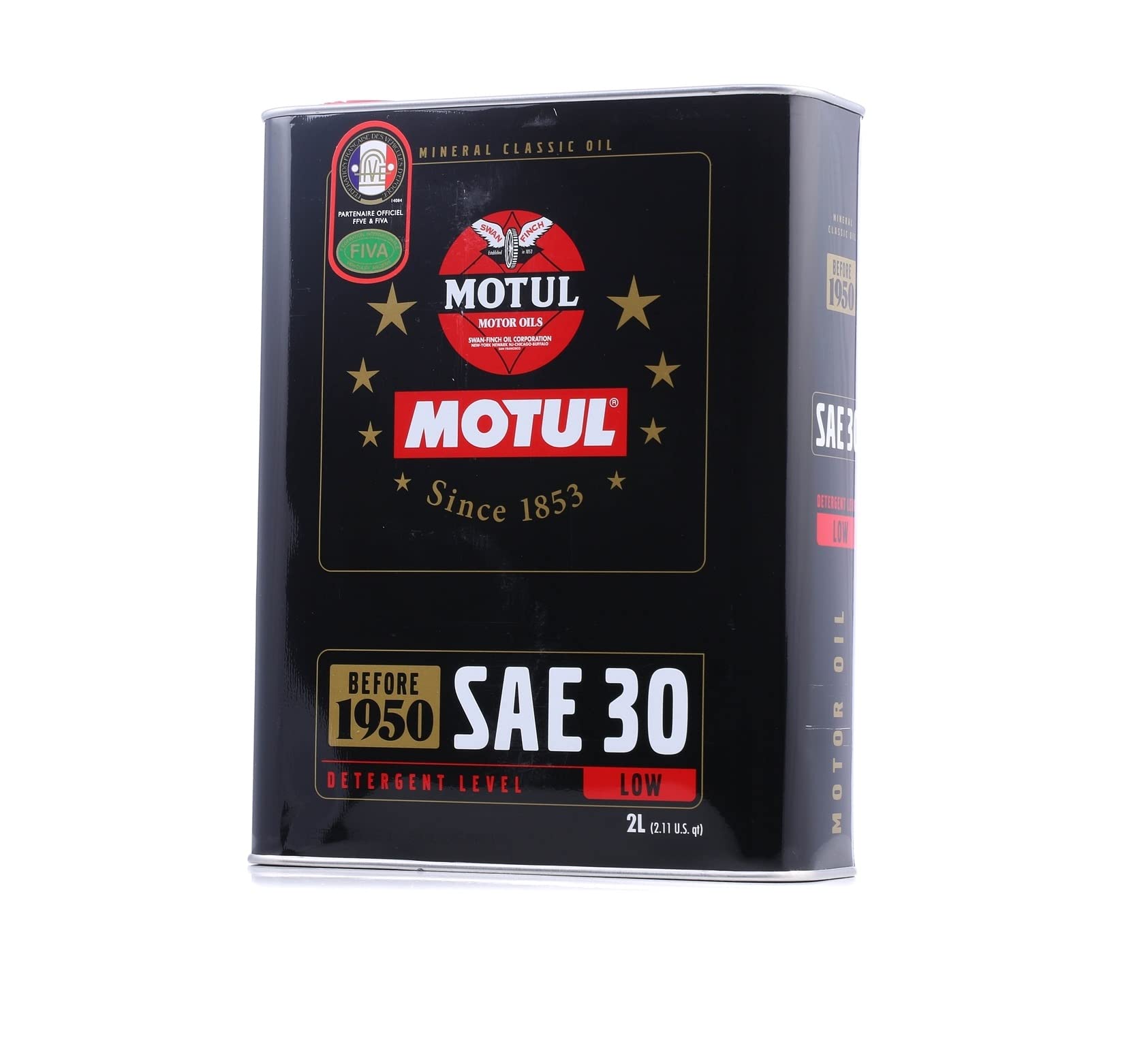
For the truly vintage machines, particularly classic cars built before 1950, the Motul 104509 Classic SAE 30 Mineral Engine Oil is a specialized choice. This monograde engine and gear oil features a low detergent level, which is crucial for preserving the sensitive internal components and seals of very old engines that were not designed for modern, highly detergent oils. It’s suitable for both gasoline or diesel 4-stroke engines.
Owners of early classics and vintage motorcycles appreciate its quality and suitability for their “petrolette de 58” (1958 bike) and other pre-war vehicles. The low detergent formula helps prevent sludge from being dislodged too quickly, which can be detrimental in engines with accumulated deposits. It can also double as a break-in oil, adding to its versatility for restoration projects.
If your classic car hails from the early to mid-20th century, this Motul Classic SAE 30 is precisely what you need. Its monograde, low-detergent formulation respects the original engineering of these venerable machines, offering gentle yet effective lubrication. It’s a thoughtful choice for those committed to authentic maintenance and ensuring the longevity of their truly historic vehicles.
Why it’s great
- Monograde mineral oil with low detergent level for pre-1950 classics.
- Suitable for gasoline or diesel 4-stroke engines.
- Can also be used as a break-in oil.
- Respects original engineering of very old engines.
Good to know
- Monograde oil means less versatility across temperature ranges.
- 2-liter can size may be inconvenient for larger oil capacities.
12. Idemitsu Full Synthetic Rotary Racing 20W-50 Engine Oil

For owners of high-performance classic rotary engines, the Idemitsu Full Synthetic Rotary Racing 20W-50 Engine Oil is a specialized and highly sought-after product. Unlike conventional piston engine oils, this formula is specifically tailored to the unique lubrication demands of rotary engines, featuring special molybdenum agents to reduce friction and improve sealing performance while minimizing exhaust port clogging.
Rotary engine enthusiasts praise this oil for its exceptional wear protection and durability, noting that it works as it should and arrives in good condition. Many appreciate finally finding a specialty oil designed specifically for their unique powerplants. While some users inquire about the zinc content for other applications, for its intended rotary use, its high moly content and superior shear stability are key benefits.
If your classic is a rotary-powered machine, such as a vintage Mazda RX-7 or similar, this Idemitsu oil is arguably the best choice on the market. It addresses the specific challenges of rotary lubrication, ensuring increased horsepower and torque, and extending engine life. It’s a premium product for a niche but passionate segment of the classic car community, delivering peace of mind for these unique engines.
Why it’s great
- Specifically formulated for high-performance rotary engines.
- Contains special molybdenum agents to reduce friction.
- Improved sealing performance and minimizes exhaust port clogging.
- Exceptional wear protection and superior shear stability.
Good to know
- Higher price point for a 1-quart bottle.
- Zinc content not explicitly detailed, though high moly is present.
13. Bar’s Leaks Rislone 4405 Engine Oil Supplement Concentrate with Zinc Treatment

For classic car owners using modern oils that may lack sufficient ZDDP, or those simply wanting an extra layer of protection, the Bar’s Leaks Rislone 4405 Engine Oil Supplement Concentrate with Zinc Treatment is an invaluable addition. This petroleum oil performance booster contains crucial ZDDP (zinc dialkyldithiophosphate) Zinc and Phosphorous EP (extreme pressure) additives, along with mixed esters, to protect internal engine components like flat tappet camshafts and lifters.
Many classic car enthusiasts, some with over 30 years of experience, swear by this product for replacing the zinc back into newer oils. They highlight its ability to reduce friction and wear, especially at start-up, helping to eliminate dry starts and reduce piston scuffing. Owners of vehicles like a 1981 Jeep CJ5 258 immediately noticed smoother running, especially at higher speeds, after adding this supplement.
If you’re running a classic engine with a flat tappet camshaft and are concerned about premature wear due to current oil regulations, this Rislone zinc treatment is a highly recommended solution. It helps stabilize motor oil against viscosity and thermal breakdown, increasing engine life by keeping critical parts lubricated where normal oil might fall short. It’s an affordable and effective way to safeguard your vintage engine.
Why it’s great
- Boosts zinc and phosphorus levels in motor oil.
- Reduces friction and wear, especially at start-up, preventing dry starts.
- Helps protect flat tappet camshafts and other valve train components.
- Stabilizes motor oil against viscosity and thermal breakdown.
Good to know
- It’s an additive, not a standalone oil replacement.
- May require careful dosing to avoid over-concentration of ZDDP.
14. Marvel Mystery Oil Original Motor Treatment
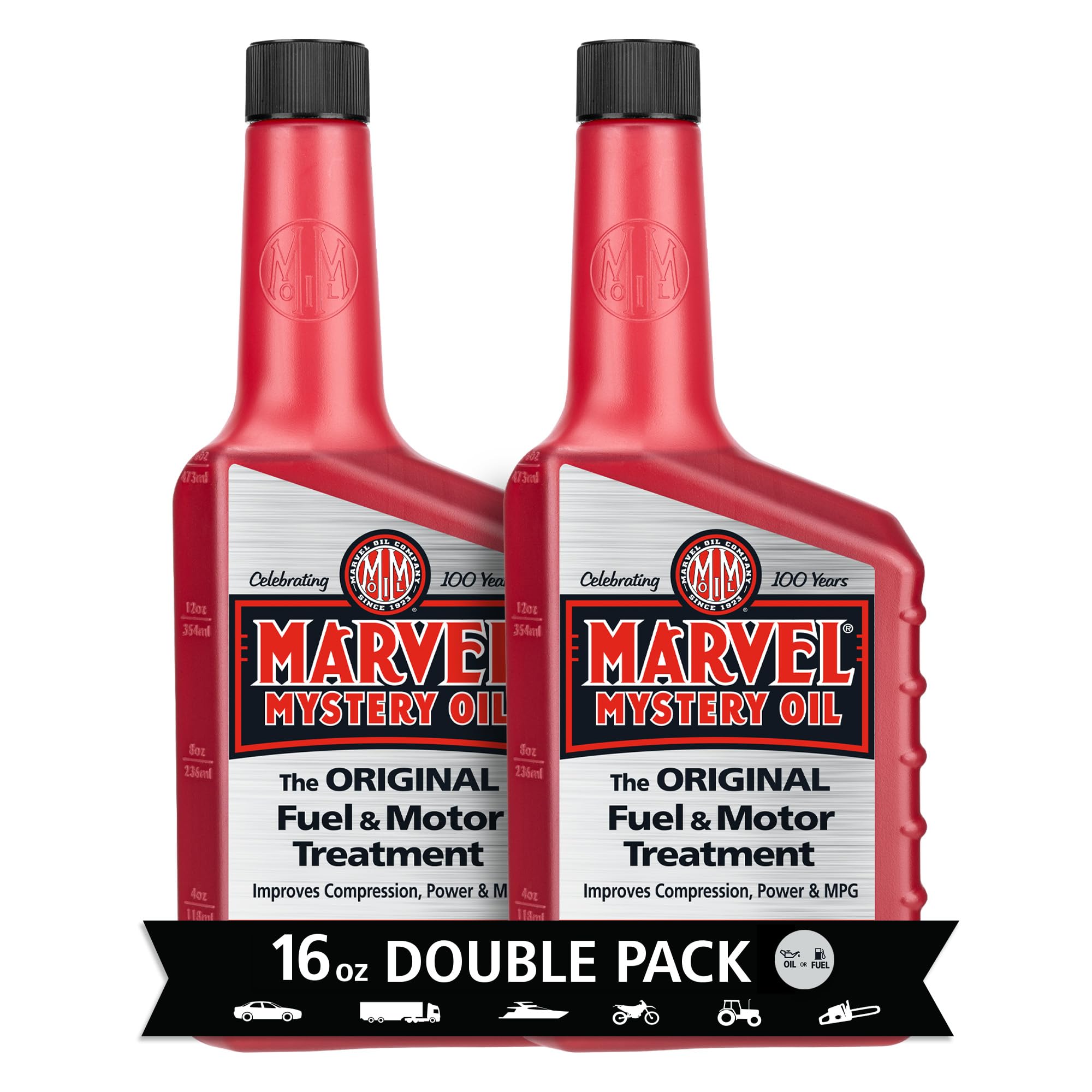
Marvel Mystery Oil has been a trusted name for over a century, offering a versatile original formula that works as both a fuel and oil additive. This product cleans, lubricates, and protects critical engine components, aiming to keep your classic car running smoother and longer. It delivers a protective lubricating film that reduces friction, wear, and corrosion inside the engine, extending the life of pistons, cylinders, and valves.
Enthusiasts report significant improvements, with some noticing better fuel efficiency and smoother engine performance after using it as a fuel additive to remove carbon deposits. When added to engine oil, it’s known to reduce noise, provide smoother start-ups, and quieter operations, particularly after seasonal storage. One user even saw their oil pressure gauge return to normal levels in an older truck after using it to clean out gummed-up sensors.
If you’re looking for a broad-spectrum treatment to revitalize and protect your classic car’s engine and fuel system, Marvel Mystery Oil is a time-tested solution. It’s safe for all gasoline, diesel, and hybrid engines, offering year-round protection. Whether you’re aiming to clean out deposits, improve lubrication, or ensure smoother operations, this iconic additive can provide noticeable benefits for your vintage ride.
Why it’s great
- Cleans, lubricates, and protects both fuel and oil systems.
- Reduces friction, wear, and corrosion in the engine.
- Removes carbon deposits and gum build-up for improved fuel efficiency.
- Helps reduce engine noise and promotes smoother start-ups.
Good to know
- Results can vary depending on engine condition and specific issues.
- Requires consistent use for best results, not a one-time fix.
15. Lucas Oil 10278 Engine Oil Stop Leak

For classic cars that have developed minor oil leaks over the years, the Lucas Oil 10278 Engine Oil Stop Leak can be a highly effective solution. This product is compatible with petroleum, semi-synthetic, and full synthetic motor oils, and it works by renewing worn seals without the risk of damage or eventual corrosion. It’s designed to reduce engine noise and oil consumption, while also helping to raise oil pressure.
Many experienced mechanics and classic car owners have seen great success with this product for minor oil seepage and leaks stemming from dried-out or starting-to-fail seals. Users report that it can stop or significantly slow down leaks, with some even seeing complete cessation of minor drips. One owner of a 325K mile Honda found it helped reduce minor oil seepage, offering peace of mind for an older engine.
If your cherished classic is leaving small oil spots on your garage floor or consuming a bit more oil than it should, the Lucas Oil Stop Leak is a worthwhile product to try. It’s not a miracle cure for major mechanical failures, but for hardened or slightly compromised seals, it can provide a cost-effective and non-invasive repair. It’s a trusted choice for extending the life of older engines by addressing common age-related oil leaks.
Why it’s great
- Renews worn seals without causing damage or corrosion.
- Reduces engine noise and oil consumption.
- Helps to raise oil pressure in older engines.
- Compatible with various oil types (petroleum, semi-synthetic, full synthetic).
Good to know
- Not a permanent solution for major mechanical failures or severely damaged gaskets.
- Effectiveness varies depending on the nature and severity of the leak.
Understanding the Specs for Best Oil for Classic Cars
ZDDP (Zinc Dialkyldithiophosphate)
This is arguably the most critical additive for classic car engines, especially those with flat tappet camshafts. ZDDP creates a protective film on metal surfaces under high pressure, preventing wear. Modern oils have reduced ZDDP levels to protect catalytic converters, which classic cars typically don’t have or don’t need to prioritize in the same way. High ZDDP content, usually measured in parts per million (ppm) of zinc and phosphorus, is essential for the longevity of vintage valvetrains.
Viscosity (SAE Grade)
Viscosity refers to an oil’s resistance to flow and is indicated by the SAE grade (e.g., 10W-30, 20W-50). The “W” (winter) number indicates cold-start performance, while the second number indicates thickness at operating temperature. Classic engines often benefit from thicker oils (like 20W-50) at operating temperature due to larger internal clearances and higher operating temperatures. However, colder climates may still require a lower “W” number for easier cold starts. Always follow manufacturer recommendations or consult a specialist for your specific classic.
Base Oil Type (Conventional, Semi-Synthetic, Full Synthetic)
Conventional (Mineral) oils are derived directly from crude oil and are often preferred for older engines because their larger molecules and less aggressive detergents are less likely to cause leaks in aged seals. Semi-synthetic oils blend mineral and synthetic bases, offering a balance. Full synthetics offer superior protection and performance, but their smaller molecules and strong detergents can sometimes expose leaks in older, worn seals. For classics, a conventional or specialized classic-formulation synthetic blend with the right additives is usually ideal.
Additives (Molybdenum, Rust Inhibitors, Detergents)
Beyond ZDDP, other additives play a vital role. Molybdenum (Moly) is another excellent anti-friction and anti-wear agent, often found in racing and high-performance oils. Rust and corrosion inhibitors are crucial for classic cars that spend extended periods in storage, preventing internal components from degrading. Detergents keep the engine clean by suspending contaminants, but in very old engines, too much detergent can dislodge old sludge too quickly, potentially clogging oil passages. Low-detergent oils are sometimes preferred for truly antique engines.
FAQ
Why can’t I use modern synthetic oil in my classic car?
What is ZDDP and why is it important for classic cars?
What viscosity should I use for my classic car?
Can I use diesel engine oil in my classic gasoline car?
Should I use an oil additive with my classic car oil?
Final Thoughts: The Verdict
Choosing the best oil for classic cars is a critical decision that impacts the longevity and performance of your cherished vehicle. After diving deep into the formulations and feedback, the clear winner for overall protection and value is the Lucas Oil 10679 Hot Rod & Classic Car SAE 10W-30 Motor Oil because it delivers a potent blend of high ZDDP, molybdenum, and phosphorus for comprehensive wear and corrosion defense. If you want a truly dedicated, no-compromise solution for flat tappet cams without needing extra additives, grab the Driven Racing Oil HR-5 Hot Rod Conventional 10w-40 Motor Oil. And for high-stress engines that demand double the zinc and superior thermal breakdown resistance, nothing beats the Valvoline VR1 Racing SAE 20W-50 Motor Oil.