
Our readers keep the lights on and the garage heater humming. As an Amazon Associate, I earn from qualifying purchases.
A pistol safe for a vehicle is not “just a smaller home safe.” Your car is a brutal environment: heat spikes, winter condensation, vibration, curious hands, and the very real possibility that the entire safe gets stolen if it isn’t anchored correctly. That’s why so many people buy a lock box that looks great online… then quietly stop using it after a week because it’s too slow, too noisy, too finicky, or simply doesn’t fit where real humans actually store things.
If you’re searching for the best pistol safe for car, here’s the mindset that will save you money and frustration: you’re not buying “a box with a lock.” You’re buying a workflow—how you secure, access, and re-secure your firearm in the real world, with sweaty hands, low light, a phone in one hand, and a seatbelt buckle jabbing your elbow.
This guide is built differently on purpose. I’m not going to waste your time reading you a spec sheet. Instead, I’m going to walk you through the friction points that show up in real ownership: which locks stay reliable when your fingers are dry or wet, what happens when batteries die, how a cable can be strong but still “wrong” if the anchor point is sloppy, why single‑latch designs feel secure until you imagine a pry bar, and how to predict fit inside the most common car locations (center console, under-seat, trunk, and backpack carry).
Below are 15 standout options—from premium weatherproof travel vaults and app-enabled smart boxes to mounted slider safes and budget lock boxes that still do the job when you set them up intelligently. The goal is simple: by the end of this article, you should feel like you can pick one safe with calm confidence—because you understand exactly how it will behave in your vehicle and your daily routine.
In this article
How to Choose the Best Pistol Safe For Car
A good vehicle safe does three things at once: it slows down unauthorized access, it keeps your pistol protected from the car environment, and it fits your real daily routine so you’ll actually use it consistently. Here’s the decision framework I use when I’m helping someone pick a safe they’ll still feel good about months later.
1. Start with your “storage truth,” not your wishful thinking
Most people picture the safe living in a neat, protected location. Real life is messier. Pick the safe that matches your real storage pattern:
- Center console reality: You need a compact safe that’s designed for tight clearances and quick opening without scraping.
- Under-seat reality: You need the right thickness, plus a lid style that can open without hitting rails or carpet.
- Trunk reality: You can go larger, but anchoring matters more because the trunk is a smash‑and‑grab target.
- Backpack / travel reality: You want weather resistance, quiet operation, and a lock you can run confidently under stress.
- Mounted reality: You’re willing to mount (or you already have a mounting plan) and want consistent positioning every time.
2. Understand the four “safe types” and their tradeoffs
Car safes are not one category. They’re four categories that behave very differently in real ownership:
- Weatherproof travel vaults: Rugged, often polymer, often gasket-sealed. Great for travel and unpredictable environments.
- Portable metal lock boxes: Classic steel lock boxes with a cable. Great deterrents, but they must be anchored correctly.
- Mounted slider / vertical safes: Designed to be installed to a stable surface; fast access and consistent orientation.
- Drop‑down safes: Mounted and designed for “downward” access in tight spaces; excellent if you have clearance.
3. Pick your access method based on reliability, not hype
Every lock method has a “weak moment.” Your job is to match the lock’s weak moment to your environment and habits:
- Fingerprint biometric: Fast when tuned and enrolled properly. Can be inconsistent if the sensor is cheap or your fingerprint changes.
- Keypad PIN: Reliable, glove-friendly, and consistent. Slower than biometric but often more predictable under stress.
- App control: Convenient for admin and battery checks. In practice, most are Bluetooth-range only, so treat it as a bonus, not your only plan.
- Contactless biometric (palm vein): Designed to reduce “dirty finger” problems. Newer category—awesome when implemented well, but you’ll still want keypad/key backup.
4. Plan your anchoring strategy before you choose the safe
This is the part most buyers skip—then regret later. Portable safes are only as good as the anchoring:
- Cable anchoring: Great for flexibility, but only if you have a strong anchor point (seat frame, trunk tie-down, or another fixed structural point).
- Bolting: The most consistent long-term solution. Great for trunk installs, under-seat mounts, and hidden compartments—if you can mount cleanly and safely.
- “Just hiding it”: Not a plan. Hiding reduces casual visibility, but it doesn’t replace a real anchor.
5. Think like your car: heat, humidity, and vibration
Your vehicle will pressure-test your safe. Here’s what matters more than most people expect:
- Temperature swings: Electronics, batteries, and interior foam all age faster in extreme heat.
- Condensation: It’s real—especially in winter. Interior lighting helps, but moisture control habits matter more.
- Vibration & rattle: A safe that rattles in your console becomes “that thing you stop using.” Interior foam quality and fit matter.
- Dust & grit: In trucks, off-road vehicles, or dusty climates, seals and lid design become surprisingly important.
6. Decide what you’re protecting: access, privacy, or both
Some people prioritize fast access; others prioritize minimizing visibility and theft risk. You can’t always maximize both.
- Fast access priority: mounted slider, drop‑down, or high-quality biometric with predictable positioning.
- Low-visibility priority: compact console safe or travel vault that looks like “gear,” not a safe.
- Shared access priority: multiple fingerprint slots + easy admin is a big deal for couples or family use.
7. Use the “two-backup rule”
In the real world, the best setups have two backups. That usually means: biometric + PIN, plus a key; or PIN + key, plus emergency power.
- Backup 1: a second unlock method you can use quickly (PIN or alternate biometric).
- Backup 2: a way to open if power fails (key or emergency external power).
8. The 60-second fit test you should run mentally (before buying)
Ask yourself these questions now—so you don’t learn the hard way later:
- Can the lid open fully in your chosen location without hitting plastic trim, rails, or carpet?
- Can you reach the keypad/biometric area comfortably from your normal seated position?
- Does your pistol have an optic or light that changes fit dramatically?
- Will your cable actually reach a real anchor point without forcing the safe to sit awkwardly?
- Will you be okay using it daily… or will the safe slowly become “extra clutter” you avoid?
Quick Comparison: 15 Best Pistol Safe For Car Picks
Use this table to narrow down the models that match your vehicle reality, then jump to the in-depth reviews. I’m highlighting the real life advantage of each safe—what it feels like to live with it—because that’s what separates a smart buy from a drawer-collecting regret.
On smaller screens, swipe or scroll sideways to see the full table.
| Model | Safe type | Car strength | Best match | Amazon |
|---|---|---|---|---|
| VAULTEK LifePod 10 (Biometric) | Weatherproof vault | Compact, rugged, travel-ready with biometric + keypad flexibility | Most drivers who want one premium “do it all” vehicle vault | Amazon |
| VAULTEK LifePod 20 | Weatherproof vault | Full-size fit + layered organization for travel, trunk, and gear-heavy routines | Full-size pistol owners who want premium protection + storage | Amazon |
| XEGIS SAFE Palm Vein Biometric Gun Safe | Biometric lock box | Contactless access + interior light for low‑light reliability | Buyers who hate fingerprint failures and want “no touch” access | Amazon |
| ORARAER Biometric Slider Safe (Mounted) | Mounted slider | Vertical storage + quick slider action for consistent positioning | Drivers who want a stable mounted solution (truck, console-side, under-seat) | Amazon |
| BILLCONCH Smart Gun Safe (App + LCD) | Smart lock box | Multi-user management + battery monitoring + roomy interior | Families or shared-access users who want smart controls + capacity | Amazon |
| movgul Biometric Drop Down Safe | Drop-down mount | Fast access in tight spaces when mounted correctly | Truck/desk crossover users who want a drop-down “grab and go” flow | Amazon |
| XGUNXBOX Portable Safe (App + Alarm) | Portable lock box | App control + anti-tamper lockout + cable anchoring | Drivers who want app features and alerts without a big footprint | Amazon |
| HOLEWOR Handheld Biometric Safe (Temp/Humidity Display) | Portable lock box | Carry handle + environment display for glovebox/travel routines | Travelers who want portability plus quick condition checks | Amazon |
| HOLEWOR Car Gun Safe (Classic Portable) | Portable lock box | Simple, solid under-seat style with emergency USB‑C power | Drivers who want a straightforward “works every day” portable safe | Amazon |
| ONNAIS Biometric Pistol Gun Safe (Trigger Lock Style) | Console-ready | Compact, mountable, designed for console/under-seat scenarios | Drivers who want a small footprint + guided placement style storage | Amazon |
| ONNAIS Iron PRO Biometric Safe | Value lock box | Reliable everyday biometric + keypad + emergency power support | Value-focused buyers who still want a polished, trustworthy experience | Amazon |
| BILLCONCH Biometric Safe (3‑Way Unlock) | Portable lock box | Solid steel feel + quick biometric + simple daily operation | First-time buyers who want easy setup and a sturdy build feel | Amazon |
| MOLICAR Biometric Portable Safe | Portable lock box | Simple biometric flow + good padding + easy “grab in the dark” design | Buyers who want fast fingerprint access without complexity | Amazon |
| VORANEXS Travel‑Sized Biometric Safe | Budget portable | Compact steel box with light + silent mode options | Occasional vehicle storage users who want multiple unlock methods cheap | Amazon |
| Grimtron Portable Pistol Safe (Keypad + Key) | Barebones lock box | Simple keypad, silent mode, cable: minimal learning curve | Budget buyers who want a basic locked container with fewer electronics | Amazon |
In‑Depth Reviews: 15 Car‑Friendly Pistol Safes That Make Real Life Easier
Now we’ll go safe by safe. I’m going to talk like an owner, not a brochure: what feels smooth, what feels fiddly, what you should test on day one, and which safe matches your vehicle reality. If you skim, skim the “Ideal for” line at the end of each product—those are your fastest shortcuts.
1. VAULTEK LifePod 10 (Biometric) – The Premium “Car + Travel” Vault That Just Makes Sense
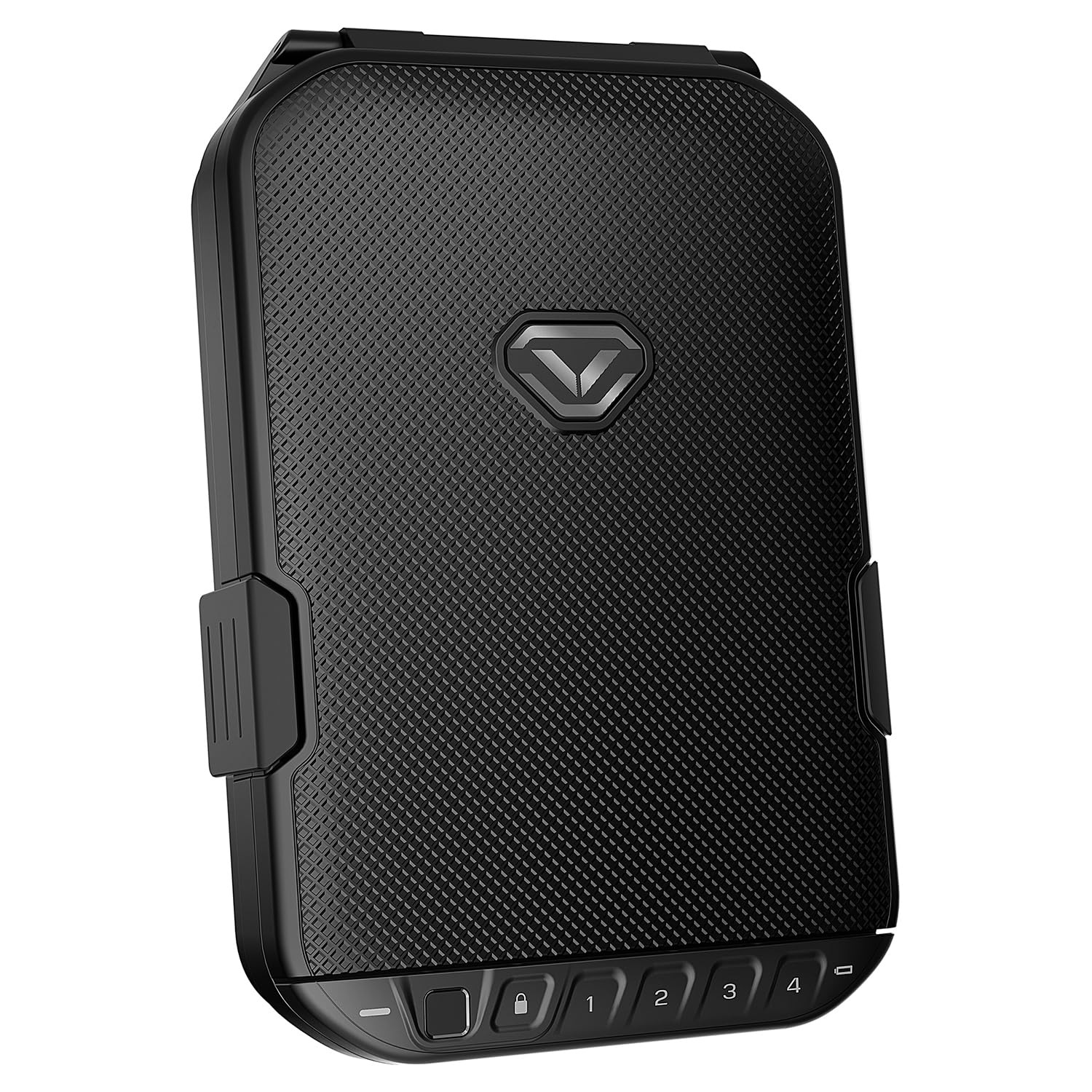
The LifePod 10 (Biometric) is the safe I point to when someone wants one premium solution that behaves well in a car and on the road. It’s compact enough to fit the places people actually use—center consoles, backpacks, and discreet trunk spots—while still feeling like a purpose-built travel vault instead of a cheap lock box pretending to be tough.
What makes it feel “premium” isn’t just the materials. It’s the predictability. The keypad is touch-activated and the biometric option adds speed when you’ve enrolled your prints properly. And because it’s a weather-resistant, gasket-style case design, it’s the kind of safe that handles real travel friction: dust, light moisture risk, and everyday knocks that can ruin flimsier boxes.
The important thing to understand: this isn’t a spring-pop “one-handed lid flips open” bedside safe. It’s a travel vault with latches and a lock system built for protection. In a car, that’s often the correct tradeoff. Many owners specifically like that it feels secure and doesn’t scream “gun safe” at a glance. It’s the safe you can treat like a piece of gear—quiet, discreet, and dependable.
My best tip for day-one setup: enroll multiple fingers at multiple angles, and test the biometric in the exact way you’ll use it in your vehicle (seated, awkward wrist angle, low light). A “perfect” biometric in your kitchen can feel different in a car.
Why it’s a top car pick
- Travel-vault DNA – Built to be carried, packed, and bumped without feeling fragile.
- Flexible access – Biometric speed plus keypad consistency is the best “real-life” pairing for most people.
- Discreet look – Reads like rugged gear more than “obvious safe,” which matters in a vehicle.
- Smart interior organization – The internal layout options help keep things from rattling or shifting during driving.
Good to know
- This style is built for protection and travel—so it’s not the fastest “instant lid flip” format.
- Like any biometric, performance depends on enrollment quality; do the setup carefully and test it.
- Compact means compact: if your pistol is larger or you run bulky attachments, you may prefer the larger LifePod 20.
Ideal for: drivers who want one premium, travel-ready vault that works in a car, in a backpack, and in a hotel drawer without feeling like a compromise.
2. VAULTEK LifePod 20 – Bigger, Smarter Storage for Full‑Size Pistols and Real Travel Kits

If the LifePod 10 is the compact daily driver, the LifePod 20 is the “I want room for my real setup” upgrade. This is the one you choose when your pistol is full-size, you carry extra items (spare magazine, small valuables, travel documents), and you want the safe to stay organized rather than turning into a rattling pile.
The feel in use is exactly what LifePod fans rave about: it’s rugged, it’s cleanly designed, and it behaves like a travel case that happens to lock—not like a lock box that happens to travel. The removable tray is more important than it sounds. It lets you separate gear into layers, which reduces rattling and makes “grab the right thing fast” easier when you’re moving between car, bag, and hotel.
For vehicle use, I like this safe most in two scenarios: (1) trunk installs where you want more volume without going to a full bolted steel safe, or (2) travel routines where the safe spends time in luggage and then moves into the rental car. It’s also a smart pick if you want to keep more than just a firearm protected—because the safe doesn’t force an “either/or” choice.
A practical note from real owners: the overall lock workflow is consistent, but key lock/user-interface quirks can happen on any product line. Treat your first setup as a true test run: install the battery, set your code, confirm the lock mode you prefer, and confirm you can open it easily in the way you expect (code and key).
Why it shines
- Roomy without being clunky – Fits full-size pistols and still leaves space for “real travel life” items.
- Layered storage – Tray + organizer design reduces rattle and makes the interior feel intentional.
- Rugged travel identity – Built to be carried; doesn’t feel delicate.
- Vehicle flexibility – Great in trunks, larger consoles, and travel bags.
Good to know
- Bigger is better for storage—but measure first if your plan is under-seat placement.
- As with any electronic case, battery setup and correct “mode” understanding matters early on.
- If your priority is one-hand “instant open,” you may prefer a mounted slider safe instead.
Ideal for: full-size pistol owners and travelers who want a rugged, organized vault that feels like a long-term piece of gear, not a disposable box.
3. XEGIS SAFE Palm Vein Biometric Safe – Built for People Who Don’t Trust Fingerprints
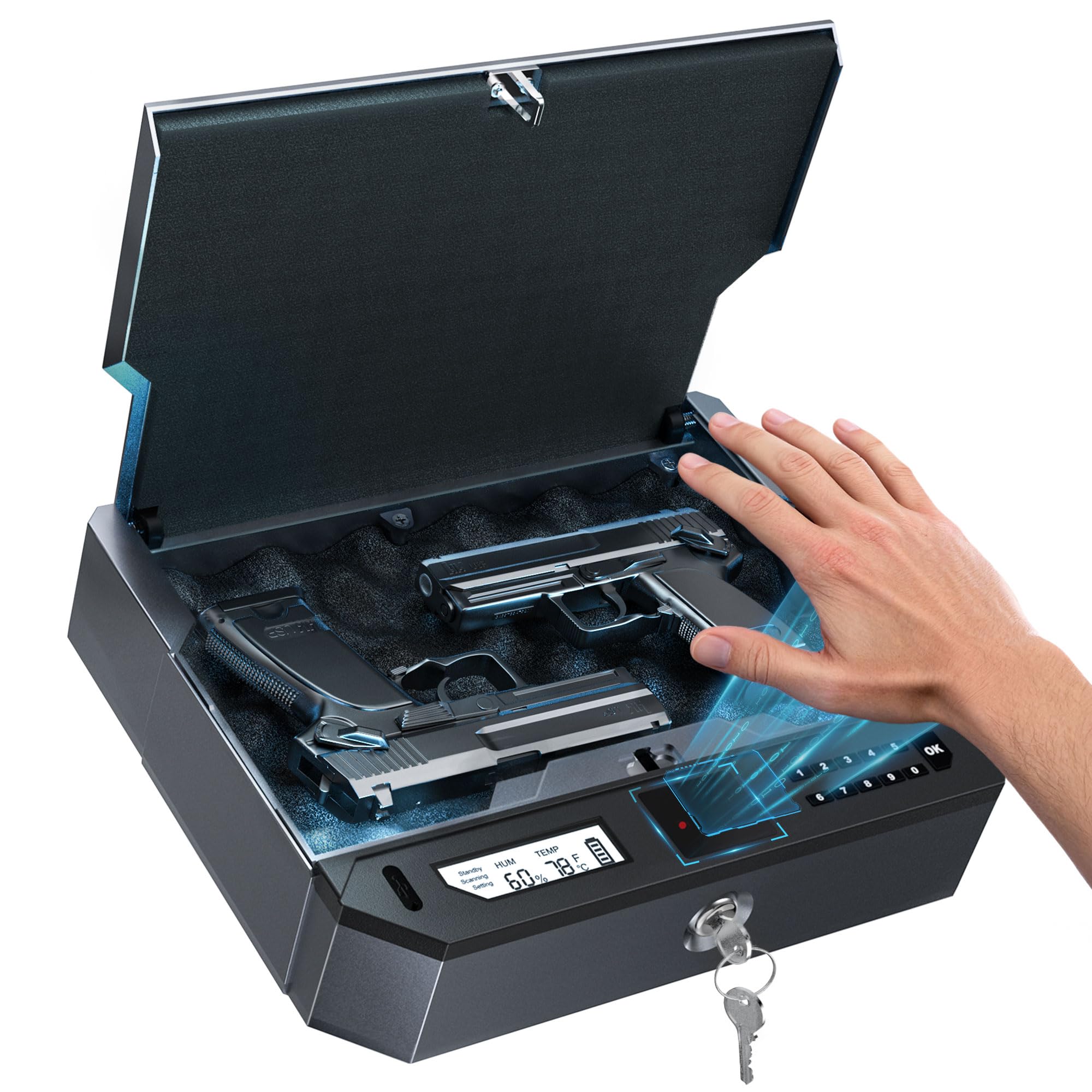
If you’ve ever used a cheap fingerprint safe and had it fail at the exact wrong time—dark room, sweaty hands, dry fingers, slightly off angle—you already understand why “contactless palm vein” tech is exciting. The whole idea is to identify you by the vein pattern inside your hand rather than the surface texture of your fingertip. In plain English: it’s designed to be less picky about surface conditions.
What owners tend to highlight is the same theme: it feels fast and it feels consistent. The “hover your hand and it opens” behavior is exactly what people want when they’re trying to access the safe without doing the little fingerprint dance. The built-in interior light is also not fluff in a vehicle context—when a safe is tucked under a seat or in a dark console, light turns “fumbling” into “grab and go.”
Where you should think like an expert is fit and anchoring. This safe has the footprint and height of a larger lock box, which can be great for two-handgun storage but also means under-seat fit is not guaranteed. And in reviews, you’ll see practical notes that matter: foam may need adjusting for your preferred loadout, some users wish the cable were longer or more flexible, and charging can be simplest with the included cable style rather than assuming every high-speed USB‑C cable works the same.
If you want a modern biometric experience without relying exclusively on fingerprints, this is a fascinating pick. Just treat it like a serious tool: enroll multiple hand positions, test it in low light, and decide up front whether it lives in the car (anchored) or travels with you (bag + cable).
Why it’s different
- Contactless biometric concept – Designed to reduce classic fingerprint “surface condition” failures.
- Multiple access methods – Palm scan + keypad + key means you’re not stuck with one unlock plan.
- Dark-friendly workflow – Interior lighting supports quick identification and retrieval in low light.
- Sturdy “premium” feel – Owners often describe it as solid, well-finished, and confidence-building.
Good to know
- Two-pistol capacity is possible, but tight if you also want extra items—plan your interior layout.
- Cable length/rigidity can matter in vehicles; check your intended anchor point distance.
- USB‑C charging behavior can be cable-sensitive; keep the included cable accessible.
Ideal for: buyers who want a next-gen biometric experience and are tired of fingerprint inconsistency, especially in low-light or “hands aren’t perfect” situations.
4. ORARAER Biometric Slider Safe – Vertical, Space‑Saving, and Fast When Mounted Right

Mounted slider safes solve a problem that portable safes can’t: consistent positioning. When a safe is mounted, you always know where it is, the opening action is predictable, and the safe isn’t shifting around every time you drive. That matters more than people think—especially if you’re trying to access the safe cleanly without fighting a cable or a wedged lid.
The ORARAER slider design is built around vertical storage and a quick-release slider mechanism. In real use, that means you mount it (under a surface, beside a seat, or in a concealed location), and the safe presents the firearm upright for retrieval. It’s a very “engineered” approach that feels faster and more intentional than a typical clamshell box. The inclusion of silent mode and an interior light also makes the user experience feel grown-up—less beeping, less guessing.
Where owners sometimes trip up is not the lock—it’s the setup process. With slider safes, the mount is everything. If the mount is slightly off-angle, you can create friction in the slider action. If the mount is too weak, you’ll feel wiggle. And if you mount it where your knee or seat adjustment can collide with the opening path, you’ve built a daily annoyance. Do your fit check with your seat in its normal driving position and your “worst position” (all the way back or forward).
This safe is also a strong choice if you want your vehicle solution to feel like a fixed part of the car, not a portable object you might forget to anchor properly.
Why people love slider safes
- Consistent positioning – No shifting, no cable flop, no “where did it slide?” moments.
- Fast presentation – Vertical storage can feel quicker than digging into a flat lockbox.
- Backup options – Fingerprint + PIN + key is the practical trifecta for daily use.
- Quiet + visible – Silent mode and interior light help it fit into real life routines.
Good to know
- Mount quality determines everything—take mounting seriously and measure twice.
- Fits handguns up to a stated length; attachments like lights/lasers can change fit dramatically.
- If you frequently swap vehicles, a portable travel vault may be a better match than a mounted safe.
Ideal for: drivers who want a stable, consistent, mounted safe—especially trucks and larger vehicles where mounting space is easier to plan.
5. BILLCONCH Smart Safe (App + LCD) – The “Shared Access” Safe With a Surprisingly Smooth UX

Some safes feel like a metal box with a lock. The BILLCONCH Smart Safe feels like a product—an interface, a workflow, and a daily experience that someone actually designed for normal people. The LCD menu and voice guidance are the underrated features here because they reduce setup errors. And setup errors are the #1 reason people later say, “the fingerprint doesn’t work” or “I can’t get in” when the issue was enrollment or admin mode confusion.
For vehicle use, this safe’s advantage is twofold: (1) it’s roomy enough that you don’t feel forced into a “pistol only, nothing else” compromise, and (2) the app layer makes battery monitoring and user management easier. You still shouldn’t treat the app as your primary “emergency unlock,” but as an admin tool, it can be genuinely useful—especially for multi-user households.
Real user feedback is often enthusiastic about how easy the safe is to set up and how reliably it opens with fingerprints. You’ll also see realistic notes: apps are typically Bluetooth-range, so you must be nearby (which is fine—this isn’t meant to be opened from across town). And as with all portable steel safes, it’s a deterrent and protection tool, not an unbreakable fortress. The cable helps, but anchoring strategy matters.
If you want a car-safe solution that can also live on a nightstand or in an office drawer without feeling “cheap,” this one makes a strong case—especially if you value user experience.
Why it’s a standout
- Easy setup UX – LCD + voice guide reduces the “manual confusion” problem.
- Multi-access flexibility – Fingerprint, PIN, app, and key means you’re covered in different scenarios.
- Roomy interior – Comfortable storage without forcing a tight, scratchy squeeze.
- Good ownership feel – Many owners describe it as sturdy, well-built, and confidence-building.
Good to know
- App control is usually Bluetooth-range; think “admin convenience,” not “remote rescue.”
- As a portable safe, anchoring is still your responsibility—cable placement matters.
- If you want the lowest-profile console safe, a slimmer model may fit better in tight compartments.
Ideal for: shared-access households and buyers who want a smoother interface, easier management, and a safe that feels polished in daily use.
6. movgul Biometric Drop Down Safe – Fast Access When You Have a Real Mounting Plan
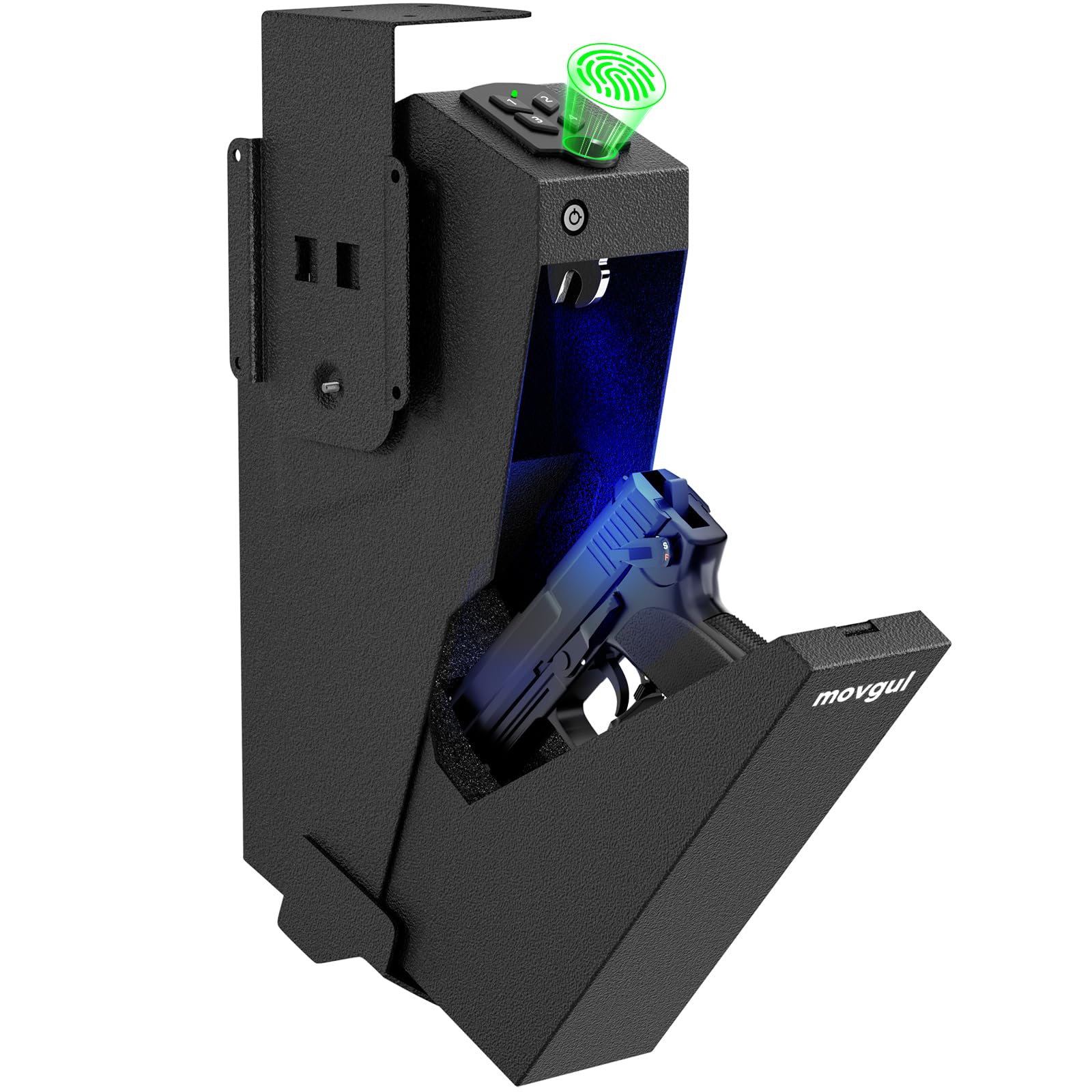
Drop-down safes are a love-it or skip-it category. When installed properly, they’re genuinely fast: the door drops down and presents the firearm in a way that feels intuitive. When installed poorly, they become a daily frustration: the door hits something, the angle feels wrong, or the safe is mounted in a location that conflicts with normal movement.
The movgul model earns its spot here because owners consistently talk about two things: solid construction and a smooth drop-down mechanism. That smoothness matters. In a vehicle, especially a truck, you don’t want a mechanism that binds or needs “just the right pull.” You want a predictable motion that behaves the same every time.
Another practical advantage: mounting flexibility. The safe is designed to mount in multiple orientations (top/left/right), which makes it easier to plan around vehicle constraints. People also like the reliable biometric and keypad behavior, plus the interior lighting that helps in low light. If your vehicle doesn’t have a locking glovebox or console and you want a discreet mounted solution, drop-down safes can be a smart answer—if you’ve measured clearance and you’re willing to mount thoughtfully.
My expert tip: sit in your driver’s seat and map the opening path with your hand. If you need to twist your wrist awkwardly, you’ll eventually avoid using the safe. The best safe is the one your body finds “natural” in that exact position.
Why it works
- Fast access format – Drop-down presentation can be very intuitive once mounted correctly.
- Solid build feel – Owners often describe it as sturdy and reassuringly “thick metal.”
- Multiple access methods – Biometric + keypad + key keeps you flexible.
- Mounting versatility – Orientation options help you adapt to tight vehicle spaces.
Good to know
- Drop-down designs require clearance; measure door swing before committing.
- Mounting is the whole game—weak mounts create wobble and frustration.
- If you want portability between vehicles, a travel vault may be a better fit than a mounted safe.
Ideal for: buyers who want a mounted quick-access workflow and are willing to measure, plan, and mount properly (especially in trucks and larger vehicles).
7. XGUNXBOX Portable Safe (App + Alarm) – Smart Features, Small Footprint, Real Usefulness

The XGUNXBOX safe is appealing for one simple reason: it packs a lot of modern features into a compact, vehicle-friendly size. You get fingerprint access, keypad access, key backup, and an app layer that can do things like mute alerts, share access, and track opening history. Those “admin” features can be genuinely helpful if more than one person needs access or you want a clearer sense of usage.
In a car context, the built-in LED light and silent mode matter more than most people expect. Cars are often the worst lighting scenario: under-seat darkness, console shadows, and night driving conditions. A light that automatically turns on makes the experience smoother and reduces fumble time. Silent mode reduces attention-grabbing beeps, which is a surprisingly big quality-of-life upgrade.
Real-world review patterns are mixed in the way you’d expect from smart electronics: many people report months of reliable use, while others have experienced electronic failures and had to lean on warranty support. The key takeaway isn’t “avoid it” or “it’s perfect”—it’s: treat the backup methods seriously. Register multiple fingerprints, set a memorable PIN, store your keys safely, and don’t let the safe become “app dependent.” The app should be a bonus.
From a security perspective, some users mention preferring dual-latch designs over single-latch designs for pry resistance. That’s a valid instinct. Portable safes are not meant to defeat a determined attacker with tools; they are meant to stop casual access and increase the time/effort required. Your anchoring strategy is what turns “portable” into “practical.”
Why it’s worth considering
- Feature-rich for the size – App, biometric, keypad, and key gives you a lot of flexibility.
- Anti-tamper behavior – Lockouts and alarms add friction against repeated guessing.
- Vehicle-friendly footprint – Designed to fit common under-seat and trunk use cases.
- Quiet + illuminated – Silent mode and LED light improve real-world usability.
Good to know
- Smart electronics can vary; treat backups as essential, not optional.
- Single-latch designs can feel less confidence-inspiring than dual-latch designs for pry resistance.
- App control is typically Bluetooth-range; you’ll need to be nearby to use it.
Ideal for: drivers who want modern features (especially app management) in a compact form, and who are willing to set up strong backup access from day one.
8. HOLEWOR Handheld Biometric Safe (Temp/Humidity Display) – A Practical “Gear Case” Feel for Car + Bag Use
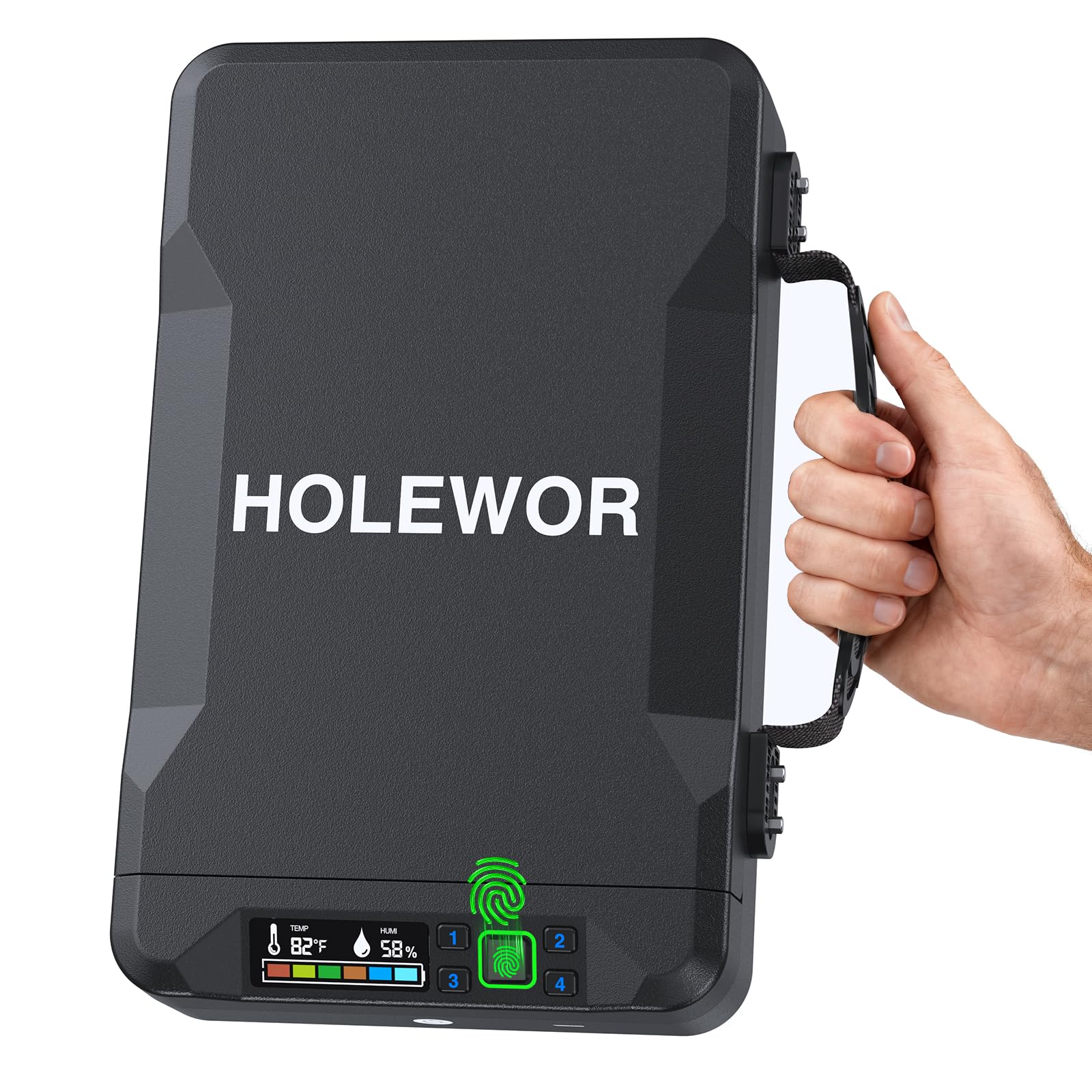
This HOLEWOR handheld model is for the buyer who thinks like a traveler. It’s not just “a safe.” It’s a portable case you can carry, anchor, and move between environments—car, hotel, office, backpack. The handle seems like a small detail, but it changes how people actually use a portable safe: you’re more likely to take it with you instead of leaving it loose in the vehicle.
The standout feature is the environmental display (temperature/humidity) plus a clear battery level display. In a vehicle environment, those are not gimmicks. Heat and humidity are quiet destroyers: they accelerate battery issues and can create long-term maintenance headaches if you’re storing anything in the car frequently. Being able to glance at conditions lets you make smarter habits (like adding dry packs, choosing a better location, or simply checking more often).
Owners often praise the fingerprint speed and the “pop open just enough” lid action. That’s the sweet spot for vehicle use: it opens enough for access without flinging wide in a tight space. Where experienced users get picky is the cable anchoring system and the “portable safe truth.” If you’re planning to detach and reattach the cable frequently, pay attention to how the cable interfaces with the case. Some users report that the cable attachment method is not designed for constant removal and re-installation. If you intend to move it a lot, treat the cable as semi-permanent or be gentle with the hardware.
This safe also highlights an honest reality: some models are slightly taller than you expect and won’t fit under every car seat. Measure your clearance. Under-seat fit is about height, not just length and width.
Why it’s smart for cars
- Carry handle changes behavior – Easier to actually take it with you when needed.
- Condition awareness – Temp/humidity and battery display helps you manage the vehicle environment.
- Multiple access methods – Fingerprint, passcode, and key keeps you flexible.
- Emergency power option – External power backup reduces “battery anxiety.”
Good to know
- Height can limit under-seat placement—measure clearance before buying.
- Cable attachment hardware may not love constant remove/reattach cycles; treat it gently.
- Portable safes deter and delay; anchoring is what turns them into a practical vehicle solution.
Ideal for: buyers who treat a car safe like a travel tool—moving it between car, bag, and room—and who value condition monitoring for long-term reliability.
9. HOLEWOR Car Gun Safe (Classic Portable) – Simple, Solid, and Easy to Live With

This HOLEWOR model is the definition of “get the basics right.” It’s a portable biometric lock box with the features that matter most for vehicle use: quick fingerprint access, passcode backup, key backup, a cable for anchoring, interior padding, and an emergency external power option so you can get in even if batteries are depleted.
One of the most valuable real-life reviews I’ve seen about this style of safe comes from an obsessive researcher type—the person who has watched every video, read every forum, and compared against higher-end vaults. Their conclusion was refreshing: you can chase “perfect” forever, but for many vehicle routines, a solid middle-ground safe that works consistently is the smartest buy. The HOLEWOR safe fits that “just works” category when you set it up correctly.
Here’s what experienced owners learn quickly: you should register multiple fingers (thumbs + index fingers on both hands), and you should test fingerprint reads at different angles. People often enroll a print straight-on, then try to open the safe from a side angle in the car and wonder why it’s slower. Enrollment angle matters.
The biggest “expert note” is security expectations. Portable safes are not impenetrable. They exist to keep unauthorized hands out and to slow down theft. If you want real vehicle protection, your cable must be anchored to a real structural point and the safe should be placed where it’s not easily visible. Do those two things and this style becomes a genuinely useful vehicle tool.
Why it’s a strong everyday option
- Simple access trio – Biometric, PIN, and key is the practical daily setup.
- Emergency power backup – USB‑C external power helps prevent lockouts.
- Vehicle-friendly size – Designed to work under seats or in trunks with cable anchoring.
- Good “value-to-function” balance – Often praised as doing the job without feeling flimsy.
Good to know
- Button placement can be pressed accidentally in some bags; consider how you store it in a backpack.
- Cable attachment methods vary—be gentle if your model uses a threaded attachment system.
- It’s a deterrent tool, not a fortress; anchoring and placement do the heavy lifting.
Ideal for: drivers who want a straightforward, portable, biometric safe for under-seat, trunk, or travel bag use—without paying for “extra” features they won’t use.
10. ONNAIS Biometric Pistol Gun Safe (Trigger Lock Style) – Compact, Mountable, Console‑Friendly
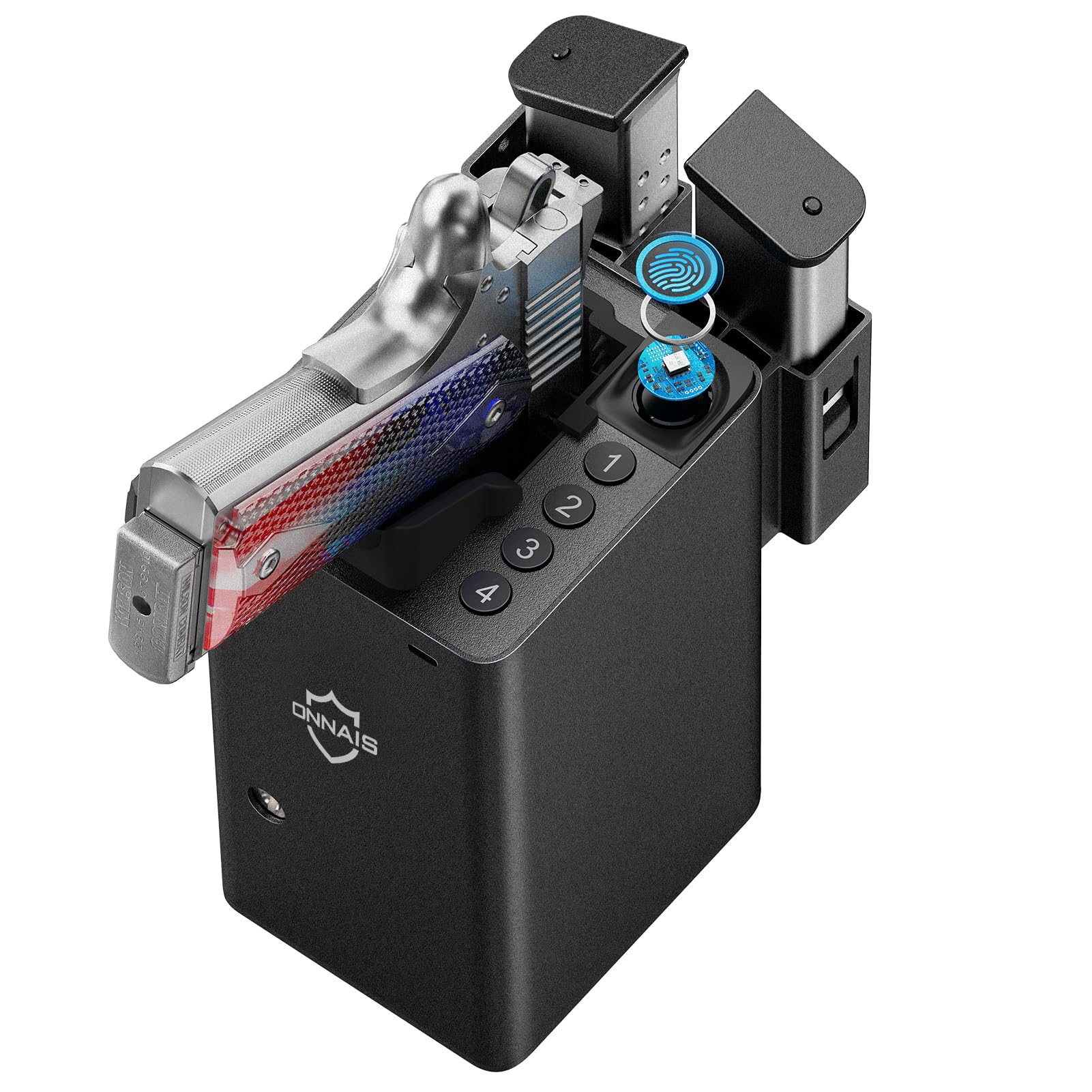
This ONNAIS model is built around a different idea than a typical “flat box” safe. It’s designed to be compact, mountable, and console-friendly, with an internal layout that encourages consistent placement. That’s a subtle but meaningful advantage in vehicles: when you always place the pistol in the same orientation, access becomes faster and the safe feels less like a puzzle.
Owners tend to describe setup as straightforward and the biometric as fast and consistent. They also highlight the build quality as solid—important for a compact safe that might live in a console or be mounted in a vehicle. The ability to mount it (with included hardware) matters because console storage without anchoring can turn into “a safe that slides around,” which is both annoying and less secure.
The honest limitation is fitment. This is not a “throw in any full-size pistol with a giant light and a bulky holster” box. Users commonly mention that compact and mid-size firearms fit best, and attachments can change everything. If your pistol has a mounted light/laser, confirm whether the safe’s internal geometry supports it. This isn’t a flaw; it’s the reality of choosing a console-sized safe. Compactness is the point.
If you want a clean, compact vehicle safe that doesn’t eat up console space and still gives you biometric + PIN + key backup options, this is a strong, practical pick.
Why it’s great in vehicles
- Console-friendly footprint – Designed for tight spaces where traditional boxes feel bulky.
- Mountable stability – Mounting reduces sliding, shifting, and awkward access angles.
- Fast biometric access – Owners often describe it as quick and reliable once set up.
- Multiple backups – PIN + key backup keeps you covered.
Good to know
- Not ideal for large pistols with bulky attachments—fitment is the key constraint.
- Console installs vary wildly by vehicle; measure your actual interior space carefully.
- If you want storage for multiple pistols plus valuables, a larger lockbox may be a better match.
Ideal for: drivers who want a compact, mountable safe for a console or tight vehicle area, and who use a firearm size that matches the safe’s “small footprint” purpose.
11. ONNAIS Iron PRO – The “Reliable Value” Biometric Box With Great Support Stories

The ONNAIS Iron PRO is a classic example of a safe that wins because of the full ownership package, not just one flashy feature. It’s a compact biometric box with keypad access, key backup, interior lighting, and an emergency power option—exactly the mix you want in a vehicle or bedside context. And importantly, owner stories often include positive support experiences, which matters for electronics.
In real use, people praise the fingerprint reader as more reliable than other budget biometric safes they’ve tried, and they like that the safe feels sturdy without being unreasonably heavy. That matters for vehicle storage: too light can feel stealable; too heavy becomes something you stop moving or using. This one sits in a practical middle where it can live in a car but still be handled without annoyance.
Now, here’s the “expert honesty” that makes this guide more useful than a spec sheet: portable lock boxes can almost always be pried open with enough time and tools. That’s not unique to ONNAIS. One reviewer points out a potential pry concern with the door lip design on some compact safes. You should interpret this correctly: the safe is a responsible storage tool and a delay device. Your security comes from (1) limiting access, (2) anchoring it, and (3) minimizing visibility. If you want “tool-resistant steel safe,” that’s a different product category and usually not portable.
If you want a safe that’s easy to set up, has multiple unlock methods, and has a reputation for “it works and the company helps if something goes wrong,” the Iron PRO is a smart pick.
Why it earns trust
- Balanced access options – Biometric + keypad + key is what practical owners actually want.
- Emergency power support – Reduces lockout risk and battery anxiety.
- Good real-life reliability reports – Many owners describe consistent daily performance.
- Support reputation – Replacement/help stories show up in real reviews, which matters for electronics.
Good to know
- Like most portable safes, it’s not designed to defeat dedicated tool attacks—anchoring is essential.
- Interior fit depends on your pistol size and accessories; measure your loadout realistically.
- If you need a very slim safe for a tight console, a smaller console-specific model may fit better.
Ideal for: buyers who want a reliable, well-rounded biometric lock box with a strong “ownership experience” reputation and practical backup access methods.
12. BILLCONCH Biometric Safe (3‑Way Unlock) – Sturdy, Easy, and Surprisingly “Tank‑Like” for the Size
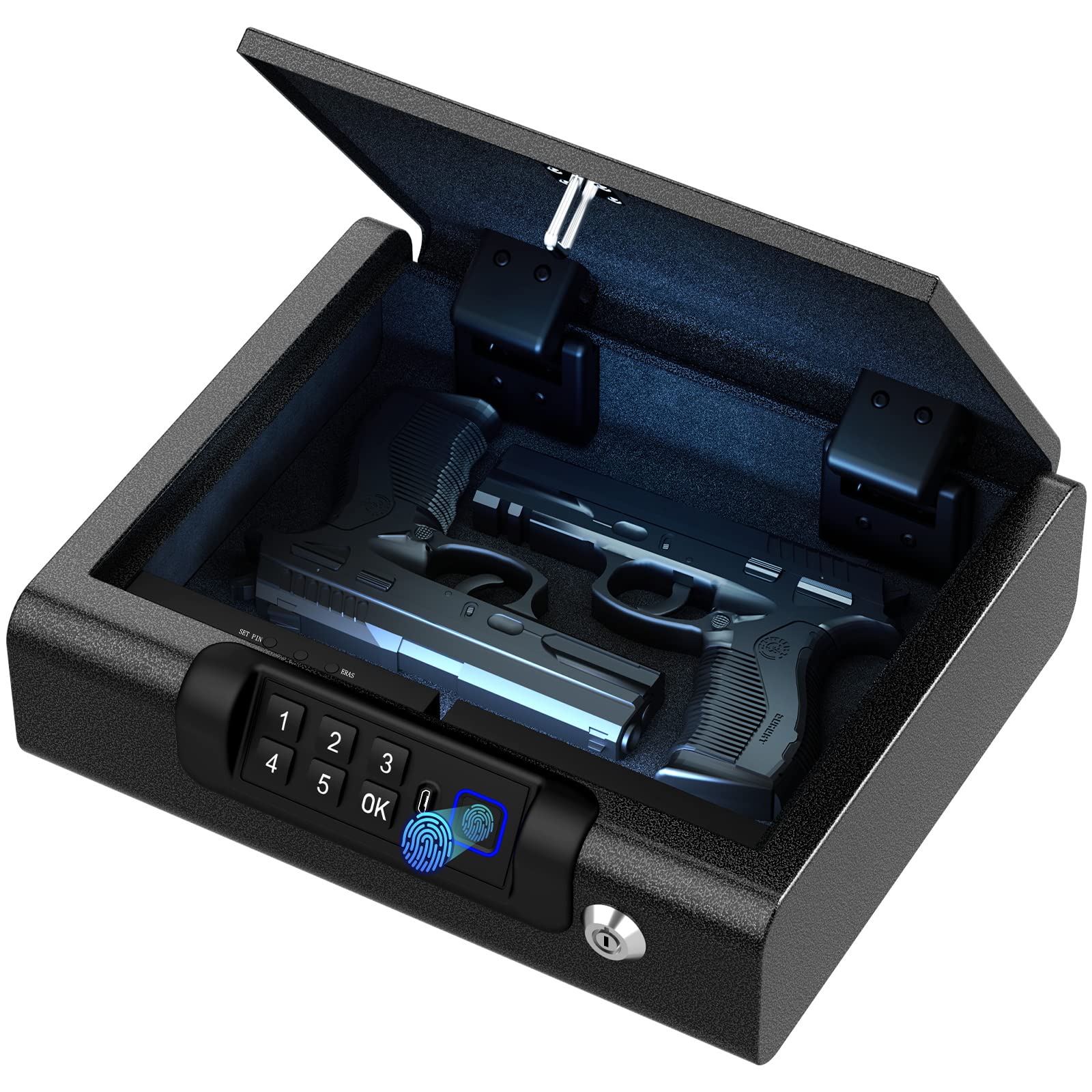
If you’re new to biometric safes, you want something that feels straightforward and solid. This BILLCONCH model is popular for that exact reason. Owners often describe it as sturdy and well-built for its size, with a fingerprint reader that feels fast and reliable once it’s set up properly.
Vehicle-wise, the value is the compact footprint and the simple daily flow. It fits in drawers, bedside setups, and cars without demanding a complex mount. The interior lighting helps a lot in low light, and the interior padding is usually praised for protecting contents and reducing rattle.
A smart “expert move” with this safe is to treat the PIN length requirement seriously. Some owners mention that the keypad expects a specific digit length. That’s not a dealbreaker—just something to learn once, set up correctly, and then enjoy. Also note that charging ports and cables can vary by model generation (micro vs USB‑C). Keep the included cable in a consistent place so you’re not hunting for the “right” cord later.
If your goal is a solid entry point into biometric safes that still feels like a legitimate tool—not a toy—this is a very strong contender.
Why first-time buyers like it
- Sturdy feel – Often described as “built like a tank” compared with other compact safes.
- Fast biometric – Quick opening once enrolled correctly.
- Simple daily workflow – Doesn’t require a complex mount to be useful.
- Interior light + padding – Better low-light access and less rattle in vehicles.
Good to know
- Portable means stealable if not anchored—use the cable and choose a real anchor point.
- PIN format requirements can trip people up if they skip the setup steps.
- If you want app management, choose a smart model like the BILLCONCH Smart Safe instead.
Ideal for: first-time biometric safe buyers who want a sturdy, simple lock box that works in a car, drawer, or nightstand with minimal fuss.
13. MOLICAR Biometric Portable Safe – Fast Fingerprint Access Without the “Tech Headache”

The MOLICAR safe sits in a sweet spot: it’s compact enough for vehicle use, but it’s designed in a way that feels straightforward and confidence-building. Owners consistently describe it as solid in hand (no cheap rattle, no flimsy lid), and they highlight the fingerprint reader as fast and dependable after a simple setup process.
In a car, this safe shines when you want “quick open, minimal thought.” The interior LED light is brighter than many people expect, which makes under-seat or trunk access much easier. Interior padding is also a real value: it keeps the firearm from shifting and reduces noise when you drive.
The “expert-level” detail that makes MOLICAR easier to live with: owners often share very specific setup steps and tips (like where internal buttons are located and how to enroll prints properly). That kind of community clarity usually correlates with a product that has a consistent interface—because people can repeat the same steps and get the same results. If you want to keep things simple, enroll both hands’ index fingers and thumbs, set a backup PIN if your model supports it, and do a quick test routine once a week.
As with every portable lock box, treat anchoring as part of the purchase. A portable safe without an anchor is not “stored,” it’s “placed.” Anchor it, place it discreetly, and MOLICAR becomes a very practical vehicle storage tool.
Why it’s easy to recommend
- Fast, simple fingerprint access – A good fit for buyers who want minimal complexity.
- Solid build feel – Often described as sturdier than expected for a compact safe.
- Bright interior light – Helps a lot for dark vehicle storage locations.
- Protective interior – Padding reduces rattle and protects finishes.
Good to know
- Portable safes must be anchored to be meaningful against theft—use the cable or mount holes if available.
- Fitment varies by pistol size and holster/attachments; measure your specific setup.
- Biometric reliability improves when you enroll multiple fingers and angles—don’t skip setup quality.
Ideal for: drivers who want fast biometric access with a simple ownership experience and don’t want to rely on apps or complex menus.
14. VORANEXS Travel‑Sized Biometric Safe – A Compact Deterrent With Useful “Night” Features
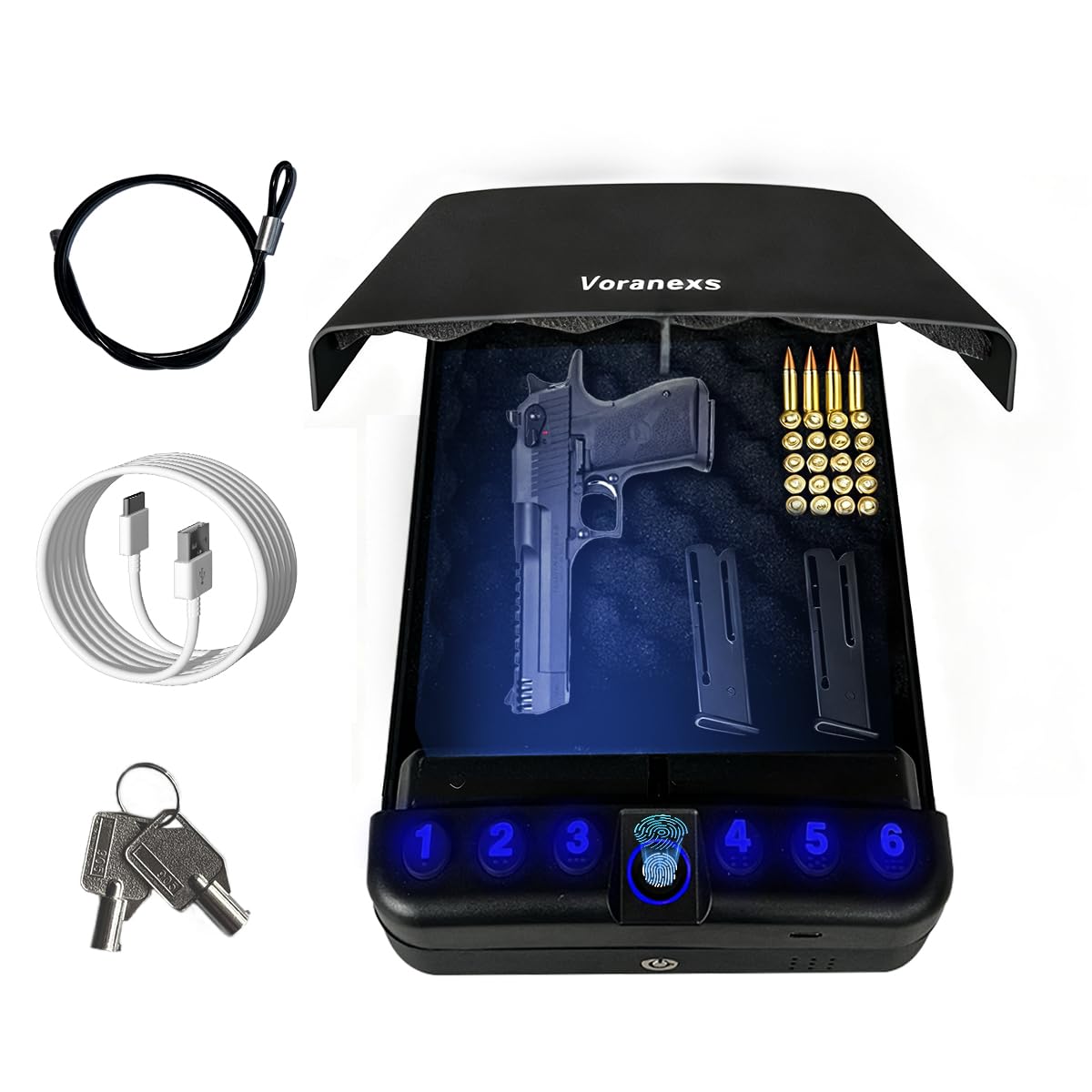
The VORANEXS safe is aimed at the buyer who wants a compact, portable biometric option without spending premium money. It includes the core trio—fingerprint, keypad, and key—plus two features that actually matter in vehicle or bedside use: an interior LED light and a silent mode. If you’ve ever tried to open a safe quietly at night or in a dark car, you already understand why those two features are more than marketing.
In terms of build, it’s positioned as a sturdy steel box with foam padding. That combination is a classic vehicle-safe recipe: steel for deterrence, foam to reduce rattle and protect finishes. But as with many budget portable safes, you should set expectations correctly: these are designed to stop casual access and add meaningful delay—not to be theft-proof against a determined person with tools and time.
One nuanced point from experienced owners in this category: biometric can be “adequate” but require firmer placement or a slightly longer press than premium sensors. That’s not automatically bad—especially when you have keypad and key backups. It just means you should test your biometric behavior in your real environment and enroll multiple fingers so you’re not relying on a single perfect print.
If you’re buying this safe, treat it as a portable deterrent with smart usability features. Anchor it, keep it discreet, and it becomes a very practical “I need a locked container in my vehicle” solution.
Why it’s useful for the price tier
- Three unlock methods – Fingerprint + keypad + key is the right combo for real life.
- Silent mode – Reduces beeping and attention in quiet environments.
- Interior LED light – Makes low-light access dramatically easier.
- Compact portability – Works in cars, drawers, closets, and travel bags.
Good to know
- Budget biometrics may require firmer placement; test and enroll multiple fingers.
- Portable safes are not theft-proof—anchoring and discretion are key to real security.
- Check hinge and lid design if you’re concerned about pry resistance; expectations matter in this tier.
Ideal for: occasional vehicle storage users who want a locked container with biometric convenience and night-friendly features, without paying premium prices.
15. Grimtron Portable Pistol Safe (Keypad + Key) – Simple, Quiet, and “Less Tech to Fail”
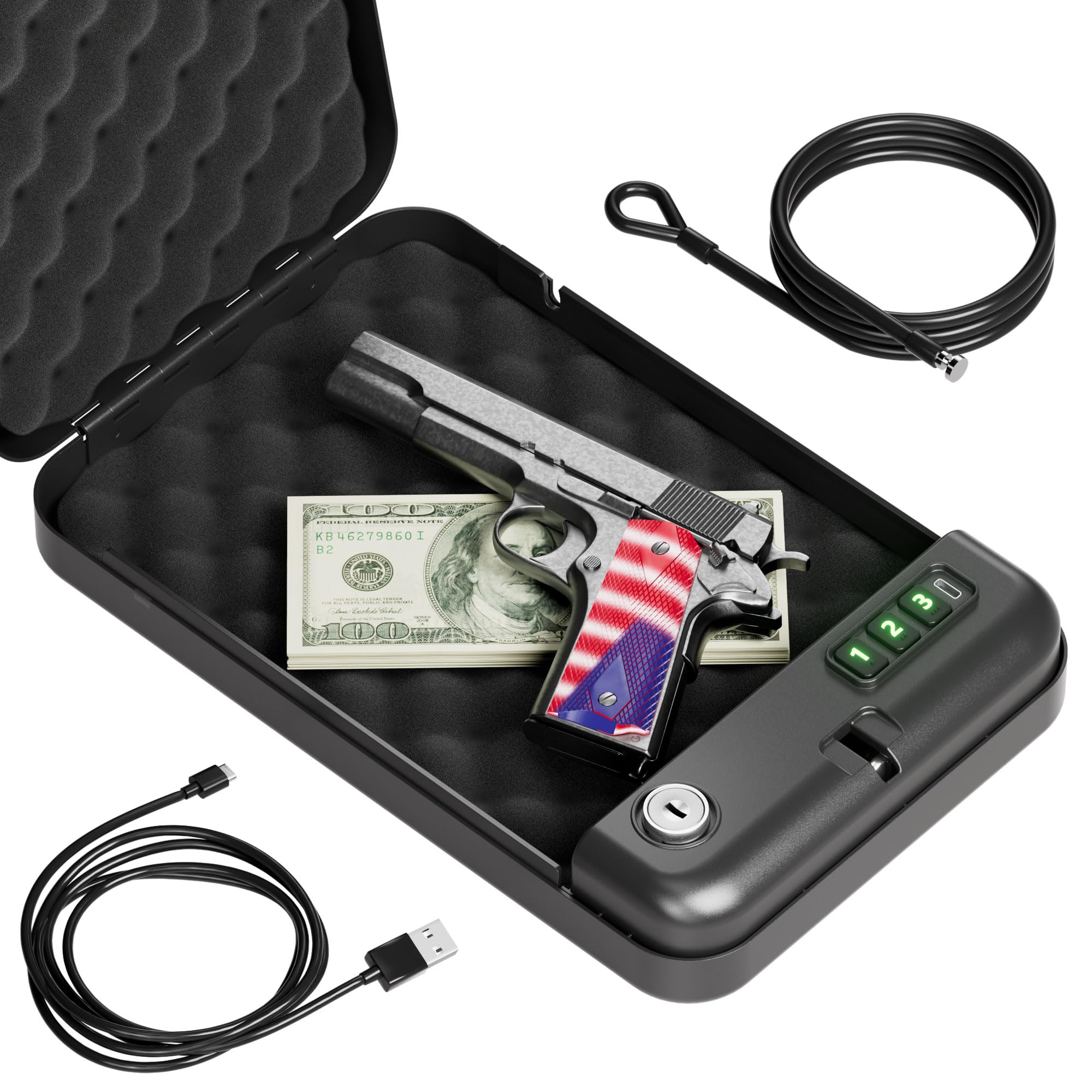
Not everyone wants biometrics in a vehicle. Some buyers prefer a keypad + key approach because it’s simpler: fewer sensors, fewer “will it read my finger?” worries, and a more predictable routine. The Grimtron portable safe fits that mindset. It gives you a digital keypad (with silent mode) and key access, in a compact metal box with a security cable.
The best part of this safe is the low learning curve. You set a code, you use a code. Silent mode is especially useful for anyone who dislikes loud beeps—because a vehicle is a surprisingly public environment at the wrong moments. People also like that the lid pops open without needing to pry it up aggressively, and that the foam keeps contents from bouncing around.
The biggest critique you’ll see in this category is cable length. If the cable is too short for your vehicle’s anchor point, you end up with awkward placement or a safe that shifts. Before you buy any cable-anchored safe, mentally map where the cable will loop and how far it must reach. The safe can be great, but a bad cable-to-anchor match ruins the daily experience.
If you want a budget safe that does the basics reliably and you’re okay skipping biometric speed, this is an easy, sensible choice.
Why it’s a smart “simple” pick
- Less tech to fail – Keypad + key is simple and consistent.
- Silent mode – Big quality-of-life upgrade for quiet access.
- Compact travel friendly – Easy to stow in a bag or discreet vehicle location.
- Basic cable anchoring – Adds theft friction when looped around a real anchor point.
Good to know
- No biometric: you trade speed for simplicity.
- Cable length may limit where you can anchor it; plan your anchor point before buying.
- Like all portable safes, it’s a deterrent—anchoring and discretion determine real-world effectiveness.
Ideal for: budget buyers who want a straightforward locked container for vehicle use and prefer keypad reliability over biometric convenience.
The Car Reality Section: What Actually Makes a Vehicle Pistol Safe “Work”
If you want a truly confident decision, you need to understand this: most disappointment with car safes isn’t caused by the safe being “bad.” It’s caused by a mismatch between the safe type and the car reality. Here are the real-world mechanics that separate a safe you’ll love from a safe you’ll quietly abandon.
1. The three threat levels every vehicle safe faces
- Curious access: someone finds the safe and tries basic guessing or prying with hands. Most safes in this guide solve this well.
- Smash-and-grab theft: someone steals what they can quickly. Your goal is to prevent “grab the whole safe.” That’s where anchoring matters.
- Tool-and-time attack: someone has tools and time. Portable safes are not designed to defeat this completely. Your strategy here is deterrence, delay, and reducing opportunity.
2. Anchoring is not optional—here’s how to think about it
A cable isn’t automatically “secure.” A cable is a tool. It becomes security only when the cable is looped around a real anchor point and the safe sits in a way that can’t be easily yanked free. Use this mental checklist:
- Anchor quality: seat frame metal, trunk tie-down metal, or a fixed structural point beats flimsy plastic every time.
- Reach and slack: too much slack lets the safe bang and shift; too little reach forces awkward placement.
- Access angle: if the cable makes the safe sit at a bad angle, you’ll fight it daily and eventually stop using it.
3. Why condensation quietly ruins “good intentions”
Cars create moisture swings. That means even a perfect safe can become an annoying safe if you don’t manage the environment. The simplest habits that help:
- Use desiccant packs in the safe if you store in the car frequently (especially in winter climates).
- Keep the interior padded and snug so the firearm doesn’t bang around, which can scuff finishes over time.
- Choose sealed travel vaults if your environment is dusty, damp, or you travel often.
4. The hidden reason biometrics “fail” (and how experts prevent it)
Biometric performance is often more about setup than hardware. Here’s what experts do:
- Enroll more than one finger (ideally 4–6 fingers) so you always have a usable option.
- Enroll at multiple angles because your wrist angle in a car is not the same as your wrist angle at home.
- Use backups by design—keep your PIN memorized and your keys accessible, not buried.
5. Smart safes: the right way to think about apps
Apps can be useful for battery checks and user management. But for most people, the app should never be your “primary access plan.” Treat it like a convenience layer, not a rescue plan. The safe should remain fully functional with fingerprint/PIN/key even if the app is ignored.
6. The one-minute “confidence test” to run after setup
Once your safe is installed (or placed and anchored), test it like a real owner:
- Open it 20 times using your primary method (biometric or PIN) from the exact position you’ll use in the car.
- Open it 10 times using your backup method (PIN or key) so you’re not learning under stress.
- Close it and drive around the block—listen for rattle, shifting, and cable slap. Fix it now, not later.
- Confirm the safe can’t be yanked free easily from its anchor point.
FAQ: Best Pistol Safe For Car Questions (Answered Clearly)
What’s the biggest mistake people make when buying a car pistol safe?
Should I choose biometric or keypad for a vehicle safe?
Is a portable safe with a cable actually secure?
Where is the best place in a car to install or store a safe?
Will my pistol with an optic or light fit in these safes?
Do app-controlled safes make sense in a vehicle?
How do I reduce rattle and noise in my car safe?
What should I test the first day I receive the safe?
Which safe type is best for frequent travel?
How many fingerprints should I enroll if I buy a biometric model?
Final Thoughts: Pick the Safe You’ll Actually Use in Your Car
A vehicle safe is only valuable if it becomes a habit—not a “nice idea.” The simplest way to pick confidently is to match the safe to your real storage location and your real access style. Here are the fastest shortcuts based on common needs:
- Want the most balanced premium pick for car + travel? Start with the VAULTEK LifePod 10 (Biometric). It’s compact, rugged, and designed for real movement between environments.
- Need more room for a full-size setup and extra gear? Choose the VAULTEK LifePod 20. It’s the “organized travel vault” answer when compact cases feel tight.
- Hate fingerprint failures and want modern contactless access? Look at the XEGIS SAFE Palm Vein Biometric Safe. It’s built around a different biometric approach and includes multiple backups.
- Want a stable mounted solution with fast presentation? Pick the ORARAER Biometric Slider Safe. Mounted consistency is a massive quality-of-life upgrade.
- Want smart management and a smoother setup experience? Go with the BILLCONCH Smart Gun Safe. LCD + voice guidance makes setup easier and reduces “user error” frustration.
- Have a real mounting plan and want a drop-down workflow? Consider the movgul Biometric Drop Down Safe. When mounted right, drop-down access can feel fast and natural.
- Want app features and anti-tamper behavior in a compact box? Try the XGUNXBOX Portable Safe. Just treat backup methods as essential.
- Want a portable safe that feels like travel gear and includes condition awareness? Choose the HOLEWOR Handheld Biometric Safe with the temperature/humidity display.
- Want a straightforward under-seat style portable safe? Go with the HOLEWOR Car Gun Safe for a simple “works every day” approach.
- Need a compact console-friendly solution? Consider the ONNAIS Biometric Pistol Gun Safe (Trigger Lock Style). It’s designed for tight spaces and consistent placement.
- Want a polished value pick with strong ownership stories? The ONNAIS Iron PRO is a strong all-rounder with practical backups.
- Want a sturdy, simple biometric starter safe? Look at the BILLCONCH Biometric Safe (3‑Way Unlock). It’s easy to learn and feels solid for the size.
- Want simple fingerprint access without smart app complexity? Try the MOLICAR Biometric Portable Safe. Fast, straightforward, and night-friendly with its interior light.
- Need an ultra-budget portable biometric option? The VORANEXS Travel‑Sized Biometric Safe offers multiple unlock methods and useful “night” features.
- Want the simplest budget locked container with fewer electronics? Go with the Grimtron Portable Pistol Safe for keypad + key simplicity and silent mode.
If you take one thing from this guide, let it be this: the best pistol safe for car is the one that fits your vehicle’s space, stays anchored to a real point, opens consistently with your chosen method, and doesn’t annoy you into skipping the habit. Choose that—and your purchase will feel smart every single day.