
Our readers keep the lights on and the garage heater humming. As an Amazon Associate, I earn from qualifying purchases.
If you’re hunting for the best 6×9 car speakers for bass, you’re not actually shopping for “speakers.” You’re shopping for a feeling: that chesty kick drum hit, the warm weight under a bassline, the kind of mid‑bass punch that makes even low volume sound full instead of thin.
Here’s the part most buying guides miss: bass from a 6×9 isn’t just a spec on a box. It’s a chain reaction between the speaker, the power source, and the place you mount it. A 6×9 that’s a monster in a rear deck can feel weak in a leaky door. A speaker that sounds “tight and punchy” on an amp can sound flat on a stock head unit. And the “harsh and bright” complaints you see online? Half the time, that’s not the speaker being “bad” — it’s the tweeter firing straight at glass, with zero tuning and a door panel buzzing like a tambourine.
So this guide is built differently. We’ll still talk materials, power handling, impedance, and design — but the real value is the stuff you only learn after installs: how to avoid bass-killing air leaks, what “big magnet” actually means for fitment, why some 6x9s wake up after a break‑in period, and how to tune a setup so vocals stay clear while the low end hits hard.
Below are 15 standout picks arranged in a “real buyer” order: the best all‑around pair first, then the specialized hitters (no‑sub bass monsters, premium clarity picks, whole‑cabin upgrade bundles), and finally the dependable budget replacements that still outperform tired factory paper cones.
If you only read one section, read the “how bass actually works” part — because once you understand why bass disappears in a car, you’ll never waste money on a mismatched setup again.
In this article
- How to choose the right 6x9s for your car, your power, and your bass goals.
- Quick comparison table of 15 standout models.
- In‑depth reviews of each speaker, with real pros and cons.
- How bass from 6x9s actually works (and why installs matter more than specs).
- FAQ answers that prevent regret purchases.
How to Choose the Best 6×9 Car Speakers For Bass
A 6×9 can absolutely deliver satisfying bass — but only when the whole system is aligned. “Bass” in a car is mostly mid‑bass (the kick drum and the body of bass guitar) plus a little low extension that the cabin amplifies. That means your job is to pick a pair that can move air cleanly, then mount and power them in a way that doesn’t leak that air away. Here’s the decision framework I use for buyers who want a strong upgrade without playing guessing games.
1. Decide what “bass” means to you (because not everyone wants the same thing)
Two people can say “I want bass” and want completely different results. Pick your target first:
- “I want a no‑sub setup that still feels full.” You want strong mid‑bass plus usable low extension. Look for larger cone area designs, efficient impedance, and a reputation for “sub‑like” weight.
- “I already have a sub — I want punch and blend.” You want clean output from about 70–200Hz so the sub isn’t doing all the work. Here, clarity and control matter more than ultra‑deep reach.
- “I want loud.” You want high sensitivity and power handling so the speaker stays clean at volume. Many pro‑audio‑leaning models do this well — but they may not be the deepest.
- “I want balanced sound, not boomy.” You want tight bass, clean vocals, smooth highs. Some models are intentionally “warm”; others are more “forward” in the upper range.
2. Match the speaker to your power source (this is where most people mess up)
Your speakers don’t live in a vacuum. They live in your head unit and amplifier reality. Ask yourself:
- Stock head unit, no amp: Prioritize higher sensitivity and speakers that “wake up” on low power. Avoid power‑hungry designs that only come alive when fed big wattage.
- Factory amplified system: Watch impedance. Some factory amps are designed around lower‑impedance speakers. Replacing them with a typical higher‑impedance pair can make the system feel quieter and thinner.
- Aftermarket amp: You can pick a speaker for control and power handling. This is where heavier‑motor designs (and some boutique brands) shine.
Also: don’t get hypnotized by “MAX power.” RMS (continuous) is what matters for clean bass. Strong bass is almost always the result of clean, consistent power plus a stable install — not peak numbers.
3. Understand impedance the “real” way (not the internet argument way)
Impedance isn’t a badge of honor — it’s a load your system has to drive. Here’s the practical version:
- Lower impedance can play louder on the same amp (because it can pull more power), but only if your amp/head unit is designed to handle it safely.
- Higher impedance is often “safer” on basic head units but may reduce output on systems designed for lower‑impedance factory speakers.
- Some models use “in‑between” impedance designs to extract more output while staying broadly compatible — a big reason certain bass‑famous 6x9s get recommended for factory‑amp upgrades.
4. Fitment is a bass feature (because a speaker that doesn’t fit can’t perform)
Real buyers keep repeating the same pain points in reviews — and they’re not about frequency response charts. They’re about fit:
- Magnet depth: A “huge magnet” can be great for control, but it can smash into window tracks or inner door bracing in shallow mounts.
- Hole alignment: Some 6×9 baskets don’t perfectly match common OEM patterns, and you’ll end up drilling, grinding, or using adapters.
- Adapter plates and harnesses: These are not optional if you value clean installs. They reduce rattles, protect wiring, and make the speaker behave like a speaker — not a loose vibrating object.
5. Your door is the other half of your subwoofer (treat it that way)
A door is basically a thin metal box full of holes. When a 6×9 plays bass, it creates pressure in front of the cone and behind it. If that pressure leaks through gaps, your bass disappears. That’s why two installs with the same speaker can sound wildly different.
The “high‑return” bass upgrades:
- Sound deadening (strategic, not excessive): A few targeted pieces on the outer door skin and around the speaker area can dramatically reduce resonance and make bass tighter.
- Sealing the speaker to the door panel: Foam rings or gasket tape keep front‑wave pressure from leaking into the door cavity.
- Rattle control: Loose harnesses, plastic clips, and door cards kill the illusion of bass fast. Secure what moves.
6. Tuning is the difference between “boomy” and “beautiful”
When reviews say “too much bass” or “harsh highs,” that’s usually a tuning story. Quick wins:
- Use a high‑pass filter if you have a sub: Let the 6x9s focus on punch and clarity. Your bass gets louder and cleaner because the midbass isn’t fighting deep sub‑bass it can’t reproduce cleanly.
- EQ the 2–4kHz region carefully: That’s where shouty vocals and harshness often live, especially in reflective cabins.
- Give new speakers time: Multiple owners describe a “break‑in” change where mid‑bass fills in and the sound smooths out after some play time.
Quick Comparison: 15 Best 6×9 Car Speakers For Bass Picks
Use this table to find your “type” fast — then jump into the reviews for the real‑world details like fitment surprises, tuning tips, and what owners actually say after months of use.
On smaller screens, swipe or scroll sideways to see the full table.
| Model | Style | Bass personality | Best match | Amazon |
|---|---|---|---|---|
| Kicker CS Series 46CSC6934 | Coaxial | Punchy, clean mid‑bass with broad vehicle fitment | Best all‑around “one pair” upgrade for most cars | Amazon |
| JBL GTO939 | Bass-forward | Full, “sub‑like” weight when installed and powered well | No‑sub builds + factory‑amp upgrades that need more output | Amazon |
| Rockford Fosgate T1693 Power | Premium | Loud, controlled, “big system” energy with strong punch | Drivers who want premium clarity + real impact (amp-friendly) | Amazon |
| Kicker DS Bundle (6×9 + 6.5) | Bundle | Balanced whole‑cabin upgrade; bass feels “even,” not lopsided | People who want front + rear to sound like one system | Amazon |
| CT Sounds Meso 6×9 | Amp-ready | Deep, muscular mid‑bass; smooth top end (silk dome) | Bass lovers running real power and willing to EQ | Amazon |
| Pioneer A‑Series TS‑A6961F | Coaxial | Balanced and detailed; bass improves when sealed and tuned | Factory replacement that aims for clarity + punch | Amazon |
| Rockford Fosgate P1694 Punch | Coaxial | Strong punch, clean highs, easy install hardware | Quick OEM upgrade with a “fun” sound signature | Amazon |
| Kicker DSC6930 | Coaxial | Clear and lively; bass is tight, can get bright without EQ | Stock system upgrades where you want “cleaner and louder” | Amazon |
| Skar Audio RPX69 | Budget | Surprisingly punchy once broken-in; great value with tuning | Budget setups that still want real volume and clarity | Amazon |
| DS18 G6.9Xi GEN‑X | Loud value | Bright, energetic, “party” voicing; can hit hard on power | Trucks/UTVs/off‑roaders and people who like volume | Amazon |
| Orion Cobalt CB693 | Value | Strong output for the size; bass surprises in small cabins | DIY installs, tailgate panels, compact enclosures | Amazon |
| Orion Cobalt CM6954 Bullet Midrange | Pro audio | Explosive mids and presence; not a deep‑bass specialist | SPL builds where vocals must cut through heavy bass | Amazon |
| Kenwood KFC‑6966S | Budget | Clean upgrade tone; bass improves with sealing and damping | Simple replacement with better clarity than stock | Amazon |
| JVC CS‑J6930 | Budget | Crisp highs + solid mids; bass is modest but cleaner than stock | Replacing blown factory speakers without fuss | Amazon |
| Pioneer TS‑F6935R | Entry | Basic but clean; best when paired with proper power and sealing | Lowest‑stress swap for older cars and daily drivers | Amazon |
In‑Depth Reviews: 15 Best 6×9 Car Speakers For Bass (Real‑World Edition)
Now we’ll go model by model. I’ll talk like a builder and an installer — what makes bass feel real, what makes it disappear, where fitment surprises show up, and how to get the best sound without turning your door into a rattle machine.
1. Kicker CS Series 46CSC6934 – The “Most Cars, Most People, Most Bass” Upgrade

The Kicker CS 6x9s are the speakers I point to when someone says, “I want more bass, but I also want this to be an easy win.” They have that rare combo of punch plus clarity without forcing you into a complicated system plan. Owners consistently describe a big jump over factory sound: tighter kick drum, more body in bass guitar, and mids that don’t fall apart when you turn it up.
Why they work so well for bass-focused buyers is the voicing. Kicker tends to tune their mainstream lines for lively output: the mid‑bass region has energy, so you feel impact even at normal listening volume. And when you add real power, they scale — multiple experienced installers and long‑time hobbyists describe them as “way louder and clearer than stock” and surprisingly satisfying in the low end when fed properly.
The other reason these win “best overall” is fitment practicality. They’re designed to fit in a wide range of vehicles, and that matters because the best bass in the world doesn’t help if your window track eats your magnet clearance. You’ll still want adapters and a proper gasket to seal them, but you’re less likely to run into weird “why won’t this sit flush?” moments than with some deeper, heavier competitors.
My favorite setup move with these: treat them like mid‑bass drivers, not subwoofers. If you have a sub, high‑pass them so they punch harder and stay cleaner. If you don’t have a sub, seal them well and tame door buzz — because these can absolutely make a door panel complain if you let it.
Why you’ll like it
- Instant “bigger sound” effect – Strong mid‑bass punch that makes music feel fuller right away.
- Plays well on stock power – Still a noticeable upgrade even before you add an amplifier.
- Scales nicely with an amp – Give them clean power and the bass firms up instead of getting sloppy.
- Practical fitment philosophy – Less drama in real vehicles compared to some deep-magnet models.
Good to know
- If you’re sensitive to bright highs, a small EQ dip in the upper range can make them sound more “smooth.”
- They can expose weak door installs fast — sealing and rattle control is what makes them sound premium.
- Expect best bass after a little play time and tuning; out of the box is good, dialed-in is great.
Ideal for: drivers who want the most reliable “I’ll be happy with this” bass upgrade without turning the install into a weekend-long engineering project.
2. JBL GTO939 – The 6x9s People Buy When They Want “Subwoofer Energy” Without a Sub

There’s a reason this model shows up again and again in “I want bass without a sub” conversations. The GTO939 has a reputation for giving you that surprising low‑end weight where you think, “Wait… is there a hidden sub in here?” Owners routinely describe bass that feels bigger than what they expected from door or deck speakers — and that’s exactly the point of this design.
Here’s the real‑world advantage that doesn’t get explained well: this line is built to extract more output from the power you already have. That matters for factory‑amped systems where swapping to a typical higher‑impedance aftermarket speaker can make the system feel weaker. With the right match, the JBLs can restore that “factory loudness” feeling while upgrading clarity and bass control.
The second secret is tune‑ability. Many buyers don’t realize how helpful an adjustable tweeter level can be in a car. Cabins are reflective, and the same speaker can sound perfect in one vehicle and too bright in another. When owners mention “set the tweeter lower,” they’re basically saying: use the tools built into the speaker so you don’t have to fight your cabin acoustics. That’s a pro move, and it’s exactly how you keep punchy bass while smoothing the top end.
Now, the honest part: these can require a little more install effort in some vehicles. People often report needing slight trimming or careful fitment because a serious bass‑capable 6×9 tends to have a real motor behind it. If you want “drop‑in and done,” Kicker CS or Rockford Punch may feel simpler. If you want maximum “no‑sub” satisfaction, the JBL is one of the most rewarding picks when installed cleanly.
Why bass lovers adore it
- Full, weighty low end – The “it sounds like I have a sub” reaction is common when installed well.
- Great for factory‑amp situations – Built to extract strong output instead of making your system feel quieter.
- Tweeter level control – Helps you avoid harshness without sacrificing clarity.
- Feels like a serious upgrade – More body, more presence, more “music lives in the car now.”
Good to know
- Fitment can require planning; confirm mounting depth and use proper adapters.
- If your door is leaky or rattly, these will reveal it — seal and deaden for best bass.
- They reward tuning: small EQ and crossover choices make a big difference.
Ideal for: drivers who want the biggest bass impression from a 6×9 pair — especially when a subwoofer isn’t part of the plan.
3. Rockford Fosgate T1693 Power – High-End “Stadium Loud” Energy With Real Punch

The Rockford “Power” line is for people who want their system to feel like a system — not just “slightly better than stock.” Owners talk about these in a very specific way: loud, clear, and surprisingly capable in the bass region for a full‑range coaxial. And when someone says “I feel like I could play music for a stadium,” that’s not about specs — that’s about a speaker that stays composed when most replacements start to sound strained.
Where these shine for bass-focused buyers is control. Cheap 6x9s can have bass, but it often gets “one‑note” or muddy when volume rises. The T1693 tends to keep the kick drum region defined, which makes bass feel tighter and more expensive. It’s also a model where installation quality matters a lot: owners who add proper enclosures (or treat the door like one) often describe a noticeable jump in bass fullness. That’s exactly what you’d expect from a high-output speaker — it rewards a good acoustic environment.
The top end is bold. People say “the tweeters scream” — sometimes as praise, sometimes as a warning. That’s not a flaw; it’s a voicing choice. In a truck cabin with lots of soft surfaces, that energy can feel exciting and detailed. In a reflective cabin, you may want to aim the tweeter away from glass or use a small EQ adjustment to keep it from becoming fatiguing. The upside is detail: when tuned right, you hear texture and separation that cheaper speakers smear.
Fitment note from real installs: some vehicles accept these easily in rear locations but can be tighter in front doors due to depth and geometry. If you want “install and forget,” consider Rockford Punch or Kicker CS. If you want premium output and don’t mind planning the install, the payoff is big.
Why it’s premium
- High-volume composure – Stays clean when others get harsh or muddy.
- Strong mid‑bass punch – The kick drum zone feels tight and confident.
- Detail and separation – Better “layers” in vocals and instruments when tuned.
- Build quality reputation – Designed for enthusiasts who drive their gear hard.
Good to know
- Premium speakers expose weak installs — deadening and sealing matter more here.
- The top end is energetic; plan minor tuning if you’re sensitive to bright highs.
- Fitment can be tighter in front doors; confirm depth and use the right adapters.
Ideal for: buyers who want a premium “bigger than stock” system feel — loud, clean, and punchy — and are willing to install it like it deserves.
4. Kicker DS Speaker Bundle – The Smart Way to Fix “Front vs Rear” Imbalance

This is the sleeper “smart money” move: instead of upgrading only the rear deck 6x9s and leaving weak factory speakers up front, you upgrade the system as a system. That matters because bass isn’t just low frequencies — it’s the sense that the entire cabin is filled evenly. When only the rear gets upgraded, you can end up with a weird “bass behind me, vocals thin up front” experience. A matched set removes that mismatch.
Real installs tell the story: people report clear, crisp sound with a big jump over stock, especially in common trucks and sedans. Many mention that installation is straightforward if you come prepared with the right adapters and harnesses — and that’s the key detail: the bundle gives you speakers, not vehicle-specific mounting hardware. In practice, buying the correct plug‑and‑play connectors makes the job cleaner, faster, and less likely to create rattles later.
If you’re chasing bass, the real win here is balance. A good bassline doesn’t feel “rear-only” — it feels like it lives in the car. A uniform brand voicing across front and rear helps that happen, and it makes later upgrades (adding a small amp, adding sound deadening, adding a compact sub) more predictable because everything is speaking the same tonal language.
Fitment is the one recurring warning. Some vehicles don’t line up perfectly, especially on the rear locations where factory brackets are odd. That’s not a reason to avoid the bundle; it’s a reason to plan: get the right adapters, and don’t be surprised if you need minor drilling in older models. When done right, this feels like the “factory system you wish you got.”
Why this bundle is a win
- System balance – Upgrading front and rear together fixes thin or uneven sound.
- Clear, crisp upgrade – Owners consistently report a dramatic improvement over stock.
- Great “phase 1” build – Add an amp later and the whole cabin scales together.
- Install is simple with the right adapters – Plug‑and‑play harnesses keep things clean.
Good to know
- Vehicle-specific mounting hardware may be required; don’t skip adapters.
- Some cars have odd factory hole patterns; minor drilling can happen.
- For maximum bass impact, pair this with door sealing and basic deadening.
Ideal for: drivers who want a coherent “whole car sounds better” upgrade, not just louder rear speakers.
5. CT Sounds Meso 6×9 – Deep Mid‑Bass Muscle With a Smooth, Non‑Screechy Tweeter

These are for the buyer who reads “I want bass” and translates it into: “I’m willing to power these properly, and I want my 6x9s to behave like real drivers.” The Meso 6x9s have a very specific reputation in owner feedback: deep, stout, and built like they’re not afraid of wattage. Multiple experienced speaker builders mention “real bass” and talk about low‑frequency performance that surprises people who assume coaxials can’t dig.
What makes the Meso special for bass lovers isn’t magic — it’s character. The cone/surround/motor combo is designed to move air without falling apart, and the silk dome tweeter is a deliberate choice: it avoids the “metallic, shrilly” vibe that turns some loud coaxials into ear fatigue machines. That’s why you’ll see comments like “not harsh” and “vocals sound right,” even from picky listeners.
But let’s talk like an installer: these are not the “lightweight, plug‑and‑play” choice. Owners repeatedly mention the huge magnet and weight. That means fitment can be a real consideration in shallow doors, and it’s one of the few 6x9s where you should genuinely measure depth before buying if your vehicle is tight.
The other “expert” detail is tuning. Some users note a slightly weak upper‑midrange out of the box — which is exactly the kind of thing that becomes a non-issue when you run a proper EQ. Give these clean power, add a small presence bump where your cabin needs it, and they can sound far more expensive than most coaxials. If you love to tweak, this is the fun pick.
Why bass heads love it
- Muscular mid‑bass – Built to hit and stay controlled when powered properly.
- Smooth highs – Silk dome tweeter helps avoid “ice pick” harshness.
- High‑confidence construction – Feels like a heavy-duty driver, not a flimsy replacement.
- Rewards EQ and amplification – Can reach “wow, that’s clean” territory with tuning.
Good to know
- Large magnet can cause fitment issues; measure depth and plan adapters.
- Lower sensitivity means they’re happier with an amp than a weak head unit.
- Grille aesthetics and dispersion quirks are mentioned; install placement matters.
Ideal for: the bass-focused buyer who wants a heavy-duty pair and is willing to feed them clean power and a little tuning love.
6. Pioneer A‑Series TS‑A6961F – Clear, Detailed, and Surprisingly Satisfying When Installed Right

The Pioneer A‑Series 6x9s sit in a sweet spot for a lot of drivers: they’re designed as a real OEM upgrade with better clarity, better separation, and a “tight but not crazy” bass profile. Owner experiences are interesting here because they tell you the truth about car audio: some people rave about the bass and say it feels like they added subs; others say it’s mid‑heavy and needs tuning. Both can be true — depending on install environment and crossover choices.
Here’s the pro takeaway: these speakers are sensitive enough to sound lively on stock amplification, but they’re also honest enough to punish a bad door. If your door leaks air, your bass will vanish, and you’ll blame the speaker. If you seal the speaker, reduce panel buzz, and set a smart EQ, the bass tightens up and the whole system feels more coherent. That’s why so many real-world reviews mention tweaking and then being “pretty happy” — this is a speaker that rewards basic tuning.
Another practical advantage is installation flexibility. Pioneer includes multi‑fit adapters and focuses on easy mounting, which matters when you’re trying to upgrade without fabrication. And if you’re integrating into factory tweeter locations (in systems that separate tweeters), Pioneer’s approach can make that less of a headache.
My advice with these is simple: decide the role. If you want them to be “bass makers,” install them in the rear deck or a well-sealed door and don’t over‑high‑pass them. If you want them to be “clean midbass + clarity” and you have a sub, high‑pass them appropriately and let them punch. Either way, they’re a smart pick when you want a balanced sound that still feels energetic.
Why people pick them
- Clear, detailed treble – You hear more texture in vocals and instruments.
- Good “stock amp” behavior – Feels lively without demanding a huge amp.
- Install flexibility – Adapters and design choices help avoid custom fabrication.
- Great when tuned – A little EQ can turn “good” into “why didn’t I do this sooner?”
Good to know
- Some installs feel light below the midbass region; sealing and crossover choices matter.
- May sound mid-forward until you EQ; not a “set it and forget it” speaker in every cabin.
- If you want maximum bass without a sub, JBL or CT Sounds may feel more naturally “thick.”
Ideal for: drivers who want a strong factory upgrade with clean detail, and are willing to do a little install and tuning the right way.
7. Rockford Fosgate P1694 Punch – The Fun, Punchy Upgrade That’s Hard to Regret

The Punch line has always been about one thing: making music feel alive in a car. The P1694 continues that tradition with a signature that owners describe as “packs a punch,” “great bass for a factory upgrade,” and “loud but still clear.” It’s one of those speakers that can make you smile the first time you hit play, because the system suddenly has energy where it used to be flat.
One reason real buyers keep recommending it is the install experience. Rockford includes grilles, mounting hardware, and OEM adapter support in many packages, and their FlexFit-style basket design is built to reduce “why don’t these holes line up?” frustration. That matters because an easy install usually becomes a better install — and a better install is how you get better bass. Loose mounting and air leaks make bass weak; clean fit and sealing make it hit.
Bass-wise, think of this as “punchy and satisfying” rather than “sub replacement.” It’s the kind of bass that makes kick drums snap and bass guitar lines sound present. And if you add a matching set of Rockfords in other locations, the tonal balance tends to stay consistent — which is why installers like using the brand across a vehicle.
If you’re someone who builds portable Bluetooth boxes or custom enclosures, you’ll also see these used outside cars — and that’s a subtle vote of confidence. Speakers that sound good in a small enclosure often have the kind of punch and sensitivity that works well in a car cabin, too.
Why it’s a safe buy
- Fun, punchy sound – The “Punch” name fits; it feels lively and energetic.
- Install kit mindset – Hardware and fit features reduce common install headaches.
- Great OEM replacement value – Strong upgrade without needing a full system rebuild.
- Plays well with tuning – EQ and sealing can make the bass feel bigger and tighter.
Good to know
- Door rattle can show up fast; plan basic deadening for best results.
- Not a “deep bass” specialist; pair with a sub if you want real sub‑bass.
- If you want premium refinement at very high volume, Rockford Power is the step-up.
Ideal for: people who want a punchy, enjoyable OEM upgrade that’s hard to mess up and easy to enjoy immediately.
8. Kicker DSC6930 – Clear, Loud, and Bass‑Capable (If You Respect Fitment)

The DSC6930 is popular for a reason: it’s one of those upgrades where regular drivers — not just audio nerds — immediately notice the improvement. People routinely say “blows stock out of the water,” and the sound signature tends to be crisp, clean, and lively. If you’re upgrading an older sedan or truck and you just want “better, louder, clearer,” these often deliver exactly that.
For bass, think “tight and present” rather than “deep and heavy.” The bass response can feel very satisfying in the normal musical range, especially when the doors are treated and the speaker is sealed. But the personality leans bright up top if you leave everything flat. Several detailed reviews basically translate to: “Kicker treble can be a lot; use EQ and tone controls.” That’s not a dealbreaker — it’s a reminder that speaker choice and cabin acoustics interact.
The most important thing to know is fitment. A few real-world installs report hole pattern weirdness and needing to grind or adjust mounting holes in common vehicles. That’s frustrating, but it’s also manageable if you go in prepared. Use an adapter bracket, test-fit before you fully mount, and keep metal shavings away from the cone. If you’re comfortable with basic DIY, it’s a solvable problem. If you want zero fabrication risk, Kicker CS or Rockford Punch may be safer.
Once installed cleanly, these respond well to smart tuning: pull a little upper treble if needed, and focus on building midbass with sealing and rattle control. That’s how you get the “Dad truck upgrade” vibe many owners describe — louder, cleaner, more enjoyable, without building a full system.
Why it works
- Big audible upgrade – Clear jump in volume and clarity over factory speakers.
- Good mid‑bass punch – Basslines feel more present when installed properly.
- Stock-system friendly – Doesn’t demand an amp to sound “better now.”
- Great for everyday drivers – Clean, lively sound that makes commutes better.
Good to know
- Hole alignment and fit can be annoying in some vehicles; plan adapters.
- Top end can sound harsh in reflective cabins; EQ solves most of it.
- They won’t produce true sub‑bass; midbass punch is the strength.
Ideal for: buyers who want a fast, noticeable upgrade and are comfortable handling basic fitment realities.
9. Skar Audio RPX69 – The Budget Pair That “Hits Hard” After a Proper Break‑In

Skar’s RPX69 is one of those “don’t judge it by the price class” picks. Real owners often describe the same story arc: out of the box they expected something basic, then after installation they got clear sound, solid volume, and a noticeable improvement over dead or weak factory speakers. It’s not an audiophile speaker, but that’s not the goal — the goal is a clean, punchy upgrade that doesn’t punish your wallet.
The bass conversation here is refreshingly honest. Some users say “not much bass,” others say “punchy and full.” That’s exactly what you’d predict from a budget coaxial: bass outcome depends heavily on installation and EQ. The most useful owner insight is the “break‑in effect.” More than one review mentions that after a couple days of play time, the low end fills out and the sound becomes less tinny. Whether you call it break‑in or your ears adapting, the practical takeaway is the same: don’t judge these in the first ten minutes. Give them time, then tune.
If you want these to sound like a much more expensive system, treat your install like it matters: use adapters, seal the speaker to the mounting surface, and stop the door panel from vibrating. One reviewer specifically described how EQ made the Skars “flow perfectly into the sub’s range” and eliminated a midbass gap that the factory system had. That’s the ideal use case: let these handle the punch zone and let a sub (even a small one) handle the deep lows.
One more practical note: not all budget sets include the little extras (wires, adapters). Plan to use proper harness adapters anyway. That one small step often separates “budget upgrade” from “budget headache.”
Why it’s a value win
- Big improvement per dollar – Clear, loud upgrade over blown factory speakers.
- Handles volume surprisingly well – Many users report low distortion at higher listening levels.
- Break‑in payoff – Bass and balance often improve after some play time.
- Great with tuning – EQ and sealing can make these feel far more expensive.
Good to know
- Deep bass expectations should be realistic; these are midbass-focused speakers.
- Best results require install discipline (sealing, adapters, rattle control).
- If you want “smooth and refined” highs, premium picks do that better.
Ideal for: budget-conscious buyers who still want punch and clarity — and are willing to give the speakers time and a little tuning.
10. DS18 G6.9Xi GEN‑X – Loud, Bright, and Built to Survive Real Use
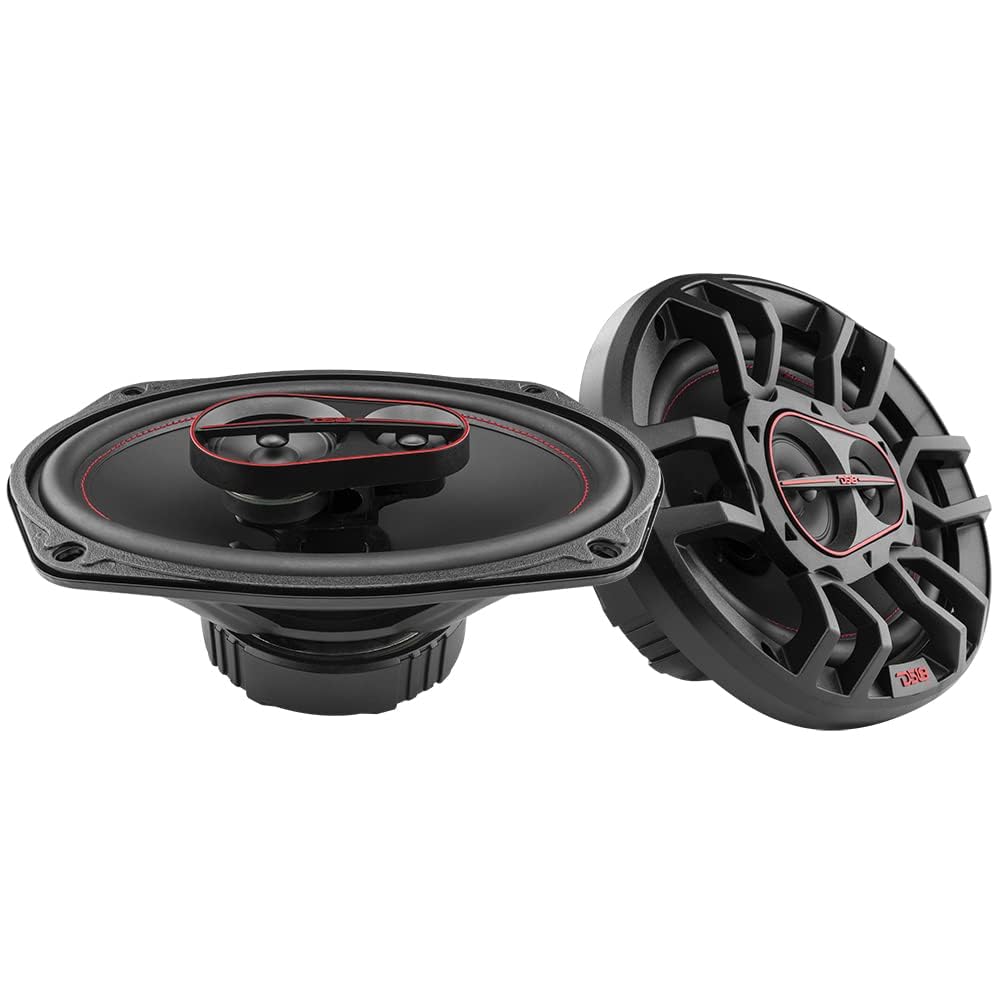
DS18 lives in that world where durability and volume matter — trucks, off‑road rigs, work vehicles, and “I want my music to cut through road noise” setups. The G6.9Xi feels built for that life: steel basket, included grilles, and a sound signature that tends to be energetic and forward. If you like sparkle on top and presence in the mids, this is the kind of speaker that makes you grin.
For bass, this one is about “impact” more than “deep.” In a properly treated door or rear deck, it can absolutely deliver satisfying punch. But DS18’s voicing often leans toward excitement: clear highs and lively detail. That means the bass you get tends to feel “fast” and “snappy” rather than heavy and warm. For many listeners, that’s perfect — especially for rock, metal, and anything with quick kick drum patterns.
Where owners tend to be happiest is when they power these appropriately and control the environment. A rattly door can make a bright speaker sound harsh. A sealed, damped door makes it sound crisp and expensive. And because these are often chosen for rougher use cases, it’s nice that they’re designed to take some real-world abuse. That’s also why you’ll see repeat buyers — people putting the same set into multiple machines or vehicles.
If your personal bass goal is “I want the car to feel full without a sub,” you may prefer JBL or CT Sounds. If your goal is “I want loud, clear, and fun, and I might add a sub later,” DS18 fits that path beautifully.
Why it’s popular
- Loud and lively – Great for cutting through cabin noise in trucks and older vehicles.
- Durable feel – Steel basket and included grilles suit real-world use.
- Snappy punch – Fast mid‑bass response when installed and powered correctly.
- Easy “fun system” foundation – Add a small amp or sub later and it scales well.
Good to know
- Bright voicing can need EQ in reflective cabins.
- Deep bass isn’t the main personality; impact is.
- Like all punchy speakers, they demand a rattle-controlled door to sound their best.
Ideal for: drivers who value volume, durability, and energetic sound — and want a punchy 6×9 that can survive daily life.
11. Orion Cobalt CB693 – Surprisingly Strong Output for Simple Builds and Daily Drivers

The Orion Cobalt CB693 is one of those picks that shows up in two types of reviews: “great speakers for the price,” and “these were perfect for my custom box.” That second category matters for bass seekers, because speakers that behave well in small enclosures and DIY builds often have the kind of output and sensitivity that works nicely in a car cabin too.
Bass impressions here are often better than expected for the class. Some owners describe bass that feels “perfect for not having subs,” especially in smaller sedans where cabin gain makes midbass feel bigger. That’s the sweet spot: you’re not asking for true sub‑bass; you’re asking for a fuller musical foundation. And in that role, the CB693 can be a satisfying upgrade over weak factory speakers.
At the same time, you’ll see a recurring caution: “a little tinny” or “small tweeters.” That’s not necessarily a defect — it’s usually the combination of cabin acoustics and a basic install. If you throw these into a factory location with no sealing, you can end up with a top‑heavy sound. If you treat the door, aim for a good seal, and keep rattles under control, they tend to sound more balanced. Think of these as a “good engine” that needs a decent chassis.
If you’re building a pelican case speaker, a tailgate panel, or a simple replacement in an older car, the CB693 is the kind of “good enough to impress” pick. For absolute bass authority, the higher-tier models hit harder — but this is a solid everyday upgrade path that doesn’t feel fragile.
Why it’s worth considering
- Strong output for the class – Can feel surprisingly full in smaller cabins.
- Easy DIY compatibility – Popular for custom boxes and portable builds.
- Simple install approach – Clear connections and a straightforward replacement vibe.
- Good “no sub” support – Can provide satisfying mid‑bass when expectations are realistic.
Good to know
- Can sound a bit “toppy” if the install is leaky; sealing helps a lot.
- Not the deepest bass hitter compared with JBL/CT/Rockford Power.
- Fitment can vary by vehicle; always test-fit with adapters.
Ideal for: DIY builders and everyday drivers who want a noticeable upgrade with good output and decent bass support without going full premium.
12. Orion Cobalt CM6954 Bullet Midrange – When You Need Vocals to Cut Through Bass
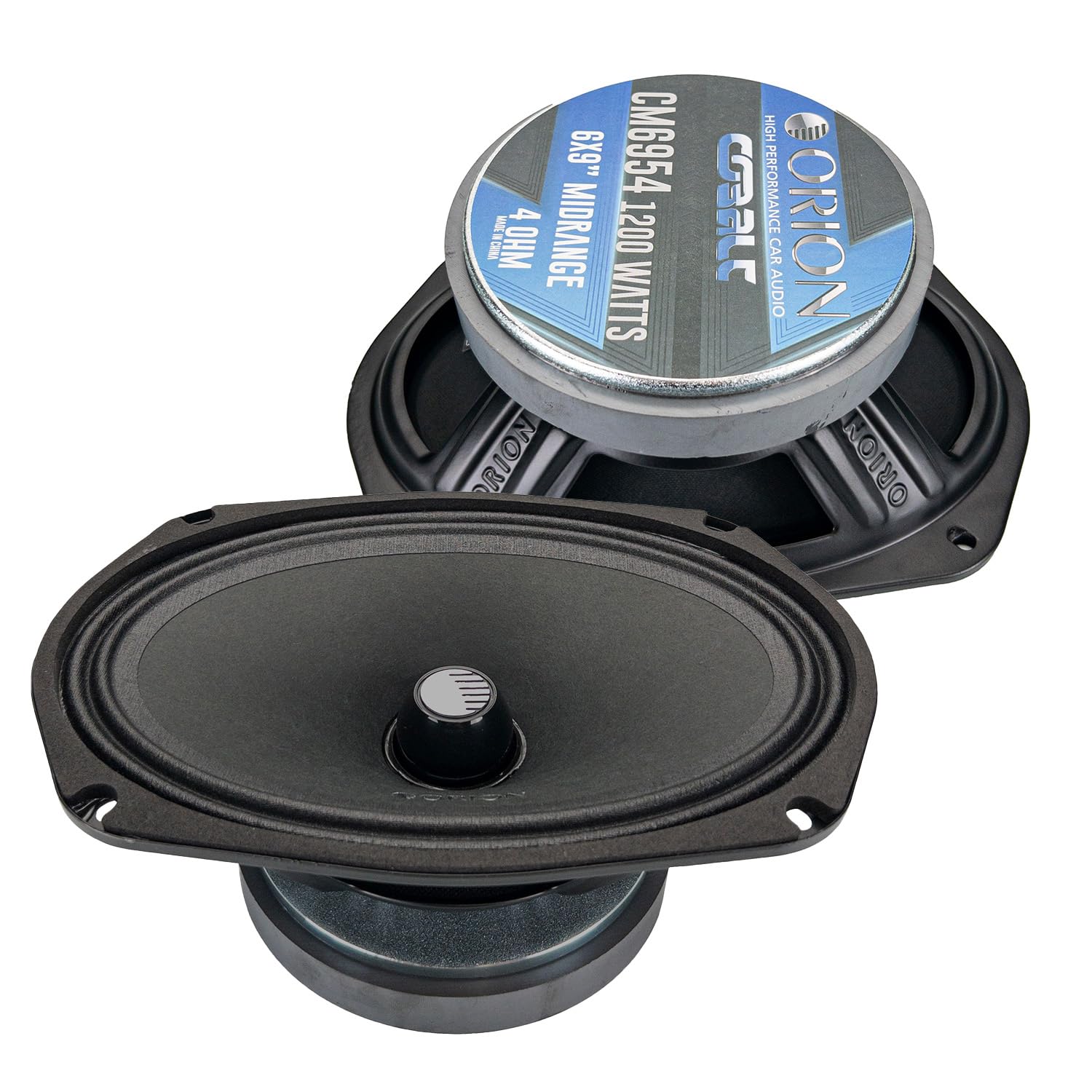
This is a different kind of product — and it’s here because “bass builds” often fail in a very specific way: you get the low end, but you lose the music. Vocals vanish. Guitars flatten. You end up with a system that’s loud, but not enjoyable. The CM6954 exists to solve that problem. It’s a high-efficiency, pro-audio‑leaning midrange designed to project and stay clear at insane volumes.
So if you’re reading this guide purely for “deep bass from a coaxial 6×9,” this isn’t that. But if you’re building a system where bass is already handled by a sub (or multiple subs) and you need your mids to cut through, this style of speaker is exactly what many SPL builders use to keep the music alive. The bullet design helps extend and project higher frequencies, so vocals and snare hits stay present even when the low end is punishing.
Real-world feedback is consistent: people talk about huge magnets, surprising loudness, and impressive clarity at high volume — with the classic warning that fitment can be tight in doors because the motor is not small. These are often better suited to rear decks, custom pods, or builds where you have control over mounting depth and structure. If you’re putting them into a factory door, measure and plan carefully.
Think of the CM6954 as a “system tool.” It’s not meant to be polite background sound. It’s meant to be heard. If your end goal is a bass-heavy setup that still sounds like music — not just low-frequency pressure — this is one of the smartest categories to understand.
Why it exists
- Vocals that cut – Keeps mids present in bass-heavy, high-volume systems.
- High efficiency feel – Designed for loud output without collapsing into distortion.
- Pro-audio character – Great for builds where “projection” is the priority.
- Build feels serious – Large motor and sturdy design match its intended use.
Good to know
- Not a “deep bass coaxial” — this is about midrange and presence.
- Huge magnets can create fitment challenges in factory doors.
- Best results usually involve an amplifier and a system-level tuning plan.
Ideal for: SPL and bass-heavy builds where you need vocals and instruments to stay loud and clear alongside big subwoofer output.
13. Kenwood KFC‑6966S – The Straightforward Upgrade That Sounds Clean and Punchy

Kenwood’s KFC series is the “do the basics well” choice. It’s not trying to be boutique. It’s not trying to be a showpiece. It’s trying to replace dead factory speakers with something that sounds cleaner, louder, and more enjoyable — and for many drivers, that’s the perfect goal. Owners often mention clear sound, good value, and a noticeable improvement in bass presence compared to worn factory units.
The most useful real-world feedback here is install-related. Several buyers mention needing minor trimming or enlarging openings on older vehicles. That’s not uncommon with 6×9 replacements — and it’s exactly why adapters matter. When you mount a speaker cleanly and seal it, you get better bass and fewer rattles. Some owners also mention the terminals feeling a bit flimsy. That’s a practical note: use solid connections (crimp properly, or solder if you’re comfortable) so the speaker doesn’t become the weak link in the system.
Bass-wise, these can do a respectable job in the midbass region — especially in rear decks where the speaker can “load” into the cabin more easily. In doors, you’ll want to do the usual: gasket, seal, and a bit of deadening if you want the bass to feel tight instead of hollow. Think of the Kenwoods as honest speakers: they’ll sound like the quality of your install.
If you’re building a bass-focused system with big amplification, you’ll likely step up to more robust options. But if you want a clean daily-driver upgrade that doesn’t require a complicated plan, this is a dependable choice.
Why it’s a practical pick
- Clean improvement over stock – Better clarity and more presence in bass and mids.
- Good everyday voicing – Works well across many music genres without sounding weird.
- Simple upgrade path – Easy to enjoy now, easy to build on later.
- Solid value – A common “worth it” replacement for older cars.
Good to know
- May require minor trimming in older vehicles; adapters reduce frustration.
- Terminal/connection quality can feel basic; make clean wiring connections.
- For maximum bass impact, door sealing and rattle control matter a lot.
Ideal for: drivers who want a straightforward, dependable upgrade with cleaner sound and better midbass than tired factory speakers.
14. JVC CS‑J6930 – The Low‑Stress OEM Replacement That Cleans Up Muddy Sound

The JVC CS‑J6930 is the “my factory speaker died and I just want my music back — but better” solution. It’s widely used as a replacement in older vehicles where the factory speakers are literally failing (blown voice coils, no output, muddy paper cone distortion). In that scenario, the upgrade can feel dramatic: clearer highs, cleaner vocals, and a midrange that no longer sounds like it’s “underwater.”
Bass expectations should be realistic. This is not a bass monster. Owners often describe mids and highs as a strong improvement, while lows range from “fine” to “basically non-existent” depending on vehicle and tuning. That’s not a contradiction — it’s the reality that many factory doors are terrible enclosures. If you install these into a leaky door and expect the speaker to do the job of a subwoofer, you’ll be disappointed. If you treat them as a clean replacement that restores clarity and gives some midbass presence, they’re a solid win.
What I like about these for buyers is the “low drama factor.” They’re commonly paired with mounting brackets and wire adapters, which makes the install clean. Many reviews highlight that a factory amplifier can power them well and keep distortion low even at higher volume. That makes them a great “phase 1” upgrade: fix the dead speakers now, then decide later if you want more bass via a small sub or an amplifier.
If your bass goal is big, use JVC as part of a plan — not as the whole plan. But as a value replacement that cleans up the sound and gets you back to enjoying music daily, it’s hard to argue with the practicality.
Why it’s a smart budget move
- Huge improvement over blown stock speakers – Restores clarity and removes “muffled” sound.
- Plays well on factory power – Can stay clean at volume in many stock-amped setups.
- Easy install path – Commonly paired with simple brackets and harness adapters.
- Great phase‑1 upgrade – Fix the problem now, build bass later if desired.
Good to know
- Deep bass is not the main strength; it’s about clean sound and clarity.
- Door sealing and deadening can dramatically change bass outcome.
- If you want “no-sub bass,” look at JBL or Kicker CS instead.
Ideal for: older cars with weak or blown rear speakers where you want a clean, simple replacement that sounds noticeably better than factory.
15. Pioneer TS‑F6935R – A Simple Swap That’s Better Than Tired Factory Paper Cones

Not every upgrade needs to be a whole identity. Sometimes you just want speakers that work, sound clean, and don’t make your car feel ancient. That’s the TS‑F6935R’s lane. It’s a basic 6×9 replacement that focuses on getting you out of “factory speaker failure” territory and into “my music sounds normal again” territory — with a bit more clarity and a bit more output than tired stock cones.
For bass seekers, here’s the honest framing: this is not the pick you buy to chase chest‑hit bass. It’s the pick you buy when you want a clean foundation and you either (a) plan to add a sub later, or (b) mainly want clearer daily listening with some midbass presence. Like most entry-level replacements, the bass outcome depends heavily on the install environment. A leaky rear deck mount or a door with no sealing will make any speaker feel thin — and entry-level models feel that most.
Where these can be surprisingly satisfying is in older cars where the factory speakers are simply worn out. Any decent new speaker will sound clearer, and when you add basic gasket tape and secure the mounting surface, the bass that is there becomes tighter and more audible. It’s not “big bass,” but it’s clean bass — and that’s already a quality-of-life upgrade.
If your end goal is one-and-done bass authority, buy higher on this list. If your end goal is “fix the sound, keep it simple, and stop the distortion,” this fits.
Why it belongs in the list
- Simple replacement – Great for older vehicles with weak or failing speakers.
- Cleaner daily listening – Reduces muddiness and restores clarity.
- Good foundation – Works as a first step before adding a sub or amp later.
- Low install drama – Straightforward swap when paired with proper adapters.
Good to know
- Not designed to be a bass monster; midbass is modest unless the install is excellent.
- Sealing and rattle control matter a lot to avoid “thin” sound.
- If you want the biggest bass impact, move up to Kicker/JBL/CT/Rockford picks.
Ideal for: daily drivers and older cars where you want a clean, simple replacement that improves sound quality without needing a full system plan.
How Bass From 6x9s Actually Works (and Why Installs Matter More Than Specs)
Most “bass disappointment” isn’t because the speaker is weak — it’s because the install environment is leaking bass away. A 6×9 makes bass by moving air. If the air pressure it creates escapes through gaps, you lose output fast. That’s why the same model can sound huge in one car and flat in another.
The 6×9 bass formula that actually predicts results
- Air control: Seal the speaker to the mounting surface so front‑wave pressure doesn’t leak behind the panel.
- Door integrity: A door full of holes is a bass killer. Even basic deadening and sealing near the speaker improves punch.
- Stable mounting: Loose screws and thin plastic brackets turn bass into vibration noise instead of music.
- Power consistency: Clean RMS power is what makes bass tight. Distorted power makes bass sound “louder” but uglier.
- Smart crossover choices: If you have a sub, let the sub do sub‑bass. Your 6×9 midbass becomes louder and cleaner when it’s not trying to do everything.
This is why the “no‑sub bass legends” (like JBL) still need a good install, and why “easy fit” models (like Kicker CS and Rockford Punch) often outperform more aggressive speakers when the install quality is average. A clean install makes good speakers great. A sloppy install makes great speakers disappointing.
The highest-ROI bass upgrades you can do in one afternoon
- Use gasket tape: A simple foam gasket between speaker and bracket (and bracket to door) is a night-and-day midbass upgrade.
- Secure the door panel: Clip rattles and loose wiring harnesses destroy bass perception.
- Add strategic deadening: You don’t need to cover every inch. A few well-placed pieces reduce resonance and tighten bass.
- Set a sane EQ: Too much bass boost at low power causes distortion, not better bass. Aim for controlled midbass instead.
- Respect break‑in: Many owners report improved bass and smoother tone after some play time. Don’t judge instantly.
Do these basics and you’ll often get more bass from a mid-tier speaker than a premium speaker installed badly. That’s not hype — it’s just physics in a thin metal box that was never designed to be a speaker enclosure.
FAQ: 6×9 Bass Questions People Always Ask (Answered Clearly)
Can 6×9 speakers really replace a subwoofer?
Do I need an amplifier to get bass from these?
Why do some people say a speaker has “no bass” while others say it thumps?
What’s the biggest mistake people make when installing 6x9s?
Should I prioritize 3‑way/4‑way designs for bass?
Which pick should I start with if I want a “safe” decision?
Final Thoughts: Buy the Pair That Matches Your Bass Goal (and Your Car Reality)
The right 6×9 upgrade feels like you changed the whole car — not just the rear deck. The wrong upgrade feels like you spent money and still need “more.” The difference is rarely a single spec. It’s matching the speaker’s personality to your power source, your mounting location, and the way you actually listen.
Here’s the simplest way to turn this guide into a confident purchase:
- Want the safest, most universal “buy once” upgrade? Start with the Kicker CS Series 46CSC6934. It’s punchy, clean, and designed to fit in a wide range of vehicles.
- Chasing “no sub” fullness and real low-end weight? The JBL GTO939 is the classic “how is this much bass coming from a 6×9?” pick — especially when installed and tuned properly.
- Want premium loudness, clarity, and impact? Go for the Rockford Fosgate T1693 Power if you’re building something that stays clean when you turn it up.
- Upgrading more than just the rear and want a coherent “whole cabin” sound? The Kicker DS Bundle is the easy way to stop your car from sounding mismatched front-to-back.
- Running an amplifier and want deep, muscular midbass with smooth highs? The CT Sounds Meso 6×9 is built for power — and it rewards buyers who like to tune.
- Want a fun, punchy OEM upgrade that’s easy to enjoy right away? The Rockford Fosgate P1694 Punch is a great “happy immediately” pick.
- Need a reliable budget fix for blown factory speakers? The JVC CS‑J6930 or Pioneer TS‑F6935R will restore clean sound and give you a solid foundation for later upgrades.
If you came here wanting the best 6×9 car speakers for bass, the real winning move is choosing the pair that matches how you’ll power them and where you’ll mount them — then doing the small install steps that let bass exist in the first place. Do that, and you won’t just get louder… you’ll get fuller, cleaner, and genuinely more satisfying sound every single day you drive.