
Our readers keep the lights on and the garage heater humming. As an Amazon Associate, I earn from qualifying purchases.
Specs are compiled from manufacturer listings and verified buyer reviews and can change over time — please confirm the key details on the product page before buying.
If you are building a hot rod, swapping an LS engine, or chasing a steering rack that feels dead, the heart of the system is that small aluminum block bolted to the front of your motor. A Type 2 pump failure usually shows up as a high-pitched whine from the engine bay, a wheel that fights you in parking lots, or fluid boiling out of the reservoir. This guide cuts through the fitment guesswork so you can pick a replacement that actually bolts on and delivers consistent assist without the noise.
I’m Mo Maruf — the founder and writer behind GoCarLife. This guide is built by comparing the manufacturers’ published specifications and the patterns across verified customer reviews, so you get each pick’s real strengths and trade-offs instead of marketing spin.
Whether you are replacing a worn unit or piecing together a custom setup, these are the best type 2 power steering pump options for matching your flow rate, pressure, and mounting style the first time.
Our Picks at a Glance
How To Choose The Best Type 2 Power Steering Pump
Sticking with the GM Type 2 (often called Saginaw TC) platform means you keep a proven design with easy-to-find parts and simple bracket mounting. Your job is to match the pump’s output to what your steering gear actually needs, then make sure the physical connections line up.
Match the Flow and Pressure
The two numbers that matter most are flow rate in gallons per minute (GPM) and pressure in pounds per square inch (PSI). A stock street car with a factory steering box needs less flow than a full hydraulic steering setup with hydraulic ram assist. If you feed a stock rack too much pressure, you can blow out seals; too little flow and the wheel feels heavy at idle. Choose a pump rated for your steering gear, not just the engine it mounts to.
Check Shaft, Rotation, and Fittings
Before ordering, verify the shaft diameter (commonly 17mm), the rotation direction (clockwise or counterclockwise as viewed from the front), and whether the inlet and outlet ports match your hose setup. Lots of builders use -10 AN inlet and -6 AN outlet lines. Getting these wrong is the most common reason a new pump ends up back in the box.
Know What’s Included
Some pumps are bare units that expect you to reuse your existing pulley, reservoir, and bracket. Others arrive as a complete kit with the block mount, tank, and V-belt pulley already included. If you are starting a custom build from scratch, a kit saves you from hunting down separate components; if you are just swapping a worn pump on a stock engine, a bare replacement is usually all you need.
Quick Comparison
| Model | Best For | Flow Rate | Pressure | Weight | Amazon |
|---|---|---|---|---|---|
| Flashpower GM Type II★ Best Overall | Custom builds needing AN lines | 3.5 GPM | 1200 PSI | 3.43 lbs | Amazon |
| Psrorkeu GM Type II | LS Gen III/IV engine swaps | — | — | — | Amazon |
| Tuff Stuff 6175AL | Simple hot rod installations | — | — | 3.69 lbs | Amazon |
| Allstar ALL48242 | Full kit with pulley and tank | 3 GPM | 1300 psi | — | Amazon |
In‑Depth Reviews
1. Flashpower GM Type II Power Steering Pump
Our pick — over 4★ from 40+ verified ratings; the strongest balance of quality and price.
The AN-fitting Saginaw TC that suits a custom plumbing job right from the start.
For street-driven hot rods and muscle cars, this Flashpower pump balances output and packaging. It moves 3.5 GPM at a preset 1200 PSI, which is a solid middle ground for a performance street setup that still wants smooth, predictable assist rather than race-only aggression.
Your engine bay stays cooler and rust-free thanks to the aluminum housing, which fights corrosion and sheds heat—critical when space is tight and temperatures climb. It fits braided-line builds with a 17mm shaft, clockwise rotation, a -10 AN inlet (a standard -10 AN fitting for the suction side), and a -6 AN outlet (a common -6 AN fitting for the pressure side). Just note the press-fit pulley is not included, so you must reuse one from your existing setup. Its compact body also helps in tight engine bays.
Buyers report it outperforms a common alternative, with one writing it “works better than the trail gear tc pump I replaced” and another saying it “looks super nice.” A few complain about leaking at the housing, but Flashpower’s support wins praise—when one unit failed right after installation, the maker still sent a replacement after the return window closed, and the new pump ran great.
What makes it a top pick
- Higher 3.5 GPM flow than the Allstar kit’s 3 GPM for stronger hydraulic response
- Aluminum body aids heat dissipation and corrosion resistance
- Ready for -10 AN inlet and -6 AN outlet lines
What to plan around
- Pulley not included — reuse or source your own
- Occasional housing leak reported; check the seal on arrival
Grab this if: you are plumbing a custom steering setup with AN fittings and want a proven flow rate for street and performance driving.
Think twice if: you need a complete bolt-on with a pulley already attached, since this is a bare pump.
2. Psrorkeu GM Type II Power Steering Pump
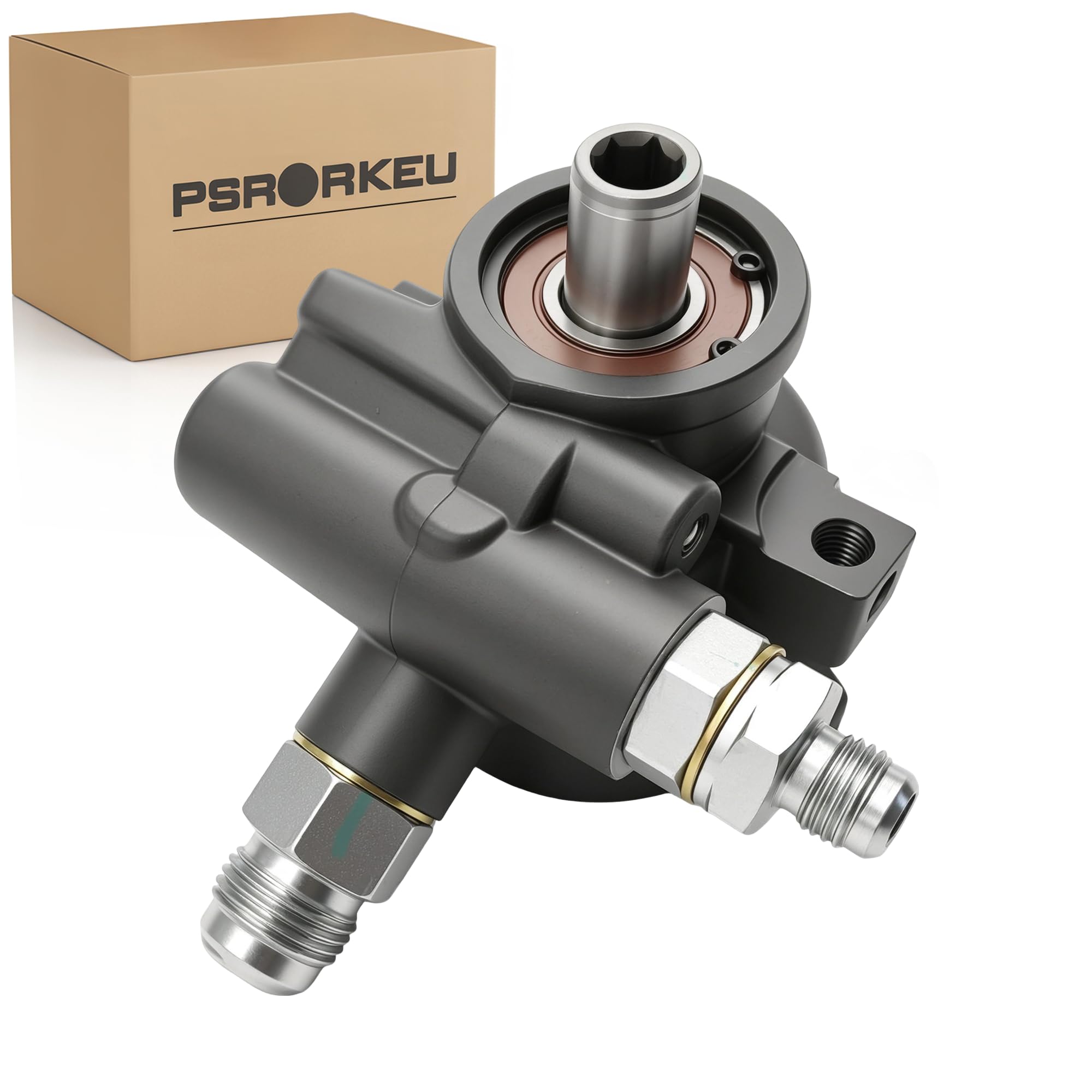
A black-finished Type 2 built specifically to drop onto Gen III/IV LS brackets.
If your project is an LS swap, this pump takes the guesswork out of mounting. It is built to fit Chevrolet Small Block V8 Gen. III and IV LS based engines, including the 6.2L 376ci and 7.0L 427ci displacements, and its mounting points align with standard LS engine brackets so you should not need to modify anything.
Its black-finished metal housing resists corrosion and engine heat. Tight-tolerance valves and bearings reduce turbulence and vibration for quieter assist. It also tracks to original equipment specs as a replacement for part number JM2010BK in GM Type II setups.
It fits custom builds well—a 1957 Custom 300 Ford owner called it “very nice,” and another confirmed it “installed works great no issues.” But one unit arrived dead (“la bomba que me enviaron no sirve,” meaning the pump they sent does not work), costing that buyer mechanic time. Inspect it carefully before full installation.
Built for swaps: the bracket alignment for standard LS engines is the standout reason to choose this one over a generic Type 2.
Check on arrival: a single defective unit slipped through, so test it before you bolt everything in for good.
3. Tuff Stuff GM Type 2 Power Steering Pump
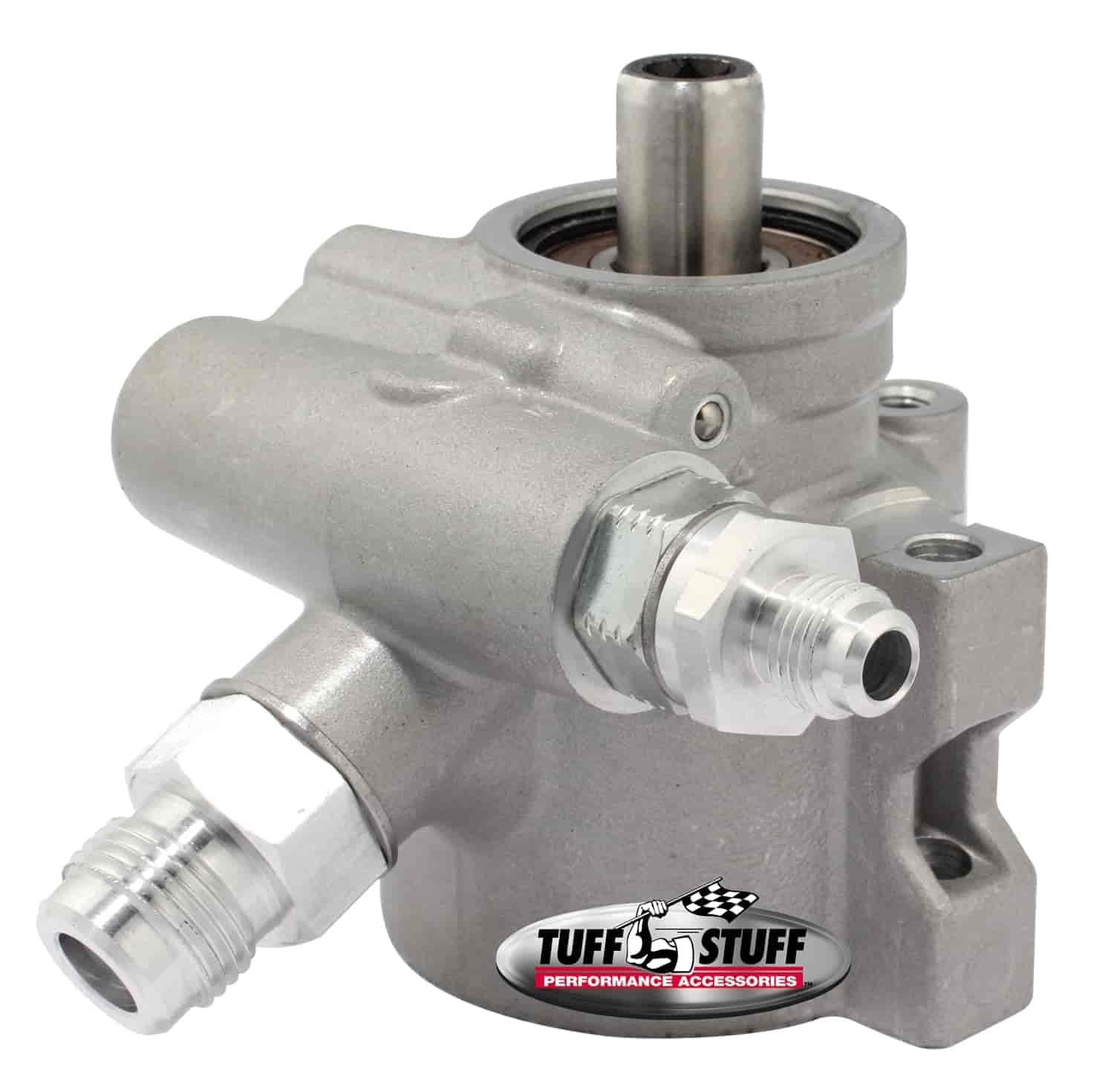
The straightforward US-made Type 2 that fits a hot rod with minimal fuss.
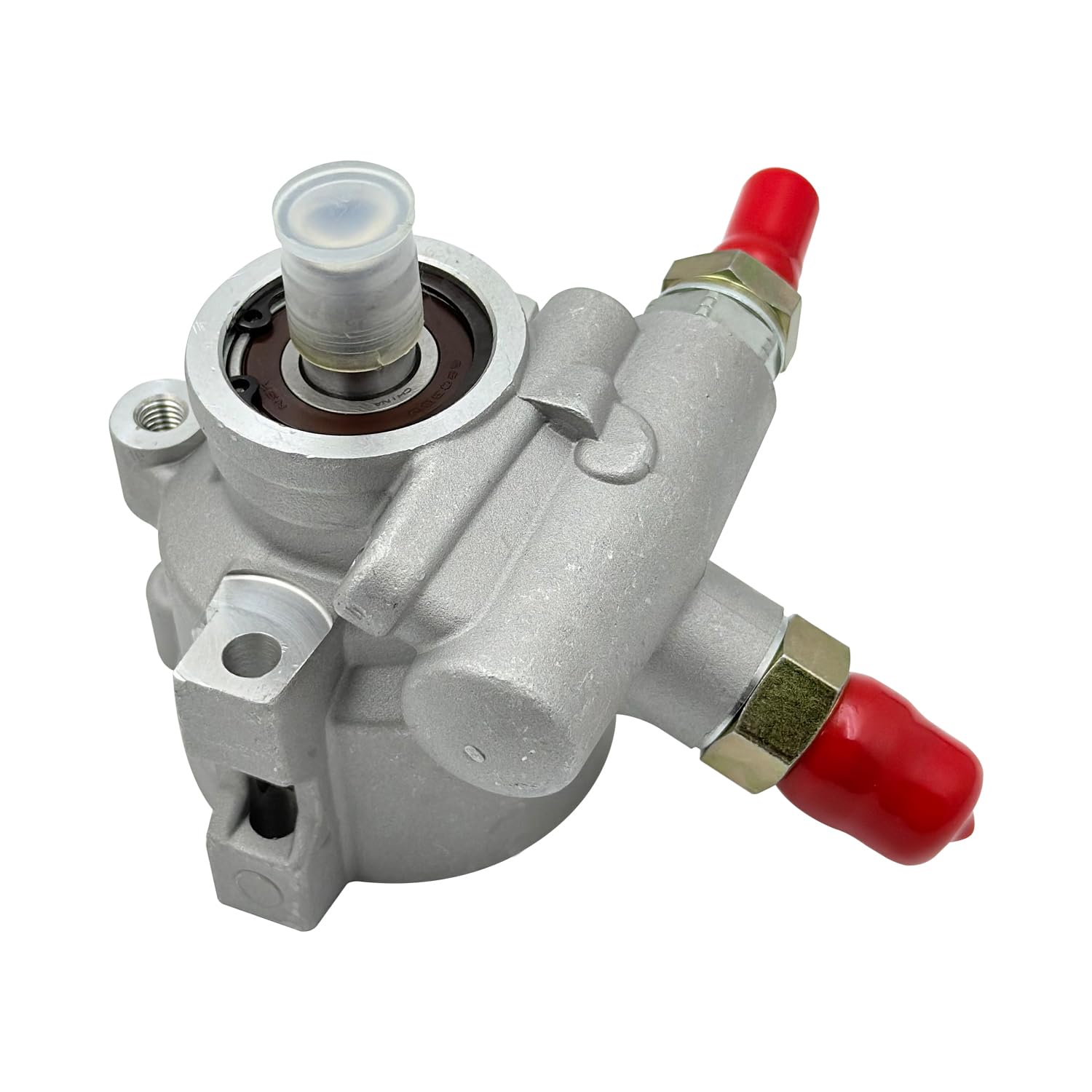
When you have a traditional build and just want a pump that mounts where it should, this Tuff Stuff unit keeps things simple. Made in the United States, it weighs in at 3.69 pounds, slightly heavier than the Flashpower’s 3.43-pound aluminum body, and it bolted right into a hot rod with no complaint — the owner called the fit “good.”
Confirm your brackets and pulley match this exact model number 6175AL. The two real-world reports split cleanly: one praised the fit, and another was burned twice by a persistent whine, ultimately switching to a rebuilt steel pump for silence. That noise complaint is the deciding factor if your build demands a whisper-quiet cabin.
As a value-driven option between the Flashpower and the premium kits, it fills a niche for builders who prioritize simple sourcing and a domestic part over peak flow specs. If you need a standard Type 2 output and will reuse your pulley, this is a sensible choice.
Reach for this if: you want a US-made replacement that drops into a typical hot rod without extra fabrication.
Look elsewhere if: you are sensitive to pump whine, since two owners returned theirs for that exact reason.
4. Allstar Performance GM Type 2 Power Steering Kit

A complete block-mount setup with tank and V-belt pulley for Small Block Chevy builders.
Starting from a bare engine bay, this Allstar kit saves you the scavenger hunt. It includes the block mount, tank, and V-belt pulley, so for a Small Block Chevy you get everything needed to mount the pump in one box. The machined finish gives it a clean, purposeful look under the hood.
You get 3 GPM (gallons per minute) at 1300 psi (pounds per square inch)—a touch less flow than the Flashpower’s 3.5 GPM but a higher pressure ceiling. At 1300 psi it pushes harder than the Flashpower’s 1200 PSI rating, but the 17% flow gap between these two means a stock rack may feel slightly firmer at idle on this kit. This trade-off means higher pressure for demanding setups but slightly firmer steering at idle.
Reviews split sharply: one owner ran it strong all season and said “bolted right up with no problems,” while another using it for full hydraulic steering saw it climb to 312 degrees within 30 seconds and called it the worst pump he had ever bought. A third lost the pump after just 3 months. It suits mild street cars with standard boxes, but full-hydraulic setups may need more flow.
What the kit includes
- Block mount, tank, and V-belt pulley all in the box
- Machined exterior for a clean engine bay look
- Higher 1300 psi pressure ceiling than the Flashpower’s 1200 PSI
Who should skip it
- Lower 3 GPM flow than the Flashpower’s 3.5 GPM may not feed full-hydraulic steering
- Mixed durability reports, including one failure at 3 months
Best for: a standard Small Block Chevy street build that wants a single-box solution with all mounting hardware included.
Not for: high-demand full-hydraulic steering, where the flow rate has let owners down.
Understanding the Specs
Flow Rate (GPM) and Pressure (PSI)
Gallons per minute tells you how much fluid the pump can move, which drives how fast the steering responds. Pounds per square inch tells you how hard it can push. A street car with a stock box usually wants a moderate flow like 3 to 3.5 GPM, while a full hydraulic steering setup with rams often wants more flow and can tolerate higher pressure. Match both numbers to your steering gear, not your engine’s horsepower.
Shaft, Rotation, and Fittings
The shaft diameter (often 17mm on Type 2 pumps) must match your pulley. Rotation direction — clockwise or counterclockwise — must match your belt routing. The inlet and outlet ports are commonly -10 AN and -6 AN respectively on performance pumps, but your existing hoses may use different fittings entirely. Confirm all three before buying to avoid a return.
FAQ
What is a Type 2 power steering pump?
Will a Type 2 pump fit my LS engine?
What does GPM mean for my steering feel?
What does PSI mean and why does it matter?
Do I need a pulley included with my new pump?
What are -10 AN and -6 AN fittings?
Why does my new pump whine?
Can I use a Type 2 pump for full hydraulic steering?
What does CW rotation mean?
Is the Flashpower pump a good value compared to premium brands?
Final Thoughts: The Verdict
For most builders, the type 2 power steering pump winner is the Flashpower GM Type II because its 3.5 GPM flow and 1200 PSI output suit a wide range of street and performance steering setups, and the aluminum body holds up in tight engine bays. If you want a pump that drops straight onto standard LS brackets without modification, the Psrorkeu GM Type II is the one to grab. And if you need a single box with a tank, mount, and V-belt pulley already included, the Allstar Performance kit gives you everything for a Small Block Chevy build.
How We Picked
We do not accept paid placement. Every pick is matched to a real buyer and a real use-case; we do not hands-on test units.
Sources & Methodology
Specifications: manufacturer listings and product documentation. Review insights: verified customer reviews, as of August 2026. Pricing: not shown on this page (it changes often); check the current price via the retailer link.
As an Amazon Associate, GoCarLife earns from qualifying purchases. This does not affect which products we feature.