
Our readers keep the lights on and the garage heater humming. As an Amazon Associate, I earn from qualifying purchases.
Specs are compiled from manufacturer listings and verified buyer reviews and can change over time — please confirm the key details on the product page before buying.
Choosing window film is about balancing three things: how dark you want it, how much heat you want to block, and whether you can actually install it without bubbles. This guide breaks down the main styles—dyed, carbon, and ceramic—so you can match the film to your car, your state’s tint laws, and your skill level.
I’m Mo Maruf — the founder and writer behind GoCarLife. This guide is built by comparing the manufacturers’ published specifications and the patterns across verified customer reviews, so you get each pick’s real strengths and trade-offs instead of marketing spin.
From 5% limo-dark rolls to 35% ceramic shields, we cover the spectrum of types of auto window film and what each one actually delivers on the road.
Our Picks at a Glance
How To Choose The Right Auto Window Film
Picking film starts with the VLT number—that’s the percentage of visible light that passes through. A 5% film is nearly black, while a 70% film looks almost clear. Your state’s laws set a minimum VLT for front side windows, so check that before you buy.
Dyed vs Carbon vs Ceramic
Dyed film is the budget workhorse: it darkens the glass and blocks glare, but it absorbs heat rather than reflecting it. Carbon film adds a matte finish and better heat resistance. Ceramic film uses nano-particles to reject infrared heat without touching your phone or GPS signal.
Roll Size Matters More Than You Think
A 20″ x 20FT roll covers the side windows of most sedans, while a 100-foot roll can do several vehicles. If you are a beginner, a longer roll gives you room to make mistakes and re-cut without running out of material.
Quick Comparison
| Model | Best For | VLT | Material | Roll Size | Amazon |
|---|---|---|---|---|---|
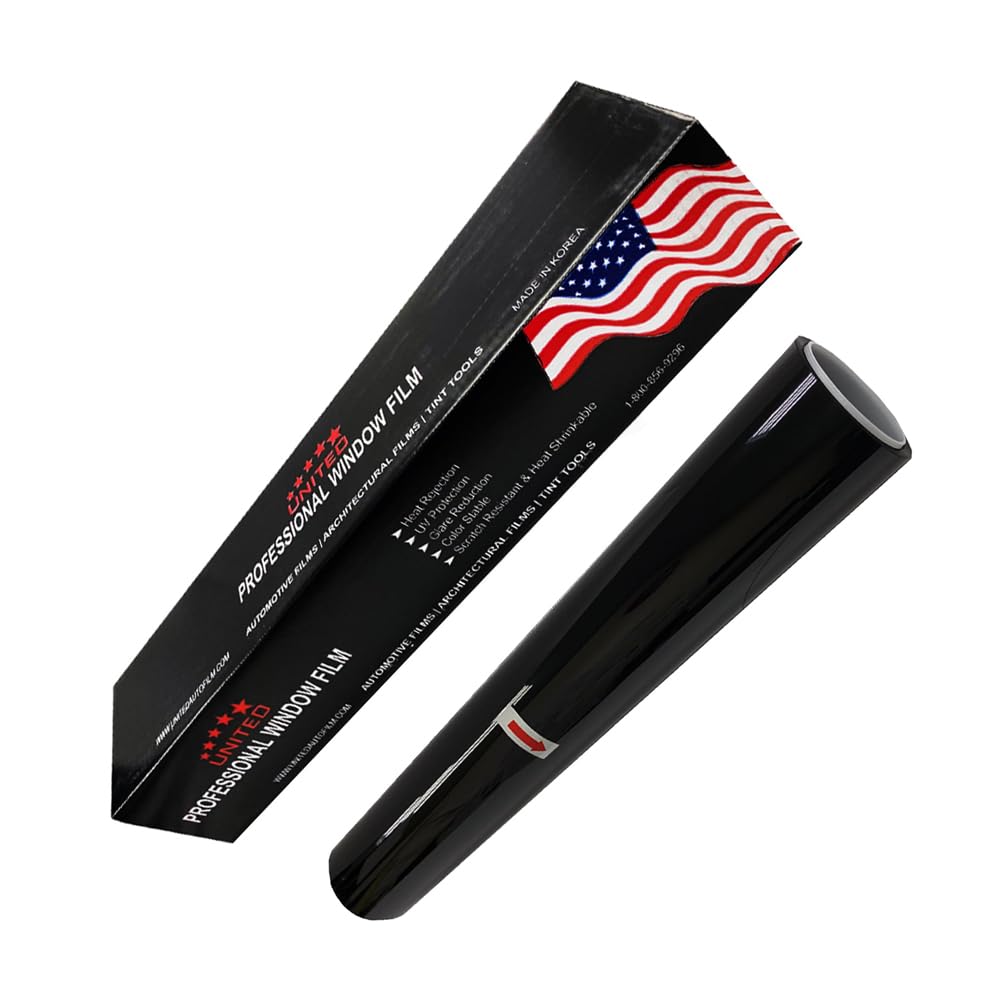
| United Universal★ Best Overall | Bulk value & multi-car jobs | 5% | 1Ply Dyed PET | 20″ x 100′ | Amazon |
| TOYOCO Ceramic 5%Signal Safe | Deep privacy with signal clarity | 5% | 2PLY Ceramic | 20″ x 20FT | Amazon |
| Vepagoo CeramicDIY Ease | Easy DIY ceramic install | 5% | Ceramic | 20″ x 20FT | Amazon |
| IAQWE Ceramic | Legal 35% with shatterproof build | 35% | Ceramic | 20″ x 20FT | Amazon |
| TOYOCO Carbon 20% | Carbon look with a 12-month warranty | 20% | PET Carbon | 24″ x 15FT | Amazon |
| SOLARCONTROL Dyed | Learning to tint on a budget | 25% | 2-Ply Dyed | 20″ x 100FT | Amazon |
| AUTOTEK 2Ply | Truck owners wanting a clean dark look | 25% | 2Ply PET | 24″ x 25FT | Amazon |
| TOYOCO Ceramic 20% | Balanced ceramic privacy | 20% | 2PLY Ceramic | 24″ x 15FT | Amazon |
| BLACKGLASS IX | Experienced fitters wanting easy shrink | 30% | 2-Ply PET | 26″ x 20FT | Amazon |
In‑Depth Reviews
1. United Universal Black Window Tint Film
Our pick — over 4.5★ from 400+ verified ratings; the strongest balance of quality and price.
A 100-foot roll that keeps giving long after the car is done.
This is the roll for the person who tints everything in sight. At 20″ x 100′ it covers 167 square feet—enough for a full car with plenty left over.
The 1Ply dyed PET construction is thicker than most budget rolls, which makes it easier to handle without tearing mid-install. Its 99% UV block shields the dashboard and upholstery from sun damage.
Quality and value are the two things owners praise most, and the 5% VLT delivers that deep black, high-privacy look. The trade-off is that installation feedback runs mixed—some find it easy, others struggle—so this is friendlier if you have a little experience under your belt.
What the roll delivers
- Huge 167-square-foot coverage for multiple vehicles
- Thicker film resists tearing during install
- 99% UV block protects the interior
What to expect
- Installation is a mixed bag for first-timers
- 5% darkness is too dark for front windows in most states
Reach for this if: you want one roll to handle the car, the truck, and maybe the house windows without restocking.
Think twice if: this is your very first tint job—a shorter practice roll might be gentler on your nerves.
2. TOYOCO Ceramic 5% VLT
Ceramic construction that keeps GPS and phone signals crisp.
This 2PLY ceramic film blocks 99% of UV rays and lets phone, GPS, and radio signals pass without interference. That’s the core advantage over metal-based films.
This one is a 20″ x 20FT sheet aimed at a single vehicle’s side and rear windows, versus the United Universal 20″ x 100′ roll above. Owners who used it on tricky surfaces like a Jeep Wrangler roof topper found it forgiving—you can lift, reposition, and reapply without damaging it.
The scratch-resistant surface stands up to daily use, and the 5% shade gives serious daytime privacy. The honest catch is that application feedback is split: around 20 owners called it easy, but a similar number struggled, and there are real reports of the film arriving wrinkled and peeling in direct sun.
Worth it for: the driver who needs deep privacy plus an uninterrupted phone signal, and who has some tinting patience.
The friction: quality control on delivery is the gamble—inspect the roll the moment it arrives.
3. Vepagoo Ceramic 5% VLT
The ceramic roll that beginners actually finish without rage-quitting.
Installation is the single biggest thing owners praise about this 20″ x 20FT ceramic roll—it earns more positive mentions than any other aspect. That ease matters because a 5% VLT film that’s hard to apply is a recipe for wasted material.
Buyers report the film dries clear after install, blocks afternoon heat and glare effectively, and gives that classic one-way daytime privacy: you see out, they can’t see in. Unlike the TOYOCO ceramic above, this one’s feedback skews more consistently positive on the actual laying-down process.
The daytime privacy is genuine, but the film is thinner than some rivals, and a few note a faint blue-ish hue when looking from inside. Night-time visibility is see-through when your cabin lights are on, which is normal for this darkness level.
Best suited to: the DIY first-timer who wants a ceramic film that forgives mistakes and looks professional when done.
Keep in mind: thinner material means you’ll want a clean, careful hand during squeegee work.
4. IAQWE 35% VLT Ceramic
A 35% ceramic film that threads the needle between privacy and legality.
The 35% VLT is the headline here—it balances privacy and visibility in a way that meets legal limits in most states for safe night driving. If you want a dark look without constant police attention, this is the smarter shade than the 5% films above.
This 20″ x 20FT roll uses nano-ceramic technology to cut infrared heat, and its 5-layer safety film holds glass together on impact—a real safety bonus that dyed film can’t offer. It’s also DIY-friendly with heat-shrink capability for curved rear windows.
Owners consistently call it easy to work with and appreciate how it keeps heat out. The quality verdict is more split—some describe it as not true pro-grade ceramic—and it arrives on a bare cardboard tube that offers minimal protection in transit.
Why it wins
- 35% VLT is street-legal in most states
- 5-layer construction adds shatter protection
- Curved-window heat shrink for a clean rear fit
The honest limits
- Some call the ceramic quality mid-tier, not premium
- Cardboard-tube packaging risks transit damage
Pick this when: you want ceramic heat rejection but need a shade that won’t get you pulled over.
skip it if: you expect show-car-depth darkness—35% keeps things clearly visible.
5. TOYOCO Carbon 20% VLT
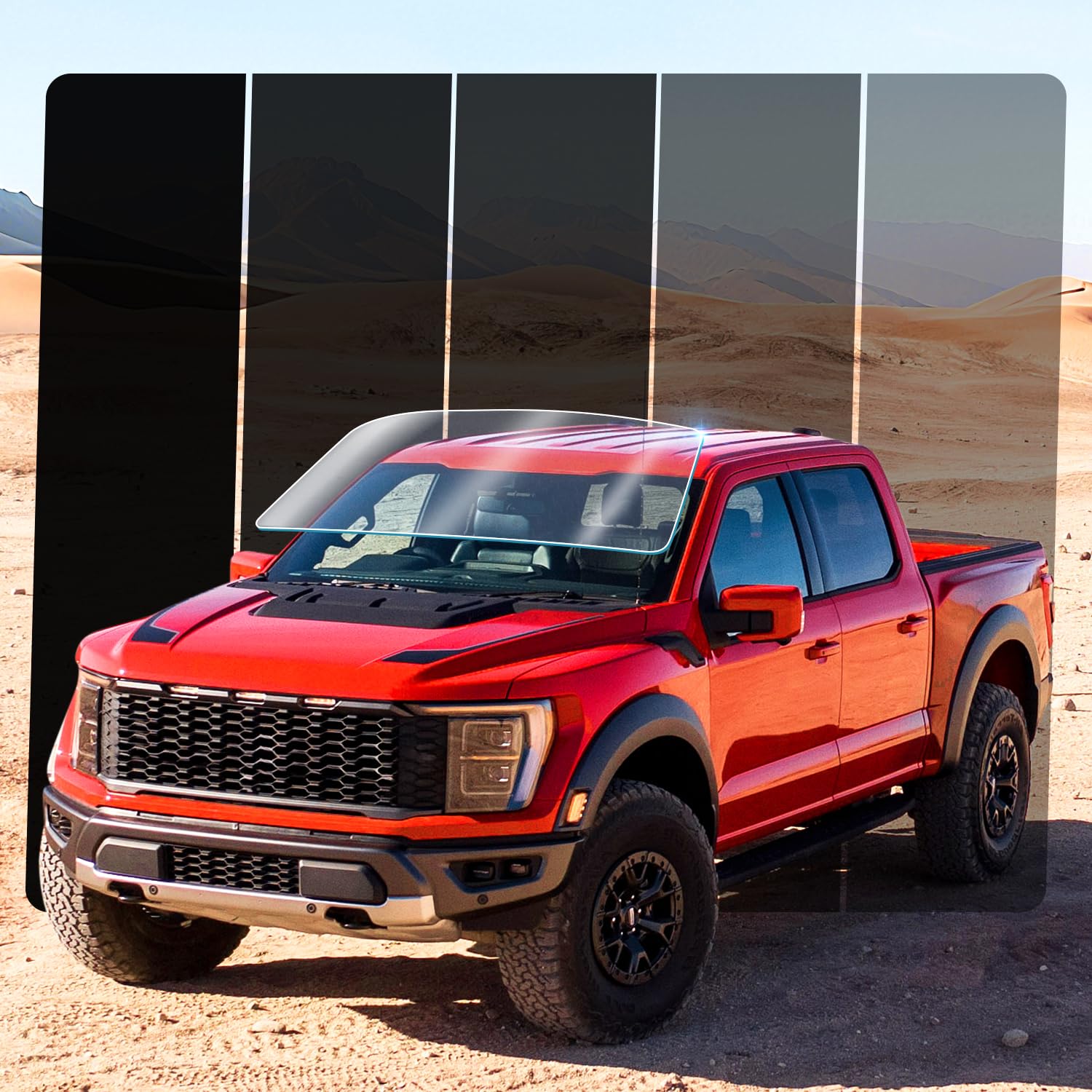
A carbon film that keeps arms cool and comes with a 12-month warranty.
This 20% VLT carbon PET roll offers a one-way view—clear from inside, blurred from outside for privacy. Carbon film keeps the cabin cooler in summer and warmer in winter without blocking mobile signals.
You get more coverage per roll with the 24″ x 15FT size, so it reaches across larger truck or SUV windows without piecing strips together. A 12-month warranty and 30-day money-back guarantee back it up—protection that budget rolls skip.
First-time DIYers found it easy enough, though the backing is a little hard to peel. The recurring note is low-angle haze, which can look distracting when sunlight hits the glass at a shallow angle. It does a solid job cutting glare from oncoming headlights.
Solid choice for: the driver wanting carbon’s heat behavior with a warranty safety net.
Watch for: low-angle haze in certain light, and give yourself practice before the real windows.
6. SOLARCONTROL Dyed 25% VLT
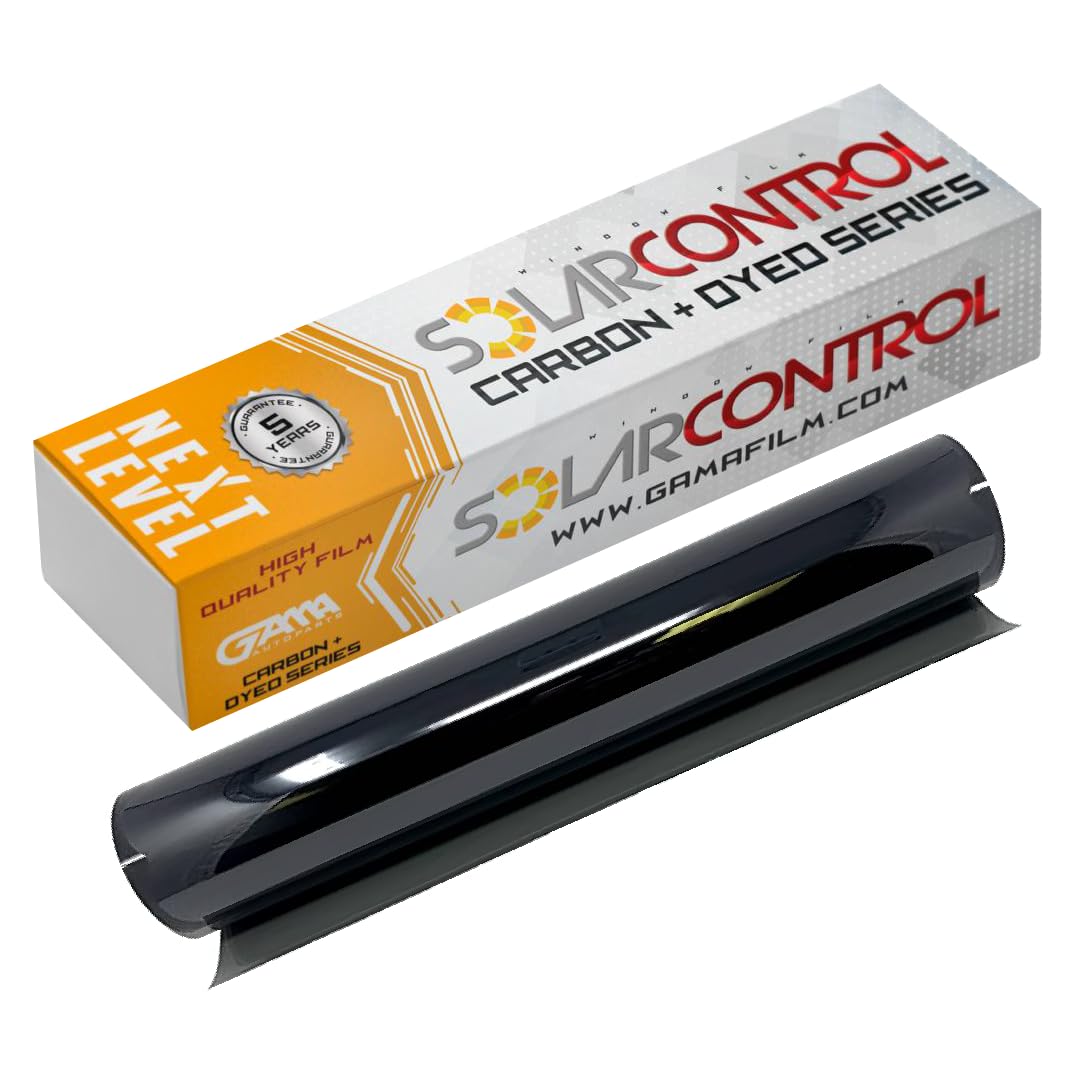
A 100-foot learning roll that exists to be your first mistake.
This is the rare film specifically bought to learn on. The 20″ x 100FT length gives you enough material to mess up, redo, and still finish the car—one owner literally used it as their training roll before moving up to ceramic. That’s the smartest way to buy dyed film.
The 25% VLT non-reflective 2-ply finish looks factory-black and, being metal-free, won’t interfere with GPS, cell, or radio signals. It installs with soap, water, and a squeegee, no experience required, and a professional tinter with 12 years of experience reported zero bubbles on a test install.
The trade-off is honesty about what dyed film is: it absorbs heat rather than rejecting it, so it’s not the coolest option on a blazing day. It also ships as a bare roll with no instructions, which trips up absolute beginners.
The smart buy
- Enough material for multiple practice attempts
- Non-reflective factory-black finish
- Metal-free so it never blocks signals
The reality
- Dyed film absorbs heat instead of rejecting it
- No installation guide included in the box
Grab it if: you’ve never tinted before and want a cheap, roomy roll to build confidence on.
Pass if: you’re chasing maximum heat rejection—that’s a ceramic job.
7. AUTOTEK 2Ply 25% VLT
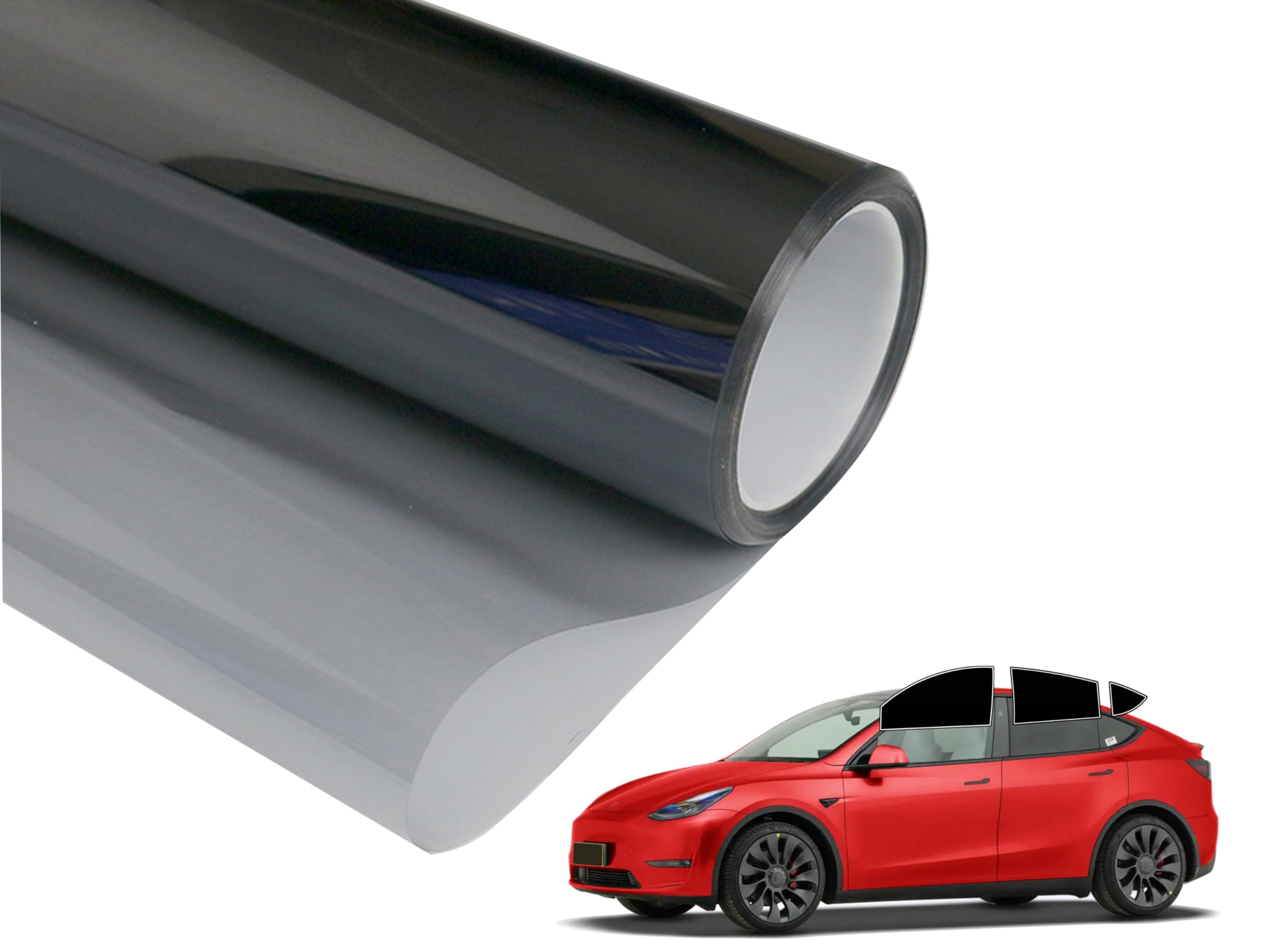
A 2-ply film that looks sharp on trucks and shrinks well with heat.
The 24″ x 25FT roll is built for bigger glass, and truck owners mention it looks great on the cab while keeping the interior cooler. The 25% VLT is the darkest legal option in many states, giving strong privacy without inviting trouble.
Tint quality is what owners praise most here. The 2-ply PET construction is thicker and easier to heat-shrink over curved rear windows, so the film conforms rather than fights you. A first-time installer covered a Chevy Equinox’s side and rear windows with a single roll and came out clean.
The catch is that installation is bipolar in the feedback—easy for some, hard for others. Beginners note the VLT may look lighter than 25% in bright daylight, so check your expectations against your state’s legal limit before buying.
Lean in if: you’re tinting a truck or SUV and want a legal, good-looking 2-ply film.
Be ready for: a steeper learning curve if this is your first-ever tint job.
8. TOYOCO Ceramic 20% VLT
A 20% ceramic that splits the difference between privacy and night visibility.
If 5% feels like a cave and 35% feels too light, this 20% VLT ceramic film is the middle path. Its 2PLY ceramic barrier blocks 99% of UV rays, and the 24″ x 15FT size covers a full set of side and rear windows.
The nano-ceramic build means no signal interference—your GPS and phone keep working—and the scratch-resistant face handles squeegee pressure without marking. One first-timer found it installs easily by simply following the steps, but the more honest advice from a 4-star owner: professionals earn their pay, and tinting is genuinely hard.
Compared with the 5% TOYOCO ceramic earlier (20″ x 20FT), this one is 20% VLT and 24″ x 15FT—a lighter-duty roll for cars that don’t need limo-black. The occasional report of bubbling and peeling exists, so inspect and install promptly.
Right for: the driver who wants ceramic perks at a moderate, legal-ish darkness.
The fine print: give yourself a slow afternoon—rushed installs are where this film fails.
9. BLACKGLASS IX 30% VLT
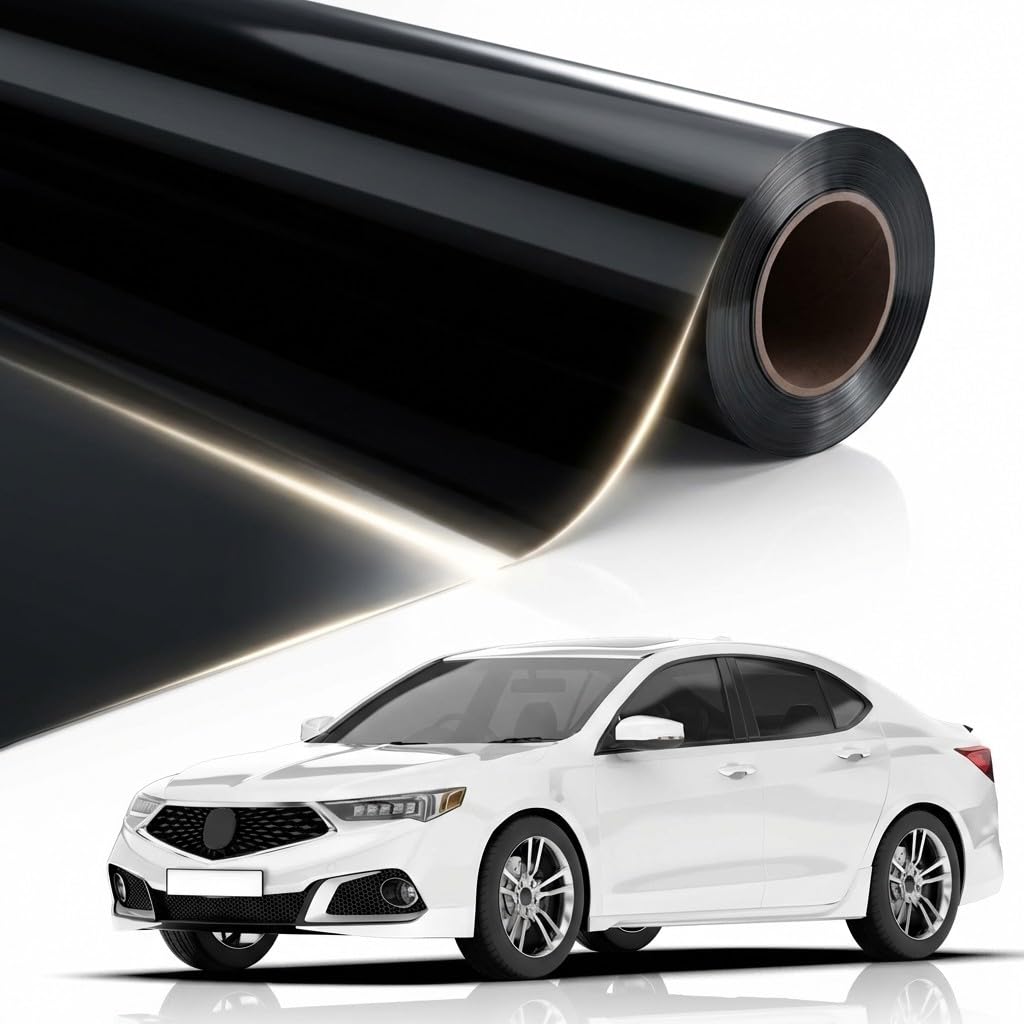
A 2-ply film that heat-shrinks like a pro sheet for curved glass.
This 30% VLT medium smoke is the widest roll here at 26″ x 20FT, covering a rear windshield and rear side windows on most cars with spare material for mistakes. It’s advertised for rear windows, home, and office—not the front—so keep your state’s laws in mind.
The thicker 2-ply laminated structure heat-shrinks more easily than single-ply films, ideal for curved rear glass. Its 2X pressure-sensitive adhesive bonds firmly, with owners reporting over two years of durability while cutting glare and heat.
The frank warning in the feedback: this film wants an experienced hand. More than one owner explicitly says not to buy it unless you know what you’re doing, and creasing is a real risk if you’re rough with it. This is the pick for the practiced DIYer, not the curious beginner.
Why pros pick it
- Widest roll here for rear-glass coverage
- Heat-shrinks smoothly over curves
- Strong adhesive that lasts years
Who it skips
- Beginners will fight creases and wrinkles
- 30% is a medium shade, not deep privacy
Best for: experienced fitters tackling curved rear windows on their own car.
Not for: true novices—this film punishes inexperience.
Understanding the Specs
VLT (Visible Light Transmission)
This percentage tells you how much light passes through the film. A 5% film is very dark, a 30% is medium smoke, and a 70% is nearly clear. Your state sets a legal minimum for front side windows, so check the VLT before you pick a shade.
Ceramic vs Dyed vs Carbon
Ceramic uses nano-particles to reject infrared heat without blocking phone or GPS signals—the premium choice. Dyed film absorbs heat and is the budget option. Carbon sits between, offering better heat resistance than dyed with a matte finish.
FAQ
What does the VLT number on window film actually mean?
Is darker window film always better for privacy?
Does ceramic window film really block phone and GPS signals?
How much window film do I need for a typical car?
Can a first-timer successfully install car window tint?
What is the difference between dyed and ceramic window film?
Is 5% VLT window film legal to use?
How long does window tint film last before it fades or peels?
Final Thoughts: The Verdict
If you want one dependable pick, the best of the types of auto window film is the United Universal because its 167-square-foot roll delivers insane value and proven quality across multiple vehicles. If you want ceramic heat rejection and clear signals, grab the Vepagoo. And for a legal, balanced daily driver, the IAQWE 35% is the one to reach for.
How We Picked
We do not accept paid placement. Every pick is matched to a real buyer and a real use-case; we do not hands-on test units.
Sources & Methodology
Specifications: manufacturer listings and product documentation. Review insights: verified customer reviews, as of August 2026. Pricing: not shown on this page (it changes often); check the current price via the retailer link.
As an Amazon Associate, GoCarLife earns from qualifying purchases. This does not affect which products we feature.