
Our readers keep the lights on and the garage heater humming. As an Amazon Associate, I earn from qualifying purchases.
Specs are compiled from manufacturer listings and verified buyer reviews and can change over time — please confirm the key details on the product page before buying.
Your engine bay can turn into an oven on a long trail ride, causing overheating, power-sapping heat soak, and a hood too hot to touch. Louvers—vents that let hot air escape—solve that. The real choice is between a bolt-on aluminum panel or a stick-on scoop, depending on how you drive.
I’m Mo Maruf — the founder and writer behind GoCarLife. This guide is built by comparing the manufacturers’ published specifications and the patterns across verified customer reviews, so you get each pick’s real strengths and trade-offs instead of marketing spin.
If you want to let engine heat escape and give your truck or Jeep a tougher look, this roundup of the best universal hood louvers breaks down the right pick for your ride and your budget.
Our Picks at a Glance


How To Choose The Best Universal Hood Louvers
Before you buy, know the difference between a performance part and a styling piece. A true louver is an open vent that lets hot air pour out of the engine bay. A hood scoop or vent sticker is mostly about looks. Decide if you need real heat extraction or just a visual upgrade, then pick the mounting style that matches.
Bolt-On vs. Adhesive — The Core Decision
Bolt-on aluminum panels give you a permanent, secure fit that won’t peel off at 70 mph. The catch is the work: you’ll need to drill or cut your hood. Adhesive options are a 15-minute install with zero permanent damage, but they rely entirely on a perfectly clean, flat surface and strong tape holding against heat and wind.
Material Matters: Metal vs. Plastic
Aluminum louvers feel like part of the car, can be painted to match, and handle engine heat without warping. Plastic (ABS or PP) options are lighter, cheaper, and easier to install, but they can look like a stick-on part and may fade in harsh sun over time. Metal suits a factory-grade finish; plastic delivers a fast, aggressive look.
Quick Comparison
| Model | Best For | Mounting | Material | Kit Contents | Amazon |
|---|---|---|---|---|---|
| RodLouvers 5″ Straight Panels★ Best Overall | Maximum cooling & durability | Bolt-On | Aluminum | 2 Panels | Amazon |
| RodLouvers Double Row 3″ PanelsPremium Pick | Off-road & towing heat relief | Bolt-On | Aluminum | 2 Panels | Amazon |
| GenRight LVR-1006 | Jeep Cherokee & Wrangler styling | Bolt-On | Metal | 2 Long Rear Louvers | Amazon |
| DREAMOTOR Hood Scoop | low-maintenance aggressive look | Adhesive 3M | Polypropylene (PP) | 1 Scoop | Amazon |
| SAMDAKAL Carbon Kit | Budget styling upgrade | Adhesive Tape | ABS | Scoop + 2 Side Vents | Amazon |
| DEERMOTO Vent Sticker | Large-cover cosmetic touch | Adhesive 3M | PP Sheet | 1 Vent + Tape | Amazon |
In‑Depth Reviews
1. Pair of Straight Aluminum 5” 11 Louver Hood Panels (Bolt-On) Kit
Our pick — over 4★ from 60+ verified ratings; the strongest balance of quality and price.
The heat-relief workhorse built from real metal that matches factory hood thickness.
This is the pick when you need actual cooling, not just looks. Buyers report these helped keep a 2004 Chevy Blazer ZR2 from overheating — the very reason most drivers hunt for louvers in the first place. The 5-inch aluminum panels are built with stainless steel button head fasteners, so the hardware won’t rust or look cheap after a few seasons.
The build quality is the story here. Owners mention the aluminum matches the thickness of a stock hood, which means it reads as a factory part rather than a stick-on afterthought. Installation is a real project — you’ll need to cut your hood — but the kit includes the nuts and bolts to do it right. In fact, the maker even sent a full second pack of hardware when the locknuts gave one owner trouble, which says a lot about backing a product.
If you want a cleaner look, the raw aluminum takes paint well; drivers have painted theirs black to match their ride. Just know your mechanic might run the part number and see “A/C vents” — a funny quirk, but the look on the truck is anything but funny. It’s aggressive, functional, and built to last.
What Owners Love
- Aluminum matches factory hood thickness for a smooth look
- Stainless steel fasteners resist rust and look sharp
- Real airflow helps prevent overheating on older trucks
The Installation Reality
- Requires cutting or drilling your hood — not a 15-minute job
- Raw aluminum needs painting to match your vehicle’s color
Reach for these if: you own a truck or SUV that runs hot and you want a permanent, metal solution that actually vents engine bay heat.
Look elsewhere if: you can’t cut your hood or want a reversible, no-drill upgrade — the installation here is permanent.
2. Pair of Double Row 3”Angled Aluminum Hood Panels (Bolt-on) Kit
The off-road specialist that keeps a Jeep XJ cool on the trail.
Hours of trail crawling trap heat under your hood. This angled double-row panel set is built for that, and customers note it “provided much needed airflow to keep my XJ cool on the trail.” The angled louvers pull hot air out while keeping a low, aggressive profile.
The quality and ease of install come up again and again. With basic tools, one owner had both panels on in about two hours. The stainless steel button head fasteners handle weather well, and the stamped aluminum takes high-heat paint cleanly — one owner prepped with 60-grit sandpaper before painting and got great results. That said, the included hardware is stainless, so if you prefer the look of black oxide bolts, you’ll want to supply your own.
The main trade-off is the work involved. Because you’re cutting into a hood, you should plan to remove the heat barrier, drill, paint the cut edges, and bolt everything down — it’s a satisfying weekend project rather than an afternoon one. The payoff is real airflow when towing or off-roading, and some owners add a small rain gutter to keep water off the battery below.
Best for: off-roaders and towers who need serious heat relief and enjoy a hands-on installation weekend.
Not for you if: you want a quick cosmetic add-on — this is a genuine performance modification that takes time and tools.
3. GenRight Off Road LVR-1006 Black 2 Piece Long Hood Louver Vent Set

A Jeep legend that slaps significantly cooler hoods onto Cherokees and Wranglers.
This GenRight set is a Jeep community staple, but it works beyond that—one owner bolted a pair onto an El Camino with a 350 crate motor and found the hood, previously too hot to touch, ran significantly cooler after install. The kit includes two rear louvers measuring 15-1/2″ long x 4″ wide, positioned to let heat pour out of the back of the bay where it collects.
The appearance wins people over instantly, and installation isn’t intimidating — most owners have it done in about three hours with basic tools. On a 1999 Cherokee 4.0, the vents provided a slight cooling improvement on a hot mountain drive, helping the engine breathe cooler air even if they didn’t fully cure a cooling-system issue. They help protect under-hood rubber parts from heat damage.
The honest caveat: the louvers look a bit like HVAC registers up close, which some find slightly cheesy, and a few buyers were surprised by the actual size — if you expect huge scoops, measure first. They’re a solid, functional part, but they’re not a cure for an already-failing cooling system, so fix your radiator before you add vents.
Built For Jeep Owners: if you drive a 1984-06 Cherokee or Wrangler, this is the proven, community-favorite choice.
Keep Expectations Honest: it improves heat drastically over stock, but won’t fix a mechanical overheating problem on its own.
4. DREAMOTOR Hood Scoops for Cars, Universal Hood Scoop Vents for Trucks
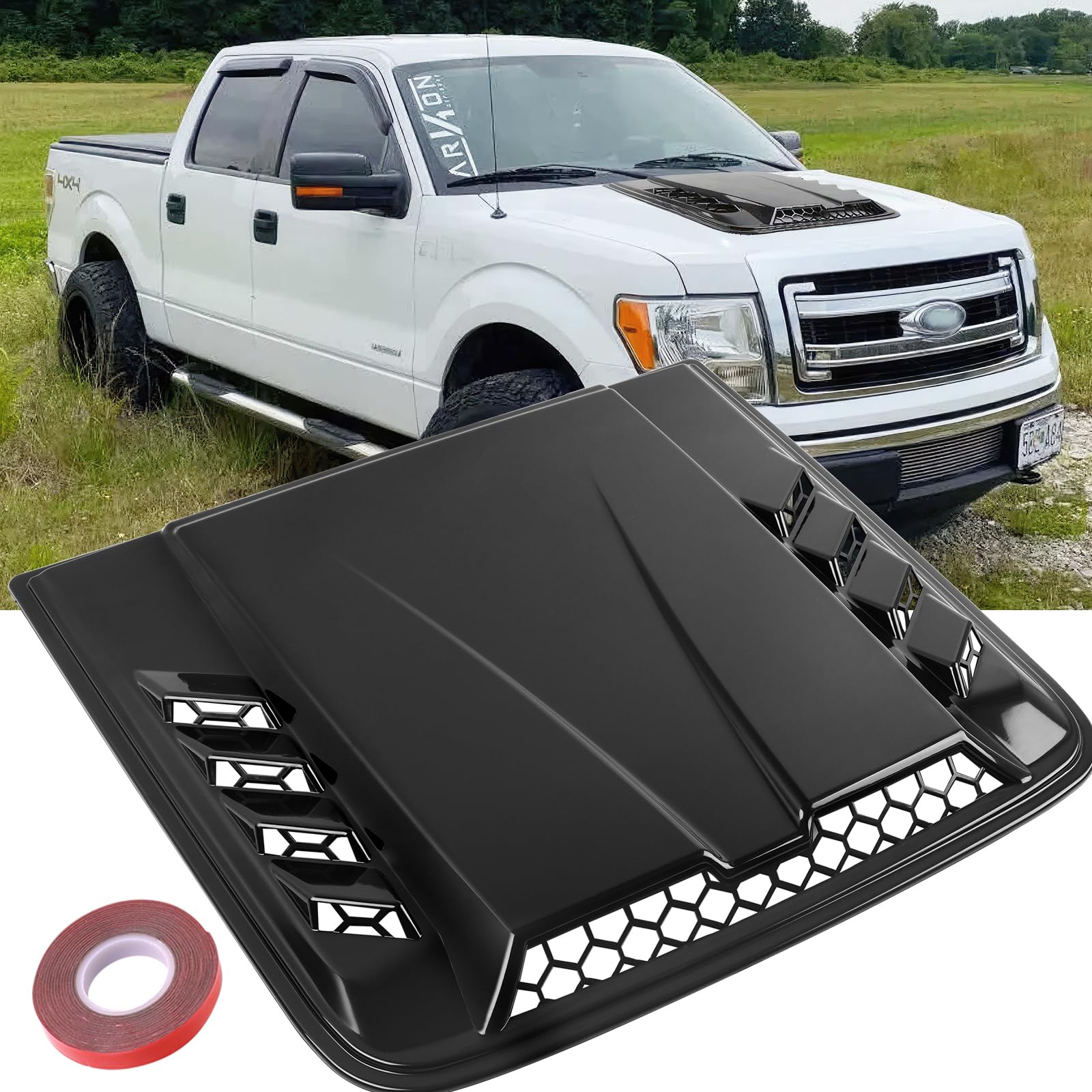
The 15-minute transformation that makes a truck look race-bred without cutting metal.
If the idea of drilling into your hood makes you wince, this is the pick. The DREAMOTOR scoop attaches with strong 3M adhesive tape — no tools, no permanent modification — and the instructions walk you through a clean-and-press process that takes minutes. The polypropylene (PP) material is lightweight, heat-resistant, and flexible enough to conform to different hood contours.
It’s designed to redirect airflow into the engine bay to help reduce heat buildup, and the aggressive, race-inspired look is the main draw. Owners call it “bad ass looking” and note it fits the aggressive style of trucks like the Ram, Silverado, and F-150. The key to success is surface prep: clean the hood thoroughly with alcohol, dry it, and press firmly for 30-60 seconds, and the bond holds even at highway speeds.
The catch is that adhesive life depends entirely on your prep and climate. The maker explicitly recommends an adhesion promoter for a stronger hold, and you should avoid car washes or heavy rain for 24 hours after install. A few owners in harsh sun reported color change over time, so if your truck lives outside in the desert, be aware this plastic part may fade before a metal one would.
Why It’s a Breeze
- No drilling — cleans, peels, presses, and done in minutes
- Lightweight PP resists heat and won’t crack in normal use
- Aggressive look that works across Rams, Fords, and Chevys
Before You Commit
- 3M tape needs a perfectly flat, clean hood to hold long-term
- Some owners note sun exposure can change the plastic’s color
Pick this when: you want a fast, reversible style upgrade without any metalwork.
Think twice if: your hood is heavily curved or you live in extreme heat — consider an adhesion promoter or a bolt-on panel instead.
5. Car Hood Air Flow Vent Decorative Kit Modification Hood Scoop with Side Vents 3pcs (Carbon pattern)

A complete three-piece visual package that gives a sedan serious attitude on a budget.
This SAMDAKAL kit delivers the full transformation — one hood scoop with 4 distinctive slats plus two side vents with 5 angled louvers each, all in a carbon fiber pattern. For the money, you get a lot of visual bang: the scoop and side vents work together to create an aggressive, sporty front end that a single scoop alone can’t match. The ABS material keeps it lightweight and the carbon pattern adds a race-inspired finish.
Installation is as easy as it gets. The kit comes with double-sided adhesive tape, and reviewers point out the stickiness is genuinely reassuring—one owner admitted worrying the adhesive wouldn’t be strong enough, only to confirm it’s “definitely holding on really good.” There’s no drilling and no permanent modification, so it’s ideal for a lease or if you’re still deciding on a permanent setup.
The trade-offs are typical of budget adhesive parts. A couple of units arrived with minor chips in the ABS finish, so inspect it on delivery. It’s a decorative upgrade first and foremost — while it mimics the look of a functional vent, it’s not the same as a cut-in aluminum louver for real heat extraction. If your priority is style per dollar, it’s a strong pick.
Style per dollar winner: the most complete look for the lowest spend, with a 2-year manufacturer warranty backing the ABS build.
Who should skip: anyone chasing actual engine cooling — this is cosmetic, so buy it for looks, not temperature relief.
6. Universal Car Hood Vent, Car Engine Hood Vents, Hood Scoop Air Vent for Trucks (Black)
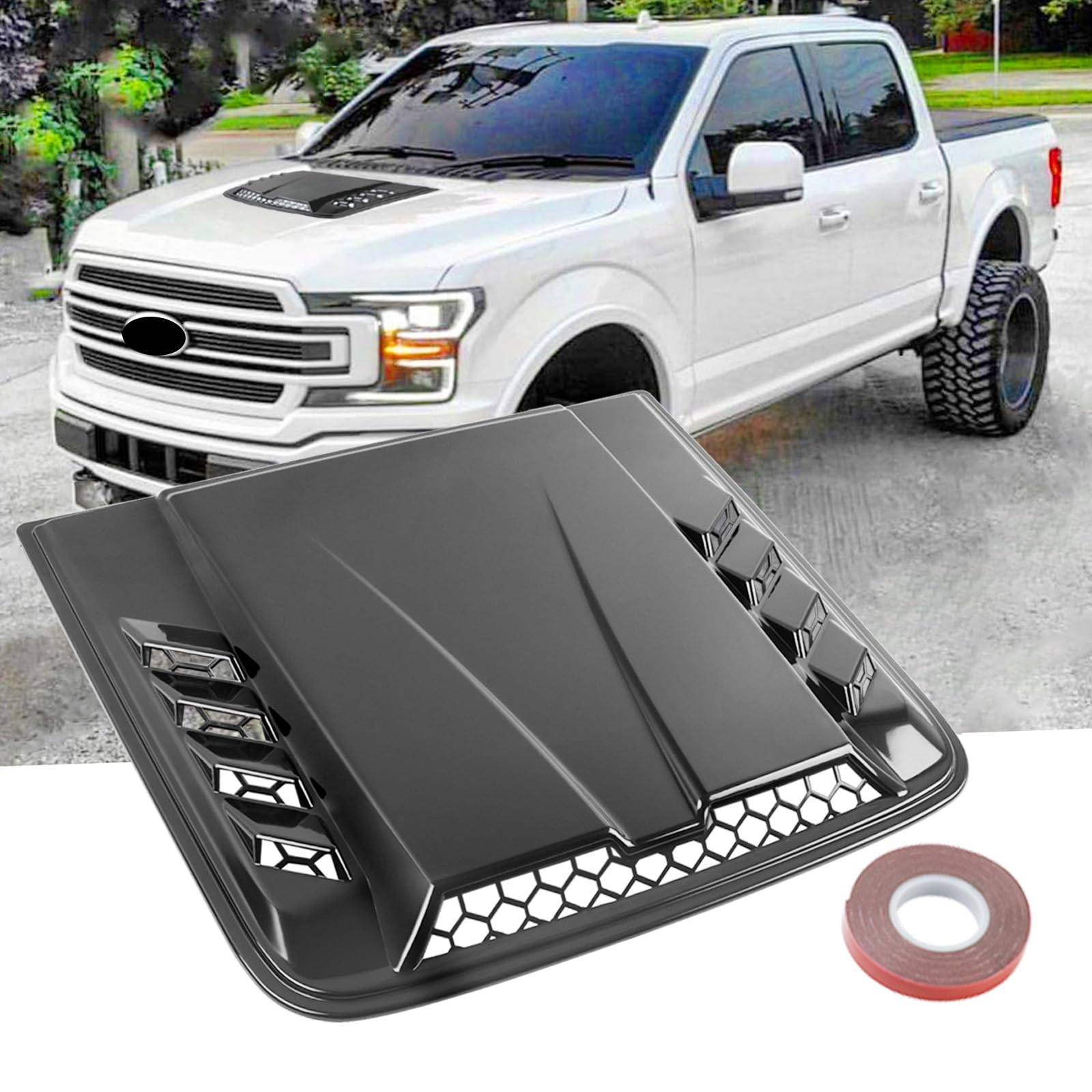
A single big sheet of PP that transforms the whole front of a full-size truck.
This DEERMOTO vent is a different approach — instead of a raised scoop, it’s a flush-fitting sheet that covers a large area. At 20 x 18.5 inches, it’s the biggest visual footprint in this lineup, designed to span the flat portion of a truck hood and add that “rugged” letter-print pattern. The PP material is scratch-resistant and corrosion-resistant, so it holds up to road grime and weather.
Owners praise the straightforward installation and the aggressive result on trucks like the Silverado and F-150. One buyer used a marker to outline placement before pressing on the 3M tape, which is smart advice for any large adhesive part. The strong 3M backing is designed to peel off cleanly without damaging paint, which makes it a low-risk way to test the look.
The honest caveats are real, though. In hot climates like Florida, the included 2-sided tape may not survive long-term — one owner switched to self-tapping screws about an inch apart for a permanent hold. And the glossy black finish reads as “toy-like” to some, so if you want a subtle, satin look, this one’s gloss might not be it. It’s a budget cosmetic piece that responds well to a little modification.
Best for: truck owners who want maximum hood coverage and don’t mind upgrading the tape to screws for a permanent hold.
Skip if: you want a subtle factory finish — the glossy black is bold, and the tape needs a cool climate to last unmodified.
Understanding the Specs
Louver Height & Count
The height of a louver (like 3″ or 5″) decides how much hot air can physically escape and how aggressive the look is. Taller 5″ louvers move more air, while shorter angled 3″ rows offer a sleeker profile. The slat count matters for style — 11 louvers on a single panel reads as classic hot-rod, while 5 angled slats look modern and sporty.
Material: Aluminum vs. PP vs. ABS
Aluminum is the performance choice: it matches the thickness of a factory hood, takes paint well, and sheds heat without warping. Polypropylene (PP) offers heat resistance and flexibility, so it conforms to curved hoods and won’t crack. ABS is common on budget parts — it’s lightweight and easy to mold into carbon patterns, but it’s not the right call if you’re chasing serious cooling.
FAQ
Will universal hood louvers actually cool my engine down?
What is the difference between a hood louver and a hood scoop?
Can I install hood louvers without drilling into my hood?
How long does the adhesive tape hold on a hood vent?
Do hood louvers fit every vehicle including my sedan?
Is it better to buy aluminum or plastic hood louvers?
Will adding hood louvers cause rain or water to damage my engine?
How do I paint my aluminum hood louvers to match my car?
Final Thoughts: The Verdict
Across the board, the universal hood louvers winner is the RodLouvers 5″ Straight Aluminum Panels because it delivers real heat relief with a factory-grade aluminum build that owners genuinely trust. If you want the same performance in a sleeker angled design for off-road use, grab the RodLouvers Double Row 3″ Panels. And for a no-drill, 15-minute transformation, the DREAMOTOR Hood Scoop is the crowd-pleasing pick that adds aggression without any metalwork. Decide between real cooling and pure style first, and the right panel choice follows.
How We Picked
We do not accept paid placement. Every pick is matched to a real buyer and a real use-case; we do not hands-on test units.
Sources & Methodology
Specifications: manufacturer listings and product documentation. Review insights: verified customer reviews, as of August 2026. Pricing: not shown on this page (it changes often); check the current price via the retailer link.
As an Amazon Associate, GoCarLife earns from qualifying purchases. This does not affect which products we feature.