
Our readers keep the lights on and the garage heater humming. As an Amazon Associate, I earn from qualifying purchases.
Specs are compiled from manufacturer listings and verified buyer reviews and can change over time — please confirm the key details on the product page before buying.
When your heater core goes bad, the factory fix often means pulling the entire dashboard. A universal heater core with blower bolts in under the dash, taps into your engine’s hot coolant, and uses its own fan to push warm air into the cab. This guide cuts through the options to match the right unit to your truck, tractor, UTV, or camper.
I’m Mo Maruf — the founder and writer behind GoCarLife. This guide is built by comparing the manufacturers’ published specifications and the patterns across verified customer reviews, so you get each pick’s real strengths and trade-offs instead of marketing spin.
We matched nine of the most popular under-dash units to the jobs they handle best, so you can find the universal heater core with blower that fits your cab and your wiring skills.
Our Picks at a Glance

How To Choose The Best Universal Heater Core with Blower
The biggest decision you face is not which brand looks nicest. It is whether the unit runs on engine coolant or on battery power alone. Nearly every serious under-dash heater uses your truck’s hot antifreeze, runs a small 12V fan to push that heat out, and needs no extra fuel. Electric-only units are simpler but put a heavy draw on your battery and produce far less heat.
Match the heat output to the cab size
Heat output is measured in BTU (British thermal units). A compact single-cab truck or a small tractor cab is fine around 8,000 to 13,000 BTU. A larger cab that must stay warm in bitter cold, or a machine with no windows or doors sealing the space, needs something closer to 28,000 BTU or higher. Pair that number with CFM (cubic feet per minute), which tells you how much air the blower actually moves. High BTU with weak CFM means the air comes out hot but never fills the cab; strong CFM with low BTU gives you a breeze that is barely warm.
Check the hose and wiring before you buy
Most coolant-style heaters need a 5/8-inch (16mm) inner-diameter water hose, which you supply yourself. You tee into the heater hose circuit so warm coolant flows through the unit’s core. The blower motor draws power from the 12V system, usually 8 to 12 amps, so heavy-gauge wire and a proper fuse (often a 10-amp fuse is recommended) keep the switch from overheating. Buyers who skip heavy wire end up with a hot cable and a heater that underperforms.
Quick Comparison
| Model | Best For | Heat Output | Airflow | Weight | Amazon |
|---|---|---|---|---|---|
| JEGS Dual Vents★ Best Overall | Skid steers and tight cabs | 28,000 BTU | 260 CFM | 9.8 lb | Amazon |
| JEGS Triple VentsMax Output | Big cabs and loader cabs | 40,000 BTU | 300 CFM | 11.9 lb | Amazon |
| Maradyne Santa FePremium Pick | Pickups, RZRs, and plow rigs | 13,200 BTU | 3-speed motor | Floor mount | Amazon |
| CYDZSW Electric | Tiny sealed spaces | 500W (electric) | 4 ports | 3.1 lb | Amazon |
| XuSha 4 Port | Bypassing a failed core | 8,000 BTU | 4 ports | 7 lb | Amazon |
| Therwen 6 Port | Windshield defrosting | 6 ports | 6 ports | 4.1 lb | Amazon |
| Saihisday 4 Port | Single-cab trucks on a budget | 4 ports | 4 ports | 7.04 lb | Amazon |
| TingAo 4 Port | RVs and small tractors | 12V / 8A | 4 ports | ~6.6 lb | Amazon |
| Sallurmose 4 Port | Failed-core workaround | 12V coolant | 4 ports | 6.93 lb | Amazon |
In-Depth Reviews
1. JEGS Auxiliary Heater with Dual Vents
Our pick — over 4.5★ from 100+ verified ratings; the strongest balance of quality and price.
Serious heat for machines where a factory core is buried too deep to reach.
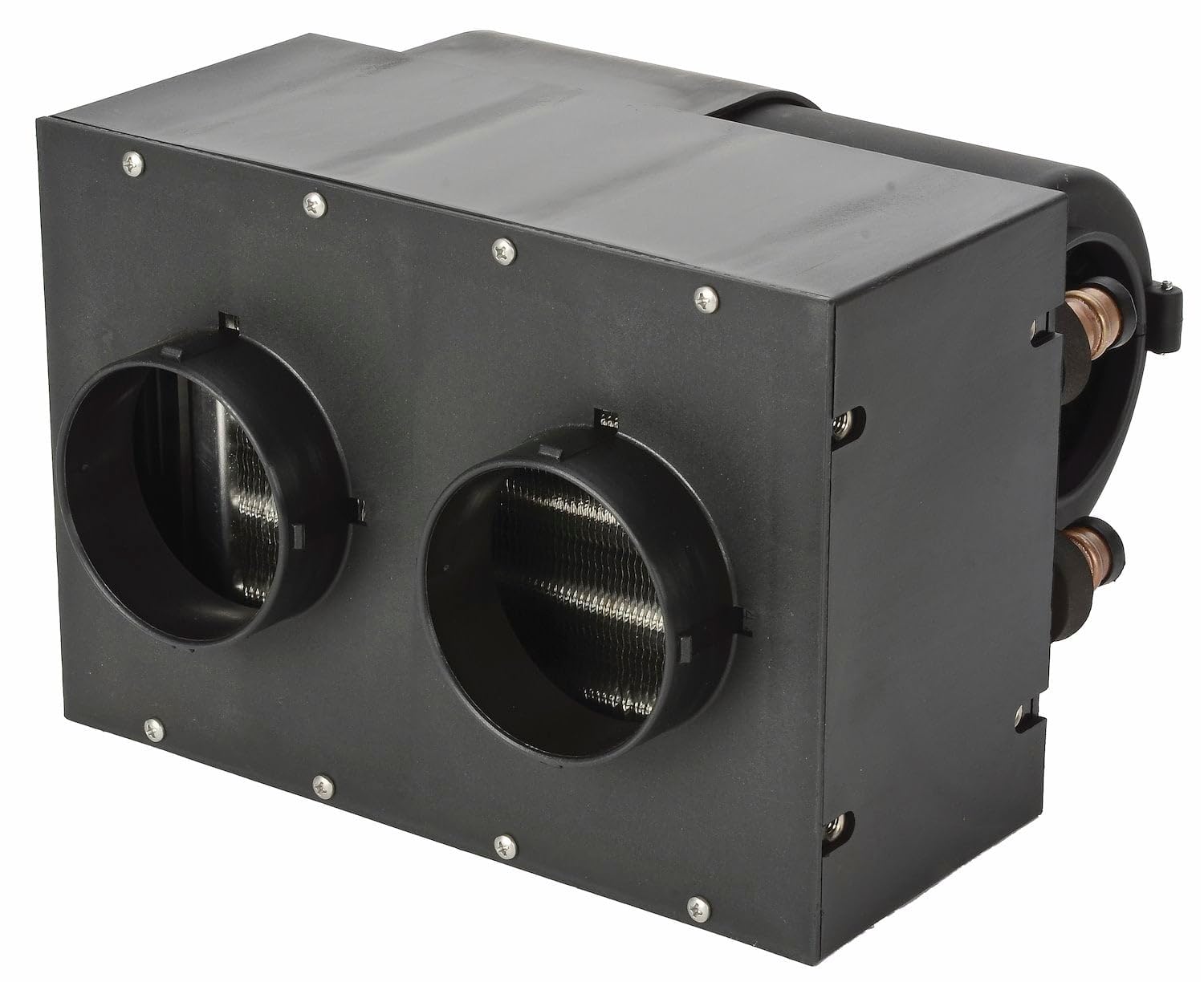
This JEGS unit is the one buyers reach for when a melted or clogged core has made the cab unusable and the dash stays intact. It pushes 28,000 BTU of heat through 260 CFM of airflow, and the three-speed 12V blower lets you dial in exactly how much you need. Buyers report the low setting alone is enough to warm a Skid Steer cab with windows and a door, with output air measured at 120 degrees.
Installation is straight forward for anyone comfortable with basic wiring and coolant hoses. The compact shell — 6.5 inches high by 9.5 inches wide by 8.625 inches deep — fits tight spots like a tractor cab, and the glass-filled nylon body shrugs off vibration. One buyer swapped out a melted OEM heater entirely and called the install easy. The catch: the blower is genuinely loud, and because it recirculates cab air, you will want a window cracked or you will fight fog on the glass.
At 9.8 pounds, it is over three times heavier than a small electric unit, but that heft signals real metal core and a motor built to run all season. For a machine that must stay warm in serious cold, this is the workhorse.
What Wins Owners Over
- Heat output is the most-praised trait — buyers consistently call it strong, even on the low fan setting
- Easy installation is the second most-discussed positive, with several first-time fitters succeeding
- Built to survive harsh cabs with heavy-duty glass-filled nylon construction
Trade-Offs To Know
- Loud blower means you will hear it, especially on high
- Recirculates air, so cracked windows are needed to avoid fog
- Missing some parts from the start has happened; check contents before you start
Grab it for: skid steers, loader cabs, and any machine where a dead factory core has left you freezing and the dash stays untouched.
Look elsewhere if: you need whisper-quiet operation in a daily-driver pickup — this one makes its presence known.
2. JEGS Auxiliary Heater with Triple Vents
The big brother that turns a loader cab into a sauna even at 70 mph.
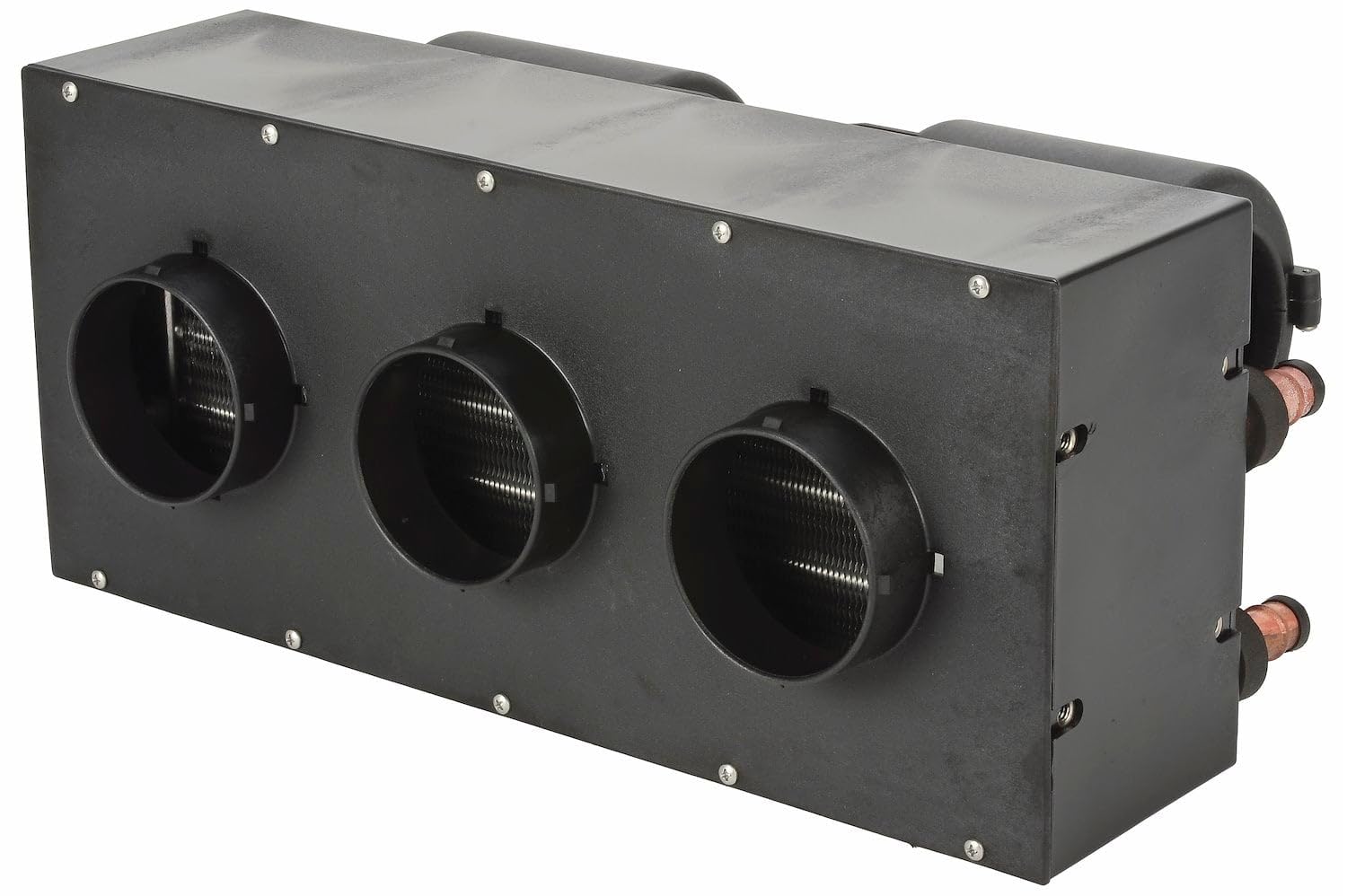
When the JEGS Dual Vents is not enough, this triple-vent version steps up with 40,000 BTU and 300 CFM — the strongest pair of numbers on this list. It is the same proven family design, just scaled up to cover roughly 300 square feet of heating space. Buyers describe it as overkill in a good way, with a 1995 Jeep YJ owner reporting it gets too hot even at 70 mph in single-digit temperatures.
The three-speed motor is noticeably quiet for the volume of air it moves. A van-conversion owner runs it on a thermostat and confirms the low fan setting handles everything, speculating the high setting could warm an uninsulated bus. Like the Dual Vents, it uses glass-filled nylon construction and the same space-efficient shape, here measuring 7 inches high by 16 inches wide by 8.625 inches deep at 11.9 pounds.
The honest caveat is the size — one loader owner called it “slight overkill in size” for his cab, and the switch-mounting bracket drew a few grumbles. But the recurring verdict is that it is well built, quiet, and worth every cent as a far cheaper alternative to replacing a clogged heater core.
Biggest surprise: how quiet it stays while moving serious heat — two different buyers called the low fan setting perfect and the unit pleasantly quiet.
Who it suits: loader cabs, sprinter vans, and big cabs where smaller units simply cannot keep up. Think twice if space under your dash is tight.
3. Maradyne Santa Fe Floor Mount Heater
A floor-mounting favorite with airflow you can aim anywhere in the cab.
This Maradyne is the most versatile unit here because it does not just blow heat — it lets you point it. Four 360-degree adjustable louvers on a 3-speed motor steer warm air exactly where you need it, whether that is your feet, the windshield, or a passenger. At 13,200 BTU it is not the hottest number on the board, but the consistent, draft-free heat from circulating engine coolant wins over pickup, tractor, and RZR owners alike.
The build quality is the headline story. Aluminum fans and a glass-filled nylon case make it corrosion-resistant enough for harsh, salty winter environments, and universal mounting hardware is included so it works as a fresh install or a replacement for the OE heater. Performance is the most-praised trait by a wide margin, with buyers in Minnesota plowing snow in a t-shirt and riders in 2013 and 2014 Polaris RZRs praising the output. One note: the 30-inch depth means it wants floor space, and some owners added a thermostat bypass to reach ideal coolant temps.
The recurring gripe is durability of the louvers — a handful of owners mention the vents breaking during use. It runs loud but tolerable, and the blower doubles as a cab fan with the coolant valve shut off, which is a genuinely useful summer trick.
Why it wins: aiming the heat with 360-degree louvers is something no other pick here offers, and the aluminum/glass-nylon build takes real abuse.
Fair warning: the louvers are the weak point — treat them gently, and give this unit floor space rather than cramming it under a dash.
4. XuSha 8000 BTU 4 Ports Universal Heater
The budget bypass that rescues a leaking core without pulling the dash.
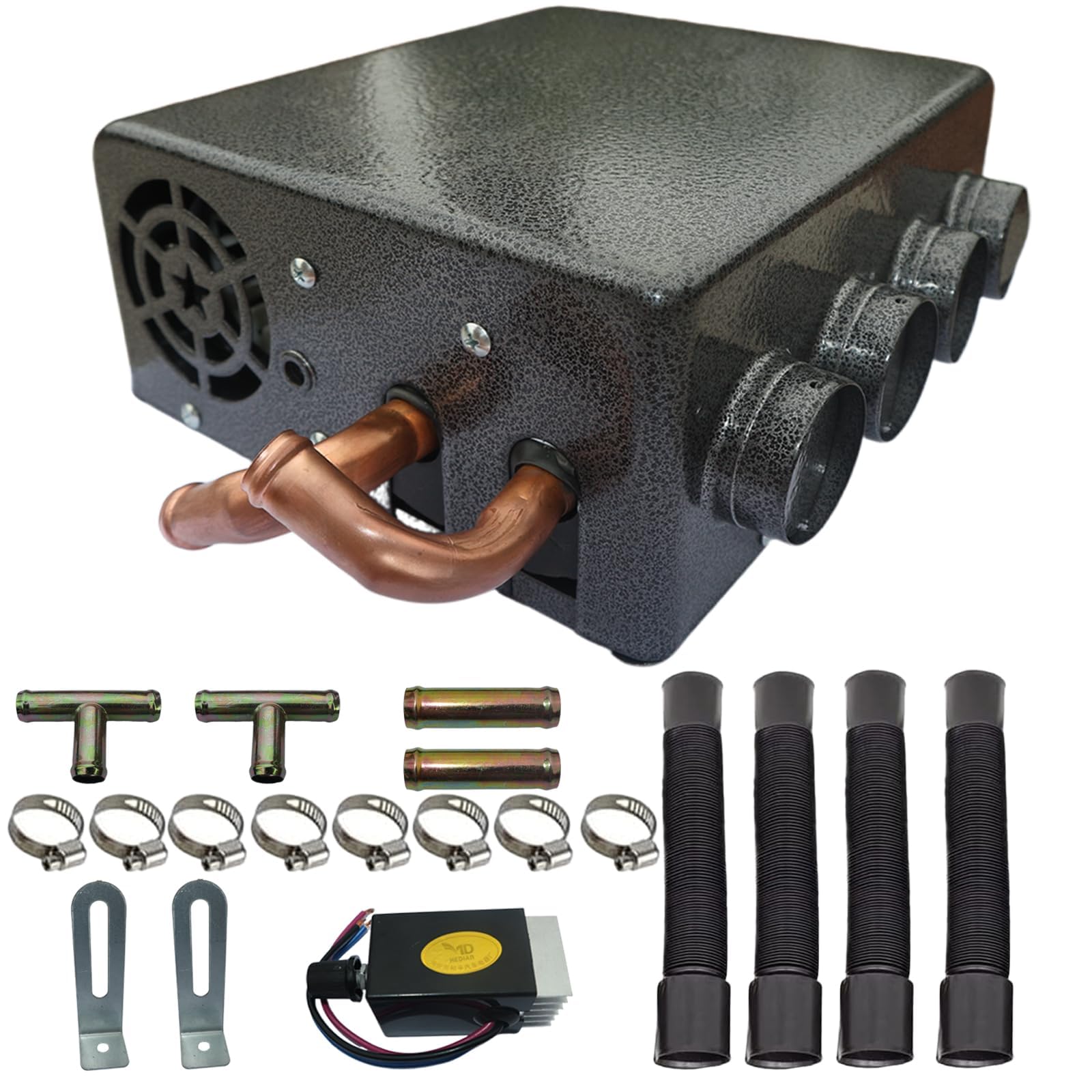
If your heater core leaks or fails, this unit is the low-cost fix buyers call “perfect.” You tee it into your existing radiator heat source and it blows warm air—no shop repair needed. Heat output is its most-praised feature, mentioned 19 times. Buyers confirm it delivers plenty of heat; one hot-rodder uses it to clear the windshield on a 1957 Dodge pickup on cold mornings.
At 8,000 BTU it is a gentler heat than the big JEGS units, suited to cabs that are already mostly sealed. It sips power and does not affect the original vehicle’s electrical system, and it runs low-noise, which owners appreciate. One rider installed it in an RZR with soft upper doors and stayed warm wheeling on a 16-degree day. Fitting requires a 5/8-inch (16mm) inner-diameter water hose that is not included.
The mixed feedback centers on two things: value for money splits buyers (some call it decent, others a waste), and noise is a real negative — one unit vibrated and its switch burned out after the second use. Build quality also draws mixed marks, so inspect yours on arrival.
Best for: anyone facing a failed heater core with a tight budget and modest heat needs — this is the cheapest real fix that taps engine coolant.
skip it if: you need big heat in a large or unsealed cab, or you want premium build consistency.
5. Sallurmose Upgraded Universal Auxiliary Heater
A proven workaround for failed cores with a stepless fan you can fine-tune.
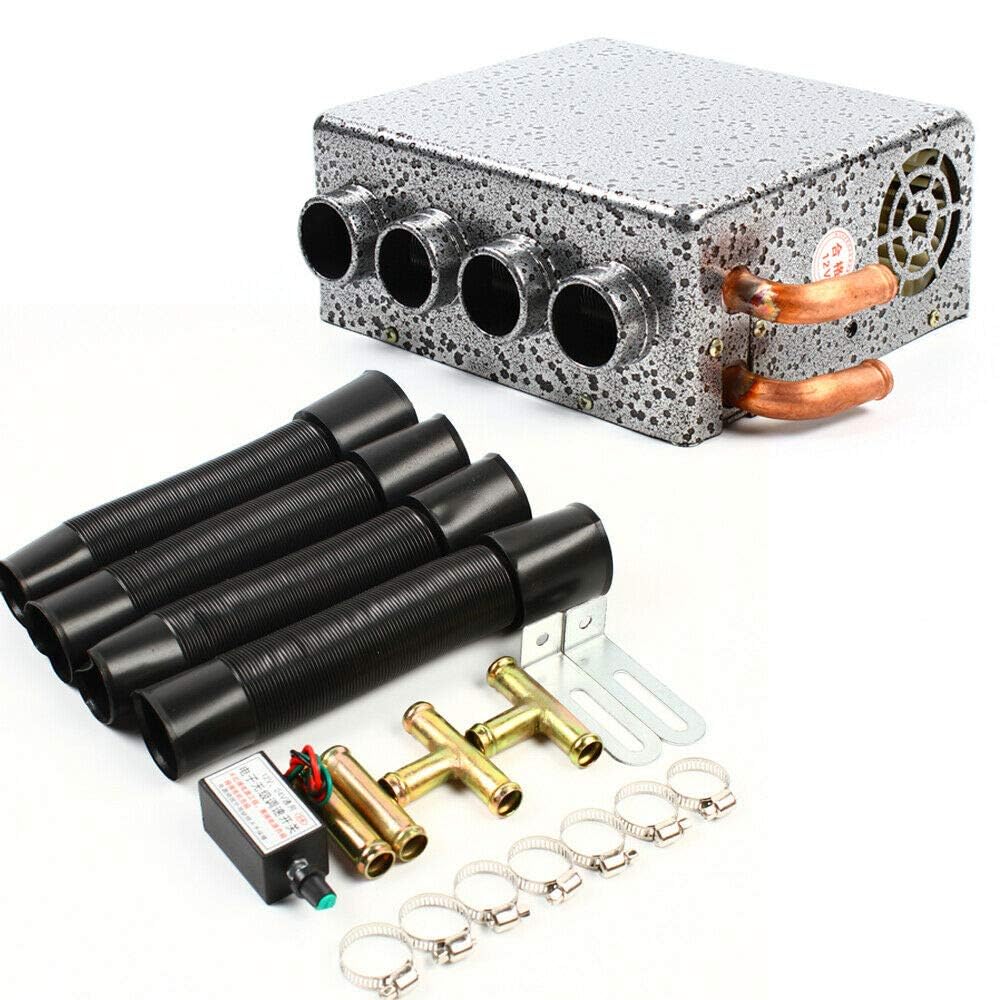
This upgraded under-dash heater earns its place as the go-to for owners of cars with failed heater cores, like the 2007 Ford Edge owner who bypassed the dash entirely. It connects to 5/8-inch coolant hoses, includes the mounting parts, and runs hot coolant through a copper core with a thickened iron body — a combo picked for harsh environments and extended service life.
The standout feature is the stepless adjustment knob, which lets you tune the airflow continuously rather than jumping between fixed speeds. Functionality is the most-praised trait at 13 mentions, with heat output close behind at 12. Customers note it blows heat very well for UTV snow work, and the wiring directions on the control switch make hookup clear. The electrical spec is worth noting: it needs 8 amps minimum, and a 10-amp fuse is recommended.
The honest split is on durability — quality and durability both draw mixed feedback. The biggest recurring complaint is the included clamps, which strip out; buyers recommend replacing them. It is also a supplementary heater, not a full replacement for main cab heat, as one owner put it plainly.
Pick this for: a failed-core workaround on a car or UTV where you want fine fan control and a metal core built to last.
Plan for: swapping the junk clamps for quality hose clamps before you trust it in the field.
6. Saihisday 12V Car Auxiliary Heater

A no-frills single-cab heater that beats having no heat at all.
For a 1998 Chevy S10 single cab or a Polaris Ranger 900 XP, this four-port unit is a straightforward value play. It uses a powerful blower motor to push air through four vent holes for windshield defrosting, demisting, and cab heating. Buyers praise the value for money, and a 1998 S10 owner said a week of use proved it “works well for single cab, better than no heat” with acceptable noise.
The wiring is clearly spelled out in the listing — red wire to positive, blue to the motor’s negative, black to the power supply’s negative — which makes the hookup manageable for a first-timer. It weighs 7.04 pounds and mounts under the dash of trucks, UTVs, and similar rigs. One Ranger owner found it easy to install and called it “really a good heater for the price,” even while noting the fan blower is a little weak.
That weak blower is the honest catch. The blower motor draws negative feedback from multiple owners, and functionality splits opinions between working well and being “completely useless” for some. Arrived-fast units have also come with defective switches and hose clamps that strip under pressure. For the money it delivers, but manage your expectations on the fan’s push.
Reach for it if: you have a small single-cab truck or UTV and want a cheap, clear-wiring heat solution that beats freezing.
Look elsewhere if: you need strong airflow to fill a bigger cab — the blower is the weak link here.
7. Therwen 12V Universal Auxiliary Heater

A six-port defogger built to keep your windshield clear, not heat the whole cab.
If your problem is an icy or foggy windshield rather than a freezing cab, this Therwen unit is purpose-built for it. Six ports aim focused heat at the glass to clear frost and fog fast, keeping your view unobstructed on cold mornings. It is a compact package at 9.84 x 8.46 x 4.06 inches and 4.1 pounds, designed to slip under the dash of SUVs, UTVs, and campers.
Functionality is the most-praised trait — buyers call it “works great” and “works very well,” with one owner installing it in a 1991 S10 and reporting it heats really well. A short-bus owner confirmed it heats the back of the bus decently. The design philosophy is clear: focused defrosting rather than trying to warm an entire vehicle.
The honest trade-off is that heat output is mixed. Some find it heats well, others find it not warm enough, and one frustrated owner said it “hardly any warm air” while sounding like a jet taking off. That noise complaint recurs — the fans are loud. It also does not come with mounting bolts, so budget for hardware. Place it where it can aim at the glass and it earns its keep.
Choose it for: windshield defrosting and demisting in SUVs, UTVs, and campers where the glass, not the whole cab, is the priority.
Bear in mind: this is a defogger first — do not expect it to warm a large cab, and be ready for fan noise.
8. Auto 4 Port Underdash Compact Heater Kit

Everything in one box — heater, blower, switch, and hoses — for a quick tractor or RV add-on.
This TingAo kit is the “great all in one heater, blower and switch” that owners describe. It arrives with the heater, four black tubes, two tees, mounting brackets, a switch, straight fittings, and eight hose clamps — genuinely everything to hook up. The 12V/8A coolant heater uses a copper core and iron body, and it is a famously easy install once you connect water and power.
It is a proven add-on for small, poorly sealed cabs. One farmer added it to an existing Case DX45 tractor heater for snow removal and said it works perfectly. A pickup owner called it “the perfect option for my pickup, opposed to installing a new heater core.” With the tubes off, the fan is powerful, and buyers consider it great value.
The reliability feedback is genuinely mixed, and one buyer received a unit in rough shape — a bent port, rattling heat exchanger, damaged fins, and coolant stains — which points to a quality-control lottery. It also does not work well below about 45 to 50 degrees, per one owner, so its effective range is limited. The controller is fiddly enough that one buyer swapped in a wet valve and a simple 12V switch instead.
Best for: RV rear heaters, small tractors, and pickups wanting a complete kit with nothing else to buy.
Know upfront: inspect every part on arrival — quality control is hit-or-miss, and this is not a deep-freeze solution.
9. CYDZSW Portable Electric 12 Volt Car Heater

A featherweight 3.1-pound electric option when you cannot tap into coolant at all.
This is the odd one out on the list because it runs purely on battery power — no coolant hoses required. The 12V 500W heater is made from metal to resist high-temperature deformation, with four air outlets and four aluminum foil telescopic tubes to route the heat. It reaches temperatures as high as 86 to 100 degrees Celsius, and it is genuinely compact and portable at just 3.1 pounds. That is a fraction of the weight of the JEGS units above, so it shines where a coolant line is impossible.
Sold as a windshield defroster, defogger, and deicer, its metal build earns quality praise. One buyer, who tried another unit first, called this one “really good” and noted the cable never goes hot. In a Kubota 4-person cab test, it blew hot air but only in limited volume—the area must be sealed or “it wont work well.” That buyer also warned the battery dies if the machine idles over 5 minutes, so use it only for short bursts.
Heat output and output both draw mixed feedback, and the reality is blunt: “may as well sit and idle to get more heat than this unit puts off,” as one owner put it. It pulls lots of power, so heavy-gauge wire is a must. This is a defogger and small-space helper, not a cab-warming solution.
Pick it for: windshield defrosting and a small warm-air boost on battery power where no coolant access exists.
pass on it if: you need real cabin heat — the airflow is too limited, and the battery draw is heavy.
Understanding the Specs
BTU and CFM explained
BTU (British thermal units) measures how much heat the core produces. CFM (cubic feet per minute) measures how much air the blower pushes. They work together. A high-BTU unit with low CFM blows hot air that never reaches you; a high-CFM unit with low BTU gives a cool breeze. For small cabs look around 8,000 BTU; for loader cabs and big truck cabs, 28,000 to 40,000 BTU plus 260 to 300 CFM handles the job.
Wiring and amperage
Most coolant heaters draw 8 to 12 amps from the 12V system. That means heavy-gauge wire and a proper fuse (a 10-amp fuse is commonly recommended) keep the switch from overheating. Buyers who use thin wire end up with hot cables and weak heat. Electric-only units like the CYDZSW pull so much power they can drain a battery if the engine idles too long, so match the wiring to the amperage rating printed on the unit.
FAQ
What size water hose do I need for a universal heater core with blower?
Can I install one of these if my factory heater core is badly clogged?
How many amps does the blower motor draw?
Will a universal heater core with blower warm my whole cab?
What is the difference between a coolant heater and an electric-only 12V heater?
Are these heaters loud when running?
How hard is installation for a first-timer?
Does a universal heater core with blower need a thermostat?
Final Thoughts: The Verdict
For most buyers, the universal heater core with blower winner is the JEGS Dual Vents because it pairs the strongest proven heat output with an easy install in the machines where factory heaters fail most. If you need even more raw heat for a loader cab or a van, the JEGS Triple Vents crushes it at 40,000 BTU. And for a pickup or RZR where you want aiming control and a corrosion-resistant build, the Maradyne Santa Fe is the crowd favorite across decades of use.
How We Picked
We do not accept paid placement. Every pick is matched to a real buyer and a real use-case; we do not hands-on test units.
Sources & Methodology
Specifications: manufacturer listings and product documentation. Review insights: verified customer reviews, as of August 2026. Pricing: not shown on this page (it changes often); check the current price via the retailer link.
As an Amazon Associate, GoCarLife earns from qualifying purchases. This does not affect which products we feature.