
Our readers keep the lights on and the garage heater humming. As an Amazon Associate, I earn from qualifying purchases.
Specs are compiled from manufacturer listings and verified buyer reviews and can change over time — please confirm the key details on the product page before buying.
Sleeping in a hot truck cab or driving a classic without factory air is miserable. The fix is a 12-volt universal unit that runs off your battery, not the engine, so you get cold air parked, idling, or cruising. This guide sorts through the rooftop heavyweights, the under-dash retrofits, and the portable splits to find which one actually fits your rig and your power setup.
I’m Mo Maruf — the founder and writer behind GoCarLife. This guide is built by comparing the manufacturers’ published specifications and the patterns across verified customer reviews, so you get each pick’s real strengths and trade-offs instead of marketing spin.
You can cool a camper van with a rooftop unit or a classic truck with an under-dash kit, and the right universal car air conditioner does it quietly—no noisy generator running all night.
Our Picks at a Glance

How To Choose The Best Universal Car Air Conditioner
To match an AC to your vehicle, you need to know three things: where you can mount it, how many amps your battery can feed it, and if you need heat too. Nail those, and the rest is just picking features you like.
Form factor: rooftop, under-dash, or split
Rooftop units bolt into a 14″x14″ vent cutout, which suits RVs, camper vans, and skoolies. Under-dash evaporator kits hide inside the cab and work on classics and tractors that never had factory air, but they need a separate compressor and condenser. Split systems mount an outdoor unit on the back of a truck or van and blow cold through an indoor head — they are the most work to install but often the most powerful.
Power draw and your battery bank
The amperage an AC pulls decides how long it runs. A rooftop unit drawing 50 amps will drain a 400Ah battery in hours, while an efficient split pulling 30 amps can run through the night on a big lithium bank. Before you buy, check the unit’s amp draw and compare it to your battery’s capacity and your alternator or solar input.
Why BTU matters less than you think
BTU tells you raw cooling power, but a 10,000 BTU unit will still fail if your battery can’t sustain its draw. A smaller unit that runs all night beats a bigger one that dies in two hours — so the real spec to compare is cooling power against energy consumption.
Quick Comparison
| Model | Best For | Cooling Power | Form Factor | Rated Current | Amazon |
|---|---|---|---|---|---|
| Outequip Rooftop★ Best Overall | RVs and Class B vans | 10,000 BTU | Rooftop | ~50A | Amazon |
| MONIPA Under-DashBudget Champion | Classic tractors and trucks | 600 CFM unit | Underdash | — | Amazon |
| Saihisday Under-DashEasy Value | Budget under-dash retrofits | 600 CFM unit | Underdash | 7.6A | Amazon |
| jiaji 4-Vent Kit | Trucks and vans without factory AC | 16,500 BTU | Underdash | — | Amazon |
| JAYGOVAN Split | Off-grid camper builders | 11,000 BTU | Split | ~600W max | Amazon |
| Treeligo Split | Compact truck and van installs | 10,000 BTU | Split | 60-80A | Amazon |
| Aspligo Under-Dash | Heat and cool in one kit | 10,000 BTU | Split System | 40-60A | Amazon |
| Cybertake S2 Pro | Tent and rooftop-tent camping | 5,100 BTU | Portable | — | Amazon |
| Gidrox Rooftop | Camper vans and skoolies | 10,000 BTU | Rooftop | ~350W eco | Amazon |
In‑Depth Reviews
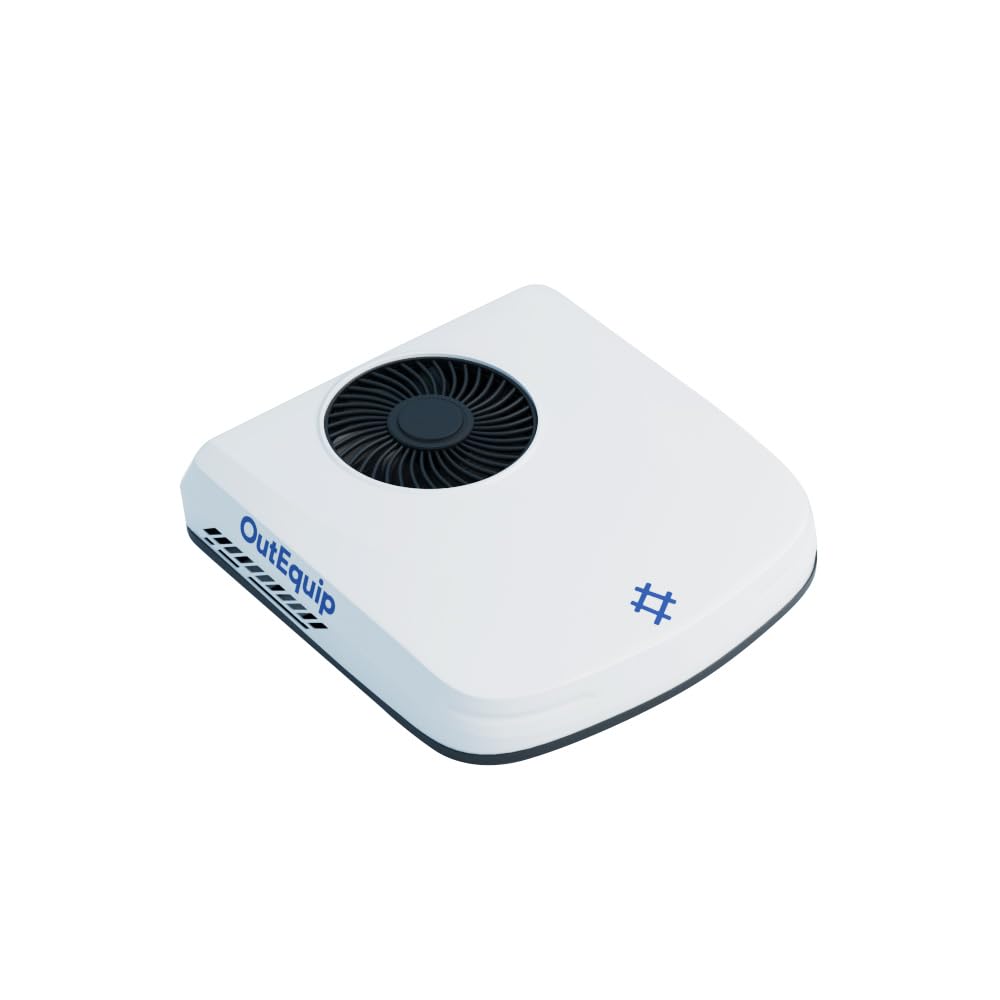
1. Outequip RV Air Conditioner
Our pick — over 4.5★ from 90+ verified ratings; the strongest balance of quality and price.
The low-profile rooftop that turns a Class B van into a cool refuge without roof surgery.
Owners in Texas heat and Phoenix summers report it cools an RV to 80°F in 15 minutes. It cools an RV in just 15 minutes, thanks to its 10,000 BTU rating (a measure of cooling power). The inverter compressor (a variable-speed compressor that adjusts output) keeps it efficient—it holds 80°F drawing only about 21 amps in 105°F heat, and Turbo mode spikes around 51 amps for a fast chill. At 43 lbs with a 28×28 footprint, one person can carry it up a ladder.
The smart controls—remote, temperature monitoring, and eco, sleep, and turbo modes—set it apart from simpler rooftop units. You get a remote, temperature monitoring, and three operating modes — eco, sleep, and turbo — so you can dial in quiet overnight cooling or rapid daytime recovery. Buyers report roughly 6 to 7 hours of runtime on a 360Ah battery at about a 50-amp draw, dropping to 30 amps once the cabin is stable.
It ships with a UV-stabilized ABS shell (a plastic that resists sun damage), an EPDM foam gasket (a durable rubber seal), and a zinc-coated condenser, so it’s built to sit on a roof for years. Installers repeatedly advise sealing the condenser base well and double-checking gasket torque. You’ll also need a serious battery bank—a 480Ah source gives about 8 hours of cooling, and 600Ah stretches that to 10 hours.
Why owners love it
- Cools a 700 sq ft camper quickly in Turbo mode, then sips power on fan 2-3
- Extremely quiet exterior — owners mention it’s quieter than portable units
- Fast, responsive customer support when questions come up
Before you buy
- Needs a sturdy power system — it draws about 50A at full tilt
- Gasket and bolt torque instructions are unclear and can cause tilt if rushed
The crowd favorite: this is the rooftop unit to reach for if you sleep in a van or RV and want the best blend of cooling, quiet, and battery-friendly operation.
Think twice if: your electrical system is stock and you aren’t ready to add a serious lithium bank — this unit demands real amp capacity.
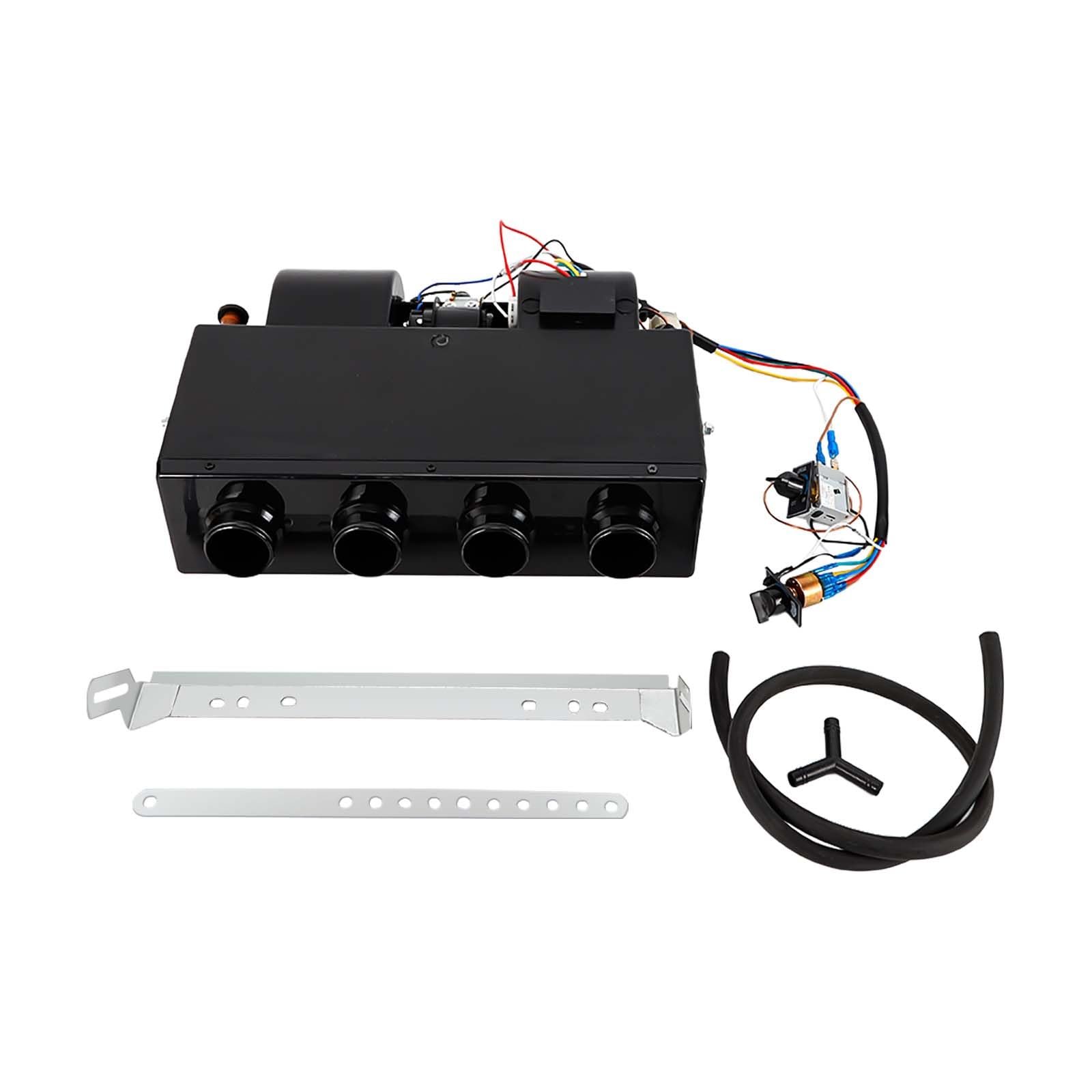
2. MONIPA Under-Dash Evaporator Kit
A no-frills under-dash unit that brings heat and cool to vehicles that never had either.
Owners are using this MONIPA evaporator on everything from a 1973 International tractor to classic trucks, and the verdict is consistent: it does exactly the job it claims. The 22-pass, 4-way aluminum evaporator handles cooling while the 6-pass, 2-way unit manages heat, and the three-speed blower pushes a solid 600 CFM of air through the cab.
The honest catch here is the install. This is a bare evaporator kit, not a plug-and-play AC — you still need a compressor, condenser, and lines to make it blow cold. One owner flagged that there’s no manual included, and another noted the thermostat failed early but was replaced with minimal hassle.
What wins people over is the value and versatility. The heater works perfectly from the start—one owner running just the heat side reported the blower “moves plenty of air.” It’s a budget-friendly way to add climate control to a project vehicle, but know it’s a blank slate for your existing AC system. skip it if you want a plug-and-play unit with all accessories included.
Smart budget pick: if your rig never had factory air and you want a proven evaporator core for a custom install, this gets the job done cheap.
Know this first: it arrives without an instruction manual and needs supporting AC parts you’ll have to source.
3. Saihisday BEU-404-100 Under-Dash Kit
A simple under-dash swap that fit one truck’s cab with zero fabrication drama.
This under-dash kit bolts into place easily, and owners praise how straightforward the install is. It delivers 4107 Kcal/H of cooling and 3619 Kcal/H of heating (kilocalories per hour, a heat output measure) through an aluminum and copper core. The three-speed fan runs on 12V at just 7.6 amps, so it’s friendly to smaller electrical systems—unlike the rooftop unit above, which needs a 480Ah battery bank.
Owners repeatedly praise the build quality, with one calling it “very well built” after it replaced a factory unit. Another noted it “blows hard enough to cool my 54 truck down” while flagging that larger vehicles will take longer. The common-sense advice from installers is that you still need a compressor and the rest of the loop — this is the evaporator side only.
Customers note the unit works exactly as advertised, and the package arrives well-wrapped and undamaged. It’s a middle-of-the-road pick that sits comfortably between the bare-bones MONIPA and the pricier dedicated kits, giving you solid cooling for classics without overthinking the install.
Reach for this if: you want an under-dash evaporator that’s proven to fit standard truck cabs and runs on minimal amperage.
Look elsewhere if: you expect a full AC system — this kit needs a compressor and lines to actually blow cold.
4. jiaji 4-Vent Under-Dash Kit
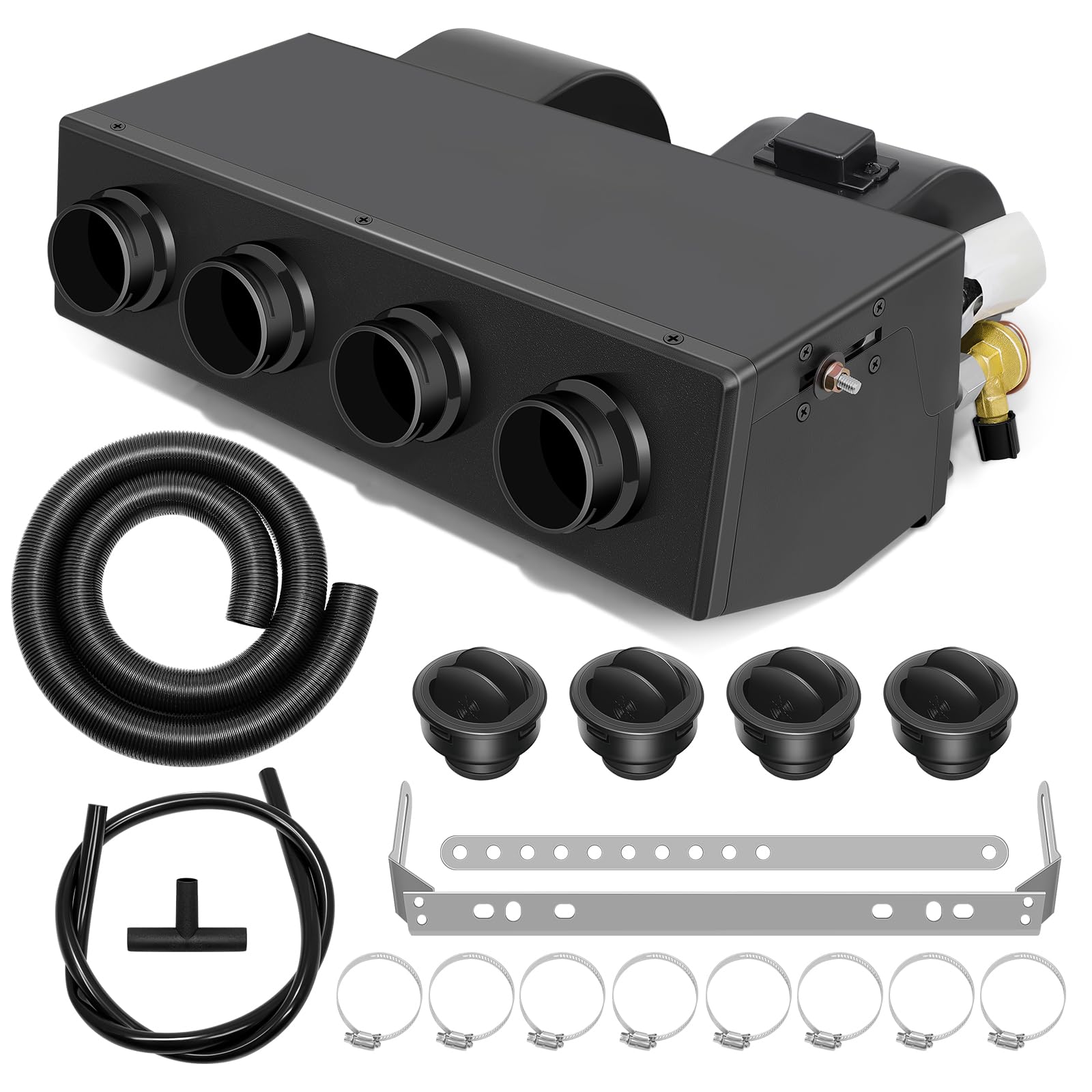
The under-dash kit with a serious 16,500 BTU punch and all the parts in one box.
This is the unit to grab when you want the most cooling muscle in an under-dash package. Its 16,500 BTU rating towers over the 10,000 BTU of the Outequip rooftop — a 65% jump in raw cooling power — and it pushes that cold through four swiveling vents at 600 CFM. Owners retrofit it into trucks, vans, and pickups that never had factory AC, and the aluminum and copper build feels substantial.
The complete accessory kit—evaporator, 6.5-foot hose, four vent covers, drain hose, T-joint, and hardware—is the standout feature. You get the evaporator, a 6.5-foot hose, four round vent covers, a drain hose, a T-joint, and all installation hardware — owners note the 6.5-foot hose reaches cleanly from undercarriage to the driver’s seat. The three-speed fan lets you run high for fast cool or low to save power, and one owner reported cooling a small cabin in minutes on max.
It’s backed by a 1-year warranty, and installers suggest dry-fitting the vents before cutting your dash. This kit makes an old truck feel like a walk-in cooler, and for hot-day comfort in a project vehicle, the value is tough to top—especially if you’re on a tight budget.
What seals the deal
- 16,500 BTU means serious cooling for small cabins — cools in minutes on max
- Everything included: hose, vents, drain line, T-joint, and hardware
- ABS and copper build feels durable, with a 1-year warranty behind it
The trade-off
- Some owners hit issues with reliability — a few report problems with the unit
- Still requires a compressor and AC loop; the kit is the evaporator side only
Most raw power: this is the under-dash champion for anyone who needs maximum cooling in a truck or van without factory air.
The caveat: reliability gets mixed reviews, so it’s a fit for hands-on owners ready to handle a hiccup.
5. JAYGOVAN 11,000 BTU Split Unit
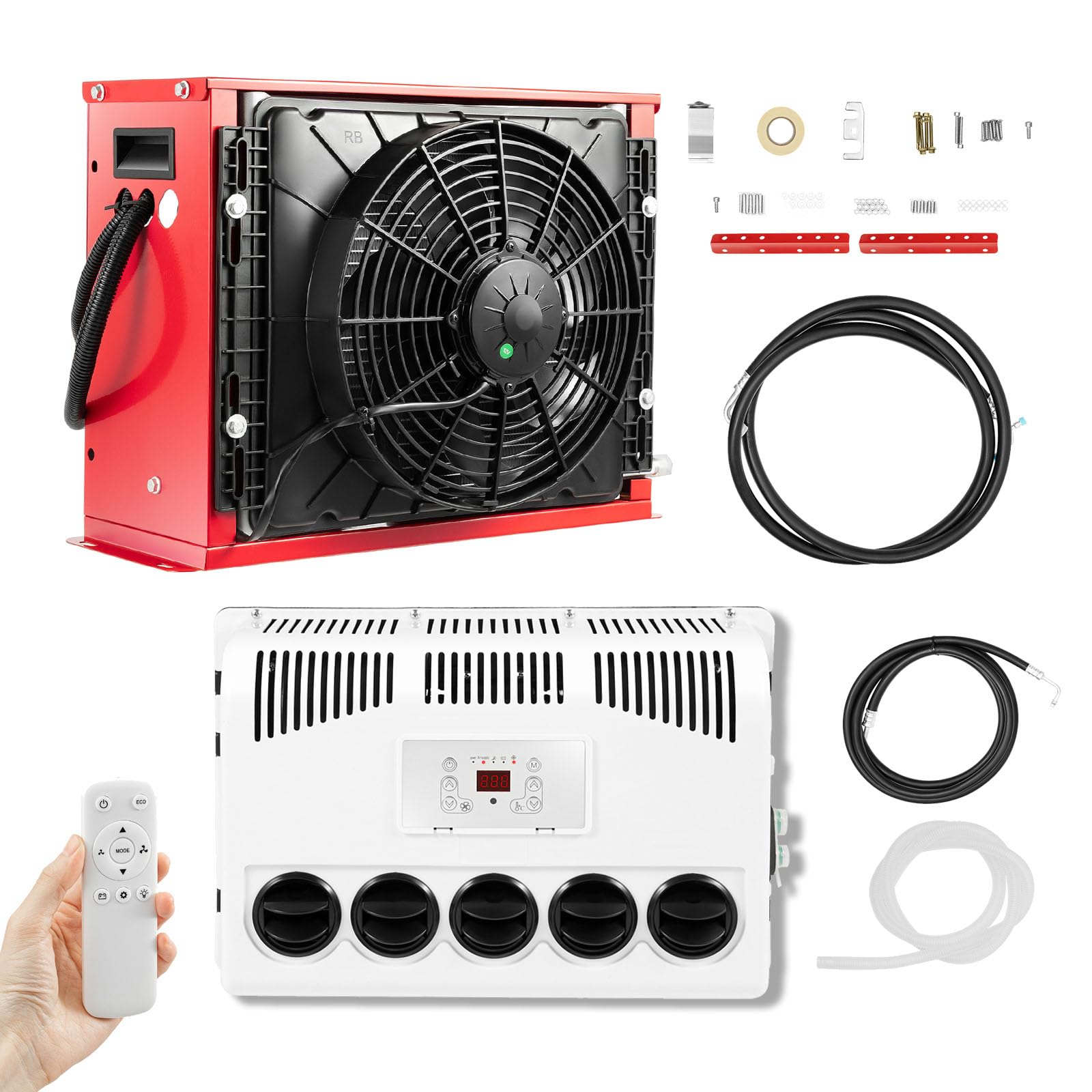
A powerful split system that ran 24/7 on solar for one off-grid camper builder.
This JAYGOVAN split is the pick for serious off-grid setups, and the evidence is strong: one owner ran it around the clock on a 1000W solar array, keeping a camper at 74°F in 95°F heat. The 11,000 BTU unit draws a max around 600W, with typical cooling at roughly 30 amps or 300-400W, making it genuinely efficient for the cooling it delivers.
The split design separates the indoor head from the outdoor condenser unit, and the build quality reflects the price tier. The internal unit uses a high-quality plastic shell, the exterior gets a hard iron shell, and the condenser is aluminum. A pure copper wire motor pushes 8828.68-15891.6ft³/h of airflow, and the 5 wind speeds give you fine control over the cabin temperature.
The catch is the install: owners advise upgrading to grade 8 bolts with nylon insert nuts, and the controls read Celsius only. Owners advise upgrading the supplied bolts to grade 8 hardware with nylon insert nuts, since the stock ones can loosen. The control panel reads Celsius only, and there are no pressure sensors, so this is a DIY project for someone comfortable with a multimeter and a set of gauges. Low voltage protection at 11V keeps your battery safe, and the maker’s customer service gets 10/10 from owners who’ve dealt with warranty claims.
For the solar builder: this split rewards owners with serious off-grid battery and solar — the efficiency is the whole story here.
Not for novices: DIY install, Celsius-only controls, and no pressure sensors mean it demands mechanical confidence.
6. Treeligo 12V Truck Cab Split
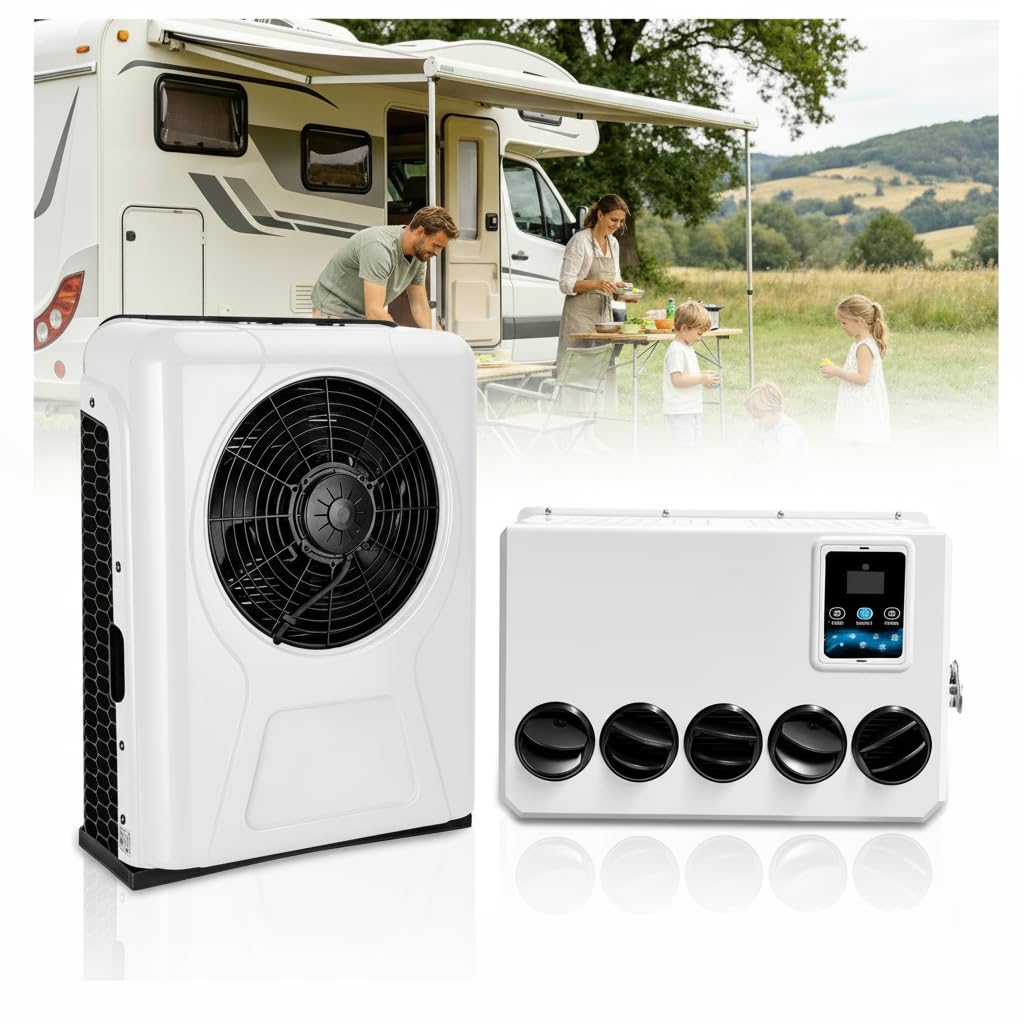
The mid-size split that’s been the workhorse for a fully finished camper build.
Treeligo’s split system earns its reputation on reliability, and owners running it in finished campers report it cools fast and stays efficient. The 20CC variable frequency scroll compressor pushes cooling capacity up to 3000W (10,000 BTU), which the maker notes is stronger and faster than most 8800 BTU units on the market. It runs 45dB noise level, and the three modes — fast cooling, sleeping, and energy saving — cover day and night use.
Battery endurance is the headline spec: the maker rates 8 hours on a 480Ah battery when parked, and 3-4 hours while driving. Real-world owners plan their power around that, with one running a 400Ah bank for about 4 hours on high in a humid van and holding roughly 68°F in 95°F heat — decent for a bare-steel cabin.
Quality control is the honest warning: some units ship with under-filled compressor oil. A few units arrive with the compressor under-filled on oil — one shipped with only 25ml when it needs about 90-125ml of POE 68 oil — and some reviewers point out the compressor dying after months of heavy use. The parts and support are solid but slow, so this is a pick for owners who accept that a unit may need a DIY repair down the road.
Solid value runner: it beats the price of a Dometic by a wide margin and cools a camper effectively when the battery can feed it.
Expect to tinker: quality is divided — some units are flawless, others need compressor oil topped up or a spare part swap.
7. Aspligo 12V Under-Dash Kit

The upgraded under-dash kit that handles both heat and cool with a scroll compressor.
This Aspligo is the “new upgrade” of the under-dash AC kit, and the engineering shows in the integrated design. It combines the traditional receiver dryer, condenser fan, and condenser into fewer parts, which reduces potential leak points and improves heat exchange efficiency. The 20CC electric scroll compressor delivers 10,000 BTU of cooling, with a rated draw of 40-60 amps at 550-600W — and it does heat too.
Owners with mechanical experience call the install straightforward, and one self-described novice proved it’s doable, admitting the hardest part is mounting the compressor and condenser. The unit ships with the compressor pre-oiled at about 20 oz, and customer service responds within 24 hours. At 54 lbs of capacity and with internal dimensions of 15.89″ x 13.58″ x 6.12″, it needs a careful measurement before purchase.
Quality consistency is the catch—some units arrive broken or dead, so inspect on arrival. While some owners praise it as a bargain, others report units arriving broken or dead, and one buyer hit a wall with the return process. This is a premium-feeling kit that rewards careful buyers — confirm the fit, plan the install, and you get heat and cool in a single under-dash package.
Pick this for all-season use: you get real heating and cooling in one under-dash install, with low voltage protection for the battery.
Know the risk: quality is inconsistent, so check the unit thoroughly on arrival and confirm return terms before buying.
8. Cybertake S2 Pro Portable
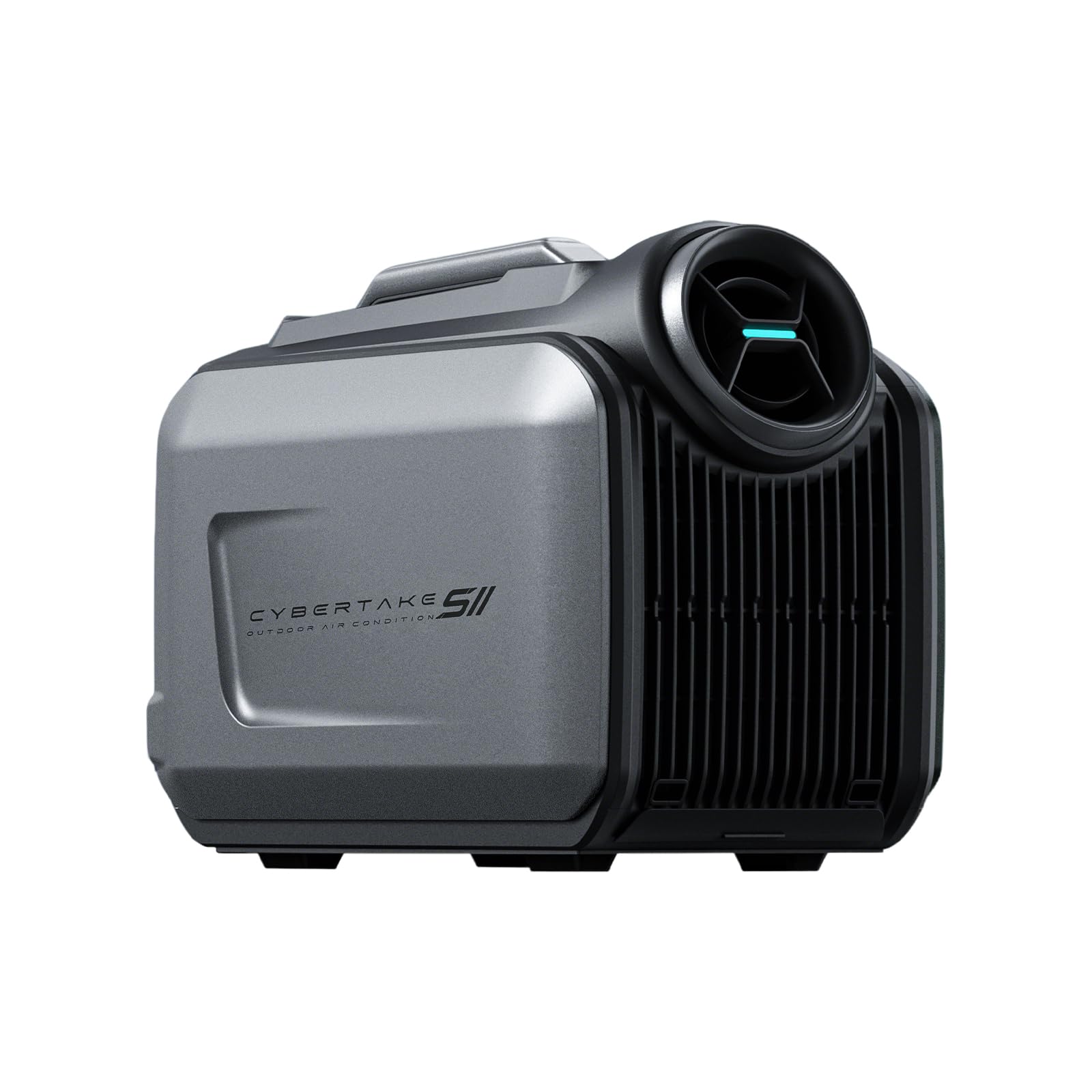
The no-install portable that turns a tent or truck cap cold in under 30 seconds.
If you want cold air without touching a single bolt, this Cybertake is the answer. It’s a true portable — no installation, just hoses and adapters — and it conditions spaces up to 130 sq ft with 5,100 BTU of cooling and 6,100 BTU of heating. It runs at a whisper-quiet 40dB, quieter than a dishwasher, and the IPX4 water-resistant shell shrugs off splashes and rain for outdoor use.
The 3-way power flexibility is the big draw. Plug into a wall outlet (100-240V), a vehicle’s 12V/24V system, or a portable power station via DC 48V — though the boost converter for hardwiring is sold separately. Shoppers say it blows genuinely cold air, ran nonstop for a month efficiently, and one truck-cap camper kept the space dry overnight on low power draw.
The trade-off is physics: it exhausts hot air through a duct, so it works best outside a tent or blowing into a vehicle, not sealed inside a small SUV. One owner drained a 2000Wh battery in under 3 hours on eco, and the Eco+ claim of 8 hours on 1kWh is optimistic except at minimal cooling. It’s a niche tool, but for rooftop-tent campers and truck-sleeper builds, it’s the easiest path to a cool night.
The easiest install on this list
- Ready in 30 seconds — plug in the hoses and it works
- 4 modes and 3 fan speeds give real control, plus a 0-12 hour timer
- Quiet 40dB operation with strong build quality
Where it struggles
- Exhaust duct gets very hot, so it’s an outside-in tool, not for sealed cabins
- Battery use is heavy — a 2400Wh power station lasts roughly 5 hours
Grab it for quick setups: tent camping, truck caps, and rooftop tents where installation isn’t an option and you have a power station.
Skip it for van life: it drains batteries fast and the hot exhaust makes enclosed-cabin use impractical.
9. Gidrox 10,000 BTU Rooftop
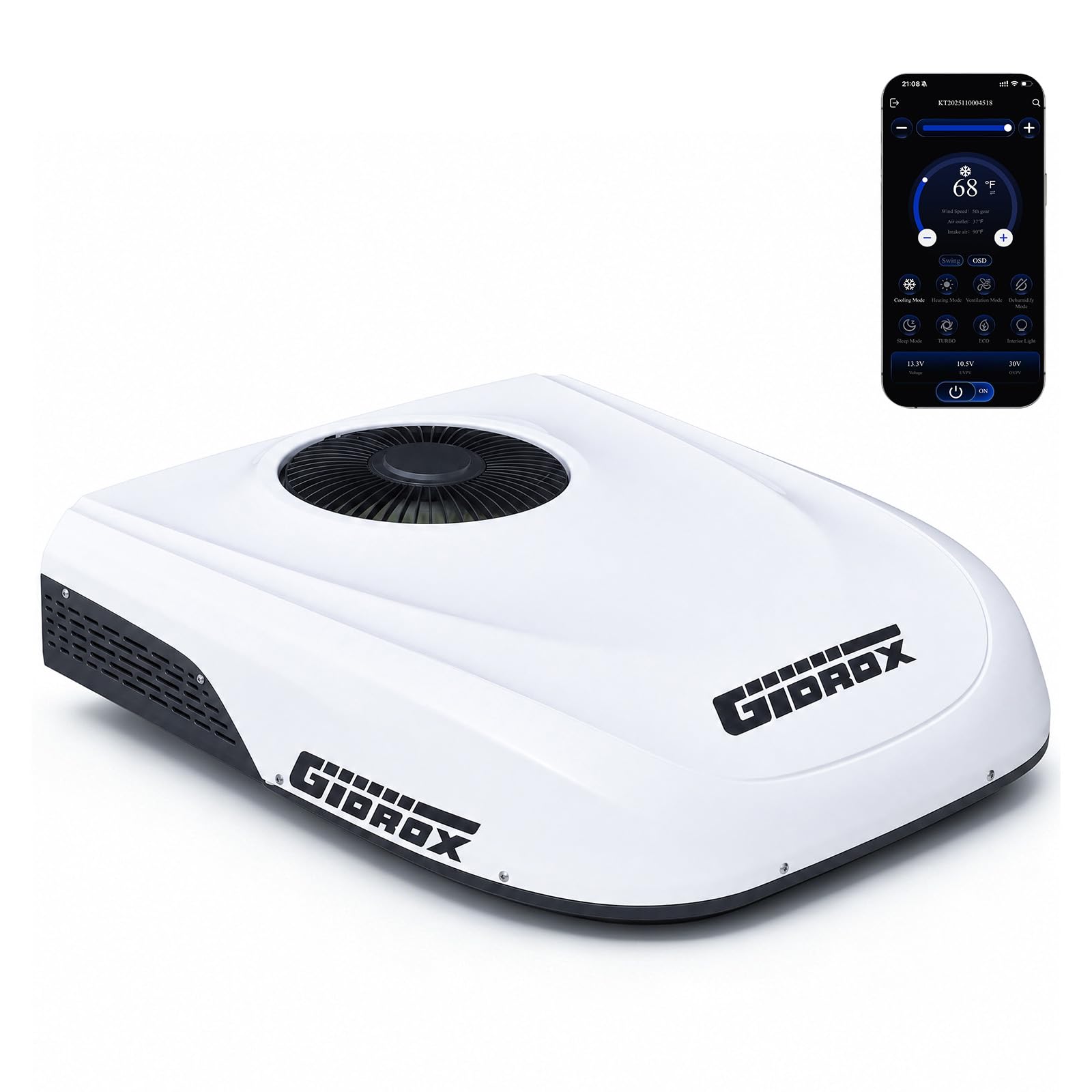
A featherweight rooftop unit with app control that makes a skoolie feel like a hotel room.
This Gidrox is the rooftop pick for smart-home tinkerers, and the story from skoolie and van owners is glowing. The 10,000 BTU unit cools so well one owner said it gets “almost too cold,” and the eco mode sips just 300-350W — a fraction of the 1200W tower it replaced. The inverter compressor and brushless fan keep it at a library-quiet 40dB in Sleep mode.
The standout feature is the 3-way control: a Bluetooth app, infrared remote, and physical buttons. The app lets you set temperature, program timers, and switch between °C/°F with automatic power adjustment based on temperature difference. At only 54 lbs total, it’s light enough for a solo installer, and it ships with a 19.7 ft power cable for a standard 14″x14″ roof cutout.
The honest knocks are install hardware—short mounting screws and a slightly oversized bracket—not cooling performance. Owners flag that the mounting screws are too short, the 14″ bracket runs about 1mm too large, and thick roofs need a fabricated duct extension. A few report the compressor not engaging at all, so check it thoroughly on arrival. The technology is there, the cooling is real — just budget for better hardware and a careful install.
Smartest rooftop here: the app, remote, and panel controls make it the most flexible rooftop unit for tech-savvy van builders.
Plan for extra work: swap the short screws, support the board during mounting, and verify the compressor cycles on immediately.
Understanding the Specs
BTU and cooling capacity
BTU (British Thermal Units) measures how much heat the AC can remove per hour. A 5,100 BTU unit conditions a 130 sq ft tent, while 10,000 BTU units handle vans, truck cabs, and small RVs. Bigger isn’t always better — a high-BTU unit that outdraws your battery leaves you hot when the power dies, so match BTU to your cabin size and electrical capacity.
Amp draw and battery math
The amps a unit pulls at 12V decide how long it runs. A 50-amp draw drains a 400Ah battery in roughly 8 hours, while a 30-amp draw stretches the same bank to 13 hours. Look for the rated current in the specs, then compare it to your battery’s amp-hour rating — and remember inverters, alternators, and solar all affect the real runtime.
FAQ
What size battery do I need to run a 12V car air conditioner overnight?
Will an under-dash evaporator kit cool my truck on its own?
Can I run a 12V air conditioner without a generator?
What is the difference between a rooftop and a split air conditioner?
How much power does a 12V truck air conditioner use?
Do these universal AC units provide heat as well as cooling?
Are these air conditioners truly universal fitment?
How long does it take to install a universal car air conditioner?
Final Thoughts: The Verdict
For the majority of shoppers, the universal car air conditioner winner is the Outequip Rooftop because it pairs the best owner reputation with genuinely efficient inverter cooling and a light 43 lb install. If you want maximum raw power in an under-dash package, grab the jiaji 4-Vent Kit and its 16,500 BTU punch. And for off-grid solar builds, the JAYGOVAN Split is the one to reach for — it’s the unit owners trust to run all day on renewable power.
How We Picked
We do not accept paid placement. Every pick is matched to a real buyer and a real use-case; we do not hands-on test units.
Sources & Methodology
Specifications: manufacturer listings and product documentation. Review insights: verified customer reviews, as of August 2026. Pricing: not shown on this page (it changes often); check the current price via the retailer link.
As an Amazon Associate, GoCarLife earns from qualifying purchases. This does not affect which products we feature.